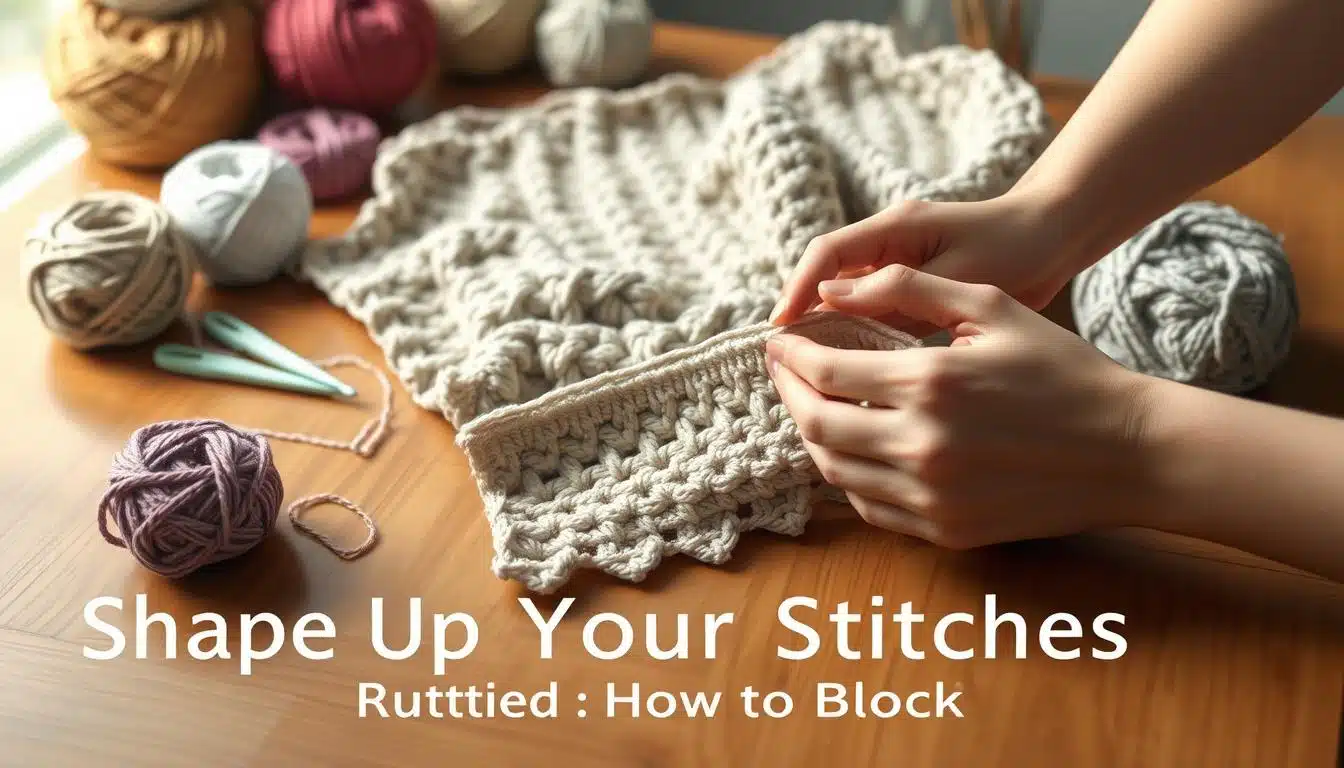
Blocking crochet is like giving your project a spa day. You add moisture, shape with pins or wires, and let it dry. This simple process fixes curling, evens out stitch tension, and improves drape.
Not every small item needs blocking. Beanies and fingerless gloves usually don’t. But for panels in sweaters or openwork shawls, it’s key. It’s the last step that shows off your work’s pattern and size.
Don’t worry about blocking making your project too big. It can only make it larger, not smaller. Follow pattern notes on blocked gauge. If unsure, test a swatch. For more tips, check out blocking crochet projects.
Key Takeaways
- Blocking crochet uses moisture and shaping to improve stitch evenness and drape.
- Wet blocking and steam blocking are the main methods—choose by fiber and project.
- Block panels before seaming and give garments a final block after assembly.
- Blocking can increase finished size; check pattern gauge for blocked measurements.
- Small accessories may skip blocking, but lace and shawls almost always benefit.
Why Blocking Matters for Your Crochet Projects
Blocking is like a spa for your crochet. It relaxes the tension, makes stitches even, and gets pieces to the shape you dreamed of. Lace opens up, edges straighten, and seams look cleaner after blocking.
Overview of what blocking does to crochet fabric
Blocking gently sets yarn fibers in a uniform way. It uses moisture or steam to make fibers settle. This blends stitch tensions, smooths out loops, and brings out stitch patterns.
Benefits you’ll notice: drape, stitch evenness, curl correction, and shaping
Blocking quickly improves your crochet. It makes shawls drape better and brings out texture and lace. It also fixes curling edges and shapes items neatly.
Shaping is a big plus. Sweaters, granny squares, and shawls get crisp edges and even sizes. Remember, blocking can change sizes slightly, so check the pattern’s gauge.
When blocking is essential versus optional
Deciding when to block depends on the project. Block delicate items, garment panels, and anything needing even edges. Wool and other natural fibers really benefit from blocking.
Some items don’t need blocking. Amigurumi, stuffed toys, and casual hats might look good unblocked. Choose based on the look you want.
| Project Type | Why Block | Recommended Method |
|---|---|---|
| Shawls and Lace | Opens stitches, defines pattern, sets symmetry | Soak and pin from center outward |
| Sweater Panels | Aligns edges, sets measurements for seaming | Wet block to size before assembly |
| Granny Squares / Blankets | Ensures uniform squares and accurate joins | Wet or spritz block; use wires for straight edges |
| Amigurumi / Stuffed Toys | Usually not needed; may distort shape if overdone | Spot steam only for minor shaping |
| Synthetic Yarns | Can relax and set shape with care; avoid too much heat | Light steam or spritz test swatch first |
how to block crochet: A Clear Step-by-Step Approach
You want neat edges, even stitches, and lace that opens like it was born ready. Below you’ll find an easy roadmap showing how to block crochet step by step. Read each short bit, pick the method that fits your fiber and project, and get ready to see your work behave like a pro-made piece.
Choosing wet, spritz, or steam based on fiber and project
Start by checking the yarn label. Natural fibers like wool, cotton, silk, and linen do well with wet blocking. Synthetics, such as acrylic, are better off with steam blocking crochet. Blends need a swatch test to avoid surprise shrinkage.
For light repairs or small tweaks, spritz blocking is the way to go. If you’re aiming for deep reshaping and opened lace, soak blocking crochet is your best bet. For quick edge smoothing or stubborn acrylic, steam blocking crochet is the answer, but keep a safe distance.
Soak blocking process from basin to towel roll
Fill a basin with lukewarm water and a gentle no-rinse detergent or wool wash. Submerge the piece fully and let it rest. Twenty to thirty minutes usually does the trick for most fibers.
Lift the piece gently and squeeze out excess water without twisting. Lay it flat on a towel, roll the towel with the piece inside, and press to remove more moisture. Unroll and move the work to your blocking surface.
Shape the piece with your hands, use pins where needed, and leave it to dry completely. If you want a quick reference on blocking supplies and techniques, visit blocking guidance.
Spritz blocking for light adjustments and quick fixes
Lay the dry piece flat. Use a clean spray bottle and mist both sides until the fabric is evenly damp. Shape gently with your fingers and secure with pins for minor corrections.
Spritz blocking is perfect when you need modest growth or to tame small curls. It saves time and water while improving drape and stitch evenness.
Steam blocking technique and safety tips with a handheld steamer
Pin your piece to the desired shape first. Hold a handheld steamer or iron with a steam function about two inches above the fabric. Hover, do not touch. Let bursts of steam relax the fibers.
Keep the device moving and test on a swatch for delicate yarns like silk. For acrylic, maintain distance to avoid melting or flattening the fiber. Leave the piece pinned until fully cool and dry.
| Method | Best For | Core Steps | Key Caution |
|---|---|---|---|
| Soak blocking crochet | Wool, cotton, silk, linen, bamboo | Soak 20–30 min, squeeze gently, towel roll, pin, dry flat | Do not wring or agitate; avoid hot water for wool |
| Spritz blocking | Light adjustments, finished pieces needing small fixes | Lay flat, mist both sides, shape, pin, dry | Use even misting; avoid over-wetting delicate trims |
| Steam blocking crochet | Acrylic, polyester, stubborn shapes | Pin to shape, hover steamer 2″+ away, steam in bursts, cool while pinned | No direct iron contact; test a swatch first |
Tools and Supplies You Actually Need (and clever substitutes)
Ready to set up your blocking station without spending a lot? Start with a solid base and add tools that make shaping easier. You don’t need every gadget; choose tools that fit your projects and budget.
Foam blocking boards, like interlocking puzzle mats, offer a firm, pin-friendly surface. If you don’t have one, use alternatives like a towel-covered couch cushion, a yoga mat, or a blue foam floor mat from a sporting goods store. Measurement grids on dedicated boards help with sizing, but kids’ play mats can also work.
Rust-proof blocking pins are key to avoid orange marks. T-pins and stainless steel sewing pins work for most pieces. For lace and long edges, blocking wires help create straight lines with fewer pins. Blocking combs and knit blockers reduce pin count and save time on repetitive shapes.
Your choice of wet, spritz, or steam depends on the fiber. A good handheld blocking steamer makes shaping quick and gentle, great for synthetic blends. If steam isn’t available, a cleaned spray bottle works well for light reshaping after a soak. Keep a stack of towels handy for blotting and rolling wet pieces.
Don’t forget small extras for your kit: a tape measure for accuracy, rust-resistant clips for awkward edges, and no-rinse detergents like Eucalan, Soak, or KnitIQ for gentle washes. These products protect fibers and make soak blocking neater and faster.
Picking the Right Blocking Method for Your Fiber
Choosing how to block depends on the yarn in your hands and the outcome you want. Think of this as a small chemistry experiment. Wool, cotton, silk, and other natural fibers react differently than acrylic or polyester. A quick test swatch saves time and heartbreak.
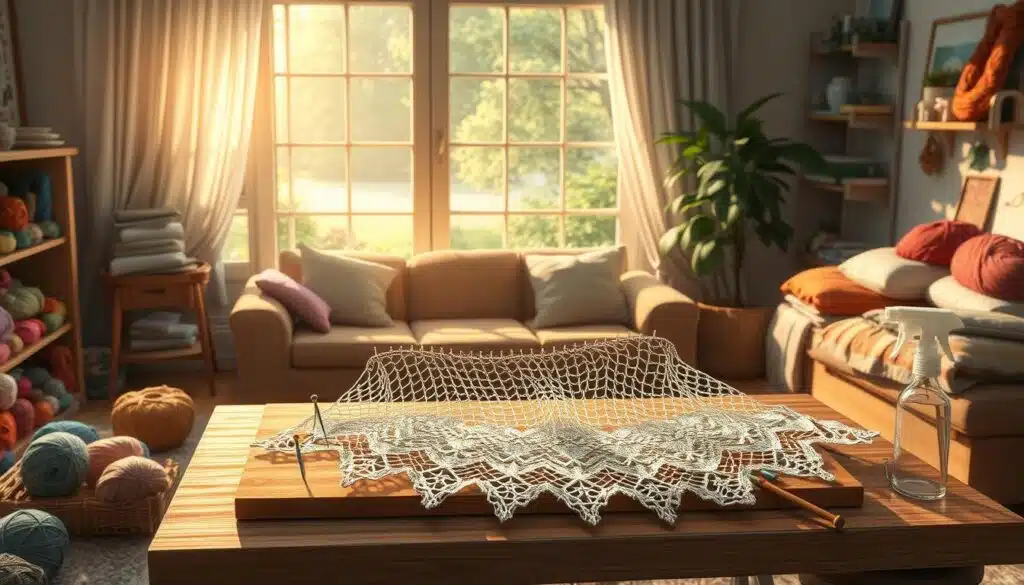
Natural fibers: wet or soak for best results
Wool and animal fibers bloom with water. To block wool, soak gently in cool water, squeeze without wringing, and pin to shape. Cotton and linen like firm shaping, so wet blocking gives crisp edges and opens lace. Silk and bamboo can gain softness and drape from a careful soak. Follow yarn care labels and use a swatch to check for growth or felting before you work on the full piece.
Synthetics: steam when you need quick shaping
Acrylic and polyester seldom respond to a full soak the way natural fibers do. If you need to block acrylic crochet, steam blocking is usually the safer route. Keep the iron or steamer about two inches above the fabric and avoid contact to prevent melting. Steam gives fast shaping but can be a fine line between a gentle reset and flattening texture permanently.
Blends and delicate fibers: always patch-test
When fibers are blended, behavior varies with spinning, twist, and fiber ratio. For blends and delicate yarns, you should block a swatch exactly as you plan to treat the finished item. This determines whether you will wet block vs steam or use a spritz method. If the swatch responds well, scale the method up and pin carefully to achieve even curves and consistent stitch definition.
For practical demos and extra tips on soak and steam techniques, check this resource for guidance on wet blocking vs steam and gentle spritz methods: how to block crochet.
| Fiber Type | Recommended Method | Why It Works |
|---|---|---|
| Wool, mohair | Wet/soak, gentle steam if needed | Opens stitches, allows bloom without felting when cool water used |
| Cotton, linen | Wet blocking | Holds shape, gives crisp edges for lace and garments |
| Silk, bamboo | Soak or light spritz | Enhances drape while avoiding stretch or shine loss |
| Acrylic, polyester | Steam blocking (no contact) | Quick shaping without risking water-driven distortion or limp results |
| Blends | Patch-test swatch, choose based on result | Behavior varies by blend ratio and spin |
Keep a swatch, a spray bottle, and patience within reach. If your project gets damp after a soak or a rainy day, it may need to be re-blocked. That is normal. With practice you’ll learn when to block wool crochet for lasting shape and when to gently block acrylic crochet for light adjustments.
Preparing Your Project: Swatches, Weaving Ends, and Measurements
Begin by treating a practice square as if it’s the real deal. Make a swatch, wash or steam it like you plan for the final piece, and note any changes. This helps you understand how your yarn behaves, so you’re not surprised when the full project does.
Measure your swatch before and after blocking. Keep both numbers. Patterns might give blocked gauge. If it’s unclear, reach out to the designer or use your own values for correct sizing.
Decide when to weave in loose ends. For everyday items and blankets, weave ends before blocking to keep them secure. For lacy pieces that stretch a lot, weave ends after blocking to match the final tension.
Think about your yarn’s character. Smooth yarns like Lion Brand Truboo are easier to stitch in after blocking. But yarns like Halo or single-ply yarns cling and are better woven in before blocking.
When pinning panels, aim for exact dimensions. Use a grid mat or tape measure as you pin. Mark chest width, hem depth, and sleeve cap height for accurate blocking.
Use a short checklist to keep decisions consistent:
- Make and block a swatch exactly like the final piece.
- Measure before and after to predict growth.
- Weave ends before blocking for most projects; delay for dramatic lace or slippery yarns when needed.
- Pin to measured dimensions to ensure blocking to size.
| Project Type | Weave Ends | Swatch Tip | Blocking Goal |
|---|---|---|---|
| Garments (panels) | Before blocking for seams; after if thread is slippery | Block swatch and measure shoulders and gauge | Block to size for accurate seaming |
| Shawls and lace | Often after blocking to match final tension | Soak and pin open to check lace behavior | Open motifs evenly and block to size for symmetry |
| Blankets and squares | Before blocking to stabilize joins | Block swatch to estimate square growth | Make each square uniform for neat joining |
| Accessories (hats, mitts) | Before blocking to hide ends under seams | Test stretch and rebound on a swatch | Ensure fit by blocking to final head or hand size |
Pinning Techniques to Get Crisp Edges and Even Curves
Good pinning can turn a square into a polished project. Start by gently shaping the piece with your palms. Then, use pins to lock in that shape. This method helps control tension and prevents stretching.
How to start pinning from the center out for squares and rectangles
Begin with a pin at the midpoint of each side for squares and rectangles. Work your way outward toward the corners. Place pins about 1 cm in from the edge to avoid dipping.
Angle pins away from the edge to keep the fabric in place. For lace, start in the side center and expand outward in small steps. This keeps stitches even.
Pinning circular pieces and flattening round motifs
For round motifs, pin at 12, 3, 6, and 9 o’clock first. Add pins halfway between those points to form eighths. Continue until the circle lies flat.
Use many pins for small rounds and more spacing for large doilies. Shape with your hands before pinning to protect delicate fibers.
Using many pins vs. wires to avoid peaks and dips
Many pins give sharp edges, perfect for motifs and short edges. Blocking combs, like those from LAMXD, speed up pinning and prevent peaks.
For long edges or shawls, use blocking wires for smooth lines. Thread the wire through edge stitches, then pin or hang it to set the curve without troughs.
| Situation | Best Approach | Why it Works |
|---|---|---|
| Small motifs and rounds | Many pins spaced evenly | Prevents warping and creates crisp, uniform edges |
| Long edges and shawls | Blocking wires threaded then pinned | Eliminates peaks and produces smooth, continuous lines |
| Lace and delicate fibers | Center-out pinning with incremental tension | Controls stretch and preserves stitch definition |
| Garments (hems, necklines) | Target pins on problem spots | Saves time and focuses shaping where fit matters |
| Speed pinning | Blocking combs (rapid placement) | Reduces pin count while avoiding peaks from single pins |
Advanced Tools and Shortcuts for Faster Blocking
Specialty tools can make your edges neater and save time. Use blocking wires for shawls and long edges to get smooth lines. Place the fabric on the wire at even intervals, then pin or hang it to hold tension while it dries.
The blocking comb is great if you dislike pinning one by one. Tools like LAMXD-style blocking combs help you secure borders quickly. They reduce pin peaks and speed up setup for multiple repeats.
For motif blankets, a peg blocking board keeps squares uniform. It has removable pegs for consistent corners and sides. But, drying may be slower in the center when pieces are stacked.
Choose wires that match your yarn weight. Thinner wires are best for lace and 4ply, while thicker ones work for aran and chunky. Bend lighter-gauge wires for crescent shawls or curved hems to avoid overstretching stitches.
Here are some fast blocking tips:
- Weave blocking wires through long edges before pinning to avoid uneven tension.
- Use blocking combs to set scallops or repeated points in one pass instead of many pins.
- Lay motifs on a peg blocking board so you can block several at once with uniform sizes.
- Substitute foam play mats or carpet tiles for commercial mats when you need extra surface area on a budget.
For a quick guide to soaking, steaming, and spritzing, along with tool suggestions, check provenancecraft’s blocking notes. The right tools can save hours on complex projects and improve fit and drape.
Common Blocking Mistakes and How to Avoid Them
Blocking can make a good project great, but mistakes can ruin it. Spotting common blocking mistakes early can keep your work safe. Here are quick tips to ensure your shawls, sweaters, and motifs look sharp and the right size.
Too much heat
Don’t hold a steam source too close to acrylic or delicate yarns. Steam can damage acrylic fibers, causing them to melt or distort. Use a handheld steamer at least two inches away and move it over the fabric. Avoid using a hot iron directly on crochet.
Handling during soak
Wringing or twisting crochet after soaking can lead to shape loss and felting. Instead, gently press to release bubbles, then roll the item in a towel to blot excess water. Aggressive agitation during soak can also ruin the texture, which is a problem with wool.
Pins and drying time
Using rusty pins can leave orange stains that are hard to remove. Choose rust-proof T-pins or knit blockers for wet blocking. Leave pieces pinned until they are fully dry; removing pins too soon can cause edges to relax and lose shape.
Test before you trust
Make a swatch and block it first. This helps you avoid blocking errors on a finished garment. A quick test shows how a fiber reacts to steam, soak, or tension before you block an entire project.
Seaming and order of operations
Block panels before seaming them. Blocking after assembly can hide uneven joins and make seams harder to match. If you must block again after seaming, be gentle and use minimal tension to preserve your work.
- Keep steam moving and distant to prevent steam damage acrylic.
- Never twist or wring crochet; gently blot and roll in towels.
- Use rust-proof pins and wait until pieces are completely dry.
- Test on a swatch to avoid blocking mistakes on finished items.
Maintaining Blocked Shape Over Time and After Washing
Blocking gives a lasting benefit, but it’s not forever. The time blocking lasts varies by fiber, stitch, and method. Wool and animal fibers keep their shape well due to natural memory. But acrylic and many synthetics may relax with washing and wear.
How permanent blocking is across different fibers
Wool holds its shape best, so your shawl might need less blocking over time. Cotton can lose crispness with wear. Acrylic often needs reshaping after washing; too much steam can change its texture and cause problems later.
Best care practices to reduce re-blocking frequency
To avoid frequent blocking, handle your items gently. Use a wool wash like Eucalan or Soak for delicate fibers and skip the spin cycle. Lay flat to dry and gently shape edges while damp to keep the shape.
When washing, think of it as starting a new block. Pin to shape while flat if you want exact dimensions. Gentle blocking often reduces the need for more work, but results vary by yarn and pattern.
Quick refresh methods: spot-cleaning and steaming between full blocks
Not every wash needs a full block. Spot-clean lightly soiled areas with mild detergent and cool water. Airing items outdoors on a dry day can freshen fibers without water.
For quick touch-ups, use a handheld steamer or a steam iron held a few inches away. Steaming sanitizes at about 175°F (80°C). Be careful with acrylic; light steam is safer than heavy, repeated steaming.
If you want a deeper read on when and how to repeat blocking, check out a practical guide: blocking explained.
- Tip: Handle seams and joins gently before blocking to avoid stretching panels out of alignment.
- Tip: Use pin layouts and wires to speed future refreshes and keep edges uniform.
- Tip: Store sweaters minimally washed; this cuts down on how long does blocking last problems caused by frequent laundering.
Project-Specific Blocking Tips
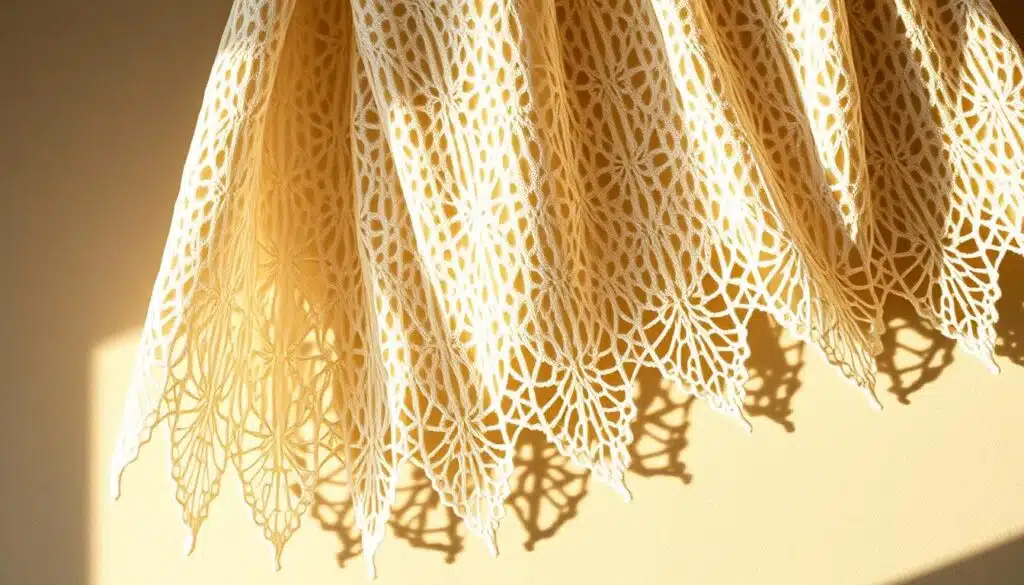
Each project needs a special touch when it comes to blocking. This approach saves time and ensures your work looks its best. Whether it’s garments, delicate shawls, or big blankets, the right technique makes all the difference.
Garments: Start by blocking each panel before sewing them together. This makes joining easier and keeps seams straight. After sewing, do a final block to smooth out any wrinkles.
When blocking, focus on areas like button bands and collars. But let sleeves and the body relax with fewer pins.
Shawls and lace: Begin blocking from the center out to show off lace patterns. Use blocking wires for straight edges and place pins as you shape each section. Make sure both sides are even and leave pins in until it’s dry.
For a quick fix, a steam pass can refresh the drape without a full wet block.
Blankets and motif projects: Block granny squares before sewing them together. This makes the seams neater. Use peg boards for batch blocking to keep sizes the same.
For big throws, block in sections or use a drying airer. This helps manage pinning and drying without cluttering your space.
When blocking garments, work in stages: panels, seams, then the whole garment. For shawl lace, use wires and many pins to shape edges. And for granny squares, aim for even tension and measurements for a flat join.
- Prep: weave in ends or secure them so pins don’t catch loose threads.
- Precision: use a tape measure to match sides and repeat measurements for consistency.
- Timing: leave pieces to dry fully; premature removal shifts shape.
Conclusion
You’ve learned how blocking makes crochet pieces look better. It fixes uneven stitches, improves how they hang, stops them from curling, and shapes them perfectly. This way, a good crochet piece becomes a great one.
Try blocking a small swatch first to see how it works. This simple test can help avoid surprises and boost your confidence.
Blocking isn’t scary. You can use water, spray, or steam, depending on the material and project. You might need just a towel, pins, and a foam mat. Remember, test with a swatch, protect delicate fibers, and use wires or many pins for sharp edges.
Use your handheld steamer for more than just shaping. It can also sanitize at safe temperatures. Hang your pieces outside to make them smell fresh. These tips make your crochet look professional with just a little effort. Start with a small project to see how easy it is.
FAQ
What is blocking and why should you bother?
Blocking is a way to shape crochet or knit fabric with water or steam. It makes your pieces look finished and professional. It evens out stitches, reduces curling, and improves drape.
Blocking also softens the fabric and helps shape panels before seaming. Think of it as the icing on a cake—optional for small accessories, but essential for garments, shawls, and lace.
How does blocking change my crochet fabric?
Blocking relaxes and evens stitches, opening up lace patterns. It reduces curling, making stitches appear uniform. It can slightly increase dimensions, but not make something smaller.
When is blocking essential versus optional?
Block lace, shawls, and garment panels for the best results. Block panels before seaming and give the whole garment a final block after assembly. Small accessories like beanies, mitts, or amigurumi often don’t need full blocking.
Use light spritzing or skip it if the fabric already behaves.
What blocking methods are there and how do I choose?
The main methods are soak/wet blocking, spritz/spray blocking, and steam blocking. Use soak for natural fibers like wool, silk, cotton, linen, and bamboo. It gets the best bloom and shaping.
Use spritz for quick, light adjustments. Use steam for acrylic or items that won’t respond to a soak—but keep the steamer at a safe distance to avoid melting or flattening fibers.
How do I do a proper soak block?
Fill a basin with lukewarm water and a no-rinse detergent or wool wash. Submerge the piece for 20–30 minutes (or up to a few hours). Then, gently squeeze out water—never twist.
Roll the piece in a towel and press to remove excess moisture. Lay flat on a blocking surface, shape with your hands and pins, and allow to dry completely before removing pins.
When should I use spritz blocking?
Spritz blocking is great for light adjustments, small distortions, or quick touch-ups. Lay the dry piece flat, spray both sides until damp, shape and pin as needed, and leave to dry. It’s fast and useful for garments that only need minor reshaping or for refreshing stitch definition.
How do I steam block safely?
Pin the piece to shape, then hover a handheld steamer or steam iron about 2 inches away—do not press the iron directly on the fabric. Add steam in short bursts, then leave the piece pinned until completely dry. For acrylic and synthetics, maintain distance and test on a swatch first to avoid “killing” the fiber.
What tools do I actually need for blocking?
Essentials include a blocking surface (foam blocking boards, interlocking mats, or household alternatives like a bed with a towel, yoga mat, or kids’ foam puzzle mats), rust-proof pins or T-pins, towels, and a spray bottle for spritzing. A handheld steamer and blocking wires are very helpful for shawls and frequent blockers. No-rinse detergents like Eucalan, Soak, or KnitIQ make soak-blocking easy.
What are budget-friendly alternatives for blocking boards?
Use interlocking foam floor mats, yoga mats, a towel on a bed, or even carpet as temporary surfaces. Peg boards can be improvised with sturdy cardboard and pushpins for small motifs, and cleaned spray bottles work fine for spritzing.
Which fibers respond best to which methods?
Natural animal and plant fibers (wool, silk, cotton, linen, bamboo) respond best to wet/soak blocking and will “bloom” and hold shape well—wool often keeps blocked memory. Cotton likes soak blocking but can grow. Acrylic and many polyesters usually do better with steam blocking; avoid soaking acrylic if you need it to revert later. Always test a swatch before committing.
Should I block a swatch first?
Yes. Block a swatch exactly as you plan to treat the finished item—measure before and after to predict how your project will grow. This tells you whether the pattern gauge refers to blocked or unblocked measurements and helps avoid surprises on the final piece.
Do I weave in ends before or after blocking?
It depends. Weaving in ends before blocking is recommended for some single-ply or halo yarns that stick and are hard to frog. For heavily blocked lace or pieces that stretch significantly, weaving ends after blocking can be easier. For garments, many prefer to block panels with ends woven in, then do a final block after assembly.
How do I measure and pin to size for garments and panels?
Use a blocking board with grid lines or a tape measure to pin to the exact dimensions called for in your pattern. Pin from the center of each side outward for rectangles and squares to avoid distortion. For hems and necklines, focus pins where shaping matters for easy seaming later.
What’s the best way to start pinning squares and rectangles?
Start pinning from the center of each side and work outward toward the corners. Place pins about 1 cm in from the edge and angle them away so the fabric won’t slip. This prevents dips and keeps edges straight for neat seaming.
How should I pin circular pieces and round motifs?
Pin at the cardinal points (12, 3, 6, 9 o’clock) first, then add pins halfway between to create quarters and eighths as needed. Add pins progressively until the motif lays flat and even. Use plenty of pins for crisp, round edges.
When should I use blocking wires instead of pins?
Use blocking wires for long straight edges—shawls, scarves, or blanket sides—to eliminate peaks and troughs. Weave the wire through the edge at regular intervals, then pin the wire to the board. Wires give a smoother finish than single pins for long edges.
What are blocking combs, knit blockers, and peg boards for?
Blocking combs and knit blockers speed up pinning by creating a long row of pins that reduce pin peaks. Peg boards let you peg multiple motifs to identical sizes quickly—excellent for large motif blankets where uniformity matters.
What common mistakes should I avoid?
Don’t apply direct heat or hold steam too close to acrylic or delicate fibers—this can melt or permanently alter texture. Never twist, wring, or agitate during a soak to avoid felting. Use rust-proof pins to prevent orange stains and always leave pieces pinned until fully dry.
How permanent is a blocked shape?
Permanence depends on fiber and method. Wool often retains blocked shape better; acrylic usually relaxes back and may need reshaping after washing. Repeated blocking can reduce future adjustment needs for some items, but expect to re-block after washing if you pinned to exact dimensions.
How can I reduce how often I need to re-block?
Hand-wash or spot-clean when possible, lay flat to dry, and use light steaming or finger-shaping between washes to refresh. Store items properly and follow yarn care instructions. For quick refreshes, a handheld steamer or airing outside will help without a full re-block.
Any safety tips for steam blocking?
Keep handheld steamers at least about 2 inches away from acrylic to avoid melting. Don’t press an iron onto fabric. Follow yarn label care instructions and always test steam or heat on a swatch if you’re unsure how the fiber reacts.
How should I block garments differently than shawls or blankets?
For garments, block individual panels before seaming to achieve straight edges and easier assembly; then do a whole-garment block after seaming. For shawls and lace, use wires and many pins to open lace and ensure symmetry. For blankets, block motifs or squares on pegged boards for uniform pieces that join cleanly.
How do I block a large blanket without drowning in pins?
Block in sections or peg motifs in batches to keep drying manageable. Use blocking wires along long edges where possible, and consider hanging large pieces on an indoor airer after pinning to save space. Work in stages to avoid uneven drying and an overwhelmed pinboard.
What detergents and supplies do you recommend?
Gentle no-rinse washes like Eucalan, Soak, or KnitIQ are excellent for soak-blocking. Use rust-proof T-pins or stainless steel pins, foam blocking mats or interlocking puzzle mats, blocking wires for long edges, and a clean spray bottle for spritzing. A handheld steamer is worth the investment if you block often.
Any final tips to get pro results quickly?
Make a swatch and block it the way you plan to treat the finished piece. Pin from the center out for rectangles, use wires for long edges, and over-pin a little to get sharp results. Be patient—leave pins until completely dry—and you’ll turn “cooked spaghetti” into crisp, professional-looking stitches.