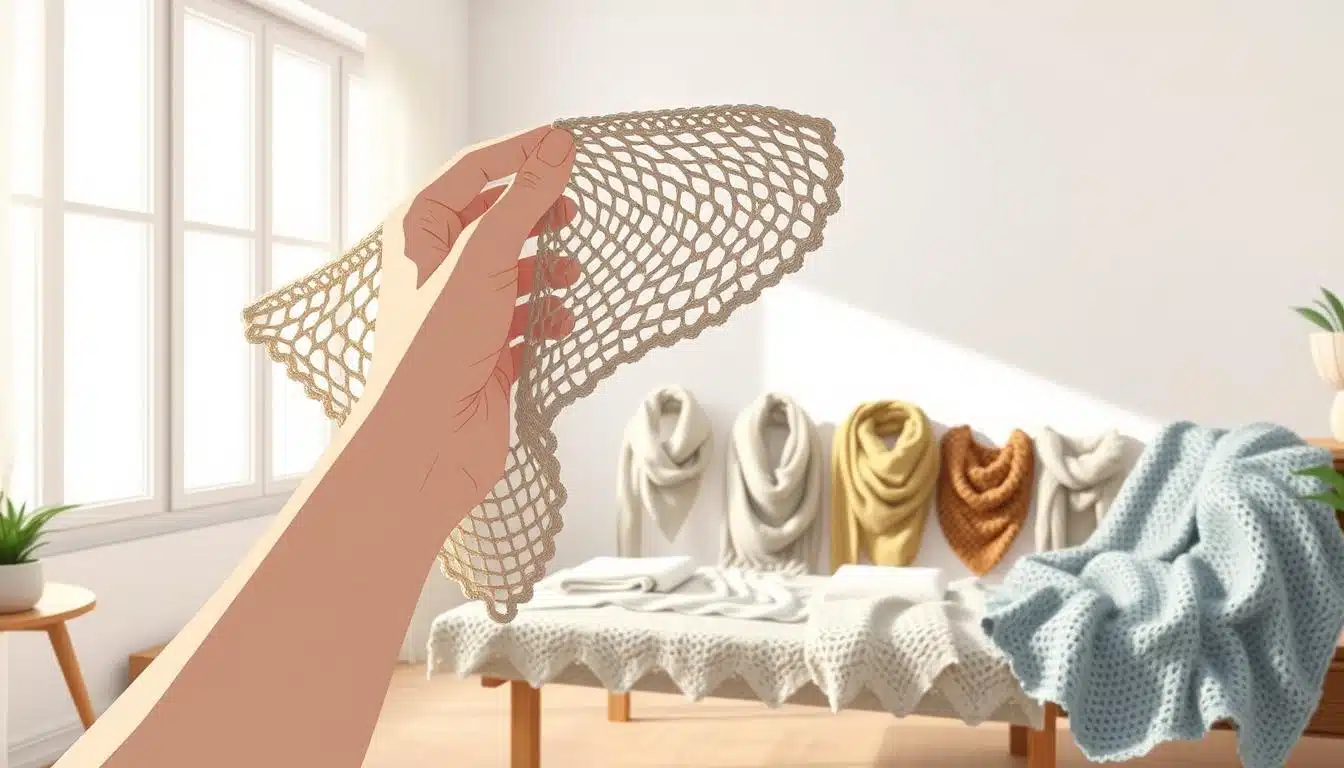
When you finish the last row, you might hold your breath. The secret to a pro finish is simple: blocking crochet. This step changes your work’s look by adding moisture and careful shaping. It sets size, opens lace, and smooths out uneven tension. It’s not magic, but it often feels like it.
Blocking uses three main methods: wet blocking, steam blocking, and spray blocking. These methods relax fibers and set the shape you want. Designers expect blocked gauge swatches. Blocking also helps garments drape correctly, so your sweater or shawl fits as imagined.
Think of blocking as essential crochet finishing. It can straighten edges, correct slanting stitches, and add width or length when allowed. But it won’t make stitches smaller or fix a missed stitch. For delicate fibers or tiny motifs, a gentle spray or careful steam is often better than a full soak.
If you want a quick guide and a practical DIY blocking board idea, visit a trusted how-to like the one at Make & Do Crew. They offer clear examples and sensible tools that fit small budgets.
Key Takeaways
- Blocking crochet sets shape and size by adding moisture and careful shaping.
- Use wet, steam, or spray blocking depending on fiber and project delicacy.
- Blocking is a critical step in crochet finishing for garments and lace.
- Blocking can open stitch definition and even out tension, but won’t fix skipped stitches.
- Designers’ gauges usually assume a blocked swatch, so block before measuring for fit.
Why blocking matters for crochet and how it transforms your work
Blocking is the secret step that turns a good crochet piece into a great one. It’s like the press and steam your stitches need to settle into their final shape. It relaxes fibers, evens tension, and helps your project reach the size and look the pattern promised.
What blocking does to fibers and stitch definition
When you wet, steam, or spray a piece, fibers relax and reorient. This produces cleaner stitch definition and lets lace open up so pattern motifs read clearly. Edges straighten, curled borders lie flat, and uneven tension smooths into a uniform surface.
Benefits for garments, lace, and home decor
Blocking benefits garments by helping them match gauge and drape as intended. Lace gets the delicate, airy look that makes motifs pop. For home decor, blocking gives crisp edges to blankets and pillow covers, making seams and joins neater and more professional.
When you can skip blocking and when it’s essential
You can skip blocking for many acrylic or polyester items that are already even and soft. This includes most amigurumi and some casual hats that will shape with wear. But, you must block lace, fitted garments, granny squares, and any piece where precise shaping matters. If the pattern tells you to, follow that instruction for the best result.
blocking crochet projects: the core techniques you need to know
Before you start with pins and steam, learn about the three main blocking methods. Each method is best for different yarns and looks. Choose the one that fits your project’s fiber and desired outcome.
Wet blocking: best uses and step-by-step process
Wet blocking is perfect for natural fibers like wool, cotton, and linen. It makes lace open up, evens out tension, and smooths out garments for lasting results.
To wet block, start by soaking your piece in lukewarm water with a no-rinse wash like Eucalan if you want. Soak for 10–30 minutes. Then, gently press out water without wringing.
Roll the piece in a towel to remove extra moisture. Lay it flat on a blocking mat or clean towel, and shape it to the right measurements. Use T-pins or blocking wires along the edges. Let it dry completely, which usually takes 24–48 hours.
Steam blocking: safety tips and when to prefer steam
Steam blocking is great for quick shape adjustments without soaking. Use a steam iron or garment steamer on low steam. Hold it 2–6 inches above the fabric. Never press the iron directly on synthetic yarns.
Steam each section briefly, then shape and pin. Let the piece cool and dry before removing pins. Steam blocking is good for quick reshaping or when a project might distort if soaked. Be careful with acrylic and polyester; high heat can melt fibers.
Spray blocking: quick method for delicate pieces
Spray blocking is ideal for fragile lace, tiny motifs, or hand-dyed skeins that could bleed if soaked. Use a fine mist of clean water or water mixed with a mild no-rinse wash. Mist until damp but not soaking, then shape and pin.
This method is gentler on novelty yarns and pieces with metallic threads. You’ll see less dramatic changes than with wet blocking. Be cautious with velour, chenille, and acrylic; spray lightly to avoid overstretching or flattening pile.
For a small blocking project, try making a set of coasters from quick and easy crochet coasters. Test each method to see the differences firsthand.
| Method | Best For | Key Steps | Notes |
|---|---|---|---|
| Wet blocking | Wool, cotton, linen, lace, shawls | Soak 10–30 min, towel roll, pin/shape, dry 24–48 hrs | Gives lasting shape; great for gauge and drape |
| Steam blocking | Quick reshaping; some acrylic when careful | Steam 2–6 in above fabric, shape & pin, cool before unpinning | Use low steam; avoid direct contact with synthetics |
| Spray blocking | Delicate items, hand-dyed, novelty yarns | Mist evenly until damp, shape & pin, let dry fully | Less change than wet blocking; gentle option |
Choosing the right blocking method for your yarn
Choosing the right blocking method saves time and keeps your stitches looking great. You need to match the technique to the fiber. This ensures your project gets the right shape and drape. Here are some tips to help you decide quickly.
Natural fibers like wool, cotton, and linen do well with wet blocking. When blocking wool, it blooms and settles into stitch definition after a gentle soak. Use lukewarm water with a mild wool wash and let it rest for 10–30 minutes. Then, shape to the pattern schematic while damp and pin it gently to set dimensions.
Blocking cotton requires less stretch than wool and takes longer to dry. Cotton benefits from careful shaping and firm pinning to hold edges flat. Linen will soften and relax with wet blocking, but it can look different when fully dry, so test a swatch first.
Synthetic fibers such as acrylic and polyester behave differently. Blocking acrylic can be tricky because it doesn’t absorb water well and can stretch when wet. If you attempt wet methods, dampen very lightly and avoid heavy pulling.
Steam blocking is an option for many synthetics but requires caution. Keep the iron or steamer well above the fabric to prevent melting. Hold steam at a safe distance and never press directly. Spray blocking is usually less effective on synthetics, so pick the gentlest approach that shapes your work.
Specialty yarns — hand-dyed skeins, novelty, chenille, and velvet-like yarns — ask for delicate handling. When blocking hand-dyed yarn, test for colorfastness first; some crocheters add a splash of vinegar to the soak for stubborn dyes, but always trial on a swatch.
Novelty yarns often dislike heavy moisture. Use light spray or gentle steam and avoid aggressive pinning that can crush texture. Treat each skein as its own case and adjust technique after testing a small sample.
Use this quick checklist when choosing a method: fiber type, dye stability, texture, and how the finished piece must drape. Matching those factors keeps your blocking efficient and your finished crochet looking professional.
Essential blocking tools and inexpensive DIY substitutes
You don’t need to empty your craft drawer to get great results. A few reliable blocking tools make shaping easier and keep edges crisp. If you prefer budget-friendly hacks, simple household items can fill in with clever setup and a steady hand.
Start with basics that pro knitters and crocheters trust. Foam blocking mats with grid lines help you hit schematic measurements. Rust-proof T-pins or stainless steel blocking pins resist staining and bend resistance while holding wet pieces in place. For lace, blocking wires give you a clean, straight edge and cut down on the number of pins you need.
Not everything must be bought. Kids’ foam play mats, yoga pads, or foam knee pads work well as a DIY blocking board for small items. Wooden shish kebab skewers or dowels make firm pin supports when inserted straight up and down every 1–1.5″ for long edges. A pegboard with evenly spaced holes can become a stable platform for peg-and-pin setups.
Measuring and care products round out your kit. Use a tape measure or yardstick for accurate shaping. A spray bottle that mists evenly keeps fibers damp without oversaturating. No-rinse detergents like Eucalan or gentle dish soap such as Dawn clean fibers without heavy rinsing. A handheld steamer or an iron with a steam setting gives you options for steam blocking when the yarn tolerates heat.
Below is a practical comparison to help you choose between purpose-made blocking supplies and DIY substitutes. Each row lists common uses and a quick tip to get the best results from that item.
| Item | Purpose | Pro tip |
|---|---|---|
| Foam blocking mats | Measure and pin wet or damp pieces | Choose puzzle-piece mats with grid lines for repeatable measurements |
| Rust-proof T-pins / blocking pins | Secure edges without staining | Insert pins at a slight angle for stronger hold on thicker yarns |
| Blocking wires | Create straight edges on shawls, lace, and blankets | Thread wire through edges, then pin the wire to the mat for clean lines |
| Blocking combs | Evenly space multiple pins for consistent scalloped edges | Work well on crochet lace and shell borders |
| Foam knee pads / play mats (DIY blocking board) | Low-cost surface for pinning and shaping | Join puzzle pieces for larger projects; mark grids with washable marker |
| Wooden skewers / dowels | Support and stack small motifs; make temporary pin arrays | Insert every 1–1.5″ for straight edges; remove when fully dry |
| Pegboard | Stable, customizable pin layout | Use brass or stainless hooks and place a towel underneath to protect surfaces |
| Spray bottle & no-rinse wash | Even dampening and gentle cleaning | Mix a light solution of Eucalan or a few drops of Dawn for washable fibers |
| Handheld steamer / iron | Steam blocking and final shaping | Keep steam at a safe distance from acrylic; test on a swatch first |
With this mix of blocking tools and smart DIY blocking board options, you can handle everything from tiny motifs to full shawls without breaking the bank. A few quality blocking supplies and household substitutions give you the flexibility to shape any project like a pro.
Step-by-step wet blocking guide you’ll actually enjoy
You want neat edges, even gauge, and relaxed stitches. Wet blocking can give you these if you follow simple steps. Just be patient and use a good towel. Here’s a friendly guide to keep your crochet happy.
Preparing the soak: water temperature and gentle washes
Fill a basin or sink with lukewarm water. Add a small amount of wool wash like Eucalan or a gentle detergent. Submerge the piece fully and press it down so fibers absorb moisture.
Let it rest for 10–30 minutes. Longer soaks are better for dense yarns and natural fibers.
Removing excess water safely and towel-rolling tips
Lift the project gently and squeeze without twisting or wringing. Lay the piece flat on a clean towel and roll it up with the crochet inside. Use the towel roll blocking method by stepping on the roll or pressing firmly to expel extra water.
Unroll and repeat with a dry towel if needed. Avoid heat at this stage. If you must speed things up, use a fan or a cool setting on a hairdryer, keeping distance from the yarn.
Pinning, shaping to schematic measurements, and drying times
Move the damp piece to a blocking mat or another dry towel. Shape to pattern measurements using a tape measure or yardstick and the grid lines on your mat. Use rust-proof T-pins, blocking wires, or blocking combs and place pins evenly around edges to keep points sharp and tension balanced.
Allow the item to dry completely before unpinning. Typical blocking drying time ranges from 24 to 48 hours depending on yarn thickness and room ventilation. Good airflow is more effective than direct heat or sunlight.
If you want extra guidance on materials and variations, see a practical primer on blocking techniques at blocking explained.
| Stage | Action | Tools | Typical time |
|---|---|---|---|
| Soak | Submerge in lukewarm water with gentle wash | Sink or basin, Eucalan or gentle detergent | 10–30 minutes |
| Remove excess water | Gently squeeze, towel roll and press | Clean towels, use towel roll blocking | 5–10 minutes |
| Pin and shape | Lay flat, pin to schematic, use wires for straight edges | Blocking mat, T-pins, blocking wires, tape measure | 10–30 minutes setup |
| Drying | Air dry with good ventilation until fully dry | Fan if needed, avoid direct heat | 24–48 hours (blocking drying time) |
Steam and spray blocking: shortcuts that look pro
Want pro results fast? Use steam or a mist to shape lace, clothes, and home items. Follow these easy steps for flat, even drying and ready assembly.
How to steam safely
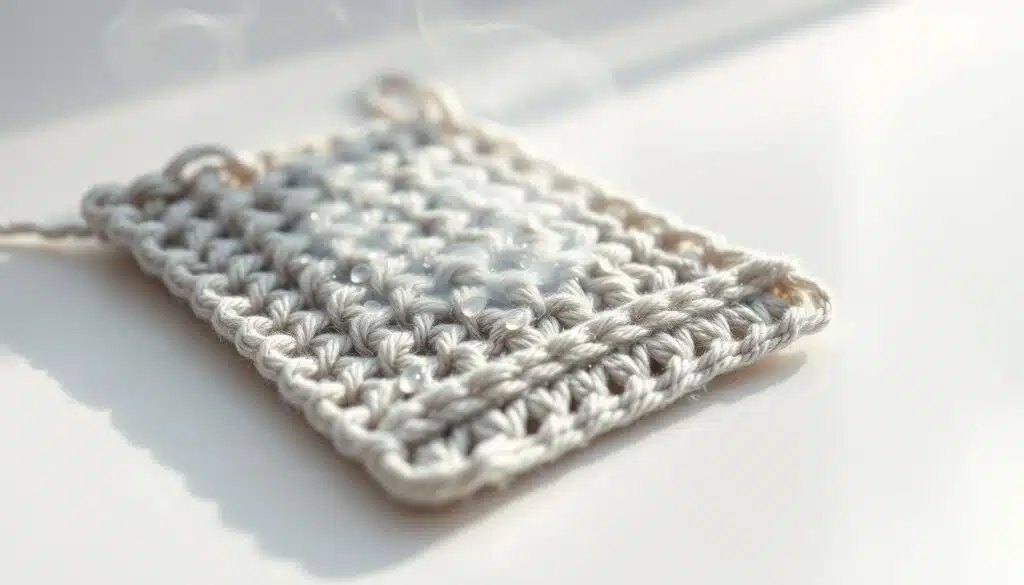
Use a garment steamer or iron on low steam. Keep it 2–6 inches away from your item. Never press the iron on acrylic or polyester. Move slowly and evenly, steaming each area for five seconds. Let it cool and dry while pinned to a mat.
Using a spray bottle
Choose a bottle for a fine mist, not a stream. Fill it with clean water or water with a bit of no-rinse wash. Mist until the yarn is damp, not wet. Be careful with synthetics as they stretch when wet.
Practical spray blocking tips
- Work in even strokes to avoid puddles and tension spots.
- Test the mist on a scrap to see how the yarn reacts.
- Use a yardstick and blocking wires for sharp, straight edges.
Finishing touches after steaming or spraying
Shape and pin to your grid or schematic right after treatment. Smooth edges with your fingers and add blocking wires or a comb for crisp lines. Let it dry fully overnight or longer before removing pins. Check each seam area and re-block small spots if needed.
Safety and results
Never let the steamer or iron touch acrylic directly. Keep a steady distance and constant motion to avoid heat damage. Follow these steps for clean stitch definition and reliable blocking finishing touches that make your project look pro.
Blocking motifs and granny squares for perfect joins
You want neat seams and a polished final piece. Achieving motif uniformity before joining saves time and frustration. When each square or hexagon matches the pattern schematic, your joins sit flat and your blanket or garment looks pro.
Why uniform pieces matter
Uniform motifs make assembly predictable. If one square is larger, edges ripple and seams pucker. Blocking granny squares to the same size keeps corners crisp and stitch rows aligned. The same rule applies when you block hexagons or triangles; consistent side lengths prevent mismatched edges.
Why motifs must be uniform before joining
Start by measuring a reference motif. Use that as your target for every piece. Motif uniformity helps you maintain gauge across the project. Pin or wire each motif to that reference size so your joins sit evenly when you seam or crochet them together.
Techniques for stacking and blocking multiple motifs at once
Save time by stacking motifs on a DIY pegboard or skewer rig. Mark the measured dimensions on a foam pad, insert wooden skewers or dowels, and slide the first motif onto the pegs. Spray or steam each layer lightly, leaving breathing space between designs for airflow.
Space pegs every 1–1.5 inches along long edges for firm shaping. Let everything dry fully before removing pins. This method lets you block motifs in batches so all pieces reach the same shape and tension.
Tips for blocking shapes: hexagons, triangles, and granny squares
For granny squares, submerge or mist, press out excess water gently, then stretch to the target size. Pin corners first, then pin midpoints on each side. Use T-pins or specialty knit blockers for stable edges.
For hexagons and triangles, measure width and height and place pins at even intervals along each side. Blocking wires work well for long straight edges on hexagons and give clean, even lines.
If you need a quick visual guide while you work, check this short demo for step-by-step help: granny square video.
When you block motifs together and aim for motif uniformity, your joins will look professional and durable. Treat blocking as part of assembly, not an optional extra, and your finished piece will thank you.
Blocking garments to get the right fit and drape
You want your sweater or cardigan to hang perfectly. Blocking changes how fabric looks and feels, making it fit better. Even small changes can make a big difference in how it looks on you.
Blocking gauge swatches before measuring
Always block gauge swatches before measuring. Patterns usually list gauge for blocked fabric. Unblocked swatches can be off.
Wet or steam the swatch, shape it right, let it dry, then measure. If your swatch doesn’t match the pattern, change your hook size or yarn. This prevents surprises when you put the pieces together.
Deciding whether to block pieces before or after seaming
Blocking before seaming lets you adjust individual parts. You can widen sleeves or lengthen a front panel. This makes joining easier.
Blocking after seaming smooths out seams. It makes them blend into the fabric. If seams look bumpy, a final block can fix it.
Your choice depends on the pattern and your patience. Some designers want you to block first. Many makers block at the end. Both methods work well if done right.
Common garment fixes achievable with blocking (uncurling, shaping)
Blocking can fix curled hems and edges. It can also align slanted stitches and soften stiff yarn. These fixes often solve fit problems without ripping back rows.
Blocking can’t fix missing or extra stitches. If construction errors change the stitch count, you must repair the piece. Use blocking to polish, not to hide major mistakes.
| Issue | What blocking does | When to block |
|---|---|---|
| Edges curl | Opens the fabric and flattens hems | Block individual pieces, repeat after assembly if needed |
| Uneven tension at joins | Blends seam ridges and evens appearance | Block after seaming for best result |
| Sleeves too narrow | Stretch and reshape to add a little width | Block pieces before seaming to test fit |
| Stiff fabric | Softens fibers and improves drape | Block with gentle soak or light steam |
| Pattern gauge mismatch | Reveals true blocked stitch and row counts | Always block gauge swatch before measuring |
Use blocking to fix crochet fit problems, not as a bandage. If you address gauge early and decide whether to block before seaming, you’ll save time and achieve a more professional finish.
Care after blocking: washing, re-blocking, and long-term shape memory
You spent hours making a shawl or sweater. Now, you want that crisp edge and drape to last. Good care after blocking keeps your work looking fresh and wearable for seasons.
How fibers behave after a wash depends on their makeup. Wool and cotton often show a blocked shape memory and will tend to settle back into the form you trained them into. Acrylic and many synthetics usually lose most of their set and ask for more attention after laundering.
When a piece returns from the wash, always lay it flat and reshape while damp. Gentle pressing with a towel to remove excess water speeds drying without stressing fibers. If you use steam on acrylic, test a scrap first to avoid melting or distortion.
Guidelines for re-blocking
- Reblocking crochet items as needed keeps edges neat and seams true. Do it after any wash that changes fit or drape.
- Match method to fiber: wet block wool, steam or spray-block acrylic with caution, and use light misting for delicate, hand-dyed yarns.
- Use mild, no-rinse washes like Eucalan or Soak. Skip hot water and strong agitation.
- Keep a small swatch handy. If you’re unsure how a yarn reacts, test before treating the whole garment.
Routine care tips
- Spot-clean when possible to limit full washes. That preserves blocked shape memory and color vibrancy.
- Air garments flat to dry in a well-ventilated area out of direct sunlight.
- If a garment shows stretching after wear, a quick light reblocking can restore structure in minutes.
How to store blocked garments
- Store blocked garments flat when you can. Folding along gentle natural lines helps maintain drape.
- Do not hang heavy crochet pieces; gravity will stretch them over time.
- For precious hand-dyed items, choose breathable cotton storage bags or acid-free tissue between folds to prevent abrasion and fading.
- If you expect long storage, plan to reblock crochet pieces before the next major use so shape and fit return to intent.
Simple habits after blocking extend the life of your work. Treat each piece by fiber type, reshape while damp, and store thoughtfully to keep your projects camera-ready and comfortable.
Creative problem solving: blocking without a board or tools
You can achieve professional-looking results without a blocking board. Start by planning carefully and keeping your workspace clean. Small projects and designs work well with simple setups if you handle them gently.
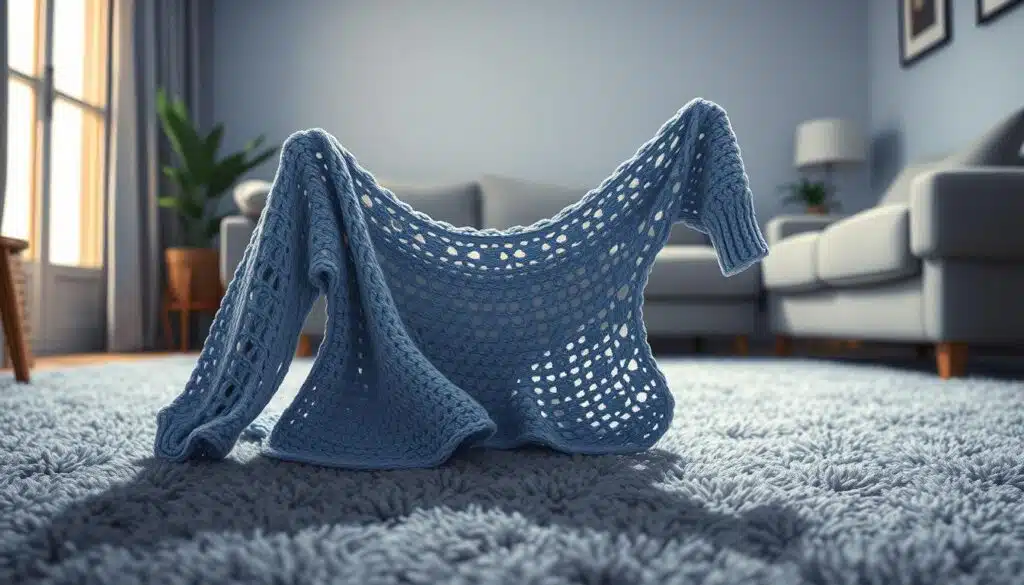
If you don’t have a blocking board, place a fresh towel on a flat surface. Shape your piece while it’s damp. For delicate lace, put a dry towel under the wet one to protect the surface. Keep pets and children away to ensure safety.
Using towels, carpet, and household surfaces safely
Wet block by smoothing your work on a towel and patting excess water with another towel. You can pin into carpet or a rug pad under the towel, but test a hidden corner first for color transfer. Avoid carpet in humid environments; moisture can warp fibers and stain floors.
When pinning on carpet, use rust-proof pins to prevent marks. If you’re concerned about the carpet, place a thin plastic sheet under the towel for extra protection. For quick fixes, lay flat over a cushioned chair or a cooled oven rack to encourage airflow.
DIY blocking board for small motifs with skewers and foam
Make a tiny DIY blocking board with a foam knee pad, pegboard, or dense styrofoam. Mark measurements with a pen, then insert wooden skewers or bamboo dowels every 1–1.5 inches along the edges. Slide motifs onto the skewers to hold shape.
Spritz each motif gently with a spray bottle or steam lightly from a distance. Then, stack with ventilation between layers while they dry. This setup is great for motifs you plan to join later; see a simple coaster pattern at easy square crochet coasters for practice pieces.
Precautions to protect floors, pets, and delicate yarns
Protect floors and furniture from moisture and pin punctures. Use a plastic layer or towel under wet items and choose rust-proof pins. Test hand-dyed yarns for colorfastness before soaking to avoid transfer to surfaces.
Keep the blocking area shaded and well-ventilated. Direct sun can fade fibers and create uneven drying. For blocking on carpet, limit exposure time and monitor humidity. If you notice damp spots on the carpet, lift the project and dry the area immediately to prevent mildew.
| Quick Setup | Best For | Notes on Blocking Safety |
|---|---|---|
| Towel on hardwood | Small garments, swatches | Protects floor; easy airflow |
| Pin to carpet under towel | Temporary motif pinning | Test for color transfer; use rust-proof pins |
| Foam knee pad + skewers (DIY blocking board) | Multiple small motifs | Great ventilation; stackable for space-saving |
| Chair or oven rack (cooled) | Flat blocking of narrow pieces | Good airflow; avoid heat and direct sun |
Conclusion
Blocking makes your crochet projects look professional. It evens out stitches and opens up lace. This makes sure your garments fit right.
There are different ways to block, like wet, steam, or spray. Always check the yarn label to choose the right method. A simple swatch can teach you how much your yarn will stretch.
You don’t need fancy tools to block. Household items like towels and surfaces work great. Some items, like amigurumi or heavy blankets, might not need blocking. For more tips, see this guide on blocking crochet garments.
Remember, blocking isn’t always permanent. Natural fibers hold their shape better than synthetic ones. You might need to re-block after washing. Use this summary to know when to pin and when to leave it alone. This way, you can finish your crochet projects like a pro every time.
FAQ
What is blocking and why should I bother?
Blocking is when you add moisture to crochet pieces to set their shape and size. It makes stitches even, opens up lace, and smooths out uneven tension. It also straightens edges and gives a professional look.
Designers often assume a blocked gauge. So, blocking can change the size and drape of swatches and garments. It’s essential for fit, lace definition, or crisp edges.
What are the main blocking methods and when do I use each?
There are three main methods: wet blocking, steam blocking, and spray blocking. Wet blocking is best for natural fibers like wool, cotton, and linen. It’s also good for lace and shawls.
Steam blocking is useful when you don’t want to fully saturate the fabric. It’s also good for some acrylic projects with caution. Spray blocking is quick and gentle for delicate or minimally-moisture-needed pieces.
Can I skip blocking for some projects?
Yes, you can skip blocking for many amigurumi, some blankets, and home decor. You can also skip it for certain beanies that will be stretched. Acrylic and polyester projects that are already even and soft might not need full blocking.
But, be cautious. Lace, garments, motifs, and patterns that specify blocking should be blocked for the best results.
How do natural fibers respond to blocking?
Natural fibers like wool, cotton, and linen absorb moisture and relax beautifully with wet blocking. Wool softens and “blooms.” Cotton and linen relax and can be shaped to measurements.
Natural fibers often retain some memory of the blocked shape. They will return to a similar position after washing if reshaped and dried flat.
What precautions should I take with synthetic yarns?
Synthetics like acrylic and polyester don’t absorb water like naturals. They can be damaged by direct heat. Use steam blocking cautiously—hold the iron or steamer well above the fabric, never press the iron onto acrylic, and move slowly.
Spray blocking may be less effective. If you wet acrylic, do so sparingly because it can overstretch and may not retain the blocked shape.
What about hand-dyed or novelty yarns?
For hand-dyed yarns, always test colorfastness on a swatch before wet blocking. Some crocheters add a splash of vinegar during the soak for suspect skeins. Novelty yarns, chenille, and velvet-like yarns need minimal moisture—prefer steam or light spray and test on a swatch first to avoid crushing pile or altering texture.
What tools do I need and can I improvise?
You’ll need a foam blocking mat, rust-proof T-pins or stainless pins, and blocking wires or combs for crisp edges. You’ll also want a tape measure, spray bottle, and a no-rinse wash like Eucalan or a gentle detergent.
Improvised tools work well: kids’ foam play mats, yoga mats, foam knee pads, pegboards, or styrofoam packaging make fine DIY blocking surfaces. Wooden skewers or dowels can serve for stacking motifs—insert them every 1–1.5″ along edges.
How do I wet block step-by-step?
Fill a basin with lukewarm water and a small amount of no-rinse wash or gentle detergent. Submerge the piece for 10–30 minutes. Gently press out excess water—do not wring.
Roll in a towel and press to remove more moisture. Transfer to a blocking mat, shape to schematic measurements using a tape measure or grid lines, and pin with T-pins or blocking wires. Let dry completely (often 24–48 hours) before unpinning.
What’s the safest way to remove excess water?
Gently squeeze—no twisting or wringing. Lay the piece flat on a clean towel, roll the towel with the crochet inside, and press or step on the roll to absorb water. Avoid heat; use a fan or cool hairdryer to speed drying if needed. This protects shape and prevents stretching or distortion.
How do I steam block safely?
Use a garment steamer or iron on low steam. Hold the device 2–6 inches above the fabric and never let the iron touch acrylic or polyester. Move slowly like you’re painting with steam—steam each small area for about five seconds, then shape and pin. Let the piece cool and dry fully before removing pins.
How should I spray block and what mix should I use?
Use a spray bottle that gives a diffused mist. Fill with clean water or water mixed with a small amount of no-rinse wash. Mist evenly until the yarn is damp but not soaked. For acrylic, spray very lightly to avoid overstretching. Then pin to shape and let dry completely.
How do I get crisp straight edges and points?
Blocking wires or blocking combs are your best friends for long straight edges and matching points. Thread the wire through the edge and pin the wire to the mat to create a clean line. Place pins at even intervals—don’t rely on a single pin at each corner; distribute tension across the fabric to prevent distortion.
Should I block motifs before joining?
Yes—blocking motifs to uniform dimensions makes joins tidy and prevents mismatched seams in blankets or garments. Blocking motifs the same way ensures consistent side lengths and even joins. You can stack and block multiples using skewers or pegboard methods to save space.
How do I block many motifs at once?
Make a DIY board with foam and inserted wooden skewers or use a pegboard. Mark your measurements, insert skewers every 1–1.5″ for long edges, slide motifs onto skewers, and steam or spray each layer. Stack with ventilation between motifs and allow complete drying before removing skewers.
Do I block gauge swatches?
Always block your gauge swatch before measuring. Many pattern gauges are given for blocked fabric. Blocking can open stitches and change tension, so measuring an unblocked swatch can give you the wrong hook size or yardage estimate.
Block before or after seaming—what’s best?
Both approaches have merit. Blocking individual pieces before seaming lets you shape and adjust size, making assembly easier. Blocking after seaming smooths bumps from joins and helps seams blend. Follow the pattern if it advises one way, and consider the garment’s needs—some makers block pieces first, then do a final light block after assembly.
What fixes can blocking actually achieve?
Blocking can uncurl edges, even out small tension differences, open lacework, soften stiff yarn, and slightly increase dimensions for a better fit. It won’t fix construction mistakes like missed or extra stitches, but it will polish overall appearance and drape.
How often should I re-block garments?
Re-block as needed—after washing or if a garment loses shape over time. Natural fibers often remember their blocked shape and may return to it after washing when reshaped and dried flat. Acrylic and some synthetics may require re-blocking more often because they hold less permanent shape.
How should I store blocked garments to preserve shape?
Store flat or folded carefully—avoid hanging heavy crocheted garments that can stretch. Keep hand-dyed or delicate items in breathable containers away from direct sunlight. If shape is critical, consider a quick re-block before major use after long storage.
Can I block without a board or fancy tools?
Yes. Use fresh towels on a flat surface for wet blocking. You can pin into carpet or a rug pad beneath a towel with caution, but watch for staining and humidity. Household items like yoga mats, foam play mats, or foam knee pads are excellent stand-ins for commercial blocking mats.
Any special precautions to protect floors, pets, and yarns?
Protect surfaces from moisture and pin punctures. Use rust-proof pins to avoid staining. Keep pets and children away while pieces dry. For hand-dyed yarns, test colorfastness and protect underlying surfaces from possible dye transfer. Avoid direct sunlight during drying to prevent fading.
Which products do you recommend for soaking and measuring?
Use a tape measure or yardstick for schematics. For washes, no-rinse products like Eucalan or Sewrella Yarn Wash are ideal; a small amount of Dawn can be used sparingly if needed. Choose spray bottles that give a mist and rust-proof pins for wet projects. A handheld steamer or iron with steam settings is handy for steam blocking.
My yarn stretched while wet—did I do something wrong?
Not necessarily. Some yarns—like acrylic—stretch more when wet. That’s why you should wet-block synthetics very lightly and prefer steam or spray methods. If a piece overstretches, re-shape gently and pin less aggressively, or test a swatch and adjust technique before blocking the whole project.
Will blocking fix uneven tension from my swatch?
Blocking can improve the appearance of uneven tension by relaxing fibers and evening stitches, but it won’t correct major tension issues or missing/extra stitches. For persistent gauge problems, adjust hook size and re-knit a swatch, then block that swatch to verify the final measurements.
How long should I leave a piece pinned to dry?
Typically 24–48 hours, depending on thickness, fiber, and humidity. Ensure the item is completely dry before unpinning to set the shape. Thicker projects or humid environments may need longer drying times.