
You’re about to learn how to make a sweater from simple stitches. This guide offers practical and witty tips. You’ll master top-down knitting and make seamless sweaters that fit well.
If you can make fingerless mitts, you can make a top-down pullover. Knit-from-the-top methods let you try it on as you go. You can adjust the fit and skip tedious seaming.
This article includes real patterns and resources. You’ll find ideas from Dovestone Hills and online tutorials. You’ll learn about raglan yoke construction, increase strategies, and more.
Ready to start? If you need a quick refresher, check out this primer on knitting a sweater: knitting a sweater.
Key Takeaways
- Top-down knitting makes seamless sweater knitting accessible and adjustable as you work.
- A raglan yoke simplifies shaping and gives predictable, flattering lines.
- Try-on-as-you-go lets you tune fit—no guesswork at the end.
- Resources like Dovestone Hills patterns and online tutorials show real implementations.
- You don’t need advanced skills: basic stitches and simple increases take you far.
Why You’ll Love Top-Down Knitting
Top-down knitting lets you skip the hassle of seaming and heavy finishing. It starts your garment clean and ready to wear at the neck. This method is perfect for those who love finishing projects quickly, thanks to its seamless construction.
Seamless construction advantages
Knitting from the neck down means your garment is almost ready to wear. Just add sleeves and a hem. Many knitters find raglan or circular yokes easy and flexible. Designers use various seamless methods, making it simple to offer many styles without extra finishing steps.
Try-on-as-you-go freedom
You can check the fit of the neck, yoke, and body length as you go. Use temporary needles or smaller circulars for quick fit checks. Designers and makers suggest visualizing the finished sweater and trying it on during shaping. This helps you reach your stitch count and silhouette goals.
Creative control and easy modification
Top-down construction gives you full control over your sweater. You can change necklines, patterns, and shaping. Try a crew neck, add a cowl, or insert cables. Practical notes make it easy to make knit modifications.
Designers who share their work and clear instructions boost confidence and sales. For a detailed guide, check out learn top-down sweater construction. It shows the benefits of top-down knitting in action.
Understanding Raglan Shoulders for Flattering Fit
Have you ever wondered why raglan shoulders look so good on sweaters? A raglan has a sleeve that goes up to the neck, with lines at four points. These lines are seen as you add increases, shaping the sweater’s fit on your shoulders.
Think of the raglan as a framework for a good fit. Each increase row adds eight stitches on both sides of all seams. This makes the sweater fit better around the bust and sleeves smoothly. Many knitters like top-down raglans because they can try it on as they go.
What a raglan is and how it shapes a sweater
A raglan has diagonal seams that connect the sleeve to the body at the collar. These seams affect how the sleeve fits and how free your shoulder feels. For more drape, space out the increase rows. For a sharper line, keep the increases close together.
Choosing increase types for different looks
The type of raglan increase you use changes the sweater’s look. Kfb creates a bold, classic bump. M1L and M1R make smooth, modern joins. Yarnovers with centered decreases add decorative holes.
Brands like Vivido and Adrift use these increases for different effects. Caelius combines a centered decrease with a yarnover for a unique look.
Adjusting the appearance of the raglan seam
Changing the knit stitches between increases changes the seam’s look. You can add pattern stitches or a centered decrease/YO combo at the seam. This extends a design into the body.
To test, try a small swatch or a short yoke from a pattern like the garter stitch sweater. This lets you see how your increases and spacing will look on real fabric before making the full sweater.
Top-down knitting
Start at the neck and work outward; that simple idea is why top-down knitting feels so freeing. You can try on as you go, tweak the yoke, and stop when the length feels right. The short-form top-down pattern below maps a compact path for a wearable sweater without a mountain of notes.
Short-form top-down pattern overview
Cast on your neck stitches and place raglan markers where sleeve joins will sit. Work the neck shaping and begin raglan increases, keeping the increase rhythm steady until you reach the target stitch counts for yoke, sleeves, and body. Slip sleeve stitches onto waste yarn or stitch holders, cast on a few underarm stitches if the pattern calls for them, then join the body in the round. Finish the body to the desired hem, return to the sleeves, and work them to cuff length.
Essential materials and needle choices
Pick circular needles that match your fabric goals. Use a longer 24″ circular needles for the neck and start of the yoke if you want roomy stitches. Switch to a second circular slightly shorter than your body circumference for the full yoke and body to avoid stretched joins. Choose DPNs, Magic Loop, or 16″–24″ circular needles for sleeves depending on your preferred small-circumference method.
Gather materials for top-down sweater projects with care: yarn with the yardage listed for your size, stitch markers, waste yarn, a tapestry needle, and a spare long circular for try-on checkpoints. Needle B sized for ribbing helps tidy necklines and cuffs.
Gauge and swatching tips for success
Swatching in the round gives the most reliable gauge for top-down knits. Work a large swatch using the intended yarn and circular needles, measure stitches and rows, then block the swatch and measure again. Use the blocked gauge for your calculations so the finished sweater behaves like your swatch.
If your gauge shifts after blocking, factor that change into try-on checkpoints. Steam or gently press the garment while trying it on to mimic final blockers. Accurate swatching saves time and keeps fit surprises out of your wardrobe.
| Stage | Needles | Key action | Tip |
|---|---|---|---|
| Neck and cast-on | 24″ circular or size for main gauge | Cast on neck stitches, work ribbing, start raglan increases | Use a marker to note RS and start of round |
| Yoke | Second circular slightly shorter than body circumference | Maintain increase pattern until target stitch counts | Try on with a spare long circular for fit checks |
| Sleeves | DPNs or preferred small-circ needles | Place sleeve stitches on waste yarn, work later in the round | Use matching needles for a consistent gauge |
| Body and finish | Second circular | Work to desired length, shape hem | Refer to blocked gauge for length calculations |
| Final checks | Spare circular or swatch needles | Try on, adjust length or stitch pattern if needed | Keep notes of needle sizes and blocked gauge |
Neck shaping and short rows for comfy necklines
For a neckline that fits well and feels good, start with neck depth. Measure how much you want the neckline to drop in inches. Then, multiply that by how many rows you want per inch to find the total rows needed.
For example, if you want a 3-inch drop at 5 rows per inch, you need 15 rows. Use tutorials to figure out when to join and where to add front cast-ons. This ensures the front and back are even.
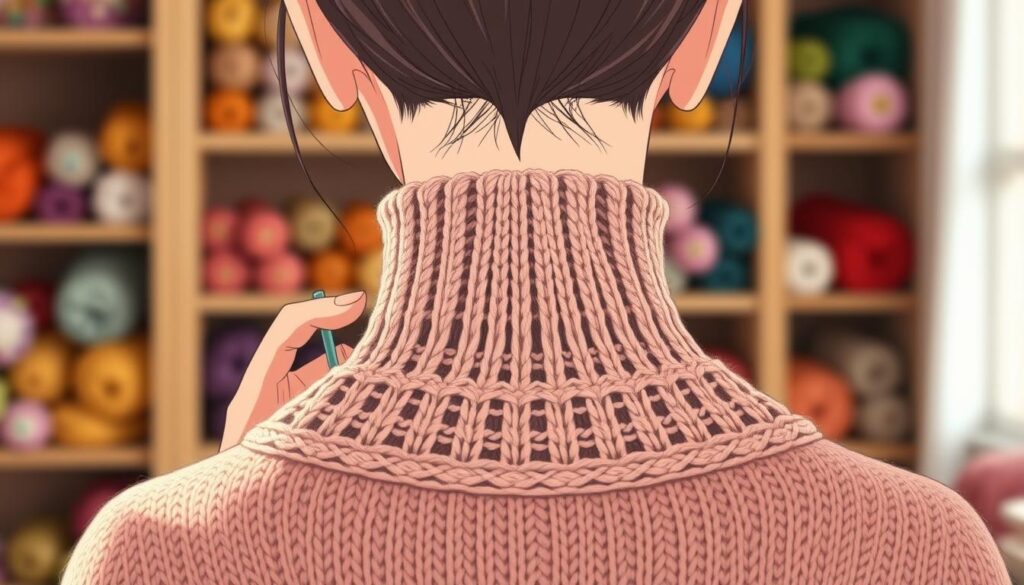
Short rows are key for a snug fit. They help raise the back neckline above the front. This keeps drafts out and makes the neckline cozy.
Neck depth planning and row math
First, decide on your neckline drop and convert it to rows. Then, mark where you’ll add front cast-ons or joins. Count carefully to ensure the front has the right number of stitches.
Short-row methods for back-of-neck shaping
Choose from wrap-and-turn, German short rows, or shadow wraps. Pick the one that fits your stitch pattern and tension. Work short rows across the back until it reaches the desired height.
Handling crew, V-neck, and cowl starts
For a crew start, increase on every other right-side row until you reach your depth. Then, count and cast off the center-front stitches to balance the front and back. For a V-neck top-down, work until the front and back stitches are equal. Place a BOR at center front and join the rounds for a neat V.
For a cowl neck top-down, start with cowl shaping and short rows. Then, switch to raglan increases. Patterns like Caelius use short rows in the cowl start for neat back-of-neck shaping. This creates a nice drape in front and coverage in back.
Rate of increase: balancing bust and sleeve growth
Knitting a top-down sweater means the yoke shapes both body and sleeves. It’s key to watch the growth rate to avoid unevenness. With a bit of math and planning, you can keep the fit just right and enjoy the process.
Why sleeve and bust growth differ
The torso grows faster than the upper arm. The chest often needs more stitches early, while sleeves stay slim near the shoulder. Using a single increase rate can lead to bulky sleeves or a tight chest. This is the main challenge in balancing growth.
Two-rate increase strategy
Designers at Dovestone Hills and Knit Picks use two-rate increases. They start with full raglan increases, then alternate. This pattern speeds up body growth while controlling sleeve size.
How to calculate and customize increases for your measurements
Start with stitch counts from a trusted guide like Fringe’s Target Stitch Counts. Multiply desired circumferences by stitches-per-inch to find targets. Subtract underarm cast-on stitches to get raglan targets.
Use row math to turn stitch targets into increase repeats. Count the stitches each round adds. Divide needed stitches by that gain to find repeats. Plan when to switch to two-rate increases to meet body and sleeve targets.
Adjust as you go by trying on the sweater. Add extra body-only increases for a better bust fit. If sleeves are loose, slow body increases or keep a full raglan round longer. This way, you can fine-tune the fit without redoing the whole yoke.
Keeping track: markers, charts, and mental maps
Keeping your top-down project organized saves time and grief. A few simple habits help you spot errors early and keep your shape balanced. Enjoy the try-on moments that make top-down knitting fun. Below, you’ll find practical steps for placing stitch markers, building an increase chart, and using try-on needles as reliable knitting checkpoints.
Placing stitch markers as your traffic cones
Think of stitch markers as tiny traffic cones. Place them where body meets sleeves and at any lace or cable panel edges. Use colored markers to mark the four raglan junctions—east/west for sleeves and north/south for body—so you can see sections at a glance.
Locking markers work well inside the body to highlight increases you must not miss. When you move between pattern repeats, the markers keep you honest and steady.
Making a simple increase chart
Make a down-and-dirty increase chart that lists the stitch counts for body and sleeves after each repeat. Write columns for body-left, sleeve-left, body-right, sleeve-right and one for total. Check off each repeat as you knit so you never lose track.
For projects like the Simple Swoncho, charting a 22-repeat increase sequence shows the final stitch count before you separate for sleeves. A quick table keeps math neat and reduces guesswork.
| Repeat # | Body Left | Sleeve Left | Body Right | Sleeve Right | Total Stitches |
|---|---|---|---|---|---|
| 0 | 40 | 20 | 40 | 20 | 120 |
| 5 | 50 | 25 | 50 | 25 | 150 |
| 11 | 62 | 31 | 62 | 31 | 186 |
| 22 | 94 | 47 | 94 | 47 | 282 |
Try-on needles and checkpoints
Carry a second long circular or a set of try-on needles. Slip sleeve stitches onto that spare cord to try the yoke on without disrupting your live rows. This makes fit checks quick and painless.
Set knitting checkpoints at regular intervals: after neck shaping, at mid-yoke, and before sleeve separation. When you pair those checkpoints with stitch markers and an increase chart, you get a clear map of progress and can fix fit issues early.
Underarm cast-on and neat joins
You’ve finished the yoke and see the gap for sleeve stitches. Choosing the right underarm cast-on and joins is key. A neat join makes the sweater wearable and keeps the shape clean. A sloppy one might make you regret your choice.
Backwards loop cast-on is appealing because it keeps you knitting in the same direction. It’s quick and creates a soft edge that works well with many yarns. Yet, the edge might not be stable after lots of wear.
Cable cast-on is done on the wrong side and makes a firmer, more durable join. It’s a favorite for designers who value durability. If you want a strong join for frequent washing, the cable cast-on is a good choice.
To save sleeve stitches, move them to waste yarn or a scrap needle when yoke increases end. Cast on underarm stitches between the held sleeve sections, then join the body. Later, return the held sleeve stitches, pick up stitches from the underarm cast-on, and place a marker at the center before joining in the round. This helps keep stitch order and avoid twisted sleeves.
Gaps at the corners can be annoying. When picking up stitches, grab one extra stitch in the small gap and then decrease it out on the next round. You can also use a tapestry needle to weave a tail through any tiny hole and close it invisibly.
If you prefer a step-by-step reminder, try this short checklist:
- Move sleeve stitches to waste yarn.
- Cast on underarm stitches using your chosen method.
- Join body and work until sleeve time.
- Return sleeve stitches, pick up stitches into each underarm cast-on, mark center, join in the round.
With practice, your underarm joins will look intentional. The choice between backwards loop cast-on and cable cast-on depends on your desired look and needed durability. When picking up stitches for sleeves, a small extra stitch and a timely decrease fix most holes without fuss.
Sleeve finishing: choices and tips for perfect cuffs
You’re almost at the finish line. Sleeve finishing is key to a sweater’s look. Focus on clean joins, tidy stitch counts, and a cuff that fits well.
Picking up sleeve stitches and joining in the round
When you return stitches from waste yarn, slide the needle through 3–4 stitches at a time. This removes waste without dropping live stitches. To close the underarm gap, pick up sleeve stitches one-for-one along the cast-on edge.
Grab a single stitch from the body at each underarm edge. Place a marker at the center underarm, then join to work in the round. Work decreases or shaping as your pattern asks, and end with your chosen cuff treatment.
For a practical walkthrough, read the clear step-by-step on beginning a top-down sleeve at beginning a top‑down sleeve.
Flat sleeves with basting stitches
If you prefer flat sleeves, plan for basting stitches in the yoke. Add one centered basting stitch per raglan and create selvage stitches at the sides when you separate the body and sleeves. Those extra yoke stitches become neat selvages for flat knitting.
After knitting the sleeve flat, remove the basting and use mattress stitch along those lines for a tidy seam. Using basting stitches keeps the shoulder line crisp and helps avoid puckering at the underarm.
Cuff bind-offs and elastic underarm options
Choose a cuff bind-off that matches your desired elasticity. A standard bind-off works for roomy cuffs. For fitted cuffs, use a stretchy option such as a tubular bind-off or a sewn bind-off for reliable give.
To stabilize the underarm, consider a reinforced cast-on like the cable cast-on or a firm cast-on at separation. That added structure helps the join resist stretching and keeps the cuff snug where you need it.
Quick reference:
| Finish | When to use | Notes |
|---|---|---|
| Standard bind-off | Casual, relaxed cuffs | Simple, fast, suits many yarns |
| Tubular or sewn bind-off | Fitted, elastic cuffs | Professional look, extra stretch |
| Reinforced CO at underarm | Heavy wear areas | Prevents sagging and stabilizes seam |
Want more finishing techniques for neat edges and durable joins? Check the practical finishing tips at knitting finishing techniques.
Pattern modifications and on-the-fly decisions
You get to steer your sweater as it grows. Try-on-as-you-go makes on-the-fly knitting decisions simple. Pause, check proportions, then choose a hem or length that flatters your shape.
Altering body length and hem treatments
When the sweater fits the way you want, work on hem treatments. Ribbing, folded hems, or decorative edging sit best after you reach the desired length. Trying on before finishing trims avoids surprises and saves frogging time.
Incorporating stitch patterns or cables in the yoke
If you want cables or small stitch panels in the yoke, set them up so increases don’t interrupt the motif. Use markers to protect fixed-pattern panels. A clear yoke stitch pattern lets texture sit cleanly across raglan lines.
Continuing a decorative raglan seam into the body
You can carry a decorative raglan down the body by planning centered decreases, yarnovers, or a narrow motif. Balance the increase and decrease math so the motif reads once raglan shaping ends. This keeps the decorative raglan as a deliberate design thread, not an afterthought.
Keep notes as you go. Small charts or a quick photo help reproduce the same tweak later. Pattern modifications look best when planned just enough to keep the sweater unique without breaking the overall fit.
Tools, workshops, and resources to level up
Ready to sharpen your skills? Start with a tidy kit and a plan. The right knitting tools make top-down projects feel effortless. Mix essential gear with a few niceties and you’ll save time and frustration while you learn new techniques.
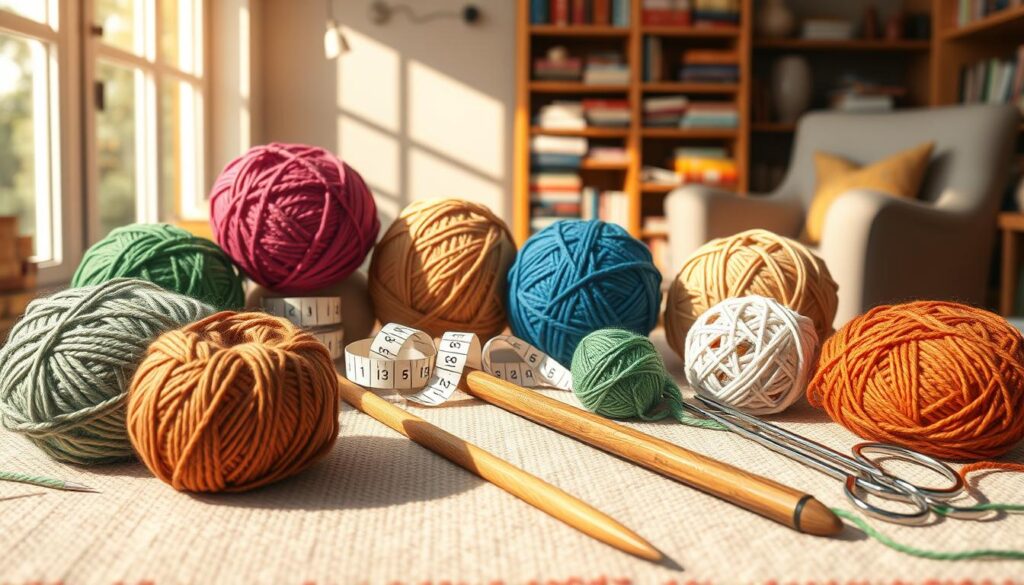
- Yarn suitable for a sweater in your chosen gauge.
- Circular needles in two sizes and lengths for body and ribbing.
- Stitch markers, waste yarn for provisional cast-ons, and a tapestry needle.
- DPNs or your preferred small-circle method for cuffs.
Optional niceties
- Try-on needles for checkpoints and locking stitch markers to stop runaway stitches.
- An extra circular if you rely on magic-loop only methods.
- Blocking tools and a bullet journal for tracking increases and notes, as Kay uses during pattern tweaks.
Books and pattern sources
Reach for classic and contemporary reference. Barbara Walker’s Knitting from the Top gives historical context for top-down construction. Fringe offers updated short-form and full top-down tutorials that match modern improv approaches. Look to pattern collections such as Dovestone Hills and individual releases tied to yarns like baa ram ewe’s Dovestone DK. MDK Field Guide No. 18 includes approachable designs such as the Simple Swoncho for practice.
Online learning and community
Top-down tutorials are abundant across platforms. Ravelry remains indispensable for pattern sources and project pages where you can read notes from knitters who finished the same design. Teachable workshops offer multi-week, instructor-led classes for fit work and focused projects. Join an online knit-along to get feedback and momentum.
Workshops and knit-alongs
Choose guided study when you need structure. Teachable workshops and multi-week masterclasses help you nail fit and technique with teacher feedback. Fringe and Friends style KALs give community energy and real-time problem solving. Tag your projects with hashtags like #fringeandfriendsKAL2016 when sharing on social platforms to connect with peers.
| Resource type | Best for | Quick tip |
|---|---|---|
| Knitting tools | Every top-down sweater | Prioritize circulars in two sizes and good stitch markers. |
| Books | Historical methods and deep technique | Start with Barbara Walker for top-down theory. |
| Top-down tutorials | Step-by-step learning | Pick a short-form tutorial, then try a full improv after one project. |
| Pattern sources | Designs and gauge-matched projects | Search pattern notes on Ravelry to avoid surprises. |
| Teachable workshops | Guided fit and refinement | Choose multi-week classes for personalized feedback. |
| Knitting workshops / KALs | Motivation and community troubleshooting | Use KALs to practice consistency and document progress. |
Conclusion
Top-down knitting offers seamless construction and the chance to try on your work as you go. It also lets you be creative. Once you grasp raglan mechanics and your favorite increase methods, you can shape a sweater that fits perfectly.
Start by planning a bit and swatching well. Trust the process, and you’ll be on your way. This approach makes knitting a sweater simple.
Before you start, use a large swatch and check your gauge. Charting increases and using stitch markers can save you trouble. Try making a simple increase chart and experiment with different increases to balance your sweater.
For neat joins, choose a firm underarm cast-on. Use techniques that minimize holes to make your seams look intentional.
Want to try something new? Knit a short improv top-down project or follow a Fringe tutorial. Then, compare your work with patterns from Dovestone Hills or yarns from baa ram ewe. For a focused guide, check out this short-read on improvisation: how to improvise a top-down sweater.
Now, get your needles ready. A bit of planning, the right tools, and a few tracked increases will help you knit better sweaters. Top-down sweaters are within reach, and with practice, you’ll be knitting pieces you love to wear.
FAQ
What makes top-down knitting worth trying if I can already knit small accessories?
Top-down knitting is surprisingly easy. If you can make fingerless mitts, you can make a sweater. It uses the same basics: cast-on, knit, purl, increases, and decreases. You get seamless construction, try-on-as-you-go fit checks, and easy on-the-fly modifications.
Patterns and tutorials like Fringe’s top-down improv and Dovestone Hills examples show real-world projects you can replicate with confidence.
How does seamless construction actually help my finished sweater?
Seamless construction means fewer seams. This means less time spent darning and more time wearing your sweater. Seamless raglans are easy to adapt and produce cleaner shoulders and a smoother silhouette.
Dovestone Hills and other designers demonstrate multiple seamless methods you can use to suit yarn and style.
What is try-on-as-you-go and why should I care?
Try-on-as-you-go means you can slip your yoke or body onto a second circular or try-on needles at checkpoints to check fit before you commit. This saves frogging later. Tutorials from Fringe and Simple Swoncho walk you through checkpoints and visualizing target stitch counts so you hit the right fit—Kay’s methodical charts are a great example.
How much creative control will I actually have with top-down?
You’ll have plenty of creative control. You can swap necklines (crew, V, cowl), add cables or lace, change increase spacing, and carry decorative raglan seams into the body. Dovestone Hills patterns like Caelius show how a decorative raglan can become a body feature.
Pro tip: knit a large blocked swatch and use blocked gauge for accurate pattern tweaks.
What exactly is a raglan and how does it shape the sweater?
A raglan shoulder extends the sleeve up into the neck by creating four seam lines—front, back, and both sleeve sides—using increases. In top-down raglan you typically increase on both sides of each raglan marker, which adds eight stitches per increase round when you increase on both sides of the four seams.
Which increase should I use on the raglan lines for the look I want?
Choose the increase to suit the look: kfb is simple and slightly visible, M1L/M1R gives mirrored, tidy joins, and yarnovers are friendlier to lace. Dovestone Hills patterns illustrate different choices—Vivido favors M1L/M1R; Adrift uses kfb; Caelius blends a centered decrease with a YO for a decorative seam.
How can I change how prominent the raglan seam looks?
Adjust the number of plain knit stitches between increases to widen or narrow the visible seam. For a decorative seam, use centered decreases plus a yarn over or repeat a small motif so the line can continue into the body once raglan increases stop.
Can you give a short sequence for a top-down improv sweater?
Yes. Cast on neck stitches, place raglan markers, work neck shaping and increases until you hit target stitch counts, separate sleeves onto waste yarn, cast on underarm stitches, then work the body and sleeves to length. This mirrors the short-form improv approach in modern top-down tutorials.
What needles and tools do I need to start?
Essentials: a long circular (24″ or length suited to gauge) for the neck/yoke, a second circular slightly shorter than the intended body circumference for the body, DPNs or preferred small-circ method for sleeves, stitch markers, waste yarn, and a tapestry needle. Optional niceties: try-on needles, locking markers, extra circular for magic loop knitters, and blocking tools.
How should I swatch and which gauge should I use for calculations?
Knit a large in-the-round swatch in your chosen stitch pattern, block it, then measure stitch and row gauge. Use the blocked gauge for all math—blocked gauge reflects the finished fabric most accurately. If blocking shifts gauge significantly, factor that into fit and try-on checkpoints.
How do I plan neck depth and calculate rows for shaping?
Decide the drop (in inches) you want from back to front, then multiply by rows per inch to get the number of rows (e.g., 3″ × 5 rows/in = 15 rows). Use target stitch count methods described in the Fringe tutorial to know when to join in the round and where to add front cast-ons so front and back match.
When should I use short rows for the back of the neck?
Use short rows if you want a higher back neckline for comfort. Add them across the back section before you finish neck shaping. Place short rows where they’ll be hidden in patterning if you prefer, as Caelius does when starting with a cowl and shaping the back with short rows.
Are there special instructions for crew, V-neck, or cowl starts?
Yes. For a crew neck, increase every other right-side row until desired depth, then CO front stitches to balance before joining. For a V-neck, work until front stitches total the desired number and place the BOR at center front before joining. For a cowl start, shape the cowl or work short rows first, then continue with raglan increases.
Why do sleeve and bust growth often feel unbalanced in raglan yokes?
Traditional one-rate raglan increases add the same number of stitches to sleeves and body, which can make sleeves grow too fast compared to bust circumference—especiall for larger-busted knitters. The result is bulky sleeve caps and a poor shoulder fit.
What is a two-rate increase strategy and how does it fix fit issues?
Two-rate increases alternate rounds so that some increases favor the body while others increase sleeves. Start with full raglan increases, then switch to a rhythm where body-only increases alternate with full raglan rounds. Designers use this to balance bust and sleeve growth and achieve better fit at yoke bottom.
How do I calculate increases for my measurements?
Compute your target stitch counts by multiplying desired circumferences by stitches per inch to get front, back, and sleeve targets. Subtract underarm CO stitches (F) to find raglan targets. Use row math to plan how many increase repeats you need and when to change your increase rhythm to match your measurements.
How should I place markers so I don’t lose my place?
Use markers to separate sleeves and body sections and to mark decorative panels. Colored or locking markers work well. The Simple Swoncho approach—using distinct markers for each quadrant—helps you visualize increases and keep symmetry during the yoke.
What’s the easiest way to track increases as I knit?
Make a simple increase chart listing how many stitches each section has after each repeat and check off repeats as you finish them. Kay’s charting method for the Simple Swoncho is a useful model for keeping a long sequence of repeats accurate.
What are try-on needles and when should I use them?
Try-on needles are a second long circular (or a smaller circular) inserted temporarily so you can slip the yoke on and check fit without disrupting progress. Use them at yoke checkpoints to confirm target counts and silhouette before you separate sleeves.
Which underarm cast-on should I use: backwards loop or cable cast-on?
Backwards loop CO is quick and lets you continue in the same direction, but it’s less sturdy. Cable cast-on worked on the wrong side and joined produces a firmer underarm—preferred for durability. Choose based on the level of stability you want at the underarm.
How do I handle sleeve stitches and join the body cleanly?
After finishing yoke increases, transfer sleeve stitches to waste yarn, CO underarm stitches (F), and continue the body. Later, return sleeve stitches to your needles, pick up one stitch for each underarm CO to close gaps, place a marker at the center underarm, and join in the round to work sleeves.
How can I minimize holes where sleeves meet the armhole?
To reduce underarm gaps, pick up an extra stitch in the gap and then decrease it away on the next round, or use the Fringe tutorial’s recommendation: pick up one extra stitch and decrease the following round. You can also close small holes with a tapestry-needle tail if needed.
Can I knit flat sleeves instead of in the round?
Yes. Use basting stitches in the yoke (one centered basting stitch per raglan and selvage stitches at sides) so you can give extra yoke stitches to sleeves at separation. Knit sleeves flat using those selvage stitches and mattress-stitch seam along basting lines for a neat finish.
What bind-off should I use for cuffs to keep them stretchy?
For fitted cuffs, choose a stretchy bind-off like tubular or sewn bind-off. Standard bind-off is fine for relaxed cuffs. For underarm durability, consider a firm CO (cable cast-on) or add a reinforced pick-up to stabilize the join.
How do I alter body length and decide on hem treatments mid-project?
Try on the body as you go to find your preferred length, then stop and work your hem treatment—ribbing, folded hem, or decorative edging—after you’ve confirmed length with a try-on. You can adjust easily because you’re working top-down and can see the drape before finishing.
Can I add cables or stitch patterns in the yoke without breaking increases?
Yes. Place markers around fixed-pattern panels and avoid doing raglan increases inside those panels. You can carry cables or garter panels across the yoke; just plan increase spacing so patterning remains intact. Dovestone Hills and Simple Swoncho show how to combine patterning with raglan shaping.
How do I continue a decorative raglan seam into the body?
Use centered decreases plus yarnovers or a repeating motif at each raglan line so the element can continue after increases stop. Caelius demonstrates a centered decrease/YO combo that creates a seam motif you can carry down the body.
What tools and supplies are truly essential for a top-down sweater?
Essentials: yarn in the required yardage, circular needles in two sizes/lengths, stitch markers, waste yarn, tapestry needle, and DPNs or your preferred small-circ method. Optional: try-on needles, locking markers, extra circular for magic loop knitters, blocking supplies, and a notebook or bullet journal for tracking charts.
Which books, tutorials, and patterns should I consult to learn more?
Start with Barbara Walker’s historical work on top-down methods, read Fringe’s updated top-down tutorial and improv pattern, explore Dovestone Hills pattern collection tied to baa ram ewe’s Dovestone DK yarn for real project examples, and check out the Simple Swoncho pattern in MDK Field Guide No. 18 for cable-based yoke ideas.
Are there workshops or knit-alongs that help with fit and technique?
Yes. Teachable workshops, multi-week masterclasses, and online knit-alongs—like Fringe and Friends KAL—offer guided projects and feedback. Ravelry project pages and social hashtags (for example, #fringeandfriendsKAL2016) are great for community help and inspiration.
What are the most important next steps to actually get a top-down sweater done?
Knit a large blocked swatch and use blocked gauge for math. Make a simple increase chart and place clear markers. Experiment with two-rate increases if you need better bust/sleeve balance. Choose a firm underarm cast-on, plan neck shaping and short rows if needed, and use try-on needles at yoke checkpoints. Then cast on and knit with confidence.