
Feeling overwhelmed? Crochet is a simple, affordable way to relax. This article will explore how crochet can improve your mental health. You’ll learn about the science behind it, get practical tips, and find out what materials to use.
Discover how crochet can lower stress hormones and improve your mood. You’ll see real-life examples and expert advice on choosing the right yarn. By the end, you’ll know how to make crochet a part of your daily routine for better mental health.
This guide is fun and easy to follow. You’ll learn how crochet can make you more mindful, boost your mood, and even improve your memory. Plus, you’ll find out how to start small and see quick results.
Key Takeaways
- Crochet for mental health can reduce stress and promote calm through simple, repetitive motion.
- Crochet stress relief combines neuroscience and lived experience to explain why crafting helps.
- Yarn therapy and therapeutic crochet support emotional regulation and cognitive resilience.
- Practical tips and material choices make it easy to begin a soothing crochet routine.
- This article blends research, survey data by Emilia Griffin, and practitioner guidance for usable advice.
Why Crochet Calms: The Neuroscience Behind the Hook
When you pick up a hook, your hands start talking to your brain. The science of crochet shows how simple stitches can calm you down. This calmness helps your mind and body relax.
How repetitive motions affect stress hormones
Hand movements create a soothing rhythm for your brain. It’s like a steady beat that lowers stress signals. Studies show that this can reduce stress hormones and make you breathe easier.
Repetition also boosts serotonin, which helps fight anxiety. This calm feeling makes it easier to relax and focus on your craft.
Dopamine and the pleasure loop from crafting
Every row you finish gives you a sense of accomplishment. This feeling releases dopamine, making you want to keep crafting. Many crafters say they feel happier after making something.
Small achievements, like finishing a pattern, motivate you to keep going. These moments of success make crafting both soothing and fulfilling.
Flow state and the relaxation-response explained
Getting lost in your craft is a sign of flow state. This state is similar to meditation, where you focus and relax. It’s a way to quiet your mind and find calm.
Flow requires focus, clear goals, and a sense of challenge. The rhythm of crochet helps you enter this state, making you feel more at peace. Scientists are studying how crochet affects the brain to understand its calming effects.
To learn more about how crochet changes the brain and eases anxiety, check out this summary on crochet and brain health here and the benefits of crafting here.
Crochet for mental health
When you pick up a hook and yarn, something changes. Surveys and small studies suggest quick mood boosts and less anxiety after crafting. This part explores the evidence without making big claims, showing what we know and what’s left to discover.
Evidence from surveys and small studies
Self-report surveys often show improved mood and calm after crocheting. Small studies report immediate anxiety drops and short-term wellbeing boosts. These findings come from volunteer groups, showing what participants felt, not what caused it.
Clinical measures are rare. A few pilot trials used brief questionnaires before and after sessions. They found consistent, short-lived benefits. These results are a good start for craft therapy research but remind us to be cautious.
How crochet compares to other creative activities
Crochet, like painting, music, and dance, promotes flow and dopamine release. Its unique loops and forgiving stitches offer a soothing feedback loop.
Comparing knitting and crochet, both lower stress. But crochet’s single-hook mechanics and quick progress on small motifs offer immediate rewards. This might be important if you like quick results and a tactile rhythm.
For a practical look at related benefits, check out a guide on knitting and mental health that links craft habits to mood and.
Limitations of current research and what we need to study
Most data come from anecdotes, cross-sectional surveys, or small trials. This creates gaps in research, like understanding lasting effects on depression, anxiety, or dementia risk.
To strengthen evidence, we need randomized controlled trials, long-term cohort studies, and objective measures like cortisol sampling or brain imaging tied to crocheting. Until then, crochet studies hint at benefits but don’t prove them.
Mindfulness and Crochet: Turning Stitches into Presence
When you pick up your hook, you’re not just making something. You’re practicing mindfulness. This quiet activity helps you focus on the moment, slowing down your thoughts and calming your body. It’s a chance to explore meditation through crochet without feeling rushed.
What mindfulness looks like when you’re holding a hook
Mindfulness in crochet is easy. You pay attention to the hook going in, the yarn’s tension, and the shape of each stitch. This focus can be as calming as sitting in meditation. By focusing on your stitches or the change in colors, you bring your mind to the present. This helps you let go of worries.
Simple mindful-crochet exercises to slow your nervous system
Try breathing with your stitches. Breathe in for two, out for two. This connects your breath with your crochet, calming your heart and mind.
Next, do a tactile scan. Say what you feel as you crochet: soft, cool, tight. Use the yarn and hook to keep your focus. Counting four stitch loops can also help you stay grounded when your mind wanders.
Put these steps together for short, mindful crochet sessions. Add a one-minute body scan between rows. These small habits can help your nervous system relax and make meditation through crochet easier when you’re feeling anxious.
Practical tips for staying present without forcing it
Start with easy stitches and patterns to keep you relaxed. Begin with short sessions of five to ten minutes. These small successes can build your habit without making you feel like you’re failing. Just notice what you’re doing, without judgment. Let your feelings guide you, not strict rules.
If you’re looking for gentle exercises and patterns, check out a helpful guide on 15 mindful crochet exercises for anxiety. Use this guide to find exercises and breathing patterns that fit your pace.
Stress Reduction Techniques Using Yarn and Hook
Using a hook and yarn can lower stress quickly. A simple setup and steady pace turn crochet into a portable stress tool. These short practices help you build calming crochet habits that fit into a busy day.
Breath-synced stitching and pacing
Match your stitch tempo to your breath to calm your nervous system. Try inhaling for two stitches, exhaling for two. This anchors attention and slows racing thoughts.
Keep the rhythm gentle. Slow, even pacing mirrors meditative breathing and nudges your body toward the relaxation response. Use an ergonomic hook from Clover or Tulip if your hands need comfort.
Choosing repetitive patterns to downshift cortisol
Select motifs with predictable, looped motion. Granny squares, rows of single crochet, or a simple ripple give your hands a steady job. These repetitive patterns cortisol-reducing effects rely on create sensory rhythm and predictability.
Start with a short repeat so you finish units fast. This steady output boosts serotonin and provides tiny wins that add up to less stress.
Creating a calming crochet ritual for daily use
Design a small pre-stitch routine. Pick soft yarn, settle into a favorite chair, dim a lamp, and take two to three deep breaths. A consistent crochet ritual trains your mind that this time is for unwinding.
Five- to twenty-minute sessions keep pressure low and make practice sustainable. Join a group, keep a simple project journal, or follow a soothing pattern link like this overview to keep momentum.
- Tip: Use a single skein of an “exhale” yarn with a soft texture for quick comfort.
- Tip: Set a timer so you don’t overthink how long you’ve been stitching.
- Tip: Repeat the same row or round until the rhythm becomes effortless.
Emotional Regulation and the Tactile Power of Materials
What you touch while you craft can change how you feel. The feel of a yarn, its weight, and the hook you choose send signals to your nervous system. These small choices steer breathing, heartbeat, and focus without any heavy thinking.
Your nervous system reads tactile cues fast. Soft merino or smooth cotton tends to soothe. Coarse or scratchy fibers can raise alertness. Thicker yarn and a larger hook slow the rhythm of stitches. That slower pace can ground you.
Thin yarn with a tiny hook asks for fine motor work and sharper attention. Use those differences to match what your body needs in the moment.
How yarn texture, weight, and hook choice influence your nervous system
Notice the physical reactions: relaxed shoulders, steady breathing, or quickened pulse. When a fiber calms you, it lowers cognitive load and invites presence. When a material excites you, it can be energizing and useful for tackling creative blocks. Choose with intention so tactile therapy crochet supports the state you want.
Medium as medicine: choosing materials that soothe
Pick materials for how they make you feel, not just how they look. Cotton and merino often read as safe and soft. Bamboo blends give a cool glide that some people find calming. Acrylic can be practical and cheerful, great for low-stakes practice.
Crochet’s forgiving structure reduces fear of mistakes, making it easier to experiment without panic. Treat the yarn like a tool in a self-care kit: medium as medicine.
Exercises to map material memory and find your “exhale” yarn
- List five recent materials you handled: cotton, wool, bamboo, acrylic blend, chunky merino.
- Next to each, jot a one-word response: calm, grounded, frustrated, energized, comfy.
- Circle the one that felt like an exhale. That is your anchor for the next 20-minute session.
- Try a short repeat pattern with that yarn and note breathing and posture changes.
- Keep a running material memory map so you can choose quickly when you need a specific state.
That simple practice builds a reliable reference you can grab when stress shows up. Over time your material memory map trains you to pick an exhale yarn that matches your mood. Using tactile therapy crochet this way makes the craft work as a calming practice, not just a hobby.
Sense of Accomplishment: Small Wins, Big Mental Health Returns
You need wins you can hold. A finished square, stripe, or motif shows your progress. It gives you a real sense of accomplishment. This tangible result helps fight feelings of helplessness and boosts your mood with a steady flow of dopamine.
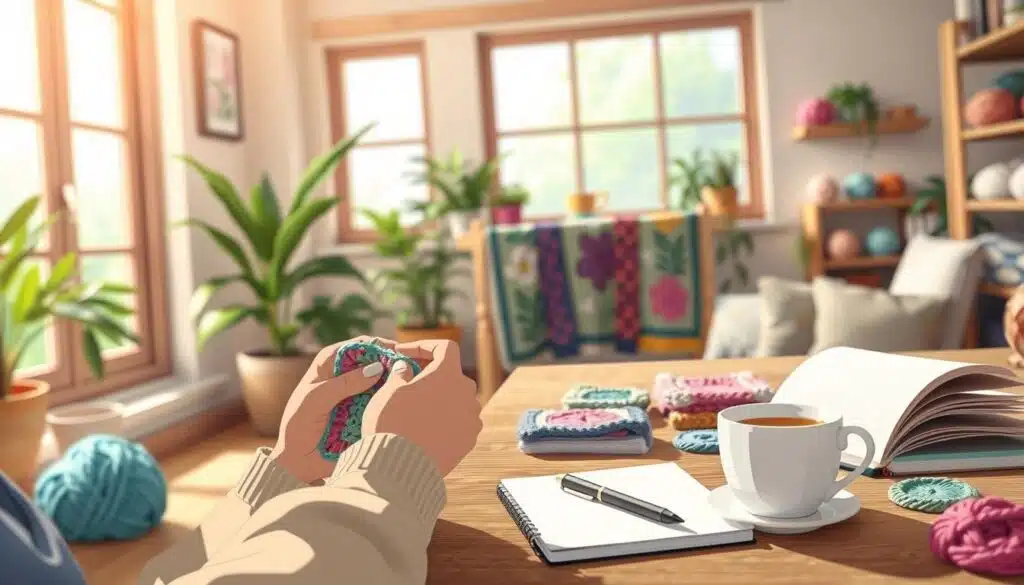
Break big ideas into smaller pieces. Plan your crochet projects in rows, squares, or small tasks. This way, each session ends with something done. Choose a coaster or dishcloth for quick feedback, or work on a blanket in modular pieces so each square counts as progress.
Set simple goals that feel achievable. Use goals like “one square per sitting” or “three rows before stopping” to keep going. Patterns provide structure and purpose, whether for yourself or to sell on Etsy.
If you need inspiration, try quick beginner projects. Look at creative crochet project suggestions for ideas. Micro-projects give you repeated small wins, boosting your self-esteem and making the habit stick.
Keep track of what you finish. A simple checklist or photo log shows your progress. This record reinforces your sense of accomplishment and helps measure growth during slow times.
When you plan with intention, you get both craft and calm. Project sizing and clear goals turn play into purpose. This keeps your mental health benefits steady.
Creative Expression: Using Crochet to Process Feelings
Crochet can be your secret way to express emotions. You don’t need words when colors, stitches, and textures tell your story. This mix of craft and reflection turns your feelings into something you can touch and see.
Color therapy crochet can change a tense moment into a calm one. Bright colors can boost your mood, while soft tones can calm it. Use a soft yarn for comfort and a firm one for stability. These choices make your crochet a clear way to express your feelings.
Creating for others can also help your mental health. Giving a handmade gift or donating something can connect you and give you a sense of purpose. This can help fight loneliness and anxiety.
Symbolic crochet lets you tell stories without words. A color can represent a feeling, and a stitch can mark a special day. It’s a way to keep your feelings safe and private.
Start with simple crochet prompts. Try making a swatch in a color that shows how you feel. Or, make a blanket with one row for each day to track your mood. These tasks can help you feel more in control.
Keep a small notebook with each project. Write why you chose certain colors or textures. Later, you’ll see patterns in your feelings. This combines craft and reflection to make crochet a powerful tool for healing.
When you need a plan, try these prompts:
- Stitch your mood: ten rows in a matching color.
- Weather blanket: one row per day, color-coded.
- Comfort square: six inches showing a safe scene.
- Texture diary: three swatches—soft, rough, mixed—then pick one for a project.
Be patient with these exercises. Allow yourself to create imperfect yet true pieces. The real value is in translating your feelings into something tangible through crochet.
Social Connection and Community Benefits of Crocheting
When you bring yarn to a gathering, you get more than just stitches. Local yarn shops, community centers, and library meetups become places for making friends. They offer real connections, learning from peers, and support that fights loneliness.
In-person groups, classes, and community circles
Joining a crochet night at WEBS or a class at Michaels is like joining a tradition. These regular meetups give you a sense of belonging and help you grow. They also offer comfort and structure, which are great for your mental health.
Online communities, Instagram, and support during isolation
Lockdown made online crochet groups a lifeline for many. YouTube and Instagram provided endless tutorials and inspiration. Sharing your work on Instagram gets you praise and tips, while forums and Facebook groups offer support and encouragement.
How shared feedback and praise support belonging and resilience
When others praise your work, it boosts your confidence. This positive feedback strengthens your sense of belonging. Sharing challenges gets you help, support, or just someone to listen. This support builds your resilience and keeps you hooked.
Start building your creative routine with a friendly guide at stitching away stress. Look for groups that match your pace. Small steps into crochet communities or online groups can make a big difference in how connected you feel.
Cognitive Benefits: Keep Your Brain Active with Crochet
When you pick up a hook, you’re doing more than making a scarf. You’re working on pattern memory, counting, and solving small problems. These tasks keep your working memory and attention sharp.
These small challenges help improve your crochet memory. They make you better at keeping stitch counts and pattern repeats in mind. This leads to fewer dropped stitches and better focus.
Regular sessions of crochet build mental habits. These habits help with planning and switching between tasks.
Pattern memory, counting, and problem-solving as cognitive exercise
Counting rows and checking repeats is like simple math for your craft. Each time you check your stitch count, you’re strengthening your working memory and attention. Making small fixes, like tinkering back or changing a stitch, also improves your flexible thinking and visual-spatial skills.
Evidence suggesting reduced risk of cognitive decline
Studies show that hobbies like crochet and knitting may lower dementia risk. They suggest that activities that require attention and learning can build cognitive reserve. This can help reduce cognitive decline over time.
For more on how crochet affects the brain, see this study on neural and behavioral effects describing attention and connectivity shifts. It shows that hobby-based mental stimulation may help reduce Alzheimer risk over time.
How learning new stitches builds neural connections
Learning new stitches creates new motor patterns. These patterns strengthen motor maps in the brain and connect them with visual planning centers. This mix of fine motor skill, memory, and spatial reasoning boosts brain health by increasing neural plasticity.
Try a challenge: learn a textured stitch, count carefully, and repeat the row until it’s automatic. This targeted practice strengthens your crochet memory and may help protect against age-related decline.
Practical How-To: Start Crocheting for Mental Health Today
Ready to try a hands-on reset? Pick a soft, forgiving yarn that soothes your touch. Cotton blends, acrylic-soft blends, or merino-wool blends suit different tastes. Use ergonomic crochet tools like bamboo hooks or cushioned-handled aluminum to keep your hand comfortable.
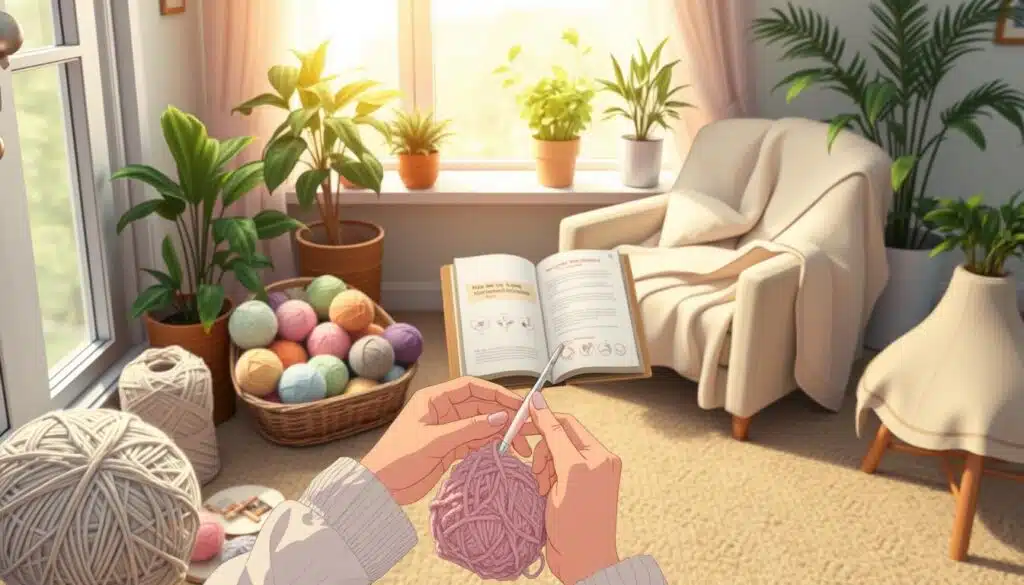
Choose a larger hook and a bulkier yarn for less fiddliness and faster progress. Sizes from G/6 to J/10 and chunky yarns make stitches easy to see. This quick progress helps your nervous system relax and keeps you coming back for short, calming sessions.
Beginner-friendly materials and tools that feel good in your hands
Start with one skein of your best yarn for anxiety—pick what feels like an exhale when you touch it. Test a few swatches to find the texture that soothes you.
Match that yarn with an ergonomic hook you enjoy holding. Try bamboo for warmth, or a cushioned-handled aluminum hook for a firmer grip. Your goal is comfort, not trend, so prioritize tools that let you stitch without strain.
Two gentle starter projects designed for stress relief
Project one: a comfort square. Use single or double crochet to make a 6–8 inch square in one sitting. Finish it fast to get an immediate win and a tactile reward.
Project two: a mindful headband or simple cowl. Work repetitive rows in one stitch—half double or half treble—so your hands fall into a rhythm. Aim for 15–30 minutes per session to sync breath with stitch and invite flow.
How to fit short crochet breaks into a busy day
Treat crochet like a mini reset. Keep a calm kit with a hook and a small ball of your go-to yarn in your bag or drawer for quick access.
Use micro-sessions of 5–15 minutes between tasks, while waiting for coffee, or during a brief break. Those crochet breaks stack up into real mental relief without feeling like a chore.
| Item | Why it helps | Suggested specs |
|---|---|---|
| Beginner crochet for stress | Easy patterns reduce decision fatigue and build fast wins | Comfort square or simple cowl, single stitch patterns |
| Best yarn for anxiety | Tactile comfort encourages relaxation and slows breathing | Cotton blend, acrylic-soft blend, or merino-wool blend; bulky weight |
| Starter crochet projects | Short projects preserve momentum and reward completion | 6–8″ square, headband, or short cowl; finish in 1 session |
| Crochet breaks | Micro-sessions reset the nervous system without guilt | 5–15 minutes between tasks; keep a calm kit handy |
| Ergonomic crochet tools | Reduces hand fatigue so you can relax into rhythm | Bamboo or cushioned-handled hooks, sizes G/6–J/10 |
Conclusion
Crochet is a simple way to relax and unwind. The motion and pace can calm your mind, boost happiness, and help you focus. It’s a way to find peace without needing special skills or a lot of time.
Crochet also helps with touch and builds confidence. It connects you with others, whether in a class or online. It’s a mix of mindfulness, touch, and brain exercise.
While many find crochet helps their mood, more research is needed. But, trying it out is safe and could bring benefits. It’s a gentle way to improve your mental health.
Start by choosing a hook that feels right, pick a yarn that calms you, and make a comfort square. Let the rhythm of crochet be your daily ritual. Your nervous system will appreciate it.
FAQ
How does crochet actually calm your nervous system?
Crochet’s repetitive motions calm your brain. The steady rhythm of stitches and breath helps shift your state from stress to calm. Studies show it lowers stress and cortisol levels, making you feel calmer.
Is there real evidence that crafting increases pleasure neurotransmitters?
Yes, many people feel happier after crocheting. The joy of creating something and seeing progress boosts dopamine. This makes them want to crochet more, improving their mood.
Can crochet put me in a flow state like meditation or music does?
Yes, crochet can put you in a flow state. Its balance of challenge and rhythm can make you fully engaged. This flow state boosts dopamine and relaxes you, similar to meditation.
Does research support crochet as a mental health tool?
Research shows crochet can help with mental health. It boosts mood and reduces anxiety. While more studies are needed, it’s a safe and effective self-care tool.
How does crochet compare to other creative activities for mental health?
Crochet shares benefits with other creative activities. It offers flow, reward, and skill learning. Its unique tactile nature provides soothing benefits that some find more calming than other crafts.
What are the limits of existing crochet research?
Most studies on crochet are small or based on surveys. They can’t prove long-term effects on serious mental health issues. More rigorous research is needed to fully understand its benefits.
What does mindfulness look like when you’re holding a hook?
Mindful crochet is about paying attention to your actions. Notice the hook, yarn, and your breath. This focus quiets your mind, similar to meditation, with the added benefit of tactile feedback.
Can you give quick mindful‑crochet exercises to calm anxiety?
Yes, try these exercises: breathe in sync with your stitches, notice the yarn’s texture, or count loops. Start with short sessions to help you relax.
How do I stay present without turning crochet into another task to perfect?
Choose simple stitches and small goals. Start with short sessions to avoid burnout. Focus on the process, not perfection, to enjoy the moment.
What is breath‑synced stitching and how does it help?
Breathe-synced stitching links your breathing to your stitches. This slow pace engages your relaxation response, reducing tension and calming your nervous system.
Which crochet patterns best lower cortisol and stress?
Patterns like granny squares or simple ripples are calming. Their repetitive nature offers a soothing rhythm that can reduce stress and boost mood.
How do I build a calming crochet ritual for daily use?
Create a calming routine: start with deep breaths, choose your yarn, and settle in. Keep sessions short and use a dedicated “calm kit” to make it easy to access.
How do yarn texture, weight, and hook choice affect how you feel?
Yarn texture and weight impact your mood. Soft yarns soothe, while chunky yarns can ground you. Choose what feels calming to you.
What does “medium as medicine” mean for choosing materials?
Choosing materials that affect your mood is key. The right yarn and hook can calm anxiety and support your senses. Crochet’s forgiving nature also reduces frustration.
How do I map material memory and find my “exhale” yarn?
Try the Material Memory Map: list yarns, note your reactions, and pick the calming one. Use it for your next project to enhance your mood.
Why does finishing a square make such a difference to mood?
Finishing a square boosts dopamine and self-confidence. It shows progress, which counters feelings of helplessness and builds resilience.
How can I size projects to guarantee progress and avoid overwhelm?
Break projects into small, achievable parts. Start with simple squares or coasters. Modular projects like blankets keep you engaged without overwhelming you.
Can simple goals and patterns help my motivation?
Yes, setting small goals and following patterns can motivate you. They give structure and purpose, and making for others adds meaning and feedback.
How do color and texture act like emotional language in crochet?
Colors and textures convey emotions. Bright hues energize, while muted tones soothe. Choose them to reflect or shift your mood.
Does making for others improve your mental health?
Yes, making for others creates social connection and purpose. It boosts mood and reduces loneliness, making you feel more connected.
What are quick creative prompts to process emotions with crochet?
Try “stitch your mood” or a weather blanket. These projects help you express emotions and gain insight through the creative process.
Where can I find community if I want social connection through crochet?
Look for local yarn shops, classes, and crochet circles. Online platforms like Instagram and Ravelry also offer supportive communities.
How does shared feedback help resilience?
Feedback validates your creativity and sense of belonging. It builds support networks that motivate and reduce feelings of isolation.
Does crochet exercise your brain?
Yes, crocheting engages working memory, attention, and basic math. It exercises neural circuits involved in planning and memory.
Can crocheting reduce risk of cognitive decline?
Observational evidence suggests crochet may lower dementia risk. It engages neural plasticity, supporting cognitive resilience.
How does learning new stitches benefit your brain?
Learning new stitches creates new neural connections. It strengthens brain networks, improving cognitive function and resilience.
What beginner materials and tools should I choose to feel good?
Choose soft, forgiving yarns and ergonomic hooks. Larger hooks with bulky yarn speed up progress, keeping the practice soothing.
What are two simple starter projects for stress relief?
Start with a comfort square or a simple headband. These projects offer quick wins and repetitive motions for stress relief.
How can I fit short crochet breaks into a busy schedule?
Use micro-sessions of 5–15 minutes between tasks. Keep a “calm kit” handy for quick crochet sessions to reset your nervous system.
Is crochet a safe, low‑risk mental health practice to try?
Yes, crochet is low cost and low risk. It’s not a substitute for professional care but can help reduce stress and boost mood when used intentionally.