
You’re about to enter a world where yarn and needles bring joy to kids. This guide is for U.S. parents, caregivers, and teachers. It offers quick and fun knitting projects for beginners.
Knitting is great for learning and creativity. It offers fast results, from simple scarves to cute bunnies. It’s a way to make kids feel proud and confident.
This article uses family blog resources and craft sites. It lists projects like finger knitting and mini pumpkins. You’ll also find a huge collection of stitch patterns online.
Start by choosing the right supplies and learning simple stitches. Then, pick patterns that fit your child’s age and interest. This way, you’ll create lasting memories with your family.
Key Takeaways
- Knitting for kids combines learning and creativity with quick, confidence-building results.
- Beginner knitting projects include finger knitting, scarves, dishcloths, and small toys.
- Reliable resources include family craft blogs, free pattern libraries, and StudioKnit by Kristen McDonnell.
- Choose projects that match a child’s age and attention span for the best success.
- Follow the article in sequence to pick supplies, learn stitches, and complete projects step by step.
Why Knitting Is Great for Kids: Benefits and Developmental Wins
Knitting is more than just making cozy scarves. It’s a fun way for your child to learn, focus, and improve their motor skills. You’ll see how pattern work helps with counting, creates calm routines, and builds hand strength.
Brain and learning benefits
Knitting engages both sides of the brain. The repetitive actions and pattern recognition boost sequencing and problem-solving skills. It also links to reading skills because it involves left-to-right tracking and following steps.
Knitting involves counting, skip counting, and basic math. These math moments are hidden in the fun, making learning feel like play.
Emotional and behavioral benefits
The rhythmic motion of knitting calms the nervous system. It’s recommended for kids with ADHD and anxiety to help them focus and manage their mood.
Knitting teaches patience with simple projects. Completing a small project gives kids a sense of pride and teaches them to handle frustration.
Millennial Child shares how slow, focused crafts help children with self-regulation, providing soothing routines.
Fine motor skills and hand-eye coordination
Knitting improves the pincer grasp, bilateral coordination, and timing. These skills help with handwriting and daily tasks like buttoning shirts.
There are projects for all skill levels, from finger knitting to tiny booties. This makes learning fine motor skills both fun and measurable.
| Benefit | What the child practices | Easy kid projects |
|---|---|---|
| Brain & learning | Sequencing, counting, pattern recognition | Striped scarf, color-repeat dishcloth |
| Emotional control | Focus, patience, self-regulation | Simple cozy, mini plush |
| Fine motor skills | Pincer grip, bilateral coordination, hand-eye timing | Finger knitting, tiny bracelets, booties |
| Special needs support | Calming routine, sensory feedback | Weighted scarf, repetitive stitch sequences |
Getting Started: Kid-Friendly Supplies and Safety Tips
Choose supplies that make kids feel confident and excited. Look for yarn and tools that are easy to use and show results fast. Bright colors and thick textures keep little hands busy while teaching basic stitches.
Best yarn types for beginners
Start with bulky or super bulky yarn for quick projects. This keeps kids interested and motivated. Acrylic or washable wool blends are best for everyday use because they handle spills well.
Choose yarn in bright colors for fun projects like rainbow scarves. Soft yarn is great for baby-friendly items like booties. It makes them comfortable and reduces fussiness.
If you want to move to finer yarn later, check out easy crochet and thin-yarn guides. They offer projects that help beginners transition.
Needles and alternatives
Use large, blunt-tipped needles in sizes US 10–15 (6–10 mm). Plastic or bamboo needles are safe and light. For easy travel, choose circular needles with short cables.
Jumbo needles or arm knitting are great for young kids. They make big, fast projects. Finger knitting supplies are perfect for toddlers. They need only yarn and hands to start.
Plastic knitting needles in fun colors are great for kids. Keep extra sets in a case for classes or travel.
Safety and ergonomic tips
Make sure needles are blunt and supervise toddlers. Store needles in a closed case. Keep yarn cutters or blunt scissors out of reach unless an adult is there.
Set up a comfy workspace with proper table height and cushioned seating. Use child-sized lap trays. Encourage short sessions and breaks to prevent fatigue and promote good posture.
Rotate activities to use different hands and muscles. Teach safe handling and simple cleanup habits. This makes crafting sessions calm and secure.
| Item | Why it works for kids | Recommended sizes/materials |
|---|---|---|
| Bulky yarn | Shows quick progress, easy to see stitches | Super bulky, acrylic or washable wool blends |
| Plastic knitting needles | Lightweight, blunt, colorful and safe | US 10–15 (6–10 mm), plastic or bamboo |
| Finger knitting supplies | No tools needed, great for toddlers | Chunky yarn, hands only |
| Circular needles | Secure stitches, portable for classes | Short cable, same needle size as flat needles |
| Storage and cutters | Keeps tools safe and organized | Needle case, blunt scissors, yarn clips |
Easy Stitches Kids Can Learn Fast
Begin with simple stitches that teach counting and confidence. These stitches are great for short sessions and lead to projects like scarves and hats.
Garter basics: The garter stitch is perfect for young learners. It’s all knit rows, so no need to switch techniques. It’s flat, soft, and mistakes are easy to see. Use it for beginners to practice and build skills.
Next step—stockinette and purling: Stockinette is knit one row, then purl the next. This rhythm introduces a new motion and makes a smooth fabric. Show a small swatch to demonstrate how edges curl and how garter stitch fixes it.
Teaching tip: Teach purling slowly, row by row. Short practice sessions make it feel natural. Use bright yarn and big needles for clear stitches.
Rib and texture tricks: Ribbing in 1×1 or 2×2 adds stretch for cuffs and hats. It’s easy to learn and rewarding. Seed stitch gives a bumpy, forgiving fabric that hides uneven tension.
Variation hacks: Seed stitch and its cousins are simple repeats. They use knit and purl in patterns. This builds confidence and creates sturdy pieces for play.
Quick practice plan:
- Day 1: garter stitch for beginners — 10 minutes of straight knitting.
- Day 2: introduce purling — practice how to purl for kids on a six-row swatch.
- Day 3: mix ribbing and seed stitch kids sections into a sample square.
Keep sessions short, praise progress, and let your learner choose colors. This approach turns these easy stitches into skills kids will use for years.
Finger Knitting Projects for Toddlers and Preschoolers
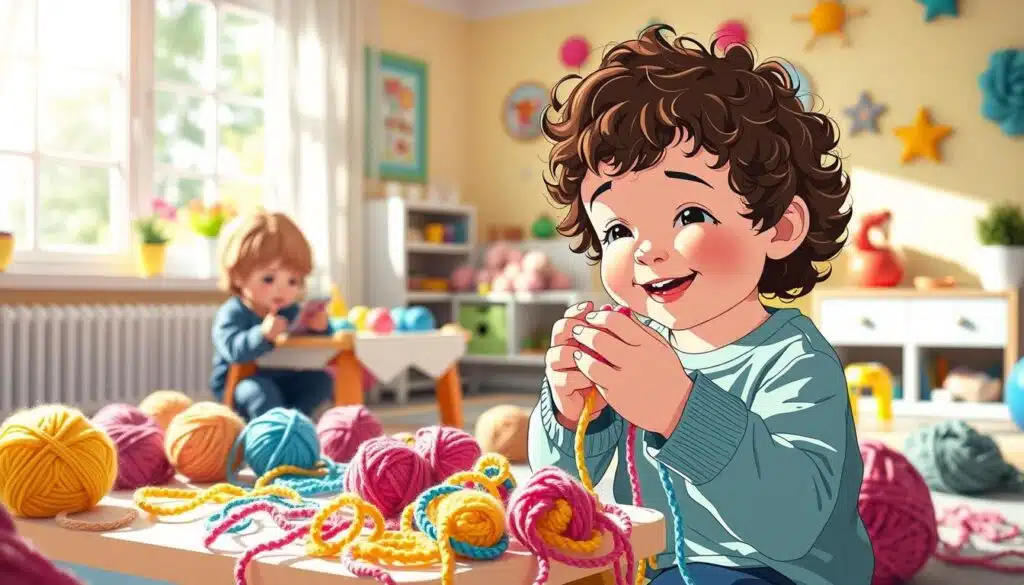
Finger knitting is a great first craft for little hands. You’ll need yarn and patience. Plus, a quick tutorial to get started. Use chunky yarn for fast results and a secure starting loop to keep toddlers engaged.
Finger knitting basics and set-up
Set up a soft rug, a small tray, and easy-to-grip yarn. Use brands like Lion Brand or Bernat. Show one loop at a time and keep instructions short. Demonstrate how to make a starting loop, then steady the rhythm: loop, pull, slide.
Simple projects kids will love
Start with wearable items that kids can show off. Finger knit necklaces and bracelets are instant wins. They let kids feel proud right away. Teach a basic flower pattern so they can make a finger knit flower to pin on a jacket or give as a gift.
Using finger-knitted pieces
Long cords become versatile trims. Braid three finger-knitted ropes into a small rug or sew multiple cords into a handle for a child-sized tote. Short sections work as doll hair, wreath accents, or brooch ties. Encourage combining pieces: braid a few strands, stitch ends, and stuff for tiny cushions or soft ornaments.
| Project | Materials | Time | Skill Tip |
|---|---|---|---|
| Finger knit necklaces | Chunky yarn, large beads | 10–20 minutes | Secure ends with a knot and hide inside a bead |
| Finger knit flower | Worsted or bulky yarn, safety pin | 15–30 minutes | Wrap petals tightly, stitch center for shape |
| Braided rug | Multiple long cords, yarn needle | 1–2 hours | Braid three cords at a time, stitch braid into coil |
| Bag handles and trims | Finger-knitted cords, sewing thread | 20–40 minutes | Sew ends through fabric twice for strength |
| Decorative garland | Short cords, felt shapes | 30–45 minutes | Space pieces evenly and knot securely |
Quick Patterns for Beginner Knitters: Scarves, Dishcloths, and More
You want to see results fast. Choose small projects that teach basic stitches quickly. Scarves, dishcloths, and tiny wearables are perfect for beginners.
Beginner scarf patterns
Start with a garter stitch scarf to learn rhythm and tension. Use bulky yarn and large needles for quick rows. A rainbow scarf is great for color practice and keeps kids excited.
For texture, try a chunky 2×2 rib scarf. Patterns usually list the yarn and needle size you need. For more ideas, check out this scarf pattern collection for simple designs.
Easy dishcloths and household projects
Dishcloths are great for beginners because they’re small and forgiving. Cotton or cotton-blend yarn is easy to wash and durable.
Simple seed stitch or two-row repeats create texture and teach stitch changes. Add a repetitive border for neat edges and a sense of accomplishment.
Small wearable projects
Short projects like knit baby booties or fingerless gloves give instant pride. Baby booties are small, use little yarn, and teach joining and simple shaping.
Other quick projects include headbands, simple hats, and knitted squares turned into soft toys. These projects let kids experiment with color and finishing techniques.
| Project | Skill Focus | Yarn & Needles | Time to Finish |
|---|---|---|---|
| Garter Scarf | Cast on, knit stitch, binding off | Bulky yarn, US 10–13 (6–9 mm) | 2–6 hours |
| Chunky 2×2 Rib Scarf | Knit and purl alternation, tension | Worsted/bulky, US 9–11 (5.5–8 mm) | 3–8 hours |
| Seed Stitch Dishcloth | Alternating knits and purls, edge neatness | Cotton worsted, US 7–9 (4.5–5.5 mm) | 1–3 hours |
| Baby Booties | Short rows, simple shaping, seaming | DK or worsted, US 5–7 (3.75–4.5 mm) | 2–4 hours |
| Fingerless Gloves | Circular knitting basics, thumb hole | Worsted, US 6–8 (4–5 mm) | 3–6 hours |
Mix projects to keep lessons lively. A simple scarf and one dishcloth teach stitches and finishing. Add a knit baby booties pattern next to the kids’ scarf to show how the same stitches scale down. These quick knit projects kids can complete quickly, so you both stay energized and ready for the next crafty challenge.
Fun Amigurumi-Style and Toy Patterns for Kids
Ready to make yarn into fun toys? It’s easy to turn simple shapes into cute friends. Start with a square or tube and learn basic sewing and stuffing. This method is quick and fun for kids, helping them feel proud of their work.
Knitted bunnies and animal pals
Start with a simple knitting bunnies pattern. Use rectangles, small tubes, or garter stitch squares. Kids can fill the pieces with fiberfill and add eyes for a cute look. Use thick yarn so projects are quick and easy to sew.
For more patterns, check out free toy knitting patterns. Begin with the simplest shapes. Each success will encourage the next.
Cat toys and small playthings
A knit cat toy, like a mouse or fish, is a quick win. Small projects need only basic shapes and a few stitches. Add catnip or fiberfill for fun. These toys are great for pets and show kids the value of their work.
Begin with one-piece shapes that need little sewing. Use colorful scraps to make many tiny toys in one day.
Mini pumpkins and seasonal crafts
A mini knitted pumpkin is perfect for fall. Use orange yarn, a green stem, and a few stitches for a cute decoration. Let kids add fun details like buttons or googly eyes.
Seasonal projects teach kids about holidays and make great gifts. Keep instructions simple and short. Choose patterns that can be finished in under two hours.
- Start with easy shapes: squares, tubes, and circles.
- Choose chunky yarn for fast results.
- Use safe embellishments like sewn-on felt or large buttons for older kids.
Fun Accessory Projects: Jewelry, Bracelets, and Wearables
Turn leftover yarn into tiny treasures you and your child will want to wear. Start with a simple I-cord or a fragile strip of wool. This can be felted into a sturdy cuff. A short session with warm water and a little agitation will shrink the fabric.
This creates a durable, kid-ready piece that resists everyday wear.
Felted bracelet and knitted jewelry
For a quick win, cast on four stitches and make an I-cord to a length of about 7–10 inches for adults or 5–6 inches for kids. Bind off with a 10-inch tail, attach clasps, and knot securely. If you prefer a guided walk-through, try a clear felted bracelet tutorial that shows I-cord basics, finishing, and clasp attachment.
Swap yarn types to change the look. Embroidery floss gives delicate charm. T-shirt yarn creates chunky, durable bands. Felted wool gives you texture and resilience in one easy step.
Rainbow scarves and colorful projects
Teach color changes by making a mini rainbow knitted scarf. Use short stripes of scrap yarn so kids practice joining and weaving ends without fuss. Add playful “cloud” fringe or sew on pompoms for a whimsical finish.
A rainbow knitted scarf is a perfect practice piece for switching colors and learning consistent tension. Kids love to wear what they make, which boosts pride and motivation.
Personalizing projects for kids
Help your child personalize knitting projects by adding initials, buttons, or fabric appliqués. Small touches let the maker claim ownership and turn a simple creation into a meaningful gift for a sibling or grandparent.
Beads, seed stitch accents, and tiny brooches are great ways to teach embellishment. Turn a knitted strip into kid knit jewelry or a brooch for a backpack. Encourage experiments with texture and color to keep projects fresh and fun.
- Materials to try: wool for felting, cotton for washable pieces, jersey for chunky looks.
- Finishing tips: leave extra tail for secure knots, use a tapestry needle to hide ends, attach lobster clasps for easy wear.
- Project ideas: felted cuffs, finger-knit friendship bands, tiny scarves for dolls and plush toys.
Teaching Tips: How to Keep Kids Engaged and Motivated
Start with short, lively sessions that fit a child’s attention span. Keep lessons to 10–20 minutes so progress feels fast. Celebrate small wins like a first row or a finished square to build confidence.
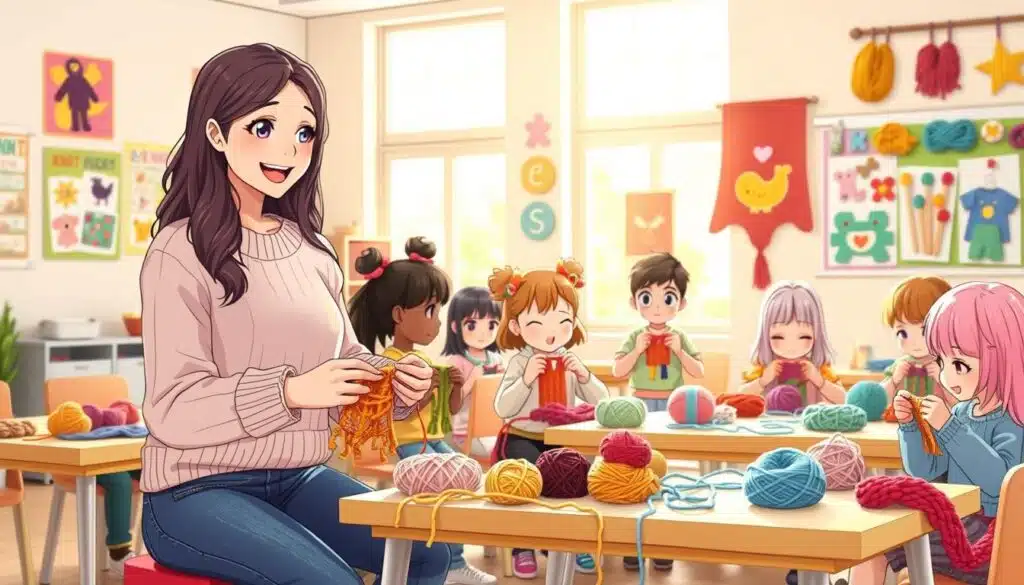
You can make practice playful. Use stitch-counting challenges and simple rewards to gamify learning. Quick projects such as finger-knitted bracelets give instant results. Those wins help you teach kids knitting without boredom setting in.
Short lessons, games, and milestones
Break skills into tiny steps. Teach a single stitch, then play a five-minute knitting game for kids that uses that stitch. Set visible milestones on a chart so kids see growth and aim for the next badge.
Troubleshooting common beginner problems
Dropped stitches are normal. Pick them up with a crochet hook or the tip of a needle right away. Uneven tension improves with larger needles and bulkier yarn during practice. If stockinette curls, add garter edges or a few rows of ribbing to stabilize the piece.
Point learners to stitch-pattern guides and video demos when a problem repeats. Those resources make troubleshooting knit mistakes feel simple and teach repair skills early.
Turning knitting into family time
Invite parents, grandparents, and older siblings to join. You can set up evening knit circles, holiday gift projects, or a weekly “knit party.” Shared projects turn learning into memory-making and keep kids eager to return.
| Tip | What to Do | Why It Works |
|---|---|---|
| Short Sessions | Limit lessons to 10–20 minutes | Matches attention span and builds consistent practice |
| Games | Use stitch-count challenges and simple prizes | Transforms repetition into fun with immediate rewards |
| Quick Projects | Make bracelets, squares, or simple toys | Gives fast accomplishments to sustain momentum |
| Simple Fixes | Pick up dropped stitches, use larger needles, add garter edges | Resolves common errors and reduces frustration |
| Learning Resources | Use guides, step-by-step videos, and local groups | Provides extra help when troubleshooting knit mistakes |
| Family Involvement | Host knit evenings or invite relatives to teach | Boosts motivation through shared family knitting activities |
| Practice Tools | Choose bulky yarn and larger needles for beginners | Makes stitches clearer and tension easier to control |
| Milestones | Track first row, first completed piece, and stitch counts | Creates visible progress and encourages persistence |
Where to Find Patterns and Tutorials for Kids
Want to keep kids happy with yarn? Start with big free libraries and easy tutorials. You can find Free Knitting Patterns: 1000s Of Fun Patterns For All Levels online. Family blogs also have fun projects like mini pumpkins and baby booties.
Free pattern libraries and beginner collections
Look for sites with patterns sorted by skill level. This makes it easy to find simple projects. Craft blogs offer step-by-step photos and lists of supplies for fun projects.
A helpful family resource combines project ideas with lesson plans. You can read a roundup at Knitting for Kids for curated kid projects and unit-study ties.
Video tutorials and stitch pattern books
When a stitch looks tricky, a short video can help. Look for knitting video tutorials that focus on basics. StudioKnit resources by Kristen McDonnell offer clear lessons and organized stitch libraries.
The Knit Stitch patterns Kristen McDonnell compendium lists 52 knit/purl repeats. It includes printable patterns and paired videos for easy practice.
Community resources and classes
Local yarn shops offer beginner sessions and holiday mini-camps. Community centers and libraries have craft hours for kids and caregivers. Online groups on Ravelry and neighborhood Facebook pages share project swaps and meetup notices.
YouTube channels also have kid-friendly playlists. If you want a structured family curriculum, consider fiber-arts unit studies. These mix history, projects, and simple tutorials.
For quick fixes on common mistakes, a short troubleshooting guide is handy. See a practical repair primer at Fix Knitting Mistakes.
Look for local knitting classes and weekend workshops for parents with toddlers. These sessions build confidence faster than learning alone. They also give kids social time and leave you with charming, wearable results.
Conclusion
Knitting for kids is easy: it’s a hobby that helps kids focus, improves their fine motor skills, and brings them calm. Start with soft, colorful yarn and big, blunt needles. Learn simple stitches like garter, stockinette, rib, and seed.
Finger knitting is great for toddlers, teaching them about loops and rhythm. Then, try quick projects like scarves, dishcloths, booties, and small toys. These projects help kids feel proud and make great gifts for fall and winter.
For patterns and help, check out knitting resources for kids. They have beginner-friendly projects and tips.
If you’re starting to knit with kids, keep sessions short and positive. Turn mistakes into learning opportunities. Kid-friendly knitting summary: choose safe tools, learn a few stitches, try finger knitting, and move to small projects. Grab yarn and needles, and start; you’ll make quick wins and memories with your family.
FAQ
What is this guide “Knitting for Kids: Fun, Easy Patterns for Beginners” about?
This guide helps U.S. parents, caregivers, and teachers teach kids to knit. It focuses on quick, beginner-friendly projects. Kids learn short lessons and easy stitches like garter and stockinette.
They also learn finger knitting for toddlers. Projects include scarves, dishcloths, mini pumpkins, felted bracelets, booties, and knitted toys. It uses free pattern collections and stitch libraries for practical instruction.
How does knitting help a child’s learning and brain development?
Knitting engages both hemispheres of the brain. It supports left-to-right sequencing useful for reading. It also strengthens pattern recognition and basic math.
These cognitive gains come from repetitive sequencing and stitch counting. Family education blogs and craft advocacy articles back these benefits.
Can knitting help with emotional or behavioral regulation?
Yes. Knitting’s rhythmic motion is calming. It helps anxious or hyperactive children focus. Family bloggers and articles report its therapeutic benefits.
Knitting improves mood regulation, builds patience, and soothes concentration and self-regulation.
What fine motor and coordination skills does knitting build?
Handling yarn and needles or looping yarn for finger knitting develops dexterity. It improves pincer grasp, bilateral coordination, and timing.
These skills support handwriting readiness and everyday tasks. Finger-knit bracelets, tiny booties, and small toys give progressively greater fine-motor challenges.
What yarn should I buy for a child who’s just starting?
Choose bulky or super-bulky yarn for faster, more visible progress. Acrylic or washable wool blends are easy-care choices. Bright, smooth worsted or chunky yarn reduces splitting and keeps kids motivated.
Use orange for mini pumpkins, soft baby yarn for booties, and colorful skeins for rainbow scarves.
What needles or tools are best for kids?
Use large, blunt-tipped needles—US sizes 10–15 (6–10 mm)—in plastic or bamboo for lighter weight and less sting. Circular needles are portable; jumbo needles or arm-knitting options work for very young kids.
Finger knitting needs only yarn. Sunny Patch and NurtureStore tutorials are helpful for finger-knit set-up.
What safety and ergonomic tips should I follow?
Use blunt-tipped needles, supervise toddlers, and keep sharp scissors stored safely. Provide child-sized seating, cushioned chairs, and proper table height.
Schedule frequent breaks to avoid fatigue and offer lap trays or small cushions for ergonomic support. Store needles in a case when not in use.
Why is garter stitch recommended for beginners?
Garter stitch (knit every row) is the simplest stitch to remember. It’s reversible and lies flat—perfect for scarves and practice swatches. It teaches rhythm and counting without the complication of switching between knit and purl rows.
What is stockinette and when should kids learn purling?
Stockinette is knit one row, purl one row, creating a smooth fabric that curls at the edges. It’s a natural next step after garter for kids ready to learn purling. The StudioKnit stitch compendium lists stockinette as a basic two-row repeat and a foundational texture for many projects.
Are rib and seed stitch easy for children?
Yes. 1×1 and 2×2 ribbing are simple, stretchy, and great for hat brims and cuffs. Seed stitch and Irish Moss give a textured, mistake-forgiving fabric. These small repeats build pattern recognition without complex shaping.
How does finger knitting work for toddlers and preschoolers?
Finger knitting uses just yarn and hands—no needles—making it ideal for preschoolers. Use chunky yarn for quick results. Start with a secure loop, teach simple looping and pulling techniques, and make bracelets, necklaces, or flowers as first projects.
Sunny Patch and NurtureStore have step-by-step tutorials.
What simple finger-knitting projects will keep kids engaged?
Finger-knit necklaces and bracelets, flowers, brooches, and small cords for garlands are instant wins. Sources like Fun Crafts Kids, The Magic Onions, and Zing Zing Tree offer high-appeal finger-knitting ideas that turn into wearable crafts or decorations.
What can you make with finger-knitted cords?
Sew cords together for rugs (Belinda Fireman woven rug), braid them into garlands, use them as handles or trims on bags, or stuff and shape them into small toys. Finger-knitted pieces are versatile and useful for quick, satisfying crafts.
What beginner scarf patterns do you recommend?
Garter stitch scarves, rainbow color-change scarves, and chunky 2×2 rib scarves are perfect starter projects. Use bulky yarn and large needles for quick gratification. Many free pattern libraries host hundreds of simple scarf patterns suitable for kids.
Are dishcloths good beginner projects?
Yes—dishcloths are small, quick, and practical practice swatches. Cotton or cotton-blend yarns wash well, and patterns like seed stitch or simple two-row repeats create attractive, useful cloths. Gauge isn’t critical, making them forgiving learning tools.
What small wearable projects are achievable for beginners?
Simple baby booties, fingerless gloves, headbands, and basic hats are all doable. These often use squares, tubes, or knitted rectangles that you seam and finish. Projects like DIY Easy Knit Baby Booties and The Magic Onions fingerless gloves are great starting points.
How do I start knitted bunnies or soft toys with kids?
Begin with simple shapes—squares or tubes—knit a few pieces, seam them, stuff lightly, and add felt or sewn-on features. Jo So and Sew and similar family craft tutorials show easy soft-toy patterns that keep complexity low and delight high.
What small toys can kids knit quickly?
Simple cat mouse toys, mini pumpkins, small stuffed hearts, and ball-shaped toys are quick wins. Red Ted Art, Our Little House in the Country, and family craft blogs provide patterns for tiny playthings that teach shaping and sewing basics.
How do you make mini pumpkins and seasonal crafts kid-friendly?
Use orange bulky yarn, knit a small tube or rectangle, gather and stuff to form the pumpkin, and add a stem and googly eyes for whimsy. Mini pumpkin patterns are perfect for fall craft time and give instant seasonal gratification.
Can kids make felted bracelets and knitted jewelry?
Yes. Knit simple wool strips, then felt them by washing in hot water and agitation to make sturdy, colorful bracelets. Craftwhack and other tutorials show how felted pieces become durable, child-friendly wearables and gifts.
How do rainbow projects teach skills?
Rainbow scarves and multicolor projects teach color changes, joining new yarn, and simple finishing like adding fringe or “cloud” motifs. They’re excellent for practicing tension consistency and pattern planning while keeping results vibrant and motivating.
How can projects be personalized for kids?
Add initials, buttons, pom-poms, appliqués, or sewn-on charms. Turn knitted items into gifts—booties for babies, brooches for grandparents, or bracelets for friends. Personalization boosts ownership and pride in completed work.
What teaching techniques keep kids engaged?
Break lessons into 10–20 minute sessions, celebrate small milestones (first row, first finished square), and turn counting into games. Use instant-win projects like finger-knitted bracelets to maintain momentum and reward progress frequently.
How do I troubleshoot common beginner problems?
For dropped stitches, use a crochet hook to pick them up. For uneven tension, try larger needles and bulkier yarn. To stop stockinette curling, add garter edges or ribbing. Video tutorials and stitch pattern guides help with step-by-step fixes.
How can knitting become family time?
Make knitting a shared activity—parents, grandparents, and older siblings can teach and knit alongside kids. Host knit-alongs, set up holiday gift-making sessions, or join local yarn-shop classes. Intergenerational knitting builds skills and memories.
Where can I find free patterns and kid-friendly tutorials?
Large free pattern libraries host thousands of patterns for all skill levels. Family craft blogs, Sunny Patch, NurtureStore, The Magic Onions, and resources like “Free Knitting Patterns: 1000s” offer project-specific tutorials. StudioKnit and Kristen McDonnell’s stitch compendium provide a wide range of stitch references.
Are video lessons and stitch books worth using?
Absolutely. Video tutorials clarify motion and rhythm; stitch books and compendiums (Kristen McDonnell’s Knit Stitch patterns, for example) organize patterns by row repeats and difficulty. Together they make an excellent reference for teaching and practice.
What community resources help beginner knitters and their kids?
Check local yarn shops for kids’ classes, community centers and libraries for programs, and online groups like Ravelry forums and family-focused YouTube channels. Neighborhood Facebook groups and Handwork Fiber Arts family unit studies are also useful for structured learning.
What are the key takeaways for parents and teachers?
Knitting is accessible and developmentally beneficial—boosting cognition, fine motor skills, and emotional regulation. Start with kid-friendly supplies, learn garter and a few other basic stitches, use finger knitting for toddlers, and move to quick projects like scarves, dishcloths, and small toys. Free patterns and stitch libraries are plentiful to support growth.
How should I get started right now?
Pick one small project, gather bulky yarn and blunt needles—or just your fingers—and spend a short session learning garter or finger knitting. Promise a quick win, celebrate it, and build on that momentum for cozy gifts and lasting skills.