
You want to learn crochet fast because you seek quick results and more projects. It’s easier than it seems and calming, so you’ll pick it up quickly. This guide offers straightforward steps to help you crochet fast with just a few tools.
You don’t need a lot of yarn or hooks. A 5mm (H/8) hook and medium worsted-weight yarn are perfect for beginners. Crochet is forgiving, so mistakes are easy to fix, boosting your confidence.
Next, you’ll find a shopping list, a cozy workspace setup, and the essential stitches. Plus, short drills to improve your skills. Follow this guide and you’ll crochet quickly and enjoy the process.
Key Takeaways
- Start simple: a 5mm (H/8) hook and worsted-weight yarn speed up learning.
- Small, regular practice sessions build skill and confidence.
- “Frogging” is normal—mistakes are fixable and part of the process.
- Minimal gear and clear drills help you learn crochet fast.
- This guide focuses on practical tips to crochet quickly with lasting results.
Why You’ll Want to Learn Crochet Fast (and Have Fun Doing It)
Learning to crochet fast boosts your creativity and keeps you excited. You’ll quickly make items like scarves and granny squares. These small wins are big reasons to crochet fast.
Benefits of speedier progress: gratification, more finished projects, less frustration
Finishing projects quickly makes you feel productive. You’ll have a steady flow of finished items and growing confidence. Fast stitches like double crochet help you see results faster.
Starting with simple projects lets you test your skills without worry. Practice squares help you build skills for bigger projects. This reduces frustration and keeps you motivated.
Stress relief and creative flow: why quick wins keep you motivated
Short crochet sessions offer calm and creative flow, like a mini-vacation. It’s not just a myth; crochet can really lower stress. The repetitive motion helps calm your mind.
Even 15 minutes of crochet while watching TV can be beneficial. These short sessions improve your rhythm and enjoyment. This makes you more likely to keep practicing.
Who this guide is for: complete newbies, slow-but-steady stitchers, and busy Americans
This guide is perfect for beginners who need basic steps. It covers things like making a slip knot and single crochet. It also teaches how to fix mistakes without starting over.
For those who crochet slowly, there are drills to speed up without losing quality. Busy people will find short practice routines that show quick progress.
To start, get the right tools like yarn, a hook, scissors, and a yarn needle. Check out a beginner’s guide like how to crochet for absolute beginners. It covers important basics like tension and finishing your projects neatly.
Essential Tools & Materials to Start Crocheting Quickly
Ready to stitch without the guesswork? Start with gear that keeps practice fun. A mid-sized hook and medium yarn make early projects less fussy and more forgiving, so you hit satisfying progress fast.
Best beginner hook sizes and materials
Pick a comfortable hook that lets you see each stitch. The 5mm H/8 hook is a sweet spot for new hands: large enough to handle easily, small enough for tidy stitches. Look at aluminum, bamboo, or an ergonomic padded handle and choose what feels natural. If you want a ready-made option, a well-reviewed crochet starter kit will include a 5mm H/8 hook along with a few sizes for comparison.
Yarn types and labels
Choose smooth, medium yarn labeled size 4. Worsted weight yarn gives clear stitch definition, so mistakes stand out and get fixed quickly. Labels show recommended hook sizes and care instructions. Cotton and acrylic work well for beginners because they’re inexpensive and easy to wash, and worsted weight yarn is widely available for blankets, scarves, and practice pieces.
Want a short guide to supplies and labels? Check a practical list at crochet supplies to compare yarn notes and hook suggestions.
Must-have extras for faster learning
Small tools speed up practice sessions. Keep sharp small scissors, a blunt tapestry needle for weaving ends, and stitch markers to track rounds. A flexible measuring tape helps check gauge and size as you work.
Comfort matters. Good lighting and a supportive chair reduce hand and neck strain so you can practice longer without pain. Toss everything into a basket or project bag to stay organized and avoid setup delays between sessions.
For a curated beginner combo, look for a crochet starter kit that bundles a mid-sized hook, sample worsted yarn, stitch markers, needles, and scissors so you have everything to begin right away.
How to Set Up a Comfortable, Fast-Learning Crochet Workspace
Make a cozy spot for crochet. A clean workspace saves time and keeps you focused. Good lighting, a comfy chair, and a soft grip make long sessions enjoyable. Daily small wins are easier with a ready space.
Lighting, seating, and posture
Work near natural light or use an adjustable LED lamp to avoid eye strain. This helps you see stitches clearly and makes fewer mistakes.
Choose a chair with lumbar support and sit with feet flat on the floor. Hold the hook loosely and relax your shoulders to avoid cramps. Ergonomic crochet practices protect your hands and let you stitch longer without pain.
Organizing yarn and tools for speed
Keep yarn, hooks, scissors, and stitch markers within arm’s reach. Use baskets or clear bins so you can grab what you need fast. A dedicated project bag helps you move projects from sofa to car without losing momentum.
Set up small labeled containers for hooks and markers. Good crochet organization cuts wasted minutes and keeps your rhythm steady.
Create a practice routine
Short sessions beat occasional marathons. Try a 15-minute practice routine each day to build muscle memory without fatigue. Pick a simple go-to piece like a granny square, dishcloth, or long chain to work on while you binge a show or listen to music.
Track your micro-practice with a notebook or app. A steady pattern of tiny sessions yields faster progress and stronger habits over time.
| Focus Area | Quick Tip | What to Buy |
|---|---|---|
| Lighting | Position light behind your shoulder to avoid shadows on stitches | Adjustable LED lamp |
| Seating & Posture | Use lumbar support and take short stretch breaks every 30 minutes | Ergonomic chair or lumbar pillow |
| Tool Access | Group hooks by size and keep a grab-and-go kit for projects | Baskets, small bins, project bag |
| Practice Habit | Do one focused 15-minute drill daily to build speed | Notebook, timer, simple practice yarn |
Grip, Tension, and Motion: Foundations to Learn Crochet Fast
Speed up your crochet by mastering three simple things. Learn how to hold the hook, feed the yarn, and move your hands. These habits improve stitch consistency and reduce hand aches. Start slow, then speed up once it feels natural.
Hook holds are about comfort. You can hold the hook like a knife or a pencil. Choose the grip that keeps your wrist relaxed. A tight grip tires you out and slows you down. Relax your fingers and let the hook glide smoothly.
Yarn control is key for consistent fabric. Start by laying the yarn across your palm. Then, wrap it behind your pinky, around your ring and middle fingers, and over your index finger. Your index finger helps feed the yarn smoothly. If this wrap hurts, try changing the number of wraps or its position on your fingers.
Beginners often struggle with tension. Too tight makes stitches stiff, while too loose makes them floppy. For the foundation chain, use a slightly larger hook. Then switch back to your regular hook for the body to avoid puckering. Practice consistent feeding to achieve even rows.
Use these tips while testing different hook grips. Alternate grips during short practice sessions. This helps you find the right grip and yarn tension methods that prevent cramps and keep your work neat.
Below is a quick comparison to help you decide fast and feel confident in your daily practice.
| Focus | What to Watch For | Quick Fix |
|---|---|---|
| Hook Grip | Wrist tension, finger fatigue | Switch between knife and pencil hold; relax fingers; take short breaks |
| Yarn Wrap | Hand cramps, inconsistent feed | Try the palm-wrap behind pinky method; adjust wrap tightness and position |
| Too-tight Tension | Stiff stitches, hard to insert hook | Use a larger hook for foundation chains; loosen wraps; breathe and relax |
| Too-loose Tension | Floppy fabric, uneven rows | Practice steady wraps; keep consistent hand position; use a slightly smaller hook if needed |
Basic Stitches You Need to Master Quickly
Want to learn crochet fast stitches without fuss? Start with a clear plan and a few focused repeats. Mastering the slip knot and chain stitch gives you a steady launch point for every project. Practice long chains to build speed and comfort before moving on.
Slip knot and chain stitch: smooth methods to speed up your start
The slip knot creates an adjustable loop that fits your hook snugly. Make it once, and you’ll use it every time you pick up yarn. A tidy chain stitch is the foundation row; yarn over and pull through, repeat. Try timed chains to increase tempo without losing even tension.
Single crochet, half double crochet, double crochet: step-by-step essentials
Single crochet is compact and precise. Insert into the second chain, yarn over, pull through two loops. That rhythm trains your hands for consistency.
Half double crochet gives a bit more height. Yarn over, insert where directed, pull through to have three loops on the hook, yarn over and pull through all three. It’s a comfortable middle ground between tight and tall stitches.
Double crochet works up faster than single crochet. Yarn over, insert, yarn over and pull through, then pull through two, and two again. Use double crochet when you want quick coverage and a looser fabric.
If you want a visual companion for these steps, check a trusted stitch guide like the one at crochet stitch guide and practice each movement slowly before speeding up.
Treble and double treble overview: when to use taller stitches for faster coverage
Treble crochet needs two yarn overs before you insert. That extra wrap makes taller loops and faster progress across wide pieces. Double treble uses three yarn overs for even greater height.
Both treble crochet and double treble give large projects a quick finish. Use them for blankets or open shawls where speed matters more than tight gauge.
| Stitch | Yarn Overs | Typical Use | Speed |
|---|---|---|---|
| Slip Knot / Chain Stitch | 0 (foundation) | Start every project, foundation rows | Fast to learn, essential for rhythm |
| Single Crochet | 0 (insert, yarn over to pull) | Tight fabric, amigurumi, edges | Slowest of basics, most control |
| Half Double Crochet | 1 | Balanced fabric, garments | Moderate speed |
| Double Crochet | 1 | Quick blankets, scarves, drape | Faster than single |
| Treble Crochet | 2 | Openwork, fast coverage | Fast for large areas |
| Double Treble | 3 | Very tall stitches, dramatic texture | Fastest coverage, less dense |
Shortcuts, Tricks, and Practice Drills to Accelerate Learning
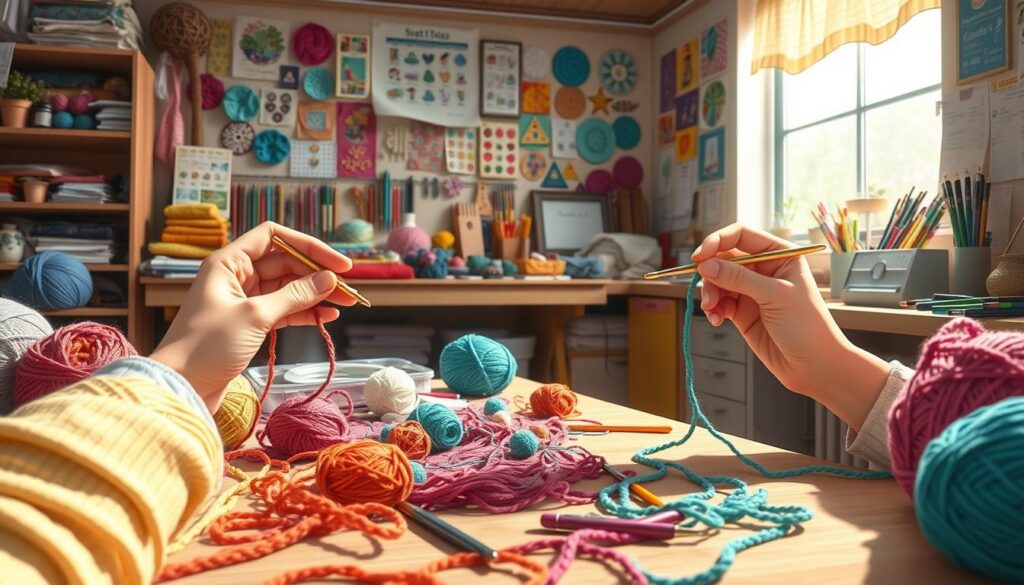
Looking for quick wins to boost your skills? Start with short, focused crochet drills. These drills help you get into a rhythm and keep your stitches consistent. Use the same yarn and hook for each drill to maintain even tension.
Practice long chains and repeated rows to train your hands. Do ten-minute sessions of chains, then switch to rows of single or double crochet. Small swatches help you test your tension and make fixes before starting a big project.
Drill ideas to build muscle memory
Try these short exercises to avoid getting stuck.
- Long chains: timed sets of 3–5 minutes to push speed.
- Granny square practice: make tiny 2-round squares and join them fast.
- Swatch repeats: one-stitch patterns across 20 rows to lock in motion.
How to frogging crochet without fear
Undoing your work is part of the learning process. Pull the yarn and watch your mistakes disappear. Frogging crochet is like a reset button that saves you time in the long run.
Practice ripping back and immediately reworking the same few rows. This builds confidence and reduces anxiety when you need to rewind a larger project.
Use stitch markers and simple counters to stay on pace
Stitch markers help you keep track of your place in rounds and pattern repeats. Clip them at corners or every 10 stitches to avoid counting errors.
Row counters keep you moving if you pause mid-project. Use stitch markers with a counter to spend less time fixing and more time stitching.
For fast project ideas, check out a quick pattern collection on Lemon8. It has simple makes like scrunchies and coasters: quick crochet projects.
Picking the Right First Projects to Boost Speed and Confidence
You want projects that teach you new skills without taking too long. Choose simple, repetitive tasks. These let you practice while watching TV or chatting with friends.
Beginner crochet projects that give quick results include dishcloths, scarves, and small squares. A dishcloth pattern uses just one or two stitches and can be finished in one evening. This quick success helps you learn steady tension and counting.
Scarf projects help you build endurance without being too hard. You can make progress over a weekend. A basic granny square teaches you about corners and joining, making it a great skill-builder for more complex designs.
Use worsted-weight yarn with a 5mm hook to crochet faster and avoid small problems. Set goals like finishing a dishcloth in one evening, a scarf in a weekend, or a granny square in thirty minutes. These goals help keep your practice focused and achievable.
Plan your first three projects to focus on one new skill each. Use one pattern for learning tension, another for shaping, and a third for joining. This method turns small wins into lasting habits and speeds up your learning.
Choosing fast crochet projects helps you build on your successes. Quick finishes boost your confidence. This confidence makes you more eager to try new things and improve faster.
Learn Crochet Fast with Guided Resources and Video Tutorials
Want to learn crochet quickly without losing fun? Start with guided resources that fit your pace. Short, clear videos show you how to move and time your stitches. Visual pattern walkthroughs help when patterns use abbreviations or symbols.
Choosing the right place to watch is key. Look for YouTube playlists from trusted creators. They guide you from simple chains to complex stitches. Channels that break projects into small steps are best. This way, you can pause, rewind, and repeat until you get it right.
Where to watch: curated playlists and step-by-step channels
Search for playlists labeled for beginners and step-by-step guides. A focused playlist makes it clear what to learn next. For a quick start, try crochet video tutorials that organize lessons by topic and skill level.
Using pattern walkthroughs and visual aids to reduce learning time
Use written patterns with visual cues. Pattern walkthroughs show you how to place stitches and follow rows in real time. They help when patterns use shortcuts, so you don’t count wrong or skip rows. Visual aids like close-up shots and on-screen captions are very helpful.
How to practice along with a video for efficient skill transfer
Practice with short segments, not full lessons. Pause after a single stitch or row, repeat until it feels natural. Use the same yarn and a 5mm hook for consistent results and quicker learning.
- Play a clip, copy the motion, then rewind as needed.
- Follow pattern walkthroughs to match what you see on screen to written steps.
- Record yourself occasionally to spot tension or posture issues you might miss live.
With focused playlists, clear pattern walkthroughs, and practice that mirrors the video, you’ll see faster progress. Short, focused sessions are better than long, aimless practice.
Common Mistakes That Slow You Down and How to Fix Them
You’re making progress, but small errors slow you down. This guide offers quick fixes for common mistakes. These tips are easy to apply, whether you’re making a scarf or a blanket.
Spotting stitch-count errors early saves time. Count stitches at the end of each row. Use stitch markers every 10 stitches or mark pattern repeats.
If you find missed stitches, drop a lifeline or insert a scrap thread. This holds your place while you fix the row.
For added stitches, compare to marked repeats to find the mistake. Rip back to the marker, correct the row, and continue. These quick checks make fixing mistakes easy.
Uneven edges and puckered chains come from uneven tension. Stretch rows gently and re-block small swatches to smooth the fabric. If puckering persists, redo the foundation with a larger hook.
Consistent wrapping on your non-dominant hand helps tame bumpy edges over time.
Tight versus loose foundation chains can affect the project’s balance. If your chain is too tight, use a larger hook for just the chain. Then switch back to your regular hook for the body. If it’s too loose, practice holding the yarn and adjust tension with small pinches.
Use this quick reference to choose the right corrective move for common problems.
| Problem | Quick Fix | Preventive Tip |
|---|---|---|
| Missed stitches or added stitches | Count row, mark divergence, rip to marker or insert lifeline | Place stitch markers every 10 stitches and at pattern repeats |
| Uneven edges and puckered chains | Gently stretch rows, rework foundation with larger hook if needed | Keep consistent wrap on non-dominant hand and maintain steady tension |
| Tight foundation chain | Make chain with a slightly larger hook, then switch back for the body | Practice chain tension; aim for uniform loops that slide on the hook |
| Loose foundation chain | Tighten hold, practice controlled pulls, or redo chain with firmer tension | Adjust finger placement and test a small swatch before starting a project |
Keep these fixes handy to reduce rework time. With a few simple habits, these fixes become second nature. This speeds up every project.
Joining Communities and Getting Feedback to Speed Progress
Learning fastest happens when you connect with others who stitch. Joining online forums and local meetups offers quick advice, new ideas, and motivation to keep practicing.
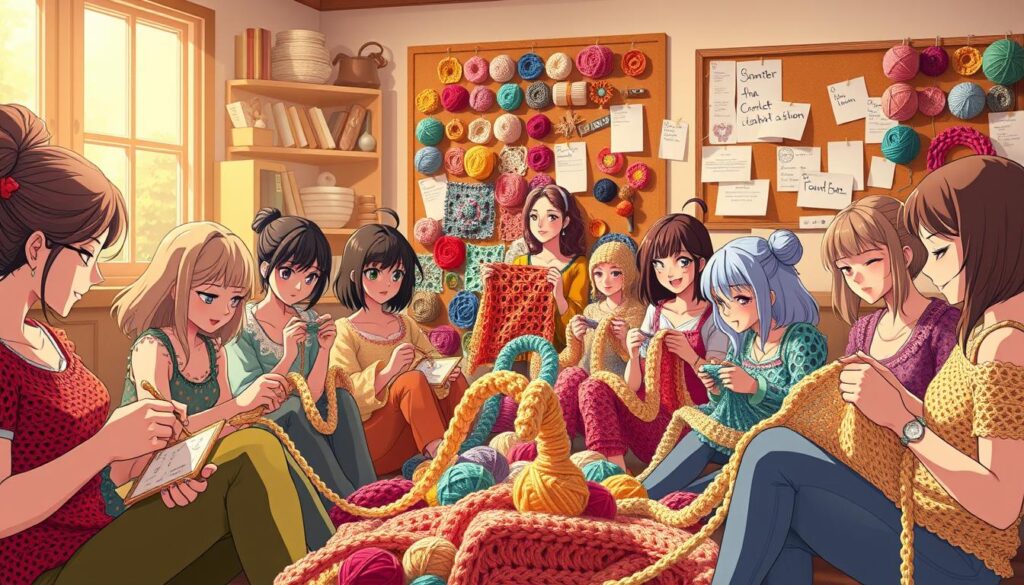
Online forums are perfect for quick fixes or pattern ideas. Sites like Reddit’s r/crochet and Facebook crochet groups let you share photos and get tips fast. You can ask about gauge and get advice from experts in hours.
Hands-on help is key for muscle memory. Local stitch circles, craft store sessions, and classes offer real-time corrections. These adjustments can cut down your learning time significantly.
Sharing your work in progress (WIPs) gets you focused feedback and motivation. Post your progress, list any issues, and ask for critiques on tension or stitch count. This way, you’ll fix mistakes faster and complete more projects.
Use groups for specific practice. Ask for simple stitch drills, request detailed critiques, or exchange short tutorials with someone who loves the same yarn. Small, consistent corrections add up quickly.
| Community Type | What You Get | Best Use |
|---|---|---|
| r/crochet | Quick answers, photo feedback, pattern recs from global makers | Troubleshooting gauge and counting, discovering new techniques |
| Facebook crochet groups | Active threads, video clips, community challenges and GIF tips | Step-by-step help and encouragement for WIPs |
| Local stitch circles | Face-to-face correction, tool demos, social accountability | Posture fixes, hands-on tuition, finishing techniques |
| Local crochet classes | Structured lessons, certified instructors, small-group pacing | Learning foundational skills quickly and confidently |
Start with one online forum and one local group. Alternate between sharing your progress online and practicing tips in person. This cycle of feedback and action is the quickest way to improve your stitch speed and finish more projects.
Conclusion
To learn crochet fast, focus on a few key things. Use a 5mm hook and worsted-weight yarn. Keep your workspace tidy and learn the basic stitches.
Practice in short sessions with small projects like dishcloths or granny squares. This helps build your skills quickly. It keeps you moving forward without getting stuck.
Making mistakes is normal; it’s all part of learning. Frogging is a skill, not a failure. Watch videos, practice, and ask for help in groups or circles.
Guided tutorials and community support are great for learning fast. They help you overcome challenges quickly.
Ready to start? Grab a 5mm hook and some worsted yarn. Make a long chain and practice single and double crochet for ten minutes tonight. Begin a small project, share it for feedback, and keep practicing.
With these tips and a positive attitude, you’ll see progress. You’ll enjoy the journey of learning to crochet.
FAQ
What tools do I actually need to start learning crochet fast?
You need a few basics to start: a 5mm (U.S. H/8) hook and a ball of medium-weight worsted yarn. Cotton or acrylic works well. You’ll also need small sharp scissors, stitch markers, and a tapestry needle for weaving ends. A comfy chair and a bright lamp are also important.
Why is a 5mm (H/8) hook recommended for beginners?
A 5mm hook is great with worsted yarn for easy stitches. It’s big enough to move quickly but keeps your fabric in shape. It’s also good for many beginner patterns, so you won’t need to change tools often.
How do I choose the right yarn for fast learning?
Choose medium-weight (worsted/size 4) yarn with clear stitch definition. Acrylic and cotton are good because they’re cheap, washable, and easy to handle. Make sure the label says it’s for a 5mm hook and follow the care instructions.
What’s the fastest way to set up a practice-friendly workspace?
Keep tools in a basket or project bag nearby. Use bright light or a task lamp. Sit in a comfy chair. Organize your hooks, stitch markers, and yarn in small bins for quick access during practice.
How often and how long should I practice to learn quickly?
Practice for 15 to 20 minutes daily. Short sessions are better than long ones. This way, you build muscle memory without getting tired and keep crochet fun.
Which stitches should I master first to speed up learning?
Start with the slip knot and chain. Then, learn single crochet (sc), half double crochet (hdc), and double crochet (dc). These stitches are used in most projects. Once you’re comfortable, try treble (tr) and double treble (dtr) for bigger projects.
How do I hold the hook and yarn for comfort and speed?
Try both pencil and knife holds to find what feels natural. Hold the yarn in your non-dominant hand with a wrap across your palm and around your fingers. Keep your grip relaxed to avoid cramps and slow down.
My tension is all over the place—how do I fix it?
For tight tension, relax your grip or use a larger hook for the foundation chain, then switch back. For loose tension, practice consistent yarn wraps and consider a slightly smaller hook. Swatching and repeating long chains will help smooth out your stitches.
What is “frogging” and should I be afraid to do it?
“Frogging” means ripping back your work to fix mistakes. It’s normal, fast, and forgiving. Just pull the yarn to undo rows and try again. Getting used to frogging helps you learn faster and feel less afraid of mistakes.
What drills build speed and muscle memory the fastest?
Repeat long chains, practice rows of sc or dc, make granny squares, and stitch small dishcloth swatches. Use the same worsted yarn and 5mm hook for all drills. This reduces variables and helps you build rhythm faster.
How can stitch markers and row counters save me time?
Use stitch markers to mark pattern repeats, round starts, or every 10 stitches to avoid counting errors. A row counter tracks your progress when you’re interrupted. Both help you avoid rework and keep moving forward.
Which beginner projects give the quickest wins?
Dishcloths, scarves, and simple granny squares are perfect. They use basic stitches, finish fast, and show visible progress. Those small wins boost your confidence and speed up learning.
How do I fix uneven edges or puckered foundation chains?
Uneven edges often come from inconsistent tension. Smooth or redo the foundation chain with a slightly larger hook to remove puckering. Keep your yarn wrap consistent and check stitch counts at the end of each row.
I keep adding or missing stitches—what’s the fast fix?
Count stitches at the end of each row, use stitch markers for repeats, and compare your row to the pattern after each pass. If you find an error, rip back to the mistake and redo that section. Frogging is part of the process.
Where can I get quick help when I’m stuck?
Online communities like Reddit’s r/crochet, Facebook crochet groups, and pattern forums offer fast, experience-based answers. Local stitch circles, craft-store classes, and library meetups give hands-on tips that can shave weeks off your learning curve.
How do I practice along with videos without losing track?
Pause and rewind short segments, practice the same motion repeatedly, and stick to one yarn/hook combo (worsted + 5mm) to keep technique consistent. Combine video walkthroughs with written patterns for clarity.
Should I learn different hook materials—plastic, aluminum, wood?
Try a few. Aluminum is smooth and fast, wood offers warmth and grip, plastic is lightweight, and ergonomic padded hooks reduce hand strain. Choose the material that feels best in your hand for longer practice sessions.
What’s a realistic time goal for my first finished project?
Expect a dishcloth in an evening, a basic scarf over a weekend of micro-sessions, and a granny square in 15–30 minutes once you’ve got rhythm. Set small goals to keep motivation high.
How do I keep projects and tools organized for fast transitions?
Use a project bag or basket, small bins for hooks and markers, and label yarn balls if you have multiple. Keeping everything within reach keeps you in flow and makes it easy to grab 15-minute practice windows.
What’s the best way to move from practice to real patterns?
Start with simple patterns that use ch, sc, hdc, and dc abbreviations. Follow a video walkthrough for the pattern and count stitches each row. Once you complete a small project, graduate to slightly longer patterns with the same stitches.
How do small wins speed up my overall progress?
Quick finishes reinforce consistent tension, counting, and finishing skills. That confidence encourages you to try new stitches and larger projects, creating momentum that accelerates learning.
Any quick posture or lighting tips to avoid strain during practice?
Sit in a supportive chair, keep shoulders relaxed, use a lamp with bright, warm light, and take short breaks to stretch hands and wrists. Relaxed hands and good lighting speed learning and prevent fatigue.
Which stitch gives the fastest coverage for larger pieces?
Double crochet (dc) covers area quickly and is a favorite for fast scarves and blankets. Treble and double treble give even taller stitches for rapid coverage, but start with dc before moving to taller stitches.
How do I handle stitch-count errors when I’m halfway through a project?
First, count across and compare to the pattern. Use stitch markers to find the error zone quickly. Frogging back to the nearest marker is faster than hunting stitch-by-stitch. Row counters also help you resume with minimal rework.
What’s the simplest way to begin tonight?
Grab a 5mm hook and a ball of worsted yarn, make a long chain, and practice single and double crochet for 15 minutes while watching a video tutorial. Pick a dishcloth or granny square as your first fast-win project and join an online group for quick feedback.