
You want smooth stitches and comfy hands. You also want tools that make your projects shine. After testing and years of stitching, the best crochet hooks are clear. They have a slick head and a handle that fits your grip.
Clover Amour tops the list, followed by Furls Odyssey for luxury. KXK counting hooks offer great value with their light and counting features.
As you get better, your choices change. Beginners love Clover Amour and Susan Bates Bamboo for their comfort. Those who like to photograph or gift their work prefer Furls. But don’t forget about Boye and WooCrafts for budget-friendly options.
Your perfect hook depends on your yarn, projects, and comfort after crocheting. This guide will help you understand the anatomy, materials, and ergonomic hooks. You’ll find the top crochet hooks that fit your style.
Key Takeaways
- Clover Amour ranks highest in hands-on tests for smooth glide and comfort.
- Furls offers a luxury feel but can be hard to find; great for photography and gifting.
- KXK lighted and counting hooks deliver strong value for night stitching and pattern work.
- Beginners benefit from Susan Bates Bamboo and Clover Amour for consistent tension.
- Try hooks before you buy: handle length, tip shape, and material change your gauge.
Why Choosing the Right Crochet Hook Matters for Your Craft
You want your project to look like the pattern photo and feel good in your hands. The hook you pick changes crochet tension and stitch consistency more than you think. A smooth Clover Amour or Furls style hook lets yarn glide, while rougher metal from some brands can snag and slow you down.
How hook choice affects tension and stitch consistency
Different hook heads and shafts nudge your gauge. Inline hooks often relax your crochet tension, giving a looser fabric. Tapered or grippy hooks tend to tighten stitches and can alter the final size of a garment.
Pay attention to shaft length and head shape. Short shafts make loaded stitches harder, which can wreck stitch consistency on bobbles and clusters. Test a swatch if you want predictable results.
Comfort, ergonomics, and long sessions: preventing hand strain
Long crochet sessions demand more than good tension. Ergonomic handles from Clover Amour or Furls cut down on grip force and help prevent hand strain. A comfortable handle means you can stitch longer without aching thumbs, wrists, or tendons.
Inline vs. tapered head styles also change how you hold the hook. Thumb rests and soft grips let you relax your fingers, which makes it easier to keep steady stitch consistency over time.
Project-specific considerations: amigurumi, granny squares, and lace
For tight, neat rounds like toys, the best hooks for amigurumi are smooth, precise tips that let you pull small stitches without splitting yarn. Metal hooks with a sharp point often work well for amigurumi details.
If you make lots of repeating rounds, a comfy granny square hook with a cushioned handle saves your hands and keeps rows even. The repetitive motion benefits from a balance of grip and glide.
For delicate work, pick a lace crochet hook that matches your yarn and openness goals. Tapered tips can give an airy fabric, while inline heads help maintain uniform stitch consistency in delicate patterns.
Understanding Crochet Hook Anatomy to Pick the Perfect Tool
Before picking a new hook, learn about its parts. Knowing about crochet hook anatomy helps you avoid hooks that don’t work well with your yarn. Small changes in design can greatly affect how your work turns out.
Handle styles: inline, tapered, and ergonomic grips
The handle of your hook is where it all starts. Hooks from Susan Bates and Boye have thin, smooth handles. These are great for those who crochet quickly.
Clover Amour and WooCrafts have silicone and rubber grips. These grips are soft and comfy, making long crochet sessions easier. Ergonomic handles are also great for comfort during long sessions.
Choosing between inline and tapered hooks is important. Inline hooks keep your stitches even. Tapered hooks are better for delicate work because they have a narrower throat.
Shaft, throat, and head: how length and shape change performance
The length of the hook shaft affects how you crochet. Longer shafts are better for complex stitches because they hold more yarn.
Short necks can be a problem. Some, like the Addi Swing, have necks that are too short for detailed work. Make sure the shaft length fits your project needs.
The throat and head of the hook are key for working with different yarns. Metal hooks are smooth, while resin or wood can grip the yarn better.
Point, groove, and lip: why tip shape matters for different yarns
The shape of the hook’s tip is important. Pointed tips, like some Addi Premium models, fit tightly but can split yarn. Semi-blunt tips are better for most yarns.
The groove and lip on the hook help control the yarn. A deeper groove keeps the yarn in place, which is good for uneven tension.
Also, check if the metal extends into the handle. If it does, it can cause problems over time, like flexing or tearing.
Materials Matter: Metal, Aluminum, Wood, Resin, and Plastic Hooks
You love yarn and want the right tool. The material of your hooks affects your stitches, speed, and hand comfort. Here’s a quick guide to help you choose the right material for your project.
Aluminum crochet hooks are known for their consistency. Brands like Clover and Furls offer smooth gliding. This keeps your tension even.
Less expensive metal hooks from Boye or Susan Bates can be rougher. This can slow your stitching and cause frustration.
Resin and poly choices
Resin crochet hooks are stunning. Furls and Omni hooks add luxury to your kit. They feel heavier and can change your gauge.
Resin moves smoothly but doesn’t glide as slick as top metal hooks.
Wood and natural fibers
Wooden crochet hooks are warm and have a good grip. KnitPro shows wood can glide well and soothe your hands. They might give a looser gauge, which is good for lace but tricky for amigurumi.
| Material | Feel | Best for | Notes |
|---|---|---|---|
| Aluminum / Metal | Buttery glide, consistent | Everyday work, tight gauge projects | Top choice for uniform tension; cheaper metals can drag |
| Resin / Poly | Weighty, attractive finish | Showpiece hooks, relaxed stitching | Furls hooks and Omni hooks excel here; may change gauge |
| Wood | Warm, tactile grip | Lacy items, cold-weather comfort | Can produce a looser tension; excellent hand feel |
| Acrylic / Plastic | Lightweight, budget-friendly | Beginners, travel sets | Can squeak or break under stress; cost-effective |
Choose based on yarn, project, and hand comfort. For consistency, go with aluminum. For style and heft, try resin hooks from Furls and some Omni. For warmth and grip, wooden hooks are great for cozy projects.
Ergonomic vs Traditional Hooks: What Should You Choose?
Choosing between ergonomic crochet hooks and traditional metal hooks is like picking between slippers and running shoes. Both work well. Your hands, project length, and grip style will help decide which one is best for you.
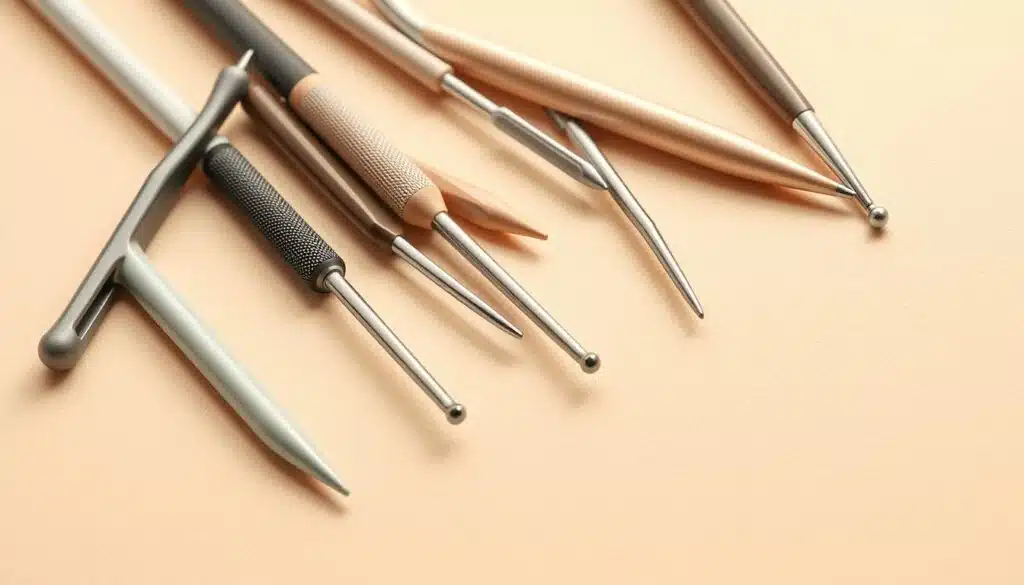
Benefits of ergonomic handles
Ergonomic handles aim to reduce strain during long crochet sessions. Brands like Clover and Furls are known for their comfort. A Clover Amour review often mentions the soft silicone grips that ease thumb pressure and steady tension.
Furls ergonomics are praised for their sculpted handles that support the palm. These handles reduce joint stress for those who crochet for hours. Yarnology hooks offer a budget-friendly ergonomic option with a rubbery grip that improves comfort.
When a simple metal hook makes sense
Traditional metal hooks from Boye or Susan Bates are useful. They excel when you need crisp stitch definition or a tiny, precise tip for thread and lace work. Metal hooks are light, fast, and often less expensive.
For stash kits and travel, a simple metal hook is a good backup. Some metal hooks may have rough spots or seam lines in budget sets. You can test them on a swatch to see if the tip finish meets your needs.
Grip types and thumb rests: matching hook to your preferred hold
Your grip style is more important than marketing. Knife, pencil, and fixed-hold crocheters find different handles useful. Thumb rests on Clover Etimo-style grips help keep tension steady for knife and pencil holds.
Remember, some ergonomic designs may hide where the shaft joins the handle. This can be a durability risk over time. Try a few styles or read hands-on reviews before committing. For a starter guide on tools, check this helpful resource best crochet hook to start with.
| Feature | Ergonomic Hooks | Traditional Metal Hooks |
|---|---|---|
| Comfort for long sessions | High; molded grips reduce fatigue | Moderate; can cause strain without breaks |
| Price range | Mid to high (premium like Furls) | Low to mid (Boye, Susan Bates) |
| Tip precision | Good; varies by shaft finish | Excellent for fine work |
| Durability concerns | Possible separation at handle joint | Possible rough spots on budget sets |
| Beginner friendliness | High; easier grip for new crocheters | Good; lightweight and familiar |
Best Crochet Hooks — top picks and what each excels at
Looking for the best crochet hooks in 2025? This guide highlights the top picks and their strengths. You’ll learn about feel, price, and who they’re best for. Choose one that fits your style, yarn, and budget.
Clover Amour review
The Clover Amour is a favorite for its smooth glide and soft handle. It’s great for long crochet sessions, reducing thumb and wrist strain. Its aluminum head also moves yarn smoothly, perfect for garments and blankets.
Furls Odyssey review
The Furls Odyssey offers a luxurious feel. Its weighted metal and polished finish speed up your crochet rhythm. It’s ideal for photo-worthy projects and those who value a premium feel, though it’s pricier and harder to find.
KXK counting hook
The KXK counting hook is a surprise hit. It combines counting, a light, and a rechargeable battery in a comfortable design. It’s perfect for pattern-heavy work or late-night crochet sessions.
Boye crochet hook
The Boye crochet hook is budget-friendly and reliable. It’s a great choice for beginners and a practical spare for messy projects. It offers consistent sizing and works well with various yarns.
Other great options include Yarnology and WooCrafts for budget shoppers. Omni and Tulip Etimo offer unique tip shapes. Addi is great for fine yarn work with its pointed heads.
Here’s a quick comparison to help you choose based on price, feel, and special features.
| Hook | Price Range | Standout Trait | Best For |
|---|---|---|---|
| Clover Amour | Mid | Silicone handle, smooth aluminum head | Everyday projects, long sessions |
| Furls Odyssey | High | Weighted, polished metal | Luxury feel, photography |
| KXK Counting Hook | Mid | Light, counter, rechargeable | Pattern-heavy, night stitching |
| Boye Crochet Hook | Low | Durable metal, consistent sizing | Beginners, backups |
| Yarnology | Low-Mid | Ergonomic sets | Value ergonomics |
| Tulip Etimo | Mid | Pointed head, good thumb rest | Fine yarn, precision work |
Use this guide to find the perfect hook for your projects. For a smooth and comfortable experience, try the Clover Amour. For a luxury tool, the Furls Odyssey is a top choice. The KXK counting hook is great for complex patterns. And for a budget-friendly option, the Boye crochet hook is a reliable choice.
In-depth Reviews: Popular Hooks Put Through Real Project Tests
Testers used each hook in real projects to see how they work with different yarns. You get real feedback, not just lab results. These reviews focus on how hooks perform in real-world conditions.
Performance with different yarns
Furls and Clover Amour worked well with cotton, acrylic, and wool. Tulip Etimo balanced smoothness and control, but its shiny shafts squeaked on some acrylics. KnitPro Symfonie, with wooden tips, offered a looser tension, perfect for drapey pieces.
Handling loaded stitches, bobbles, and clusters
Longer shafts were great for clusters and loaded stitches. Addi Comfort Grip excelled in these areas. Addi Swing, with a very short neck, found loading stitches and clusters hard.
Rounded grooves were better for textured stitches, while blunt points struggled with tight stitches. Sharp tips could split finer fibers. For bobble stitch patterns, choose a hook with a rounded head and a forgiving groove.
Noise and drag issues reported by testers
Several metal tips caused drag issues, according to testers. Yarniss, Addi Swing, Boye, and Susan Bates had rough metal that led to drag and squeak. Some Boye and WooCrafts tips got smoother with use. Prym started stiff but often improved after a few projects.
Shiny metal shafts could squeak with acrylic yarn, making long sessions distracting. These reviews aim to help you choose the right hook for your project. Look for smooth finishes and the right tip shape for cotton and acrylic yarns. Also, test for drag issues in the first 10–30 minutes of stitching.
Comfort & Fit: Finding Handles That Match Your Hands
Finding a hook that feels like an extension of your hand makes projects easier. Think about the handle size and how it fits in your grip. Small changes in width or length can prevent discomfort and keep your stitches even.
Handle width, length, and long-hand fit
If you have long hands, look for handles that are longer. This prevents the hook from poking your palm. Brands like Furls offer teardrop handles that distribute pressure evenly.
Clover Amour has a soft silicone grip with clear size markings. These markings don’t fade quickly. Addi Swing has a thinner profile that some prefer not to use. Try different lengths to find what works best for you.
Learn more about handle materials and shapes in this guide from a reliable review top picks and their advantages.
Weight considerations for speed and control
Weighted crochet hooks offer more control and steady stitches. Furls models are heavier, providing a rhythmic feel for slower work.
Lightweight aluminum or bamboo hooks speed up your work. They reduce fatigue during long sessions. Choose based on whether you prefer speed or control.
Size recognition and quick switching
Color-coding hooks saves time when switching sizes. Clover Amour, Corner Stone, and Yarnology use consistent colors for quick identification.
Engraved size marks are best. Printed numbers or stickers on Tulip or Prym models may fade, causing confusion.
| Feature | Examples | Why it matters |
|---|---|---|
| Handle shape | Furls Wooden Streamlines, Clover Amour | Reduces hand strain, matches pencil or palm grip |
| Length & shaft | Addi Swing, Tulip Etimo | Long shafts suit long hands; short shafts may irritate palm |
| Weight | Furls (weighted), ChiaoGoo bamboo (light) | Weighted crochet hooks improve control; light hooks increase speed |
| Markings & color | Clover Amour, Yarnology, Tulip | Hook color-coding and engraving speed size ID and last longer |
| Handle material | Rubber, wood, aluminum, polymer clay | Material affects grip feel, cleanliness, and durability |
Price vs Performance: When to Splurge and When to Save
Choosing a crochet hook is like deciding between a sports car and a reliable car for daily use. You want it to be fast, comfortable, and not snag your yarn. At the same time, it should be affordable and easy to replace when it wears out.
High-end options worth the cost
For a silky feel and premium quality, Furls is a top choice. These hooks have polished finishes, balanced weight, and grips that reduce hand fatigue. They cost around $36 each, but daily crocheters find the comfort worth it.
Great value sets for beginners and multi-size needs
Beginners and those building their yarn collection will love sets that offer many sizes at a good price. Clover Amour sets have consistent finishes and cushioned handles. They are a bit pricier but many find them worth it.
Boye and WooCrafts offer affordable hooks for beginners. These sets let you try different grips and sizes before spending more on pricier tools.
Common tradeoffs: finish quality, handle durability, and replaceability
Buying cheap hooks often means they might have rough metal or size markings that fade. Some handles are silicone-wrapped and last long. Others are glued and can loosen over time. You need to decide if single hooks or resin designs fit your needs better.
| Choice | Pros | Cons |
|---|---|---|
| Furls | Luxury finish, ergonomic, durable resin options | Expensive crochet hooks, limited availability |
| Clover Amour | Comfortable silicone handles, good sets for many sizes | Pricier than basic metal sets |
| Boye / WooCrafts | Affordable crochet hooks, wide size ranges, starter-friendly | Finish quality can vary, possible drag or rough spots |
| Handmade resin options | Unique weight and feel, aesthetic appeal | Higher cost, consider whether usage matches value |
Are you torn between Furls and Clover? If you crochet for hours and want comfort, Furls might be your choice. For a good set that’s easy on the wallet, Clover Amour or Boye is a great option.
For a detailed comparison and tips, check out a guide at best crochet hooks for the money. It shows when it’s worth spending more and when you can save.
Special Features to Consider: Lighted, Counting, and Rechargeable Hooks
You want tools that make long projects easier, not just clutter. Small add-ons can make a big difference if they work well. Choose features that fit how you crochet, not just for looks.
When a lighted/rechargeable hook like KXK can be helpful
If you crochet in dim light or at night, a lighted hook is a lifesaver. The KXK review shows it has a smooth metal tip and a wide handle. This reduces hand fatigue and the built-in light helps with tight stitches.
Rechargeable hooks save you from battery replacements. The KXK set’s battery life and charging ease won over reviewers. They loved it for long hours on detailed patterns.
Counting features for pattern-heavy or complex projects
A counting crochet hook is great for motif work and filet charts. It keeps your place without a separate marker or notebook. Reviewers who work on tapestry or complex repeats found it reduced mistakes.
Use a counting hook for pattern accuracy. If you mostly do simple rows, you might not use it.
Why some novelty features may be gimmicks (tester impressions)
Not every light or counter is a game-changer. The Yarniss lighted hook got mixed reviews for its build and light. Some found the wire and battery made it too heavy.
Corner Stone Crochet Lite was comfortable but its light was optional for many. Prym and others got mixed feedback. A neat trick can become a nuisance if it affects balance or finish.
Try novelty features in person if you can. A rechargeable hook that keeps a smooth shaft and handle is worth testing. If it sacrifices tip feel or adds drag, it’s not worth it.
Common Pitfalls: Hooks to Avoid and Issues Testers Found
Choosing the right hook makes crocheting faster and easier. The wrong one can lead to tension, squeaks, and frustration. Testers have identified several hooks to avoid to help you make the right choice.
Rough finishes and draggy metals
Draggy hooks slow down your stitches and fray your yarn. Yarniss and Addi Swing were criticized for their squeaky and rough metal. Cheap, grippy metal from Boye and Susan Bates can also cause problems. You need a hook that glides smoothly, not one that drags.
Handles, seams, and irritation
Poorly finished grips can be annoying during long crochet sessions. Boye and WooCrafts have handles with visible seams that can cause irritation. A shaft that pokes through or a handle that loosens is a big problem. Avoid hooks with seams or weak joins for long crochet nights.
Size markings and short necks
Size markings that fade or rub off can make choosing a hook difficult. Brands like WooCrafts and Tulip have labels that fade quickly. Short necks limit your ability to work certain stitches, like clusters. Addi Swing’s short neck was a major issue for testers.
Lightweight and hollow concerns
Lightweight hooks can feel flimsy and reduce control. Some Sewrella-style hooks lack the feedback you need. If your gauge changes with different tools, it might be due to the hook’s shape. Test before starting a big project.
Quick checklist before purchase
- Run a finger along the shaft to detect burrs or rough spots.
- Check printed or stamped size markings for permanence.
- Look for smooth handle joins and no visible seams.
- Consider shaft length for clusters and specialty stitches.
Want to avoid common crochet mistakes? Check out this guide for tips on gauge swatches, yarn tails, and avoiding beginner errors: 10 Common Crochet Mistakes and How to Solve.
How to Test Crochet Hooks Yourself Before Committing
Before buying a set or falling for a glossy photo, test the hook yourself. A quick home test checks how the hook works with different yarns, feels, and stitches. Try it with cotton, acrylic, and wool to see how it handles each.
Short home tests: knit a swatch in multiple yarn types
Knit small swatches for each yarn type. Use single crochet, half double, and a loaded stitch to check for snags and drag. This test shows if the hook tip causes snags or gets smoother with use.
Try amigurumi rounds and a lace repeat on separate swatches. This shows if one hook works for all projects or if you need different ones for cluster work and fine thread.
What to watch for in the first 10–30 minutes of use
Spend at least ten minutes with each hook. This short time tells you a lot about seams, squeaks, and comfort. If the hook causes lint, irritates your palm, or the size marking rubs off quickly, note it.
Notice how gauge changes between inline and tapered hooks. Watch for stitch loading issues and any repeated snagging that a brief session exposes.
How to check shaft length, neck taper, and tip smoothness
Measure shaft length against your hand. Avoid ends that poke your palm during longer rows. Test neck taper by loading several stitches; short necks can crowd cluster work while long shafts ease bobbles.
Examine hook tip smoothness for entry and split risk. A semi-blunt tip helps quick entry without splitting delicate fibers. A pointier tip can speed precise work but may split softer yarns.
Want troubleshooting tips for gauge and common errors while you test? Visit mastering your crochet for pattern-aware checks and fixes.
- Do a swatch test with at least three yarn types.
- Use 10–30 minutes per hook to detect squeaks or seams.
- Check shaft length for clustered stitches and hook tip smoothness for snagging.
- Always check crochet hook fit against your hand size and preferred hold.
Conclusion
In this roundup, we’ve learned that fit is more important than hype. Clover Amour is the top choice, followed by Furls and KXK for those who love luxury and gadgets. Susan Bates bamboo and Boye are great for beginners. Addi and Tulip cater to specific needs.
Choosing the right crochet hook means looking for comfort, smooth tips, and the right length. Try different types and materials to see what works best for you. Clover Amour and Yarnology have ergonomic grips, while Furls offers a premium feel.
Our final tips: start small and build your stash. Try hooks in person and experiment with sizes. Begin with Clover or Susan Bates bamboo, then upgrade to Furls or KXK for extra features. Choose what makes your hands happy, not just what’s trendy.
FAQ
Why does the choice of crochet hook matter for your projects?
The hook is key for stitch tension, speed, and comfort. Smooth metal hooks like Clover Amour or Furls give consistent stitches. Rougher metal hooks can drag and slow you down.
Shaft length, head shape, and handle ergonomics also matter. They affect how easily you can work stitches and keep even tension.
How do inline and tapered hooks change your stitch gauge?
Inline hooks tend to make stitches looser. Tapered hooks tighten stitches. If you need precise sizing, try both types for your project.
Which hooks are best for preventing hand and wrist strain during long sessions?
Ergonomic handles like Clover Amour, Furls, and Yarnology reduce grip tension. Silicone or rubberized grips cushion your joints. But, ergonomics are personal.
Try different grips and measure handle length against your palm. This ensures the shaft doesn’t poke into your hand.
What hook materials should you choose for different yarns?
Aluminum and smooth metal hooks work well with most yarns. They offer excellent glide. Resin and poly hooks look beautiful but may alter gauge and add weight.
Wood and bamboo hooks give warmth and grip. They might loosen your tension. For amigurumi, choose a smooth metal head. For lace, consider a tapered metal or fine resin hook.
Are lighted or counting hooks actually useful, or just gimmicks?
They can be useful for low-light work or row-heavy patterns. The KXK counting/rechargeable hook is highly rated. Other lighted models may feel gimmicky or add weight.
Test the feature against the hook’s core performance before committing.
Which hooks are best for beginners?
Beginners should try Clover Amour and Susan Bates Bamboo. They are comfortable and reliable. Budget-friendly Boye or WooCrafts sets are also good backups.
The key is to pick a hook that feels comfortable in your hand. Then, make a swatch to check gauge and yarn glide.
What should you test in the first 10–30 minutes with a new hook?
Knit a short swatch in your most used yarns. Check for drag, squeak, and splitting. See how the hook handles half double crochet and loaded stitch work.
Notice seams or sharp edges on handles. Feel for shaft flex where metal inserts into silicone. Watch if the hook changes your gauge.
How do shaft length and neck taper affect specific stitch work like bobbles or clusters?
Longer shafts help load multiple loops for bobbles and clusters. Short necks can make these stitches fiddly. Neck taper affects how yarn slips past the head.
Narrower throats tighten stitches, while rounded grooves help hold yarn for texture work.
Do high-end hooks like Furls justify their price?
Furls hooks are luxury pieces with ultra-smooth metal and weighted balance. Many testers love them for photos, comfort, and control. But they’re pricey and sometimes hard to find.
If you crochet daily and value feel and durability, they’re worth it. For beginners or casual crafters, quality aluminium hooks like Clover Amour or budget sets from Boye/WooCrafts give great value.
Can a hook change how a finished project looks beyond just comfort?
Yes. Hook tip shape, head profile, and material influence stitch definition and uniformity. Sharper heads enter tight stitches but risk splitting yarn. Inline heads yield looser fabric; tapered heads create denser stitches.
Choose your hook with the project type in mind. Lacy shawls, amigurumi, and granny-square blankets may all benefit from different hook characteristics.
What common quality issues did testers find that you should avoid?
Watch for rough or unpolished metal that drags. Some Yarniss and Addi Swing reports mention this. Visible seams or hard ridges on ergonomic grips are also issues.
Printed size markings that rub off and shafts that wiggle or poke through silicone handles are problems. Also, very short shafts limit stitch loading, and lightweight hollow-feeling hooks reduce tactile control.
How should you pick a hook if you have long hands or a strong preference for certain grips?
Measure handle length so the shaft sits comfortably without poking your palm. Long hands often need longer handles and shafts. Consider thumb rests and wider grips for knife or pencil holds.
If possible, hold the hook in-store or borrow from a friend and work a few rows. See if the handle’s shape and length suit your grip.
Are color-coded or printed size markings reliable?
Color-coded handles (Clover Amour, Corner Stone) are handy for fast swaps. Engraved markings are most durable. Printed or sticker labels (Tulip, some budget sets) can fade with use.
Don’t rely on them long-term. Test the hook size when precision matters, or mark your tools yourself.
What’s the best way to decide between saving and splurging on hooks?
Match your purchase to how often and what you crochet. For frequent, long sessions, invest in ergonomic, quality hooks (Clover Amour, Furls). For beginners or casual crafters, budget-friendly Boye, Yarnology, or WooCrafts sets give great value.
Keep a couple of high-end hooks for special projects. Use a practical stash of inexpensive hooks for classes, travel, or yarn that might snag premium finishes.
Do wooden and bamboo hooks really perform well compared to metal?
Yes, in many cases. Wooden and bamboo hooks like KnitPro Symfonie and Susan Bates Bamboo provide warmth, grip, and pleasant tactile feedback. They can make tension slightly looser and may be preferred for certain fibers.
Metal generally wins for universal consistency and precision. But wood is a fine choice for comfort and aesthetic preference.
How do charging and electronics in hooks affect long-term use?
Rechargeable features (KXK counting/light) can be very practical. No dead batteries and useful counters for complex patterns. But electronics add weight and can fail.
Good engineering like KXK’s impressed testers. Other lighted models may feel gimmicky or poorly built. Prioritize core hook performance first, then evaluate the electronics as a bonus.
Will a hook’s finish improve with use?
Sometimes. Some budget metal hooks start slightly rough but smooth out after a few swatches. But poor plating or badly finished tips may remain problematic.
If a hook feels unbearably rough initially, it might not be worth the effort. Return or replace it instead of risking slow, frustrating stitching.