
You want to finish more projects without losing the look you love. This guide shows how to crochet faster with practical, hands‑on tips. You’ll learn faster crochet techniques, stitch choices, yarn and hook tricks, and simple habits that help you speed up crochet while keeping quality high.
Start with quick crochet projects like baby blankets and scarves. Use reliable stitches such as half double crochet, single crochet, and double crochet. Choose a #4 worsted yarn and good contrast colors so your eyes follow rows easily. Small swatches build muscle memory, and watching trusted video tutorials speeds the learning curve.
Practice smart: short focused sessions, stitch markers, a row counter app like Knit Counter Lite, and an ergonomic setup cut wasted time. Avoid sticky yarns like untreated alpaca or sticky wooden hooks; if friction shows up, try a smoother metal hook or a bit of beeswax. Add steady music to keep tempo and you’ll see cadence improve.
Key Takeaways
- Pick fast basic stitches (half double, single, double) for quick wins.
- Use #4 worsted and high-contrast colors to see and move faster.
- Swatch regularly to build muscle memory and reduce pattern checks.
- Equip yourself with stitch markers, a row counter app, and ergonomic props.
- Avoid sticky yarns and try waxing hooks to reduce friction.
Why You’ll Want to Crochet Faster
You want to enjoy a finished project without waiting too long. Learning to crochet faster means scarves, baby blankets, and hats can become gifts in hours, not weeks. This quick process brings joy and keeps you eager to crochet more.
Getting good at a few stitches makes crochet faster. Start with simple stitches like single crochet and half double. The more you practice, the better you’ll get, making projects like washcloths and beanies with ease.
Working faster also makes you more productive. You can make several small projects at once. This is great for craft fairs or sending gifts early for birthdays and holidays. Keeping your workspace organized helps you stay focused and work efficiently.
Speed comes from consistent practice. Set aside short times for drills and use stitch markers to keep track. Listening to music that keeps a steady beat helps you stay in rhythm. These habits improve your speed without sacrificing quality.
Speeding up lets you make more gifts and practice pieces. This means you can try new colors and patterns. It also helps if you sell your crochet items online or at local markets. Faster progress keeps you motivated to make even more.
Best Beginner Stitches for Speed
Want to crochet faster on small projects? Focus on a few beginner stitches that are quick to learn. Start with the basics to get your rhythm going. Then, choose the stitch that fits the fabric you want. Practice with short swatches to get your hands used to the motion before starting a big project.
Chain stitch is your starting point. It lays the groundwork for rows and rounds and helps you control tension. A neat chain makes your project smooth and lets you start quickly.
Chain stitch and why it matters
The chain stitch is easy, quick to learn, and a must for most patterns. It’s great for improving consistency. An even chain saves time on fixing edges later. Use videos and short practice sessions to master the chain stitch fast.
Single crochet for tight, quick fabric
Single crochet creates dense, sturdy fabric fast. It might be slower per stitch than taller stitches, but it’s great for amigurumi and structured items. For tight, clean finishes, single crochet is a reliable choice.
Half double crochet: the speedy all‑rounder
Half double crochet offers a balance of height and control, saving time while keeping shape. It’s quicker than single crochet and perfect for hats, cowls, and baby blankets. Try swatching in worsted weight yarn to see how it compares.
Double crochet for fast, drapey pieces
Double crochet is taller, covering more ground in fewer rows. It creates loose, drapey fabric ideal for scarves, shawls, and airy blankets. For fast, openwork, or soft drape, double crochet is a top choice.
Looking for tips on working more efficiently? Check out this guide on working more efficiently to improve your practice and stitch selection.
Six Fast Stitches to Try Today
Want to make your crochet projects faster without losing their charm? Choose six stitches that are quick to work and add texture and color. Try swatching, and watch a short video to see how each stitch transforms a simple skein into something unique.
Half double crochet and quick projects
The half double crochet is perfect for fast projects. It creates solid fabric, is easy to work with, and is great for blankets, scarves, and clothes.
Use worsted weight yarn and a slightly larger hook for a steady pace. For a quick guide, check out this crochet stitch guide.
Sand/moss/linen stitch for texture without fuss
The moss stitch, also known as linen or sand stitch, adds a nice texture. It looks fancy but is easy to do, making it perfect for quick projects.
Work in two-row repeats to quickly memorize the pattern. This will help you crochet faster next time you need a quick gift.
Primrose stitch for impressive, fast results
Primrose stitch creates a puffy, detailed surface quickly. It’s great for blankets that need to impress without taking too long.
Swatch primrose with mid-weight yarn to see its full effect. You’ll be amazed at how fast it works up.
Mesh stitch for lightweight, speedy blankets
Mesh stitch makes airy, fast blankets and wraps. It uses fewer stitches per row, making large pieces grow quickly.
Choose smooth yarn for easy hook movement. This keeps your pace steady for long rows.
Blanket stitch for cozy, fast coverage
The blanket stitch adds thickness and warmth quickly. It works well with different yarn weights, so you can speed up with thicker yarn or use a lighter one for a finer look.
Use color blocks to keep your project interesting. Switching shades adds pace and visual appeal.
Spike stitch for visual interest with minimal effort
Spike stitch creates dramatic vertical lines without being hard to do. It adds striking texture without complicated counting.
Pair spike stitch with single crochet for a complex look that’s easy to stitch. Try short swatches to learn the pattern’s rhythm.
Choose Yarn and Hook for Speed
Choosing the right yarn and hook can save you hours. They should glide smoothly and control well. This way, you can keep a steady pace without struggling.
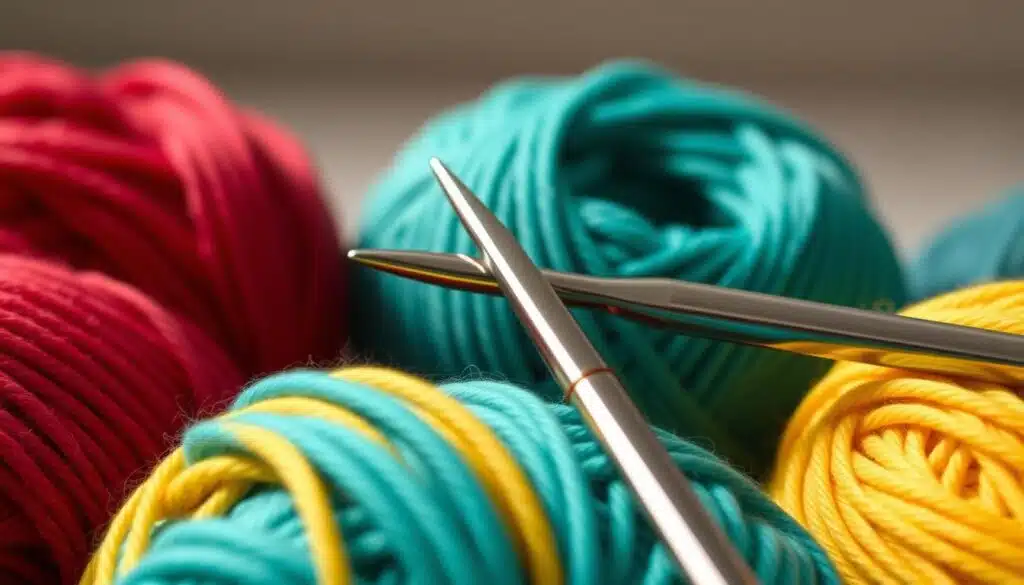
Why weight #4 worsted is ideal for fast work
#4 worsted is perfect because it’s not too thick or too thin. It works up quickly and gives you a lot of yarn for each stitch. This makes your project grow fast without losing control.
How yarn texture affects speed — avoid sticky alpaca and rough wood
Yarn texture is key. Smooth yarns like acrylic or superwash wool move easily on metal hooks. But, alpaca can catch and wooden hooks can slow you down. Waxing wooden hooks or using coated ones can help.
Color choices to help you see stitches and move faster
Choose bright colors like red, orange, or cream. They make it easy to see your stitches. This helps you stay focused and avoid mistakes.
When super bulky helps and when it hurts
Super bulky yarn is great for quick projects like big blankets. But, it can be heavy and tire your hands. Stick with #4 worsted for projects that need both speed and ease.
Quick checklist: choose #4 worsted for balance; test yarn texture before starting; avoid sticky yarn and rough hooks; pick clear colors; use super bulky for big, heavy projects.
Tools and Accessories That Increase Pace
You want to stitch faster without losing neatness. The right tools make that possible. Choose items that reduce fumbling, keep patterns visible, and cut counting time. This way, you can focus on rhythm and flow.
First, pick a hook that matches your grip and yarn. Try smooth metal or coated hooks for glide with bulky or slick yarns. Test pencil and shovel grips to see which helps your hands relax. The best crochet hook material for speed is one that lets yarn slip easily while you keep control.
Keep stitch markers within arm’s reach. Use them to mark repeats, ends of rounds, and every 10–20 stitches on wide pieces. Good stitch markers stop miscounts and save frogging time.
Next, use row counting apps and simple mechanical counters to track progress. Free apps like Knit Counter Lite work on tablets and phones. They prevent mental math and let you focus on tempo instead of tallying rows.
Arrange your pattern on a clipboard or tablet stand so it stays visible and hands-free. Set your device’s screen timeout longer and use markup apps to highlight repeats. This pattern organization trims interruptions and keeps your flow steady.
Below is a quick comparison to help you pick tools that boost pace.
| Tool | Benefit | When to Use |
|---|---|---|
| Smooth metal or coated hooks | Fast stitch glide, fewer snags | Bulky, acrylic, or slippery yarns where speed matters |
| Pencil vs. hammer grip hooks | Comfort reduces fatigue, steadier speed | Long sessions or dense fabrics |
| Stitch markers | Stops counting errors, marks repeats | Large pieces, lace, or multi-color projects |
| Row counting apps | Automatic tallying, saves mental energy | Multi-row repeats and pattern-heavy designs |
| Clipboard / tablet stand | Hands-free pattern access, fewer interruptions | Video tutorials, long patterns, or complex charts |
| Markup and annotation apps | Highlighting repeats, personal notes on pattern | Patterns you’ll reuse or teach |
Stitch faster by combining these items. Use the best crochet hook material for your yarn, keep plentiful stitch markers nearby, run a row counting app when repeats pile up, and maintain tidy pattern organization on a stand. Small gear changes add up to big time saved.
Practice Habits That Make You Faster
Start small and smart. A short intro swatch teaches more than frantic pattern-reading. Swatching benefits go beyond gauge; they anchor rhythm, show how a stitch grows, and make it simple to count stitches when you move to a full piece.
Swatches let you repeat the same motion until it becomes second nature. Muscle memory crochet saves time on every row because your hands find the right motion without your brain micromanaging. Practice and swatch to master stitches; this makes fast projects like baby blankets feel effortless.
How to structure short, focused practice sessions
Keep sessions tight. Aim for 15–30 minutes a day of focused crochet practice. Use a timer and pick one goal: speed a stitch, smooth a tension issue, or finish a repeat without checking the pattern. Focused crochet practice builds consistency without burning you out.
Counting strategies and marking repeats
Train yourself to count stitches as you go. Mark every 10–20 stitches with a removable stitch marker and use a row counter or a scrap of contrasting yarn to note repeats. If you want a quick reference for pacing and tips, see an external guide on efficiency here: crochet speed tips.
Practical routine: swatch new stitches until you can do several repeats without looking. Prepare enough yarn to finish a repeat to avoid stopping. When you practice this way, you learn to count stitches naturally and reduce pattern checks.
- Set a 20-minute timer for a focused crochet practice burst.
- Swatch with bulky or smooth yarn for clear stitch definition.
- Mark every 10–20 stitches and track rows with a counter.
When you repeat this routine, your pace improves. These crochet practice tips help you build speed while keeping quality high and fatigue low.
Workflows and Environment for Speedy Stitches
Start a simple routine to keep your hands moving and eyes relaxed. A clean crochet space helps you focus. Choose quick projects and yarns that are easy to see.
Adjust your chair, table, and hook for comfort. This makes long sessions easier.
Setting up your workspace for uninterrupted stitching
Hold your pattern on a clipboard or iPad. Use sticky notes or a cheat sheet for repeats. A row counter app and stitch markers are handy.
Pre-wind yarn cakes or cut lengths to avoid pauses.
Lighting, seating, and props to reduce hand fatigue
Good lighting helps your eyes. Use a bright, soft lamp to avoid glare. A lumbar pillow and lap tray support big projects.
Switch between pencil and knife grip to ease wrist strain.
Preparing patterns and keeping them visible
Highlight repeats and use sticky tabs. Place the pattern at eye level to avoid hunching. Better visibility means fewer mistakes and less ripping back.
- Checklist: prop pattern for easy view
- Checklist: arrange crochet lighting for clear stitch contrast
- Checklist: support project to reduce wrist strain for ergonomic crochet
- Checklist: keep stitch markers and row counter app within reach
- Checklist: prepare pre-wound yarn or pre-cut lengths
Rhythm, Music, and Mindset to Boost Speed
Find a steady groove and your hands will follow. Picking music that matches your stitch tempo turns slow rows into satisfying progress. You can experiment to discover your ideal crochet BPM and shape playlists for relaxed evenings or short deadline sprints.
Finding your beat
Try different tempos to tune into a natural flow. Lightweight projects and tall stitches pair well with faster tracks. Tighter fabrics and counting-heavy patterns benefit from calmer songs. Building dedicated crochet playlists helps you summon the right energy without hunting for the next track.
Headphones and steady tempo
Headphones cut ambient noise and lock in a steady pace so you can stay focused crochet without interruptions. Use playlists that nudge you forward when you need momentum. A timed mix for work bursts works well when a deadline looms, letting the rhythm push steady hands and fewer mistakes.
Mindset tips for speed
Treat practice like play to protect quality. Patience and short, regular sessions build muscle memory faster than frantic marathons. Keep the crochet mindset positive: reward small wins, pause before fatigue sets in, and swap hooks or yarn to ease tension when needed.
For curated ideas and community tips on pairing tutorials with Wii soundtracks and ergonomic hook choices, check this helpful guide: crochet playlists and tips.
Troubleshooting Slowdowns and Fixes
Stalled stitching feels like a speed bump on a sunny drive. You can get back up to pace by spotting the cause, trying a quick remedy, and keeping your project looking great.
First, test on a small swatch. If the yarn grabs or your hook drags, you need yarn friction remedies right away. Rub the hook lightly on wax paper or swap to a metal or coated hook such as Boye or Clover to improve glide. Test again before you keep going.
Next, work on crochet tension fixes. Loosen your grip, take short breaks, and practice slow, even repeats to reestablish rhythm. Use your non-hook hand to open stitches a touch for easier entry. Mark rows and repeats to avoid stopping to recount.
If the yarn choice is the culprit, know when to change yarn mid-project. Move to a #4 worsted or a super bulky when deadlines loom or the original yarn proves fiddly. Pick a simpler stitch like half double crochet or double crochet to speed coverage without ruining the look.
Practical checklist to fix crochet slowdowns:
- Swatch with the planned hook and yarn to spot problems early.
- Apply yarn friction remedies: wax paper, different hook material, or a coated hook.
- Use crochet tension fixes: loosen grip, breathe, and mark repeats.
- Decide to change yarn mid-project only if it preserves function and appearance.
Follow these quick moves and you’ll resolve most hiccups, keep your pace, and enjoy stitching again.
Conclusion
To crochet faster, pick the right stitches and materials. Use half double crochet and the six fast stitches. Choose a #4 worsted or bulky yarn and colors that show each loop.
Practice is key. Swatching, short sessions, and video tutorials improve your skills. Use tools like stitch markers and apps to stay on track.
Set up a good workspace and listen to music that keeps you moving. Keep your patterns in sight to keep going. With these tips and practice, you’ll crochet faster and enjoy your projects more.
FAQ
What stitches should you learn first to crochet faster?
Start with the basics. Learn the chain stitch to set up rows and rounds. Then, master the single crochet for tight fabric.
Next, the half double crochet is a speedy all-rounder. For tall, fast rows, try the double crochet. These stitches build muscle memory, making you faster.
Why is half double crochet often recommended for speed?
Half double crochet is perfect because it’s taller than single crochet but denser than double crochet. It’s simple and versatile, great for baby blankets, hats, and scarves.
Which six fast stitches should you try to finish projects quickly?
Try half double crochet and sand/moss/linen stitch for textured simplicity. Primrose stitch is impressive and fast. Mesh stitch is great for lightweight blankets.
Blanket stitch covers quickly, and spike stitch adds drama with little effort.
What yarn weight is best when you want to crochet quickly?
#4 worsted weight is the most reliable for speed and control. It’s bulky enough to cover ground quickly but easy to manage. Super bulky is faster but heavier.
How does yarn fiber and hook material affect your speed?
Sticky fibers like alpaca slow you down. Use smooth metal or coated hooks for better glide. Waxing the hook or rubbing it with wax paper can help.
What colors should you pick to work faster?
Choose high-contrast, bright colors like cream, red, or orange. They make loops pop and reduce eye strain. Dark or variegated yarns can slow you down, so pick visibility over vanity.
How do tools like stitch markers and row counters speed things up?
Stitch markers save you from recounting. Mark every 10–20 stitches on big pieces. Row counter apps like Knit Counter Lite keep your place without slowing you down.
What’s the best way to learn new stitches quickly?
Watch trusted video tutorials and practice short swatches. Use the same yarn and hook as your project. Small, focused practice builds muscle memory faster.
How should you structure practice to get faster without burning out?
Practice in short daily bursts of 15–30 minutes. Focus on one stitch or repeat. Count often at first and take breaks to avoid hand fatigue.
Track progress to keep momentum and make practice rewarding.
How can you set up your workspace to minimize interruptions?
Prop your pattern on a clipboard or tablet stand. Adjust screen timeout and use markup apps or sticky notes. Keep stitch markers, a row counter, and extra hooks within reach.
Good lighting and a lap pillow or table support reduce strain and unnecessary stops.
Can music actually help you crochet faster?
Yes—finding a steady BPM helps maintain tempo. Build playlists for relaxed vs. deadline speeds. Use headphones to block distractions and match music to your stitch speed.
Rhythm keeps your hands moving and boosts consistent tension.
What quick fixes help when your tension or stitches are slowing you down?
Loosen your grip and practice slower repeats to reset tension. Switch hook size if stitches feel tight. If the yarn is the problem, test a smoother hook or swap to #4 worsted or super bulky.
Small mid-project changes can save time if they don’t ruin the look.
When is it worth switching stitches or yarn mid-project to save time?
Switch if the current stitch or fiber keeps forcing stops or creates tension issues. Choose a simpler stitch or a different weight to preserve the design while cutting work time.
This is important for deadline projects or gifts.
What ergonomic tips help you crochet longer and faster?
Use a comfortable hook hold and prop the project to reduce wrist strain. Sit with good back support and keep frequent short breaks. Use a pillow or table support for big blankets.
How many times should you repeat a keyword like “half double crochet” in instructions to stay clear but not spammy?
Repeat important stitch names enough that you can find them quickly. Don’t overload a paragraph. Aim for clear, short sentences and break longer ideas into two or three small paragraphs.
How do you avoid sticky hooks or yarn without buying new supplies?
Rub the hook with wax paper or beeswax, or slide it across a bar of soap to smooth the surface. For yarn that grabs, try a slightly larger hook. Open your stitches a bit with the non-hooking hand to make insertion easier.
What’s a practical checklist to get started when you need to finish a project fast?
Choose a fast stitch like half double or double crochet. Pick #4 worsted or suitable super bulky yarn in a high-contrast color. Use a smooth metal hook and prop your pattern on a tablet.
Load stitch markers and a row counter app. Set a playlist at your preferred BPM. Swatch for five minutes to dial tension before you begin.