Ever looked through a drawer of hooks and wondered which ones are important? After 15 years of designing and testing, I’ve learned a lot. I tell every maker to start with a $20 plan before spending more on luxury sets.
Practicality wins over looks. Heart Hook Home, designed by Ashlea, is a must-have for its built-in ruler and feel. WeCrochet Dots is also great for beginners, with color-coded heads and millimeter markings. Each handle has a hole for stitch markers.
For a single hook to try, pick a 5mm. It will change how you feel about tension and comfort.
Retail data from Mary Maxim and brands like Clover and Susan Bates show prices are reasonable. You can find Clover Amour hooks on sale, steel hooks for $1.99, and circulars for $9.99. This means you can find good deals if you know where to look.
Shop smart by trying one reliable hook first. Then, build a starter set with pieces that fit your hands and projects.
Choosing the right hook can make a big difference. It affects how much you enjoy crocheting, how fast you work, and the quality of your stitches. Try out different materials like aluminum, wood, and ergonomic handles before buying a full set.
For a quick guide on sizing and anatomy, check out this helpful guide at crochet hook sizes — perfect for beginners.
Key Takeaways
- Begin with one good 5mm hook before buying a full set.
- Heart Hook Home and WeCrochet Dots are strong starter recommendations.
- Affordable options from Clover or Susan Bates mean budget crochet hooks can perform well.
- Test materials—aluminum, wood, ergonomic—to find what reduces fatigue.
- Retail pricing shows many crochet hook set deals and crochet bargains if you compare.
Why Choosing the Right Crochet Hook Matters for Your Projects
Using the wrong hook can ruin your sweater at blocking time. The right hook keeps your tension even, makes stitches clear, and speeds up your work. Small changes in the hook, like metal versus wood, affect how yarn moves and feels in your hands.
Choosing the right hook is key to matching your gauge swatch to the pattern. Metal hooks slide smoothly, which can make stitches loose. Wood and resin hooks grip better, tightening your stitches. For accurate sizes, use the same material for all your hooks.
The shape of the hook head impacts your stitch definition. Inline hooks with a deeper throat create crisp, uniform stitches, perfect for colorwork. Tapered heads make it easier to start yarn, reducing splits in fuzzy yarns.
Fast crochet comes from a balanced hook. Smooth hooks like Clover Amour or Boye speed up your work. Rough hooks slow you down, requiring more adjustments. A well-suited hook can save you minutes on each row.
Ergonomic hooks offer more than comfort. They reduce hand tension and delay fatigue, even after 30–45 minutes of stitching. Brands like Prym and Tulip show how different handles and weights affect your crochet experience.
The material of your hook affects the look of your finished project. Aluminum highlights stitch texture with a subtle sheen. Wood tones add warmth and mute the sheen. Resin or acrylic hooks offer smoothness and style, depending on the slip.
Try one hook before buying a set. See how it affects your tension, stitch definition, and speed. You’ll know if it’s worth the upgrade and how it changes your project.
| Hook Type | Typical Feel | Impact on Tension | Best For |
|---|---|---|---|
| Aluminum (polished) | Slick, fast | Loosens slightly; consistent | Blankets, amigurumi, fast projects |
| Wood/Bamboo | Warm, grippy | Tightens; can vary with humidity | Garments, textured yarns, quiet stitching |
| Resin/Acrylic | Smooth, stylish | Neutral to slightly loose | Statement hooks, mixed-media projects |
| Inline Head | Defined, precise | Promotes consistent loops | Colorwork, lace, tidy stitch definition crochet |
| Tapered Head | Soft entry, less splitting | Can tighten on textured yarn | Chunky textures, boucle, split-prone fibers |
| Ergonomic Handle | Cushioned, balanced | Reduces tight gripping; steadies tension | Long sessions, hand pain, comfort seekers |
Understanding Crochet Hook Anatomy and Sizing
Get cozy. You’re about to learn the parts of a hook that actually change your stitches. Start with the head or tip: that’s the part that slips into stitches. A sharp point can split yarn, while a rounder tip glides past fibers.
The throat, sometimes called the mouth or lip, holds the loop. A deep inline throat gives a defined loop shape. A tapered throat has a gentler curve and often reduces yarn splitting. Thinking about inline vs tapered will help you pick the right feel for your pattern.
The shaft, measured in millimeters, sets stitch size. A longer shaft fits more wraps and can smooth gauge for textured patterns. Look for printed sizes on the thumb rest or handle when manufacturers like Clover or Boye label their tools.
Head, throat, and shaft: inline vs. tapered explained
Inline hooks, such as many Susan Bates models, have a straighter shaft and a deeper throat. You’ll see consistent stitch definition and a firmer head shape. That makes inline a favorite for amigurumi and precise tension.
Tapered hooks tend to have a rounder head, wider lip, and shallower mouth. Brands like Boye favor this shape for faster work and less splitting. If you cruise through rows quickly, a tapered hook may suit your rhythm.
Millimeters are your friend: US vs UK vs metric sizing
Stop guessing with letters. Metric sizes are universal; mm crochet hooks tell the true diameter. US letters and numbers can vary by brand. The UK system uses different labels that run opposite to US numbering on steel hooks.
Use a hook sizing chart before you buy. A clear conversion saves you from mismatched gauge. If you need a quick reference, check the beginner guide linked here for a handy conversion and sizing table: hook sizing chart.
How to read labels and pick the right size for yarn weight
Read labels the way an experienced maker does. Yarn labels usually list a suggested hook size in both US and metric formats. Match the yarn weight to the mm recommendation for best results.
| Yarn Weight | Common US Sizes | Metric (mm) |
|---|---|---|
| Fingering / Super Fine | B–E | 2.25–3.5 |
| Sport / DK | E–G | 3.5–4.5 |
| Worsted / Aran | H–J | 5.0–6.0 |
| Bulky | K–M | 6.5–9.0 |
| Super Bulky / Jumbo | P–Q / S+ | 9.0–25.0 |
Retail labels often give both a US number and a millimeter. For example, B-1 listed as 2.25 mm and C-2 as 2.75 mm appear on many product pages. When patterns use US sizing, double-check the mm value to avoid surprises in gauge.
For small work like doilies or fine thread, steel hooks follow a separate scale measured in fractions of a millimeter. For large projects use longer hooks or circulars to hold many stitches without crowding the shaft.
If you want a deeper dive into how head shape, throat depth, and sizing interact, consult this practical beginner guide that merges anatomy and metrics cleanly: mm crochet hooks guide and conversions.
Quick tip: when in doubt, pick the metric size the pattern lists. Your gauge swatch will tell you if you need to shift up or down. That simple step beats frogging an entire sweater.
Best Crochet Hook Set Deals for Every Skill Level
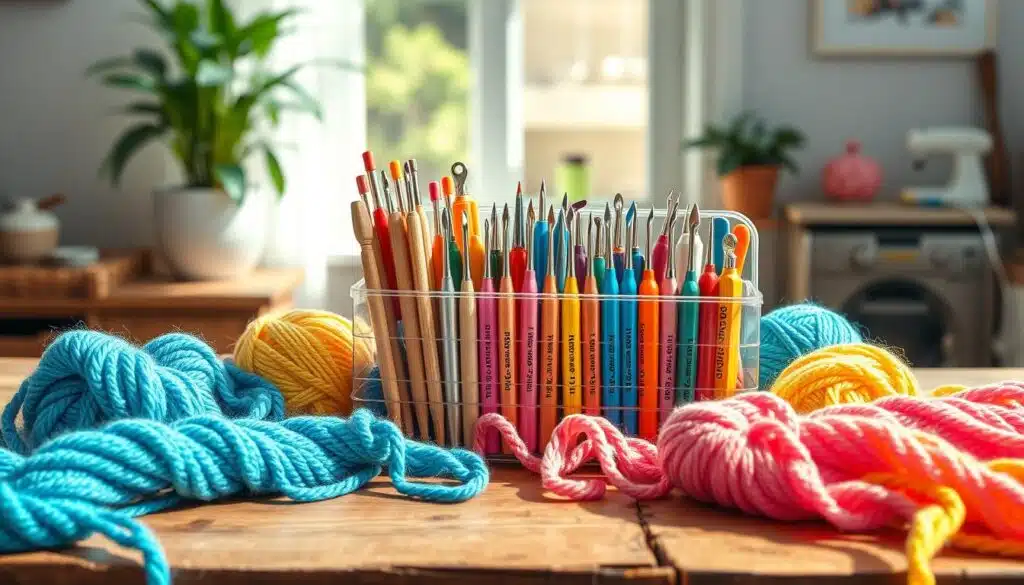
Looking for a set that fits your hands and budget? Start by checking out current crochet hook set deals. These deals offer great value and comfort. A single 5.0mm aluminum hook is a smart buy before you get a full set.
Top budget-friendly starter sets for beginners
Budget starter sets for beginners often have color-coded sizes and stamped millimeters. This makes it easy to know your gauge. WeCrochet Dots deals are worth checking out. Their Dots set is lightweight, has a smooth aluminum head, and a small hole for stitch markers.
The set starts around $29.99, making it affordable while providing reliable hooks. Clover Amour is also great for beginners. Its metal head and rubber grip make starting easier. Single Clover hooks cost near $10.75, and full sets up to $93.95. Keep an eye out for discounts to lower the price.
Start simple: buy a 5mm hook first. Practice a few swatches. Then, decide if you need a full set.
Mid-range ergonomic sets worth the upgrade
Ergonomic crochet sets are great when your hands hurt after long sessions. Brands like Prym and Etimo focus on comfort. Etimo hooks have a soft grip and precise head, with single hooks from about $10.98 and sets near $99+.
Heart Hook Home, designed by Ashlea, is another good choice. It has a built-in ruler on the handle. This makes it a practical upgrade for frequent makers.
Premium and specialty sets for experienced makers
Premium crochet hooks are for those who love craft and finish. Hand-turned wood and resin offer warmth and flair. Ommi and Divit Shilp resin hooks start at modest prices, while WeCrochet Mosaic sets offer luxury for about $47.29 in some bundles.
Premium sets focus on finish, material, and engineering. They reduce friction and improve stitch definition. Expect to pay more, but enjoy a premium experience for special projects.
| Level | Representative Brand | Why Pick It | Price Notes |
|---|---|---|---|
| Beginner | WeCrochet Dots, Clover Amour | Color-coded, stamped sizes, smooth glide | Dots set ~ $29.99; Clover singles ~$10.75 |
| Intermediate | Prym, Etimo, Heart Hook Home | Comfort grips, ergonomic shape, extra features | Etimo singles ~$10.98; sets ~$99+ |
| Advanced | Ommi, Divit Shilp, WeCrochet Mosaic | Hand-turned, resin, premium finish | Individual hooks $8.85–$12.85; mosaic sets ~$47.29 |
Looking for sales is smart. Retailers like Mary Maxim often lower full-set prices. For starter picks and sizing advice, check this guide at best crochet hooks for beginners.
Balance your spending with how often you crochet. Ergonomic sets are good for long sessions. Budget sets cover the basics without breaking the bank. Shop around, compare, and grab deals when you can.
Top Picks by Material and Use Case
Choosing the right crochet hook is like picking the perfect tool for a small miracle. Your project, yarn, and grip decide the best choice. Here are clear, easy-to-follow recommendations for aluminum, wood, resin, and steel hooks.
Aluminum: smooth glide and speed for everyday projects
Aluminum crochet hooks are great for fast, even stitching. Brands like Clover Amour and WeCrochet Dots offer metal heads with comfy grips. This keeps your rows moving smoothly.
These hooks are perfect for acrylic and wool yarns. They have low friction and consistent shape, helping keep even tension. If your hands get cold or you crochet for long, look for hooks with cushioned handles. This prevents the cold feel of bare metal.
Wood and bamboo: warmth, grip, and quiet stitching
Wood crochet hooks offer warmth and a gentle grip. They’re great for slippery yarns like rayon or mercerized cotton. KnitPro Symfonie inline wood hooks are a favorite for their feel and look.
They provide a softer, quieter stitch rhythm that’s easy on your joints. But, they might snag on textured yarns and can be fragile in very fine sizes. Use wood hooks for cozy projects, quiet crafting, and when you need to control tension more than speed.
Resin and acrylic: style statements that perform
Resin crochet hooks are known for their looks and smooth finish. Makers like Divit Shilp and Ommi create colorful designs that feel warm in your hand but work like metal.
Resin and acrylic sets from brands like Coopay are popular for their style and function. They can chip if dropped, so handle them with care. For a stylish hook that also performs well, consider resin or acrylic.
Steel hooks for threadwork and fine lace
Steel crochet hooks are made for fine work. Sizes from 0.6mm to 2.0mm are perfect for lace, doilies, and delicate trims.
These tools are short and stiff, ideal for thread and tatting. For affordable steel hooks, check out mainstream retailers and specialty shops. Keep a magnifier or good light handy for those tiny stitches.
| Material | Strengths | Best Use | Notable Brands or Types |
|---|---|---|---|
| Aluminum | Fast, smooth, consistent | Everyday sweaters, blankets | Clover Amour, WeCrochet Dots |
| Wood / Bamboo | Warmth, slight grip, quiet | Slippery yarns, relaxed stitching | KnitPro Symfonie, hand-turned wood |
| Resin / Acrylic | Stylish, smooth feel, colorful | Showpiece hooks, casual projects | Divit Shilp, Ommi, Coopay sets |
| Steel | Extreme precision, tiny sizes | Lace, threadwork, doilies | Basic steel sets sold by major retailers |
Your comfort and yarn choice should guide your hook choice. For more on specific brands, grip types, and how shaft length affects your stitch, check this detailed roundup at best crochet hooks.
For a quick guide: choose aluminum for speed, wood for grip and quiet, resin for style, and steel for delicate lace. Use this as your cheat sheet for the best hooks by material.
Interchangeable and Travel-Friendly Hook Sets
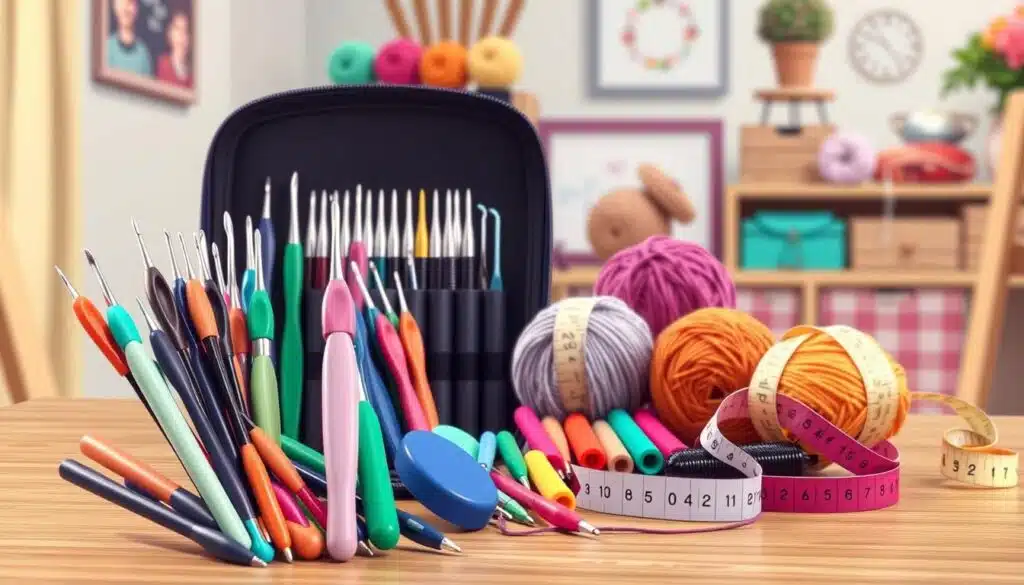
If you enjoy trying different things without clutter, interchangeable crochet hook sets are perfect. They have one handle and many heads. This saves space, money, and makes traveling easier.
Benefits of one-handle, many-head systems
Having one handle means your grip stays the same. You just swap heads, not tools. This makes travel crochet hooks and compact kits great for trips and workshops.
Svartur vs Mdoker: feel, range, portability
The Svartur set has twelve aluminum heads from 3mm to 10mm. It comes with a brushed-aluminum handle. The connection is smooth, and the case keeps things organized.
The Mdoker hooks have a wooden handle and nine aluminum heads from 3.5mm to 8mm. The natural grip helps with control, and the pouch is perfect for gifts.
How interchangeables perform on long projects and mixed yarns
Long projects depend on handle comfort and head connection quality. A solid join prevents catching. For heavy projects, the Svartur set might be better. For slippery yarns, Mdoker hooks are steadier.
Choosing the right travel setup
For true portability, choose compact kits that match your yarn weights. Test the handle first. The right handle makes interchangeable sets versatile and space-saving.
Ergonomic Hooks and Picks for Crocheters with Hand Pain
If your hands hurt after a short time of crocheting, you’re not alone. The right tools can help reduce strain and let you crochet longer. This guide will show you what to look for, recommend some top picks, and share tips to ease discomfort.
What to look for in an ergonomic crochet hook
Choose hooks with thicker handles for easier grip. Handles around 0.4 in (1 cm) or more are best. Soft rubber or silicone handles are gentle on your skin.
A triangular thumb rest or a smooth, rounded shape helps avoid pressure points. Lighter hooks reduce strain from repetitive motion, making crocheting easier.
Top ergonomic recommendations and why they reduce fatigue
Prym ergonomics are loved for their softgrip handle and thumb rest. Etimo comfort-grip hooks are praised for their cushioned handle and smooth head. These features make them great for those with hand pain.
| Model | Handle Type | Strength for Hand Pain | Notes |
|---|---|---|---|
| Prym Ergonomics | Softgrip rubber with thumb rest | High | Firm head, long-lasting hook, easy to hold for extended sessions |
| KnitPro Etimo comfort-grip | Cushioned handle, slightly tapered | High | Good glide, comfortable for crochet for arthritis, widely recommended |
| Heart Hook Home | Ergonomic foam with built-in ruler | Medium-High | Useful features for measuring, pleasant grip for many crafters |
Practical tips for crocheting with arthritis or tendon issues
Try a single ergonomic hook, like a 5 mm, before buying a set. Work in 30–45 minute sessions and stretch your hands gently between rounds. Switch hands when you can and use a wrist brace if needed.
Remember, grips like rubber or silicone will wear out. But the metal hook head usually stays good, so you can replace the handles later. Testing individual hooks from Prym ergonomics or Etimo comfort-grip is a good idea before buying a full set. This way, you can find the best fit without spending too much.
How to Buy Smart: Start Small, Test, Then Invest
You don’t need a whole set to start a project. Begin with one good hook. Learn how it feels in your hand. Expand your collection only when you know what works best.
This way, you save money and avoid mixing brands in the middle of a project.
Why buy single hook first
Start with a 5mm hook. It’s great for worsted-weight yarn. Your stitches will be clear, making it easier to see your work.
This hook size lets you test how comfortable it is to hold and how fast you can crochet. You won’t be stuck with a whole set if it doesn’t feel right.
When a full set makes sense
If you crochet often and find a brand you like, then buying a set is smart. Brands like Clover, Boye, and Knit Picks offer consistent quality. A full set is useful for projects that need different sizes or when switching yarn weights.
How to buy crochet hooks with confidence
Make a small swatch with your 5mm hook before buying more. Check if your stitches match the pattern’s gauge. Make sure the hook size matches the yarn weight chart.
If the handle doesn’t feel right, buy single hooks until you find one that fits your hand well.
Practical care and storage tips
Proper care can make your hooks last longer. Clean aluminum hooks with a soft cloth. Check bamboo for rough spots and sand them lightly. Rub beeswax to smooth them out.
Store resin and acrylic hooks in a padded case to prevent damage.
How long hooks last
With proper care, metal hooks can last for decades. Wood and bamboo hooks will last many years if kept dry and flat. Ergonomic grips might wear out, but they rarely affect the hook’s tip.
Treat your tools well, and they’ll serve you for years of comfortable crocheting.
Quick checklist before buying more
- Try a 5mm as a starter; buy single hook first to test comfort.
- Make a gauge swatch for fitted projects.
- Choose a full set only after you know your preferred brand and handle shape.
- Follow simple crochet hook care routines to maximize lifespan.
Where to Find the Best Deals and How to Compare Prices
Looking for great crochet hook deals without regret? Start by checking out different sellers. Look for small makers like Heart Hook Home, big brands like WeCrochet, and online marketplaces like Amazon. Supporting artisans can lead to better-made hooks that last longer.
For a guide on the best hooks for your money, check out this guide on best crochet hooks for the.
Where sellers hide the bargains
Keep an eye out for seasonal sales at stores like Joann, Michaels, and Mary Maxim. They often have bundles, buy-one-get-one-free deals, and clearance sales. Small makers and brands also offer promo codes during holidays.
Amazon has flash deals on crochet hooks, but make sure to check the seller’s ratings and return policies first.
How to judge true value
Don’t just look at the price. Consider the material and finish. A well-made hook with a smooth head and precise sizing is worth the extra cost. Clover Amour hooks, for example, are often more expensive but perform better.
While cheaper steel and aluminum hooks work for many projects, a smooth finish helps avoid snagging.
Smart buying moves
Decide whether to buy one hook or a set based on your risk level. If you’re unsure, start with a single mid-size hook. For a range of sizes, look for discounts or bundles.
Make sure the hooks are color-coded or stamped with the correct size. Also, check the seller’s return policy or warranty.
| Source | What to watch for | Typical deals |
|---|---|---|
| Brand sites (WeCrochet, Clover, Prym) | New releases, warranty info, direct support | Limited-time bundles, manufacturer discounts |
| Marketplace (Amazon) | User reviews, seller ratings, return policy | Flash sales on Amazon crochet hooks, mix-and-match packs |
| Small makers (Heart Hook Home) | Handcrafted feel, design details, limited runs | Occasional shop sales and holiday bundles |
| Big-box craft stores (Joann, Michaels, Mary Maxim) | Weekly coupons, clearance aisles, seasonal markdowns | Craft store hook sales, low-priced sets, end-of-season cuts |
Consider the price versus the finish and think about the long term. For a quick comparison of materials, check out this guide on aluminum vs wood hooks. Use this knowledge to find the best deals that fit your needs.
Conclusion
When picking crochet hooks, think like a maker, not a shopper. Start with a 5mm hook to test how it feels and fits. Then, try different types like Susan Bates and Boye to see what works best for you.
Beginners can try WeCrochet Dots and Clover Amour without spending too much. For better comfort, look into Heart Hook Home, Prym, and Etimo’s ergonomic options.
The key to finding great crochet hooks is to prioritize comfort, then size, and lastly style. Make sure the hook’s size matches your yarn and pattern. Try a small swatch to see if it causes hand fatigue.
Decide if you prefer the warmth of wood or the speed of aluminum for your projects. There are many hooks at various prices, so you don’t need the most expensive ones to create amazing things.
Watch for sales and bundles to get the best value. Prices vary a lot, from under $5 to over $100. Focus on finding a hook that feels right and is the right size, then look for deals.
This guide helps you choose the right crochet hook and get the most out of your crafting time.
FAQ
What hook should I buy first if I’m just starting?
Start with a 5.0 mm (US H/8) hook. It works well with worsted-weight yarn. It makes stitches easy to see and helps you learn tension.
Aluminum 5.0 mm hooks like WeCrochet Dots or a Clover Amour single hook are great. They are affordable, smooth, and easy to find.
Do hook material and head shape really change my finished project?
Yes. Material affects yarn glide and stitch tightness. Aluminum is slick and speeds you up.
Wood/bamboo gives a bit of grab and warmth, good for slippery yarns. Resin/acrylic can be stylish while performing well.
Head shape matters too. Inline heads give crisper stitch definition and help with colorwork. Tapered heads reduce splitting and feel more forgiving on textured yarns.
How do I read hook sizes across different systems?
Use millimeters as your universal guide. Every brand stamps mm on the head sometimes. Retailers list metric sizes.
US letter/number sizes and UK sizes can confuse you. Stick to mm for accuracy. For quick matches: fingering ~2.25–3.5 mm, DK/sport ~3.5–4.5 mm, worsted/aran ~5.0–6.0 mm, bulky ~6.5–9.0 mm, super bulky 9.0–16 mm. Steel hooks for thread run 0.6–2.0 mm.
Inline vs tapered—which should I try first?
Try both if you can, but start with whatever your favorite starter hook uses. Many beginners find tapered heads (Boye-style) easier because they’re forgiving.
If you do colorwork or want sharper stitch definition, try an inline head (Susan Bates-style). Sampling a 5.0 mm in both shapes will quickly tell you which fits your stitch style.
Are ergonomic hooks worth the extra money?
If you crochet more than 30–45 minutes per session, yes. Ergonomic handles reduce hand tension and fatigue.
Try one ergonomic 5.0 mm—Prym or Clover Amour or an Etimo hook—before buying a full set. See whether the comfort justifies the upgrade.
Should I buy a full set or pick single hooks as needed?
Buy one good hook first, test it, then expand. Full sets make sense once you know your preferred brand, head shape, and handle feel.
Sets range widely—cheap single stamped hooks can be
FAQ
What hook should I buy first if I’m just starting?
Start with a 5.0 mm (US H/8) hook. It works well with worsted-weight yarn. It makes stitches easy to see and helps you learn tension.
Aluminum 5.0 mm hooks like WeCrochet Dots or a Clover Amour single hook are great. They are affordable, smooth, and easy to find.
Do hook material and head shape really change my finished project?
Yes. Material affects yarn glide and stitch tightness. Aluminum is slick and speeds you up.
Wood/bamboo gives a bit of grab and warmth, good for slippery yarns. Resin/acrylic can be stylish while performing well.
Head shape matters too. Inline heads give crisper stitch definition and help with colorwork. Tapered heads reduce splitting and feel more forgiving on textured yarns.
How do I read hook sizes across different systems?
Use millimeters as your universal guide. Every brand stamps mm on the head sometimes. Retailers list metric sizes.
US letter/number sizes and UK sizes can confuse you. Stick to mm for accuracy. For quick matches: fingering ~2.25–3.5 mm, DK/sport ~3.5–4.5 mm, worsted/aran ~5.0–6.0 mm, bulky ~6.5–9.0 mm, super bulky 9.0–16 mm. Steel hooks for thread run 0.6–2.0 mm.
Inline vs tapered—which should I try first?
Try both if you can, but start with whatever your favorite starter hook uses. Many beginners find tapered heads (Boye-style) easier because they’re forgiving.
If you do colorwork or want sharper stitch definition, try an inline head (Susan Bates-style). Sampling a 5.0 mm in both shapes will quickly tell you which fits your stitch style.
Are ergonomic hooks worth the extra money?
If you crochet more than 30–45 minutes per session, yes. Ergonomic handles reduce hand tension and fatigue.
Try one ergonomic 5.0 mm—Prym or Clover Amour or an Etimo hook—before buying a full set. See whether the comfort justifies the upgrade.
Should I buy a full set or pick single hooks as needed?
Buy one good hook first, test it, then expand. Full sets make sense once you know your preferred brand, head shape, and handle feel.
Sets range widely—cheap single stamped hooks can be $1.99 at big-box retailers like Mary Maxim, mid-range hooks around $7–$12, and premium ergonomic sets $90+. Sampling keeps you from overspending on a set you won’t love.
What are interchangeables and are they practical?
Interchangeables give you one comfortable handle with many heads—great for travel, saving space, and switching sizes mid-project. Quality matters: look for seamless connections that won’t catch yarn and a handle weight you enjoy.
Svartur tends to be heavier and brushed-aluminum; Mdoker uses a wooden handle with aluminum heads for a natural grip. They’re practical if you work across multiple yarn weights frequently.
Which brands should I consider at different budgets?
Budget-friendly: WeCrochet Dots, basic Clover or Susan Bates hooks, and retailer options at Mary Maxim. Mid-range: Clover Amour, Heart Hook Home, Prym ergonomics. Premium/specialty: Etimo, hand-turned wood or resin makers, Mosaic wood sets.
Price doesn’t guarantee comfort—finish, head shape, and handle feel matter more than sticker shock.
How should I care for and store my hooks?
Wipe metal hooks with a soft cloth; keep wood/bamboo in a case to avoid cracking and sand/condition rough spots with beeswax if needed. Store interchangeable heads and handles together to avoid losing parts.
Proper care will keep metal hooks usable for years and wooden or resin hooks in good shape.
Where can I find the best deals on crochet hooks?
Watch brand sites (WeCrochet, Clover), marketplaces like Amazon, and craft retailers such as Mary Maxim, Joann, and Michaels for seasonal sales and bundles. You’ll see very low-priced options ($1.99) and discounts on mid-range sets.
Compare finish and warranty, and favor color-coded or stamped-mm hooks to avoid mislabeling.
Will switching hook materials change my gauge?
It can. Different materials and finishes change yarn glide and tension. If you’re making fitted garments, stick to the same hook material or recheck your gauge when switching.
Always make a gauge swatch when changing hook type to avoid surprises in the finished piece.
What’s the advantage of aluminum versus wood for everyday crocheting?
Aluminum offers a smooth glide, speed, and consistent finish—great for long runs and visible stitches. Wood/bamboo provides warmth, a gentle grip (helpful with slippery yarns), and quieter stitching.
Choose aluminum for speed and consistency, wood for control and comfort, and keep both options in your kit if you switch yarn types often.
How often do ergonomic grips wear out and can I replace them?
Grips can show wear over time—soft rubber or silicone may compress or tear after heavy use. The metal or nylon hook head often remains fine.
Some brands offer replacement heads or handles; for modular sets, you can replace just the worn handle. Test one ergonomic piece before committing to a whole expensive set.
I have hand pain—what practical tips help beside buying an ergonomic hook?
Use a thicker, cushioned handle (≥1 cm diameter), take breaks every 30–45 minutes, and do hand stretches. Keep projects light—choose lighter yarns and shorter hooks for lap work.
Consider a single ergonomic handle with interchangeable heads so you maintain comfort across sizes without heavy tools.
Any quick buying checklist before I add to cart?
Yes—pick mm size first, choose a head shape (inline vs tapered), decide on material (aluminum, wood, resin), test one 5.0 mm hook for fit, consider an ergonomic handle if you crochet long sessions, and hunt sales at WeCrochet, Amazon, or Mary Maxim for the best price.
Sample before investing in a full luxury set.
.99 at big-box retailers like Mary Maxim, mid-range hooks around –, and premium ergonomic sets +. Sampling keeps you from overspending on a set you won’t love.
What are interchangeables and are they practical?
Interchangeables give you one comfortable handle with many heads—great for travel, saving space, and switching sizes mid-project. Quality matters: look for seamless connections that won’t catch yarn and a handle weight you enjoy.
Svartur tends to be heavier and brushed-aluminum; Mdoker uses a wooden handle with aluminum heads for a natural grip. They’re practical if you work across multiple yarn weights frequently.
Which brands should I consider at different budgets?
Budget-friendly: WeCrochet Dots, basic Clover or Susan Bates hooks, and retailer options at Mary Maxim. Mid-range: Clover Amour, Heart Hook Home, Prym ergonomics. Premium/specialty: Etimo, hand-turned wood or resin makers, Mosaic wood sets.
Price doesn’t guarantee comfort—finish, head shape, and handle feel matter more than sticker shock.
How should I care for and store my hooks?
Wipe metal hooks with a soft cloth; keep wood/bamboo in a case to avoid cracking and sand/condition rough spots with beeswax if needed. Store interchangeable heads and handles together to avoid losing parts.
Proper care will keep metal hooks usable for years and wooden or resin hooks in good shape.
Where can I find the best deals on crochet hooks?
Watch brand sites (WeCrochet, Clover), marketplaces like Amazon, and craft retailers such as Mary Maxim, Joann, and Michaels for seasonal sales and bundles. You’ll see very low-priced options (
FAQ
What hook should I buy first if I’m just starting?
Start with a 5.0 mm (US H/8) hook. It works well with worsted-weight yarn. It makes stitches easy to see and helps you learn tension.
Aluminum 5.0 mm hooks like WeCrochet Dots or a Clover Amour single hook are great. They are affordable, smooth, and easy to find.
Do hook material and head shape really change my finished project?
Yes. Material affects yarn glide and stitch tightness. Aluminum is slick and speeds you up.
Wood/bamboo gives a bit of grab and warmth, good for slippery yarns. Resin/acrylic can be stylish while performing well.
Head shape matters too. Inline heads give crisper stitch definition and help with colorwork. Tapered heads reduce splitting and feel more forgiving on textured yarns.
How do I read hook sizes across different systems?
Use millimeters as your universal guide. Every brand stamps mm on the head sometimes. Retailers list metric sizes.
US letter/number sizes and UK sizes can confuse you. Stick to mm for accuracy. For quick matches: fingering ~2.25–3.5 mm, DK/sport ~3.5–4.5 mm, worsted/aran ~5.0–6.0 mm, bulky ~6.5–9.0 mm, super bulky 9.0–16 mm. Steel hooks for thread run 0.6–2.0 mm.
Inline vs tapered—which should I try first?
Try both if you can, but start with whatever your favorite starter hook uses. Many beginners find tapered heads (Boye-style) easier because they’re forgiving.
If you do colorwork or want sharper stitch definition, try an inline head (Susan Bates-style). Sampling a 5.0 mm in both shapes will quickly tell you which fits your stitch style.
Are ergonomic hooks worth the extra money?
If you crochet more than 30–45 minutes per session, yes. Ergonomic handles reduce hand tension and fatigue.
Try one ergonomic 5.0 mm—Prym or Clover Amour or an Etimo hook—before buying a full set. See whether the comfort justifies the upgrade.
Should I buy a full set or pick single hooks as needed?
Buy one good hook first, test it, then expand. Full sets make sense once you know your preferred brand, head shape, and handle feel.
Sets range widely—cheap single stamped hooks can be $1.99 at big-box retailers like Mary Maxim, mid-range hooks around $7–$12, and premium ergonomic sets $90+. Sampling keeps you from overspending on a set you won’t love.
What are interchangeables and are they practical?
Interchangeables give you one comfortable handle with many heads—great for travel, saving space, and switching sizes mid-project. Quality matters: look for seamless connections that won’t catch yarn and a handle weight you enjoy.
Svartur tends to be heavier and brushed-aluminum; Mdoker uses a wooden handle with aluminum heads for a natural grip. They’re practical if you work across multiple yarn weights frequently.
Which brands should I consider at different budgets?
Budget-friendly: WeCrochet Dots, basic Clover or Susan Bates hooks, and retailer options at Mary Maxim. Mid-range: Clover Amour, Heart Hook Home, Prym ergonomics. Premium/specialty: Etimo, hand-turned wood or resin makers, Mosaic wood sets.
Price doesn’t guarantee comfort—finish, head shape, and handle feel matter more than sticker shock.
How should I care for and store my hooks?
Wipe metal hooks with a soft cloth; keep wood/bamboo in a case to avoid cracking and sand/condition rough spots with beeswax if needed. Store interchangeable heads and handles together to avoid losing parts.
Proper care will keep metal hooks usable for years and wooden or resin hooks in good shape.
Where can I find the best deals on crochet hooks?
Watch brand sites (WeCrochet, Clover), marketplaces like Amazon, and craft retailers such as Mary Maxim, Joann, and Michaels for seasonal sales and bundles. You’ll see very low-priced options ($1.99) and discounts on mid-range sets.
Compare finish and warranty, and favor color-coded or stamped-mm hooks to avoid mislabeling.
Will switching hook materials change my gauge?
It can. Different materials and finishes change yarn glide and tension. If you’re making fitted garments, stick to the same hook material or recheck your gauge when switching.
Always make a gauge swatch when changing hook type to avoid surprises in the finished piece.
What’s the advantage of aluminum versus wood for everyday crocheting?
Aluminum offers a smooth glide, speed, and consistent finish—great for long runs and visible stitches. Wood/bamboo provides warmth, a gentle grip (helpful with slippery yarns), and quieter stitching.
Choose aluminum for speed and consistency, wood for control and comfort, and keep both options in your kit if you switch yarn types often.
How often do ergonomic grips wear out and can I replace them?
Grips can show wear over time—soft rubber or silicone may compress or tear after heavy use. The metal or nylon hook head often remains fine.
Some brands offer replacement heads or handles; for modular sets, you can replace just the worn handle. Test one ergonomic piece before committing to a whole expensive set.
I have hand pain—what practical tips help beside buying an ergonomic hook?
Use a thicker, cushioned handle (≥1 cm diameter), take breaks every 30–45 minutes, and do hand stretches. Keep projects light—choose lighter yarns and shorter hooks for lap work.
Consider a single ergonomic handle with interchangeable heads so you maintain comfort across sizes without heavy tools.
Any quick buying checklist before I add to cart?
Yes—pick mm size first, choose a head shape (inline vs tapered), decide on material (aluminum, wood, resin), test one 5.0 mm hook for fit, consider an ergonomic handle if you crochet long sessions, and hunt sales at WeCrochet, Amazon, or Mary Maxim for the best price.
Sample before investing in a full luxury set.
.99) and discounts on mid-range sets.
Compare finish and warranty, and favor color-coded or stamped-mm hooks to avoid mislabeling.
Will switching hook materials change my gauge?
It can. Different materials and finishes change yarn glide and tension. If you’re making fitted garments, stick to the same hook material or recheck your gauge when switching.
Always make a gauge swatch when changing hook type to avoid surprises in the finished piece.
What’s the advantage of aluminum versus wood for everyday crocheting?
Aluminum offers a smooth glide, speed, and consistent finish—great for long runs and visible stitches. Wood/bamboo provides warmth, a gentle grip (helpful with slippery yarns), and quieter stitching.
Choose aluminum for speed and consistency, wood for control and comfort, and keep both options in your kit if you switch yarn types often.
How often do ergonomic grips wear out and can I replace them?
Grips can show wear over time—soft rubber or silicone may compress or tear after heavy use. The metal or nylon hook head often remains fine.
Some brands offer replacement heads or handles; for modular sets, you can replace just the worn handle. Test one ergonomic piece before committing to a whole expensive set.
I have hand pain—what practical tips help beside buying an ergonomic hook?
Use a thicker, cushioned handle (≥1 cm diameter), take breaks every 30–45 minutes, and do hand stretches. Keep projects light—choose lighter yarns and shorter hooks for lap work.
Consider a single ergonomic handle with interchangeable heads so you maintain comfort across sizes without heavy tools.
Any quick buying checklist before I add to cart?
Yes—pick mm size first, choose a head shape (inline vs tapered), decide on material (aluminum, wood, resin), test one 5.0 mm hook for fit, consider an ergonomic handle if you crochet long sessions, and hunt sales at WeCrochet, Amazon, or Mary Maxim for the best price.
Sample before investing in a full luxury set.