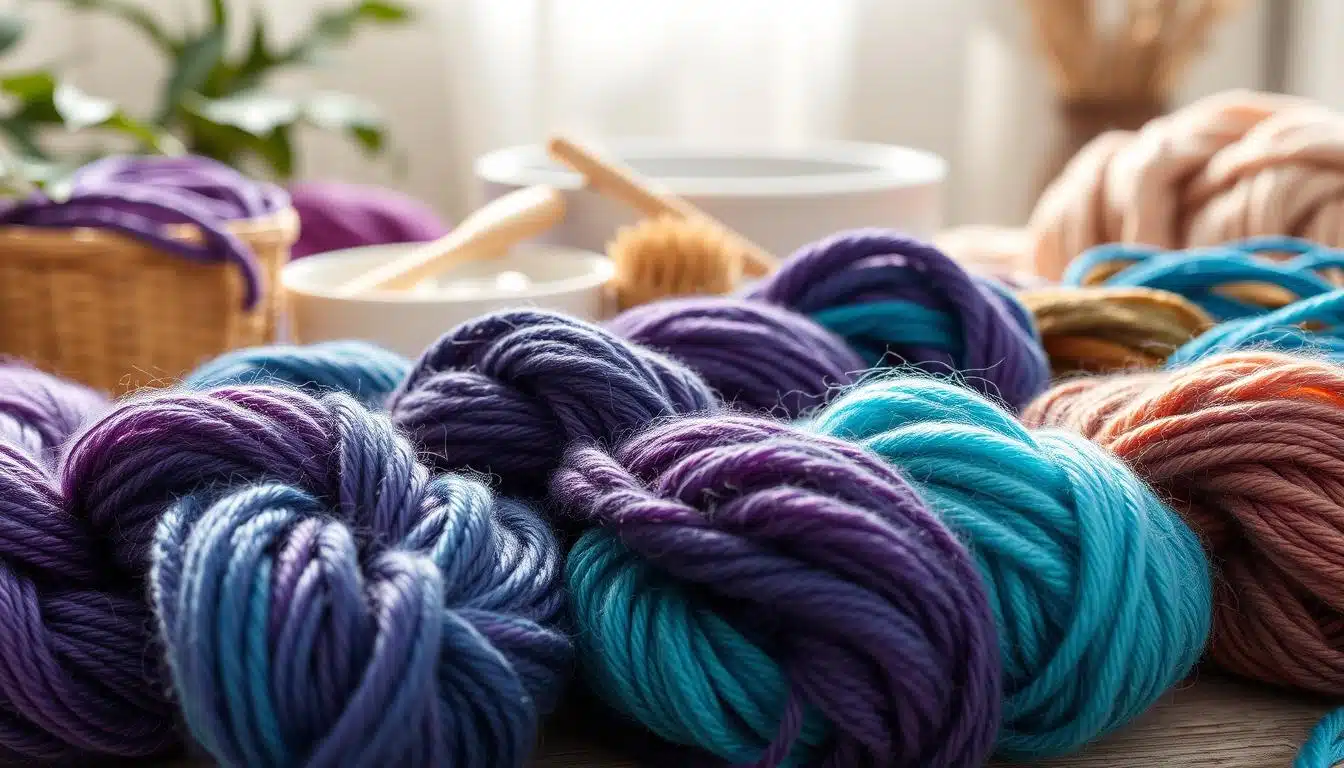
You’ve bought a special hand-dyed yarn. It’s time to treat it like the treasure it is. Hand Dyed Yarn Care begins when you open the skein. Some dye might come out in the first wash.
Use cool water and gentle care to keep the color bright and the yarn soft. This also helps prevent it from shrinking.
Think of hand-dyed yarn as a small-batch painting. Each skein was dyed, rinsed, and dried by hand. This means each skein is unique. Wind the yarn into cakes before using it to check for color bleed and tangles.
When it’s time for the first wash, follow a simple guide. Test a swatch, soak in cool water, and avoid moving it too much. Darker colors might release more dye, so be extra careful with the first rinse.
For more tips and product options, check out this quick guide at yarn care tips.
Key Takeaways
- Hand Dyed Yarn Care begins with a gentle first wash to remove excess dye.
- Cool water and minimal agitation help preserve yarn color and keep yarn soft.
- Winding into cakes lets you test color behavior and prevents tangles.
- Dark colors may bleed more—always test a swatch before committing.
- Treat each hand-dyed skein as a small-batch item with unique care needs.
Why Hand-Dyed Yarn Needs Special Care
Your hand-dyed skeins are unique. They have more depth and speckles than factory yarns. This makes your finished pieces special, but they need extra care.
Artisan yarns are made in small batches. This means they have a human touch and can vary in color. Mill-dyed yarn, on the other hand, is made in large batches and is more consistent.
Typical dye behavior: initial rinse-off, crocking, and color migration
When you first wash yarns like navy or burgundy, you might see some dye bleed. Crocking, or color rubbing off, can happen on clothes. Color migration occurs when fibers exchange pigments, often with friction or warm water. Always test a swatch before making a garment.
How artisan techniques and small-batch variation affect care needs
Small-batch dyeing and artisan techniques create unique colors in each skein. This means each skein can behave differently. Treat each skein as unique and wash them gently. Use cool water and avoid agitating too much to keep the colors vibrant and the yarn soft.
Hand Dyed Yarn Care
You want your hand-dyed yarn to stay colorful and soft for years. Start with simple habits. Use cool water for washing, handle the yarn gently, and avoid agitation. These steps help keep the yarn soft and prevent felting or color changes.
Core principles: cool water, gentle handling, minimal agitation
Fill a basin with cool to room-temperature water. Add a mild, unscented wool wash like Soak or Eucalan. Gently submerge the skein so the fibers soak without stress. Let it rest for 15–20 minutes, then rinse in cool water until the rinse runs clear.
Press water out with a towel instead of wringing. Air-dry flat away from direct sun. This method minimizes shrinkage and keeps the yarn soft. You’ll get better drape and stitch definition.
Testing a swatch: how to check for bleed and crock before committing
Before starting a full project, do a swatch bleed test or crock test. Hand-wash a small swatch in cool water with gentle soap. Watch for dye release. Expect slight release on first washes for some dyers.
If you want extra assurance, try a colorfast test yarn soak with 1–2 tablespoons of white vinegar. See if color stabilizes. Rub the damp swatch on white fabric for a crock test. If color transfers heavily, contact the dyer or plan extra precautions.
Use a color-catcher sheet for first washes if you’re unsure. This step can reduce stray dye during the initial rinses.
Why alternating skeins and winding into cakes helps color consistency
Hand-dyed skeins can vary even within the same dye lot. To avoid obvious stripes, alternate skeins row-by-row or round-by-round. Many studios recommend alternating skeins while you knit to blend small-batch shifts and reduce visible demarcation.
Winding skeins into cakes before you start makes alternating skeins easy and keeps yarn tidy. For single-skein projects, wind into two balls and alternate between the center and outside to distribute color shifts and prevent pooling.
For more detailed studio tips on washing and long-term care, check this guide from a reputable dyer: tips for caring for hand-dyed yarns.
Choosing the Right Wash Method for Your Fiber
Choosing between hand wash and machine wash for yarn can save you trouble later. Always read the yarn label and vendor washing notes first. These tell you about the fiber, temperature, and special care instructions.
When to hand wash and when a machine is okay
For hand-dyed skeins, hand washing is best. Superwash yarn care helps, but it’s not foolproof. Some yarns, like Symfonie, are machine-washable, but small-batch dyes can be unpredictable. Always test a swatch before machine washing.
Fiber-specific recommendations
Merino yarn care: wash in cool water, soak 15–20 minutes, then rinse and lay flat. Even superwash merino benefits from gentle care to keep its color and drape.
Silk yarn washing: use cooler water, around 55–60°F, and handle it very gently. Silk blends may lose some color; steam or light spray blocking helps without harming the fibers.
Alpaca yarn care: Suri and other alpaca bases are delicate. Never machine wash or tumble dry non-superwash alpaca. Soak 15–30 minutes without moving it, then gently squeeze and lay flat to dry. Steam blocking helps set the shape and keep the halo.
Blends and sock yarns: Merino-polyamide blends are strong, but hand-dyed ones need care. Treat silk blends like silk, and sock blends with mild detergents and short soaks to protect color and strength.
How to read yarn labels and vendor notes
Look for fiber content, temperature, and machine-washable or superwash treatments on the label. Check for OEKO-TEX or other certifications for dye and chemical safety. Vendor notes often suggest detergents like Soak or Eucalan and warn against certain chemicals that can harm the dye.
If vendor care notes and yarn care instructions disagree with what you know, choose gentler handling. Test a swatch, record the dye’s birthdate or dye lot, and keep notes for future projects. These habits help keep your hand-dyed work looking vibrant and wearable.
Detergents, Additives, and Color Fixers That Work
You want your hand-dyed yarn to stay vibrant and clean. Using a wool-safe detergent and gentle wash keeps it soft and colors bright. Soak and Eucalan are top picks because they reduce agitation and skip harsh rinses.
First, test a small swatch with your chosen product. Check for color transfer. A gentle wool wash, like a handmade bar or no-rinse option, can remove surface dye safely.
Try these practical options:
- Soak — mild, gentle, fragrance options let you match sensitivity.
- Eucalan — no-rinse formula that works well for delicate skeins and handspun.
- Unscented handmade wool wash bars — studio picks for subtle cleaning and low agitation.
For acidifier dye fix, add a small amount of white vinegar. Many recommend 1–2 tablespoons in the first soak or rinse. This helps set acid dyes on protein fibers. Use cool water and test before using it on larger batches.
Be careful with scented soap dye bleed. Strong fragrances, optical brighteners, and enzymes can loosen dye bonds. Some detergents can damage yarn even if dyes were set. Stick to neutral, enzyme-free cleaners when unsure.
For spinning fibers and rovings, a mild acid bath can reduce migration. Vinegar works best with gentle rinsing. This helps prevent dye migration later.
Experiment carefully. Vendor care notes might list compatible products, but water chemistry and additives can change results. For consistent color and soft yarn, choose wool-safe detergents, use small amounts of acidifier dye fix, and avoid strong or brightening products.
Water Temperature, Soaking, and Rinsing Techniques
You want your hand-dyed yarn to stay colorful and soft. Start with the right water temperature to avoid felting and color loss. For most yarns, cool to room-temp water is best. Silk yarns should be washed in water around 55–60°F to keep their shine.
Choose the coolest water for the most delicate fiber in a blend. This keeps the yarn happy. Don’t shock the yarn by moving it from hot to cold water. Always check the care label, even if it says machine wash. Gentle care can make your yarn last longer.
Soak strategy
Soak times should be short. For merino, soak for 15–20 minutes. For Suri alpaca, soak for 15–30 minutes. Soak gently without stirring, letting gravity and time work. For delicate fibers, soak and rinse quickly.
Handle with care
Minimize agitation when handling yarn. Lift it slowly and press out water with a towel. This keeps its loft and prevents loss of halo. Basin soaking is better than running water for spinning or handwashing, as it reduces stress and keeps fibers aligned.
Rinse and trap loose dye
Rinse until the water runs clear. Use gentle pours or fresh basins instead of strong water jets. Add color-catcher sheets to the basin for the first wash to catch stray dye. This reduces the risk of color migration later.
Vinegar can help stabilize dye in the first wash. But it’s not a replacement for cool water and careful handling. Always test a swatch before washing a full project. This small step can save you time and heartache.
Drying, Blocking, and Preventing Shrinkage
Treat wet hand-dyed pieces gently, like fragile guests. Avoid rough handling and hot rooms. No spinning thrill rides allowed. Air and patience help prevent yarn shrinkage and keep colors true. Remember, no dryer for wool—heat and agitation are a quick path to disaster.
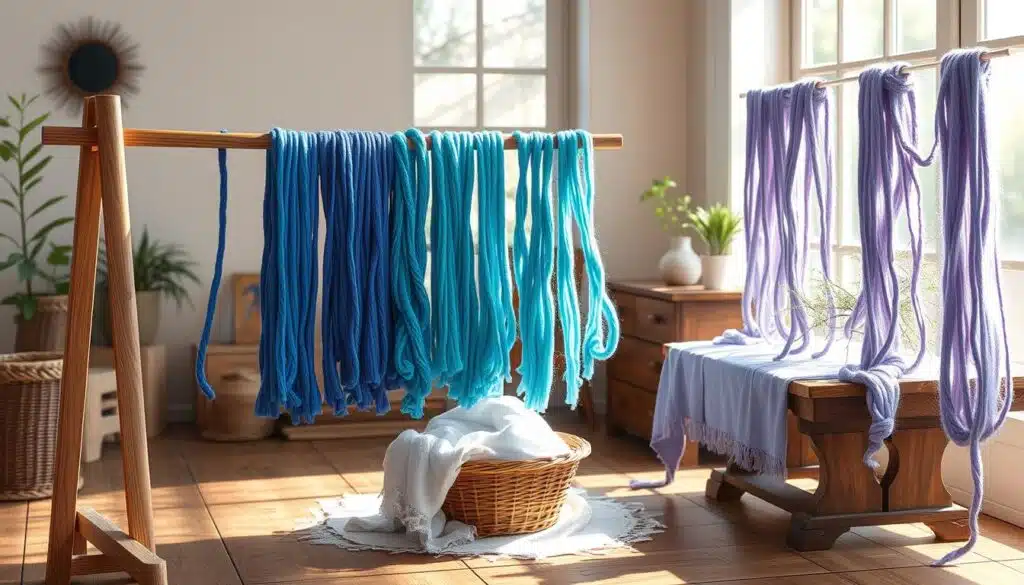
Why you should avoid the machine
Using a machine dryer on non-superwash fibers is risky. Heat tightens wool and merino fibers, causing felting. This can shrink the yarn by 5–15%. Even superwash fibers may fare better with lay-flat drying when hand-dyed.
Towel roll, gentle squeeze, and lay-flat steps
Wash as recommended first. Lay the item on a clean towel and roll it up like a sleeping bag. Press gently to transfer moisture into the towel. Do not wring.
Towel roll drying yarn cuts drying time and protects the fabric. Unroll and reshape the piece. Choose a flat surface or blocking mat for lay-flat drying. Avoid hanging, which causes uneven stretching.
Blocking tips for delicate projects
Blocking hand-dyed yarn improves stitch definition and drape when done carefully. For merino and stretchy wools, wet blocking with rust-free pins shapes without over-stretching.
For silk, Suri alpaca, and lace, steam blocking preserves halo and sheen. Light steam from a Singer iron or handheld steamer sets the shape without soaking the fiber. Test on a swatch first to ensure color stability and desired drape.
When in doubt, follow studio and vendor guidance. Practical notes and gentle techniques appear in this guide for blocking handknits and may help your approach: blocking hand-dyed yarn.
- Towel roll to remove excess water yarn.
- Lay-flat drying on a clean surface for even shape retention.
- Wet blocking pins that are rust-free for secure, safe pinning.
- Steam blocking for delicate silks and halos; avoid over-steaming.
Dealing with Dye Lots, Skein Variation, and Pooling
Hand-dyed yarn comes with its own unique charm. Small-batch yarn differences and dye lot variation are part of its beauty. You can plan your yarn purchases to manage these variations and see them as design features.
Artisan dyers like Madelinetosh and Malabrigo create skeins with subtle color shifts. Each skein has its own “birthdate” that explains the small-batch differences. To ensure consistency, buy all needed skeins at once or get an extra skein as a backup.
Alternating skeins and winding strategies to blend variations
Use the alternate skeins technique to blend skein colors. Work one row from skein A, then one row from skein B. Winding yarn cakes before starting makes this easy. For single-skein projects, split the skein into two balls and alternate pulling from each end to smooth out color.
Stitch choices to minimize pooling with variegated yarns
Simple stitches let colors flow smoothly without blobs. Stockinette and garter stitches create predictable patterns. For textured patterns, try cables or textured stitches. Changing needle sizes can also affect how colors land, helping prevent pooling.
| Issue | Quick Fix | When to Use |
|---|---|---|
| Visible mismatched skeins | Alternate skeins technique, blend skein colors by row | Multi-skein garments and shawls |
| Sudden color jump at a join | Fade-in new skein over several rows; maintain tension | Any project with noticeable pattern repeats |
| Pooling in patches | Change stitch pattern or needle size; test swatch | Variegated yarns with long color repeats |
| Uneven color flow in one-skein projects | Wind yarn cakes and alternate center/outside pulls | Hats, mitts, small accessories |
| Unexpected dye lot variation | Plan yarn purchases; buy extra skein or request sample | Large garments and color-critical designs |
Swatch in the intended stitch and check for pooling before starting. Variegated yarn stitch tips are simple: swatch, adjust, and alternate. This approach helps prevent pooling and ensures your finished piece looks intentional.
Long-Term Storage and Moth Prevention for Hand-Dyed Yarns
Storing hand-dyed yarn right keeps colors vibrant and fibers soft for years. Think of storage as part of your craft routine. Making smart choices now saves time and stress later.
Best storage environments
Store yarn in cool, dry, dark places to keep dyes and fibers in top shape. Sunlight can fade hand-dyed yarns, so keep them in closets or opaque bins. Also, keep humidity levels steady to prevent mildew and bad smells.
Using cedar, lavender, and airtight containers safely
Airtight containers keep dust and pests out during long breaks. Clean yarn and clothes before packing to avoid food residue or insect eggs. For natural repellents, use cedar-lined boxes or lavender sachets, but avoid direct contact with delicate fibers to prevent resin transfer.
Practical moth prevention steps
To prevent moths, refresh cedar or lavender every few months and rotate stored items. Vacuum and check storage areas regularly. Use breathable baskets for yarn you use often, and save airtight tubs for long-term storage.
How to prepare garments for seasonal storage
Start seasonal storage prep by washing or dry-cleaning items according to their fiber type. Dry them flat until they’re completely dry. Always clean garments before storing to remove oils and food that attract pests.
Extra-safe packing tips
Use acid-free tissue between shaped items to protect their shape and texture. Label containers with fiber and wash notes to avoid unnecessary handling. Check stored items every few months to air them out and inspect for damage.
Quick checklist
- yarn storage tips: keep cool, dry, and dark
- store yarn cool dry dark, away from windows
- protect yarn from light with opaque bins or closet shelves
- moth prevention yarn: use cedar blocks yarn carefully or lavender sachets yarn storage
- clean garments before storage and store garments clean to avoid inviting pests
- seasonal yarn storage prep: launder, dry-flat, then pack airtight or cedar-lined
Care Tips for Specific Bases: Merino, Silk, and Alpaca
Working with hand-dyed bases means each fiber needs special care. Always check the yarn label and test a swatch. This way, you treat the most delicate fiber in a blend with care. Here are some simple steps to keep colors bright and textures soft.
Merino fingering does best in cool, calm conditions. Hand wash merino in cool water for 15–20 minutes. Rinse until the water is clear, then press between towels and lay flat to dry. Even with superwash, remember that heat and agitation can harm the dye and drape.
For machine washing, buy extra yarn and follow the vendor’s advice. This ensures your garment stays in top condition.
Mulberry silk care requires a gentle touch. Wash silk yarn in water between 55–60°F with a wool-safe detergent. You might see some dye release in the first rinse. Use color-catcher sheets and a bit of white vinegar to help.
To keep silk looking great, steam block it instead of wet-blocking. When silk is mixed with merino, follow the silk care rules to keep it shiny.
Suri alpaca care is all about protecting the halo. These fibers can felt if handled roughly. Soak without moving the yarn for 15–30 minutes, then squeeze gently. Avoid heat and do not tumble dry.
For mohair or halo blends, limit washing and use spot cleaning when you can. A light steam block can reshape without harming the halo.
Here’s a quick guide to help you choose the right care steps:
| Fiber | Water Temp | Wash Method | Dry/Blocking |
|---|---|---|---|
| Merino fingering | Cool (around room temp) | Hand wash merino, soak 15–20 min | Towel-press, lay flat |
| Superwash treated merino | Cool to lukewarm | Hand wash recommended; note superwash caveats | Avoid machine dryer; lay flat or follow label |
| Mulberry silk | 55–60°F | Ultra-gentle soak; use gentle wash | Steam block silk; avoid heavy wet-blocking |
| Suri alpaca / halo blends | Cool | Soak without agitation; avoid harsh chemicals | Delicate steam blocking; lay flat out of sun |
Always test a swatch before starting a project. This helps avoid color bleeding and texture changes. By keeping temperatures steady and agitation low, your hand-dyed pieces will last longer.
First-Wash Protocols for New Skeins and Spinning Fibers
Start simple and curious. A quick pre-wash skein or a focused swatch test will save you from color surprises mid-project. Expect some dye to release, and plan for that with a clear first-wash yarn protocol.
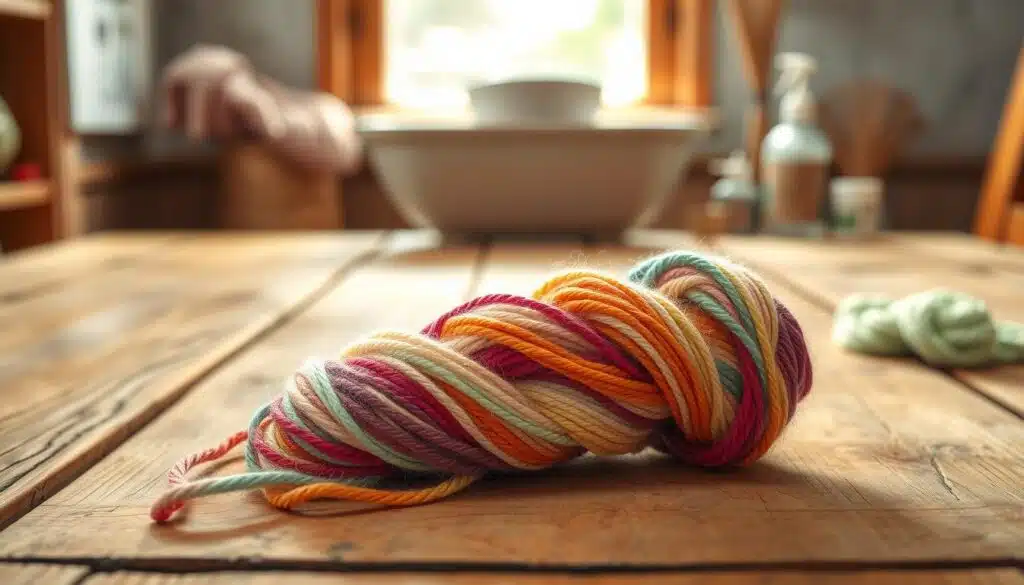
Why you should pre-wash or test a skein before knitting or crocheting
Always test skein dye bleed before you commit. Wet a small sample, blot the water on white paper, and check for color transfer. This quick step tells you whether to pre-wash skein or to alternate skeins while you work.
For large projects, buy all yarn at once and either pre-wash or run a test swatch. This reveals crocking, color migration, and how the dye behaves when exposed to repeated rinses.
Special notes for rovings and spinning fibers
Rovings need gentler handling than wound skeins. Follow roving wash tips: use cool water, minimal movement, and add 1–2 tablespoons white vinegar to the soak to reduce dye migration. Vendors often recommend vinegar for rovings to help stabilize color without harsh agitation.
Handle fiber carefully to avoid drafting or felting. Lay rovings flat to dry on a towel and avoid wringing or spinning that would distort the staple alignment.
Setting the twist on handspun and reducing excess dye
After plying, set twist handspun by giving the yarn a gentle soak using your first-wash yarn protocol. Add a splash of vinegar to the rinse water to help fix stray dye and to reduce later release.
Rinse handspun yarn until the water runs clear. If you see tint, repeat short, gentle rinses or try color-catcher sheets. Hang the skein with a light weight to let the twist settle while it dries. This method will help preserve structure and hand.
| Step | Action | Why it helps |
|---|---|---|
| 1 — Test | Swatch and blot to check test skein dye bleed | Shows colorfastness before you invest time in a project |
| 2 — Pre-wash | Soak skein gently using cool water and wool-safe soap | Removes surface dye and reveals long-term behavior |
| 3 — Vinegar rinse | Add 1–2 tablespoons white vinegar for roving or handspun | Helps settle dye, reduce dye migration, and stabilize color |
| 4 — Rinse | Perform spinning fiber rinse until water is clear | Prevents future bleeding and preserves stitch definition |
| 5 — Dry | Lay flat or hang with light weight to set twist handspun | Maintains shape and prevents felting or twist imbalance |
| 6 — Final check | Repeat quick rinse or use color-catcher to reduce dye handspun | Ensures stable color before you knit, crochet, or sell |
Care During Wear: Spot Cleaning, Frequency, and Maintenance
You want your hand-dyed pieces to last long and look great. Spot-cleaning helps a lot. Use a damp cloth with wool-safe soap and blot gently. This keeps colors bright.
For tough stains, test on a hidden area first. This avoids surprises and protects special fibers like mohair or suri alpaca.
Spot-cleaning techniques
Blot spills right away with a clean cloth. Mix a bit of scentless wool wash with cool water. Gently dab to remove stains without spreading the dye.
For grease or oil, a small amount of dish soap on the cloth works well. Then, rinse with wool. Keep color-catcher sheets ready for multi-colored skeins. Sometimes, just airing the garment is better than washing it.
Washing frequency and seasonal care
Light touch-ups can delay full washes. Most hand-dyed garments need washing only 2–3 times a year. But, items like socks or hats may need more care.
Check the care label for specific washing advice. This prevents shrinkage and color loss. Clean garments before storing them, and use moth deterrents. Store in cool, dark places.
Maintenance, pilling, and repair
Remove pilling gently with a fabric shaver or by hand. This keeps the fabric looking good. Be careful with halo fibers, as over-pilling can damage them.
For small repairs, try invisible darning or small patches. Keep leftover yarn and swatches for matching. Use a matching skein or contrasting patch for a unique look.
| Care Task | When to Use | Best Practice |
|---|---|---|
| Spot clean yarn | Small spills, makeup, food | Blot with cool water and wool-safe soap; test first |
| Remove stain wool | Oil, grease, ink | Use mild detergent sparingly, follow with wool rinse |
| Remove pilling knitwear | Surface fuzz on body or sleeves | Use fabric shaver gently; hand-pick for delicate halos |
| Quick yarn repairs | Holes, worn heels, loose stitches | Invisible darning or re-knit small patches; keep leftovers |
| How often wash wool garments | Everyday wear vs. occasional pieces | Typically 2–3 times per year; adjust by use and fiber |
| Laundry frequency knitwear | Socks, hats, frequently handled items | Wash more often for hygiene; follow blend care to avoid heat |
| Seasonal yarn care | End-of-season storage | Clean first, store in breathable containers with moth deterrents |
| Preserve stitch definition | Blocking and everyday wear | Use gentle blocking methods and minimize friction |
| Repair hand-dyed garments | Color loss, wear spots | Match dye lot when possible; mend with care or consult a pro |
For quick tips on fiber care, check a trusted guide like this yarn guide. It offers washing advice and vendor tips. A little care now saves big fixes later.
Conclusion
You’ve learned the basics of caring for hand-dyed yarn. Use cool water, handle it gently, and avoid too much agitation. Make sure to rinse it well to keep the color and softness.
Be extra careful with delicate fibers like silk and Suri alpaca. Choose wool-safe detergents like Soak or Eucalan. This helps keep the yarn’s texture and color just right.
Remember, hand-dyed yarns might lose some color at first. Always test a swatch before starting a big project. Use vinegar or color-catcher sheets for the first washes.
Try to buy all the yarn you need for a project at once. Then, use each skein in turn to avoid color pooling. This way, you can enjoy the yarn’s unique qualities in your projects.
Hand-dyed yarns are special, so plan your projects to show off their beauty. For more tips, check out Sassy Black Yarns’ guide and Crochet Craze’s fiber overview. They’ll help you care for your yarn and make your projects last longer.
FAQ
What makes hand-dyed yarn different from mill-dyed yarn?
Hand-dyed yarns are made in small batches. They are dyed with professional acid dyes on premium fibers. This process creates richer colors and unique variations.
Unlike mill-dyed yarn, no two skeins are the same. The dye uptake varies, which is part of their charm. But, they need gentler care.
Is it normal for hand-dyed yarn to release dye during the first wash?
Yes, it’s normal. Deep colors like navy or burgundy might bleed a lot. Reputable studios wash skeins before shipping.
But, some dye might stay. Expect color in the first rinse. It usually stops after a gentle pre-wash or swatch test. If bleeding doesn’t stop, contact the dyer.
What are the core principles for washing hand-dyed yarn?
Use cool to room-temperature water. Choose a gentle wool-safe detergent like Soak or Eucalan. Avoid harsh detergents.
Wash with minimal agitation and short soak times. Rinse until the water runs clear. Press out water with a towel, then lay flat to dry.
How do I test a swatch for dye stability before committing to a project?
Hand-wind a small swatch or cut sample. Soak it in cool water with gentle wash for 15–20 minutes. Rinse until clear.
Check for crocking with a dry white towel. Add 1–2 tablespoons of white vinegar to the first soak. If dye keeps running, try a different wash or contact the dyer.
Why should I alternate skeins and wind them into cakes before using?
Hand-dyed yarns have visible variations. Alternating skeins blends these variations. This avoids sudden color changes.
Winding into cakes prevents tangles. For one-skein projects, wind into two balls. Alternate center/outside to distribute color shifts.
When is it acceptable to machine wash hand-dyed yarn?
Only if the label says machine-washable or superwash. Always test a swatch first. Even superwash yarns can react differently to heat and agitation.
Default to hand-washing unless the vendor guarantees machine washability and you’ve tested it.
How should I care for specific fibers like merino, silk, and Suri alpaca?
Merino: soak 15–20 minutes in cool water, rinse until clear, towel-press, and lay flat. Treat superwash merino gently—hand-wash is safer.
Mulberry silk: use cooler water (about 55–60°F), gentle handling, and prefer steam-blocking. Suri alpaca and halo fibers: no agitation, soak 15–30 minutes, gently squeeze, lay flat to dry, and use gentle steam blocking.
Which detergents and additives help reduce dye migration?
Use neutral, enzyme-free, wool-safe washes like Soak or Eucalan. Gentle unscented soap bars are also good. Add 1–2 tablespoons of white vinegar to the first soak to reduce dye migration.
Color-catcher sheets can trap stray dye in the first wash. Avoid brighteners, bleach, and scented or enzyme-rich detergents that can provoke bleeding.
What are the ideal water temperatures and soak times for washing hand-dyed yarn?
Use cool to room-temperature water for most protein fibers. Silk prefers cooler water around 55–60°F. Soak merino 15–20 minutes; Suri alpaca 15–30 minutes with no agitation.
Avoid temperature shocks—keep water consistent to reduce felting risk.
How should I rinse and dry hand-dyed yarn to prevent color issues and shrinkage?
Rinse in cool water until it runs clear. Use a towel to press out excess water—do not wring. Lay flat to dry on a clean surface or blocking mat away from direct sunlight.
Never use a tumble dryer; heat and agitation cause felting and 5–15% shrinkage in non-superwash fibers.
When should I use steam blocking versus wet blocking?
Use steam blocking for delicate silks and halo fibers to avoid over-wetting. Wet blocking is fine for most merino projects but keep it gentle and avoid aggressive stretching.
Always test blocking on a swatch to see how the dye and fiber react before blocking a finished garment.
How do I plan yarn purchases to avoid dye-lot problems and pooling?
Buy all the yarn you need for a project at once when possible. If you must buy later, request skeins dyed on the same day or “birthdate” from the vendor.
Alternate skeins while knitting to blend variations. Swatch in your chosen stitch to preview pooling; simple stitches tend to showcase variegation more predictably, while textured stitches and needles adjustments can break up pooling.
What storage methods protect hand-dyed yarn and finished garments?
Store yarn and garments in cool, dry, dark places to preserve color and fiber. For frequent access, breathable storage is best; for long-term storage, clean items and use airtight containers or cedar-lined boxes.
Use lavender sachets or cedar cautiously (avoid direct contact) and check stored items periodically to prevent moth damage.
How should I prepare garments for seasonal storage?
Wash items according to fiber-specific recommendations to remove body oils and residues that attract pests. Ensure items are fully dry before storing.
Pack in clean, airtight containers or cedar-lined boxes with sachets, and avoid direct cedar contact to prevent resin transfer. Inspect and air items yearly.
How do I handle rovings and spinning fibers differently from commercial yarn?
Rovings are fragile—use minimal agitation and short, gentle soaks. Add 1–2 tablespoons of white vinegar to help stabilize dyes during initial rinses.
Handle carefully to avoid disrupting fiber alignment. When setting twist on handspun, rinse gently until clear, add vinegar if needed, and set twist with light weight while drying.
How often should I wash wearable hand-dyed items?
Wash only when necessary—airing and spot-cleaning extend time between full washes. For long-term care, washing 2–3 times per year is a good guideline for occasional garments.
Durable items like socks may need more frequent care but always use gentle, cool-water washes.
What are safe spot-cleaning techniques for hand-dyed garments?
Blot stains with a damp cloth and a tiny amount of gentle wool wash; avoid rubbing. Test first on an inconspicuous area. For delicate fibers, use minimal moisture and neutral products.
Steam refreshes and airing can reduce the need for full laundering.
How do I handle pilling and small repairs on hand-dyed garments?
Remove pills gently with a fabric shaver or by hand, taking care with halo fibers to avoid thinning. For repairs, re-knit patches with matching yarn or use invisible darning for socks.
Keep swatches and leftover yarn for future repairs whenever possible.
What should I do if a skein keeps bleeding despite testing and gentle washes?
First, try a gentle soak with 1–2 tablespoons of white vinegar and use color-catcher sheets. If heavy bleeding or persistent crocking remains, contact the dyer.
They may offer guidance, a replacement, or additional treatment. Avoid harsh detergents that could worsen the issue.
Any final quick-care reminders for getting the most out of hand-dyed yarn?
Treat hand-dyed yarn as the artisan product it is: pre-wash or swatch-test, use cool water and wool-safe detergents, add a little vinegar for first baths if needed, alternate and wind skeins into cakes, and air-dry flat.
These small rituals keep colors vibrant and fibers soft for years.