
Looking at a pattern you adore, but the yarn is sold out or not your taste? Don’t worry, a smart yarn swap can save the day. This guide focuses on what matters most: weight, fibre, and metres per ball. This way, your finished piece will match the original.
Tools like Ravelry and Yarn Worx show that swapping yarns is common and possible. Designers often swatch from their stash and compare yarns. They adjust as they go. You’ll learn how to do this too: find the pattern yarn’s specs, calculate yardage, search for substitutes, and swatch to check tension and drape.
This guide is like a field guide for yarn swapping. Whether it’s a quick fix or a planned change, this section gives you the basics. Your next yarn swap will feel like a crafty challenge, not a guess.
Key Takeaways
- Yarn substitution is a routine, solvable part of knitting and crocheting.
- Focus first on weight, fibre, and metres/yards per ball when selecting a substitute yarn.
- Use Ravelry and manufacturer pages to compare construction and real-world projects.
- Swatching remains the best test for gauge, drape, and stitch definition.
- Plan yardage carefully to avoid mid-project shortages during a yarn swap.
Why you might need a yarn substitution
Patterns often don’t work out in real life. You might find the yarn suggested in a pattern is sold out or too expensive. These are common reasons to swap yarns. Swapping can save money, match the climate, or save a project when the original yarn is no longer available.
Common reasons knitters substitute yarn
You might want a different feel or look for your project. Designers at magazines like Vogue Knitting swap yarns for color or editorial reasons. You can swap to change the season, make a sweater lighter, or use yarn you already have.
Availability, cost, and discontinued yarns
Yarns can stop being made. Finding a replacement for discontinued yarn is often a top priority. Start by matching the weight and yardage, then look at the fiber and twist. If a pattern calls for a DK blend like Shibui Maai, find yarns that balance drape and structure.
Cost is also a factor. If the yarn recommended in a pattern is too expensive, you can swap for something more affordable. Online shops or local yarn stores can help find similar yarns, making it easier to find a replacement.
Allergies, ethics, and climate considerations
Personal comfort is important. Some knitters have allergies to alpaca or lanolin in wool. Choosing a substitute like cotton, bamboo, or superwash wool can prevent irritation and make the garment comfortable.
Your values also guide your choices. Ethical yarn choices are important for those who prefer responsibly sourced fibers or transparent supply chains. Resources on green knitting practices can help. Check out green knitting tips for sustainable options.
Climate and season also affect your choice. Swap to linen or cotton for warm-weather wear. Choose wool or wool blends for cold months. Each swap changes the drape, warmth, and care needs, so swatching is key before committing.
Understanding yarn weight and how it affects your project
Choosing the right yarn is key. The wrong one can make your sweater fit your cat. This guide helps you understand yarn weight charts, compare DK vs worsted, and see how yarn weight changes your fabric.
Yarn weight categories and international names
Yarn names vary by country. In the US, you might see DK and worsted. In the UK, these are called 8-ply or aran. A clear yarn weight chart makes switching between patterns easy.
Remember, metres and yards matter. Two 50g balls can have different lengths. Always check the total yardage before buying. For more tips, visit Yarn Worx.
How weight changes drape, warmth, and stitch definition
Weight impacts drape and stitch definition. Lighter yarns create soft, drapey fabrics with clear stitches. Thicker yarns make warmer, chunkier fabrics with bold texture.
Fiber and construction also play a role. A silk-blend in a heavier category might drape better than a stiff cotton of the same weight. Always consider drape and stitch definition when choosing substitutes.
When swapping weight is safe and when it’s risky
Some projects can handle weight swaps. Scarves, shawls, and loose wraps focus on drape, not fit.
Fitted garments like sweaters are trickier. Swapping weight can change tension, measurements, and overall look. If you use lighter yarn, you might need more metres and should test sizing carefully.
| Project type | Safe to swap | Notes |
|---|---|---|
| Shawl / scarf | Yes | Focus on drape and yardage; lighter weight often increases metres needed |
| Loose pullover | Maybe | Check gauge and fabric hand; similar yarn weight equivalents work best |
| Fitted sweater | No | Match stitch definition and gauge exactly; DK vs worsted swaps change fit |
Quick rules: substitute within the same weight when possible, verify metres per ball, and swatch for drape and gauge. For detailed guidance on substitutions and metres, check the yarn substitution guide at Yarn Worx.
Gauge, tension, and why your swatch is your best friend
It’s tempting to skip the swatch and dive into knitting. But, a swatch is key to a successful project. It shows how the yarn works, how long rows are, and if you can hit the pattern’s gauge.
To measure gauge, start by casting on 6–8 inches of stitches in the pattern’s stitch. Work a few inches, then lay it flat. Count stitches and rows in a 4-inch section. Divide by 4 to find stitches and rows per inch.
If your gauge doesn’t match the pattern, try changing needle sizes. Swap needles up or down one size and knit the same swatch again. This will change the stitch size and row length. Keep trying until your swatch matches the pattern’s gauge.
Swatch blocking is also important. Wet or steam block a swatch like the finished piece. Let it dry completely, then re-measure. This shows true stitch and row counts and how the fabric drapes.
Use tools to make swatching easier. A ruler, locking stitch markers, and a tapestry needle help measure. Online tools can give quick estimates, but real swatches are essential for matching gauge.
Don’t rush. Designers often suggest making multiple swatches, like at Brooklyn Tweed and on Ravelry. Test different needle sizes and yarn weights. Compare the fabric after blocking before buying a lot of yarn.
| Swatch Step | What to Do | Why It Matters |
|---|---|---|
| Cast on | Cast on a wide swatch (6–8″ recommended) in the pattern stitch | Prevents edge distortion and gives enough area for accurate counting |
| Knit sample | Knit 4–6 inches in height, include pattern repeats if applicable | Shows how stitch pattern affects gauge and row length |
| Measure unblocked | Count stitches and rows in a centered 4″ section, divide by 4 | Gives baseline for needle size adjustment and initial tension |
| Block swatch | Wet or steam block as the finished piece will be treated; let dry fully | Swatch blocking reveals true fabric size, drape, and stitch definition |
| Re-measure | Count stitches and rows again after drying; compare to pattern | Confirms whether you match pattern gauge or need different needles |
| Adjust and repeat | Change needle size or yarn holding, make new swatch if needed | Ensures final garment fits and behaves as intended |
Comparing yardage and skein size for accurate substitutions
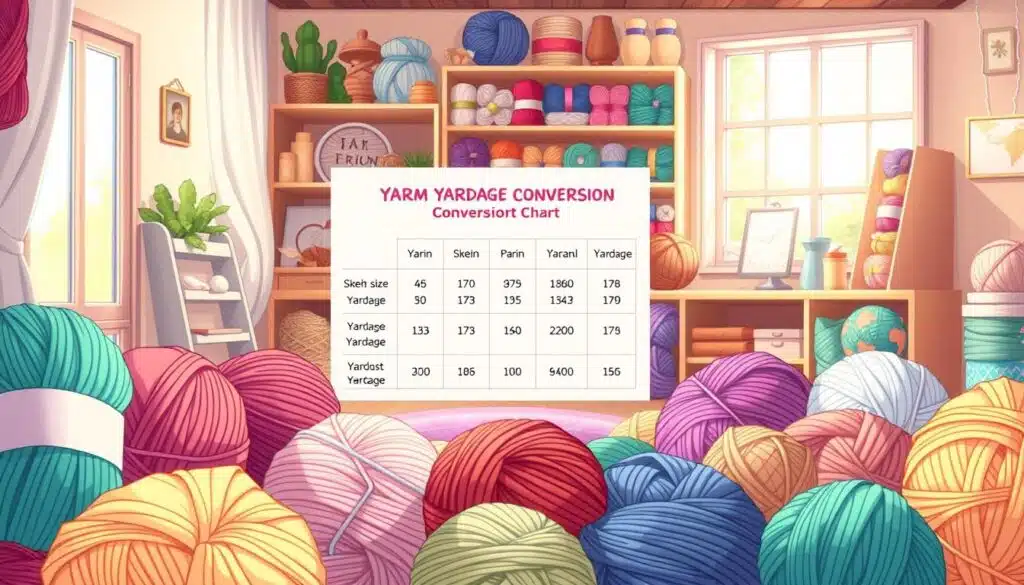
Want a smooth swap without last-minute skein hunts? Start by checking the ball band for grams and metres. This simple step helps avoid surprises when you convert yarn yardage and find a replacement.
Converting metres to yards for US-based patterns
American patterns use yards. If your pattern is in metres, remember: one metre equals 1.0936 yards. This makes comparing totals easy before you shop.
Keep units the same when calculating yarn. Convert all metres to yards or vice versa. This prevents mistakes at checkout.
How to calculate total yardage needed for each size
Patterns often list balls by size, not metres. Multiply balls by metres per ball to find total metres, then convert to yards if needed. For example, five 100m balls equal 500m total.
Use a checklist: pattern metres, balls, substitute metres per skein, and total skeins needed. This helps plan exact purchases and avoid leftover worries.
Practical examples: swapping 50g/100m balls for 100g/200m skeins
Imagine a pattern needs five 50g/100m balls (500m). A 100g/200m skein substitute gives 200m per skein. Three skeins equal 600m. You get extra yardage, which is okay unless color or dye-lot limits are a concern.
When substituting skein sizes, consider packaging and dye lots. Buying three 100g skeins instead of five 50g balls changes how you alternate skeins and manage color pooling.
| Original | Pack Size | Metres per Unit | Units Needed | Total Metres | Equivalent US Yards |
|---|---|---|---|---|---|
| Pattern yarn | 50g balls | 100 m | 5 balls | 500 m | 546.8 yd |
| Substitute A | 100g skeins | 200 m | 3 skeins | 600 m | 656.2 yd |
| Substitute B | 50g balls | 110 m | 5 balls | 550 m | 601.5 yd |
| Substitute C | 100g skeins | 180 m | 3 skeins | 540 m | 590.6 yd |
Use the table to compare options and calculate yarn needed before buying. Careful yarn yardage conversion and skein size substitution save money and time.
Fibre content and how it changes feel and behavior
Before you swap yarn, get curious about what each fiber brings to the stitch. Fibre content tells you about warmth, drape, and how the fabric will age. Animal fibers like wool and alpaca give warmth and spring. Plant fibers such as cotton and linen stay cool and crisp. Synthetics add strength and easy care.
Animal, plant, and synthetic fibers: strength, drape, and care
Wool and alpaca offer elasticity and memory, which helps garments keep shape. You’ll notice alpaca vs merino differences right away: alpaca gives more drape and halo, merino feels springy and resilient. Cotton lacks bounce and can sag, while linen adds crisp drape and softens with wear. Nylon and acrylic improve durability and abrasion resistance.
Care varies by fiber. Animal fibers can felt if treated roughly. Plant fibers often tolerate heat and agitation poorly when stretched. Look for a machine washable yarn if you need easy care for everyday items. When in doubt, test a small swatch to learn how washing affects feel and size.
Effects of blends on drape and blocking
Blends mix strengths. Fiber blends such as wool/alpaca/silk/linen change drape, sheen, and blocking response. A 70/30 alpaca/merino mix will hang differently than pure merino. Silk adds fluidity. Linen adds structure. Blends often make better all-round yarns for wearable pieces.
Designers use blends to get targeted results. For example, a chainette construction with 70% alpaca and 30% merino gives lightness, halo, and a graceful drape. If your pattern lists a blend, match proportions where possible to mimic the original behavior.
Special considerations: felting, steeking, and machine washability
Felting and steeking rely on animal fibers’ natural cling. If your project needs a stable steek or intentional felting, avoid plant or fully synthetic substitutes. Superwash wool resists felting but may lack the grip you need for secure steek edges. Think about alpaca vs merino when steeking; alpaca’s halo can blur stitch definition, merino tends to hold clearer edges.
Machine washable yarn options are handy but not universal. Sock yarns often combine superwash wool with nylon for durability. Swapping in pure wool can risk felting and faster wear at high-friction spots like heels. If you choose a machine washable yarn, test laundering on a sample to confirm behavior.
For deeper reading on fiber behaviour and practical swap tips, see this yarn and fiber guide.
| Fiber Type | Typical Traits | Best Use | Care Notes |
|---|---|---|---|
| Merino (wool) | Springy, good stitch definition, resists creasing | Sweaters, hats, fitted garments | Hand wash or gentle machine; can felt if agitated |
| Alpaca | Soft, drapey, halo, less elasticity | Shawls, drapey garments, scarves | Hand wash recommended; less prone to itch, can pill |
| Silk blends | Sheen, fluid drape, added strength | Luxury garments, drapey accessories | Gentle hand wash; blocks well |
| Linen | Crisp drape, softens with wear, low elasticity | Summer garments, structured pieces | Wash with care; can shrink if hot |
| Cotton | Stable, little stretch, cool to wear | Dishcloths, summer tops | Machine washable; may sag over time |
| Acrylic / Nylon | Durable, affordable, colorfast | Kidswear, socks (with nylon), budget projects | Machine washable; less breathable |
Substituting yarn of a different weight
Swapping yarn weight can make a pattern sing or turn it into a puzzling mess. You need quick tests, clear expectations, and a plan for weight swap troubleshooting before you cast on.
How going lighter or heavier affects finished measurements
Going lighter usually yields a looser fabric with more drape. This change increases the metres you’ll need and can lengthen garments where stretch matters.
Choosing a heavier yarn produces a denser, stiffer piece that may narrow and shorten your finished measurements. For fitted sweaters, you must swatch and measure carefully to avoid surprises.
When to use multiple strands to mimic a heavier weight
If you can’t find the exact weight, hold yarn double or pair two finer skeins. Two fingering held together often mimics sport or DK, while mohair plus merino creates halo without losing strength.
Always swatch in the stitch pattern you plan to use. Multiple strands change needle feel, stitch definition, and drape. Swatching reveals whether you should adjust pattern for weight by changing needle size or stitch counts.
Troubleshooting common problems with weight swaps
Start weight swap troubleshooting by comparing your swatch to the pattern gauge. If you’re off, try a larger or smaller needle to bring gauge into line.
Watch for altered stitch definition and unexpected drape. If the fabric pools or stretches oddly, check Ravelry projects for similar substitutions and copy successful fixes.
If yardage climbs, recalculate using your swatch to estimate total metres needed. When shaping looks wrong, adjust pattern for weight by changing stitch counts or ease to preserve fit.
Using Ravelry and other tools to find suitable alternatives
Looking for a yarn substitute? Start with the right tools online. Community databases and virtual swatches offer real knitters’ insights. Ravelry is key, helping you check fibre, yardage, and photos before you buy.
How to use Ravelry’s advanced yarn search effectively
Open Ravelry’s advanced filters and set your criteria. Look for fibre, weight, and needle size. Use metre and yard figures to plan skeins and avoid surprises.
Exclude discontinued yarns and sort by popularity or newest. This gives you a list that meets your project’s needs.
Searching by fibre, weight, needle size, and project photos
Filter for fibre blends like wool-alpaca or wool-silk for drape. Choose a weight that matches your swatch target. Match needle size to the pattern’s gauge and check yardage per skein.
Look at project photos and notes. See how a yarn drapes, behaves, and holds stitch definition. This helps decide if it’s right for your project.
Using project pages to see real-world substitutions and results
Visit yarn project pages for real-world yarn choices. Look for “yarn ideas” and comments. Here, knitters share adjustments, blocking success, and yardage surprises.
For quick yarn substitutes, use specs and photos. Combine virtual swatches with project notes. This reduces risk and speeds up your choice. Your finished piece will be a success.
Design considerations: keeping the look and function you want
Before you swap yarn, take a moment to think about what you want your project to look like. Consider things like drape, halo, spring, and how clear the stitches are. This helps you pick yarns that will keep your project looking the way you want it to.
To get the right drape and halo, look at the yarn’s fiber and how it feels. For example, a mix of silk and alpaca will look different than 100% cotton. If you want a fancy look, choose yarns with similar fibers and weight from brands like Shibui or Brooklyn Tweed.
Stitch definition is key for patterns like cables, lace, or textured stitches. Choose a yarn with the same twist and ply to keep your stitches sharp. If the new yarn makes stitches look softer, you can adjust your pattern by using smaller needles or adding more ease.
If the yarn changes how it looks when blocked or how it springs back, you might need to make some pattern changes. Shorten or lengthen rows, adjust the shape, or change how you finish it to keep it looking right. These small changes help you keep the look you want while using a yarn that’s easier to find or fits your budget better.
Maybe you want to change the design to fit a new season or style. Choose fibers that match the new look you want—like linen blends for summer or alpaca for something cozy. Remember, this change might affect how the yarn looks, feels, and behaves, but it can also be part of your design story.
Make a quick swatch to check your choices. Block it, take a photo, and compare it to the pattern and pictures on sites like yarn types unraveled. This helps you see if you need to make any pattern changes or if you can go ahead with confidence.
Practical substitution workflows you can use right now
You want a reliable plan to make your project without stress. Use a clear yarn substitution workflow to find the right yarn. This includes evaluating the pattern yarn, picking candidates, swatching, and deciding. These steps help you save time and stash.
Start small. Take notes on the pattern’s recommended fiber, weight, and metres per ball. Compare these to your project needs before buying. This approach makes swatching easier later on.
Step-by-step: evaluate pattern yarn, pick candidates, swatch, decide
1. Identify the pattern yarn’s weight, fiber mix, and metres per skein. Write these on your project sheet.
2. Check the pattern gauge and the needle size used. Convert metres to yards if needed for easier understanding.
3. Use Ravelry’s advanced search or yarn catalogs from brands like Malabrigo, Rowan, or Cascade. Find candidates that match weight and fiber type.
4. Knit a consistent swatch that matches the pattern stitch repeat. Block it the same way as the finished piece. This shows drape, stitch definition, and true gauge.
5. Compare finished swatch measurements and hand feel to the pattern yarn. Choose the best match and recalc total metres for your size before buying.
Quick stash-first method for urgent or low-cost projects
If you need a fast substitute without shopping, try a stash-first substitution. Search your yarn boxes for skeins close in weight and fiber. Hold them together to check bulk and drape.
Next, look at Ravelry project pages that used the yarn you already own. Seeing how real knitters handled yardage and technique gives you a huge shortcut.
Knit a tiny blocked swatch. If the swatch behaves like the pattern expects, you can often proceed with confidence and minimal extra purchase.
Project-based search method: find what others used for similar patterns
When you prefer to buy new yarn, a project-based yarn search helps you pick options that worked in practice. Open the pattern’s project pages and review the yarn ideas tab for substitutes that other knitters rated well.
Filter results for projects of similar size and stitch pattern. Note any alternations those knitters made. Use those notes in your swatch steps so you test the same modifications before you commit.
| Workflow | Best for | Key actions |
|---|---|---|
| Full step-by-step | New yarn, complex garments | Identify pattern specs, shortlist candidates, knit & block swatch, recalc metres |
| Stash-first substitution | Last-minute projects, budget builds | Match weight/fiber in stash, check Ravelry projects, knit small blocked swatch |
| Project-based yarn search | Buy with confidence | Scan pattern projects, use yarn ideas tab, pick proven substitutes, swatch targeted areas |
Common substitution pitfalls and how to avoid them
You’re excited to swap yarn and your pattern looks simple. But, pause and read this quick checklist. This way, your project won’t turn into a lesson in substitution pitfalls.
Underestimating yardage for lighter yarns
Switching to a lighter weight means your fabric needs more metres. Learn to estimate yarn yardage by calculating total yards from the pattern. Then, divide by yards per skein of your substitute.
Yarn Worx and community posts warn that lighter yarns often demand extra skeins. Swatch, measure, and buy a bit more than your math suggests.
Ignoring fiber behavior: blocking, stretch, and pilling
Different fibers behave like different pets. Wool and alpaca respond to blocking and can felt or bloom. Cotton and linen stretch and don’t spring back, which matters for fitted pieces.
Superwash blends with nylon give socks strength; pure wool can pill or felt in the wash. Test blocking differences on a swatch to see final drape. Then, check Ravelry project notes for real-world reports on pilling and stretch.
Color pooling, dye lot pooling, and alternating skeins
Color pooling shows up fast when a yarn has short repeats or hand-dyed variations. Dye lot pooling creates visible bands if you don’t alternate skeins. To avoid surprises, alternate skeins every two to four rows.
Inspect project photos from other knitters. Popular posts about color pooling and virtual swatches help you spot likely problems before you commit to a full garment.
Use Ravelry and pattern forums to see how others handled similar swaps. If you want a concise how-to for basic swaps, check this helpful guide from a practical blog: yarn substitution how-to.
Quick tips to dodge the worst traps:
- Swatch, wash, and block the swatch before you buy the last skein.
- Calculate total project yards, then round up to cover mistakes or shrinkage.
- Alternate skeins to prevent dye lot pooling and test color repeats for pooling patterns.
- Check fiber care labels so you won’t be surprised by felting or pilling after the first wash.
You’ll get creative freedom by substituting yarn. Treat the swatch as your safety net and the community as your field guide. This keeps the fun and removes most substitution pitfalls.
Conclusion
Substitution is a big part of knitting. The knitting community and tools like Ravelry help a lot. They make it easy to test ideas and learn from others.
Think of this as your guide to yarn substitution. Look for the key qualities you need like weight and fiber. Check the metre and yardage. And use project pages to see how it works before you buy.
For tips on yarn swaps, start with similar yarns and swatch. Yarn Worx and many designers say to measure gauge and block your swatch. Also, calculate total yardage to avoid running out.
If you need to change weight, think about using strands or adjusting needle size. Don’t just guess.
Here are the best practices for substitutions: research similar projects on Ravelry. Test the stitch definition and drape. Decide if you want a close match or a new look.
Do the small tests first. This will save you time, money, and frustration. Plus, you might find a better result than the original.
FAQ
What’s the fastest way to decide if a yarn substitution will work?
Start by matching the pattern yarn’s weight and fibre family. Then, check metres/yards per ball and the pattern’s gauge. Use Ravelry’s yarn page and Advanced Search to find candidates.
Swatch the stitch pattern, block it the same way you will the finished piece, and measure gauge. If gauge, drape, and stitch definition line up, you’re good to go; if not, adjust needle size or choose another substitute.
How important is yarn weight versus fibre content?
Both matter. Weight sets the basic fabric density and stitch size; fibre controls drape, halo, spring, and care. For fitted garments, weight plus gauge is critical—don’t gamble.
For loose items like scarves or shawls, fibre and hand might be more important because the fit is forgiving. Always compare metres per ball and swatch to see how the two interact in your intended stitch.
Can I substitute DK for DK without changing anything?
Often yes, if the DK yarns have similar metres per gram and construction. But not all DKs behave the same—chainette DK with alpaca will drape and halo differently from a twisty wool DK. Swatch, check metres per skein, and review Ravelry project notes for real-world behavior before committing.
What if the pattern yarn is discontinued or unavailable in my country?
Use the pattern yarn’s Ravelry page to note weight, fibre percentage, and metres per ball. Search for non-discontinued yarns with similar specs, filter by construction (e.g., chainette or plied) and fibre (e.g., alpaca/wool/silk). Swatch candidates, check project photos for blocking and pooling issues, and calculate total metres needed.
How do I calculate yardage when skein sizes differ?
Convert everything to metres or yards first. Add up the pattern’s required total metres for your size. Divide that by the substitute skein’s metres to get the number of skeins you need. For US patterns using yards, convert metres to yards (1 m ≈ 1.094 yd) before calculating.
Always buy an extra skein to allow for gauge drift, pattern adjustments, or dye-lot differences.
If a pattern uses 50g/100m balls and my substitute is 100g/200m, how many skeins do I need?
Work in metres. If the pattern needs 500m, that’s five 50g/100m balls. A 100g/200m skein contains 200m, so you’d need three of those (600m), giving you about one extra skein’s worth. Plan for the extra and check project pages to see if others used the larger skeins successfully.
When is swapping yarn weight acceptable and when is it risky?
Swapping weight is usually safe for unstructured items—shawls, scarves, blankets, and loose cardigans—because fit isn’t critical. It’s risky for fitted garments, like those with shaping, set-in sleeves, or precise ease. If you must change weight, swatch carefully, recalculate yardage, and expect to alter needle size or stitch counts to maintain fit.
Can I hold two thinner strands together to mimic a heavier weight?
Yes. Holding two fingering strands can substitute for sport or DK. This method lets you mix fibres (mohair + merino for halo + body) and achieve desired drape or texture. Swatch because the combined fabric can change stitch definition, yardage use, and blocking behavior compared with a single heavier yarn.
How should I adjust needle size to match pattern gauge?
Swatch using the pattern’s stitch pattern and needles. If you have more stitches per inch than the pattern, go up a needle size; if fewer, go down. Make multiple swatches with different needles if needed. Block each swatch the same way you’ll finish the garment to see accurate changes in gauge and drape.
How long should I wait after blocking a swatch to decide?
Wait until the swatch is fully dry—often 24–48 hours depending on fibre and thickness. Designers emphasize that drying time matters because fibres like linen and some blends can change significantly after blocking. Evaluate hand, measurements, and stitch definition only when the swatch has returned to room temperature and is fully dry.
Which fibre swaps are dangerous for techniques like steeking or socks?
Steeking and felting rely on animal fibres that have scale and grip—wool, alpaca blends, and some blends felt well. Plant fibres (cotton, linen) and many synthetics don’t felt and may not hold steeks securely. For socks, avoid swapping superwash wool + nylon blends for pure wool if you need durability and washability; nylon adds critical strength for heels and toes.
How do blends affect drape and blocking compared with single fibres?
Blends combine traits: silk and bamboo add sheen and drape, alpaca adds halo and softness, wool adds spring and memory, linen adds crispness and weight. A 70/30 alpaca/merino will drape and halo differently than a 50/50 alpaca/wool. Match the dominant behaviour you want (drape vs. structure) and expect different blocking responses—animal fibres usually open up more and felt differently than plant or synthetic fibres.
How can Ravelry help me pick a substitute?
Use Ravelry’s Advanced Search to filter by weight, fibre, needle size, and status (not discontinued). Visit yarn pages for metres per ball and user project photos. Check the “yarn ideas” tab and project notes to see real-world substitutions, yardage used, pooling issues, and whether others achieved the desired look with your candidate yarn.
What should I watch for in project photos and notes when researching substitutes?
Look for stitch definition, drape, blocking results, pooling, pilling, and reported yardage. Notes often reveal whether knitters had to change needle sizes, used extra skeins, or altered ease. Pay special attention to photos showing the same stitch pattern as your project to judge how the yarn behaves in context.
How much extra yarn should I buy when substituting to be safe?
At minimum, buy one extra skein beyond your calculated need—more if the substitute has different metres per skein or if you’re changing weight. Designers recommend extra yardage for lighter yarn swaps (they often consume more metres) and when working with hand-dyed skeins where dye-lot mixing or pooling might force alternate-skein strategies.
What common pitfalls ruin a substitution and how do I avoid them?
Top mistakes: ignoring metres per ball, skipping the swatch, and overlooking fibre behavior (blocking, felting, stretch). Avoid them by calculating total metres, swatching and blocking, checking Ravelry project experiences, and buying extra yarn. For colorwork or hand-dyed skeins, alternate skeins to prevent banding or pooling issues.
How do I handle dye-lot and pooling issues with hand-dyed or variegated yarns?
Alternate skeins every few rows to blend dye-lot differences and reduce abrupt color shifts. Swatch in the pattern to test pooling tendencies. Use Ravelry project photos to see how the yarn behaves in large pieces, and consider changing stitch patterns or needle size to break up pooling if needed.
Can I intentionally change a design’s seasonality by swapping fibres?
Absolutely. Swap wool/alpaca blends for linen/cotton or Tencel to make a garment more summer-friendly. Expect different drape, sheen, and care needs. Embrace the new outcome: you’ll get a different hand and appearance, and the pattern may need minor ease or finishing tweaks to suit the new fibre properties.
What’s a practical step-by-step workflow for substitutions?
Identify the pattern yarn’s weight, fibre, construction, and metres per ball. Note the pattern gauge and required yardage by size. Use Ravelry to find candidate yarns that match those specs, then swatch each candidate in your stitch pattern and block them. Compare gauge, drape, and stitch definition. Adjust needle size or pick a different candidate based on results, then buy extra skeins.
Any quick methods when I need to substitute from stash fast?
Swatch from stash first. Search Ravelry projects that used your stash yarn to see how similar patterns behaved. If the swatch matches gauge and drape after blocking, you’re set. If not, consider holding two strands or buying a small number of contrast skeins and swatching those before committing to a full purchase.
How do I troubleshoot when a substitute changes stitch definition or drape?
Try changing needle size to tighten or loosen the fabric, adjust stitch counts for shaping, or layer the yarn (hold a halo with a firmer base). If changes are acceptable aesthetically, embrace them. If they break the design, go back to Ravelry, pick a closer match in construction or fibre blend, and swatch again.
Are there reliable substitute examples for a DK-weight alpaca/merino like Shibui Maai?
Look for substitutes that balance drapey fibres (alpaca, silk, bamboo, Tencel) with firmer fibres (merino, wool, hemp) to preserve halo and structure. Aim for similar fibre percentages (or a drapey-dominant blend balanced by a firmer content). Check chainette constructions if lightness is essential, and always swatch to confirm how halo and spring play together in your stitch pattern.
How do I validate that my FAQ answers apply to patterns using different national yardage units?
Always convert units to a single system (metres or yards) before calculating totals. Remember 1 metre ≈ 1.094 yards. Use metres per ball from yarn pages and pattern totals to compute how many skeins you need regardless of whether the pattern lists metres or yards.
What should I check if my substituted yarn caused unexpected pilling or stretch in a finished project?
Review the fibre composition—certain fibres pill more (e.g., some alpacas, short-staple wools). Check care labels and washing method; aggressive laundering can increase pilling and stretch. Look at Ravelry project notes for the yarn to see if pilling is a known issue. Future swaps may require a firmer fibre or a tighter gauge to reduce abrasion and stretch.