
Ever felt like a blanket, scarf, or pillow is almost complete, but it’s missing something? A beautiful crochet edging can make all the difference. It can turn your work from “nice” to “wow.” You can choose from simple designs like single crochet or something more complex like scalloped edging.
Designers like Emma Varnam and Sandra Paul have shown how a smart border can change everything. You can use different yarns for different looks, like Scheepjes Softfun for softness. Or, you can follow free tutorials to find 27-plus edging ideas.
When picking a border, think about the project. Use light, flowing edges for shawls and sturdy ones for afghans. Decorative scalloped edging is great for gifts. The best part? These finishing touches are for all skill levels, so you can try new things and find what works best for you.
Key Takeaways
- Crochet borders transform a project from unfinished to finished with minimal effort.
- Choose edging that suits the item’s purpose—flowy for shawls, sturdy for blankets.
- Try beginner-friendly options like single crochet and moss stitch before moving to textures.
- Mix crochet and knit edges to add definition to knitted blankets and garments.
- Explore free patterns and designer samples for inspiration and one-skein border projects.
Why Borders Matter: Transforming Your Crochet Projects
When you finish a blanket, shawl, or scarf, the edge is what greets the eye first. The importance of borders goes beyond looks; a neat finished edge signals care and raises the perceived value of your work. Pick the right border and a simple square can become a statement piece.
The visual impact of a finished edge
Your choice of edging can draw attention or gently frame the center. A crisp single crochet gives a tailored feel. A scalloped or shell border creates a soft focal ring. Think of the finished edge as the picture frame for your stitch art.
How borders improve structure and durability
Edges that reinforce corners and sides keep blankets and garments from stretching out. A well-planned border function adds stability where wear is heaviest. That extra row can stop fraying, reduce sag, and extend the life of a treasured item.
Choosing a border to complement color and stitch patterns
Match the border to your pattern so the pieces sing together. A bolder border may compete with a complex center, while a subtle edge can offer a stitch pattern complement that supports the main fabric. Try contrasting colors for modern pop or a tone-on-tone finish for quiet elegance.
Beginners’ Friendly Borders to Start With
Looking for a quick fix for your project? Choose a border that’s easy and looks great. Beginner crochet borders are perfect for finishing blankets, scarves, and motifs. Pick one that fits your stitch and your schedule.
The single crochet border is a great choice for a neat edge. It works well on most projects, making corners look sharp. For a subtle look, use the same yarn as your project.
Single crochet border for crisp, polished edges
Begin with a foundation round or one round of any stitch. This creates a clean edge before starting. Join or start with chain 1, then single crochet evenly into each stitch or space. Make sure stitch counts are even for flat corners.
Moss stitch (linen stitch) border for modern texture
The moss stitch border adds a woven look that’s modern and neat. It’s great with simple squares and textured blankets. Alternate single crochets and chains for a linen-like fabric that’s elegant and easy.
Simple slip stitch and chain edgings for quick finishes
Slip stitch edging and chain edgings are perfect for when you’re short on time. They add a neat rim with little bulk. Use slip stitch edging to tighten loose edges, or a chain-based trim for a light, lacy finish on small projects.
For a one-row option with a unique look, check out a step-by-step guide at quick easy one-row crochet border. It’s beginner-friendly and shows how to keep stitch counts even for sharp results.
Textured Borders That Add Cozy Dimension
You want an edge that feels as good as it looks. Textured crochet borders give blankets and garments personality. They turn simple pieces into cozy keepsakes. Small changes in texture can make a big difference, shifting a project from sleek to plush.
Puff stitch and bobble borders for plush effect
Puff stitches and bobble edging create a soft, pillowy rim. This invites touch. Use a puff stitch border on afghans and baby blankets for warmth. A single-row bobble edging adds charm without weighing down a lighter project.
Spike stitch border for bold vertical texture
The spike stitch brings tall, linear interest to any edge. It’s perfect for a strong visual line that frames your work. It works well on chunky and mid-weight yarns, adding a modern vertical pull to square or rectangular pieces.
How texture changes drape and warmth
Texture alters both look and function. Dense borders like puff stitch border and bobble edging trap air and increase warmth. Lighter textures preserve drape and flow, which makes them better for shawls and garments.
Designers often recommend testing textured crochet borders on a swatch before committing to a full project. Compare how puff stitch border, bobble edging, and spike stitch affect stretch, weight, and overall balance. For curated inspiration and tutorials, check a helpful round-up of patterns at crochet border patterns.
| Border Type | Visual Effect | Best For | Care Notes |
|---|---|---|---|
| Puff stitch border | Soft, cloud-like clusters | Blankets, baby items | May trap dirt; gentle wash recommended |
| Bobble edging | Playful raised dots | Throws, kids’ garments | Low-profile if single row; handwash for longevity |
| Spike stitch | Tall, vertical ribs | Modern blankets, scarves | Blocks well; retains shape after steam |
| Light textured stitch | Subtle surface interest | Shawls, garments | Maintains drape; machine wash possible depending on yarn |
Decorative Edgings for Elegant Projects
You love a project that feels finished. Decorative crochet edgings make a plain piece special. They frame colors and stitches, add movement, and give a refined edge to garments or linens.
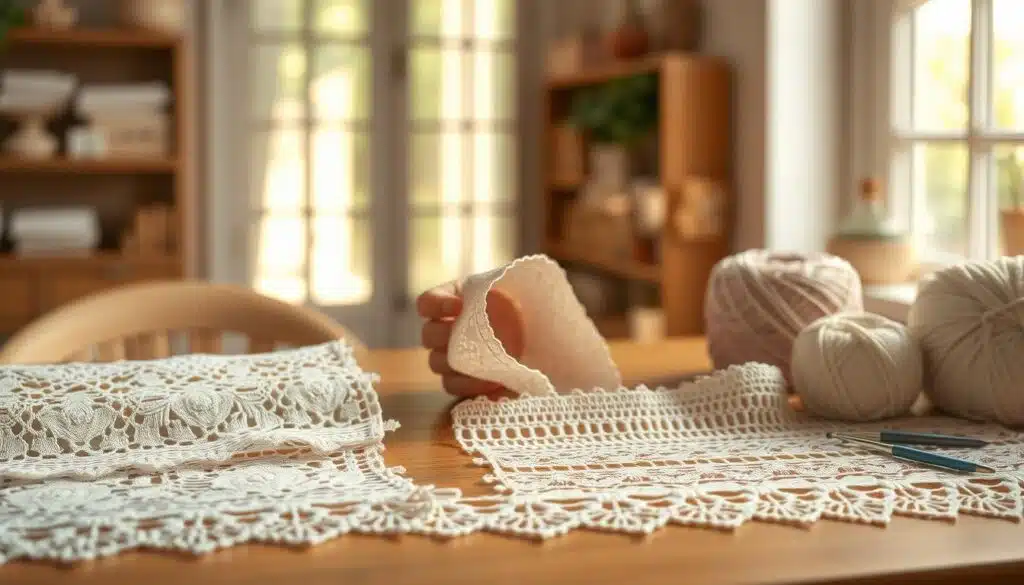
Scalloped and shell borders are classic for a soft, feminine look. A scalloped border with shell clusters gives a gentle wave. It’s perfect for baby blankets, shawls, and dress hems.
Lynne Rowe’s multi-round shell patterns add depth that blocks out beautifully.
Scalloped and shell borders for a feminine touch
Start with a simple shell edging for an easy win. It uses double or treble stitches to form petals. Count your stitches for even shells.
Emma Varnam’s shell recipe is great for adapting counts and spacing.
Lacy borders for table linens, shawls, and garments
A lacy crochet border adds elegance to linens and wearables. It combines chains, picots, and tall stitches for openwork. Sandra Paul’s lacy border works well with certain stitch counts.
Explore curated collections and boards for inspiration. Find free patterns and guides for lacy motifs. Use an inspiration link like creative crochet projects to sample templates and tutorials.
Combining shells and picots for delicate detail
Mix a shell edging with picot edging for contrast. Place a row of shells, then add picot edging for sparkle. Picot edging is small but powerful for tiny accents.
For complex projects, layer techniques. Work a base shell row, add a lace round, then finish with picot edging. This creates depth and sharpens stitch definition.
Geometric and Modern Borders for Clean Lines
You want borders that look crisp and modern. Geometric crochet borders add a structured finish. They anchor your work well. Choose patterns with clear repeats for a clean edge on blankets, cushions, and clothes.
Block stitch border and basketweave edging are perfect for straight lines and a tailored look. The block stitch border makes neat squares that match the main piece’s color blocks. Basketweave edging creates a woven texture that stands out from afar.
Plan your corners carefully. A well-made mitered corner border keeps angles sharp. Use extra decreases or joined rows at corners to avoid puckering. Mapping stitch counts in advance ensures a flat and professional look.
Contrasting border colors add a modern touch. They frame your project and make motifs stand out. Try a bold stripe or a two-tone frame to enhance stitch work. Using one-skein contrasting yarns is a great way to experiment without wasting too much yarn.
Test small swatches of each option for a quick reference. Compare how a block stitch border versus a basketweave edging affects drape and weight. Check corners while the swatch is fresh to save time later.
These methods can modernize traditional pieces. Clean repeats and bold color choices make geometric crochet borders a striking finish. They look modern, neat, and intentional.
Adapting Borders for Different Projects
Choose a border that fits the piece and yarn. Think about how size, weight, and use affect scale and drape. A bulky puff edge is cozy on a throw but might overwhelm a cardigan. For blankets, pick borders that can handle wear and tear.
For lighter pieces, go for shawl edgings that keep the fabric flowing and delicate.
Blankets and afghans: On large blankets, use bigger and heavier borders to match the body. Puff or bobble textures add warmth and look good. Shells and scallops are charming and stay flat if you adjust stitches.
Think about how the border will look on a couch. It should anchor the blanket without puckering.
Shawls and scarves: For shawls and scarves, you want them to flow, not stiffen. Choose edgings with small motifs, picots, or light lacy repeats. These keep the fabric drapey and let it move with you.
Avoid heavy borders that make the fabric fold down or change its shape. Test a swatch to see how the edging affects wrapability and fold.
Garments and home decor: Match the stitch gauge and wear to the project. For sweaters and tops, use subtle edge finishes to keep seams neat without bulk. For cushions and table linens, pick edgings that handle wear and wash well.
When edging knit pieces, a delicate crochet trim can blend textures without affecting gauge.
Try a simple swatch plan: test one plain single crochet, one scallop, and one textured border at the same yarn weight. Note how they change drape, stretch, and look. This quick test saves time and makes your final piece look polished.
Corner Techniques and Seamless Joins
Edges and joins greatly affect your project’s look and feel. Use smart crochet corner techniques to keep corners crisp and flat. This is key when adding scallops or shells.
Work extra stitches, like seven trebles in a shell corner, or skip a base stitch to avoid puckering. Your project will sit neatly after blocking.
When planning joining motifs, think about stitch distribution. Place extra chains or increases at the meeting points. This ensures motifs align without pulling.
Lynne Rowe’s multi-round corner tips show how spreading increases over rounds prevents tight spots. This keeps seams smooth.
Pick a joining method that fits your style. For a nearly invisible finish, practice invisible join crochet with a slip-stitch or mattress-style seam. For a decorative edge, use visible joining motifs with a contrast color or raised seam.
Working neat corners: extra stitches and spacing
Make corners breathe. Add extra stitches in the corner space, then skip a stitch or two along straight edges. This simple tweak keeps shells and scallops from flaring or curling.
Joining motifs and preventing puckering at seams
Join motifs while they’re on the hook to control tension. Use matched stitch counts and place increases evenly at corner intersections. Many tutorials, including practical guides at how to join crochet squares, walk you through step-by-step options for neat joins.
Invisible joins vs. decorative join methods
Invisible joins suit minimal designs and let textured borders shine without competition. Decorative joins add character and can double as edging. They need planned stitch repeats so corners stay even. Try both to see which suits your project’s mood.
Color and Yarn Choices for Impactful Borders
Choosing a border with care can make your project shine. A solid border can tie together a busy center. On the other hand, a contrasting edge can make the shape stand out.
Try out different border colors on a swatch before you decide. Two colors might look great alone but clash together.
When to match, contrast, or spotlight
For a subtle look, match the border color to your main fabric. This lets the stitch texture shine. For drama, choose a contrasting band to highlight the edge.
For layered effects, start with a neutral round and end with a brighter one. This makes the final round pop as the focal point.
Don’t skip a border just because of its color. Try it in different colors before giving up. For tips on choosing colors and how rounds work together, check out how to choose the best crochet.
Yarn weight and fiber effects on border definition
The weight of your yarn changes everything. A laceweight mohair scallop will be delicate, while a bulky wool one will be bold. Choose a yarn weight that matches your project’s scale.
The type of fiber also matters. Cotton gives a crisp look, alpaca softens edges, and acrylic is easy to work with. Swatching with your chosen yarn helps you see how it will look before you start.
For more on choosing fibers and weights, check out yarn types unraveled.
Using variegated and gradient yarns in edgings
Variegated yarn edging adds color without extra joins. But it might hide stitch details. Use it when you want color over clarity.
A gradient border offers a smooth color transition. Place the gradient to enhance your design’s focal point. Swatch and adjust the skein’s placement for the best effect.
Changing yarn for a border affects stitch count and scale. Test and adjust to find the right look for your edge. You might want a subtle frame, a bold highlight, or a colorful finish.
Troubleshooting Common Border Problems
When your edging goes wrong, you need fast fixes. This guide will help you fix common issues. Stay calm, keep an eye on your stitches, and have a spare thread ready.
Wavy or ruffled edges? Try targeted adjustments.
Fixing wavy edges often involves spacing. Skip some base stitches when adding shells or scallops. This helps prevent the edge from pulling.
If your border ripples, try reducing how often you repeat a pattern. Or, add more stitches at the corners to balance the tension.
Gaps, holes, or bulky corners need small, specific repairs.
To fix gaps, crochet single stitches into both loops. This fills holes without making them bulky. If corners bulge, remove one round of edging and rework the corner with fewer increases.
If a corner is too tight, add an extra stitch or a chain space. This opens it up.
Blocking and finishing will save many projects.
Crochet blocking makes your edging flat and neat. Spray it lightly with cool water, pin it to the right size, and keep it flat while it dries. Weave in ends before blocking to avoid bumps.
Lynne Rowe’s simple steps—pin, dampen, let dry—are a reliable way to finish your work.
Practice smart repeats and adapt patterns.
If a pattern puckers, test it on a swatch first. Adjust the stitch repeats until it lies flat. Use video tutorials and pattern libraries for help. Many designers show how to fix wavy edges, gaps, and bulky corners.
Quick checklist before you call it done:
- Count stitches along each side for evenness.
- Adjust shell and scallop spacing to prevent ruffle.
- Fill gaps with targeted single crochets or slip stitches.
- Block to shape and set the border.
Incorporating Crochet Borders into Knitted Items
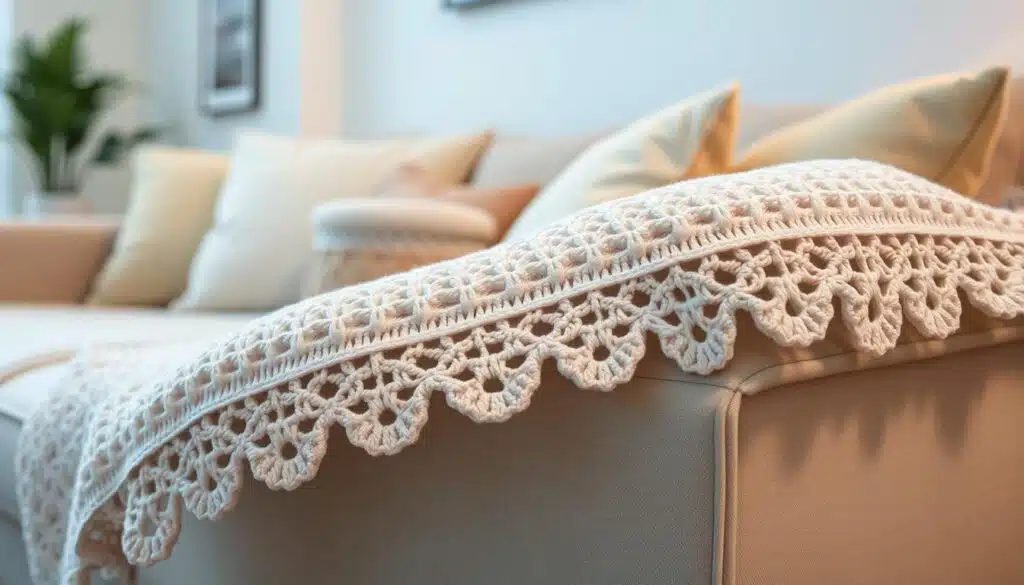
Ever felt like a knitted blanket is almost perfect but something’s missing? Adding a crochet edge can make all the difference. It adds definition, stability, and a frame that turns homemade items into beautiful gifts.
Using a crochet edging is a great solution for knitted blankets with stretched or curled edges. A small border can fix these issues, giving the fabric a neat finish. This way, you keep the softness of the knit while adding the needed structure.
When adding crochet to knit, it’s important to count stitches carefully. Don’t force one crochet stitch for each knit loop. Instead, stretch and gauge to ensure evenness. Designers often suggest using small-repeat edgings or counting spaces for a balanced look.
Choose border styles that complement the knit’s texture. Simple single crochet or slip-stitch edgings work well with garter and stockinette. For shawls and baby blankets, light lacy trims or picots are perfect. Heavily textured knits can be paired with slim moss-stitch or chain-loop borders.
For a quick guide, check out this edge instructions and tips post. It covers spacing and technique, including working through fabric and yarn legs for a neat finish.
| Project Type | Best Simple Borders | Why It Works |
|---|---|---|
| Blankets and Afghans | Single crochet, slip-stitch, scallop | Stabilizes wide edges, hides uneven counts, suits heavy fabric |
| Shawls and Wraps | Lacy picot, chain-loop edging, delicate shell | Maintains drape, adds light decorative detail, keeps weight low |
| Garments | Moss stitch border, narrow ribbed crochet, slip-stitch trim | Blends with knit texture, avoids bulk at seams, looks tailored |
| Baby Items | Small scallops, single crochet, tiny picots | Soft, safe edges that wash well and stay neat |
Before adding an edge, test a swatch. Try different hooks, count spaces, and mark corners. A small sample can save time and ensure your border looks even and charming.
After finishing, gently block the item. Blocking helps settle the join between knit and crochet. It softens tension differences and lets your new border look like it was meant to be there.
Resources and Patterns to Try Right Now
You’re looking for quick wins and clear steps to improve your edging skills. Below, you’ll find ten beginner-friendly borders to try, links to free crochet edging patterns online, and yarn suggestions for U.S. shoppers. Pick one, grab a hook, and experiment. Each style works well on blankets, shawls, and garments.
Ten beginner-friendly borders to practice
- Single crochet — clean, sturdy finish that suits any project.
- Moss (linen) stitch — modern texture with simple repeats.
- Shell — soft, rounded scallops for a classic look.
- Scallop — slightly larger curves for a decorative edge.
- Puff stitch — plush, cozy bumps for warmth and depth.
- Spike stitch — vertical accents that change drape.
- Block stitch — geometric look that frames work neatly.
- Lacy edgings — airy motifs for shawls and linens.
- Picot — tiny points for delicate detail.
- Slip stitch/chain edgings — fast, tidy finishes for quick projects.
Where to find free crochet edging patterns and video help
- Search pattern libraries and blogs for curated round-by-round instructions and blocking tips. Those resources often include detailed photos so you can match tension and shape.
- Pinterest boards and YouTube channels host step-by-step beginner border tutorials you can follow at your own pace.
- Designers like Emma Varnam, Sandra Paul (Cherry Heart), and Lynne Rowe publish clear edgings with example yarns used in samples, which helps you replicate their results.
Suggested yarns and hooks for border practice (U.S.-focused)
- Worsted weight: Lion Brand, Red Heart, Bernat — try hook sizes H/8 (5.0 mm) to I/9 (5.5 mm).
- DK weight: consider Lion Brand and Bernat blends — use G/6 (4.0 mm) to H/8 (5.0 mm).
- Scheepjes Softfun is a lightweight example many designers use for sample edgings; it shows texture nicely and blocks well.
- Always swatch and adjust hook size for gauge, drape, and the firmness you want along the edge.
Practice a simple border on scrap swatches before adding it to a finished piece. This habit saves time, preserves yarn, and helps you decide if a pattern’s scale fits your project.
| Border Type | Best For | Recommended Yarn Weight | Typical Hook Size (US) |
|---|---|---|---|
| Single Crochet | All-purpose, crisp edges | Worsted (4) | H/8 (5.0 mm) — I/9 (5.5 mm) |
| Moss (Linen) Stitch | Blankets, modern garments | DK (3) — Worsted (4) | G/6 (4.0 mm) — H/8 (5.0 mm) |
| Shell / Scallop | Shawls, baby items, decorative trims | DK (3) — Worsted (4) | G/6 (4.0 mm) — I/9 (5.5 mm) |
| Puff Stitch | Cozy borders with texture | Worsted (4) | H/8 (5.0 mm) — I/9 (5.5 mm) |
| Spike Stitch | Bold vertical detail | DK (3) — Worsted (4) | G/6 (4.0 mm) — H/8 (5.0 mm) |
| Block Stitch | Geometric edges, structured pieces | Worsted (4) | H/8 (5.0 mm) |
| Lacy Edging | Table linens, elegant shawls | DK (3) — Fingering (2) | G/6 (4.0 mm) — F/5 (3.75 mm) |
| Picot | Delicate finishing touch | DK (3) — Worsted (4) | G/6 (4.0 mm) — H/8 (5.0 mm) |
| Slip Stitch / Chain Edging | Quick trims, tidy joins | Any weight | Match project hook |
| Combined Borders | Custom looks by mixing styles | DK (3) — Worsted (4) | Adjust per stitch pattern |
Conclusion
Choosing the right border can make a big difference. This summary shows how edges can go from simple to fancy. Even beginners can use basic edgings to make a big impact.
Think about the look you want when picking an edging. Consider the yarn, like Scheepjes Softfun, and how to join corners neatly. These details make your finished project look professional and last longer.
Don’t be afraid to try new things. Swatch different borders, block your work, and explore patterns. Testing a few will help you find the perfect edge for your projects.
See borders as a key part of your design, not just an afterthought. With practice and a bit of fun, your crochet projects will look intentional, durable, and uniquely yours.
FAQ
What difference does a crochet border really make?
A border can turn a simple project into something special. A clean single crochet edge gives a polished look. Textured or decorative edgings add personality and interest.
They also help define the shape and frame the colors of your project. Plus, they can hide any imperfections in the edges.
How do I choose a border that suits my finished item?
Think about the function and scale of your project. For example, plush puff or bobble borders are great for blankets. Delicate lace or scalloped shells are perfect for shawls and baby blankets.
Consider the visual weight of the border. An ornate edge can overwhelm a delicate motif. Simple edges like single crochet or linen stitch work well with busy patterns.
Which beginner-friendly borders should I try first?
Start with single crochet for a crisp edge. The moss (linen) stitch is modern and textured. Quick slip-stitch/chain edgings are fast and neat.
These borders are great for beginners because they are easy to learn. They help you practice spacing and corner techniques.
What textured borders add the most cozy dimension?
Puff stitch and bobble borders add a plush feel. Spike stitch creates bold vertical texture. Use these on pieces where warmth is important.
Make sure the stitches don’t bulk up the corners.
Can I use scalloped and shell edgings on everyday items?
Absolutely. Scalloped shells and delicate lace edgings add a touch of elegance. They’re perfect for baby blankets, table linens, and shawls.
Designers like Emma Varnam and Lynne Rowe often use shell edgings. Keep the repeats simple and mind the stitch counts to keep the edge flat.
When should I use a block stitch or geometric border?
Choose geometric borders like block stitch or basketweave for clean lines. They’re great for modern throws and cushion covers.
Plan the corner treatments carefully to keep the geometry flat and aligned.
How do I prevent corners from puckering or flaring with shells and scallops?
Adjust the stitch spacing to avoid puckering. Skip base stitches or add extra stitches in the corners. Many designers recommend missing base stitches for flatness.
Swatching helps you test the corner behavior before starting the project.
Can I add a crochet border to a knitted blanket or garment?
Yes—crochet edgings add definition and stability to knit pieces. Pick simple borders like single crochet or slip-stitch chains. They work well with knit edges.
Use tutorials and pattern boards to learn how to space stitches evenly.
How do yarn choice and color affect my border?
Yarn weight and fiber affect the stitch definition and drape. Start with worsted or DK yarns from brands like Lion Brand or Bernat. Swatch to find the right match.
Matching the border color creates unity. Contrasting colors highlight the edge and add a modern touch. Variegated yarns can create subtle or bold effects—swatch first.
What hook sizes work best for practice borders?
For worsted-weight borders, try H/8 (5.0 mm) to I/9 (5.5 mm) hooks. For DK, use G/6 (4.0 mm) to H/8 (5.0 mm). Always swatch and adjust the hook size for the desired drape and stitch definition.
How many border stitches should I repeat? Any stitch-count rules?
Follow the pattern’s repeat when available. Many shell or lacy edgings require specific repeat counts. If improvising, choose simple repeats and distribute extra stitches at corners.
Swatching and counting across edges helps fit repeats evenly.
My edges ripple or wave—how do I fix wavy or ruffled borders?
Check your tension and stitch count first. Ruffling usually means too many stitches or too-loose tension. Puckering means too few stitches or too-tight tension.
Try skipping base stitches for shell edgings, reduce or increase repeat counts, and swatch with the same hook and yarn. Blocking often smooths minor waviness.
How do I fix gaps or bulky corners?
Gaps often come from large lace-type stitches at corners; reduce stitch height or add a chain bridge if needed. Bulky corners come from cramming extra stitches into one spot.
Spread the increases across a few stitches or use smaller stitch heights in corner rounds. Invisible joins and careful weaving help reduce bulk.
When should I block my border and how do I do it?
Block after finishing and weaving in ends to set shape, flatten scallops, and even stitch tension. For most edgings, lightly mist with cold water, pin to shape on a blocking board or towel, and let dry fully.
Lynne Rowe and other designers recommend blocking scalloped edgings to keep corners flat and neat.
Which edgings pair best with knitted fabric?
Delicate crochet edgings—single crochet, slip-stitch chains, and small lacy borders—pair well with knitted blankets and garments. They stabilize edges without overwhelming knit drape.
Use small repeats and even spacing to accommodate knit stretch and uneven stitch counts.
Where can I find good free border patterns and tutorials?
Look to curated pattern libraries, crochet blogs, YouTube tutorials, and Pinterest boards like Love Life Yarn. Many collections list 27+ edging options and include one-skein-friendly patterns.
Search tags such as “crochet edging tutorial,” “crochet border patterns free,” and “treble crochet edging” to find step-by-step guides.
What ten beginner-friendly borders should I practice first?
Try single crochet, moss (linen) stitch, shell, scallop, puff, spike, block (basketweave), lacy (simple lace repeats), picot, and slip-stitch/chain edgings. These cover crisp, modern, textured, and decorative looks.
They are excellent for swatching and quick finishes.
Any tips for combining colors in borders for a modern look?
Use a contrasting border color to create a clean frame or a two-round approach (Yarn A then Yarn B) for layered contrast. One-skein accent colors make bold pops without huge cost.
Test color and stitch on swatches to ensure the contrast reads well and doesn’t overpower the main fabric.
How do I keep a geometric border flat and aligned?
Plan corner treatments and stitch placement ahead of time. For mitered corners and block stitch edgings, maintain consistent stitch counts and work evenly spaced increases or decreases at corners.
Blocking after finishing helps lock geometry into place.
Are there one-skein border ideas for small projects?
Yes—many scallop, shell, picot, slip-stitch, and simple lacy borders can be done with a single skein of accent yarn. Pattern collections and Pinterest boards often tag “one-skein” or “border only” projects—perfect for quick experiments.
How many times should I repeat a keyword like “border” or “edging” in a pattern description?
Keep language varied and natural. Use terms like border, edging, scallop, shell, trim, and finish so instructions stay clear without over-repetition. Practically, vary phrasing to help you read and follow directions smoothly across a project.
Any final practical tips to get professional-looking edges?
Swatch, count, and block. Match border scale to the project, choose appropriate yarn and hook sizes, and mind corner increases or skipped stitches. When in doubt, start simple: single crochet or linen stitch will tidy edges while you test bolder textures and decorative trims.