
You love the rhythm of needles and the calm yarn brings. But, one season of marathon projects taught me a hard lesson. Repetitive motion injuries are real.
After weeks of intense knitting, I developed radial tunnel pain. This kept me off the needles for months. A three-month splint and deliberate rest were my ticket back to knitting.
Starting at ten minutes a day, they taught me how vital knitters wrist care and knitting ergonomics are.
Most knitters shrug off a twinge during a TV show. But, that small tingling and sudden cramp can be the start of tendonitis or carpal tunnel. Short, simple moves between rows can change the story.
Hand exercises for knitters and focused knitting hand stretches improve circulation. They ease tightness and help prevent long recoveries or surgery.
This article gives you easy, practical steps you can use now. Warm-ups, micro-break stretches for commercial breaks, and quick strength moves to prevent flare-ups. Use them to protect your hands, keep knitting therapeutic, and avoid costly doctor visits.
So, your projects can finish without sidelining your favorite hobby.
Key Takeaways
- Knitting hand stretches and hand exercises for knitters reduce stiffness and lower injury risk.
- Early attention to knitters wrist care can stop tendonitis and carpal tunnel from worsening.
- Short breaks and simple moves during TV sessions are effective and easy to do.
- Good knitting ergonomics and gradual return after injury prevent relapse.
- Consistent micro-stretches and strength work protect your hobby and mental well-being.
Why knitters need hand stretches and exercises
Your hands work hard when you knit. Long hours of small, precise actions can strain fingers, thumbs, wrists, and forearms. Stretching and exercises help these areas relax, improve blood flow, and let you knit longer without pain.
Understanding repetitive motion injuries (RMIs) and RSIs
Repetitive motion injuries occur when tissues face the same force over and over. In knitting, wrists and forearms often suffer. Some injuries heal with rest and gentle exercises. Others might need splints, doctor’s advice, or surgery.
Knitting too much, like during a TV marathon, increases your risk. Taking short breaks and doing warm-ups can help avoid long recoveries.
Common conditions knitters face: tendonitis, carpal tunnel, radial tunnel
Tendonitis in knitting causes aching or tenderness near tendons, often at the thumb or finger sheaths. Carpal tunnel brings numbness, tingling, and weakness in the thumb, index, and middle fingers. Radial tunnel causes persistent forearm pain that lasts even after rest.
Some knitters needed custom splints and months off from knitting. Exercises, splints, and gradual returns helped them regain their skills without rushing back and facing setbacks.
Mental and emotional cost of losing your ability to knit
Knitting is more than just making things for many. It calms anxiety, focuses the mind, and is a reliable stress reliever. Losing this can cause real emotional pain.
Mental health knitting links hobby to mood. When pain stops you, you might feel anxious, restless, or lost. This emotional impact is why prevention is as important as physical care.
Find simple hand stretches and routines for busy days. For practical moves and a short set for people with arthritis and crafting hands, see this guide from Knit N Style: hand stretches for knitters with arthritis.
Signs and symptoms you should never ignore
You love the rhythm of needles, but your hands send messages you must not skip. Early warning signs can be subtle. Catching them can mean the difference between a weekend fix and months off the needles.
Tingling, numbness, and persistent cramps
Tingling fingers knitting often starts as a brief prickle. If it shows up every time you work a few rows, take note. Numbness knitting can follow and leave patches of your hand feeling dead or doughy. Persistent cramps that do not ease after a short break are another red flag.
Small fixes like micro-breaks and gentle stretches usually help. When symptoms return or spread, you may be facing more than simple fatigue.
When mild soreness becomes a warning sign
Soreness after a long session is normal. Soreness that lasts into the next day is not. Stiffness, lasting morning pain, or pain that wakes you at night deserve attention.
If soreness shifts to sharp, radiating pain down the forearm or top of the hand, watch for radial tunnel symptoms. Those signs often need targeted treatment, not just rest and ice.
Why early rest and a doctor visit can save months of recovery
Resting and modifying motion early may stop progression to tendonitis or carpal tunnel. Yet, some people rest for two weeks and find no relief. In one case, a medical assessment revealed radial tunnel symptoms that a generic splint missed. A custom splint and specific guidance sped recovery and avoided surgery.
Know when to escalate care. Learn when to see doctor knitting if numbness knitting or persistent tingling fingers knitting persists despite sensible self-care.
For practical tips on managing hand pain and simple in-practice fixes, see crochet and knitting hand care advice.
| Symptom | What to watch for | Action |
|---|---|---|
| Tingling | Intermittent prickling during or after knitting | Pause, do five-minute stretches, monitor frequency |
| Numbness | Loss of sensation in fingers or thumb | Limit knitting, note patterns, consult clinician if persistent |
| Persistent cramps | Muscle tightening that does not relax with rest | Introduce micro-breaks and gentle strengthening; seek exam if no change |
| Night pain or waking | Pain that interrupts sleep or causes shaking hands | See a hand specialist; discuss splinting and diagnostics |
| Forearm/top-of-hand pain | Sharp or burning pain along outer forearm | Evaluate for radial tunnel symptoms; early medical review advised |
Warm-up routine before you pick up your needles
Get your hands ready for a long knitting session. A short warm-up routine wakes up muscles, eases joints, and prevents soreness. Do these moves slowly, hold each for about five seconds, and repeat as suggested to keep things gentle.
Quick clench-and-release to wake up finger muscles
Start with a simple clench and release exercise. Hold your hands in front with palms down, clench for 5–10 seconds, then spread your fingers wide. Repeat five times per hand to activate finger and grip muscles before you pick up needles.
Wrist circles and gentle arm rotations for joint lubrication
Do wrist circles for knitters next. Bend your arms about 45 degrees and rotate your wrists five times each direction while keeping forearms and shoulders steady. Follow with gentle arm rotations to loosen shoulders and upper arms.
Mattress-stitch-style interlace stretch to open your palms
Try the mattress stitch stretch to open your palms. Interlace your fingers with palms toward you, rotate palms away, then push your hands forward for about 10 seconds. Repeat three to five times to improve hand opening and ease tension that builds during long sessions.
You can pair these warm-ups with finger stretches: hold the palm away and use the opposite hand to gently press fingers toward the body for five seconds, repeating five times. For a full set of stretches and strengthening moves that fit into short breaks, check this practical guide from New Wave Knitting: best stretches and strengthening exercises for.
| Move | Action | Hold / Reps | Benefit |
|---|---|---|---|
| Clench-and-release exercise | Clench fists then spread fingers wide | 5–10 sec, 5 reps per hand | Activates finger muscles and grip |
| Wrist circles for knitters | Rotate wrists with arms bent 45° | 5 rotations each direction | Lubricates wrist joints, reduces stiffness |
| Finger press stretch | Press fingers back toward forearm with opposite hand | 5 sec, 5 reps each hand | Improves finger flexibility and reach |
| Mattress stitch stretch | Interlace palms, rotate away, push forward | 10 sec, 3–5 reps | Opens palms, eases hand tension |
| Micro-break guideline | Pause knitting and repeat brief stretches | Every ~30 minutes, hold ~5 sec | Prevents overuse and maintains comfort |
Knitting hand stretches
Before starting, do some quick stretches to keep your hands flexible and pain-free. These stretches improve blood flow, reduce tension, and lower the risk of pain while knitting.
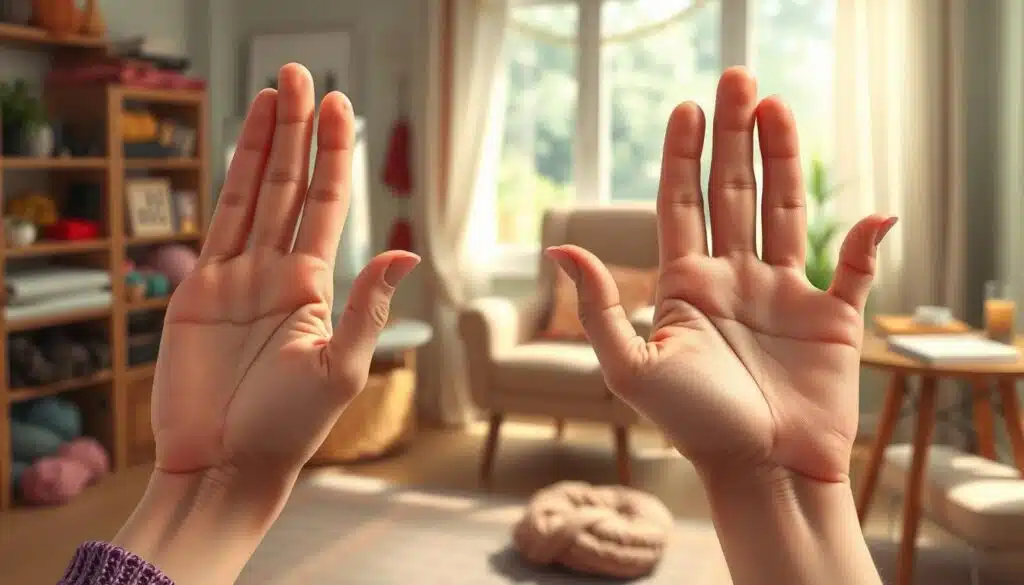
Wrist flexor stretch: how to do it and what it helps
Stand or sit with your arm straight and palm up. Bend your hand down and use the other hand to gently pull your fingers toward your body. Hold for about five seconds, then release and repeat several times.
This stretch targets the muscles on the underside of your forearm. It’s great to do before and during long knitting sessions to ease forearm tightness and improve comfort.
Wrist extensor stretches: two easy variations
Variation one: keep your arm straight, point your fingers down, and pull your hand toward you with the other hand. Hold for five seconds and repeat.
Variation two: extend both arms with fists. Slowly turn your fists down, then outward so the tops face each other. Move slowly and breathe.
Both variations stretch the top of your forearm. They help relieve tension and reduce stiffness after long rows.
Finkelstein/thumbnail tuck for thumb and radial wrist relief
Stand with arms straight and palms facing each other. Tuck your thumbs into your palms and wrap your fingers around them. Gently turn your fists down until you feel a mild pull.
Knitters use this stretch to ease thumb overuse and loosen the radial wrist area. Keep the motion gentle to avoid irritation.
Radial nerve glides to relieve top-of-forearm tension
Stand relaxed with arms at your sides. Drop one shoulder and reach the same-side hand down in a cupped shape or light fist. Tilt your head away from that side, keep your arm straight, and slowly raise it up and backward while holding your body steady.
Repeat in short sets. This move helps mobilize the nerve pathway across the top of your forearm and reduces referred tightness.
Do short holds and repeat often: before you start, during breaks, and after finishing. These stretches are quick to learn and fit into every knitting project.
| Stretch | Target | Hold | When to do it |
|---|---|---|---|
| Wrist flexor stretch | Underside of forearm | ~5 seconds, repeat 5–8x | Before and during long knitting sessions |
| Wrist extensor stretch (pull) | Top of forearm | ~5 seconds, repeat 5–8x | During short breaks between rows |
| Wrist extensor rotate | Wrist extensors and hand tops | Slow 8–10 rotations | Warm-up or cool-down |
| Finkelstein/thumbnail tuck | Thumb base and radial wrist | Gentle turn, 5–6x | When thumb feels overworked |
| Radial nerve glide | Radial nerve pathway, top forearm | Slow glide, 6–10 reps | At first sign of top-of-forearm tension |
Micro-break stretches to do during knitting sessions
You know the drill: a row or two becomes an hour and your hands start to complain. Short, regular pauses keep you knitting longer and happier. Use simple micro break stretches knitting fans can do without leaving the couch. A quick pause can reset circulation, ease tension, and help prevent knitting cramps.
Set a gentle rhythm. Try a knitting break timer to nudge you every 30 minutes. Stand, walk to the kitchen for water, or do a few movements to change posture. These tiny shifts protect tendons and stop numbness from progressing.
Five-second holds you can do between rows or episodes
Hold each stretch for about five seconds and repeat twice per hand. That simple pattern of five-second stretches knitters trust keeps motion safe and effective. Focus on slow, careful movement to avoid aggravating anything.
- Open-hand hold: Spread your fingers wide, hold five seconds, release.
- Tendon glide: Start open, touch fingertips to top of palm, to bottom of palm, make a soft fist, open. Pause five seconds at each stage.
- Wrist stop sign: Arm out, palm up, fingers back toward you; hold five seconds. Rotate palm down for a deeper stretch; hold again.
Finger spreads and gentle pulls to reduce cramping
A deliberate finger spread exercise calms tight hands. Spread fingers wide, then use the opposite hand to gently pull each finger back for a short hold. Repeat across both hands. This finger spread exercise is quick, works between rows, and can prevent knitting cramps before they start.
Keep movements soft. If a pull hurts, ease off. The goal is flexibility, not strain.
Setting a timer: ideal break frequency (about every 30 minutes)
Use a knitting break timer set for 30 to 45 minutes until the habit sticks. When the alarm rings, stand, change position, and run through the five-second holds. A smartwatch, phone alarm, or kitchen timer works fine.
If you want further guidance, check simple stretch demos at Modern Daily Knitting for clear steps and friendly reminders to rest both hands.
Strengthening exercises to build resilience
Building hand strength helps you knit longer without pain. Start with short, daily sessions using light resistance. This strengthens tendons and muscles.
Begin with about ten slow reps per move. If soreness occurs, reduce to every-other-day.
Why strength matters
Strong wrists and forearms boost endurance and lower injury risk. They provide better tendon support and steadier hands. This makes longer projects easier and safer.
Resisted wrist extension and flexion with bands
Sit with your knee at 90°. Anchor the band under your foot. For wrist extension, place your forearm face down on the leg and let your hand hang over the knee.
Lift the hand up against the band, then lower slowly. Flip your forearm face up for wrist flexion and bend toward your palm, controlling the return.
Forearm supination and pronation with resistance
Use the same seated setup for forearm work. For supination, start with your palm down and rotate the fist up against the band. For pronation, begin palm up and turn the fist down while resisting.
These moves help balance twisting forces used while turning yarn and needles.
Ulnar and radial deviation moves to balance wrist muscles
Anchor one end of tubing at the opposite knee and hold the other at your hip for ulnar deviation. Move the wrist outward while keeping the forearm steady.
For radial deviation, keep the forearm on the leg in a handshake grip on the band and tilt the wrist the other way. Regular ulnar radial deviation exercises build the small muscles that steady your needles.
Practical tips
- Use variable-resistance bands so you can progress safely.
- Keep movements slow and controlled; count ten slow reps to start.
- Do these resistance band wrist exercises once a day, reduce frequency if tender.
Ergonomic tips to reduce strain while knitting
Small changes in your knitting can make a big difference. Use different tools, yarns, and habits to avoid repetitive motions. These tips help keep your hands and shoulders comfortable and your projects on track.
Needle size, yarn weight, and stitch pattern variety to mix motion
Change needle size and yarn weight between projects. This changes how your hands move. A bulky yarn with large needles uses slower, broader motions. A fine yarn with small needles requires quicker, tighter movements.
Try different stitch patterns in your projects. Lace and stockinette patterns require different finger skills. Keep technique changes, like English or Continental, on separate projects to avoid tension issues.
Good posture, relaxed shoulders, and seating recommendations
Sit with hips higher than knees and feet flat. Lean back into a chair that supports your lower spine. This lets your shoulders relax and avoids neck and forearm tightness.
Stand and walk every 20 to 30 minutes to improve circulation. Use a lumbar cushion and an armrest that lets your elbows rest. These adjustments help protect your neck and reduce fatigue.
Using ergonomic needles and accessories to minimize stress
Try ergonomic knitting needles from brands like Clover and Knitter’s Pride. They reduce grip force. Use needles with soft grips or tapered ends for easier yarn handling.
Keep lightweight circular needles and an ergonomic crochet hook handy. These tools make adjustments easy and prevent small aches from becoming bigger issues.
How to create a balanced knitting routine
Think of knitting time as a workout for your hands. Mix up the types of projects, needle sizes, and yarn weights. This way, your fingers, wrists, and forearms won’t do the same thing for hours. Start with short sessions and slowly increase the time to avoid injury and build strength.
Switch between different projects to give your muscles a break. Keep a simple scarf, a patterned sweater, and a quick sock on hand. This lets you switch when one project starts to hurt or feel tight.
Make sure to warm up before every knitting session. Do ten wrist circles and a fingertip clench to get your muscles ready. If you’ve had an injury, start with ten minutes of knitting and gradually increase the time.
Take short breaks during your knitting time. Use a timer for 30–45 minutes to stretch, drink water, or stand up and walk. These breaks help prevent fatigue and are key to avoiding injuries.
Include strength exercises in your weekly routine. Use a resistance band or a soft stress ball for two or three short sessions. These exercises strengthen your tendons and improve your endurance, acting as insurance for long projects and busy times.
Keep a journal to track your progress. Note how long you knit, what project you’re on, the stitches or tools you use, and any discomfort. This helps you identify patterns of pain and prevent them from getting worse.
Use a table to organize your week. It helps you see the variety and rest you need. This way, you can evenly distribute the effort across your hands, wrists, and shoulders.
| Day | Project Type | Warm-up | Breaks | Strength Work |
|---|---|---|---|---|
| Monday | Garter scarf (large needles) | 5 min wrist circles | Timer 30 min | Band wrist flexion 2 sets |
| Wednesday | Patterned sweater (small needles) | 10 min clench/release | Timer 35 min | Grip ball squeezes 3×10 |
| Friday | Quick socks (double-point) | 5 min finger spreads | Timer 30 min | Forearm rotations 2×12 |
For more tips on hand pain and makers’ health, check out this guide at crochetcraze. It offers advice that fits well with your routine.
Remember, your plan should be flexible. If a technique hurts, switch to something easier and adjust your routine. Making small changes now can prevent long recoveries later.
Troubleshooting: when stretches don’t help
If your hand routine stops helping, don’t panic. Watch for warning signs that need quick action. Early care can save weeks or months and keep you knitting.
Red flags that mean see-a-professional now
If pain doesn’t go away with rest and home care, it’s a warning. Tingling, numbness, or cramps getting worse or pain stopping daily tasks mean it’s time to see a doctor.
Persistent weakness or a sudden drop in grip strength is another sign. Don’t think it will pass if symptoms keep getting worse over days.
What to expect from a medical evaluation (splints, diagnosis)
At a clinician’s visit, expect a detailed exam and nerve tests. A clear diagnosis of radial tunnel or ruling out carpal tunnel will guide treatment. Accurate diagnosis avoids wasting time on wrong treatments.
You might get custom splints for knitters to support healing. Generic braces might feel helpful but might not fix a specific nerve issue.
Treatment plans could include specific exercises, manual therapy, or surgery in severe cases. A good evaluation often leads to a faster, safer recovery.
Adjunct resources: courses and therapists who specialize in makers’ hands
If standard stretches don’t work, look for specialized help. A hands of a maker course offers deeper techniques for fiber artists, including massage-informed movement and long-term habits.
Seek hand therapist knitters or occupational and physical therapists with experience in makers’ hands for targeted rehab. They use splinting, manual therapy, and strengthening that fits your craft needs.
For visual guides and troubleshooting tips, try reputable video resources and guided programs that show correct form. You can also explore a practical repair guide via a focused how-to for hand care tips.
| Problem | Likely Professional Step | Typical Outcome |
|---|---|---|
| Persistent tingling or numbness | Nerve conduction testing, targeted diagnosis | Accurate label such as radial tunnel diagnosis or carpal tunnel |
| Unresolved pain after home stretches | Custom splints for knitters, manual therapy | Reduced pain, improved function |
| Weak grip or loss of dexterity | Referral to hand therapist knitters or occupational therapist | Tailored rehab, graded strengthening |
| Recurring flare-ups with work | Hands of a maker course or structured program | Better routines, fewer relapses |
Quick routines you can do anywhere (TV commercial breaks friendly)
When a row ends and a commercial starts, you have a tiny window to help your hands. These quick knitting stretches and TV break knitting exercises fit into short pauses. They ease tension without interrupting your project flow.
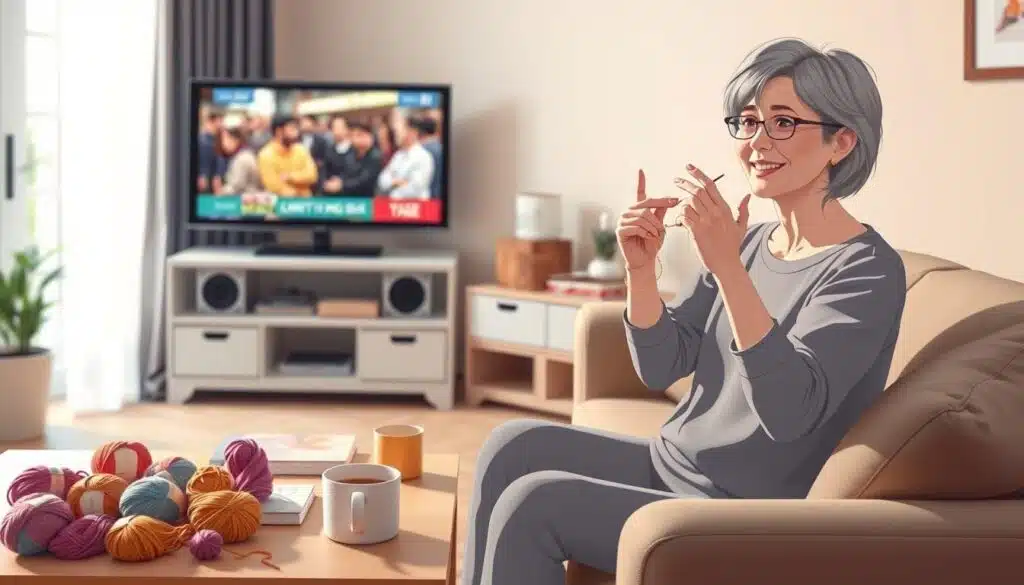
Two-minute stretch sequence for immediate relief
Try a compact routine you can finish before the next scene. Do five clench-and-release cycles, then drop into five slow wrist circles each direction. Hold the mattress-stitch interlace push for 10 seconds, repeat once. This two-minute stretch sequence wakes circulation and melts tightness fast.
One-minute strengthening mini-set with a resistance band or ball
If you have a therapy ball, squeeze it 8–12 times with calm effort. Use a light band for 10 slow wrist flexion and extension reps if you prefer. Aim for controlled motion and breathe through each rep. This one-minute resistance band set builds endurance without fatigue.
Stretch-and-hydrate habit hacks to make breaks stick
Pair movement with hydration to make breaks automatic. Stand, refill your water, then do a short stretch routine. Set a phone reminder or use your streaming app’s episode timer until the habit forms. Hydration knitting breaks refresh posture and give you a reason to move.
Do these micro-exercises gently and repeat holds twice when you can. With regular practice, quick knitting stretches become a tiny ritual. They prevent cramping, reduce tingling, and keep your hands ready for the next stitch.
Long-term care and prevention strategies for avid knitters
Keeping your hands healthy is a long-term plan. It’s about making a few minutes of daily care a habit. Choosing smart projects and taking rest when needed will help you keep knitting for years.
Build strength slowly. Start with resistance bands for progressive strengthening. Do about ten controlled reps and increase the challenge each week. If you feel sore, slow down.
Building strength progressively to avoid flare-ups
Use different resistance levels to make your workouts more challenging. Add wrist curls, finger squeezes, and gentle banded extensions. Keep your workouts short and frequent.
Keep a log of your workouts. This helps you see when it’s time to increase the challenge. A well-planned approach protects your hands and prevents flare-ups.
Seasonal and workload adjustments to protect hands
Adjust your knitting workload with the seasons. In busy months, choose lighter projects. Use larger needles and simpler patterns.
Alternate between heavy and light projects. Switch between different techniques like cables and lace. For tips on hand pain, check out crochet hand pain resources.
When to scale back and prioritize healing over finishing a project
Sometimes you’ll need to decide whether to keep going or stop. If you feel numbness, sharp pain, or weakness, it’s time to rest. Shorten your knitting sessions or take a break until you feel better.
Knitters coming back from surgery might start with short sessions. This approach helps avoid long breaks or more surgery. Always prioritize healing over finishing a project so you can keep knitting.
Conclusion
Think of this as your guide to keeping hands healthy while knitting. Small warm-ups and short breaks during TV time help. Also, mixing needle sizes and yarn weights keeps hands nimble.
If soreness doesn’t go away, see a doctor. Early treatment can stop tendonitis or carpal tunnel. It’s better to treat early than to suffer through pain.
Here’s your plan to avoid knitting injuries: warm up, stay hydrated, take breaks, build strength slowly, and use ergonomic tools. Follow these steps and you’ll knit longer with less pain. Plus, you’ll enjoy your projects more.
FAQ
What are repetitive motion injuries (RMIs) and why do knitters get them?
RMIs, also called repetitive strain injuries (RSIs), harm ligaments, muscles, nerves, or tendons from repeated actions. Knitters often stress small muscles in their hands, wrists, and forearms from gripping, yarn tensioning, and needle movements. This repeated action can lead to tendonitis, carpal tunnel syndrome, or radial tunnel syndrome if not varied, warmed up, and with breaks.
Which symptoms should make me stop knitting and see a doctor?
Stop and get medical advice if you have persistent pain that doesn’t improve with rest, new or worsening tingling or numbness, ongoing cramps, or pain that limits daily tasks. Early evaluation can reveal the right diagnosis—radial tunnel looks different from carpal tunnel—and a tailor-made splint or therapy plan can prevent months off needles or even surgery.
How soon will mild soreness go away on its own?
Mild, transient soreness that eases after a short rest and a quick stretch is common. But if soreness persists beyond a couple of weeks, gets worse, or is accompanied by tingling or numbness, it’s no longer “mild.” That’s the time to scale back, add targeted stretches and strength work, and consider a medical check if it doesn’t improve.
What simple warm-up can I do before knitting?
Start with a two-minute routine: clench-and-release (5 reps), wrist circles (5 each direction), and a quick finger spread with gentle pulls. These moves wake up the finger and wrist muscles, improve circulation, and prepare your hands for gripping needles and balancing yarn.
How long should I hold stretches and how often should I repeat them?
Hold most warm-up and micro-break stretches for about 5 seconds and repeat each at least twice. Gentle, slow movement is key—avoid bouncing. For a longer palm-opening or mattress-stitch hold, aim for ~10 seconds and repeat 3–5 times if it feels good.
What are the best wrist stretches to relieve forearm tension?
Two effective wrist stretches: wrist flexor stretch—arm straight, palm up, gently pull fingers toward you to stretch the underside of the forearm; wrist extensor stretch—arm straight, palm down, pull the hand toward you to stretch the top of the forearm. Both can be done gently for ~5 seconds and repeated on each hand.
What is the Finkelstein/thumbnail tuck and when should I use it?
The Finkelstein/thumbnail tuck helps thumb and radial wrist tension. Fold your thumbs into your palms, wrap fingers around the thumbs, and gently turn your fists downward. Use it to ease thumb overuse and radial wrist strain—when you do a lot of thumb motions like picking up stitches.
What are radial nerve glides and who benefits from them?
Radial nerve glides target the nerve pathway running along the top of the forearm. Stand relaxed, drop one shoulder, reach that hand down in a cup or fist, tilt your head away, then raise the arm slightly back while keeping the body steady. They can relieve top-of-forearm tension and help symptoms linked to radial tunnel issues when done gently.
How often should I take micro-breaks while knitting?
Aim for a break about every 30 minutes (30–45 minutes is fine too). Use a timer or phone reminder until it becomes habit. During the break, do short stretches, stand or walk, refill water—these simple changes reset posture and circulation and stop tension from building.
What quick stretches can I do between rows or during commercial breaks?
Try a one-minute micro-set: clench-and-release (5×), wrist circles (5 each direction), and a quick finger spread with gentle pulls. You can also do a one-minute strengthening mini-set: 8–12 soft ball squeezes or 10 slow band reps. These tiny habits prevent cramping and tingling from escalating.
How do I build strength safely without making things worse?
Start light and slow. Use resistance bands or a soft therapy ball for about 10 controlled reps per exercise once a day. If you feel soreness afterward, reduce to every other day. Gradually increase band resistance and reps. Focus on wrist flexion/extension, forearm pronation/supination, and ulnar/radial deviation to balance the muscles that knitting overworks.
Can changing needles, yarn, or stitch patterns help prevent injury?
Yes. Rotating needle sizes, yarn weights, and stitch patterns changes which muscles and tendons you use. Alternating between heavier and lighter projects or trying different techniques (English vs. Continental) breaks repetitive loading. Keep multiple WIPs with varied demands so your hands don’t repeat the exact same motion for hours every day.
Which ergonomic tools or yarns reduce hand strain?
Ergonomic needles with cushioned grips, lightweight interchangeable sets, and soft yarns can reduce strain. Cotton blends or softer fibers—brands like Cotton to the Core and GentleBliss are examples of hand‑friendly yarns—feel gentler for long sessions. Also check your chair: good back support and relaxed shoulders go a long way.
How should I adjust my routine if I’m recovering from an injury?
Scale way back. Follow your clinician’s guidance: the author who recovered from radial tunnel used a custom splint and zero knitting for months, then returned to about 10 minutes a day. Progress gradually—short daily sessions, gentle warm-ups, micro-breaks, and strength work—prioritize healing over finishing projects to avoid re-injury.
When should I see a hand therapist or occupational therapist?
See a specialist if stretching and self-care don’t improve symptoms, if numbness or weakness appears, or if pain persists despite rest. Hand therapists can offer targeted rehab, custom splints, manual therapy, and tailored strengthening plans specific to makers’ hands.
Are there resources or courses for makers who want structured hand care?
Yes. Programs like Hands of a Maker (developed by movement and massage professionals for makers) and guided video resources teach printable routines and habits. Look for instructors with hand therapy, occupational therapy, or physical therapy experience for the best tailored advice.
How can I track progress and identify triggers?
Keep a simple knitting journal: note session length, project type, needle size, symptoms (location and intensity), and which stretches or exercises you did. Over weeks this reveals patterns—what flares your forearm or which techniques let you knit longer without pain.
What are red flags that mean immediate action is needed?
Red flags include persistent pain despite rest, worsening tingling or numbness, loss of grip strength, and pain that stops you from doing daily tasks. These signs suggest nerve involvement or progressive tendon damage—see a physician or hand therapist promptly.
Any final practical takeaways to keep my hands healthy long term?
Treat your hands like an athlete’s: warm up, hydrate, take micro-breaks every ~30 minutes, rotate projects and techniques, and build strength progressively with bands or a soft ball. If symptoms persist, get a medical evaluation early—custom splints and targeted rehab can save months and keep you knitting happily for years.