
When you’re almost done with your knitting, you might wonder if it looks finished or homemade. Binding off, or cast off, is the last step. It keeps your stitches in place and lets you remove the needles. A neat edge can turn a simple sweater into a stylish one or prevent cuffs from drooping.
This guide will teach you about finishing techniques in knitting. You’ll learn when to use a tight bind off and when to choose a stretchy one. You’ll discover how to match bind-offs with cast-ons and when to pick elastic options or sewn finishes.
Here, you’ll find practical tips for finishing your knitting. Try using a lifeline before your last row, and use a bigger needle for a looser edge. Also, keep a Clover darning needle ready for sewn joins. For edges that stay in place, like ribbing or a stable neckline, the right bind off is key. You can see a clear example of binding off in pattern here.
Key Takeaways
- Binding off (cast off) secures live stitches and defines the finished edge.
- Different bind-offs give distinct stretch and appearance for cuffs, necklines, and hems.
- Simple step-ups: lifelines, larger needles for looseness, and tapestry needles for sewn finishes.
- Match your bind off to the cast-on and intended wear to avoid sagging or tight edges.
- Learn a few methods — standard, stretchy, and sewn — to handle most finishing needs.
Why finishing matters: look, function, and longevity
Good finishing makes a handmade piece look intentional and last longer. Necklines, cuffs, and hems can look neat or sloppy. Finishing well prevents garments from losing shape or stretching out after washing.
Edge performance affects how well a garment fits. Think about putting on a crew neck or socks on a cold day. You need an edge that balances stretch and structure. The choice between a stretchy or stable bind-off impacts how it holds up.
Edge performance knitting is about picking the right finish. A standard bind-off keeps things stable and prevents sagging, great for necklines and seams. For smooth movements, like over joints, choose a stretchier method.
Match your cast-on and bind-off for a cohesive look. Tubular bind-off works well with ribbing and a tubular cast-on. Icelandic-style edges are good for garter stitch and German twisted cast-ons. An i-cord cast-on pairs well with an i-cord bind-off.
Before finishing, consider three stretch levels:
- Slightly looser for comfort without sagging.
- Firm but not tight for structural edges.
- Very stretchy for items needing lots of give.
When choosing between decorative and functional finishes, prioritize function on wear points. Use functional bind-offs at cuffs, sock tops, and necklines. Save decorative finishes for scarves, shawls, and statement hems where they add flair.
Think about bulk and maintenance. A three-needle bind-off adds strength but weight. Kitchener stitch is seamless and low-bulk, perfect for fine garments and places where invisibility matters. These choices impact washing, blocking, and longevity.
Finishing for longevity combines technique and planning. Match your methods to the stitch pattern and cast-on. Imagine how the garment will be used and choose an edge that looks good after many wears.
Common bind-offs you should know
Before choosing an edge, think about what your garment needs. Do you want it to stretch, be structured, or stand out? The right bind-off can make a big difference. Here are some quick notes on common methods to help you choose.
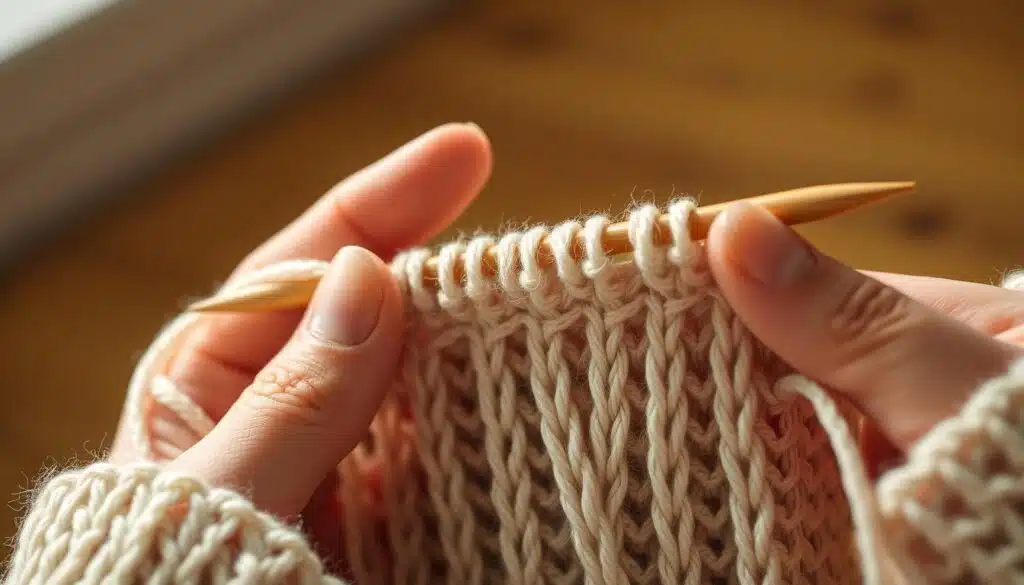
Standard bind-off (regular cast-off)
The standard bind-off is the first one most knitters learn. It involves knitting two stitches, then lifting the first over the second and off the needle. Repeat this across the row. This method creates a neat, stable edge that works well with seams and hems.
This bind-off is firm, not stretchy. Use it when you need the edge to keep its shape. It pairs well with the long-tail cast-on and is great for shoulder seams and edges that shouldn’t stretch.
Stretchy bind-offs
For when flexibility is key, you’ll want a stretchy bind-off. Try an elastic or sewn bind-off for a stretchy edge. This is perfect for ribbing, toe-up socks, neckbands, and cuffs. It also pairs well with the tubular cast-on.
Jeny’s surprisingly stretchy bind-off adds a lot of stretch. It’s great for lace shawls that will be heavily blocked. But, it can make the edge flare, so avoid it for fitted edges.
Other stretchy options include lace-inspired or Estonian techniques. These use returning stitches or k2tog-tbl moves to add flexibility. An elastic variant using knit-two-together through the back loop is also simple and effective.
Decorative and chunky options
If you want an edge that makes a statement, try the i-cord bind-off. It creates a neat, corded rim that looks great on shawls and jackets. The i-cord bind-off is thicker and not the stretchiest, but it adds visual weight to an edge.
The picot bind-off offers a scalloped, feminine trim. It’s perfect for shawls, baby garments, and finishing touches. It pairs well with a picot cast-on and frames lace beautifully.
For hefty joins, use a three-needle bind-off to seam live stitches with structure. The Icelandic and two-color bind-offs give options for knitters who want texture plus modest stretch.
| Bind-off | Stretch | Best uses | Cast-on match |
|---|---|---|---|
| Standard bind-off | Low | Shoulders, hems, seams | Long-tail cast-on |
| Elastic / sewn bind-off | High | Ribbing, cuffs, neckbands, toe-up socks | Tubular cast-on |
| Jeny’s surprisingly stretchy | Very high | Lace shawls that will be blocked | Works with many cast-ons |
| I-cord bind-off | Low | Shawl edges, decorative rims | I-cord cast-on |
| Picot bind-off | Moderate | Decorative trims, shawls, garments | Picot cast-on |
| Icelandic / German twisted style | Moderate | Garter stitch edges, cozy garments | German twisted cast-on |
| Three-needle bind-off | Low | Joining live stitches, shoulder seams | Not applicable |
For a deeper look at bind-off methods and when to use them, check out this guide: bind-off methods. Use it to match technique to project and try small swatches before committing to a full edge.
Knitting finishing techniques
Finishing is where your work gets its applause. A clear plan helps you choose the right method for each part. Think about wear points, stretch, and how edges meet before binding off.
Which technique suits your project
For sweater necklines and seamed shoulders, a tidy edge is key. Use a firm bind-off or three-needle bind-off for stability. Avoid sewn binds that add bulk.
Toe-up socks need stretch. Choose elasticized or lace finishes for a smooth fit. Ribbed cuffs and neckbands do well with tubular or Italian methods for a smooth look.
Shawls that will be blocked wide benefit from open bind-offs. Jeny’s Surprisingly Stretchy Bind-Off is great for dramatic reach.
Tools and prep for successful finishing
First, safety stitch with a lifeline knitting setup. Thread a contrasting cotton through live stitches for easy ripping back. This saves hours of frustration.
Use a larger needle in your right hand for a looser bind-off. Two to four needle sizes up usually works. Test on a swatch to confirm.
Choose trusted tools: blunt tapestry needles for sewn binds and weaving ends, a small crochet hook for crochet bind-offs, and blocking mats with pins for shaping.
Leave a 10-inch tail when finishing a standard bind-off. This allows for secure weaving. Match your cast-on style to the bind-off for a neat edge.
- Lifeline knitting before big moves preserves your work.
- Swap to a larger needle to adjust edge stretch quickly.
- Keep a tapestry needle and crochet hook in your tool kit for fast fixes.
Stretch control: how to get the looseness you need
Getting the right stretch in an edge can make a big difference. Small changes can make a big impact without changing the fabric. Try one change at a time to see how it works.
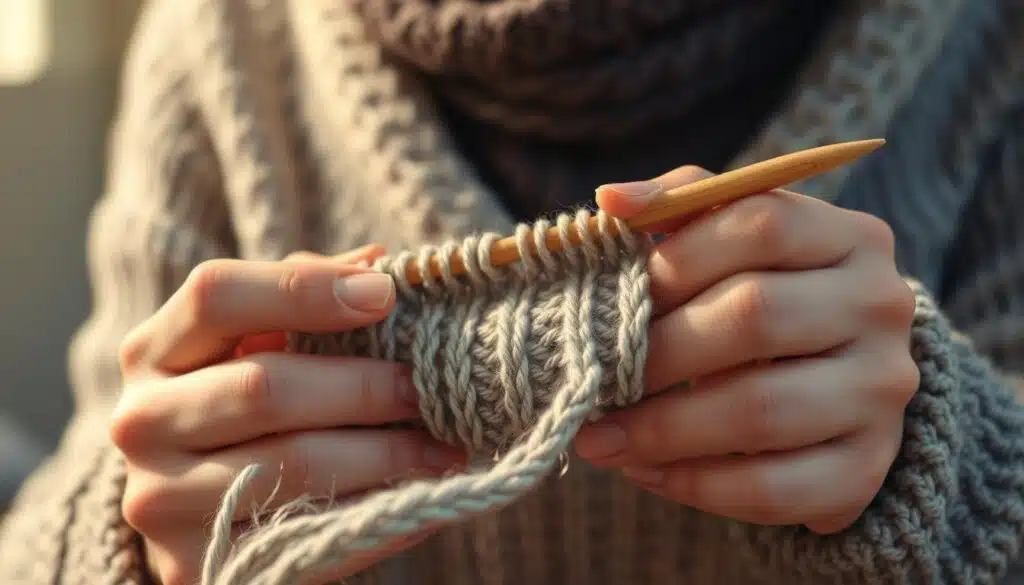
Use a larger needle for a looser edge
For a quick fix, bind off with a right-hand needle two to four sizes larger than your working needle. This method stops the stitches from tightening when they leave the needle. It’s great for a relaxed crew neck or a gentler cuff.
Yarnovers and selective looseness
Insert occasional yarnovers during the bind-off to add slack. Try a yarnover bind-off every third or fourth stitch for a bit of give. You can place those yarnovers in the row before binding off or use backwards e-wrap yarnovers to change the look and tension.
When extreme stretch is wanted
For huge expansion, choose Jeny’s bind-off or a yarnover-heavy variant. Jeny’s bind-off creates a lot of extra yarn in each stitch, so edges unfurl widely after blocking. It’s perfect for lace shawls but might be too loose for fitted garments.
For strong stretch with less flare, test lace, Russian, or Estonian bind-offs. They use paired-stitch manipulation for good elasticity without bulk. If unsure, thread a lifeline and test the edge on the garment or a swatch before cutting the yarn.
Sewn and grafted finishes for invisible joins
You want seams that disappear and joins that hold. Sewing and grafting offer solutions for when neatness, stretch, and strength are key. Choose the method that fits your project and its load.
The Kitchener stitch is perfect for invisible joins in knitting. It’s great for closing sock toes, finishing mitten tops, or joining hat crowns. Use live stitches, a tapestry needle, and the knit-and-purl sequence to achieve a flat, seamless finish.
For heavy-duty joins, the three-needle bind-off is the way to go. It binds two pieces together for a strong, structural seam. This method creates a thicker edge, ideal for shoulder seams and areas that face stress or frequent movement.
The sewn bind-off family offers elastic, neat edges that mimic a tubular cast-on. Elizabeth Zimmermann’s method is famous for its stretchy neckline or sock cuff. This bind-off takes more time but rewards you with longevity and recovery where stretch is essential.
Quality tools make a big difference. Use tapestry needles like Clover darning needles for smooth threading. Double-check stitch orientation before grafting or sewing. Remember, the Kitchener stitch offers an invisible join that lies flat, while the three-needle bind-off provides structure at the cost of bulk.
| Finish | Best use | Stretch | Appearance | Tool |
|---|---|---|---|---|
| Kitchener stitch | Sock toes, mitten tops, hat crowns | Low to medium | Invisible, flat | Tapestry needle |
| Three-needle bind-off | Shoulder seams, structural joins | Low | Visible, robust | Knitting needles (paired) |
| Sewn bind-off (EZ style) | Necklines, sock openings, cuffs | High | Neat, elastic | Tapestry needle |
Decorative bind-offs to make your edges pop
You want an edge that sings, not one that hides. Decorative bind-offs add personality and can turn a plain hem into a design feature. Choose a trim that fits your project’s weight and how it will be worn to avoid bulk.
I-cord and corded edges
The i-cord bind-off creates a neat, rounded cord along the edge. It looks polished on shawls and scarves where a pronounced border is desired.
This method is visually strong and not very stretchy. Pair an i-cord bind-off with an i-cord cast-on for a cohesive frame that reads like a deliberate design choice.
Picot, scallop, and lace trims
If you like delicate details, try a picot bind-off to create small pointed loops along the rim. It pairs well with a matching picot cast-on and suits feminine shawls and trims.
Scallop edge knitting and lace trims use yarnovers or tiny decreases to form soft curves and eyelet patterns. These decorative bind-offs add charm without heavy structure.
Colorwork and texture at the edge
Edge colorwork can make a border pop. Two-color bind-offs create crisp contrast, great for blankets and statement scarves.
Chunky corded or two-color techniques add weight and emphasis. Use them on accessories where a bold frame is welcome. Match your decorative bind-off choice to the yarn and intended drape so the edge lies flat when it needs to.
Weaving in ends and final finishing steps
You’ve bound off and your piece looks great. Now, you need to make sure the edges are clean and the tails are secure. Start by leaving a 10-inch tail at the last stitch. This extra length makes weaving and hiding yarn tails easier.
Use a darning or tapestry needle to follow the yarn path on the wrong side. For flat pieces, pull tails to the purl-side to hide joins. In garter stitch, tuck the tail along two ridges to hide it. Don’t pull too tight to avoid puckering and keep the fabric strong.
Ribbing needs special care. To keep it stretchy, weave vertically along a knit column. This method keeps the cuff or hem soft. Always weave a color’s tails back into stitches of the same color to prevent bleed-through.
When joining new colors in the round, use the leftover tail to close tiny gaps. This trick works well on striped hats and cuffs. For a quick guide, check weaving tips and methods for neat joins and secure starts.
Blocking is a key finishing step. Wet blocking, steam blocking, or pin-and-shape on mats even out stitches and open up lace. It lets decorative bind-offs relax into their intended shape. Finishing steps blocking can rescue a slightly tight edge and make a lacy bind-off sing. Very stretchy bind-offs, such as Jeny’s, benefit from a gentle stretch during blocking to reach full elasticity.
Before cutting any lifeline, try on the piece or check fit with a swatch. If an edge gapes or binds, you can rip back and rework the last rows. After blocking and wear-testing, inspect seams and ends for loose threads. Secure any stray yarn, resew weak spots, then trim excess once you’re satisfied.
| Task | Purpose | Quick tip |
|---|---|---|
| Weave tails on wrong side | Invisibility and strength | Follow existing yarn path with a tapestry needle |
| Weave into ribbing | Preserve stretch | Weave vertically up and down knit columns |
| Weave stripes | Prevent color show-through | Weave each color into its own stitches |
| Blocking | Shape and set stitches | Use pins and mats or gentle steam; stretch if bind-off is elastic |
| Final inspection | Ensure fit and durability | Try on, check seams, secure any loose yarn tails |
Troubleshooting common bind-off problems
You’ve finished the last row and now the edge looks wrong. Don’t panic. Quick checks and small fixes often stop bind-off problems from ruining a garment. Try a lifeline before you cut yarn so you can rework the edge without undoing the whole piece.
Edge too tight or too loose
If the bind-off feels like a corset, use a larger needle two to four sizes up for a simple tight bind-off fix. Slip an occasional yarnover into the bind-off for extra give when you need a looser edge. If your bind-off is floppy, switch to a smaller needle or a firmer method such as the standard bind-off or a three-needle join.
Place a lifeline through all stitches before binding off to save time if you must rework tension. Test the chosen method on a swatch first. For step-by-step tips, see a practical guide at techniques in depth.
Flared edges and sagging necklines
Very stretchy bind-offs like Jeny’s or some yarnover variants can flare at hems or cause a sagging neckline. For necklines, pick tubular or elastic bind-offs that hold shape without stretching out. Avoid overly stretchy finishes on sweater necks where containment matters.
If an edge has already flared, you can add a sewn elastic bind-off or pick up stitches and work a short rib to stabilize the opening. A measured flared edge solution often combines a firmer cast-off plus targeted blocking.
Visible seams and uneven tension
When grafting looks lumpy, check stitch orientation and follow the Kitchener sequence precisely. A misaligned stitch causes visible seams. Use Kitchener for flat, invisible joins and reserve three-needle bind-off for strength where a bit of bulk won’t hurt.
Uneven tension knitting at joins shows up as bumps or loose spots. Practice on small swatches, tweak needle size, and use proper tools like a tapestry needle for sewn finishes. If you need more ideas, a concise tip collection is available at knitting techniques and tips.
Quick fixes and testing
Always try a small swatch, add a lifeline, and keep spare yarn for redoing the bind-off. Sewn techniques can add controlled elasticity without a flare. You get the best result when you match bind-off choice to fabric behavior and wear patterns.
Conclusion
Finishing your project is key. The right bind-off keeps your work looking good. It adds stretch and improves the overall look.
This summary helps you choose the best bind-off. Use the standard bind-off for firm edges. For stretch, try elastic or sewn methods like tubular and Kitchener. Jeny’s or yarnover methods are great for shawls.
Don’t forget these finishing tips. Always test on a swatch first. Leave a lifeline before making cuts. Try a larger needle for a looser edge.
Use a reliable tapestry needle to weave in ends. Brands like Clover make tools that last. Block your work after finishing to set the shape.
If you’re not sure about the best bind-off, test it on scraps. A small fix now is better than a big problem later. Practice these techniques and show off your neat edges.
FAQ
What is binding off and why should you care?
Binding off, or BO, is how you secure your knitting and remove it from the needles. It affects the edge’s look, stretch, and durability. A neat bind-off prevents sagging, keeps socks from failing, and makes shawls look professional.
When should you use a firm bind-off versus a stretchy one?
Use a firm bind-off for areas needing shape and stability, like sweater necklines and seams. Choose a stretchy bind-off for openings that need to stretch, such as ribbed necks and cuffs.
How do I choose a bind-off that matches my cast-on and stitch pattern?
Match the bind-off with your cast-on and stitch pattern. Tubular bind-off works well with tubular cast-on and ribbing. Icelandic bind-off suits garter stitch and German twisted cast-on. I-cord bind-off pairs with i-cord cast-on.
What is the standard bind-off and when is it best?
The standard BO involves knitting two stitches, lifting the first over the second, and repeating. It’s simple and firm, perfect for necklines and hems that need to hold their shape.
Which stretchy bind-offs should I learn for socks and ribbing?
Learn the tubular/Italian bind-off for ribbing and neckbands. Try the Elizabeth Zimmermann–style sewn/elastic bind-off for very stretchy edges. Jeny’s Surprisingly Stretchy is great for lace shawls but can flare. Lace/Russian/Estonian and elastic K2tog-through-back-loop variants offer good stretch without flare, ideal for socks and shawls.
What decorative bind-offs add visual punch without sabotaging function?
Use i-cord bind-off for a clean, corded border on shawls and scarves. Picot and scallop bind-offs create feminine, pointed edges for wraps and decorative hems. Two-color or double-knit bind-offs deliver bold contrast. Keep in mind that decorative edges are for showpieces, not tight neck openings.
When should I use a Kitchener grafting or a three-needle bind-off?
Use Kitchener stitch for an invisible, flat seam, perfect for sock toes and hat crowns. Use a three-needle bind-off for strong seams in shoulder joins or seams that bear weight. Three-needle is sturdier but thicker than grafting.
How do I avoid a too-tight bind-off?
Use a right-hand needle two to four sizes larger when binding off. Add occasional yarnovers during the BO or in the preceding row to relax the edge. Try a sewn/elastic bind-off for stretch with minimal flare. Always test on a swatch if unsure.
How do I prevent a bound-off neckline from sagging later?
Choose a bind-off that balances stretch and stability. For ribbed necks, tubular or sewn/elastic bind-offs reduce sagging. Avoid Jeny’s or heavy yarnover methods for fitted necklines. Block gently and use lifelines for adjustments after wear.
What tools should I have on hand for finishing?
Lifeline thread, a larger right-hand needle for looser BOs, a Clover or similar quality tapestry/darning needle for sewn finishes and weaving in ends, a crochet hook for crochet bind-offs, and blocking supplies. Good tools make tidy work and reduce frustration.
How and why should I use a lifeline before binding off?
Thread a lifeline through all stitches before binding off for easy ripping back. It’s a small investment that saves time and effort in case of mistakes.
What’s the sewn/elastic (Elizabeth Zimmermann) bind-off and when is it best?
It’s a taped-like sewn finish creating a very elastic edge. It’s excellent for ribbing, neckbands, and toe-up socks needing stretch. It’s a bit more involved but worth it for durability and elasticity.
Why does Jeny’s Surprisingly Stretchy bind-off flare and when should I use it?
Jeny’s adds yarnovers for extreme stretch and flare, great for lace shawls. Avoid it for fitted garments or where you need a neat edge.
How do yarnover-heavy bind-offs compare to lace/Russian/Estonian techniques?
Yarnover-heavy bind-offs like Jeny’s maximize stretch but flare. Lace/Russian/Estonian bind-offs use stitch returns and decreases for stretchy edges with less flare, ideal for socks and shawls.
How do I weave in ends so they’re invisible and strong?
Use a blunt tapestry needle and follow existing yarn paths. Hide tails on the wrong side for flat pieces. Leave a 10-inch tail for securing the last stitch. Avoid pulling too tight to prevent puckering.
Any special tips for ribbing and striped edges?
For ribbing, weave tails vertically up the columns of knit stitches, then back down. For stripes, weave each color’s tail into matching stitches. Use tidy joins and the right bind-off for round changes to avoid holes and bulky joins.
What should I check after binding off and weaving in ends?
Block the piece if needed, check fit and stretch, and inspect for uneven tension or gaps. If something’s off, use your lifeline to rip back and rebind. Blocking often rescues stitches, even in decorative bind-offs.
How do I fix an edge that’s too loose or too tight after finishing?
Too tight: rework the BO with a larger needle or add yarnovers. Too loose: rebind using a firmer method or smaller needle. If reworking isn’t an option, consider a structural fix like a sewn elastic bind or a narrow facing.
What causes visible seams or uneven tension with grafting and three-needle joins?
Incorrect stitch orientation during Kitchener or inconsistent tension when doing a three-needle BO. For Kitchener, follow the knit/purl sequence precisely and match the stitch direction. For three-needle, keep the joining tension even and block after joining to even things out.
How do I choose between decorative and functional finishes?
Consider what the edge must do. For wear points, choose functional, stable, or elastic bind-offs. For statement edges, prioritize decorative options like picot, i-cord, or two-color trims. Remember, decorative edges are for showpieces, not tight neck openings.
Any quick practical rules to remember before you bind off?
Test the bind-off on a swatch, plan the match with your cast-on, put in a lifeline, use a larger needle for a looser edge, and have a tapestry needle ready for sewn finishes and weaving. If uncertain, test, adjust, and block — it’s cheaper than reknitting.