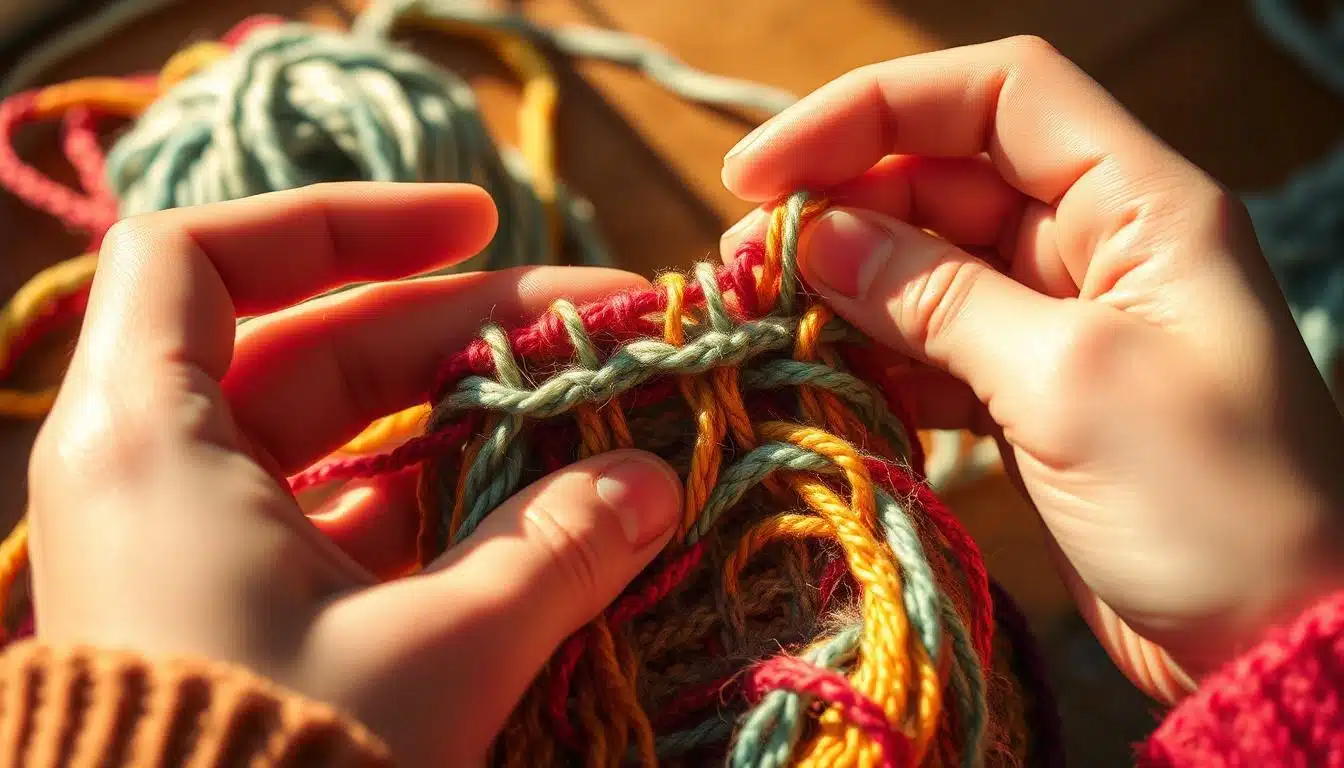
Ever felt that sinking feeling when a scarf looks perfect but has tiny tails at the neckline? Finishing crochet is key to making your projects shine. It’s the small details like tidy yarn tails that show you care. This guide will teach you how to weave in ends to make your work look polished and last longer.
We’ll show you a reliable yarn needle technique and why invisible tails are better than quick knots. You’ll learn when to weave before or after blocking. The best method comes from years of trying different techniques and finding what works best for many textures and joins.
You’ll get practical steps, tool picks, and fixes for short tails. If you want clean seams and no loose bits, this article is for you. For a quick how-to and more tips, check out this weave in yarn ends guide.
Key Takeaways
- Weaving in ends is essential for polished, durable crochet and knitting projects.
- Use a metal yarn needle technique for secure, invisible tails.
- Tidy yarn tails prevent snagging and improve finished appearance.
- Decide whether to weave before or after blocking based on tail placement.
- Practice the go-to method to replace weaker options like whipping over tails.
Why finishing matters: the case for tidy ends and polished projects
Hours of work go into a sweater, hat, or blanket. A messy finish can undo all that effort quickly. Finishing matters because tidy ends protect your time and make the piece feel complete.
Sloppy ends show up in public. Tied color joins that are snipped too short send dozens of loose tails poking out after a few washes. Crocheting over tails can slip free under stress. Whipstitch seams sometimes add bulk that ruins a silhouette. These mistakes turn careful stitching into a collection of weak points.
A clean weave changes how a project wears. A polished crochet finish smooths transitions between colors and textures. Properly locked tails resist loosening during wear and washing. That simple step raises project durability and keeps stitches neat under handling.
Your presentation and durability go hand in hand when you finish well. Buyers and giftees judge handmade goods by edges and seams. Hidden ends in a seam look professional and reduce bulk where pieces join. That kind of attention lifts perceived value and signals skill.
Different textures demand different approaches. Seed stitch, garter-like fabrics, and cables each hide tails in specific paths. Choosing the correct weave for a stitch pattern keeps surface texture intact while securing the tail. This keeps the look consistent across the whole item.
Think about sequencing. Blocking, seaming, and finishing interact and affect the final look. Block before you hide ends when you want even tension. Seam first to tuck tails into the join for the neatest result. Planning those steps protects both presentation and durability.
| Issue | Effect on Appearance | Effect on Durability | Recommended Fix |
|---|---|---|---|
| Tied and snipped color joins | Loose tails visible on surface | Tails poke out after wear | Weave tails into adjacent stitches or seam |
| Crocheting over tails | Uneven surface, possible slippage | Tails can slip free under tension | Weave tail along stitch path on wrong side |
| Whipstitched seams | Bulky join, breaks silhouette | Seam stress points wear faster | Use mattress stitch and hide tails in seam |
| Wrong weave for texture | Pattern disrupted, visible joins | Tails may work free in openwork | Match weave to stitch (seed, garter, rib) |
| Finishing after blocking | Smoother drape, neat edges | Reduced tension pull on tails | Block, then weave; seam where needed |
weaving in ends: the essential skill every maker needs
Every finished project looks better when you know how to hide those pesky tails. Learning to weave in ends makes your work look clean and professional. It shows off your stitchwork instead of loose yarn.
Defining weaving in ends and when to use it
To weave in ends, you thread yarn tails through existing stitches on the wrong side. You can also weave them into seams to secure and hide them. This technique is useful when changing colors, finishing a piece, joining new yarn, or after altering row counts.
When to weave tails depends on the project and where the tail is. Make sure to leave enough length to pass through several stitches. For mid-row joins and color changes, weave immediately. For row-end tails, wait until you seam them.
How weaving in ends compares to crocheting over tails and whipstitching
Crocheting over tails is quick and neat for simple edges. But, crocheting over tails vs weaving shows a difference in security: covered tails may slip if not anchored well.
Whipstitching secures joins, but it can thicken seams and change drape. Weaving tends to lie flatter and avoids added weight. It’s the best choice for most garments and fine work.
Why you should always aim to weave on the wrong side
You should weave on the wrong side to protect the public face of your work. Weaving on the wrong side keeps tails hidden and stitches intact. When seams exist, weave into the seam to prevent visible lumps.
Textured stitches need adapted routes to stay invisible. Think of weaving as a core skill you shape to match the texture, not a one-size-fits-all trick.
Tools of the trade: needles, scissors, and other finishing must-haves
You want tidy ends fast and without drama. The right kit turns a fiddly chore into a calm, almost satisfying ritual. Choose tools that slide, snip, and secure with minimal fuss. This way, your project will look like the work of a pro.
Why a metal yarn needle often beats plastic
Metal yarn needles glide through stitches with less drag. They work well with dense fabrics, textured yarns, or tightly knit fingering. A metal eye keeps the tail moving and reduces split plies.
Plastic needles can work for loose knits, but they may struggle with thick seams. Choose stainless steel or nickel-plated options for durability. You’ll notice fewer snags and a smoother path when you compare yarn needle metal vs plastic in real use.
Recommended needle sizes for different yarn weights
Match needle thickness to yarn thickness for a smooth pass. For bulky and super-bulky yarns, use large, blunt tapestry needles. They take chunky tails without deforming the stitch.
For worsted and aran, medium-sized tapestry needles give control and ease. For fingering and lightweight yarns, smaller tapestry needles slip through tight stitches without stretching them.
When in doubt, test on a scrap swatch. If the needle distorts stitches, step down a size. If it’s hard to thread or push, go up one size.
Scissors, blocking mats, and optional gadgets that speed the job
Sharp finishing scissors or embroidery snips give clean cuts and protect the surrounding work. Use them for tails and trimming, but be very careful not to cut your knitted fabric.
A blocking mat and rustproof pins are essential for shaping and setting stitches. You may block before weaving when tails sit at row ends, or weave first if the tail runs mid-row. That choice affects how the blocking mat fits into your workflow.
Keep a small kit of yarn sewing tools: needle threaders for short tails, threaders that fit tapestry needle eyes, stitch markers for aligning seams, and a seam ripper for careful unpicking. These gadgets save time and frustration when a tail is stubborn or a seam needs coaxing.
Pro tip: organize your finishing station so you can reach your recommended tapestry needles, finishing scissors, and blocking mat without interrupting momentum. A little setup goes a long way toward a polished finish.
Tail length strategy: how long to leave your ends for easy weaving
You want tidy joins and no last-minute panic. A clear tail length guide keeps your finishing quick and your stitches neat. Think of tails as insurance: a little extra saves hassle later.
Guidelines for color changes, joins, and mid-row tails
When you change colors or join a new skein, leave enough to pass through several stitches. Aim to weave through 4–6 inverted-V shapes or stitches. This gives you room to back-weave and lock the tail without bulk.
For mid-row joins, plan to weave before blocking. That way the fabric stays stable and your tails sit where you expect them.
What to do when your tail is too short
If you trimmed too close, try the short tail fix used by many knitters. Run the needle along the intended path first, then thread the short tail through the eye and pull it through the stitches. That trick saves ripping and keeps the join secure.
If the tail won’t reach, consider a small duplicate stitch or tiny whipstitch on the wrong side. Those options hide the end and preserve the fabric’s look.
Balancing economy of yarn with leaving adequate tails
Yarn budgets matter, but don’t skimp so much that you sabotage the finish. If supply is tight, plan join locations and leave minimally adequate tails. Aim for tails long enough to run through multiple stitches and back-weave.
Think of economical tails as planned economy. Leave slightly longer tails at first. You’ll build a habit that prevents the short-tail scramble next time.
| Scenario | Recommended Tail Length | Why it works |
|---|---|---|
| Color change at row end | 4–6 stitches worth | Allows inverted-V weaving and tidy back-weave without bulk |
| Mid-row join | 6 stitches; weave before blocking | Prevents shifting during blocking and secures seam |
| Limited yarn supply | Minimum 4 stitches; plan joins | Balances economical tails with strength and invisibility |
| Accidentally cut short | Use short tail fix | Run needle path first, then thread and pull short tail through stitches |
Step-by-step go-to technique for secure, invisible tails
Begin with a calm pace and a sharp needle. This method ensures an invisible tail that keeps your work neat and strong. Follow each step carefully and match the tension to the surrounding stitches. This way, your finish will blend in seamlessly.
Follow the six-step guide below for most ends. Do one step at a time. Keep tails about 3–4 inches long for easy handling, unless your pattern suggests differently.
- Step 1: Insert the yarn needle through the vertical bar on the side of the last stitch and pull the yarn all the way through.
- Step 2: Re-enter the top of that same stitch, close to where the yarn came from, and pull through to mirror the entry point.
- Step 3: For taller stitches, push the needle through the middle of the stitch so you reach the fabric’s base near the bottom of the row.
- Step 4: Thread the needle through the bottoms of several stitches in inverted-V stitches, running 4–6 stitches to follow natural stitch geometry.
- Step 5: Turn, skip the first half of the last inverted-V you passed through, then weave back through the same path or slightly further to lock the tail with back-weaving.
- Step 6: Pull the yarn a little tight, cut the end, then ease the tail back into the stitches so tension matches the surrounding work.
Each step is important. The vertical-bar entry hides the entry point where eyes fall first. Moving into the middle of taller stitches prevents a visible tail at the stitch top. Running through inverted-V stitches makes the yarn sit where the fabric naturally wants it.
Turning and back-weaving locks the tail so it resists slipping when the piece sees wear. That extra pass can mean the difference between a tail that stays put and one that sneaks out on a sweater’s first wash.
Watch your tension. If you pull too tight you will pucker the edge. If you leave it loose, the tail can work free. Aim for the same feel as the surrounding stitches, and test by gently stretching the finished area.
| Step | Action | Why it matters |
|---|---|---|
| 1 | Enter vertical bar and pull through | Hides the entry and prevents a visible bump at the stitch top |
| 2 | Re-enter near the top of the same stitch | Creates symmetry so the tail lies flat |
| 3 | Pass through the stitch middle for tall stitches | Reaches the row base and avoids a tail showing above |
| 4 | Run 4–6 stitches through inverted-V stitches | Follows stitch geometry for the most invisible outcome |
| 5 | Turn and back-weave through same path | Locks the yarn in place so it resists slipping |
| 6 | Tighten slightly, trim, ease yarn into stitches | Balances security with even tension to avoid puckering |
Project-specific tips: adapting your weave for stitch patterns and textures
Mastering finishes means matching your tail path to the fabric’s structure. Lacy pieces have open spaces and shifting motifs. Look for repeating anchors and weave the tail across several points. This way, the join blends in with the gaps.
When patterns lack clear rows, you have options. Find at least three inverted-Vs, motifs, or vertical bars to secure the tail. Weave lightly through these anchors and stop after a few passes to avoid stiffness. This method keeps the lace drape and openness intact.
Seed stitch and garter textures need a different approach. Seed stitch satchets alternate knits and purls, so weave the tail zigzag to follow the texture. This keeps the tail invisible and prevents a flat patch. For garter or knit-like fabrics, run tails along purl ridges or between knit columns for a clean finish.
Ribbing and cables hide secrets well when you use structure to your advantage. For ribbing and cable tail hiding, feed the tail vertically through purl columns or slip it behind a cable twist. If you have a seam, tuck heads and tails into it to mask bulk. This trick often works for hats, cuffs, and sweater hems.
Bulky yarns need gentler handling. Use fewer passes with larger needles to avoid a lumpy finish. For bulky yarn finishes, aim to minimize the number of times the tail crosses the surface. When a seam is available, route the tail into the seam to keep the join soft and flexible.
| Fabric Type | Best Anchor Points | Recommended Path | Tip to Avoid Bulk |
|---|---|---|---|
| Open lace and mesh | Inverted-Vs, motif junctions, vertical bars | Weave across 3+ anchors, light passes through motifs | Limit passes; preserve drape |
| Seed stitch | Alternating knit/purl bumps | Stagger tail path to mirror texture (seed stitch tail weave) | Short, zigzag passes to blend |
| Garter / knit-like | Purl ridges and knit columns | Run tails along ridges or between columns (garter tail weave) | Follow existing ridges to remain invisible |
| Ribbing and cables | Purl columns, cable twists, seams | Weave vertically in purl columns or behind twists (ribbing and cable tail hiding) | Hide in seam or behind cable to reduce bulk |
| Bulky yarns | Seams, fabric joins, large vertical bars | Use few, deep passes and secure in seam (bulky yarn finishes) | Use larger needle; fewer passes |
Try small swatches before you commit. Test your path, then adjust the number of passes and direction. With practice, you’ll spot the best anchoring points fast and finish like a pro.
When to weave before blocking and when to block first
Choosing whether to weave before blocking or block first can save time and keep your work looking good. It depends on where the tail is and if the pieces will be joined. Knowing a few simple rules can guide you and prevent issues like puckers or visible tails.
Rules of thumb for ends left at row ends versus mid-row
If a tail is at the end of a row, block the pieces first. This makes the seam neater and reduces bulk. For tails in the middle of a row, weave before blocking. This way, blocking helps set the stitch and hide the thread.
How blocking can help or hinder hiding tails
Blocking can open stitches and show tails that aren’t well-secured. It can also flatten and hide a well-woven tail. For tails in the middle, weave first to secure the thread. When weaving before blocking, use even tension to avoid puckering.
Seaming first to hide ends in the seam
Wait to weave ends into the seam until after blocking and seaming. This lets you hide the tails inside the seam. Think of it as a three-step process: block, seam, then weave into seam for the best look.
Tension and invisibility: avoid puckering and bulk while securing tails
You want your finish to blend with the fabric. Start by matching the feel of your knitting. Avoid pulling too hard, as it can distort the fabric and create ripples.
Try to weave through 4–6 stitches for a good grip without adding weight. With bulky yarn, use fewer passes to prevent lumps. Keep your needle path straight to avoid bulk where pieces meet.
When burying ends across a color change, choose rows of the matching color. This makes the color change invisible and keeps the float neat. Run the tail through inside rows or hide it in a rib or cable channel to minimize bulk.
Use the same tension as the body of the piece. After a gentle tug, ease the yarn back into the stitch. This helps avoid puckering around the weave.
When seaming, weave tails into the seam line instead of stacking knots. Turn and pass the tail back through adjacent stitches for security without thickness. This method reduces bulk seams and keeps seams smooth under wear.
For tricky textures like rib or garter, rotate the needle as you take stitches. Alternate directions to lock the tail without tightness. For more tips, visit weaving-in techniques for stockinette, garter, and rib.
Focus on the fabric, not the tail. Small adjustments as you go keep tension even and the look seamless. With practice, you’ll master weaving tension and achieve invisible finishes that last.
Fixes and recoveries: what to do when an end pops out or you cut too short
Oops, you cut too close and an end pops out. Don’t worry, you can fix it without ruining your work. Follow these steps to learn how to fix popped tails and repair short tails with ease.
First, find the stitch path where the tail was. This path will guide your repair. If you can see the tail, use a blunt needle to secure it back in place.
Re-threading through stitches with a short tail
For a short tail, thread the needle first, then the tail. This makes it easier to rethread without damaging nearby stitches.
If the tail is almost gone, use a lifeline. Spool some yarn, pull it through, then attach the tail. For more tips, check out weave-in-ends knitting.
Repairing a popped-out tail without ripping the work
Find the original path by comparing it to the surrounding fabric. Use a tapestry needle to follow this path, weaving in and out. If unsure, weave into nearby columns for extra security.
Make the weave a bit longer than the loose area. This reduces tension and secures the tail. Trim carefully, leaving a small margin to avoid cutting your work.
Preventive tips to avoid future mishaps
- Leave longer tails at joins and color changes. Short tails lead to more repairs.
- Weave into seams or wrong-side areas when possible. This reduces the need for future fixes.
- Avoid crocheting-over-tails for long-term security if you plan heavy wear; secure with back-weaving instead.
- Double-check tails after blocking and reweave any that show. Blocking can loosen hidden paths.
By following these tips, you’ll reduce panic repairs and make fixing short tails routine. Keep a blunt tapestry needle, sharp snips, and patience handy. Your projects will be better off, and you’ll avoid the need for rework.
Creative finishes: when visible tails add style and how to use them intentionally
You can turn leftover yarn into a signature touch. Instead of hiding every end, plan for decorative tails. This adds flair without weakening the fabric.
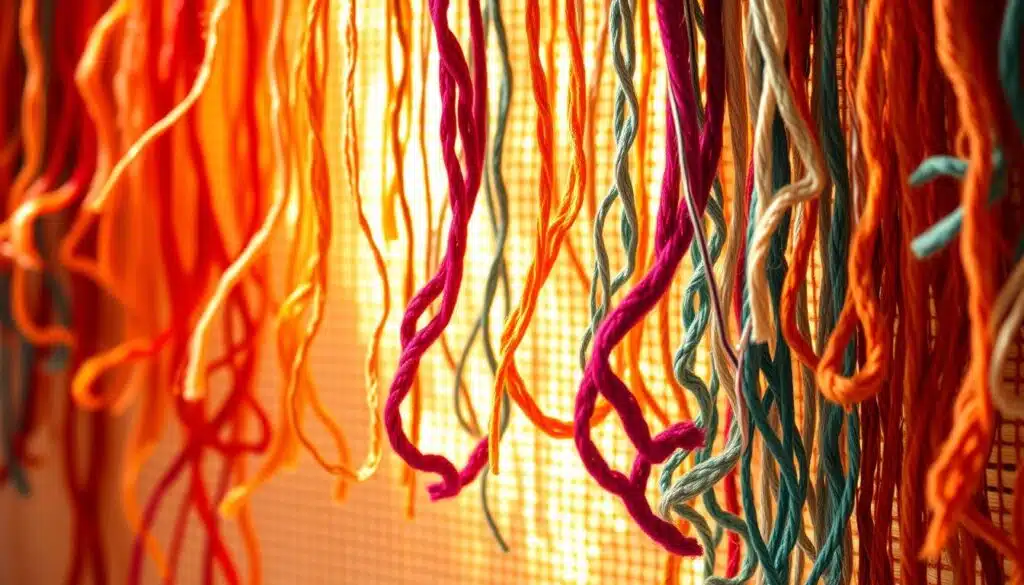
Use tassels fringe at color-change points to mark edges or add weight. Secure the base with several wraps or a sewn-in knot. This keeps the accent in place through wear and washing. When attaching tassels fringe to a hem, weave the tail ends into the seam for added durability.
Contrast tail design makes a bold statement when you let a different hue peek through. Stitch exposed weaves in a contrasting color to create lines or speckles. This plays with texture. Place intentional visible tails where they complement cables, ribbing, or openwork so the look reads as design, not mistake.
Decorative tails can be functional decorative finishes when you balance look with technique. Back-weave or anchor knots at the base before trimming to prevent unraveling. For bulky yarns, hide most of the tail within a seam and leave just enough visible length to form a neat end treatment.
Try decorative knots as low-key accents at join points. A small Turk’s head or a wrapped button loop can use short tails creatively. If you plan a fringe, stagger lengths and treat tips with a neat finish so the piece stays tidy while feeling handmade.
Keep proportion and bulk in mind. Too many visible tails can add weight and change drape. Place intentional visible tails in areas that tolerate texture, like hems and cuffs. Avoid dense stitch panels where extra bulk would distort the fabric.
When you design with visible tails, think like a stylist and a stitcher. Choose contrast tail design and functional decorative finishes that enhance your project. With a little planning, those tails change from chores to creative signatures.
Conclusion
Mastering weaving in ends makes your projects look professional. It keeps yarn tails hidden and secure, preventing bulk or puckering. This also makes your garments last longer.
Use a metal yarn needle for easy passage. Leave enough yarn tails. Follow the best method for invisible tails to achieve neat results.
Adjust your method based on the stitch pattern. Seed stitch and garter stitch need different approaches. Bulky yarns benefit from tight weaving and long-angle trimming.
Seams are great for hiding yarn tails. If a tail is too short, re-threading usually works. For quick tips on weaving ends, check out this guide.
Be careful not to pull too hard. Avoid knots that can mess up your stitches. Weave on the wrong side or into seams to keep things looking good and lasting longer.
Practice is key. Finishing your crochet or knitting projects well takes practice. But with regular practice, you’ll get great results every time. Finish your projects with confidence and enjoy the professional look you’ve achieved.
FAQ
What exactly does “weaving in ends” mean and when should you do it?
Weaving in ends means hiding yarn tails in your stitches. Do it after changing colors, joining new yarn, or finishing a project. For joins in the middle of a row, weave before blocking. If the tail is at the end, block first and then weave into the seam.
Why bother weaving in ends instead of crocheting over tails or whipstitching?
Crocheting over tails can come undone. Whipstitching adds bulk. Weaving keeps your fabric smooth and looks better. It’s perfect for most projects and makes your work look more professional.
Which side should you weave on—the right side or the wrong side?
Weave on the wrong side to keep your work looking neat. If your fabric doesn’t have a right or wrong side, weave along seams or structural elements. Weave into seams after blocking for the best look.
What needle should you use for weaving in ends?
Use a metal tapestry or yarn needle. Choose a size that fits your yarn. A larger needle is better for bulky yarns.
How long should I leave a tail for a secure weave?
Leave tails long enough to weave through 4–6 stitches. This ensures they’re secure. If yarn is scarce, leave the minimum safe length.
What if I accidentally cut my tail too short—can I fix it?
Yes, you can fix a short tail. Run the needle through the stitches first, then thread the tail through. Use a needle threader for easier fixing.
What is the six-step go-to technique you mentioned for invisible tails?
The six-step technique is: insert the needle through a vertical bar, pull the yarn through, and re-enter near the top. For taller stitches, go through the middle. Run through the bottoms of inverted-V shapes for 4–6 stitches. Turn, skip the first half of the last inverted-V, then weave back through. Pull gently, trim, and ease the yarn back into the fabric.
How do I adapt weaving for seed stitch, garter, or other textured patterns?
Follow the texture of your stitches. In seed stitch, weave in a way that matches the alternating bumps. For garter or knit-like fabrics, weave along purl ridges or between knit columns. Always seek at least three anchoring points and vary the route to blend with the texture.
How should I handle ends in ribbing, cables, and bulky yarns?
In ribbing, weave vertically through purl columns. For cables, hide tails behind or inside twists. With bulky yarns, use fewer passes and a larger needle to avoid bulk. Always match the number of passes to the yarn’s heft.
When should I weave before blocking and when should I block first?
Weave before blocking if the tail is mid-row. If the tail is at a row end, block first and then weave into the seam. Blocking can reveal or hide a weave, so choose the order to minimize visible changes.
Can blocking make a well-woven tail show or hide a bad one?
Yes, blocking can expose or hide a weave. It settles stitches, which may show a bad weave. Keep weave tension even and avoid over-tightening to ensure a good finish.
How tight should I pull the tail when finishing so it doesn’t pucker?
Pull the tail just a bit tighter than the surrounding stitches. This ensures a smooth finish without distorting the fabric. After trimming, ease the tail back into the fabric and check the stitch tension.
What tools beside needles should I keep on hand for a clean finish?
Keep sharp scissors, blocking mats, and pins for finishing. A needle threader is useful for short tails. Stitch markers help align seams, and a seam ripper can fix mistakes. Be careful not to cut your work.
How do I repair a tail that has popped out after wear or washing?
Find the original path of the tail. Reinsert a needle and re-weave along that route. Add a back-weave to lock it in place. If the path is gone, anchor the tail in nearby stitches and weave a longer route. For stubborn cases, unpick a small area to recreate a tidy path, then reseam and finish.
Are there times when you should leave tails visible on purpose?
Yes, tails can be decorative. Use them as tassels, fringe, or exposed weaves. Plan the design to enhance texture without adding bulk. Secure decorative elements well to ensure style doesn’t compromise durability.
How many stitches should a weave run through to be secure for everyday use?
Aim for 4–6 stitches of weave length for most yarns. With bulky yarns, use fewer passes but make each pass robust. Ensure multiple anchoring points and a back-weave to prevent slippage.
Any quick fixes to avoid future short-tail panic?
Make leaving adequate tails a habit. Plan joins and color changes to leave enough tail. If yarn is tight, plan seam placement to hide shorter tails. Always check tail lengths before cutting.
Which keywords should I keep in mind when learning or teaching this technique?
Remember terms like weaving in ends, inverted-V shapes, back-weave, wrong side, and metal yarn needle. Also, know about tapestry needle sizes, blocking, seam, mid-row tail, color change, ribbing, seed stitch, garter stitch, bulky yarn, tassel, fringe, and tension. These phrases help find specific advice and tools for your project.