Crochet project planner: 10 Powerful Reasons to Get Organized 2025
Why Every Crocheter Needs Better Organization
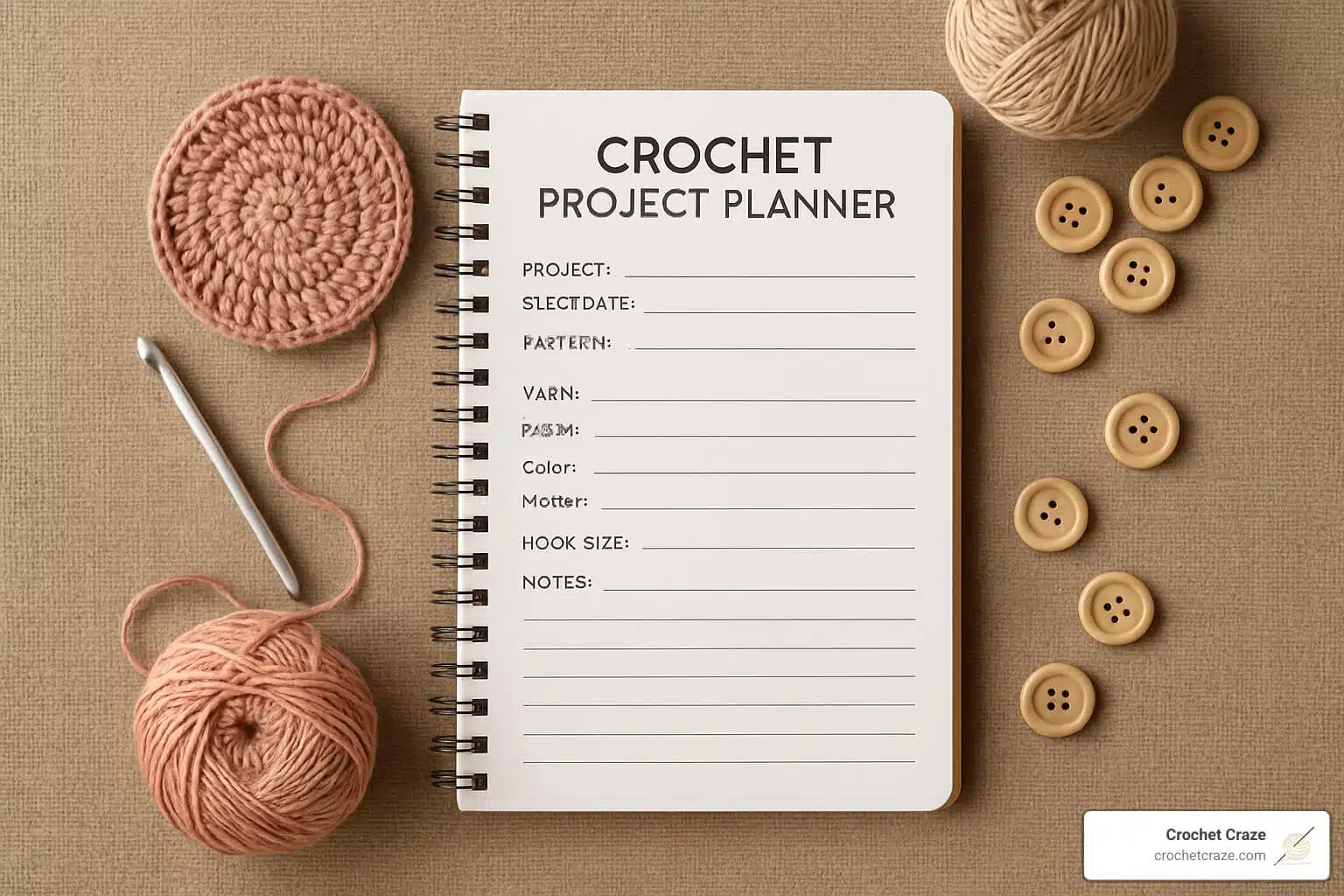
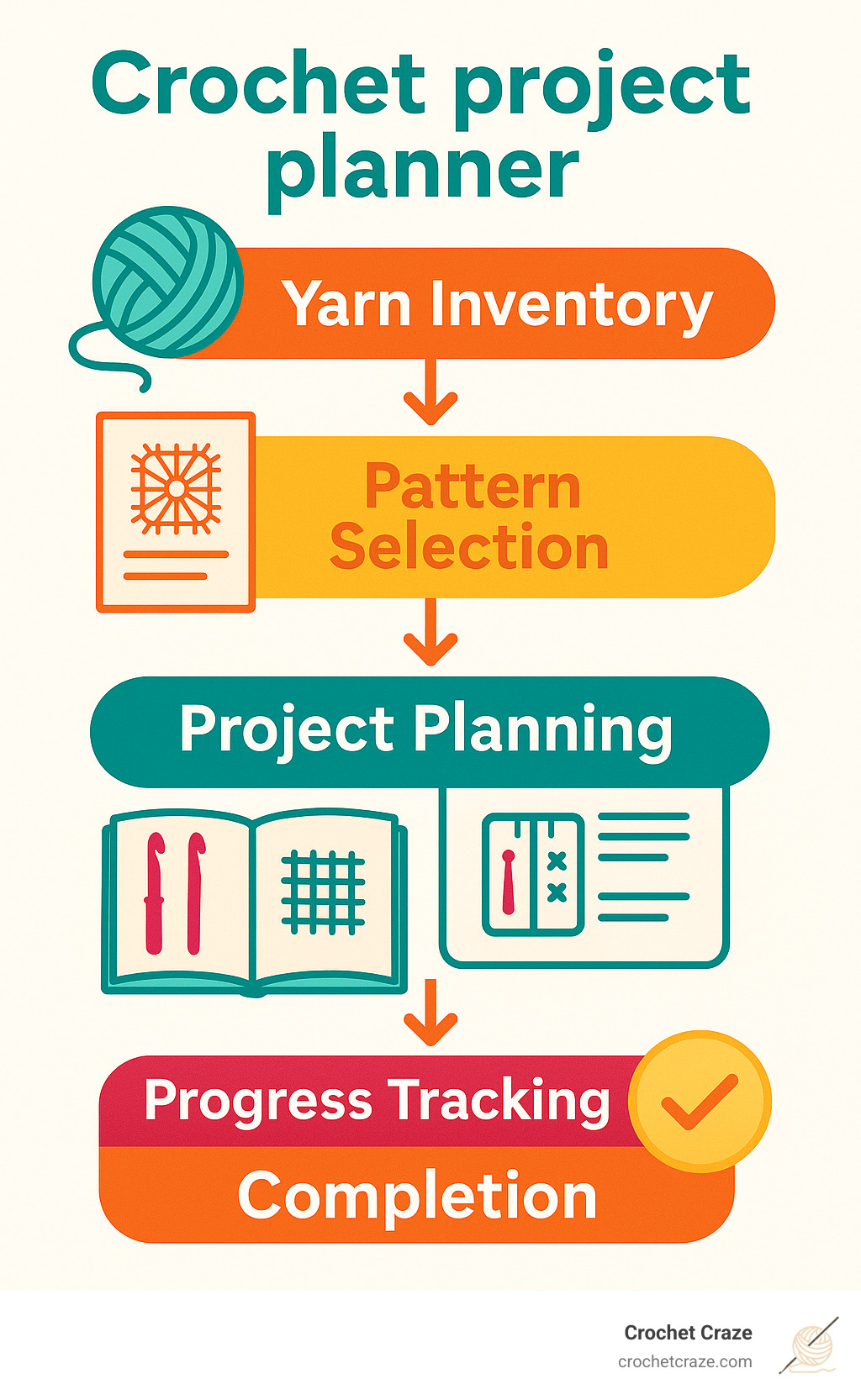
A crochet project planner is a dedicated organizational tool that helps you track yarn inventory, manage works-in-progress, schedule project deadlines, and store pattern details in one central location. Here’s what you need to know:
Key Components:
• Project tracking pages – Record hook sizes, yarn details, gauge swatches, and progress notes
• Yarn inventory sheets – Organize stash by weight, track dye lots, and prevent duplicate purchases
• Pattern storage – Catalog both digital and physical patterns with quick reference details
• Calendar planning – Schedule project deadlines, especially for gift-giving occasions
• Reference charts – Size guides, abbreviation lists, and hook conversion tables
Available Formats:
• Printable PDFs – Download and print pages as needed, unlimited use
• Digital planners – Use with tablets and stylus for on-the-go editing
• Bound books – Pre-made spiral or hardcover planners ready to use
Have you ever driven to the yarn store to buy a skein you needed, only to find it weeks later buried in your stash? Or forgotten what hook size you were using on a work-in-progress project? You’re not alone – these common frustrations affect crocheters at every skill level, from beginners managing their first few projects to experienced crafters juggling multiple complex works.
The good news is that a well-designed planner can eliminate these headaches while helping you finish more projects and enjoy the creative process instead of feeling overwhelmed by it.
I’m Sonja Huerta, and as someone who appreciates attention to detail and organized creativity, I’ve found that using a crochet project planner transforms chaotic craft sessions into focused, productive time. Let me walk you through everything you need to know to choose and use the perfect planning system for your crochet journey.
Easy Crochet project planner glossary:
– Creative crochet projects
– Crochet project kits
What Is a Crochet Project Planner and Why Use One?
Picture this: You’re sitting down for a relaxing evening of crochet, excited to work on that beautiful blanket you started last month. But wait — what hook size were you using again? And where did you put that pattern? Suddenly, your peaceful crafting time turns into a frantic search mission.
A crochet project planner is your solution to this all-too-common scenario. It’s much more than a simple notebook — think of it as your personal crochet assistant that keeps everything organized in one convenient place.
This comprehensive system is designed specifically for fiber-arts enthusiasts like you. Every skein of yarn, every pattern detail, and every project milestone gets its own designated space. No more digging through bags or trying to remember which dye lot you used three weeks ago.
The crafting community has accepted these planning tools with enthusiasm. One popular free printable planner has been shared nearly 1,000 times across social media platforms, with hundreds of Pinterest shares alone. This widespread interest shows just how much crocheters crave better organization.
Organization and productivity become effortless when everything has its place. Instead of spending precious crafting time hunting for supplies, you’ll know exactly where to find what you need. Time management improves naturally because you can see at a glance what projects need attention and when.
Stress-free crafting becomes reality when you can track your works-in-progress without feeling overwhelmed. Your planner shows you exactly where each project stands, what materials you need, and which deadlines are approaching. WIP tracking has never been easier.
Gift deadlines stop being a source of panic. Plan handmade presents months in advance, with dedicated pages to track recipient preferences, sizing needs, and completion timelines. Stash control prevents those embarrassing moments when you buy yarn you already own, because your inventory pages keep accurate records organized by weight and color.
For more guidance on planning your crochet journey, check out our More info about Project Planning resources.
The Big Benefits for Every Skill Level
Every crocheter — from nervous beginner to seasoned expert — finds unique advantages when using a crochet project planner.
Goal setting becomes clearer when you can visualize your project timeline. Motivation stays strong because you can see your progress documented in black and white. There’s something deeply satisfying about checking off completed milestones.
Beginners find the planner invaluable for navigating the learning curve. Record which hook and yarn combinations work best for different projects. Note which stitches feel comfortable and which need more practice. The reference charts become your personal cheat sheets, always within reach when you need a quick reminder.
Intermediate crafters appreciate how the planner manages multiple projects without confusion. You’ll always remember where you left off on each work-in-progress and what materials you need to continue. No more frogging rows because you forgot your gauge measurements.
Advanced crocheters use their planners to coordinate complex schedules, especially when juggling commissioned pieces or multiple holiday gifts. Track gauge swatches for different yarn substitutions and maintain detailed notes for future reference.
The memory aid function benefits everyone, regardless of skill level. Let’s be honest — we all forget details sometimes. Your planner becomes your external brain, storing hook sizes, yarn weights, and pattern modifications so you don’t have to rely on remembering everything perfectly.
Core Sections Every Crochet Project Planner Should Include
When you’re choosing or creating a crochet project planner, certain sections make the difference between a helpful tool and a game-changing organizational system. After looking at what works best for crocheters at every level, we’ve found these core sections are absolutely essential.
Think of your planner as having different “zones” for different aspects of your crafting life. The yarn inventory sheets become your personal yarn shop catalog, organized by weight categories like fingering, worsted, and chunky. You’ll record brand names, colorways, and yardage so you never again buy that beautiful blue yarn only to find you already have three skeins at home.
Your pattern inventory acts like a library card catalog for both physical and digital patterns. Include quick reference details like skill level, yarn requirements, and project type. This saves you from scrolling through hundreds of saved Pinterest pins trying to remember which blanket pattern caught your eye last month.
The project planning pages are where the magic happens – individual sheets for each project with space for sketches, yarn samples, hook sizes, gauge notes, and progress tracking. These pages capture all those little details that slip away if you don’t write them down.
Calendar integration keeps your crafting realistic and deadline-focused. Monthly and weekly views help you schedule project completion dates, especially when you’re planning handmade gifts. No more panic-crocheting a baby blanket the night before the shower.
Smart planners also include task lists for daily and weekly priorities, reference charts with size guides and abbreviations, a dedicated gift tracker for managing multiple recipients and deadlines, and printable tags for labeling your works-in-progress.
For additional stitch guidance while planning your projects, visit our comprehensive Crochet Stitch Guide.
Project Tracking Pages in Your Crochet project planner
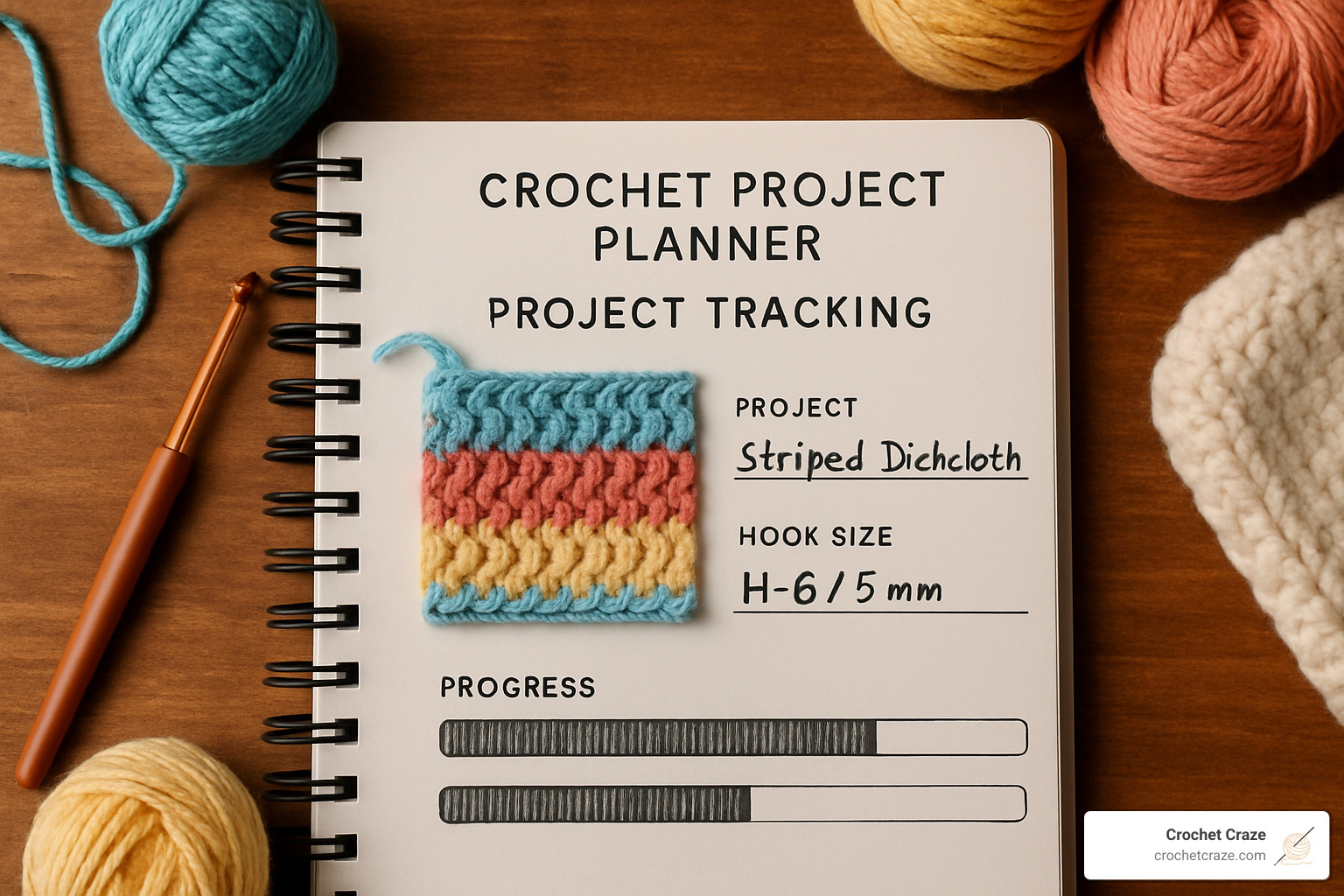
The project tracking pages are truly the heart of your crochet project planner. These dedicated sheets capture everything you need to know about each individual project, turning scattered mental notes into organized, accessible information.
Start with the basics in your project information section – the project name, intended recipient if it’s a gift, start date, and target completion date. This simple foundation helps you prioritize your work and keeps gift deadlines visible.
The materials documentation area becomes your project’s ingredient list. Record the specific yarn brand, colorway, weight, and total yardage needed, plus your hook size and any special notions. Many crocheters love planners that include a small space where you can tape or staple an actual yarn sample for future color matching.
Your gauge and measurements section saves you from the frustration of size surprises. Document your gauge swatch results, including the hook size used and any adjustments needed. Record key measurements as you work to ensure proper fit.
Progress tracking gives you that satisfying sense of accomplishment. Whether you prefer progress bars, checkboxes, or percentage tracking, seeing your advancement visually motivates you to keep going. Some crocheters track by sections completed, while others use time-based goals.
The notes section becomes your personal crochet diary. Capture pattern modifications, helpful tips, or problems you encountered. This becomes invaluable reference material for future projects or when helping other crocheters tackle similar challenges.
Don’t overlook the sketch space – those blank areas for drawing stitch diagrams, color placement ideas, or design modifications often become the most creative part of your planning process.
Organizing Yarn Stash with a Crochet project planner
Your yarn stash probably tells a story of good intentions and impulse purchases. A well-organized crochet project planner transforms that chaotic collection into a manageable, searchable inventory that actually helps you finish projects.
Weight categories form the backbone of smart stash organization. Separate your inventory sheets by yarn weight – lace, fingering, sport, worsted, chunky, and super chunky. This makes it infinitely easier to find appropriate yarn when a pattern calls for a specific weight.
For each yarn entry, detailed records prevent confusion and duplicate purchases. Note the brand, specific colorway name or number, dye lot, yardage remaining, and storage location. When you need to purchase additional skeins for larger projects, having the exact dye lot number can save you from slight color variations that drive perfectionist crocheters crazy.
Color documentation takes organization to the next level. Some planners include space for yarn samples or color swatches. Taping small yarn pieces directly to your inventory page gives you accurate color reference when shopping or planning color combinations. No more holding your phone up to yarn displays trying to match a photo.
Use your inventory for purchase planning too. Note when you’re running low on frequently used colors or weights, and maintain a wish list of yarns you’d like to try. This transforms random yarn shopping into strategic stash building.
Stash location mapping saves precious crafting time. If you store yarn in multiple locations – bedroom closet, craft room bins, under-bed storage – note where each type lives. You’ll thank yourself when you need specific materials for a project.
Handy Reference & Resource Sheets
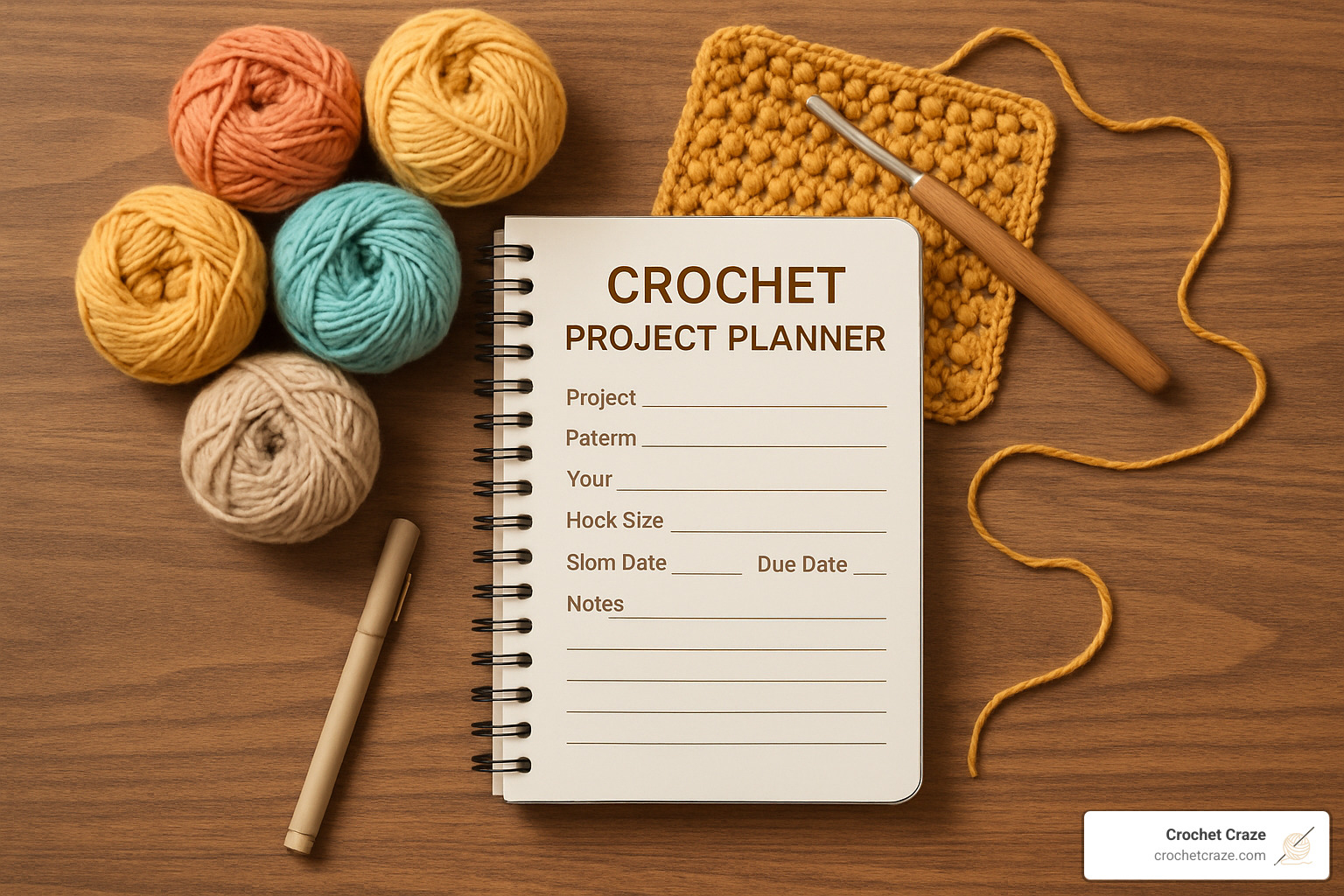
The reference pages in your crochet project planner transform it from a simple organizer into a comprehensive crafting resource you’ll reach for constantly. These charts and guides eliminate the need to hunt through multiple sources for basic information.
Size charts for blankets and hats help you plan projects with proper dimensions from the start. These become especially valuable when creating gifts for people whose measurements you don’t have handy – like that coworker’s new baby or your cousin’s toddler.
Abbreviation lists covering both US and UK crochet terms save you from pattern confusion. This becomes invaluable when working with international patterns or vintage designs that use different terminology. No more pausing mid-project to google what “tr” means in British crochet terms.
Hook conversion charts ensure you use the correct tools regardless of where your pattern originated. US, UK, and metric hook size equivalents prevent the frustration of having the wrong size hook for your chosen pattern.
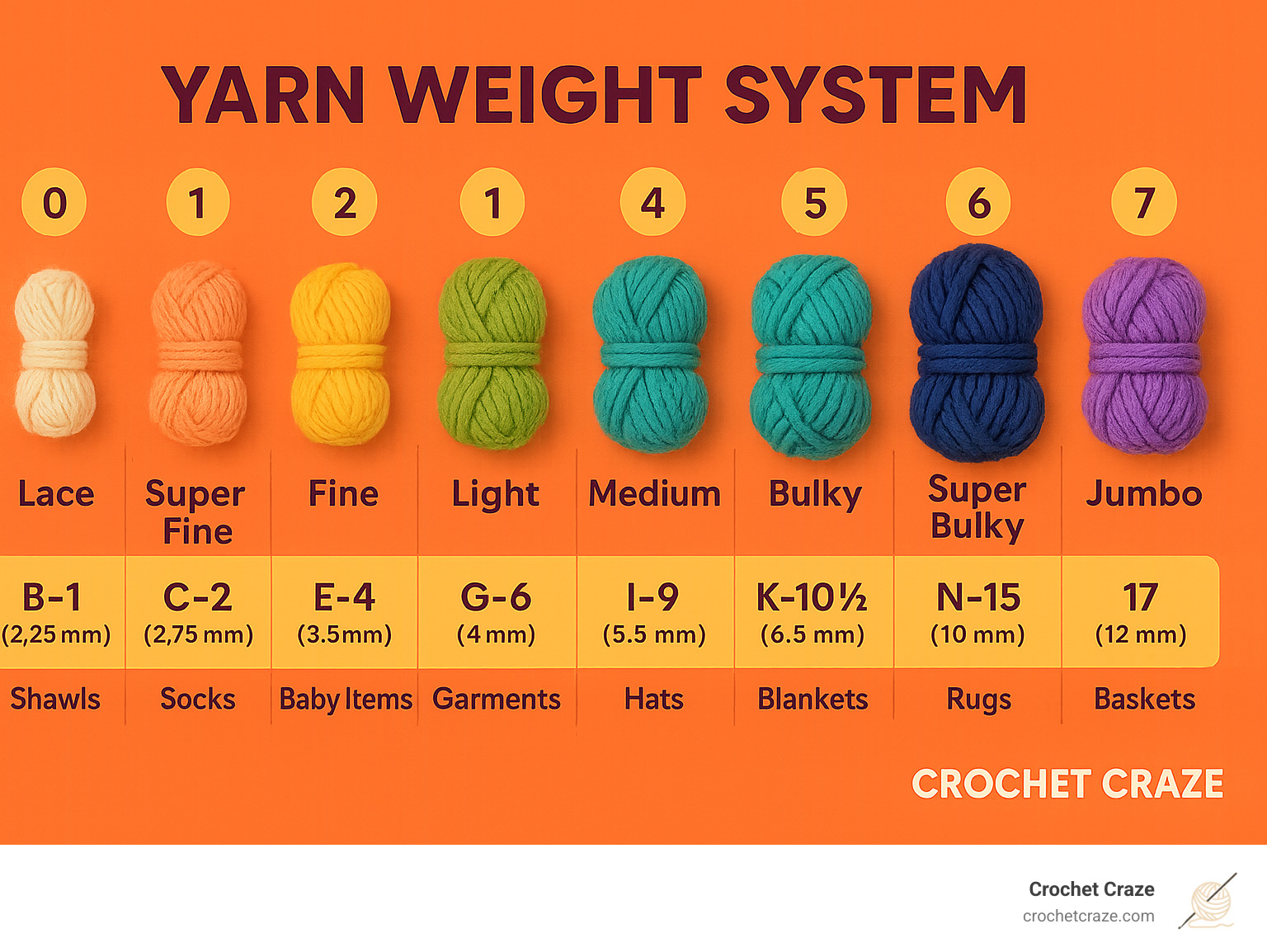
The yarn weight guide provides both visual and text references for yarn weights from lace to super chunky, including typical hook size recommendations for each weight. This helps you make smart substitutions when you can’t find the exact yarn specified in a pattern.
Doubled yarn guides show what weight you achieve when holding two strands of different weights together. This opens up creative possibilities for using up smaller amounts of yarn or achieving specific textures.
For help with common crochet challenges while using your planner, check out our guide on Mastering Your Crochet: A Guide to Fixing Common Mistakes.
Printable vs Digital vs Bound: Choosing the Right Format
Choosing the right format for your crochet project planner can make the difference between a tool you love using and one that sits forgotten in a drawer. Each format has its own personality and works better for different crafting styles.
Printable PDFs are like having a craft store that never closes. You can print exactly what you need, when you need it. Running out of project pages? Print more. Want to try a different layout? Download a new one. The Winding Road Crochet planner includes 17 two-page bullet journal spreads, showing just how comprehensive these digital downloads can be. Plus, many are available as free downloads, which is perfect when you’re not sure what style works best for you yet.
The beauty of printables lies in their flexibility. You can print on cardstock for durability, choose different colors of paper, or even laminate frequently-used reference pages. If you’re someone who likes to customize everything from your coffee order to your workspace, printables give you that creative control.
Digital planners bring your crafting organization into the modern age. Using apps like GoodNotes on your tablet, you can fill out forms with a stylus, attach photos of your gauge swatches, and access your planner anywhere. There’s something satisfying about having unlimited pages – you’ll never run out of space for new project ideas.
Digital formats shine when you’re always on the go. Your planner syncs across devices, so you can check your yarn inventory while shopping or update project notes during your lunch break. They’re also wonderfully eco-friendly, which appeals to many crafters who care about sustainability.
Bound books offer the classic planner experience without any setup required. Quality options like the Dream-Plan-Create Journal, which has received over 18 positive reviews, prove that bound planners can be both beautiful and functional. There’s something special about the tactile experience of writing on paper – many crafters find it more satisfying than digital alternatives.
The immediate usability of bound planners appeals to people who want to start organizing right away. No printing, no app downloads, no assembly required. Just open and begin planning your next masterpiece.
Here’s how these formats stack up against each other:
| Feature | Printable | Digital | Bound |
|---|---|---|---|
| Initial Cost | Low/Free | Medium | Medium-High |
| Customization | High | Medium | Low |
| Portability | Medium | High | Medium |
| Durability | Variable | High | High |
| Setup Time | Medium | Low | None |
| Backup Options | Manual | Automatic | None |
For a quality bound option that’s ready to use immediately, you can Get your copy of this crochet planner on Amazon here.
Pros & Cons Snapshot
Printable planners excel at giving you control. You can reprint pages as often as needed, experiment with different layouts, and choose your own paper quality. However, they do require access to a printer, and ink costs can add up over time. You’ll also need to punch holes and assemble pages yourself, which some people find tedious.
Digital options offer the convenience of automatic cloud backup and easy editing. You can rearrange sections, duplicate successful project pages, and never worry about losing your planning work. The main challenges involve the learning curve if you’re not comfortable with technology, and you’ll need a compatible device with a stylus for the best experience.
Bound planners provide immediate tactile satisfaction and require no technology whatsoever. They look professional and feel substantial in your hands. The trade-off comes with limited pages and no customization options. Once you fill up a bound planner, you’ll need to purchase a replacement, and there’s no backup if you lose it.
Consider your crafting habits when choosing. Do you plan projects months in advance or prefer spontaneous creativity? Are you always traveling with your crochet, or do you have a dedicated crafting space? Your answers will guide you toward the format that becomes an indispensable part of your creative process.
Customizing & Maximizing Your Planner for Deadlines, WIPs and Gifts
Once you’ve chosen your crochet project planner format, the real magic happens when you make it truly yours. Think of customization as adding your personal touch to transform a basic planner into your crafting command center.
The key to maximizing your planner lies in developing systems that match how your brain works. Some crocheters are visual learners who thrive with color coding systems – they might use purple for gift projects, blue for personal items, and green for charity donations. Others prefer the simplicity of bullet journal symbols where a star means urgent, a dot represents a regular task, and a heart marks favorite projects.
Priority queue management becomes especially important when you’re juggling multiple works-in-progress. Rather than feeling overwhelmed by a dozen half-finished projects, create a simple ranking system. Consider which gifts have firm deadlines, which personal projects you’re most excited about, and which charity items can wait until next month.
Time blocking transforms good intentions into actual progress. Instead of hoping to find time for crochet, schedule it like any important appointment. Even thirty minutes on Tuesday evenings can keep your projects moving forward steadily.
Creating a holiday calendar early in the year prevents the December panic we’ve all experienced. Mark every birthday, anniversary, and gift-giving occasion, then work backward to determine realistic start dates. A complex sweater for Christmas should probably begin in August, not November.
For works-in-progress, WIP tags solve the mystery of abandoned projects. When you can quickly see that the blue blanket uses a size H hook with Red Heart yarn on page 47 of your pattern book, you’re much more likely to pick it up again.
For guidance on selecting appropriate materials for your planned projects, visit our Best Yarn and Hook for Beginner Crochet guide.
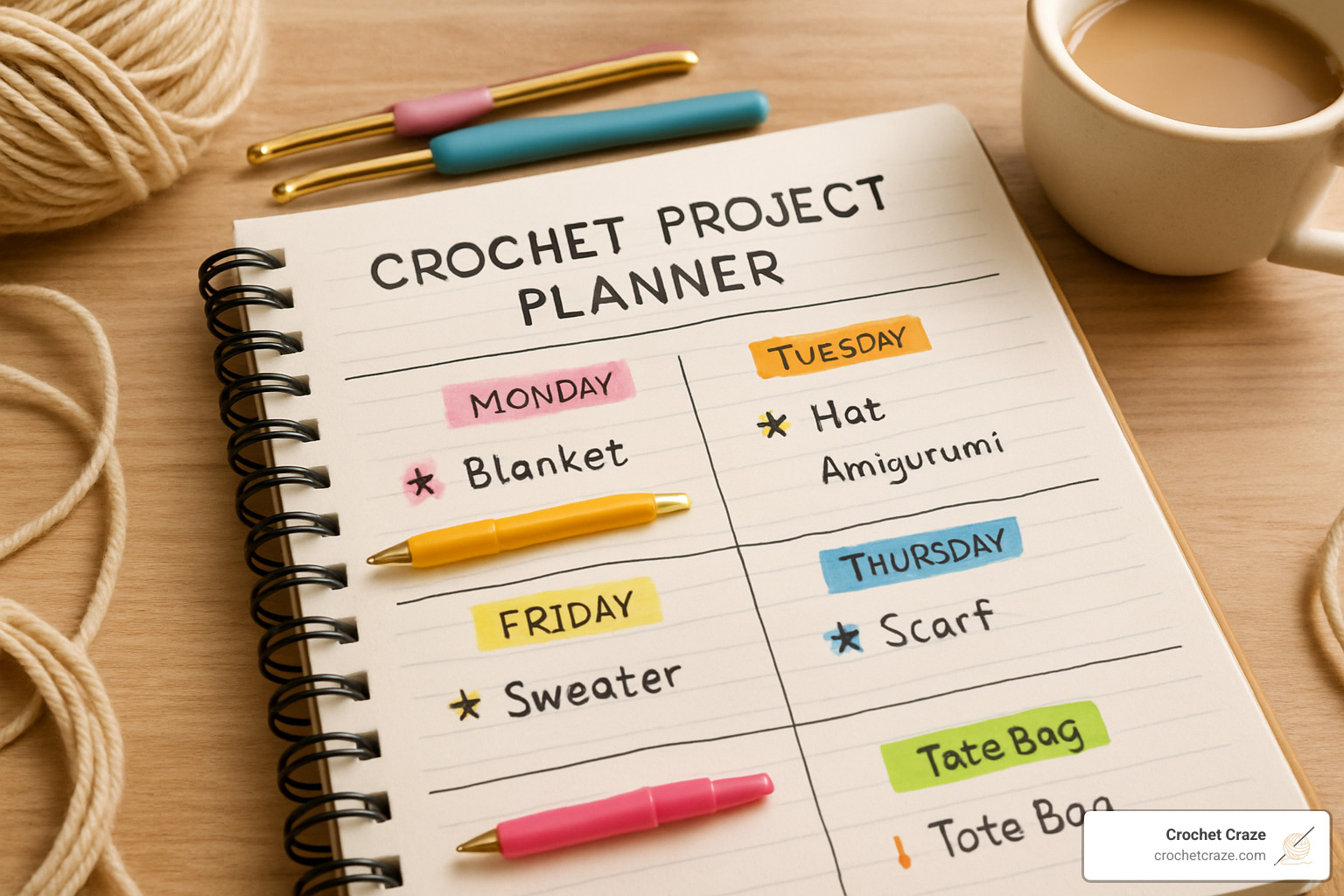
Scheduling Success: From Idea to Finished Gift
Gift planning separates successful crocheters from those who end up buying last-minute store gifts while their unfinished projects sit in bags. The secret lies in realistic milestone mapping that breaks intimidating projects into manageable chunks.
Instead of writing “finish baby blanket by shower date,” create specific milestones like “complete 20 granny squares by week 2” and “join all squares by week 3.” These smaller goals feel achievable and help you track progress accurately.
Always build in buffer days because life happens. That two-week scarf project should be scheduled for three weeks to account for work deadlines, family obligations, or simply days when your hands need a break. Experienced crocheters learn that rushing leads to mistakes and frustration.
Your gift tracker becomes your secret weapon for staying organized throughout the year. List every person you typically give handmade gifts to, note their preferences and sizes, and brainstorm project ideas during slow crafting periods. This prevents the scramble of trying to remember if your nephew likes blue or green when his birthday approaches.
Deadline alerts work best when set multiple times – one for the project start date, one at the halfway point, and one final reminder before completion. Think of these as gentle nudges rather than stress-inducing alarms.
Keep a list of backup projects that can save the day when bigger plans fall through. Simple dishcloths, bookmarks, or quick baby hats can become thoughtful gifts when your ambitious sweater project hits unexpected snags.
Tips to Keep Your Crochet Project Planner Up-to-Date
A crochet project planner only helps when it reflects reality, not wishful thinking. The difference between a useful planner and a guilt-inducing pile of unrealistic dreams lies in regular maintenance.
Weekly review sessions become as important as your actual crochet time. Spend fifteen minutes every Sunday evening updating project progress, crossing off completed tasks, and adjusting timelines based on how the week actually went. This prevents small delays from becoming major problems.
Regular idea purging keeps your project queue exciting rather than overwhelming. Every few months, honestly evaluate your “someday” project list. That complicated lace shawl you bookmarked two years ago might not spark joy anymore, and that’s perfectly fine. Remove projects that no longer interest you to make room for new inspiration.
Swatch documentation requires immediate attention because details fade quickly from memory. The moment you finish a gauge swatch, record the hook size, yarn details, and measurements. Attach the actual swatch to your project page while the information is fresh and accurate.
Digital backup strategies protect months of planning work. For physical planners, photograph important pages monthly using your phone. Digital planner users should verify that automatic cloud syncing works properly – losing your entire planning system to a device failure creates unnecessary stress.
Inventory updates prevent the disappointment of planning projects around yarn you no longer have. Update your stash records immediately after purchases and when starting new projects. This small habit prevents major frustration later when you find that perfect blue yarn was used for last month’s baby blanket.
Bonus Resources & Setup Tools
Setting up your crochet project planner for success means having the right reference materials and supplies at your fingertips. Think of these as the supporting cast that makes your planner truly shine.
Essential reference charts transform your planner from a simple organizer into a comprehensive crafting companion. Blanket size charts are absolute lifesavers when you’re planning gifts – knowing that a baby blanket should measure 30×36 inches while a throw needs to be 50×65 inches takes the guesswork out of project planning. Hat circumference guides organized by age groups help ensure your handmade beanies actually fit their intended recipients.
The yarn weight system infographic deserves a permanent spot in your planner’s reference section. Having a visual guide that shows you exactly what lace weight (0) through jumbo (7) yarns look like, along with their typical hook size recommendations, eliminates confusion when substituting yarns or planning new projects.
For printable planner setup, invest in supplies that will make your system both functional and enjoyable to use. A quality hole punch saves frustration when adding new pages, while a sturdy 3-ring binder keeps everything organized and portable. Divider tabs help you quickly steer between yarn inventory, project pages, and reference materials. Consider page protectors for your most-used reference charts – they’ll stay clean and readable even after months of handling.
Your writing tools matter more than you might think. Choose pens that won’t bleed through your planner pages, and keep colored pencils handy for sketching color combinations or marking priority levels. Small sticky tabs work wonderfully for marking your current projects or flagging important reference pages.
Consider creating a portable planning kit with your planner, essential pens, a small ruler for measuring gauge swatches, and tiny scissors for snipping yarn samples to attach to your pages. This keeps everything together whether you’re planning at home or taking your planner to your local yarn shop.
For comprehensive guidance on your planned projects, explore our detailed Crochet Blanket Guide and browse our curated selection of Crochet Project Kits to get started with confidence.
Frequently Asked Questions about Crochet Project Planners
Let’s address the most common questions we hear from crocheters considering their first crochet project planner or looking to upgrade their current system.
How many projects can one planner handle?
The capacity of your crochet project planner depends entirely on the format you choose, and honestly, this is one of those wonderful problems to have – it means you’re excited about lots of projects!
Most bound planners include dedicated pages for 12 to 20 individual projects, which works perfectly for crocheters who focus on a few projects at a time. However, if you’re like many of us who get inspired by every pattern we see, you might need more flexibility.
Printable planners offer unlimited capacity since you can simply download and print additional project pages whenever you need them. This makes them ideal for prolific crocheters who always have multiple works-in-progress and a long list of “someday” projects.
For high-volume crafters, we recommend organizing your projects into three categories: active projects you’re currently working on, queued projects planned for this year, and someday projects for future inspiration. A 3-ring binder system works beautifully for this approach, allowing you to add extra inserts and reorganize sections as your needs change.
What if I switch between knitting and crochet?
Many crafters work with both needles and hooks, and the good news is that most planning systems adapt beautifully to dual-craft usage. The key is choosing a planner with flexible features that serve both crafts.
Look for planners that include conversion charts for both knitting needles and crochet hooks, along with abbreviation lists covering both crafts. The project tracking pages should be generic enough to work whether you’re planning a knitted sweater or a crocheted blanket.
There are a few differences to keep in mind: knitting typically requires more detailed gauge tracking due to how fabric drape can vary between knitters, while crochet often involves more color work planning for projects like granny square afghans. Choose a planner with flexible project pages that include plenty of space for notes and swatches.
The yarn inventory sections work identically for both crafts, and the gift planning features are just as valuable whether you’re knitting scarves or crocheting hats for the holidays.
Can I start mid-year?
Absolutely! One of the best things about most crochet project planners is their flexibility – you don’t need to wait for January 1st to get organized.
Most quality planners use undated calendars and flexible layouts that work regardless of when you begin. This means you can start in March, July, or any month that feels right for you. Printable planners are particularly perfect for mid-year starts since you can print only the months you actually need.
If you’re considering a dated planner that’s already partway through the year, don’t let that stop you. Simply adapt the timeline to fit your needs. Focus initially on the project planning pages and yarn inventory sections, which provide immediate value regardless of timing. Then incorporate the calendar planning features as you approach the next major gift-giving season.
The best time to start organizing your crochet projects is whenever you’re feeling motivated to do it. Your future self will thank you for taking that first step, no matter what month it happens to be.
Conclusion
Starting your crochet project planner journey might feel like one more thing to add to your to-do list, but trust me — it’s actually the secret to crossing more items off that list. After helping thousands of crocheters organize their creative lives, I’ve seen how the right planning system transforms chaotic craft rooms into productive creative spaces.
The beauty of a crochet project planner lies in its flexibility. Maybe you’re drawn to the unlimited customization of printable PDFs, or perhaps you love the instant gratification of a bound book waiting on your coffee table. Digital planners offer their own magic with cloud syncing and endless pages. The format matters less than finding something that feels natural in your hands and fits your daily routine.
What matters most is consistency. Your planner becomes more valuable with each project you track, every yarn sample you attach, and all those little notes about what worked (or didn’t work) along the way. Those details that seem insignificant today become treasure troves of information six months from now when you’re planning your next big project.
The numbers tell an inspiring story — with nearly 1,000 shares on popular planner resources, our community clearly recognizes the power of organized crafting. You’re joining a movement of crocheters who’ve found that a little planning leads to a lot more finished projects and significantly less stress.
Think about it: no more frantic searches through your stash for that perfect skein you know you bought. No more missed birthday deadlines or forgotten hook sizes. Instead, you’ll have the confidence that comes from knowing exactly where you stand with every project and what you need to move forward.
At Crochet Craze, we’ve built our entire mission around helping crafters like you succeed. Your crochet project planner becomes more than just a notebook — it’s your creative compass, guiding you from those exciting “what if” moments to the satisfaction of binding off your final stitch.
Whether you’re planning your first baby blanket or your fiftieth, organized creativity isn’t about perfection. It’s about creating space for your imagination to flourish while keeping the practical details manageable. Your future self will thank you for every pattern detail you record and every deadline you track.
Ready to dive deeper into organized crafting? Explore our More info about DIY crochet kits for additional project planning inspiration and find how the right tools can make your crochet dreams reality.