
You love bold motifs and crisp colorwork but don’t want bulky tapestry or fiddly color changes. Overlay crochet offers the best of both worlds. It uses graphic, two-color techniques that are easy to follow, like knitting charts but work like regular crochet. It’s great for wall hangings, pillows, and seasonal gifts.
Overlay mosaic is like a layered language for stitches. With one color per row, you build dense motifs that sit on top of the fabric. Inset mosaic and Tunisian mosaic offer lighter or stretched alternatives. For a clear tutorial, check out this guide on mosaic techniques at mosaic crochet tutorial.
Whether you’re an adventurous crocheter or a pattern pro, overlay crochet patterns let you play with texture and depth. Instagram feeds and designer blogs are full of pattern photos to inspire your next project. Both free and premium options are easy to find when you’re ready to level up.
Key Takeaways
- Overlay crochet creates bold, layered motifs using one color per row for clean two-color effects.
- Overlay mosaic gives dense, textured results; inset and Tunisian mosaic offer lighter or different feels.
- Great for small home decor, gifts, and large projects like blankets—patterns range from beginner to advanced.
- Free round-ups and premium patterns both exist; Instagram and designer blogs are excellent inspiration sources.
- Start small—coasters or pot covers are quick wins that build confidence for larger overlay projects.
Why Overlay Crochet Is the Secret Weapon for Your Next Project
Overlay crochet adds drama with layered stitches on top of the fabric. It creates crisp motifs and bold contrast easily. You only need one color per row, making patterns simpler to follow.
This means you can move from making coasters to a mosaic Nordic blanket with ease. It boosts your confidence in your crochet skills.
What makes overlay crochet different from other colorwork techniques
Classic tapestry and intarsia use several yarns at once. Overlay, however, stacks stitches with a single color per row. This creates sharp edges and clean charts.
Many designers love overlay for its geometric clarity. It’s often paired with mosaic ideas. This makes overlay a favorite for those who want clean, sharp designs.
Benefits you’ll love: depth, texture, and dramatic two-color motifs
Overlay crochet brings surface relief and crisp lines. These features make two-color crochet motifs stand out. The raised layers enhance stitch definition and highlight texture benefits.
It offers fast visual results and works well with charts and color planning. Small projects finish quickly, allowing you to see results while learning. Instagram is full of examples of dramatic two-color combos.
Who should try it: beginners, adventurous crocheters, and pattern pros
Newbies can start with simple projects like coasters or bookmarks. These projects test one-color-per-row patterns. Adventurous crocheters will enjoy the unique feel of overlay.
Pattern pros love the control it offers over negative space and texture. It’s perfect for creating heirloom afghans and bold accessories.
For a practical guide and to see how overlay fits into your skill progression, check this transformation overview on Crochet Chronicles: overlay and mosaic-style patterns.
Understanding Overlay Crochet: Basics and Techniques
Want to turn flat fabric into something three-dimensional? Start with the basics of overlay crochet. You’ll learn about stitches that add texture, how to read charts, and the importance of where you place stitches. Begin with small projects like coasters and mug rugs to practice.
Key stitches and terminology used in overlay mosaic and overlay techniques
Overlay crochet uses stitches from many traditions. You’ll see alpine stitch, moss stitch, bobbles, and cables. Also, granny-style clusters and corner-to-corner squares are common. Knowing the overlay stitch glossary helps you understand terms like overlay mosaic and Tunisian mosaic.
Charts and video tutorials show where to place each stitch. This makes following patterns easier.
One color per row approach and why it simplifies colorwork
Using one color per row makes yarn management easier. It reduces tangles and keeps motifs clear. This method is great for complex designs and repeating patterns.
Many designers provide charts that work well with this method. They also link to mosaic crochet tutorials for extra help.
Tools and yarn choices that make overlay crochet sing
Choose the right yarn for overlay crochet carefully. Smooth, plied yarns like Malabrigo Rios or Cascade 220 show stitches well. Cotton blends and DK-weight acrylics are good for home decor.
Use a hook that brings the fabric to life. A size up from the label works best for overlay stitches.
| Project | Recommended Yarn | Hook Suggestion | Why it Works |
|---|---|---|---|
| Coaster | Sport weight cotton | 3.5 mm | Dense, washable surface highlights overlay texture |
| Mug rug | DK acrylic blend | 4.0 mm | Affordable, good stitch definition, easy care |
| Small pillow panel | Wool blend DK | 4.5 mm | Soft drape with clear texture, cushions retain shape |
| Lapghan | Worsted weight acrylic or wool | 5.5 mm | Warm, quick to work, shows repeating motifs well |
| Wearable panel | Merino or cotton blend | 4.5–5.0 mm | Comfortable next-to-skin feel with crisp overlay lines |
Work methodically. Practice the overlay stitch glossary on a swatch, try a one color per row sample, then test yarns listed above. Your eye will learn what gives the motif pop and what leaves it flat. With a few short projects, you’ll see how the best yarn for overlay crochet makes every stitch sing.
Overlay Crochet vs. Mosaic, Tunisian, and Tapestry Crochet
Standing in a yarn shop, you’re surrounded by colors and patterns. Choosing the right colorwork makes your project shine. But the wrong choice can mute your design. This guide helps you understand overlay vs mosaic, Tunisian mosaic vs overlay, tapestry crochet differences, and intarsia crochet. This way, you can pick based on look, drape, and how many ends to weave in.
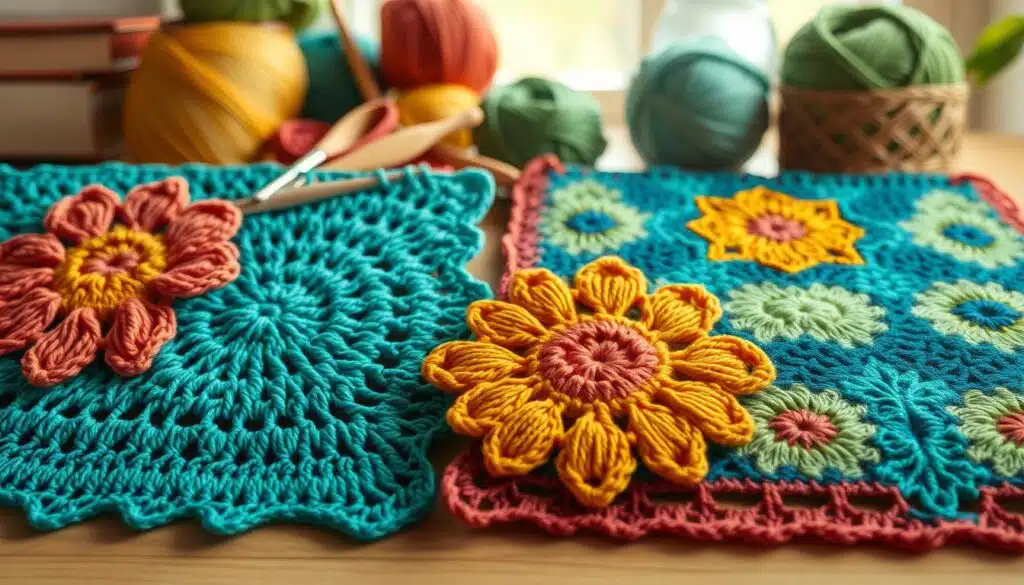
Overlay vs mosaic is like comparing bold paint strokes to a stencil. Overlay crochet stacks stitches on top of a base to create raised motifs. Mosaic crochet uses slipped stitches for a flatter, graphic look. Overlay gives depth, while mosaic offers crisp patterns, making them great together for blankets.
Tunisian mosaic vs overlay uses a Tunisian hook for a different texture. Tunisian mosaic combines the grid of Tunisian crochet with mosaic color rules. It’s heavier and more structured than overlay. Choose Tunisian mosaic for warmth and a tile-like look, or overlay for lighter drape and sculptural motifs.
Tapestry crochet differences involve how yarns are carried. Tapestry carries multiple strands across a row, hiding color changes. This creates dense fabric with sharp color edges. Intarsia crochet works with separate yarn blocks and twist joins, reducing floats but increasing ends to weave in.
Practical choices matter. For bold geometry with fewer ends, mosaic or overlay might be best. For a dense, warm scarf with crisp colorwork, tapestry or intarsia crochet is better. Look at Instagram for clues on drape, stitch definition, and fabric weight before starting a big project.
| Feature | Overlay Crochet | Mosaic Crochet | Tunisian Mosaic | Tapestry / Intarsia |
|---|---|---|---|---|
| Stitch structure | Layered, raised motifs for texture | Flat, slipped-stitch charts; one color per row | Dense, grid-like fabric using a Tunisian hook | Solid color blocks; carried strands or separate sections |
| Fabric weight | Light to medium | Medium; breathable | Heavy and warm | Heavy (tapestry) to variable (intarsia) |
| Color handling | Overlay motifs over base colors | One color per row; minimal floats | One color per row in Tunisian style; structured repeats | Many floats (tapestry) or separate blocks (intarsia) |
| End weaving | Moderate; overlays add ends | Few; efficient color changes | Moderate; similar to mosaic with Tunisian joins | Tapestry: few but long floats; Intarsia: many ends |
| Best for | Textured motifs, heirloom panels, overlay vs mosaic combos | Graphic blankets, repeatable charts, C2C hybrids | Structured shawls and warm wraps like Meera-style pieces | Sharp colorwork in garments or pictorial designs |
Quick Wins: Small Overlay Crochet Projects to Build Skill and Confidence
Looking for fast, fun projects that teach you new skills? Start with small, colorful pieces. These projects help you practice different stitches and colors. You’ll learn to make motifs stand out.
Coasters and mug rugs — fast, stash-busting practice pieces
Coasters are great for beginners. They’re quick to make, use little yarn, and show off your skills. Try making overlay crochet coasters to improve your layering and tension.
Mosaic mug rugs are similar but bigger and more colorful. They’re perfect for practicing charts and color changes. You can find lots of patterns at Overlay Crochet project list.
Plant pot cozies and small home accents that show texture off well
Plant pot cozies and bowl covers are great for practicing curves and short repeats. Use sport or worsted cotton for clear stitches. Brands like Lion Brand or Bernat work well.
Try a mosaic cozy for a decorative touch. These quick projects turn your learning into useful items you’ll love or want to give away.
Bookmarks and small wearables to gift or sell
Bookmarks and simple wrist cuffs are perfect for practicing on the go. You can make several in one evening. Tunisian mosaic bookmarks and slim overlay bands are great for learning charts and stitches.
Small items to sell can help you get your yarn costs back. Make colorful coaster and mug rug sets to show off your skills. They’re great for selling at craft fairs or online.
| Project | Skill Level | Yarn | Hook | Approx. Size |
|---|---|---|---|---|
| Coaster (set) | Beginner | Bernat Handicrafter Cotton | 4 mm (G) | 5 in diameter |
| Mosaic Mug Rug | Beginner | Lion Brand 24/7 Cotton | 4 mm (G) | 5 x 7 in |
| Plant Pot Cozy | Easy | Simply Melanie Jane / Cotton blend | 5 mm (H) | Designed to fit 4–6 in pots |
| Bookmark (Tunisian Mosaic) | Beginner | Cotton or fingering cotton | Hook per pattern | 2 x 7 in |
| Small Decorative Bowl | Easy | Red Heart Scrubby Smoothie or cotton | 4 mm (G) | 9.5 x 7 in (basket size) |
Wearables and Accessories Using Overlay Crochet Patterns
You can make bold charts into everyday style with overlay crochet wearables. They come alive in color and texture. Start with scarves and shawls to learn color changes and motifs.
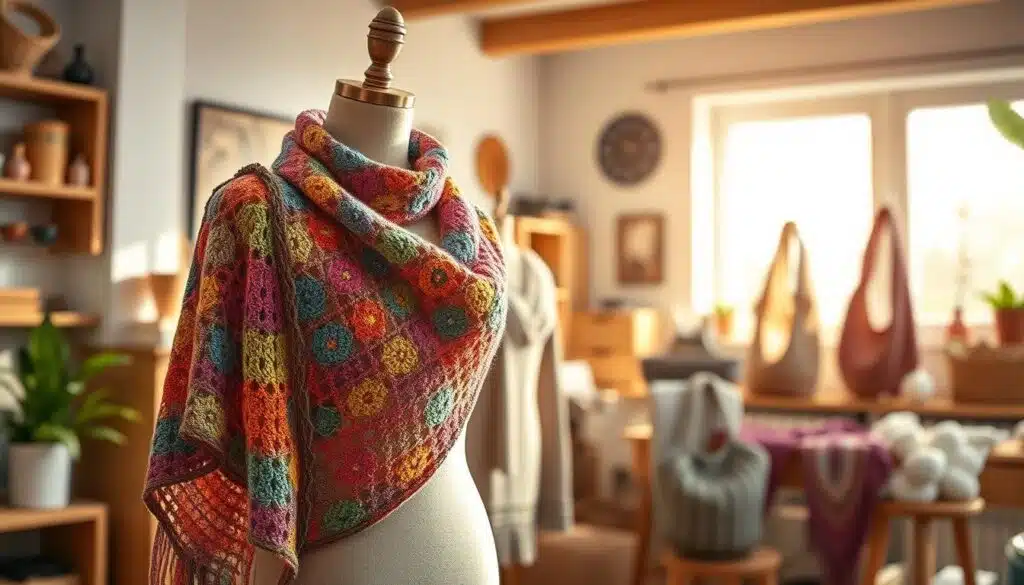
Mosaic crochet shawls make a big impact. Patterns like Meera Tunisian Mosaic Shawl and Ira Mosaic Shawl Tunisian Crochet Sampler show how two-color repeats create beautiful geometry. An infinity scarf like Overlay Mosaic Piano Infinity Scarf is great for practice and looks sharp.
Purses and bags get a graphic art look with overlay panels. Overlay crochet bags let you place striking motifs where you want. Designers like Tinna Thórudóttir show how a mosaic panel can make a simple bag into a statement piece.
Cardigans and sweaters get a fashion boost with mosaic panels. Terrazzo Cardigan by Tinna Thórudóttir, Alma Sweater by LillaBjornCrochet, and Fjell cardigan are great for ideas. Mosaic cardigan patterns use one-color-per-row logic for manageable colorwork.
Smaller items are great for gifts and practice. A Tunisian scarf like Niyati or Priya is good for tension and drape practice. Stitch a few panels and make a cowl, vest, or bag for a unique gift.
Instagram and maker communities are great for styling ideas. Seeing how others wear mosaic crochet shawls or layer an overlay crochet bag helps you choose the right yarn and finishing touches.
Below is a quick comparison to help you pick a first wearable project based on time, skill, and visual impact.
| Project | Skill Level | Time Commitment | Visual Impact |
|---|---|---|---|
| Infinity scarf (overlay mosaic) | Beginner to Intermediate | Short (weekend) | High — bold repeat around neck |
| Mosaic crochet shawl (Tunisian or overlay) | Intermediate | Medium (2–4 weeks) | Very high — large graphic surface |
| Overlay crochet bags | Intermediate | Medium (2–3 weeks) | High — focal panel for outfits |
| Mosaic cardigan patterns (panelled) | Advanced | Long (1–3 months) | Very high — wearable heirloom |
Blankets and Large-Scale Overlay Crochet Projects
Starting a big blanket project is exciting. Think of color as your guide. Choose two or three main colors to test how they look together. Small swatches help you see how your blanket will look from a distance.
How to plan color palettes and repeats for afghans and throws
Keep your color choices simple. Use low contrast for a vintage look or high contrast for bold patterns. Test repeats to see if the colors work well together. This helps you avoid mistakes and keeps your crochet rhythm steady.
When planning repeats, map out color changes in a single block. This makes scaling up to a full throw easier. For a guide, check out this mosaic crochet tutorial to see how it’s done.
Sample blanket patterns and design sources
Look at established patterns for inspiration. The Mosaic Nordic Blanket and C2C Nordic Winter Blanket are great examples. They show how different squares come together to create something beautiful.
For baby blankets, check out Nicki’s Homemade Crafts and Tinna Thórudóttir’s designs. Etsy also has unique blanket patterns like the Proteus Blanket and Badlands Blanket.
Breaking large projects into panels and using charts to stay organized
Break down big blankets into smaller parts like panels or squares. This keeps your project manageable. You can work on different parts with different colors and even share them with friends.
Use charts to plan your project. They help you keep track of repeats, colors, and borders. Charts also make it easier to make the same pattern in different sizes without starting over.
- Tip: Stitch a sample block, photograph it, then compare on Instagram for scale and color placement ideas.
- Tip: Treat panels like building blocks; assemble them with a slip-stitch or mattress stitch for neat seams.
- Tip: Keep a yarn notebook with colors, hook size, and which blanket charts you used for future heirloom projects.
Free and Premium Overlay Crochet Pattern Resources
You’re looking for patterns that teach and inspire. Start with curated roundups on designer blogs. They feature mosaic crochet patterns free and seasonal projects like tote bags and holiday stockings. These lists include step-by-step photo guides and quick projects to practice motifs.
Where to find free overlay and mosaic crochet patterns online
Search for multi-designer roundups and collaborations. These often include free overlay crochet patterns. The Hayden Bag and Wanderers Blanket are great free projects for a weekend. Follow designers who offer ad-free pdf freebies and easy motif packs.
Recommended marketplaces: Etsy and Ravelry patterns to expand your library
Etsy mosaic patterns offer polished, printable patterns with charts and sizes. Many shops bundle tutorials with instant downloads. Ravelry overlay patterns include indie free releases and premium downloads with trusted project pages and gauge notes.
Look for designers like KnitterKnotter for Tunisian mosaic coasters and Made By Gootie for placemats. Juniper and Oakes has festive pieces like a mosaic Christmas stocking and a triangle blanket.
Courses, tutorials, and video walkthroughs for overlay and Tunisian mosaic
For those who learn by watching, search for a Tunisian mosaic course. It will cover the one-color-per-row method and chart reading. YouTube and paid courses offer lessons on tension, color changes, and finishing. Instagram can guide you to these lessons through finished-project posts and designer stories.
For a single reference, check a comprehensive roundup. It lists free and premium picks and highlights projects like the Hayden Bag and Wanderers Blanket. Find it on overlay mosaic crochet patterns.
- Quick tip: Start with mosaic crochet patterns free tutorials, then add a paid pattern or two when you want charts and multiple sizes.
- Quick tip: Use Etsy mosaic patterns for polished PDFs and Ravelry overlay patterns for community feedback on gauge and yarn choices.
- Quick tip: Pair a Tunisian mosaic course with hands-on projects to cement the technique.
Troubleshooting, Tips, and Advanced Techniques for Better Results
Even after lots of practice, small problems can still arise. Use some key overlay crochet tips to find and fix issues like uneven tension and color pooling. Keeping your tension even helps your motifs look flat and your edges neat.
Begin each row with a clear Beginning Border Stitch and end with an Ending Border Stitch. Always check your charts as you go and watch short videos to compare your stitches. For help, check out this overlay mosaic tutorial on drop-down dc and FLOdc rules.
Common pitfalls: tension, missed overlay stitches, and color pooling
Missed overlay stitches can cause gaps in your motif. If you notice this, unpick to the last complete repeat and redo the row carefully. Remember, using different hook sizes can affect tension, so stick to one size.
Color pooling can be due to uneven tension or yarn with long color repeats. Try using solid or semi-solid yarns or change how you cut and join rows. Making small swatches first can show if a yarn will pool.
Finishing and blocking overlay crochet pieces for crisp motifs
Blocking your mosaic crochet can make motifs look clearer. Wet-block or steam-block your pieces to open up stitches and square up motifs. Use blocking wires and pins to keep edges straight while drying.
For wearables, a gentle stretch during blocking can improve drape. If you have ends showing at the back, use an envelope border to hide them for a clean finish.
Advanced variations: combining overlay with cables, bobbles, and textured stitches
Want more texture? Try overlay advanced techniques on small swatches first. Mix alpine stitch, bobbles, or cables with overlay rows for depth without losing the mosaic look. Chart your rows and mark where you switch textures to avoid mistakes.
Projects like bobble pumpkins or a Monstera wall hanging need careful chart work and patience. Share your progress on Instagram to get feedback on tension and finishing from others.
When you encounter a problem, follow these steps: review the chart, check your loop placement, and rip back only as far as needed. Keep your experiments small, learn from swatches, and your overlays will improve with each piece.
Conclusion
You’ve learned that overlay and mosaic projects can be simple gifts or lasting blankets. Start with small items like coasters or bookmarks to get better. Then, move on to bigger projects like blankets or clothes when you’re more confident.
There are many free and paid patterns, plus courses and videos to learn. Use charts, Etsy, Ravelry, and Instagram to find new patterns and colors. This will help you plan your next steps in overlay crochet.
Don’t worry about the tough parts like tension and missing stitches. With practice and feedback from others, you’ll get better. Remember, small successes lead to bigger and more complex designs. And, with the right resources, you can start and keep going with your overlay crochet projects.
FAQ
What is overlay crochet and how does it differ from other colorwork?
Overlay crochet uses one color per row to create bold, geometric motifs. It’s different from tapestry or intarsia because you only work with one color at a time. This avoids the mess of juggling many yarn ends.
Unlike inset mosaic and Tunisian mosaic, overlay uses layered stitches for a denser fabric. Inset mosaic works into chain spaces for a lighter feel. Tunisian mosaic uses a Tunisian hook for a different drape and rhythm.
Who should try overlay and mosaic crochet?
If you love graphic motifs and texture, try overlay crochet. It’s great for adventurous crocheters and beginners. Many patterns use one color per row and come with charts and video tutorials.
If you prefer Tunisian hooks or want a different drape, Tunisian mosaic is a good choice. Use Instagram, Ravelry, and Etsy to find finished examples and pattern difficulty.
What are the best small projects to learn overlay mosaic techniques?
Start with coasters, mug rugs, bookmarks, and plant pot covers. Quick gifts like Christmas bauble covers or bobble pumpkins are great for practicing. They let you test tension and color contrast without a big project.
Which stitches and terms should I learn first?
Learn basic overlay stitches, moss/linen stitch, alpine stitch, bobbles, and cables. Know key terms like overlay mosaic, inset mosaic, and Tunisian mosaic. Many patterns include charts and video walkthroughs to help.
How does the one-color-per-row approach simplify colorwork?
Working with one color per row means fewer yarn ends to weave in. It creates clean, bold motifs and consistent stitch definition. But, watch your tension to keep motif edges crisp.
What tools and yarns work best for overlay crochet?
Choose smooth, plied yarns for layered stitches and color contrast. Use a hook that matches the yarn weight but is slightly larger. Mark repeats with stitch markers and use a yarn needle for tidy ends.
For Tunisian mosaic, you’ll need Tunisian hooks or interchangeable sets. Check designer notes on Ravelry, Etsy, or Instagram for specific fibre and hook recommendations.
When should I pick overlay versus inset or Tunisian mosaic?
Choose overlay for dense texture and dramatic graphics. Pick inset mosaic for a lighter fabric. Choose Tunisian mosaic for a different drape and texture.
Your project type—cozy blanket, wearable, or small decor—also influences your choice.
Can overlay and mosaic techniques be used in garments and accessories?
Absolutely. Overlay panels work well in scarves, shawls, purses, and even cardigans and sweaters. Designers have adapted mosaic panels into garments like the Terrazzo Cardigan or Fjell cardigan.
Use panels or stripes to manage shaping and keep colorwork readable in wearables.
How do you plan a large mosaic blanket or CAL project?
Plan color palettes and repeats using charts or sample squares first. Break the project into panels or squares. Use consistent gauge and block panels before joining.
Many designers supply charted squares or modular patterns to simplify planning and color placement.
Where can you find reliable free and premium overlay and mosaic patterns?
Look on craft blogs, pattern round-ups, Ravelry, and Etsy. Specific free Tunisian mosaic and small-project patterns appear on sites like KnitterKnotter, Made By Gootie, and Juniper and Oakes.
For deeper learning, search for video tutorials, YouTube walkthroughs, and paid courses that cover Tunisian mosaic and overlay techniques.
What are common mistakes and how do you troubleshoot them?
Watch for uneven tension, missed overlay stitches, and color pooling. Use charts and slow practice rows to avoid missed overlay placements. If motifs look uneven, block the piece to even out edges and stitch definition.
Post close-up photos on Instagram or pattern groups for quick community feedback. Many designers include troubleshooting tips in pattern notes.
How do you finish overlay pieces for crisp motifs and good drape?
Finish with careful blocking to square motifs and even stitch height. Use a clean border—single crochet, ribbing, or a simple lace edge—depending on the project. For blankets and wearables, weave in ends neatly, press gently where appropriate for the fiber, and consider lining bags or purses for structure.
Proper finishing transforms a good piece into a polished heirloom.
Are there good video or chart resources for learning overlay and Tunisian mosaic?
Yes—many pattern pages include charts, step-by-step photos, and video tutorials. YouTube channels, pattern author pages, and paid courses on Tunisian mosaic offer guided practice. Ravelry project pages and Instagram reels also show close-up stitch shots and progress clips that make following repeats easier.
What quick projects are ideal for gifting and practice?
Make Christmas bauble covers, bobble pumpkins, plant pot cozies, small pillow panels, and coasters. These are fast, teach texture stitches like alpine and bobble, and make lovely, giftable items. They’re perfect for practicing overlay repeats without committing to large-scale work.
Can overlay crochet be combined with other textures like cables and bobbles?
Yes. Designers often mix overlay mosaic with cables, bobbles, and granny-style motifs to create hybrid textures. Combining methods adds depth and interest—but test tension and blocking on swatches to ensure motifs sit well together before committing to a large project.
How can social platforms help with overlay crochet projects?
Instagram, Ravelry, and pattern blogs offer inspiration, finished-project photos, yarn recommendations, and designer links. They’re great for colorway ideas and real-world scale shots. Use hashtag searches and pattern tags to find project notes, swatch photos, and community troubleshooting to refine your approach.