
You love the feel of wool between your fingers. But your stash shouldn’t look like it survived a creative tornado. This guide helps you tame the pile and create a calm corner. It should feel like a boutique, with charm and community spirit.
Start small. A quick audit of what you own saves time and makes storage sensible. Use simple labels and clear containers for easy yarn organization. This way, your knitting stash management becomes straightforward.
Look for inspiration on Instagram for clever storage hacks and mood boards. Choose lightweight digital tools for tracking your knitting storage. They should work even if a site’s JavaScript misbehaves.
Key Takeaways
- Begin with a brief stash audit to simplify knitting stash management.
- Use clear bins and labels to make yarn organization instant and visual.
- Model a calm craft corner after small-town shops and co-op wool sources.
- Follow Instagram for visual ideas and practical storage hacks.
- Choose simple, lightweight digital tools for knitting storage tracking.
Why you need to organize knitting supplies (and how it saves your sanity)
Having a tidy stash makes everything faster. When your space is neat, you won’t waste time looking for needles. You can start knitting right away.
Speed up projects and reduce tangles
Organizing your supplies means you can start projects quickly. Clear bins and labeled bags help you see what you have. This makes it easy to find what you need.
Instagram shows how a tidy space can make a big difference. It helps you avoid yarn tangles and keeps your work flowing smoothly.
Protect fibers and tools for longer life
Quality yarns need to be stored right. The Real Wool Shop and Canadian Co-operative Wool Growers Limited explain why. Keeping yarns dry and aired helps them stay fluffy.
Use soft cases to protect your needles and hooks. This way, they won’t get damaged. Taking care of your tools saves money and keeps them working well.
Create a calmer creative space inspired by boutique calm spots
Make your space like The Coastal shop in Carleton Place. A tidy, cozy area reduces stress. It makes you want to stay and work longer.
Adding simple touches like good lighting and a comfy chair helps. These details make your space feel special and relaxing.
Don’t forget the little things that save sanity. Keep a simple inventory or use a light app. Small habits like tidying up each day or using labeled bags make a big difference.
organizing knitting supplies
Before you start, make a plan. First, take a quick look at what you have. Decide what to keep, what to give away, and which yarns are for current projects. It’s like going to a Farmers’ Market—come with a purpose and leave with only what you need.
How to audit what you actually own
Start by laying out all your yarn and handling each skein. Note the fiber, yardage, color, and any flaws. Remember, The Real Wool Shop and Canadian Co-operative Wool Growers Limited suggest logging where the raw wool or specialty fibers come from.
Use a simple checklist for each bundle: brand, type, weight, and project. This makes choosing easier and helps you spot duplicates or special yarns to keep.
Categorizing by fiber, weight, and project
Then, sort yarn by fiber to protect its value and match project needs. Separate wool, alpaca, cotton, and blends for proper care. This way, you can easily find your favorite skeins and know which ones to donate.
Organize yarn by weight on top of fiber grouping. Keep heavy worsted and bulky apart from finer yarns. Also, have a section for projects in progress and kits, so you don’t lose track of patterns or gauge.
Using inventory lists and simple spreadsheets
Keep a yarn inventory in a spreadsheet that you update regularly. Instagram has many visual templates you can use, but don’t forget to save your data offline too.
Create a small table to track brand, fiber, weight, yardage, color, and project. Use the inventory template as a guide, then simplify it to fit your needs.
| Field | Why it matters | Example entry |
|---|---|---|
| Brand | Identifies dye lots and quality | Malabrigo |
| Fiber | Helps with care and project choice | 100% Merino Wool |
| Weight | Guides gauge and needle selection | DK |
| Yardage | Ensures you have enough for patterns | 220 yards |
| Project | Keeps in-progress items tidy | Striped sweater |
After your first sort, aim for regular audits. Do a quick check monthly and a full inventory every season. Your spreadsheet will help you shop smarter and work on projects faster. This leads to less clutter and more time for the knitting you love.
Smart storage solutions for yarn
Keep your stash neat and visible. This way, you can easily find the right color. Use clear bins for daily use and breathable bags for long-term storage.
Clear bins, breathable bags, and dedicated yarn shelves
Clear yarn bins are great for quick color checks. They help you avoid buying the same yarn twice. Shelving inspired by Coastal and boutique displays keeps your space tidy.
Breathable yarn bags are perfect for active use. They let fibers breathe while keeping dust away. For seasonal storage, use sealed containers with cedar or lavender to protect fibers.
Keeping skeins vs. balls: winding and labeling tips
Winding yarn into balls saves time. Balls feed smoothly and reduce tangles. Use a ball winder or a simple swift for even tension.
Label yarn with weight, fiber, dye lot, and project. Keep a spare tag and a copy in a notebook. This way, you won’t lose important details.
Storing natural fibers like wool to avoid pests
Use breathable bags for everyday wool storage. This prevents moisture buildup. For long-term storage, choose airtight containers with cedar or lavender to deter moths.
Regularly check wool and rotate boxes seasonally. Small habits protect your fibers. This way, you avoid damaged skeins and pests.
Needle and hook organization that actually works
Make your tools easy to see and use. This way, you’ll grab them without hesitation. Coastal boutiques like Purl Soho show how neat displays encourage crafting. A simple system helps during classes at The Real Wool Shop, making it easy to access tools.
Rolls, cases, and racks
Needle rolls are great for tidy shelves and portable kits. They come in leather or canvas, folding up to protect points. Clear zip cases let you quickly see sets, perfect for switching between projects or workshops.
For daily tools, try a wall-mounted knitting rack. It keeps circulars and long needles organized. This saves drawer space and makes your studio look like a curated shop.
Labeling that saves time
Label needle sizes to avoid mid-row searches. Use printed tags or color-coded tape that matches yarn weight. These labels are durable and last through classes and market days, without needing an app.
Crochet hook organization works the same way. Sort hooks by material and size in small cases or pocketed rolls. This keeps them protected and speeds up pattern work.
Practical tips you can copy
- Store frequently used sizes on a wall-mounted knitting rack near your chair.
- Keep specialty needles in a labeled needle rolls section for travel.
- Use contrasting color tape to label needle sizes for quick grabs.
- Group crochet hooks by material, then by size, for smooth selection.
These small changes make your crafting time more relaxed. You’ll spend less time searching and more time creating. Your tools stay safe, and your space looks inviting, just like boutique shops.
Project organization: keep multiple projects tidy
You handle more than just yarn; you manage patterns, needles, and the tiny helpers that save sweaters. Begin with a simple system to keep projects easy to carry and calm. Imagine a neat caddy by your favorite café table or a lined basket for the car seat. These steps make organizing your crafts easy.
Project bags, caddies, and portable kits
Choose a clear project bag for each ongoing project so you can quickly see colors and labels. Add small zip pouches for notions and pattern notes to avoid phone distractions. Create a set of portable knitting kits with spare needles, a stitch marker tin, a tape measure, and a written stitch count.
Use a structured caddy at home to keep tools upright and prevent tangled yarn. When traveling, switch to a compact project bag for knitting that fits under a café table or in a tote. Portable knitting kits are great for farmers’ markets, retreats, and quick stitches on the train.
How to store in-progress items without losing gauge or pieces
To store WIP knitting safely, include a small swatch and the needle size in the same bag as the project. This keeps gauge safe even after a break. Keep a printed note with row counts and pattern adjustments in a zippered pouch to avoid app issues.
Seal leftover yarn and delicate swatches in breathable zip-top bags to prevent tangles and pests. Place cedar blocks or a lavender sachet nearby to protect natural fibers. Label each bag with the project name, needle size, and a brief status note for easy resumption.
| Item | Why it helps | Best use |
|---|---|---|
| Clear zipper project bag | Fast visual scan, dust protection | Daily projects, café knitting |
| Structured caddy | Tool organization, prevents tangles | Home sessions, market stalls |
| Portable knitting kit | All essentials in one place | Workshops and travel |
| Zippered pouch for notes | Preserves gauge data and counts | Long-term WIP storage |
For setup ideas and storage inspiration, check a concise guide on storage methods at yarn storage ideas. Small habits like labeled bags, printed stitch notes, and neat portable knitting kits will make your projects travel-ready and keep gauge safe when you pick them back up.
Small items and notions: taming buttons, stitch markers, and more
Ever feel a sinking feeling when you lose a button? Small items can ruin your sewing day. Use clear containers and easy-to-see systems to keep everything in sight.
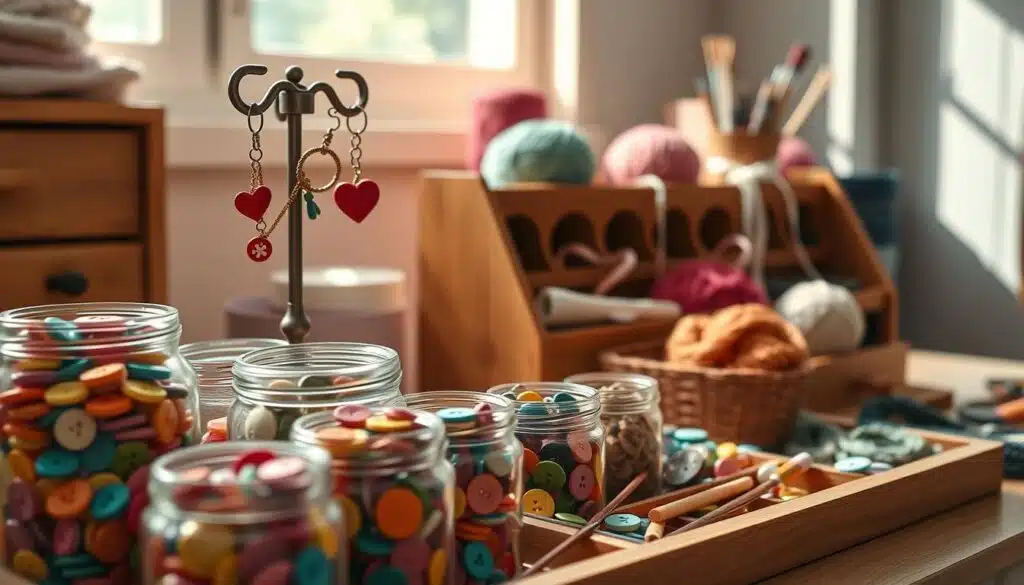
Begin by sorting your items. Group buttons, charms, and small findings by size and use. This makes finding what you need much easier.
Use of divided trays, pill organizers, and mason jars
For buttons, a divided tray is perfect for quick spotting. Retailers at Carleton Place and farmers’ markets use trays for easy browsing.
Mason jars are great for storing your most-used items. They look good on shelves and let you see colors from afar.
Pill organizers and small tackle boxes are ideal for stitch markers. They keep your markers, pins, and clips organized and safe.
Travel-friendly packing for workshops and retreats
For workshops or retreats, prepare small, labeled kits. A zipper pouch with a pillbox inside keeps your items tidy and prevents spills.
For packing, use clear pouches inside a tote for easy access. A laminated checklist in your kit ensures you don’t forget anything important.
| Item | Best Storage | Why It Works |
|---|---|---|
| Buttons | Divided tray for buttons | Shallow compartments show size and color at a glance |
| Stitch markers | Pill organizer or small box | Individual slots prevent tangles and allow stitch marker organization |
| Needles and small hooks | Folded pouch with clear pockets | Protects tips and keeps sizes separated for quick use |
| Charms and findings | Mason jar craft storage | Clear glass offers attractive display and easy selection |
| Workshop kit | Zipper pouch with nested boxes | Combines portability with sorted compartments for travel knitting notions |
Creating a craft corner inspired by calm retail spots
You want a tidy spot that feels like a small shop in your home. Start with a simple color scheme and a few displays to mimic Coastal boutiques. Place it by a window or near a nice view, like riverside seating in Carleton Place, to boost focus and mood.
Designing a peaceful nook with boutique touches
Choose one shelf for finished pieces and change them often. Use open shelving with little clutter to highlight texture and color. Keep mood boards or printed inspiration from local markets and wool shops to guide your layout; they help make your space personal.
Follow Instagram creators’ small-display strategies: group three items, add a plant or soft textile, and leave space. This creates a boutique-inspired craft nook vibe without spending a lot. For a quick guide, check out setup and styling tips.
Lighting, seating, and display ideas to keep you crafting longer
Good lighting is key for your knitting room. Use a daylight lamp at shoulder height and place your window on the non-dominant side to avoid shadows. Keep screens at eye level to prevent neck strain when looking at patterns.
Choose cozy seating that supports long crafting sessions. Test chairs as if you’ll work for an hour. Add a footrest and firm lumbar support for easy posture and to avoid posture problems.
Use simple yarn display ideas to inspire without cluttering. Use staggered shelves, pegs, or glass-fronted boxes to keep skeins visible and tidy. Show a rainbow of favorites on a small ledge; change colors each month to keep things fresh.
- Keep active WIPs within arm’s reach in a basket beside your seat.
- Store backup needles in labeled jars or narrow bins for quick grabs.
- Use rolling carts when space is tight so your craft nook can flex into other rooms.
Portable setups for knitting excursions and markets
You need a knitting setup that fits in a car trunk, tote, or kayak hatch easily. Choose compact tools, a small project bag, and a lightweight notions pouch. This way, you can enjoy workshops, retreats, and markets without worrying about space.
Packing for workshops, retreats, or yarn-shopping trips
Begin with a list for your knitting market needs: one project, two spare needles, a tape measure, stitch markers, and small scissors. Store fragile notions in a hard case to keep them safe. Use zip pouches for skeins to protect them from the weather and dust.
Label your project bags with pattern notes and yarn details when packing for workshops. Carry printed patterns or a tablet with PDFs in a single folder. Bring your favorite needles and a compact light for better visibility.
Tips for visiting local wool shops and markets
Check Instagram hashtags for market dates and tips before you go. Call shops like The Real Wool Shop to confirm hours and workshop registration. This avoids surprises due to website issues or incorrect event listings.
At wool co-op locations like Canadian Co-operative Wool Growers Limited, expect raw fleeces, bulk lots, and workshop calendars. Bring cash for small vendors at farmers’ markets and a sturdy tote to protect your purchases from rain. Flea-market furniture can become a great yarn display at home.
Look for clear bins and lift-up cabinet doors at yarn shops for easy browsing. Measure your car or bike rack space before big market days. Keep a small inventory sheet on your phone to avoid duplicate purchases and track fiber types.
Use repurposed boxes and cigar tins to sort buttons and notions in your market bag. Store binders or pattern printouts in a slim folder that fits under seats or in a trunk. Treat your portable knitting setup like a tiny studio: compact, visible, and ready for wooly surprises.
See a compact studio layout and storage ideas that inspire portable solutions at this studio tour.
Maintenance routines to prevent future chaos
Keeping your stash tidy is easy with a few smart habits. These habits should be part of your craft routine. They stop small messes from becoming big problems. Think of it as a kind act to yourself, making projects start on time and needles easy to find.
Weekly quick tidy rituals
End your crafting day with 10–20 minutes of tidying. Put stitch markers back, wind loose ends, and organize needles. After trips to markets or yarn shops, tidy up to avoid clutter.
Keep a small checklist near your crafting area. Quickly go through items like clearing your space, returning notions, and adding new purchases. Use printed labels and tags to keep things organized, even when apps fail.
Seasonal deep-clean and inventory checks
Do a deep clean of your stash seasonally. Match it with market cycles and craft seasons. Sort yarn by fiber and weight, get rid of unused yarn, and update storage.
Check your yarn inventory during deep-cleans. Count skeins, note yardage, and update care instructions. Keep a printed summary of your stash, even if you use apps or Ravelry.
Quarterly and yearly reviews are also important. Quarterly checks keep projects moving. Annual audits help you decide what to keep, donate, or buy next.
| Routine | Frequency | Key Actions | Tools |
|---|---|---|---|
| Quick tidy | Weekly | Clear surface, return notions, wind loose ends, update small notes | Labeled jars, needle rolls, paper checklist |
| Post-outing reset | After market/shop trips | Store new buys, add to inventory, attach care tags, label containers | Printed labels, stash notebook, clear bins |
| Seasonal deep-clean | Every 3–6 months | Sort by fiber/weight, declutter, update yarn inventory checks, reorganize storage | Clear bins, hanging organizers, binder with swatches |
| Annual audit | Yearly | Full inventory, assess fiber needs, plan purchases for next season | Printed inventory, project planner, donation box |
For more ideas, check out a guide on getting organized for 2025 at getting organized in 2025. You’ll find storage hacks and before/after photos to inspire you.
Make your maintenance routines simple and consistent. When you do, you’ll have more time to enjoy knitting without the hassle of searching for tools or dealing with mess.
Where to buy supplies and find local knitting resources
You want yarn that feels right and classes that keep you coming back. Start by scouting established sources like Canadian Co-operative Wool Growers Limited for serious fiber. Indie shops such as The Real Wool Shop and Coastal offer curated selections and small-batch treasures. When you buy yarn locally, you support makers and can feel the fiber before you commit.

Wool co-op shopping often leads to surprising finds: graded fleeces, friendly mill referrals, and community knowledge about storage and spinning. Farmers’ markets and civic hubs, including visitor centers, frequently point to seasonal sales or festivals. Here, you can chat with growers and dyers.
Seek out knitting workshops run by reputable yarn shops. Many stores list knitting workshops and local knitting classes on Instagram with geotags and event posts. If an event page won’t load, call the shop or visit the municipal visitor center to confirm dates and registration details.
Yarn shop resources go beyond skeins: time-tested patterns, tool swaps, and stitch libraries help you grow skills fast. Attend a weekend class to test a new technique, then use the shop’s resource shelf for needles, blocking tools, and yarn care tips.
If you prefer community learning, sign up for local knitting classes at community centers or yarn stores. You’ll meet makers, trade tips about blocking and gauge, and get hands-on guidance that videos can’t match. Bring a project to a workshop and watch your skills level up in real time.
For quick discovery, use Instagram hashtags and geotags to locate pop-ups and market stalls. When tech fails, make a phone call or drop by the shop. That small step often leads to a better haul and new friends who love to knit as much as you do.
Digital tools and community tips that help
You’re looking for fast ways to manage your yarn stash and find knitting events. Use apps and real-world connections to stay updated without tech issues. Keep important phone numbers and store hours ready for quick checks.
Using social platforms and inventory apps
Start with Instagram for inspiration. Follow local yarn shops and makers for event alerts and sales. When a shop posts a sale, you can plan a visit right away.
Choose apps that work offline and sync later. Some apps are like paper records, helping you avoid tech problems at markets.
Use an app with a paper list in your bag. If the app fails, your paper note keeps you going.
How local groups and markets (and even quirky cafés) enhance your stash hunt
Visit local knitting groups and wool shops to meet makers. Carleton Place shows how markets and stores like The Real Wool Shop help you find unique yarns.
Bring tips to markets: ask about returns, classes, and special deals. Shop staff often post class lists offline, saving you a trip.
Share finds and swap notices in social knitting communities. Small meetups at cafés build trust and lead to great trades.
| Tool or Spot | Best Use | Offline Reliability |
|---|---|---|
| knitting inventory apps | Track skeins, colors, yardage, and project assignments | High when app supports offline mode or export to paper |
| yarn stash apps | Visual catalog of stash for planning and swaps | Medium; sync features may need connection |
| social knitting communities | Event alerts, pattern tips, local meetups | Low offline; use phone contacts as backup |
| local knitting groups | In-person swaps, skill-sharing, market leads | Very high; information often shared face-to-face |
| Cafés and Markets | Casual meetups, pop-up stalls, vendor chats | Very high; staff and flyers are reliable |
For app recommendations and comparisons, visit a concise review page like crochet and yarn apps overview to choose tools that match your workflow.
Conclusion
Keeping your knitting stash tidy can transform your crafting experience. Drawing inspiration from places like Coastal and The Real Wool Shop shows how. It’s all about organizing and adopting good habits.
Start by auditing and sorting your supplies. Choose systems that fit your workflow to stay productive. This way, your knitting time becomes more enjoyable.
Online and offline tools can help you stay on track. Instagram can motivate you to complete projects and keep your space organized. Offline, use printed lists, labeled bins, and phone calls to avoid losing items.
For a list of essential tools, visit essential knitting tools. This guide will help you complete your collection.
In summary, mix calm, community, and practical tools to protect your stash and time. When your supplies are organized, you’ll spend less time searching. This boosts your productivity and keeps your projects joyful.
FAQ
What’s the quickest reason to organize your knitting supplies?
Organizing your stash makes starting projects faster. It reduces tangles and saves time. With everything visible and labeled, you can quickly pick what to knit.
How does organizing protect my fibers and tools?
Proper storage keeps fibers like wool in good shape. Use breathable storage for short-term and airtight bins for long-term. Regular checks and gentle handling prevent damage.
How can I create a calm, boutique-style craft corner like the shops in Carleton Place?
Choose a simple color scheme and tidy shelving. Think of a cozy space with visible storage and a comfy chair. Keep it clean and focus on one project at a time.
How do I audit what I actually own without getting overwhelmed?
Start with a plan, like a farmers’ market visit. Sort items into Keep, Use Soon, and Donate piles. Log important details as you go. Short sessions work better than long ones.
What’s the best way to categorize yarns?
Sort yarns by fiber, weight, and project type. Store common weights in easy spots and special ones in bins. Note the origin and care tags for each.
Should I use a digital inventory or paper lists?
Use both for different needs. Apps and Instagram are good for quick looks. But keep a simple offline list as a backup.
How many times can I repeat a keyword in my inventory notes before it feels spammy?
Keep your notes natural and easy to read. Avoid repeating tags too much. Use varied descriptors for better searching.
What storage solutions work best for yarn visibility?
Clear bins and open shelves are best. They let you see colors and weights easily. Use breathable bags for long-term storage.
How should I store skeins versus wound balls?
Keep skeins intact for long-term storage. Wind balls for projects and label them. Use tags or tape for quick identification.
What’s the best way to prevent moths and pests in my stash?
Use cedar or lavender to repel pests. Clean storage regularly and check fibers often. Store off-season yarn in airtight containers.
How can I keep needles and hooks organized and easy to access?
Use rolls, cases, or racks for storage. Label by size and material. Keep favorites in a caddy and a case for classes.
Any tips for labeling systems that won’t break if an app does?
Use printed labels and markers on tags. Store a printed inventory backup. These systems work even when apps fail.
How do I manage multiple in-progress projects without losing gauge or parts?
Use project bags with stitch counts and needle sizes. Keep a small kit in each bag. Label bags for easy tracking.
What travel-friendly packing works for retreats and workshops?
Pack a compact caddy with essentials. Use clear pouches and a zippered pocket. Instagram lists can help with efficient packing.
How should I organize small notions like buttons and stitch markers?
Use trays, pill organizers, or small jars for visibility. Group by type and size. Keep a travel kit for classes.
How often should I do maintenance on my stash?
Do weekly tidies of 10–20 minutes. Schedule quarterly checks and a deep clean with market seasons. Annual audits help plan purchases.
Where should I look for high-quality yarn and local resources?
Visit local shops and co-ops. Check farmers’ markets for artisan vendors. These spots offer curated yarns and workshops.
How can social platforms like Instagram help my organization?
Instagram is great for stash photos and storage hacks. Follow shop accounts and hashtags for inspiration. Use geotags for local market dates.
What should I do if a shop website or inventory app won’t load because of JavaScript errors?
Call or email the shop for help. Keep printed lists and offline spreadsheets. Use lightweight apps and always carry printed pages.
Any tips for bringing a portable kit to a market or shop visit?
Pack a small caddy with essentials. Bring samples and a list of needs. This way, you buy with purpose.
How do I design a peaceful crafting nook that encourages focus?
Place your nook near natural light. Add layered lighting and a comfy seat. Keep it tidy with storage and a small display shelf.
How can community spots like cafés and markets support my crafting routine?
Cafés and markets offer social momentum and inspiration. Pack project bags for café knitting. Use local shop boards for workshop dates.
What regular rituals keep a stash usable and pleasant?
Do weekly tidies and post-market put-aways. Schedule quarterly checks and deep cleans. Keep contact numbers and a rotating plan to use older fibers.