German short rows might seem like a secret only a few know. But with practice, you’ll master the turn and improve your shaping. This guide will show you why the German method is loved for its clean shaping and fewer holes.
When you make the double stitch (DS) and move it to the right-hand needle, make sure the yarn is in the right spot. If you need to purl next, move the yarn under the needle first. If you’re knitting, let it stay behind. These steps help keep the turning point neat and prevent gaps.
Don’t just rely on one source. Try different needles and yarns, watch a good German short row tutorial, and talk to other knitters online. If a page won’t load or a video won’t play, check your browser settings or ad blocker. For a detailed guide, see this German short row tutorial at How to Do the German Short.
Key Takeaways
- German short rows give a visible, easy-to-check turn and reduce holes at the pivot.
- Pull the yarn snug when forming the DS and position it for the next stitch to keep the fabric tidy.
- Practice on scraps with different needles and yarns to find what works best for you.
- Watch video demos and consult community forums when pattern instructions feel unclear.
- Using German short rows expands shaping options for heels, necklines, and hat crowns.
Why German Short Rows Matter for Your Knitting
You want your shaping to look intentional, not like an accident. German short rows help you achieve this by adding fabric where needed, without changing the stitch count. This makes them perfect for smoothing out curves and creating subtle angles in your projects.
What short rows do for shaping
Short rows allow you to add length to specific parts of your work. You stop mid-row, turn, and then work back, creating a small wedge of extra fabric. This double stitch at the turn keeps the edge neat. It makes your shaping look like a smooth curve, not a messy frill.
Common uses: heels, necklines, hat crowns
Knitters often use short rows for sock heels. The extra fabric supports the heel without the need for forced decreases. For neckline shaping on top-down sweaters, it ensures the front sits flat and comfortable. And for hat crowns, it helps close the top smoothly without pulling.
Advantages of the German method over other short-row techniques
The German method has a simple slip-and-pull turn that creates a visible double stitch. This double stitch is easier to spot and fix if needed. It also tends to avoid holes, reducing the need for darning and picking up stitches later.
| Shaping Goal | Why Short Rows Help | German Method Benefit |
|---|---|---|
| Short row shaping for curves | Adds fabric locally without altering total stitch count | Creates predictable, neat turns with a visible DS |
| Sock heels | Forms a cup that fits the heel with minimal seams | Reduces holes at the turn and speeds up fixing |
| Neckline shaping | Allows gradual depth control for a flattering finish | Makes placement easy to read in patterns and demos |
| Hat crown short rows | Smoothly reduces or closes the crown without puckers | Yields a clean top with less fiddling |
Understanding the Basics of Short Rows
Short rows are like little detours in your knitting. You stop, turn your work, and knit back. This adds length where needed without changing the fabric’s width.
what are short rows is a common question for beginners. Simply put, short rows are a part of a row worked alone. This makes a section longer than the rest, adding shape without adding stitches.
Short rows add fabric while keeping the stitch grid the same. You turn mid-row and treat the turned point as one stitch. This keeps the stitch count the same across the piece.
Patterns often tell you when to use short rows. Look for notes, abbreviations, or row-by-row instructions. If a designer names a method, follow it. If not, you can usually substitute a technique like the German short row, unless the pattern needs a specific finish.
When you see shaping for heels, necklines, or hat crowns, short rows are likely expected. Pay attention to cues for the short row stitch count. Count across and through the turned points to confirm you haven’t changed the number of live stitches.
german short rows
German short rows are a neat way to add fabric without changing your stitch count. You work to the spot your pattern names, then turn the work. Slip the last stitch purlwise with the yarn in front, and pull the working yarn up to form a double stitch DS.
Step-by-step overview of the German short row turn
Here’s how to do a tidy turn with German short rows. On the right side, work to the specified stitch and turn so the wrong side faces you. Slip the stitch purlwise to the right needle with yarn in front.
Pull the yarn up and over the needle to distort the stitch so it looks like two strands. Move that double stitch DS back onto the right needle and position the yarn for the next stitch before you continue.
What a double stitch (DS) looks like and why it’s helpful
The double stitch DS looks like two strands sitting over the needle. It’s easy to see, making the turning point obvious. Treat that doubled stitch as one when you encounter it later.
Knit or purl two legs together if your pattern calls for it. This keeps your shaping smooth and predictable.
How the visible DS makes checking and fixing easier
Because the DS is visible, checking DS placement is fast. Run your fingers along the row and spot each double stitch. This saves you from counting back through bows of stitches.
If you find a missed turn, unpick to the last doubled stitch and recreate the turn. Follow the same German short rows steps. For pattern substitutions from wrap-and-turn, match the location: knit to the spot you would have wrapped, then make the German turn.
If you want a visual refresher, check the clear demo at Tin Can Knits for close-up photos that show DS formation and yarn placement.
Tools and Materials That Make German Short Rows Easier
Choose tools that help your double stitch look neat and boost your confidence. The right tools reduce hassle, speed up your work, and let you check DS placement easily. Here are some top picks that experienced knitters love for smooth German short rows.
Needle choices
Find needles that fit your yarn and hand feel. Many prefer Lykke Driftwood Shorties or metal needles for their smooth tips. These make the DS slide onto the right needle smoothly. Pointy tips are great for small turns, while blunt tips work well with split yarns.
Yarn weight and fiber
Opt for yarn that shows stitch definition clearly. Superwash worsted yarns like Everyday Merino are good because they’re smooth and easy to see. Avoid fuzzy or haloed yarns for practice, as they can hide the DS.
Useful notions
Have stitch markers ready to mark turns and track DS positions. Use a lifeline on big projects for safe ripping back. A tapestry needle is perfect for weaving in ends without snagging your DSs.
Practical tip
To avoid snagging, move the DS to the right needle and position the working yarn before continuing. This small trick prevents loops from catching on needle tips, making the next stitches neat and predictable.
Detailed How-To: Working German Short Rows (With Purl and Knit Variations)
Get ready to learn how to do German short rows. This guide will show you how to make clean turns, neat double stitches, and smooth returns. Follow each step carefully, and you’ll keep your shaping neat and easy.
Preparing to turn: where to stop and why
Keep working in pattern until you reach the turning point. Stop one stitch before it to keep the last stitch ready on the left needle. This makes slipping the stitch easy and keeps your gauge right.
Turn your work to the wrong side or opposite side as instructed. Move the last worked stitch to the right needle. This creates a neat double stitch that hides the gap short rows can make.
Making the slip/turn and creating the DS for purl-next rows
Slip the last stitch purlwise to the right needle with the yarn in front. Pull up gently on the working yarn to form the double stitch. This purl variation DS keeps the yarn position correct and avoids a loose loop at the turn.
Before you purl the next stitch, bring the yarn to the front if it’s not already there. Purl the next stitch as usual through the double stitch if the pattern treats it that way.
Creating the DS when the next stitch is a knit
For the knit variation DS, slip the stitch purlwise to the right needle, then pull the working yarn up to form the double stitch with the yarn at the front. Move the yarn to the back and knit the next stitch normally. The double stitch sits on the needle like a single stitch when you later work across it.
If your pattern asks you to treat the DS as one stitch on return rows, knit or purl it once. If it asks to work both layers, follow the pattern. Most patterns simplify by treating the DS as a single stitch.
Continuing after short row turn
Continue in pattern after short row turn by following the row instructions until the next turning point. Keep the yarn tension consistent when you form and release DSs. That makes the fabric lie flat and avoids visible gaps.
When you encounter a worked DS later, check your pattern for guidance. If the pattern does not specify, treat the double stitch as a single stitch to preserve stitch count and shaping.
| Step | Purl Variation DS | Knit Variation DS | Tip for Continuing After Turn |
|---|---|---|---|
| 1. Stop point | Work to one stitch before turning | Work to one stitch before turning | Place last stitch on left needle for easy slip |
| 2. Slip/turn | Slip purlwise with yarn in front | Slip purlwise with yarn in front | Turn work to the wrong side immediately |
| 3. Form DS | Pull yarn up to form DS, keep yarn front | Pull yarn up to form DS, move yarn to back | Adjust tension by a small tug to avoid holes |
| 4. Next stitch | Purl next stitch as directed | Knit next stitch as directed | Treat DS as one stitch unless pattern says differently |
| 5. Working back | Work over DS as pattern specifies | Work over DS as pattern specifies | Count stitches to ensure tuck and gauge remain correct |
Troubleshooting Common Problems
If your German short rows have a valley or hole, don’t worry. A simple change in your knitting habit can solve it. Make sure to pull the working yarn tight when you create the double stitch. Also, place the yarn correctly—under the right needle for a purl-next turn, over for a knit-next turn—to avoid gaps.
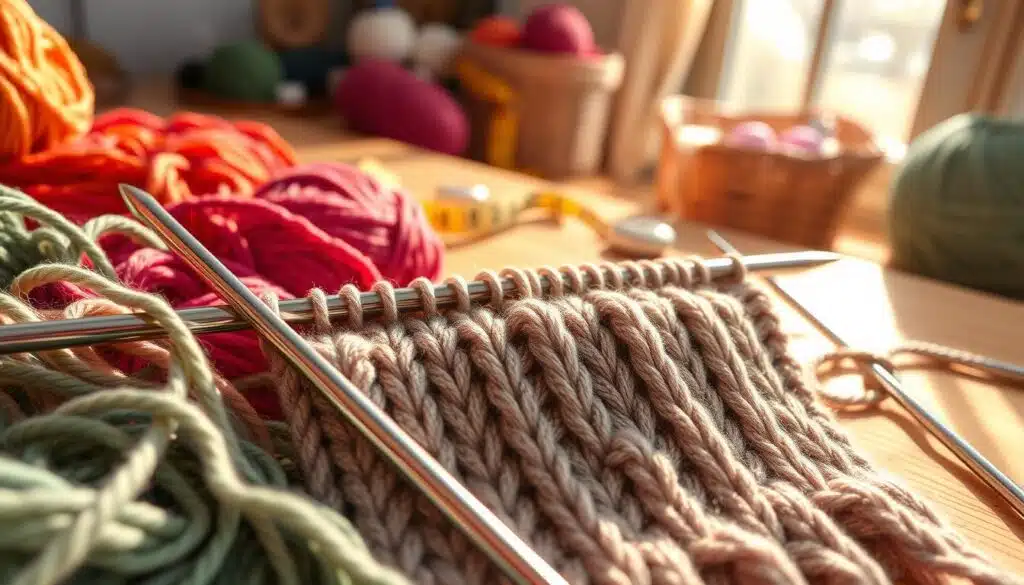
Is your double stitch floppy or puckered? Check your tension first. Pull the yarn firmly as you make the slip/turn for a tight DS. If it looks too tight, ease the tension a bit with your thumb and redo the DS for even fabric. Use a stitch marker to mark that spot for later checks.
Did you miss a double stitch in the middle of a row? Stop knitting and take a look. Use a crochet hook or unpick back to the turn, then remake the DS carefully. Watching a short, focused demo can help. If you don’t want to tug stitches backward, you can lift and rework a few loops instead. This often gives a clean fix without a long rip-back.
Below is a compact troubleshooting guide to compare fixes and when to use them.
| Problem | Quick Fix | When to Use |
|---|---|---|
| Small hole at turning point | Pull working yarn snug and position correctly; remake DS if needed | New short-row learners or uneven yarn tension |
| Loose, floppy DS | Tighten yarn during slip/turn; use a stitch marker to monitor | Loose-handed knitters and slippery fibers |
| Too-tight DS that puckers | Loosen slightly and re-create DS; relax wrist tension | Tight knitters and small needles |
| Missed DS mid-row | Unwork to turn and redo DS, or lift loops with a crochet hook | When stitch count stays off or DS is visibly missing |
| Confusing pattern wording | Check community demos or ask a knitting group for clarification | Unclear abbreviations or inconsistent instructions |
Practical Tips and Tricks from Experienced Knitters
Starting with German short rows? A few habits can save you time and keep your work neat. These tips come from experts who work with brands like Lykke and Everyday Merino. Try them on swatches before starting a big project.
How tightly to pull the yarn when making the DS
When making the double stitch, pull the yarn snug but not too tight. A well-made DS lies flat and hides the gap at the turn. If it’s too tight, it puckers and messes up the stitches next to it.
Move the DS to the right needle right away. This keeps your needles organized and prevents loops from twisting. Practice on a swatch until your tension is even.
Using stitch markers to track DS placement
Use a stitch marker next to each DS to easily find turning points. A colored marker or a small locking marker makes it easier to find the next turn in a long row.
Stitch marker DS placement helps when you come back to your project. It shows you exactly where to make the next turn. For patterned pieces, mark both the DS and the pattern repeat to avoid mistakes.
Counting stitches after turns to stay on track
Counting after each short-row turn helps catch mistakes early. Count the live stitches on the needles, not just the visible rows. German short rows keep stitch counts the same.
Use a tally or mark on your pattern as you count. Combining counting after short rows with stitch marker DS placement reduces rework and keeps shaping accurate.
| Problem | Quick Fix | Pro Tip |
|---|---|---|
| Gap at turn | Tighten the DS slightly and move it to the right needle | Practice the snug pull on a Lykke needle swatch |
| Lost turn point | Place a locking marker beside the DS | Use contrast-colored markers to spot DSs fast |
| Wrong stitch count | Count live stitches after each turn | Record counts on the pattern as you go |
Pattern Reading: How Designers Write Short Row Instructions
Following pattern short row instructions can be tricky. Patterns often use short row abbreviations without explanation. Knowing these abbreviations saves time and keeps your knitting neat.
https://www.youtube.com/watch?v=dJVK2Bxsgh0
First, look for method notes in the pattern. Designers might specify a method or leave it open. If no method is mentioned, you can usually use German short rows. But remember, the double stitch in German short rows looks different from a wrap-and-turn slip.
When unsure, check the designer’s notes or errata. You can also look for help in community threads. This helps clear up any confusion.
Breaking down each instruction into small steps is key. Identify where to stop, how to slip the stitch, and how to position the yarn. This makes complex instructions easier to follow and keeps your knitting on track.
Below is a compact reference table you can use while knitting to map common shorthand to a clear action.
| Shorthand | What it signals | Action you take |
|---|---|---|
| “Work to X, turn” | Place a short-row turn at X stitches | Work to that stitch, make the slip/turn or German DS, then continue |
| “Short row” | Designer expects a partial row shaping | Follow any method note or choose your preferred short-row technique |
| “W&T” | Wrap and turn specified | If you substitute German short rows, make one extra stitch and form the DS to match |
If a pattern uses W&T and you prefer German Short-Rows, remember the slipped stitch of German DSs is equivalent to the W&T stitch. You might need to work one stitch more than the pattern states. This small adjustment ensures accurate shaping and avoids surprises at seaming or finishing.
For a detailed guide on German Short-Rows, check out a guide on the German Short-Rows page. The author has step images and downloadable PDFs available.
Use videos and close-up photos to confirm your understanding of short row abbreviations and instructions. This extra visual check helps reduce mistakes and boosts your confidence.
Practice Projects to Build Confidence
Start small and cunning: cast on a short row practice swatch and work several German turns back and forth. Stop when a double stitch (DS) forms, then move those DSs to the right needle. Practice pulling yarn into position for the next purl or knit. Repeat until DS creation feels natural and your tension stays even.
Beginner-friendly swatch to practice DS creation
Keep this swatch simple: use worsted-weight yarn and needles you like. Work a few rows, make the turn, slip the stitch, tug the yarn, then return to pattern. Short, focused sessions help you lock in the movement without frustration.
Staple Sock heel example using German short rows
The Staple Sock German short rows used for the heel give you real-world shaping practice. Try the heel on a scrap sock to see how the extra fabric builds a cup for the foot. Use Everyday Merino or similar yarn with comfortable needles like Lykke Driftwood Shorties to make DSs obvious while you learn.
If you prefer a guided demo, check a clear walkthrough that pairs Linea-style turns with a German substitute to boost confidence: German short row success.
Tall beanie and neckline variations to avoid purling in the round
For hats, practice beanie short rows to shape a taller crown without switching to purl rounds. This trick keeps the knit-in-the-round rhythm while adding depth where you need it.
Neckline short rows work the same way when you want a curved back hem or a smoother collar line. Try a tall beanie pattern with optional short rows or adapt a sweater neck to practice moving between knit and purl positioning.
When you follow video demos for these projects, make sure the pages load correctly in your browser before you start. Seeing the DS form in motion helps you match tension and timing. Steady practice turns a fiddly move into a reliable tool in your kit.
Video and Visual Learning Resources
Watching someone do German short rows can clarify things words can’t. You see the double stitch shape and how the yarn looks after the turn. You also see the hand motion that keeps the tension even. Try practicing along with a video so your movements match and your DSs look consistent.
Why video tutorials help: see the DS form and yarn placement
Watching a German short rows video gives you instant visual cues. You learn where the yarn should sit. This helps avoid gaps at the turning point and speeds up your learning.
Recommended tutorial styles: close-up hands, slowed steps
Look for a close-up knitting tutorial with tight framing of hands and needles. Slow-motion or step-by-step narration helps you copy the slip-and-turn. It also helps you judge how snug to pull the yarn.
Where to find community help and pattern-specific demos
If a video won’t play, check your browser settings or disable ad blockers. For pattern-specific demos, look for knitting community help on Ravelry, Reddit r/knitting, and Facebook knitting groups. These places often have creators who post demos and help with tricky spots in comments.
| Resource Type | What to Expect | Why It Helps |
|---|---|---|
| Short focused clips | 30–90 seconds showing one DS move | Quick reference when you need a fast visual reset |
| Full tutorials | 10–20 minute lessons with narration and pacing | Good for learning the full sequence and variations |
| Close-up knitting tutorial | Tight framing of hands, yarn, needles, often slowed | Shows tension and exact yarn placement for cleaner DSs |
| Pattern-specific demos | Walkthroughs tied to a single pattern or heel type | Makes substitution and placement clearer for your project |
| Community threads | Images, short clips, and troubleshooting tips | Real-world fixes and knitting community help from peers |
Conclusion
Now you see how practice makes perfect with German short rows. Just move the double stitch to the right needle. Then, position the working yarn before the next stitch and pull it up snugly.
This will make your turns neat, gaps smaller, and boost your confidence in knitting short rows.
German short rows are great for many projects. They work well for a Staple Sock heel, a tall beanie crown, or subtle neckline shaping. Start with the right yarn and needles, and watch a close-up video demo.
This will help you see the double stitch clearly. It makes checking and fixing easier than other methods.
Make sure JavaScript is enabled and adjust your browser extensions. This way, you can watch tutorials and join community threads for extra help. Use this German short row recap as a checklist.
Practice the slip/turn, keep your tension consistent, and use visual resources. Soon, the technique will feel like second nature.
FAQ
What are German short rows and why should you learn them?
German short rows are a technique where you turn your work before finishing the row. This creates a double stitch (DS) at the turn. Learning them is beneficial because the DS makes the turn easy to spot, reduces holes, and opens up design options. This includes sock heels, neckline shaping, and hat crowns, all without changing your stitch count.
How do short rows add fabric without increasing stitch count?
Short rows add length by turning mid-row and working back. The DS created at the turn is worked later as a single stitch. This keeps your stitch count the same while adding extra length where needed.
What’s the step-by-step of the German short row turn?
Work to the turning point and turn to the wrong side. Slip the last stitch purlwise to the right needle with yarn in front. Pull up the working yarn to form a double stitch (DS). Move the DS to the right-hand needle. If the next stitch is a purl, bring the yarn under the right needle (yarn in front). If it’s a knit, bring yarn to the back. Continue in pattern.
What does a double stitch (DS) look like and how do you treat it later?
A DS looks like two loops stacked, created by pulling up the working yarn at the turn. It’s a visible marker of the turn and usually prevents holes. When you later work over that DS, treat it as a single stitch unless your pattern instructs differently.
How do you avoid holes at the turning point?
Pull the working yarn snugly (not too tight) when forming the DS so it lies neatly. Position the yarn correctly before the next stitch—under the right needle for purl-next, or to the back for knit-next. Move the DS to the right needle immediately to reduce snagging and maintain neat tension.
My DS is too loose or too tight—how do I fix it?
If the DS is too loose, practice pulling the yarn more snugly when you form it and check your tension on a swatch. If it’s too tight, relax your pull slightly and maybe switch to needles with a smoother tip or a slightly larger size for practice. Swatching with different needles and yarns helps find the best combination.
I missed creating a DS mid-row—what now?
Unwork (tink) back carefully to the turning point and redo the turn to form the DS. If that’s fiddly, use a crochet hook to recreate the DS or consult a video demo to match the visual cue. Count stitches after you fix it to confirm stitch count remains correct.
Which needles and yarns make German short rows easier?
Smooth wooden or polished metal needles with tips that match your yarn weight reduce fuss—examples like Lykke Driftwood for smaller practice pieces were favored in demos. Worsted or aran weights with clear stitch definition, such as superwash merino, make the DS easy to see. Avoid very fuzzy fibers for learning.
What notions should you keep on hand when practicing German short rows?
Keep stitch markers to mark DS locations, a lifeline for larger pieces, and tapestry needles for weaving ends. A darning needle or small crochet hook can help fix missed DSs. These tools save time and frustration when shaping.
How do patterns signal short rows and can I substitute German short rows?
Patterns often say “work to X sts, turn” or note a short row method. If a pattern doesn’t specify a method, you can usually substitute German short rows unless the designer states a preference. Remember that the German DS looks different from wrap-and-turn or Japanese methods, so substitution is best when appearance isn’t critical.
How should you interpret terse pattern notes about turns?
Know where to slip the stitch, how to position the yarn, and how to form the DS. If wording is unclear, check designer notes, errata, or community discussions on Ravelry and Reddit. Video demos help match the intended motion and tension to the pattern shorthand.
What are quick practice projects to get comfortable with German short rows?
Start with a small swatch that uses repeated German short rows so you can practice DS formation and yarn positioning. Move to a Staple Sock heel to apply short-row shaping in a real project. Try a tall beanie or neckline variation to practice avoiding purling in the round with short rows.
Why are video tutorials recommended and what should you look for?
Videos let you see the DS form, yarn placement, and hand positioning—visual cues that make the technique less intimidating. Look for close-up shots of hands, slowed steps, and step-by-step narration. If a tutorial page won’t load, enable JavaScript or disable blocking extensions in your browser to view demos.
Where can you get community help if a pattern or video isn’t clear?
Join Ravelry groups, Reddit r/knitting, and Facebook knitting communities for pattern-specific help and demos. Many designers and experienced knitters post short videos or photos that clarify turns and DS appearance. Don’t rely on a single source—compare demos and try different needles and yarns.
Any practical tips from experienced knitters to make German short rows smoother?
Pull the yarn snug but not tight when making the DS, move the DS to the right needle immediately, use stitch markers to track turning points, and count stitches after turns. Practice on swatches with clear yarn and friendly needles, and watch close-up video demos to copy tension and motion.
How long before German short rows feel natural?
With a few swatches and a practice project like a sock heel or beanie, German short rows usually become second nature. Regular practice and watching a handful of quality video tutorials accelerate the learning curve and build the confidence to substitute the method in patterns when appropriate.