
You love your clothes and hate waste. This darning tutorial teaches you to repair them with skill and style. You’ll learn both hand and machine darning, and when to choose visible mending.
Over the years, sewing machines have evolved. Models from Husqvarna/Viking to Bernina now make repairs faster and neater. You can choose the method that suits you best, whether it’s hand-darning or machine-assisted mending.
This guide is for savvy U.S. sewists who want affordable, eco-friendly fixes. You’ll learn how to fix everything from simple holes to tricky fabrics. Plus, you’ll get tips on aftercare to keep your repairs lasting longer. By the end, you’ll know when to choose invisible hand darning or bold visible mending.
Key Takeaways
- This darning tutorial covers both hand darning and machine darning for practical repairs.
- Visible mending is a valid, stylish option alongside invisible repairs.
- Modern machines from Husqvarna/Viking, Janome, Brother, Singer, and Bernina support effective machine-assisted mending.
- You’ll save money and reduce waste by learning straightforward repair clothing techniques.
- The guide emphasizes fabric-specific strategies and aftercare to extend garment life.
Why Darning Stills Matters for Savvy Sewers
You know a ripped hem or a laddered sock doesn’t mean it’s time to throw it away. Darning makes your clothes last longer. It’s a key part of sustainable sewing, encouraging you to mend instead of replace.
Environmental and economical benefits
Fixing a shirt or sock saves water, energy, and raw materials. It reduces waste and lowers your wardrobe’s impact. This is at the heart of sustainable sewing.
Darning is often cheaper than buying new or hiring a tailor. With tools like Singer and Janome, you can mend by hand or machine. This thriftiness is key to good mending economics.
How darning preserves garment history and value
Darning keeps the original fabric and marks intact. It’s great for preserving the history of special items like wool sweaters or vintage jeans.
Visible mending can become a design feature. It tells the story of your garment. This approach honors history while keeping your clothes functional and stylish.
When to choose darning over replacement or patching
Use darning for small holes, worn knees, and frayed cuffs. It works well when the fabric around is strong. Darning keeps the garment’s original feel and fit.
Choose replacement or patching for bigger damage. If seams or panels are beyond repair, it’s time for a new approach. For darning tools, check out best darning eggs for options.
Tools and materials you’ll actually want to use
You want a repair kit that feels like a good friend: reliable, honest, and a little clever. Start with a tidy selection of darning tools and a clear plan. Pack sturdy sewing needles, a careful thread match for each fabric, and a darning egg or darning mushroom to support the hole while you stitch.
Essential darning tools: needles, thread, and darning egg/cloth
Choose sewing needles by fabric. Use tapestry or blunt darning needles for knits and thicker wool. Select milliners or sharp crewel needles for fine woven fabrics. Keep an assortment so you never force the wrong needle through delicate fibers.
Match thread fiber to the garment. Use fine cotton or polyester-blend thread for lightweight shirts and silk. Pick wool or sock yarn for sweaters and stretch knits. For denim or heavy canvas, reach for heavy-duty polyester or upholstery thread to prevent early wear.
A darning egg or small cloth-covered mushroom gives a smooth surface under the hole so stitches sit even and neat. You can use a rounded wooden egg, a plastic mushroom, or a makeshift cloth cushion for awkward shapes.
Choosing threads and yarns by fabric type and weight
Think fiber first, weight second. For lightweight cotton and silk, a fine mercerized cotton or polyester blend keeps repairs thin and unobtrusive. For knitwear, a stretch-friendly wool or blended yarn will move with the fabric and reduce strain on stitches.
When in doubt, test a few rows nearby. Compare color and thickness to find the best thread match. Keep spare bobbins and thread nets if you’ll be doing machine-assisted work; they prevent tangles and maintain consistent feed.
For sashiko-style visible mending, consider Perle cotton or pearl-weight threads. They add texture and intentional contrast while strengthening the wear area.
Optional gear that speeds things up: hoops, embroidery/darning foot, magnifier
Small hoops stabilize woven fabric during hand darning and keep tension even. A magnifier or bright LED lamp helps with silk and satin repairs.
If you use a sewing machine, many modern models include or list an embroidery foot or darning foot as an accessory. Brands like Husqvarna/Viking and Janome often ship compatible free-motion feet, while Singer has long offered optional darning presser feet for home models. A proper foot plus seam guides makes free-motion darning faster and neater.
Round out your kit with spare bobbins, needle assortments, spool caps, and a small pair of scissors. For a quick primer on basic supplies and real-brand context, see this beginner menders guide at basic tools for beginning menders.
| Item | Best for | Why it helps |
|---|---|---|
| Sewing needles (tapestry, milliner) | Knits and fine wovens | Right tip and eye reduce fabric damage and ease threading |
| Thread (cotton, polyester, wool) | All fabric weights | Good thread match improves durability and visual blend |
| Darning egg / mushroom | Shirts, socks, sweaters | Provides firm support for even stitches |
| Embroidery/darning foot (machine) | Machine free-motion repairs | Stabilizes fabric and keeps stitch density consistent |
| Hoops and magnifier | Fine fabrics and precise visible mending | Improves control and reduces eye strain |
| Spare bobbins, spool caps, thread nets | Machine users | Prevents tangles and ensures smooth feeding |
Prep work: Assessing the damage and stabilizing the fabric
Before you start, take a moment to look at the hole. Check its size, type, and the fabric around it. Look for holes at knees and elbows, and frayed tears. Also, see if there are thin spots nearby that might need extra care.
Identifying hole types and surrounding fabric condition
Check the fabric’s fiber and weight. Natural fibers like cotton and linen are different from silk, wool, or synthetics. A tight weave is better for darning than a loose one. Make sure the fabric can handle stitches without puckering.
Cleaning, trimming, and reinforcing weak edges
Clean the fabric before you mend it. This stops dirt or oils from getting trapped. Gently wash or spot-clean the garment and let it dry. Then, trim loose threads and carefully cut frayed edges to avoid making the hole bigger.
Use small stitches or a narrow zigzag to stop fraying. For delicate fabrics, try temporary baste stitches. If you’re using a sewing machine, check tutorials from Husqvarna/Viking or Janome for tips on stabilizers.
Choosing a stabilizer or interfacing without ruining drape
Choose a stabilizer or interfacing based on the fabric’s behavior. For knits, use a stretch-friendly option. For delicate silks, go for a water-soluble or minimal backing to keep the fabric’s hand and shine.
For thick fabrics like denim, use woven interfacing or scrap denim patches for extra strength. But, avoid stiff interfacing on fabrics that need to drape well. It can ruin the look and feel.
When picking a stabilizer, balance drape and long-term stability. For a quick guide on finishing knit edges, check this guide on finishing knits. It has tips that work well with darning interfacing.
darning tutorial
Ready to mend like a pro? This guide will teach you hand darning on a small worktable. Make sure the light is bright and you’re sitting comfortably. Place a darning egg or cloth under the hole.
Get small scissors, a needle threader, matching thread or yarn, and a needle. A clean darning area helps you see any issues as you work.
Begin by tying a small knot or a few backstitches outside the damage. This gives you a solid start and keeps the mend in place. Use a darning egg for knees and heels to keep the fabric natural.
For the main fix, lay parallel stitches across the hole. Space them to match the original fabric’s density. Fine fabrics need closer spacing, while knits should respect the stretch.
Weave the perpendicular threads through the warp to build a patch. Alternate each row, over and under. This method rebuilds the fabric’s strength and structure.
Finish by hiding thread tails and securing stitches. Weave the thread tail back into existing stitches or tie a small knot. This keeps the repair looking neat and lasting.
Quick tips: use a needle threader for thick yarns, trim edges carefully, and test tension on scrap fabric. A well-organized darning area and a clear process make repairs quicker and more reliable. With practice, your mends will be strong and look great.
Machine-assisted darning and using a darning/embroidery foot
Want to make repairs faster and get them looking neat? Machine darning is a great way to do this, working well on denim and thick knits. You’ll need an embroidery foot or darning foot, some stabilizer, and the right needle for your fabric.
First, set up your machine for free-motion darning. Use an embroidery foot or darning foot and turn off the feed dogs. Many machines from Husqvarna/Viking, Janome, and Brother come with these feet or offer them as accessories. If your fabric is light or stretchy, use a small hoop or stabilizer under it.
Next, set your stitch length to zero for free motion. Lower your machine speed or use a speed control to guide your stitches smoothly. Adjust the stitch tension slowly, testing on a scrap of the same stabilizer. This will help you see if the repair puckers or if the top and bobbin threads are balanced.
Test your settings on a sample that matches your garment. Look for even stitches, no loops on the back, and minimal stiffness. If the bobbin thread shows on top, loosen the top stitch tension a bit. If the top thread nests beneath, tighten it a little at a time and test again.
Machine darning is perfect for big holes and jobs where you need uniformity. Hand darning is better for delicate pieces and invisible mends because you have more control over the thread and tension.
Keep your sewing machine in good shape. Clean the race hook, remove lint from under the throat plate, and use the right needles and presser feet. Regular maintenance helps prevent problems like skipped stitches and uneven tension during long sessions.
Below is a quick comparison to help you choose the right approach for your repair.
| Feature | Machine Darning | Hand Darning |
|---|---|---|
| Speed | Fast for large or many repairs | Slower but precise for single, delicate jobs |
| Control | Good with practice; aided by speed control | Excellent tactile control for delicate fabrics |
| Uniformity | High consistency across repairs | Variable; depends on stitcher skill |
| Best hardware | Machines with dedicated darning foot or embroidery foot and adjustable speed | No machine required; darning egg or cloth recommended |
| Stitch tension tuning | Requires testing on scrap to dial stitch tension | Tension controlled by hand; easier to match yarn behavior |
| Fabric types | Great for denim, canvas, and stable knits | Better for fine silks, lace, and fragile vintage pieces |
Creative darning techniques to elevate repairs
You can transform a worn-out cuff or sweater hole into a unique feature. Choose a method that suits your skill and mood. You can go for bold visible mending, a hidden mend, or a mix of both for style and function.
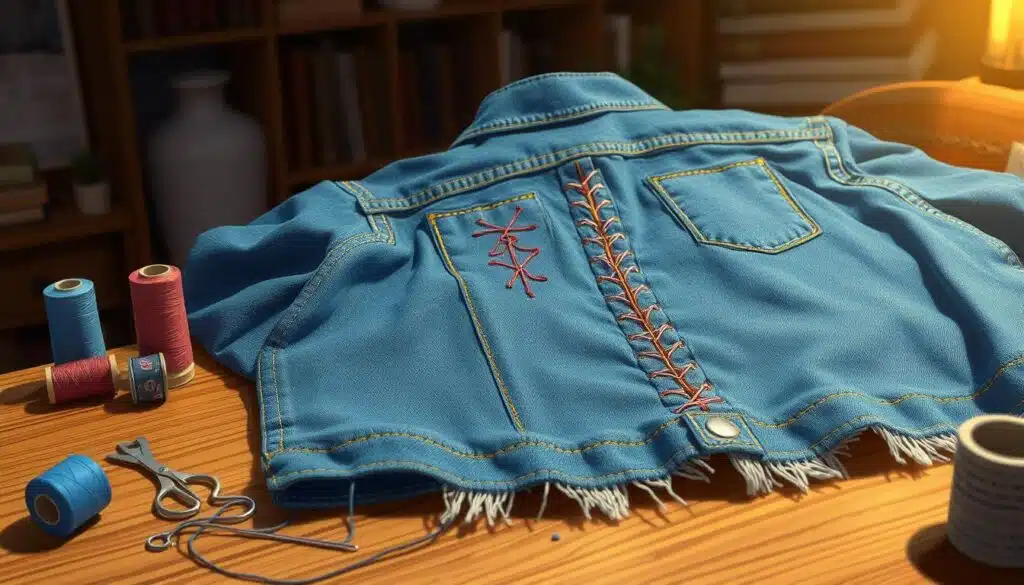
Visible mending highlights contrast. Pick vibrant threads or patterns to make the repair stand out. Try sashiko or geometric darning for texture and strength.
For a tactile grid, use sashiko thread or embroidery floss with a sashiko needle. This method stabilizes fabric and adds a handmade touch.
For an invisible mend, match the repair’s fiber and color to the fabric. Test yarn thickness and keep tension even. Fine yarns work best for lightweight items.
When doing an invisible mend, work in small sections and check tension often. Avoid puckering by not pulling too tight. A well-done mend can make a hole disappear without affecting the fabric’s feel.
Blend embroidered repairs with structural darning for the best results. Start with a strong darn, then add motifs or stitches to disguise the join and add flair.
Use a domestic machine for digitized motifs and reinforcement. Machines like Husqvarna/Viking Designer Epic or Brother Innov-is are great for this.
Visible mending is quick and forgiving. It lets you use bold colors and patterns. Decorative darning is also great for experimenting with colors and designs.
Here’s a quick guide to help you pick based on speed, visibility, and strength.
| Approach | Best use | Materials | Skill level |
|---|---|---|---|
| Visible mending | Decorative repairs and statement pieces | Contrasting threads, sashiko thread, embroidery floss | Beginner to advanced |
| Invisible mend | Heirloom garments and subtle fixes | Matched fiber threads, fine silk or cotton, wool yarn | Intermediate |
| Decorative darning + embroidery | Reinforced areas that need style and strength | Darning yarn, stabilizer, embroidery floss, machine or hand tools | Intermediate to advanced |
Fabric-specific strategies: knits, denim, silk, and wool
Different fabrics need different repair methods. You want fixes that move with you, last through tough tasks, and are subtle when you want them to be. Here are some simple, effective tips for fixing knits, denim, silk, and wool so your repairs look intentional and last long.
Darning knits
First, stabilize the area with a tear-away or fusible interfacing. This stops the knit from fraying while you mend it. Use a darning mushroom or egg to keep the fabric’s shape. Follow the stitch direction along the wales and courses. Choose a stretch-friendly thread or fine wool yarn for flexibility and durability.
Denim and heavy fabrics
For denim, reinforce from the underside with a denim scrap or heavy interfacing. Use strong polyester or upholstery thread to withstand washing. Layer your stitches and add top-stitching to distribute stress evenly. Use a domestic machine like Janome or Husqvarna/Viking with heavy-duty needles for thick layers.
Silk and fine woven fabrics
Keep repairs minimal to keep the fabric’s shine and drape. Use a light stabilizer while sewing. Choose a fine silk or cotton thread and sew closely. Finish with careful pressing under a cloth to avoid shine or distortion.
Wool-specific tips
Match the yarn gauge and choose a wool yarn that blends with the fabric’s halo. Secure raw edges with small tacking stitches before weaving in yarn. Wool’s natural loft helps hide joins, so aim for a subtle texture.
Not all fabrics are easy to sew on a machine. Mid-weight cotton, linen, wool, and many synthetics work well. But extra-thick denim, heavy leather, fur, reptile skins, and rigid plastics need hand work or special tools. Choose the method that fits the fabric’s behavior and your machine’s capabilities.
Common trouble spots and how to fix them
Small disasters happen. You might see a hole at the elbow or a frayed cuff before you leave. This guide helps you prevent puckering, fix fraying, and repair large holes. You’ll learn how to do it by hand or with a machine.
Preventing puckering and stiff seams after repair
Choose the right stabilizer for your fabric. Heavy interfacing can pull in drapey fabrics, causing puckers. For light cotton or silk, use a lightweight fusible or sew-in stabilizer.
Use thread that matches the fabric’s weight. When hand darning, relax your tension. Test stitches on a scrap before working on the garment. Spread stitches evenly to avoid puckering the fabric.
What to do if edges fray while you darn
Trim loose fibers carefully for a clean edge. Apply small stay-stitches or a narrow zigzag around the hole to stop fraying.
If the weave is badly worn, anchor the edge with a tiny fusible or sew-in patch. This gives you something stable to darn into and helps fix fraying without bulky seams.
Repairing very large holes and multiple worn areas
For very large damage, combine darning with a backing patch. Stitch a backing patch in place, then darn into that patch for structure and longevity. This method gives you the strength of a patch with the blended look of darning.
If invisible repair won’t hold, make a visible mend and celebrate it. Decorative patches and sashiko-style reinforcement techniques add personality and extra durability for heavy-wear spots.
| Problem | Quick fix | Best tool |
|---|---|---|
| Light puckering after repair | Reduce thread tension; press with low heat using a damp cloth | Hand needle, pressing cloth |
| Active fraying edges | Trim and stay-stitch; use fusible stabilizer under the hole | Small zigzag foot or hand needle |
| Large or multiple holes | Apply backing patch, then darn into patch; consider visible mend | Sewing machine with wide throat or strong hand thread |
| Machine stitch irregularities | Clean race hook and feed dogs; check tension and test on scrap | Screwdriver, lint brush, machine manual |
Machines differ. Models like Husqvarna/Viking Designer Epic and Janome Memory Craft have bigger embroidery fields and useful stabilizer guidance for larger jobs. Older portables and Singer basics work best for small repairs. Regular machine cleaning prevents skipped stitches during extensive mending.
For a compact how-to on choosing patches and materials, see a practical guide at how to mend your clothes. Use a mending basket to keep threads, needles, and patches handy. This way, you can mend quickly when the next trouble spot shows up.
Care and maintenance after darning
You’ve fixed the tear and now you want it to last. A bit of care after mending keeps your repairs looking good. It also saves you time on future fixes. Handle the darned areas gently and follow a simple routine of checks.
Laundering is a big test for many repairs. Always check the garment care label. Use cold water and a gentle cycle for most fabrics. For delicate mends, choose hand-wash or the lowest spin setting.
Put small items in a lingerie bag before machine washing. Use mild detergent that won’t harm fibers or weaken thread. Avoid bleach and high heat, as they stress seams and stabilizers.
When drying, air dry when you can. If you must tumble dry, use low heat and remove items quickly. Press mended spots with a pressing cloth. Don’t apply direct high heat on synthetic threads or interfacing to prevent melting.
Storing affects how long a repair lasts. Fold or hang garments so repaired zones aren’t bent or creased. Use breathable storage for sweaters to reduce friction and pests.
Avoid concentrated wear on repaired patches. For example, don’t kneel repeatedly on a darned knee. Rotate wear so the same repair doesn’t bear all the stress. Store mended items separately, with heavier pieces away from lighter ones to prevent crushing.
Inspection and rework should be a routine habit. Check mends after several wears and washes. Look for thinning threads, loose stitches, or fraying nearby fabric.
If you spot wear, plan for re-darning before the hole grows. Use a stronger thread or add backing when repeated repair is needed. Reinforce seams that show stress to prevent bigger repairs later.
| Task | How to do it | When to act |
|---|---|---|
| Washing | Cold water, gentle cycle, lingerie bag for small items | Every wash; use gentle settings for delicate mends |
| Drying & Pressing | Air dry preferred; low tumble heat if needed; pressing cloth for mends | After each wash; avoid high heat on synthetic stabilizers |
| Storing | Fold or hang to minimize stress; breathable containers for knits | Seasonal storage and between wears of delicate items |
| Wear Rotation | Alternate garments to prevent repeated abrasion on repaired spots | Ongoing; start immediately after mending |
| Inspection & Re-darning | Check for thinning threads; re-darn or add backing when needed | After several wears or when stitches loosen |
| Manufacturer-style upkeep | Follow sewing-machine-like maintenance habits: check seams and clean lint | Regularly, mirroring machine service intervals |
Resources, references, and gear recommendations
Before you start mending, get the right tools and references. Look for books and videos on visible mending, sashiko, hand darning, and free-motion techniques. Find guides and lessons that are easy to follow and help you learn fast.
Books and video tutorials
Choose classic and modern guides on visible mending. They should cover tension, thread choice, and finishing. Online video tutorials are great for demos you can pause and replay. Also, check out on-board machine tutorials, like Husqvarna/Viking’s mySewnet tutorials, for embroidery and darning.
Presser feet and machine features to look for
When shopping, look for a darning or embroidery foot. Also, free-motion capability and speed control with a start/stop button are key. Even-feed or IDT systems help with layers. Bright LED lighting and a strong frame reduce puckering.
Sewing machine recommendations
For top-notch options, consider the Husqvarna/Viking Designer Epic with its large touchscreen and mySewnet connectivity. Janome Memory Craft and Brother Innov-is lines are great for embroidery. Portable Singer machines are perfect for quick fixes and light darning.
Recommended darning supplies in the U.S.
Choose quality threads like Aurifil, Gütermann, and Coats & Clark for consistent results. Find darning eggs, specialized yarns, stabilizers, and tear-away or water-soluble options at Joann, independent sewing shops, and online retailers. Look for darning supplies USA at established dealers and specialty stores.
Accessories and maintenance
Get extra bobbins, a needle assortment, hoops, thread nets, and spool caps to avoid interruptions. For machine servicing, use authorized dealers and trusted local shops like Ace Sewing and Vacuum. Independent centers with good reviews can also help keep your machine ready for free-motion work.
Quick checklist
- Books and video tutorials plus on-board mySewnet tutorials
- Darning/embroidery foot, free-motion foot, and even-feed/IDT system
- Quality threads: Aurifil, Gütermann, Coats & Clark
- Stabilizers: Pellon tear-away and water-soluble options
- Sources for darning supplies USA: Joann, local sewing stores, specialty retailers
- Authorized service centers for routine maintenance
Conclusion
You now know how to darning: choose between hand and machine darning. Pick the right needles and threads. Also, stabilize fabric before stitching.
Start with small projects like socks, denim knees, or sweater elbows. This helps you build confidence without wasting fabric.
Practice on scraps and test machine settings on a swatch. Put together a basic repair kit with needles, threads, a darning egg, stabilizers, and a darning or embroidery foot.
If you need inspiration, check out this guide on how to darn socks.
Embrace visible mending and sashiko-inspired stitches to make repairs a feature. Repairing saves textiles from landfill, saves money, and adds personality to your wardrobe.
Whether you use a Husqvarna/Viking Designer Epic or a Singer portable, the key is to practice, kit up, and enjoy the satisfaction of fixing your favorites.
FAQ
What is darning and why should you learn it?
Darning is fixing small holes in fabric by weaving new threads into it. It’s good because it saves money and reduces waste. It also lets you keep your favorite clothes looking new.
When is darning the right choice versus patching or replacing?
Use darning for small holes and worn spots where the fabric is mostly okay. Choose patching or replacing for bigger damage or when the fabric is too thin.
What basic tools should you keep in a darning kit?
You’ll need sturdy needles, threads, and yarns. Also, a darning egg, scissors, and a needle threader. You might also want hoops, a magnifier, and special machine feet.
How do you choose thread or yarn for different fabrics?
Pick threads that match the fabric’s type and feel. Use fine threads for light fabrics and thicker ones for heavy ones. Always test on a scrap first.
How do you assess the hole and surrounding fabric before darning?
Check the hole type and the fabric’s condition. Clean the area first and trim frayed threads. If the edges are too frayed, add stabilizing stitches.
What stabilizers or interfacing should you use for machine darning?
Use fusible stabilizers for knits and water-soluble ones for silks. For denim, use woven interfacing. Always follow your machine’s guide for the best results.
What’s the basic hand-darning sequence (warp and weft)?
Start with a few backstitches to anchor the thread. Then, lay parallel stitches across the hole. Finish by weaving perpendicular threads over and under the first ones.
How do you prevent puckering when you darn?
Match your stitches to the fabric’s density and use the right stabilizer. For machine darning, test on a scrap. Hand darning? Relax your tension and check both sides often.
How do you set up a home sewing machine for free‑motion darning?
Use a free-motion foot and drop the feed dogs. Mount a stabilizer and adjust your machine’s speed. Set the stitch length to zero and test on a scrap.
Which machines are good for machine‑assisted darning?
Look for machines with free-motion capability and embroidery/darning feet. Models like Husqvarna/Viking Designer Epic and Janome Memory Craft are good. Portable Singers work for small repairs.
What are the pros and cons of machine darning vs hand darning?
Machine darning is faster and uniform. Hand darning is better for delicate fabrics and gives finer control. Choose machine for speed, hand for precision.
How do you handle laddered runs in knitwear?
Stabilize with interfacing, use a darning mushroom, and mimic the fabric’s weave with yarn or thread. Test your machine’s stretch recovery and match yarns to the fabric’s gauge.
What’s the best approach for denim and heavy fabrics?
Reinforce from the underside with a matching denim scrap or interfacing. Use strong thread and layer stitches for durability. Topstitching helps too. Test your machine with heavy layers and needles.
How should you repair delicate silks and fine wovens?
Use water-soluble stabilizer, fine thread, and tiny stitches. Keep repairs minimal to preserve the fabric’s drape and sheen. Invisible mending is best for heirloom silks.
Can you make darning decorative instead of invisible?
Yes. Visible mending uses contrasting threads and patterns. It turns repair into design. Use sashiko thread for texture and strength, or layer embroidery over a darn for style and reinforcement.
How do you troubleshoot fraying or unstable edges while darning?
Trim frayed bits carefully and anchor edges with tacking stitches or zigzag. Use stabilizers or patches for severe wear. Reinforce from the underside if fraying recurs.
What machine maintenance matters for reliable darning?
Clean the race hook and feed dogs regularly, change needles often, and follow the manufacturer’s service schedule. Use correct presser feet and needle sizes. Local dealers and repair shops can handle deeper servicing.
How should you launder and care for darned garments?
Follow care labels. Wash gently, use low-spin or hand-wash settings, and air dry or tumble at low heat. Press gently with a cloth and avoid high heat on synthetic threads.
When should you re‑darn a repaired area?
Check repairs after several wears and washes. Re-darn or reinforce when threads thin, stitches loosen, or adjacent fabric wears through. Use stronger backing or heavier thread for repeated stress.
Where can you buy quality darning supplies in the U.S.?
Buy threads from Coats & Clark, Aurifil, and Gütermann. Stabilizers and interfacing from Pellon. Find darning eggs, yarns, and accessories at Joann, independent stores, and online. Use authorized dealers for machine parts and service.
What are good starter projects to build darning skills?
Start with socks, sweater elbows, or denim knees. These small repairs teach tension control and thread selection. Practice on scraps, test machine settings, and build a repair kit.
Any quick tips to make darning easier and more successful?
Work under good light and keep a darning egg handy for curves. Test on scraps, use the right stabilizers, and match thread thickness and fiber. Keep extra bobbins, needles, and spool caps for smooth machine use. Practice, and visible mending is fun and forgiving.