Circular knitting needles are the workhorse tool of modern knitting. Whether you are casting on a seamless sweater, knitting in the round for a hat, or working flat panels that are too wide for straight needles, a good circular needle makes every stitch easier. And if you are a crocheter who has started exploring amigurumi and knitted toys, circulars open up a whole new world of shaping, small-circumference work, and tidy finishing.
This guide covers everything you need to know in 2026: how circular needles are built, which types suit which projects, the brands that consistently earn praise, and how to choose your first set without overspending. By the end, you will know exactly which needles to put in your basket.
Why Circular Needles Beat Straight Needles
A circular needle is two tapered tips joined by a flexible cord. That simple design solves several problems at once:

- No seams. You can knit tubes — sweater bodies, sleeves, hat crowns, sock legs — without sewing pieces together later.
- Weight distribution. The project rests in your lap rather than hanging off the ends of long straight needles, which is gentler on wrists and shoulders during long sessions.
- Versatility. The same needle handles flat knitting, in-the-round knitting, and magic loop for tiny circumferences.
- Travel friendliness. Cords fold down, so a sweater’s worth of stitches fits neatly in a project bag.
- Stitch capacity. Large shawls and blankets with hundreds of stitches stay put instead of sliding off the back end.
For amigurumi makers branching into knitted toys, circulars are especially handy. Small stuffed animals often use short-circumference knitting, and a circular needle with a long cord lets you use the magic loop technique to knit arms, legs, and heads without double-pointed needles slipping out of tiny stitches.
The Three Types of Circular Needles
Not all circulars are built the same way, and the construction affects how smoothly the yarn moves from tip to cord.
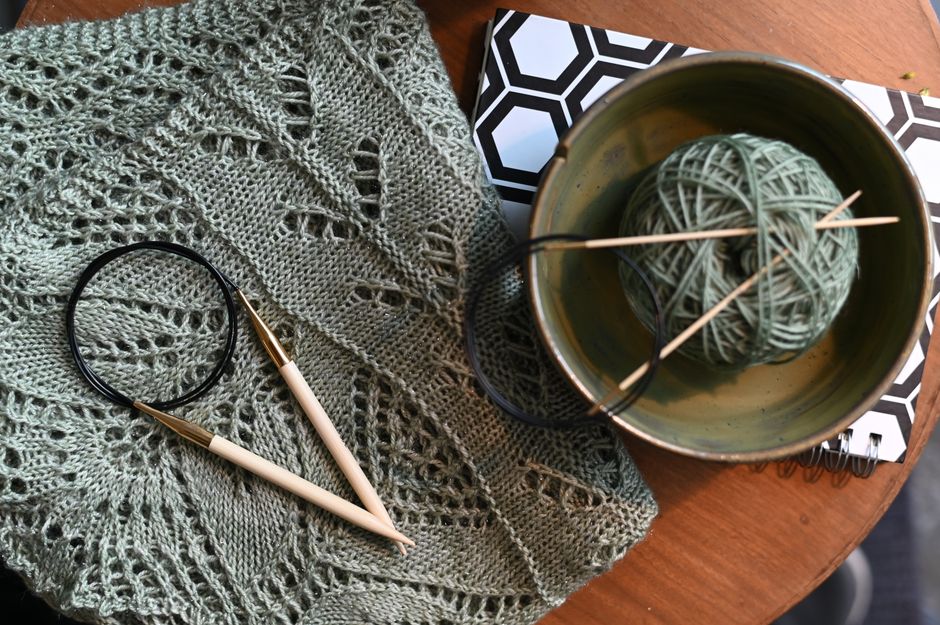
Fixed Circulars
The tip and cord are permanently joined. These are the simplest option, and because there is no connection to loosen, they are often the smoothest for continuous knitting. The trade-off is that you need one needle per size and cable length, which adds up if you knit many gauges.
Interchangeable Circulars
A set of tips in multiple sizes plus a selection of cords that screw or click together. You buy once and cover most of your knitting life. Interchangeables are the best value for anyone who knits regularly, and modern sets include tightening keys, end caps, and cord connectors so you can join two cords for very large projects.
Convertible and Specialty Circulars
Some systems let you attach a second tip to a cord to create a straight needle of custom length, or swap in a crochet hook tip for picking up stitches. There are also very short circulars designed specifically for sock and toy knitting, with tips as short as two inches.
What to Look For: Materials, Tips, and Cords
Needle Material
- Metal (stainless steel, nickel-plated, aluminum): Fast, smooth, and durable. Best for slippery yarns, lace, and knitters who want speed. Nickel-plated tips can bother people with metal sensitivities, so coated or stainless options are worth a look.
- Wood (birch, rosewood, laminated): Warm to the touch, slightly grippy, and quiet. Great for beginners and for slick fibers like silk or alpaca that slide off metal too easily.
- Bamboo: Lightweight, affordable, and the grippiest of the natural options. Wonderful for cotton and for anyone whose hands tire quickly.
- Carbon fiber and resin composites: Light, strong, and warmer than metal with a smooth finish. A popular middle ground in 2026.
Tip Shape
Blunt tips are forgiving and ideal for bulky yarn and beginners. Sharp tips are essential for lace, fine gauge work, k2tog decreases in amigurumi, and picking up stitches along edges. If you knit toys with tight gauge, a moderately sharp tip saves a lot of fumbling.

Cord Quality
The cord is where cheap needles give themselves away. Look for cords that are supple rather than stiff, that do not hold tight coils from packaging, and that have a smooth transition from tip to cord so stitches do not snag. Swivel cords, which rotate independently of the tips, are a genuine comfort upgrade for magic loop and for knitters who twist their work frequently.
Join Smoothness
Run a fingering-weight yarn across the join before you commit. If it catches, every round will catch. In interchangeable systems, the join depends on how well the tips screw or click in, so tighten with the provided key or pin.
The Best Circular Knitting Needles by Category
Rather than crowning a single winner, it helps to match the needle to the job. Here are the categories that matter most, with the traits to prioritize in each.
Best Overall for Most Knitters
A stainless steel interchangeable set with swivel cords and a range of tip lengths covers the widest range of projects. Look for sizes from US 2 to US 11 (roughly 2.75 mm to 8 mm), at least three cord lengths, and spare connectors. This is the set that will handle sweaters, blankets, hats, and most knitted toys. If you are weighing up larger equipment for bigger projects too, it is worth reading this guide to choosing a professional knitting machine.
Best Budget Pick
Bamboo fixed circulars in the three or four sizes you actually use. They cost a fraction of a set, they are gentle on hands, and they grip yarn well enough that beginners drop fewer stitches. Buy them individually rather than in a giant multipack — quality control on very cheap multi-size bundles is inconsistent.
Best for Socks and Small Circumference
Very short-tip circulars, or a long cord used with magic loop. Short tips reduce hand strain on tiny rounds, while a 32- or 40-inch cord with magic loop avoids the laddering that can appear at the junctions of double-pointed needles.
Best for Lace and Fine Gauge
Sharp metal tips with a slick finish. Precision matters more than grip here, and a smooth join keeps fine yarn from snagging as you work decreases and yarnovers.
Best for Amigurumi and Knitted Toys
Amid all the plush and toy knitting happening in 2026, the sweet spot is a moderately sharp tip in a small size (US 1 to US 4) paired with a long, flexible cord for magic loop. Tight gauge means your stitches are dense, so an overly grippy bamboo tip can slow you down, while a polished metal tip keeps the work moving. Keep a set of stitch markers and a tapestry needle nearby — toy knitting involves a lot of small-round counting and closing up.
How to Choose Your First Circular Needle Set
- List your next three projects. If they are all worsted-weight hats, you need one or two sizes. If they include a fingering-weight shawl and a bulky blanket, you need a set.
- Decide fixed versus interchangeable. Fewer than three projects a year: buy fixed needles individually. More than that: an interchangeable set pays for itself quickly.
- Match material to yarn. Slippery yarn favors wood or bamboo; grippy cotton and wool favor metal.
- Check the cable length you actually need. A 16-inch needle is for hat crowns and small tubes. A 32-inch needle is the all-rounder for adult sweaters. A 40-inch or longer cord is for magic loop, large blankets, and two-at-a-time socks.
- Budget for one good set rather than three cheap ones. A single quality interchangeable set will outlast multiple bargain purchases and knit more smoothly the whole time.
Needle choice is only half the story, though. Pairing your circulars with a pattern built for working in the round — like the approach in this seamless sweater knitting pattern guide — is what turns good tools into finished garments you will actually wear.
Care Tips to Make Your Needles Last
- Store tips in their case so the points do not get bent or nicked.
- Wipe wooden and bamboo needles with a dry cloth; avoid soaking them in water.
- Keep cords relaxed by hanging them or storing them loosely coiled rather than tightly wound.
- Check the join tightness at the start of each session — a loose tip is the most common cause of snagging.
- Retire a needle if the tip has developed a burr; it will snag yarn forever after.
Conclusion
The best circular knitting needles are the ones that match your yarn, your project, and your hands. Metal interchangeables with sharp tips and swivel cords win for most committed knitters, bamboo fixed circulars are the smart, affordable starting point, and short-tip or magic-loop setups handle socks and knitted toys beautifully. Start with one needle that suits your current project, add sizes as your skills grow, and you will never want to go back to straight needles. And if you are still building core skills alongside upgrading your tools, a review of the Purl Soho Learn to Knit Kit is a good next stop.
If your crafting heart belongs to amigurumi, remember that Crochet Craze stocks thousands of instant-download PDF patterns, step-by-step tutorials, and guides for every skill level — the perfect companion whether you are crocheting a new friend or knitting one with the circular needles you just chose.