If you crochet amigurumi, you already know the joy of turning a single strand of yarn into a tiny, huggable friend. But many makers who start with a hook eventually pick up knitting needles too, often to make hats, sleeves, sweaters, and other pieces for the dolls and characters they create. A circular knitting needle set is the fastest, most affordable way to build a full toolkit in one purchase, and choosing the right one can shape your experience for years. This guide covers what to look for, which sets stand out in 2026, and how to match a set to your skill level and the kinds of projects you love.
Why a Circular Needle Set Beats Buying Singles
Circular needles consist of two needle tips joined by a flexible cable. They let you knit flat or in the round, which makes them the most versatile needle type available.

Buying individual circulars gets expensive fast. A single quality circular can cost $8–$18, and most knitters eventually need several sizes for gauge swatching and different yarn weights. A set bundles 8–13 tip sizes, multiple cable lengths, and accessories like stitch markers, cable keys, and a case, usually for the price of four or five singles.
Beyond cost, sets offer consistency. When all your tips share the same brand, surface finish, and join design, your gauge stays more predictable between projects. That matters for amigurumi, where a half-stitch difference can change the shape of a head or limb.
Interchangeable vs. Fixed Circulars
- Interchangeable sets: Tips screw or click onto different cables, so one set covers dozens of combinations. Best for long-term value.
- Fixed circulars: Tips and cable are permanently joined. Cheaper per needle, but you must buy each size and length separately.
For most makers, an interchangeable set is the smarter buy. If you only ever knit one hat size, a fixed circular or two may be enough.
What to Look For in a Circular Needle Set
Needle Material
Material affects stitch speed and comfort.

- Metal (stainless steel, aluminum, brass): Smooth and fast. Ideal for slippery yarns and experienced hands. Often the most durable option.
- Wood (birch, rosewood, laminated): Warm to the touch, with a slight grip that helps beginners avoid dropped stitches.
- Bamboo: Lightweight and grippy. Good for slippery cotton and for knitters with hand fatigue.
- Resin, carbon, and composite: Middle ground with smooth surfaces and low weight.
Join Quality
The join is where the tip meets the cable. A rough or snagging join will catch your yarn on every round, which is maddening when you are knitting tiny amigurumi pieces in the round. Read reviews that specifically mention the join, and check whether the set uses a screw-in or a click-lock system.
Cable Flexibility and Memory
A good cable is supple but not floppy. It should hold a gentle curve without kinking or developing permanent bends. Cables that stay coiled after unboxing make magic loop and small-circumference knitting harder than it needs to be.
Cable Lengths and Accessories
Look for a set that includes at least three cable lengths, such as 16, 24, and 32 inches (roughly 40, 60, and 80 cm). Shorter cables suit hats and toy pieces; longer cables suit sweaters and blankets. Extender cables and couplers are a bonus because they let you test a project before committing to a final needle.
Size Range
Most standard sets cover US 4–11 (3.5–8 mm). If you knit amigurumi or fingering-weight garments, prioritize a set that includes smaller sizes down to US 0–2. If you work chunky yarns, a set from US 7–15 may serve you better.
Warranty and Replacement Parts
Needle tips get lost. Cables crack. A brand that sells individual replacement tips and cables keeps your set usable for years instead of turning it into a partial kit.
Best Circular Knitting Needle Sets in 2026
The sets below represent the most reliable options across price points and materials. Availability and bundled accessories shift over time, so check the current listing before buying.
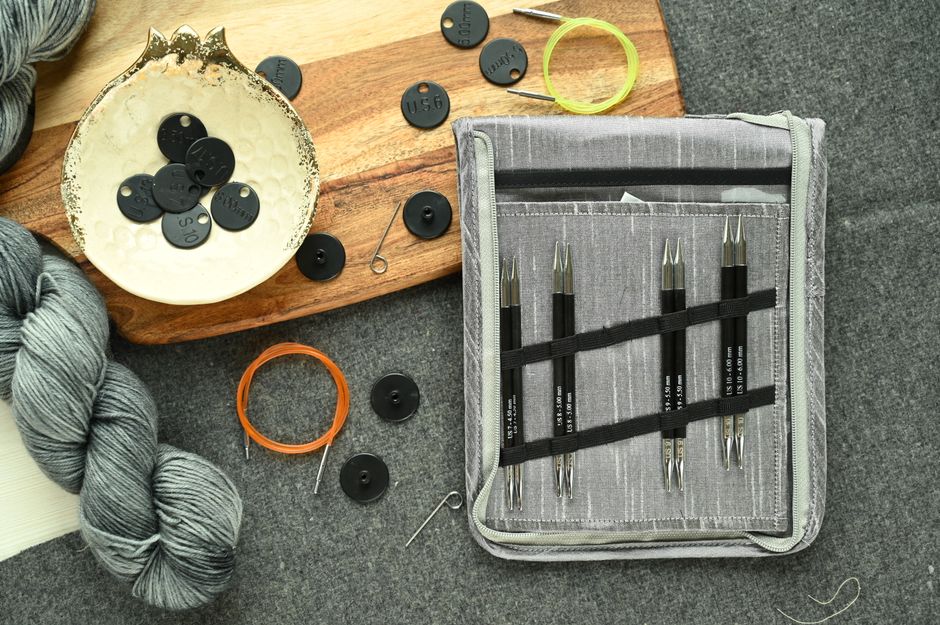
Best Overall: Metal Interchangeable Set
A stainless steel interchangeable set with a smooth screw join and swivel cables remains the workhorse choice. Metal tips glide through wool and acrylic, the surfaces resist wear, and the size range typically spans US 4–11. If you want one set to cover the widest variety of projects, start here.
Best for: All-purpose knitting, garments, accessories, and fast stockinette work.
Best for Beginners: Wood or Bamboo Set
A birch or bamboo interchangeable set gives new knitters the grip they need while learning tension. The slightly textured surface holds stitches in place, which reduces the panic of a dropped stitch mid-round. Wood also feels warmer during long sessions.
Best for: Beginners, slower knitters, and anyone who prefers a tactile surface.
Best for Small Circumference and Amigurumi: Short-Tip Set
Short-tip interchangeable sets use tips of about 2–3 inches, which makes knitting small circles like toy arms, hat crowns, and sock cuffs much easier than wrestling with long tips. These sets often include cables as short as 9–16 inches. If you also work with flat-bed machines, our Silver Reed Sk280 knitting machine reviews cover a different kind of knitting toolkit worth comparing.
Best for: Amigurumi makers, sock knitters, and anyone who knits small tubes.
Best Budget Set: Basic Aluminum Interchangeable Set
Entry-level aluminum sets cost a fraction of premium brands. The joins may not be as refined, and the cables may be stiffer, but they cover a solid size range and get the job done. This is a smart first set if you are not yet sure how much you will knit.
Best for: Trying out knitting, gift recipients, and backup needles.
Best Premium Set: Precision-Machined Interchangeable Set
High-end sets feature precision-machined joins, swivel cables that reduce hand strain, and etched or laser-marked sizes that never rub off. They cost more, but many knitters report using the same set for a decade or longer.
Best for: Committed knitters who want a buy-once tool.
Circular Needles and Amigurumi: A Natural Pairing
Amigurumi is usually crocheted, and it will stay that way for most makers. Crochet creates the dense, structured fabric that holds stuffing well and shapes into recognizable characters. But knitted amigurumi has a loyal following too, and it offers a softer, more plush look with a smooth stockinette surface.
Circular needles matter for knitted toys in two ways:
- Knitting in the round: A circular needle with a short cable lets you knit a toy body, head, or limb as a seamless tube. No side seams means no lumpy joins and less finishing work.
- Magic loop: With a long cable (32 inches or more), you can knit very small circumferences without double-pointed needles. This is ideal for narrow pieces like toy legs and tails.
If your main goal is crochet amigurumi and knitting is a side interest, a modest set with short cables and small sizes will cover nearly everything you need. If you plan to mix crochet and knitting in the same project, choose a set whose smallest tip size matches the hook size you typically use, so your gauge stays in the same family.
Tips for Using Circular Needles with Amigurumi Projects
- Use stitch markers generously. Small circumferences are easy to lose track of.
- Choose a cable that is one size shorter than your total stitch count suggests, so the fabric hugs the cable and does not stretch.
- For tiny pieces, magic loop usually beats a short fixed circular.
- Keep your tension slightly tighter than for garments so stuffing does not show through the fabric.
- Write down your tip size and cable length for each project so you can repeat it precisely.
How to Choose the Right Set for You
Answer these four questions before you buy:
- What will you knit most? Garments and blankets favor a wide size range and long cables. Small toys, hats, and socks favor short tips and short cables.
- How much do you knit? Occasional makers do fine with budget aluminum. Daily knitters benefit from premium joins and cables.
- How do you hold your needles? Tight grippers often prefer wood or bamboo. Loose, fast knitters often prefer metal.
- Do you have hand or wrist issues? Lightweight tips, swivel cables, and smooth joins reduce strain noticeably.
One more consideration: storage. A set with a well-organized case keeps tips, cables, and accessories together and makes it easy to grab what you need without digging through a project bag.
Care and Maintenance
Circular needle sets last longer with a little attention.
- Wipe metal tips with a soft cloth to remove hand oils that slow your stitches.
- Store cables loosely coiled rather than tightly wound, so they keep their flexibility.
- Check screw joins periodically and tighten them with the included key to prevent loosening mid-project.
- Keep a spare cable connector in your project bag for emergencies.
- Avoid leaving needles in direct sunlight, which can warp wood and degrade some plastics.
Building Your Full Maker Toolkit
Circular needles are one half of a well-rounded craft kit. The other half is your crochet hook collection, and if amigurumi is your focus, the pattern library matters just as much as the tools. Having reliable patterns on hand means you can start a project the moment inspiration strikes, without hunting through the internet for something that fits your yarn and skill level.
At Crochet Craze, you will find thousands of amigurumi PDF patterns with instant downloads, plus detailed tutorials and guides for every skill level, from your very first magic ring to advanced shaping techniques. Whether you are crocheting a plush bear or knitting a sweater for it, having the right needles and the right patterns together makes the whole process smoother.
Conclusion
The best circular knitting needle set is the one that matches your yarn, your project types, and your hands. Metal interchangeable sets win for versatility and speed. Wood and bamboo sets win for beginners and grip. Short-tip sets win for small circumferences and amigurumi work, while budget aluminum sets offer a low-risk entry point. If you can, choose a set from a brand that sells replacement parts, because a set you can repair is a set you can keep for a decade. Pair it with a strong pattern library, and you will be ready for whatever your hands want to make next.