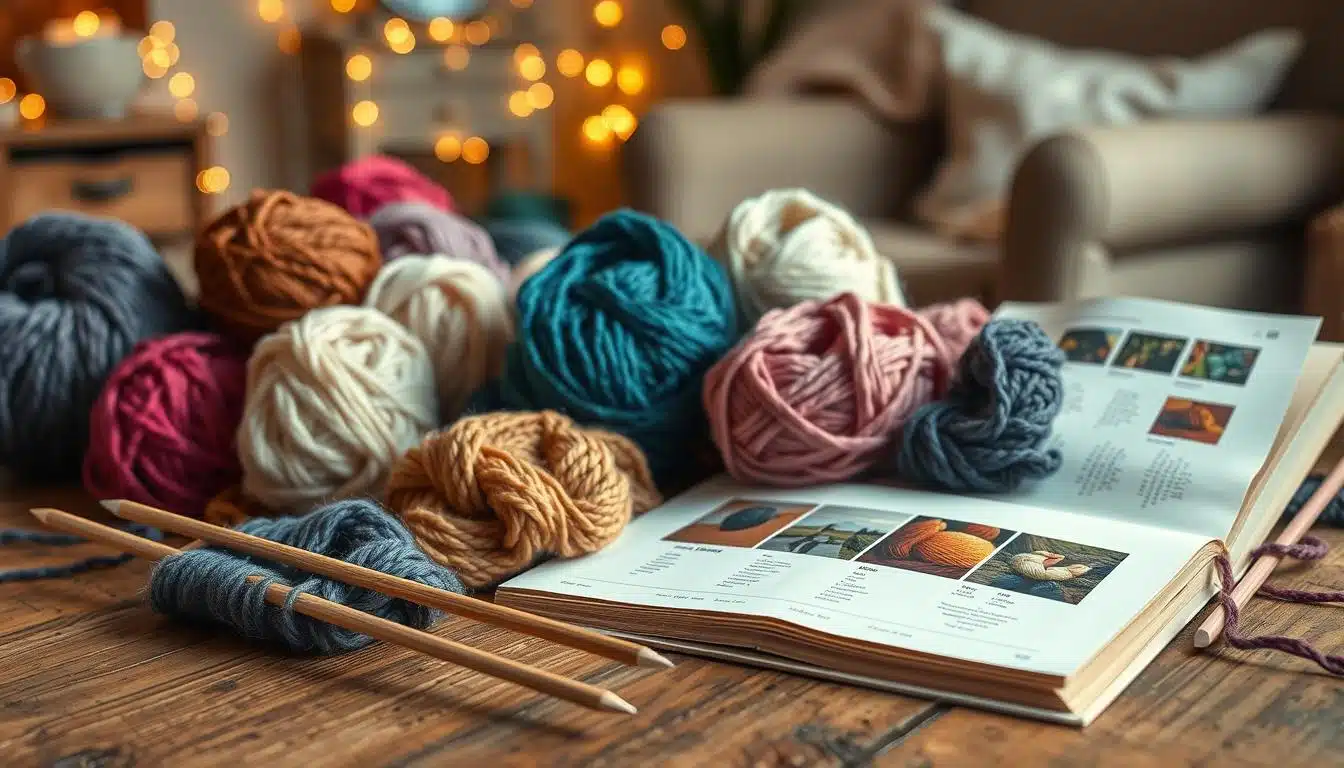
This guide will help you pick the best yarns for your projects. Whether you love making wool sweaters or cotton dishcloths, knowing about yarn materials saves time and money. It also helps avoid the frustration of unraveling your work.
Yarn is more than just string. It’s the foundation of knitting, crochet, weaving, punch needle, and macramé. Purl Soho tells us that natural fibers offer both touch and environmental benefits. The Lovely Yarn Club explains how fiber choice affects price, allergies, and how to care for it. This guide makes these facts easy to understand, so you can start your next project with confidence.
You’ll learn about animal, plant, and synthetic fibers. We’ll cover how staple length, microns, elasticity, and surface structure impact drape, warmth, and durability. You’ll also get tips on dyeing, yarn structure, and care. For a quick or detailed look, check out this yarn fiber guide.
By reading on, you’ll discover how to pair knitting materials with patterns. You’ll learn to avoid surprises and choose the right yarns with both your heart and head.
Key Takeaways
- This knitting fiber guide helps you choose yarns that match projects and care needs.
- natural yarn materials and plant offer tactile environmental benefits.>
- Fiber traits like staple length, microns, and elasticity affect drape and warmth.
- Blends and synthetics balance cost, durability, and easy care.
- Understanding fiber types reduces mistakes and improves finished results.
knitting fiber guide
Choosing fibers for a project is all about fit, feel, and how it looks after washing. Factors like staple length, microns, and texture affect warmth, drape, and durability. Even small changes, like Merino vs. Cormo, can make a big difference.
Practical considerations are also key. Think about price, care needs, and allergies. Blends like wool and nylon are great for durability and less felting. Always consider how the fiber will fit into your daily life.
Why fiber choice changes your finished project
Fiber choice affects breathability, loft, and drape. Cotton and linen are perfect for summer, while wool and alpaca keep you warm in winter. The texture and twist of the fiber also impact stitch clarity.
Care instructions are important for longevity. Superwash wool is easy to wash but may not be as durable as non-superwash. Elasticity and crimp also affect fit, with high-crimp fibers bouncing back and low-crimp fibers relaxing.
How to use this guide
Begin by reading category pages to narrow your choices. Then, check sections on yarn structure, weight, and gauge. Don’t forget to read care and handling notes, which are vital for luxury fibers.
Use the project-matching cheat sheet to make quick decisions. If unsure, make a swatch to compare gauge, drape, and wash behavior. This simple test can save you from surprises and improve your project.
Understanding fiber categories: animal, plant, and synthetic
Choosing a fiber shapes your project. Knowing the main categories helps pick for warmth, drape, care, and budget. This guide explains animal, plant, and synthetic fibers. It also lists pros and cons to match yarn to your project.
What makes a fiber animal, plant, or synthetic
Animal fibers come from creatures like sheep, goats, alpacas, and rabbits. These fibers have natural scales, loft, and spring. They give stretch and stitch memory. Examples include wool, cashmere, alpaca, mohair, angora, and yak.
Plant fibers come from cellulose in sources like cotton, flax (linen), hemp, and bamboo. They feel cooler next to skin and absorb moisture well. They tend to be denser with less natural stretch.
Synthetic fibers are man-made in mills through chemical or spinning processes. Acrylic, nylon, polyester, and rayon are common. They aim for easy care, consistent sizing, and lower cost.
Pros and cons by category
Animal fibers offer warmth, elasticity, and loft. They give great stitch definition and spring. This helps fitted garments keep shape. Downsides include higher cost, special-care needs for many wools, and sensitivities for allergy-prone knitters.
Plant fibers make breathable summer garments, sturdy dishcloths, and easy-care pieces. They drape nicely when treated or regenerated, such as rayon from bamboo. Expect less elasticity and weaker stitch memory, so patterns that need bounce may suffer.
Synthetic fibers provide budget-friendly, washable, and durable options. They strengthen blends for socks and outerwear. Environmental concerns and lower natural breathability are common trade-offs.
Blends let you combine benefits. Wool plus nylon boosts sock durability. Cotton blended with linen softens texture while keeping strength. For a quick primer with examples and a visual comparison, see this handy guide at ultimate yarn guide.
| Category | Typical fibers | Strengths | Limitations | Best uses |
|---|---|---|---|---|
| Animal fibers | Wool, cashmere, alpaca, mohair, angora, yak | Warmth, elasticity, loft, stitch memory | Higher cost, special care, allergy risk | Sweaters, hats, winter garments, luxury items |
| Plant fibers | Cotton, linen (flax), hemp, bamboo, rayon | Breathable, absorbent, hypoallergenic, easy-care | Low elasticity, heavier drape, can wrinkle | Summer tops, dishcloths, table linens, baby wear |
| Synthetic fibers | Acrylic, nylon, polyester, stellina | Durable, washable, affordable, colorfast | Lower biodegradability, less natural feel | Kids’ wear, afghans, reinforced socks, festive trims |
| Common blends | Wool+nylon, cotton+linen, silk+alpaca | Balanced performance, improved durability | Variable care needs, mixed cost | Versatile garments, socks, hand-dyed projects |
Wool and its variations for warmth and elasticity
You choose wool for its warmth, bounce, and classic charm. It comes from sheep and stays warm even when wet. Lanolin helps keep it dry and fresh.
Wool types vary in texture, softness, and durability. This lets you create your dream wool projects.
Merino, Cormo, Andean, and other breed differences
Merino wool is known for its softness. It’s great for baby clothes and next-to-skin wear. But, it can pill and is pricier than others.
Cormo wool is perfect for structured items. It has spring and stitch memory, making it durable.
Andean wool is from highland sheep. It’s rustic and tough, ideal for outerwear and tweeds.
Superwash vs. non-superwash wool
Non-superwash wool gets better with age. It’s durable and keeps its shape. But, it needs hand washing to avoid felting.
Superwash wool can be machine washed without shrinking. It’s perfect for everyday clothes. But, it may pill more with heavy use.
Best projects for different wool types
Merino wool or superfine blends are great for shawls and baby items. They’re soft and drape beautifully.
Cormo wool or worsted-spun yarns are best for stretchy items like sweaters and hats. They recover well.
Andean wool is perfect for tough outerwear and blankets. Blends with nylon are good for socks and items that get a lot of wear.
Quick pick: merino wool for softness, Cormo wool for spring, Andean wool for toughness, and superwash wool for easy care.
Alpaca, cashmere, and luxury animal fibers
You want your knitting to be warm, drape well, and feel luxurious. Alpaca, cashmere, and mohair offer these qualities in unique ways. Each fiber behaves differently when you knit, block, or wear it. Here are quick guides to help you choose the right luxury fibers for your project and lifestyle.
Alpaca: warmth, drape, and hypoallergenic properties
Alpaca yarn is silky and light, yet keeps you warm. Its hollow core traps air, providing great insulation without bulk. It drapes beautifully and has a soft sheen, thanks to Suri alpaca’s silky halo.
Alpaca is low in lanolin, making it a good choice for those with wool allergies. Huacaya alpaca has a soft crimp and long staple length, perfect for cozy sweaters and scarves. It stretches a bit and may pill, so it needs gentle care.
Cashmere: softness, care, and cost
Cashmere yarn is incredibly soft and insulating. It develops a lovely bloom with use. It’s ideal for luxury scarves, lightweight sweaters, and special-occasion pieces.
Cashmere is delicate and loses shape if mishandled. Dry cleaning or hand washing with care is best. Pure cashmere is pricey; blends with merino or silk offer a softer, more affordable option.
Mohair and specialty fibers
Mohair yarn, from Angora goats, has a bright halo and vibrant colors. Its long staple length creates airy, warm fabrics. It’s great for layering sweaters and shawls.
Mohair is fluffy and light, perfect for outer layers. Some find it irritating, so use it for outerwear. Swatching is important due to its halo, which can make frogging tricky.
| Fiber | Key Strengths | Care | Best Uses | Price Range |
|---|---|---|---|---|
| Alpaca yarn | Warm, excellent drape, hypoallergenic yarns, low lanolin | Hand wash gently, spot clean, careful blocking | Sweaters, scarves, hats with warm drape | Moderate to high |
| Cashmere yarn | Ultra-soft, lightweight warmth, beautiful bloom | Dry clean preferred; gentle hand wash and steam blocking possible | Luxury scarves, gloves, lightweight sweaters | High to premium |
| Mohair yarn | Sheen and halo, strong staple, vivid dyeing | Hand wash, avoid agitation to prevent felting | Airy sweaters, layering pieces, texture blends | Moderate to high |
Plant-based fibers: cotton, linen, bamboo, and more
Looking for yarn that’s cool and breathable? Plant-based fibers are perfect for sunny projects. They offer crisp stitch definition, strong fabric, and natural comfort. These fibers have less stretch than wool, are easy to care for, and feel clean against your skin.
Cotton varieties and performance
Cotton yarn is great for dishcloths, market bags, and snug summer tops. American cotton is common and durable. Pima cotton is softer, and Egyptian cotton is the silkiest when you can afford it.
Mercerized cotton adds shine and better dye uptake. Unmercerized cotton has a matte finish, which brands like Purl Soho prefer. Cotton is excellent for textured patterns because it provides clear stitch definition.
Linen and flax for durable summer knits
Linen yarn, made from flax, is very strong. It’s cool, dries fast, and perfect for summer. It has a crisp feel that softens with each wash.
Linen has little bounce, so use looser gauges or wooden needles to manage stitches. It’s great for table linens, lightweight shirts, and durable market totes.
Bamboo and other regenerated plant fibers
Bamboo yarn and rayon-from-bamboo mimic silk with a sleek drape and subtle sheen. Pure bamboo can be slippery and wear faster, so many blend it for strength. These fibers are perfect for shawls and flowy garments.
Processing methods vary, so always check care labels. Bamboo and other plant fibers offer a cooling touch, ideal for warm weather garments.
For a quick guide, check a practical guide to plant-based yarns at a Yarn’s Length. It compares prices, benefits, and projects.
- Use cotton yarn for sturdy, washable pieces that show texture.
- Choose linen yarn when you want strength and long-term softness.
- Reach for bamboo yarn when drape and sheen matter most.
Synthetic and biosynthetic fibers: acrylic, nylon, and rayon
You might want yarn that’s better than natural fibers in some ways. Synthetic fibers are cheap, easy to care for, and last long. Biosynthetic yarns are made from plant cellulose and feel like silk. Each type affects how your project looks and lasts.
Acrylic: affordability and easy care
Acrylic yarn is cheap and easy to find, perfect for beginners and busy people. It’s made by melting material into threads that become yarn. It’s machine washable and durable, great for blankets and clothes that can get dirty.
But, there are downsides. Acrylic can hold onto smells and stains, and it’s not as breathable as natural fibers. It’s also sensitive to heat, so dry it on a low setting. Brands like Lion Brand and Bernat make softer acrylic blends that get better with washing.
Nylon and strength for socks and durability
Nylon yarn was a big deal when DuPont first made it. It’s now used in sock yarns with wool for strength and shine. A little bit of nylon makes a yarn very strong and durable.
Nylon is light but very strong, perfect for things that get a lot of use. It’s easy to wash in a machine, but it melts at high temperatures. Avoid using hot irons or dryers. Pure nylon can be scratchy, so it’s often blended with other fibers.
Rayon and other biosynthetics
Rayon yarn is made from plant cellulose and feels like silk. It’s smooth, shiny, and drapes well. Use it for projects that need to move freely, like shawls and tops.
Rayon doesn’t stretch much and can be slippery to work with. Always check the label for washing instructions; gentle is best. Biosynthetic yarns are a green option, but how they’re made is key to their sustainability.
When choosing between acrylic, nylon, rayon, and blends, think about what you need. Acrylic is good for cheap, easy-to-clean items. Nylon is for things that need to last a long time. Rayon is for projects that need to drape well. Mixing these fibers with natural ones can give you the best of both worlds.
Yarn structure: staple length, microns, twist, and plies
Yarn structure is like a secret recipe for your project’s feel and wear. Small choices at the fiber and spin stage, like staple length and micron count, affect drape, warmth, and stitch behavior. These choices are made before you even start knitting.
Staple length and its tactile effects
Staple length is the raw fiber length before spinning. Short staples make yarns loftier and softer, hiding tiny imperfections. Long staples create smoother, stronger yarns with cleaner stitch lines.
Think of cashmere with long, fine staples versus a shorter-staple wool. One will drape and polish, the other will feel plush and billowy. This difference is key when choosing yarn for a sweater versus a cozy cowl.
Micron measurement and softness
Microns measure fiber diameter. Lower micron counts mean finer, silkier fibers that feel gentle against skin. Cashmere often has 14–17 microns, while many common wools have 20–25 microns.
For next-to-skin pieces, you want lower micron numbers. Higher micron fibers are better for outerwear and durable accessories where softness is less important but strength is needed.
Twist and plies: stitch definition and durability
Yarn twist locks fibers together, setting the yarn’s personality. A higher yarn twist makes a firm, springy rope with crisp stitch definition. A looser yarn twist lets the fiber bloom, giving softer hand and more halo.
Yarn plies are multiple strands twisted together. Single-ply yarns feel round and yielding, perfect for relaxed drape and bloom in accessories. Two- and three-ply constructions add strength and roundness, ideal for cables, textured stitches, and heavy-wear garments.
Practical examples help: Partridge Superwash is a single-ply that showcases bloom; Cashmere Merino Bloom uses two plies to balance softness with definition; Yonder is a three-ply with crisp stitch definition for detailed patterns. Multi-ply choices like Nigh Aran and Plenty deliver durability and clean cables.
You can learn more about fiber preparation, spin, and how these choices affect finished work at Purl Soho’s complete guide. It shows how worsted-spun yarns give sleek stitch definition while woolen-spun yarns encourage warmth and bloom.
- Tip: Pick long staple, lower micron yarns for next-to-skin items.
- Tip: Choose higher yarn twist and multiple plies for cables and heavy wear.
- Tip: Opt for lower twist, single-ply yarns when you want bloom and a soft halo.
Yarn weight and gauge explained for pattern success
For your next project to fit and feel just right, start by seeing yarn weight as a guide, not a rule. Yarn weight groups, from lace to jumbo, give a quick idea of thickness and expected knitting gauge. But, needle size, your tension, and the type of fiber used can all affect the final stitch count.
Standard weights and typical stitches per inch
| Weight Category | Typical Stitches per Inch | Common Uses |
|---|---|---|
| Lace weight | ≈ 8.25–10 | Delicate shawls, fine edgings |
| Fingering / Sock | ≈ 7–8 | Socks, lightweight garments, shawls |
| Sport | ≈ 5.75–6.5 | Children’s wear, light sweaters |
| DK / Light Worsted | ≈ 5.25–6 | Everyday sweaters, layering pieces |
| Worsted weight | ≈ 4–5 | Classic sweaters, hats, mitts, blankets |
| Chunky / Bulky yarn | ≈ 3–3.75 | Quick cowls, chunky hats |
| Super Bulky | ≈ 1.75–2.75 | Thick blankets, statement accessories |
| Jumbo | ≈ 1.5 or fewer | Arm-knitted blankets, sculptural pieces |
Standard yarn weights from lace to jumbo
Craft Yarn Council labels match what brands like Purl Soho use, so patterns and shop labels speak the same language. Lace weight can be airy or dense, depending on needles and technique. At the other end, jumbo gives dramatic texture with very few stitches per inch. Swapping between close categories can change drape and feel.
Why gauge matters and how fiber affects it
Gauge determines finished size, stitch definition, and fabric behavior. If your knitting gauge differs from a pattern, your sleeves, hems, and button bands shift out of alignment. Fibers change gauge through elasticity and drape. Wool springs back; cotton sits firmer; alpaca relaxes and can grow with blocking.
Two skeins labeled the same yarn weight can have different knitting gauge because of twist, plies, and staple length. Swatching saves you from surprises. Make a swatch in the stitch pattern, wash and block it the way you will the finished piece, and measure again.
Project-matching cheat sheet
- Lace weight: delicate shawls and trims where lightness matters.
- Fingering / sock weight: socks, lightweight garments, and layered shawls.
- Sport / DK: comfy kids’ sweaters and breathable adult knits.
- Worsted weight: everyday sweaters, sturdy hats, and blankets.
- Bulky yarn to jumbo: fast accessories, dramatic blankets, and cozy outerwear.
Best practice: always make a gauge swatch and block it. Consider fiber-specific behavior when matching project to yarn weight. That little step keeps your finished piece from staging a wardrobe rebellion.
Color and dyeing methods that influence outcomes
Color changes how your knitting looks. The dyeing stage affects the depth, clarity, and care of your yarn. This guide helps you choose between fiber-dyed, yarn-dyed, and hand-dyed yarns for your next project.
Fiber-stage, spun, and small-batch dyeing
Fiber-dyed color is applied to raw fibers before spinning. This method creates a rich, blended look. It’s perfect for cozy sweaters.
Yarn-dyed skeins get their color after spinning. They have a luminous core with varied outer tones. Hand-dyed yarns offer unique tonal effects through kettle-dyeing, hand-painting, or speckling.
Common dye styles and what they do to your stitches
Solid colors keep stitch definition crisp. They’re great for cables or lace.
Heathered yarns mix fibers or colors before spinning. They produce gentle slubs and color shifts. This softens pattern edges and gives garments a lived-in look.
Tweed yarns add flecks that pop against a base tone. They’re perfect for rustic jackets or accessories.
Helix effects come from plying differently colored strands together. They create a barber-pole appearance. This style works well with ribbing and adds subtle vertical motion.
Self-striping yarn is dyed in repeat sequences. It produces stripes as you knit. Use it for socks, hats, and simple garments for color play.
Fiber content and dye uptake
Different fibers take dye in distinct ways. Merino produces saturated, velvety tones. Linen and cotton yield clearer, brighter hues but a flatter surface. Mohair accepts dye unevenly, giving a haloed, soft glow.
Blends behave like layered artists. When a yarn contains wool and linen, each fiber absorbs dye differently. This creates rich and complex colors. It’s a major advantage for hand-dyed yarns and fiber-dyed batts.
Practical notes for choosing colorways
For texture-heavy patterns, choose solids or gentle heathered yarns. This keeps stitches visible. If using variegated or self-striping yarn, test a swatch first.
Always check care instructions and colorfastness. Some methods, like hand-painting or printed finishes, need gentler washing. Match dye method to project use for longer-lasting, better-looking garments.
Put-up, packaging, and practical handling tips
How yarn arrives is important. It affects how you store it, your project’s flow, and your mood. Checking labels and looking at the yarn can save time and help decide when to start.
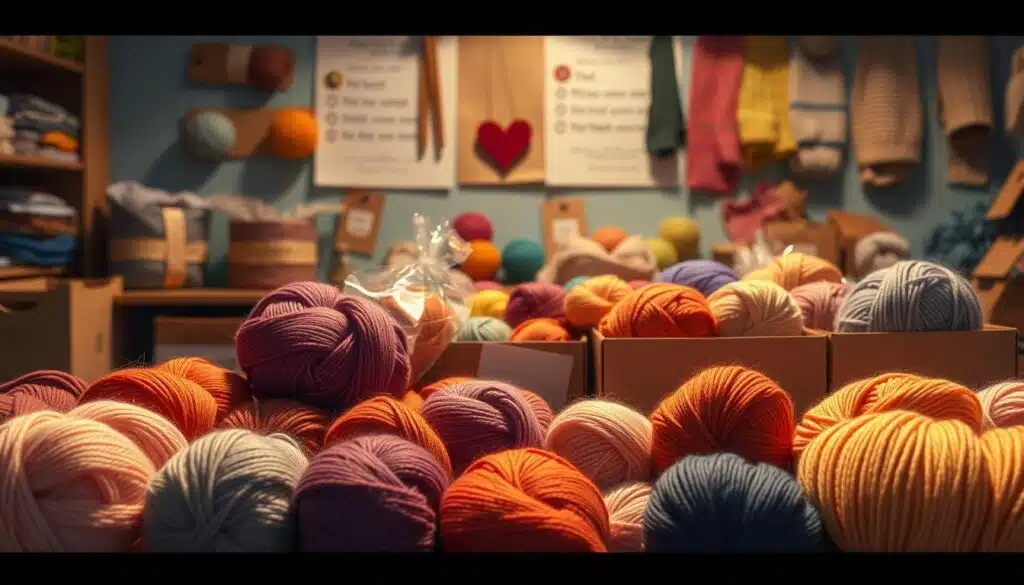
Skeins, cakes, balls, and cones
Skeins come as loose hanks or braids. You can see color repeats and length before winding. But, they need to be wound into cakes or balls to start knitting.
Cakes and balls are ready to use. Cakes are flat and easy to work with. Balls, though, might need rewinding to keep colors right.
Cones are best for big projects. They reduce joins and keep tension steady.
Skeins vs cakes
Choosing between skeins and cakes depends on your preference. Skeins let you see color repeats before winding. Cakes offer instant knitting with less handling.
Avoiding tangles and preparing yarn for use
To avoid tangles, check skeins for knots before winding. Use a swift and winder for center-pull cakes. If you don’t have tools, wind by hand around a chair back.
For colorwork, use bobbins or small cakes. Alternate skeins to blend color changes in variegated yarns.
Store wound yarn in breathable bins. This protects fibers from dust and pests. For more on organizing your stash, see this guide from Crochet Craze: organizing yarn collection.
| Put-up | Pros | Cons |
|---|---|---|
| Skein / Hank | Inspect length and color repeats; compact for storage | Requires winding yarn; risk of tangles if handled poorly |
| Cake / Ball | Ready to knit; center-pull reduces tangles; portable | May need rewinding to preserve hand-dyed sequence |
| Cone | Ideal for large projects; few joins; consistent feed | Bulky storage; not typical for small craft projects |
Good yarn handling starts with a calm setup. Lay out tools, wind carefully, and work in a tidy space. Small habits will prevent tangles and keep your knitting fun.
Care, washing, and longevity for different fibers
You want your handmade pieces to last and look great. Start with basic yarn care routines that match fiber behavior. Animal fibers like wool, alpaca, and cashmere need gentler handling. Plant and synthetic fibers tolerate more robust washing and drying.
Machine-washable options and gentle-care animal fibers
Superwash wool is marketed as machine-friendly, yet repeated cycles can wear fibers. Use garment bags and select the gentlest cycle when washing yarn items in a machine. For non-superwash wool, hand wash in cool water with a mild detergent to avoid felting.
Hand wash, blocking, and storage tips
Hand washing is safest for delicate animal fibers. Gently squeeze water through the fabric instead of rubbing. Lay items flat to dry to keep shape. When you block, know the difference between woolen-spun and worsted-spun pieces; wool often benefits from wet blocking, while some worsted fabrics need light steam.
Cotton and linen tolerate stronger blocking but have low elasticity. Test a swatch before heavy manipulation. Store knitwear folded, not hung. Protect animal fibers from moths with cedar or airtight containers when you store knitwear for long periods.
Repair, pilling, and maintenance strategies
Pilling happens on soft fibers and blends. Use a depilling tool or carefully clip pills by hand. For small worn spots, duplicate stitch blends well with matching yarn. Darn socks and reinforce elbows and cuffs with nylon blends for extra durability.
Reblocking can revive stretched pieces, but alpaca and silk may not rebound fully. Follow fiber-specific repair methods to avoid further damage.
| Fiber | Washing yarn | Blocking tips | Common maintenance |
|---|---|---|---|
| Superwash wool | Machine cycle: gentle, low temp; garment bag recommended | Light wet block or steam; avoid aggressive stretching | Pilling with wear; gentle depilling and occasional reblocking |
| Non-superwash wool | Hand wash in cool water with mild detergent | Wet block on a flat surface; pin to shape carefully | Felting risk if agitated; lay flat to dry |
| Alpaca | Hand wash or spot clean; minimal agitation | Block gently; avoid over-stretching due to low stitch memory | Prone to stretching; careful storage and light pilling repair |
| Cashmere | Spot clean or very gentle hand wash; many prefer dry clean | Steam block lightly; do not overstretch | Shows wear quickly; depill and reinforce high-wear zones |
| Mohair | Hand wash with minimal agitation; avoid rubbing | Steam block is best; wet blocking can felt if mishandled | Delicate surface; avoid friction and use careful pilling repair |
| Acrylic / Nylon | Machine-washable; low to medium heat drying | Minimal blocking needed; synthetic holds shape well | Resists moths; can melt if exposed to high heat |
| Cotton / Linen | Machine washable; linen softens with repeat washes | Aggressive blocking possible; expect limited elastic recovery | Watch for stretching; mercerized cotton resists pilling |
| Silk | Hand wash or dry clean; avoid harsh detergents | Steam block carefully; avoid pin marks | Store to avoid snagging; delicate pilling repair when needed |
Conclusion
You’ve learned about the unique qualities of fibers from sheep, alpaca, cotton, silk, and synthetics. This guide emphasizes the importance of hands-on experience. Feel the yarns, knit small swatches, and see how they work with needles and your skin.
Choosing yarn wisely means looking at quality and where it comes from. Find brands and mills that are open about their practices. This ensures you get the best yarn for your project.
When picking yarn, consider the price, care, allergies, and how it fits your project. Blends can be a good choice for their softness and durability. Single-source fibers offer specific benefits like warmth or shine.
Always check the labels, do a gauge swatch, and test the yarn’s care. These steps can save you time and trouble. They help you make the right choice for your next knitting project.
Keep in mind the basics of each fiber type. Animal fibers are warm and lofty, plant fibers are breathable for summer, and synthetics are durable and affordable. Use this guide to pick the right fiber for your project’s needs.
For a quick review and comparisons, visit this yarn fiber guide. It’s a great resource to help you succeed with your next knitting project.
FAQ
Why does fiber choice change the way my finished project looks and wears?
Fiber properties like staple length and micron count affect warmth and drape. They also influence stitch definition and durability. For example, long-staple fibers make fabric smooth and strong. Short-staple fibers create a warm, lofty texture.
The same yarn weight can look different in different fibers. Merino, alpaca, or cotton can change the gauge and stretch of your project. This means your choice of fiber changes both fit and finish.
How should I use this guide to pick yarn for a project?
Start by reading the category sections to narrow fibers by season and care. Then, check yarn structure, weight, and gauge to match pattern requirements. Always check care and handling before purchase.
Use the project-matching cheat sheet later in the guide to speed decision-making. Remember to swatch and block the swatch as you’ll block the finished piece.
What’s the difference between animal, plant, and synthetic fibers?
Animal fibers like wool and alpaca are warm and elastic. They may require gentle care and can trigger allergies. Plant fibers like cotton and linen are breathable and hypoallergenic.
Synthetics like acrylic are man-made for affordability and easy care. Biosynthetics like rayon mimic silk’s drape.
What are practical pros and cons by category?
Animal fibers offer warmth and stitch memory but can felt. They need delicate care unless superwash-treated. Plant fibers are cool and durable for summer and home items but lack elasticity.
Synthetics are inexpensive and washable, good for practice and high-wear items. They can trap odors and raise environmental concerns. Blends balance traits — wool + nylon for socks, merino + silk for sheen and softness.
How do breed differences affect wool performance?
Breed influences micron count, crimp, and staple length. Merino is fine and next-to-skin soft. Cormo is springy with excellent stitch memory.
Andean or highland wools are robust and ideal for rustic outerwear. Choose by desired softness, elasticity, and durability.
Should I choose superwash or non-superwash wool?
Superwash wool is machine-washable and convenient for everyday wear. But treatment can reduce long-term resilience and increase pilling. Non-superwash often feels more substantial and blooms with wear.
Match to project use: daily garments may benefit from superwash; heirloom garments often prefer non-superwash.
Which wool types suit which projects?
Extra-fine merino and superfine wools are ideal for shawls and baby wear. Cormo and well-spun worsted wools work for garments needing bounce and stitch definition.
Heavier or rustic wools belong in outerwear, blankets, and sturdy hats. For socks and high-wear items, look for wool blended with nylon for strength.
How is alpaca different from wool and when should I use it?
Alpaca is very warm and drapey with a silky halo. It contains little lanolin, so it’s often better for people sensitive to lanolin. It stretches more and has weaker stitch memory than wool.
It’s superb for scarves, airy sweaters, and cozy layers where drape matters. Handle blocking and care gently to avoid distortion.
Is cashmere worth the cost and how do I care for it?
Cashmere offers unmatched softness and light warmth. It’s excellent for scarves, lightweight sweaters, and special garments. It’s delicate and prone to abrasion and pilling.
Many knitters dry-clean or hand-wash very gently and steam-block. Expect higher cost and plan garments for lower daily wear unless blended for durability.
What about mohair and specialty animal fibers?
Mohair gives luminous halo, long staple strength, and vivid dye absorption. It’s perfect held with another yarn for ethereal sweaters and layers. It can irritate sensitive skin and is tricky to frog because of the halo.
Care is gentle hand wash and minimal agitation to avoid felting.
How do cotton varieties perform differently?
Short-staple American cotton tends to be economical but rougher and prone to pilling. Pima and Egyptian cottons have longer staples, feel softer, and cost more. Mercerized cotton gains sheen, stronger dye uptake, and reduced pilling.
Useful for garments and accessories where color pop and durability matter.
When should I choose linen or flax?
Choose linen for summer garments, market bags, and homeware when you want strength, cool hand, and increasing softness with washing. Linen has little stretch and can be slippery to stitch.
Use wooden needles and relaxed tension to help. It blocks differently than wool, so swatch and wash-test first.
Are bamboo and other regenerated plant fibers a good choice?
Rayon-from-bamboo and similar regenerated fibers offer silk-like drape and cool hand. Great for lacy shawls and drapey tops. They can be less durable alone, so blends are common.
Check sourcing and care, as production methods vary in sustainability and wash instructions.
When is acrylic a smart pick?
Acrylic is budget-friendly, machine-washable, and durable. Ideal for beginners, practice pieces, washable blankets, and children’s wear. Downsides include poor breathability, tendency to hold odors, and heat sensitivity.
Avoid high-heat drying.
Why add nylon to yarn blends?
Nylon boosts strength, elasticity, and abrasion resistance. It’s commonly blended into sock yarns with wool to prevent rapid wear and add structure. Use nylon-blend yarns where durability matters, like socks, mitts, and reinforced elbows.
What does rayon/biosynthetic fiber do for a project?
Rayon and other biosynthetics mimic silk’s sheen and drape. Excellent for elegant, flowing garments. They lack elasticity and stitch memory, so they suit unstructured shawls and drapey tops.
Care varies — err on the side of gentle washing.
How do staple length and micron count affect hand and comfort?
Staple length influences smoothness and strength: longer staples yield smoother, stronger yarns; shorter staples lead to loft and bloom. Micron count measures fiber diameter — lower microns (e.g., cashmere ~14–17) feel softer next to skin, while higher microns (20–25+) can be coarser.
Match micron needs to next-to-skin use.
What role do twist and plies play in yarn behavior?
Twist binds fibers and determines firmness: high twist makes firm, crisp yarn with crisp stitch definition; low twist yields soft, fluffy yarn that blooms. Plied yarns (two, three, or more strands) create rounder, stronger yarns with durability; single-ply produces a softer, more rustic fabric that blooms and pills differently.
How do standard yarn weights translate to projects?
Lace weight suits delicate shawls and edgings. Fingering/sock weight fits socks, lightweight garments, and shawls. Sport/DK works for children’s wear and lighter sweaters.
Worsted/Aran handles classic sweaters, hats, and blankets. Bulky and super bulky are for quick cowls, chunky blankets, and statement pieces. Always swatch — fiber affects gauge deeply.
If two yarns share the same weight, why do they knit up differently?
Fiber content, staple length, twist, plies, and spinning method change elasticity, drape, and stitch memory. A worsted-spun wool and a woolen-spun wool of the same weight will behave differently: one will lie smooth with crisp stitches, the other will bloom and feel loftier.
Gauge swatches reveal those differences.
How does dye method change the look of my knitting?
Fiber-dyed (dyed at fiber stage) gives deep, blended color. Yarn-dyed or hand-dyed skeins produce luminous, variegated effects. Solid colors highlight stitch definition, heathers and tweeds add depth, helix and barber-pole effects come from plied colorways, and self-striping creates planned stripes.
Choose dye style to complement texture: solids for cables, variegated for simple stitches.
Does fiber content affect dye uptake?
Yes. Different fibers absorb dye differently due to surface structure and absorbency. Mohair, linen, merino, and nylon will take color uniquely, so multi-fiber yarns can produce layered, complex color. Test or alternate skeins when color consistency matters.
Should I buy skeins, cakes, or cones?
Skeins/hanks are great for inspecting long color repeats and hand-dyed transitions but need winding before use. Cakes and center-pull balls are ready to knit and reduce tangles. Cones are efficient for large projects or machine knitting.
Choose put-up by how you’ll work the yarn and whether color sequence matters.
Any tips to avoid tangles and preserve color sequences?
Wind hand-dyed skeins carefully into center-pull cakes using a swift and winder or by hand to preserve color runs. Use bobbins for stranded colorwork to limit tangles. Alternate skeins every few rows in striped or variegated projects to blend abrupt color changes.
Store wound cakes in breathable containers to protect from pests.
How should I wash and block different fiber garments?
Animal fibers like most wools prefer gentle hand wash or delicate machine cycles and flat drying; non-superwash wool felts with agitation. Alpaca and mohair need very gentle handling and minimal agitation. Cashmere is often dry-cleaned or gently hand-washed and steam-blocked.
Synthetics and many plant fibers are machine-washable; cotton and linen may be machine-dried and soften with washing. Always follow label instructions and test a swatch.
How do I handle pilling, repairs, and worn areas?
Use depilling tools carefully on soft fibers and blends; clip pills close to the fabric. Reinforce high-wear spots with nylon blends or duplicate stitch. Darn socks where needed. For stretched garments, reblocking may help but some fibers (alpaca, silk) may not fully return to shape.
Treat repairs with fiber-appropriate techniques to avoid further damage.
What environmental or allergy considerations should I keep in mind?
Animal fibers are renewable but may trigger lanolin allergies; alpaca and some processed wools can be better for sensitive skin. Synthetics pose environmental concerns but offer washability and affordability. Rayon’s sustainability varies by production.
Balance price, access, allergy risk, and care demands when choosing yarn.
Any final practical advice before I buy yarn?
Feel fibers in your hands, compare spins and plies, and swatch with the needles you’ll use. Check micron and staple info for next-to-skin items, and always wash-test a swatch if care or blocking is critical. Match fiber traits to project goals — warmth vs. drape, easy care vs. luxury, durability vs. softness — so your finished piece behaves the way you want.