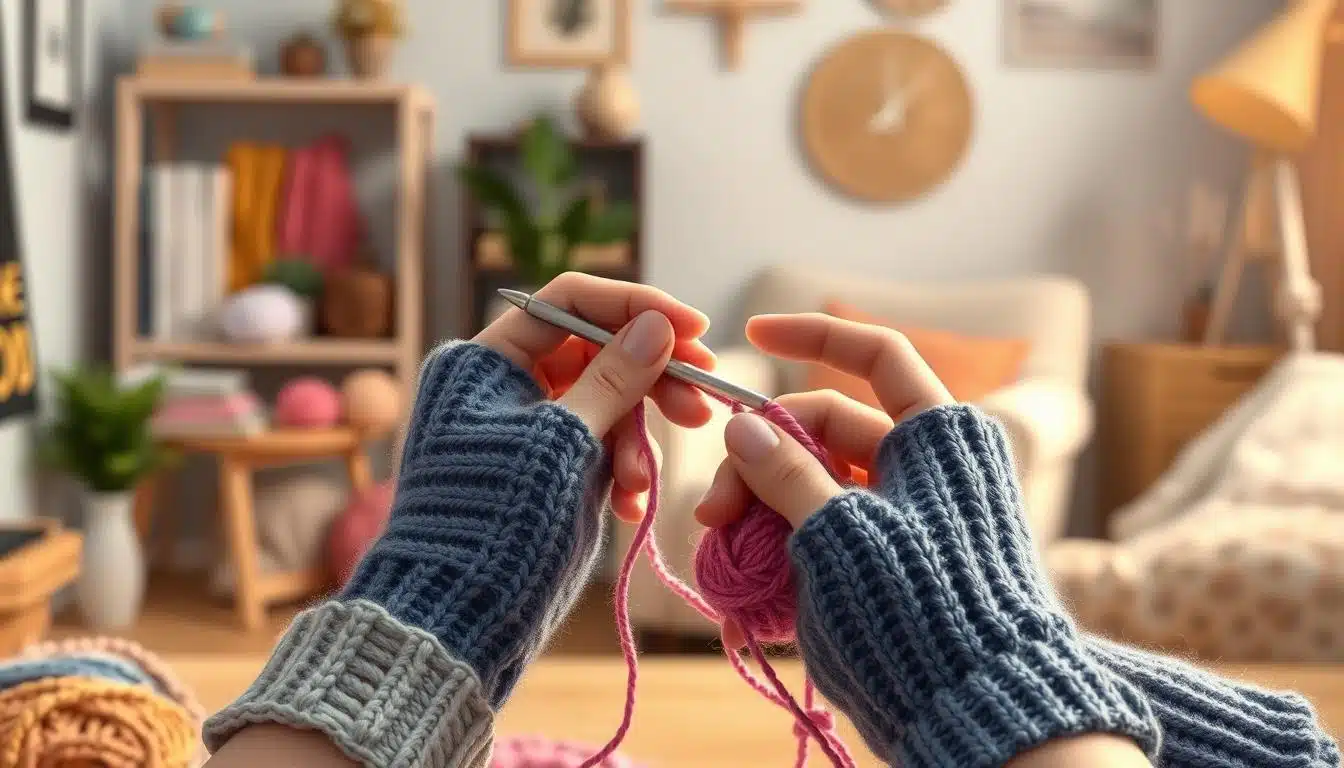
You love the quiet rhythm of yarn and hook, but wrist pain can make it hard. This guide offers maker-friendly tips to ease pain and keep you creating. You won’t have to give up your favorite stitches.
This is like a crochet ergonomics toolkit. It includes quick warm-ups, breaks, and moves to release your forearm. You’ll also learn about swapping gear, like using different hooks and gloves, to reduce strain.
Dr. Kenneth Brooks advises on when to use heat or ice. He also tells you when to see a physical therapist for further help. The goal is to reduce pain, restore function, and keep your creativity flowing.
You’ll hear from others who have recovered with self-care. You’ll also learn when to act fast to avoid bigger problems. This is about preventing injuries while keeping your craft enjoyable and sustainable.
Key Takeaways
- Practical self-care and ergonomics can dramatically reduce wrist pain from crocheting.
- Short breaks, warm-ups, and forearm release techniques help prevent flare-ups.
- Switching hook types and using compression gloves or braces supports recovery.
- Use heat before stitching and ice after intense sessions, per Dr. Kenneth Brooks’ guidance.
- See a medical professional if numbness, weakness, or persistent pain appear.
Why Your Wrists Hate Marathon Stitching (and What You Can Do)
Long crochet sessions are fun, but they can hurt your wrists. The constant motion can cause tiny tears and swelling in tendons and their sheaths. Over time, this can lead to tendonitis or tenosynovitis, making it hard to crochet.
How repetitive motion leads to tendonitis, tenosynovitis, and carpal tunnel
Each stitch puts stress on the same tendons. The body tries to fix these small injuries during breaks. But, this can make the tendons thicker and irritate the sheath, leading to tendonitis or tenosynovitis.
Pressure on the wrist can also harm the median nerve. This can cause numbness, tingling, or weakness in the thumb and first two fingers. Some bloggers ignore early signs but end up needing physical therapy.
Why forearm tightness often causes wrist pain downstream
The muscles controlling your fingers are in your forearm. Tightening these muscles from crochet, typing, or lifting can strain the tendons at the wrist. This strain can lead to pain and reduced movement.
Forearm tightness often starts with mild soreness. If ignored, it can turn into persistent wrist pain. Taking regular breaks is key to avoiding this.
Signs to watch for so you can act before it gets worse
Look out for sharp pain near the thumb, hand cramps, and soreness after stopping. Dropped stitches and weaker grips are also warning signs.
Numbness or tingling in your fingers is a sign of carpal tunnel. If rest and basic care don’t help, see a doctor. Many find relief with physical therapy, splints, or changing their crochet style.
For tips and stories on fixing hand pain, check this resource: crochet hand pain guide.
crochet wrist pain relief: Practical Strategies That Actually Work
If your wrists hurt after crocheting, you need a plan. These strategies are quick, easy, and stop pain before it gets worse. Use them between projects to keep your hands happy and your hooks moving.
Short, consistent self-care routines that prevent flare-ups (Pomodoro-style breaks)
Set a timer for 25–30 minutes and take breaks. When it goes off, stand up, shake your hands, and do quick forearm releases. This breaks the cycle of repetitive strain and helps your posture.
Consistency is key, not long, rare sessions. Do two to five minutes of gentle stretches and a brief massage after each break. Bloggers and makers see improvement with this routine. For more tips, check out ergonomic knitting tips.
When to ice, when to heat — and how to time both around your stitching
Learn when to use ice vs heat for tendonitis. Use heat for five to ten minutes before starting to loosen stiff joints. A warm pack or warm water makes your wrists more flexible before crocheting.
After crocheting, switch to ice to reduce inflammation. Fifteen minutes with a cold pack can lessen soreness and swelling. Alternating between heat before and ice after helps manage pain and keeps your wrists mobile.
How to tell when home care is enough and when to see a medical pro
Start with home tools like Pomodoro breaks, gentle forearm massage, posture checks, and compression gloves. Try ergonomic tweaks to your grip and hook size. Avoid heavy chores that stress your wrist, like carrying groceries or pulling a dog leash.
If pain lasts despite home care, or if you notice numbness, weakness, or a drop in function, seek help. Talk to your doctor, a physical therapist, or an orthopedist. Many makers who delayed care needed imaging, physical therapy, or injections to recover. If unsure about when to see a doctor for wrist pain, it’s better to err on the side of early assessment to avoid a longer recovery.
| Strategy | When to Use | Benefit |
|---|---|---|
| Pomodoro crochet breaks | Every 25–30 minutes | Reduces repetitive strain and enforces movement variety |
| Pre-session heat | 5–10 minutes before stitching | Improves flexibility and reduces stiffness |
| Post-session ice | 15 minutes after long sessions | Controls inflammation and soreness |
| Short daily drills | Multiple times per day | Prevents flare-ups and strengthens movement patterns |
| Professional evaluation | Persistent pain, numbness, weakness | Accurate diagnosis and targeted treatment |
Use these tactics together for the best results. Small changes, done often, are better than big fixes that come too late. For more exercises and routines, see crochet hand pain resources.
Forearm Release and Self-Massage Techniques
Changing how your wrist feels starts with freeing tight forearm muscles. A focused forearm release can ease tendon tension that affects the wrist. Many stitchers report feeling better almost instantly, sometimes even feeling a subtle pop or shift.
Start with simple self-massage for wrists during your 25–30 minute breaks. Use short sessions to keep up with them. Slow and gentle pressing works better than a quick rub.
Why loosening forearm muscles helps wrist pain
Your forearm controls your fingers and wrist motion. Tight extensors can pull on the common extensor tendon, causing wrist pain. A targeted forearm release can quickly reduce this pull and ease pain.
Step-by-step: thumb press and sawing motion
Sit with your forearm supported. Use your thumb to press along the top and bottom surfaces from wrist to elbow. Hold firm but not painful pressure on tender spots for 20–30 seconds.
After pressing, make a slow sawing motion down the muscle, keeping downward pressure. Repeat on both sides of the forearm. Do this during each break to prevent flare-ups and support long-term forearm release.
Step-by-step: ball rolling technique
Rest your forearm on a table. Place a lacrosse, tennis, or bouncy ball under the muscle. Use your other hand to press the forearm onto the ball and roll from elbow to wrist.
When you find a sore spot, pause and hold pressure for 20–30 seconds. Rolling across top and bottom surfaces reaches different fibers. Regular lacrosse ball massage often hits deeper knots than a tennis ball.
Tool comparison: lacrosse ball vs. tennis ball vs. bouncy ball
| Tool | Feel | Best use |
|---|---|---|
| lacrosse ball | Firm, focused | Deep forearm trigger point release and precise work |
| tennis ball | Softer, larger contact | Gentle rolling when you need less intensity or wider coverage |
| bouncy ball | Medium firmness, portable | Balanced pressure for on-the-go self-massage for wrists |
For a guided approach, check a focused write-up on Spot No. 5 and forearm extensors at forearm extensor trigger points. The article explains anatomy and practical tips that pair well with the techniques above.
Use the tool you have so you don’t skip self-care. Many makers reduce or eliminate tendonitis by combining regular forearm release with targeted exercises or physical therapy. Short, consistent sessions win over occasional marathon treatments.
Ergonomic Tweaks to Your Hook, Grip, and Tension
Small changes can make a big difference in reducing wrist strain. Try adjusting your tools and habits. Keep notes and choose what works best for you. The goal is to feel more comfortable while crocheting.
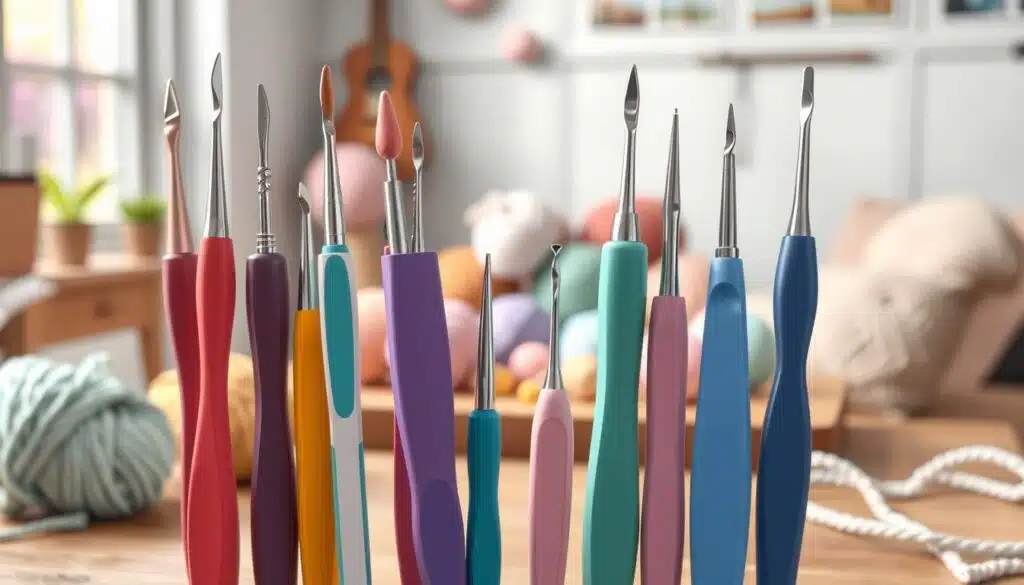
Begin with your hook. Experiment with ergonomic and weighted hooks to see how they affect your grip. Furls hooks have sculpted handles that distribute pressure evenly. Clover hooks have padded grips to reduce fatigue.
If new gear is out of reach, try wrapping foam or a hair curler around your hook. This can make it feel larger and more cushioned.
Play with different grip styles. Try the knife vs pencil hold for short periods. The knife hold can stabilize your wrist, while the pencil hold allows your fingers to relax. Switching between them can help reduce strain and slow your pace.
Focus on crochet tension tips that really matter. Tight tension can cause repetitive strain. Loosen your yarn and try larger hook sizes to reduce pulling. Some crocheters find that dropping one hook size and relaxing tension keeps the fabric neat and reduces strain.
Weighted hooks can also help if you tend to crochet too fast. A heavier handle requires less grip and can make your motion smoother. Try using a weighted hook for a session and note any changes in discomfort, speed, and stitch quality.
Make short trials to find what works best for you. Use different ergonomic tools and grips for a few sessions each. Track your pain level, stitch quality, and work speed. This data will help you choose the best ergonomic setup.
Use simple DIY fixes until you can buy new tools. Foam tubing, fabric wrap, or cushioned tape can make a basic hook more comfortable. These cheap changes can often provide relief while you explore more expensive options.
Keep a small log of your experiments. Record the hook, grip, and tension you use. After trying several combinations, you’ll notice patterns. This will help you create a personalized ergonomic plan that suits your hands and favorite stitches.
Smart Posture and Workstation Setup for Longer, Pain-Free Sessions
Set up your crafting space so your body helps your hands, not fights them. Small changes to chair height, table level, and lumbar support can make a big difference. Think of workstation ergonomics as a team: when the base is right, your hands get the rest they deserve.
Chair, lumbar support, and table height adjustments for crafting comfort
Choose a chair with firm lumbar support for crafters or add a lumbar cushion. This keeps your lower back in its natural curve. Adjust the seat so your knees are about level with your hips.
Your table should let your forearms rest flat while you work. A too-high or too-low surface forces awkward wrist angles and raises the chance of strain.
Body alignment tips so your shoulders, neck, and back don’t sabotage your wrists
Keep your back straight and your shoulders relaxed and down. Tuck your chin so your neck stays neutral. When you avoid hunching forward you stop your shoulders and neck from changing hand mechanics.
This helps your wrists stay in a healthier position for longer.
Small props (pillows, footrests) that make a big difference
Use rolled towels or small pillows under your forearms to reduce unsupported wrist extension during long sessions. A footrest can take pressure off your lower back and improve overall posture. Try a laptop stand or lap tray to lift work into a comfortable zone instead of leaning over your lap.
Make posture checks part of your crafting routine. Use your Pomodoro breaks to reset alignment and test small adjustments. These habit changes reinforce good crochet posture and save you from repeating strain.
For a simple ergonomic add-on that helps wrist comfort during computer-based design or pattern work, consider an ergonomic mouse wrist rest. The Virtusx Ergonomic Mouse Wrist Rest uses a soft silicone-like material that conforms to your wrist and glides smoothly, providing a practical boost to long sessions and linking back to broader workstation ergonomics in your crafting setup. Learn more on how small tools protect wrist health at ergonomic wrist rest info and find tips for crochet-specific hand pain at crochet hand pain guidance.
| Adjustment | Why it helps | Quick how-to |
|---|---|---|
| Chair height and lumbar support | Maintains spine curve and reduces forward hunch that changes wrist angles | Set seat so feet touch floor, add a lumbar cushion at the small of the back |
| Table height and arm support | Keeps forearms supported to prevent excessive wrist extension | Adjust table so forearms rest lightly; use rolled towels if needed |
| Neck and shoulder alignment | Prevents compensation that transmits tension down to wrists | Keep chin neutral, shoulders down, and check alignment every 25–30 minutes |
| Small props (pillows, footrests) | Redistributes pressure and improves overall posture mechanics | Place pillows for elbow support, use footrest to relieve lower back |
| Work surface aids (stands, lap trays) | Brings work into view without hunching, improving crochet posture | Use a lap tray or craft stand to raise projects to eye level |
Warm-Ups, Stretching, and Mobility Routines for Crafters
Before you start crocheting, take two minutes to get your wrists and fingers ready. Do some wrist circles, finger bends, and light grip squeezes. Shake your hands to boost blood flow and lower injury risk. These simple exercises are loved by many crocheters.
Quick pre-session warm-ups to increase blood flow and flexibility
Begin with slow wrist circles in both directions for 30 seconds. Next, tap each finger five times, then squeeze a soft ball for 15–30 reps. This two-minute routine gets your tendons and nerves ready for easier stitching.
Hand and wrist stretches to do during your 25–30 minute breaks
During your breaks, stretch your wrist flexors and extensors, and do the prayer stretch for your palms. Also, gently glide your tendons and do finger pulls and wrist rotations. These stretches should be done every 25–30 minutes to keep your hands relaxed and blood flowing.
Full-body stretches (neck, shoulders, hips) to relieve downstream tension
Don’t forget to stretch your whole body. Tight shoulders or a stiff spine can lead to wrist strain. Try neck rolls, shoulder openings, and hip moves to keep your body flexible.
For guided stretches, Yoga with Adriene has great videos. They help improve flexibility and reduce tension. Use these videos with your warm-ups and forearm stretches for the best protection against pain.
Make a simple routine: warm-up, forearm release, posture reset, then stitch. Repeat this during each break to keep your hands flexible and your projects pain-free. For more on crafting and wellbeing, check out crochet for mental health.
Supportive Gear: Braces, Compression Gloves, and Aids Worth Trying
Hours of crafting can make your wrist ache. The right gear can help you keep creating without pain. Tools like gloves and splints offer support and protection.
When to pick gentle support versus rigid splinting
Compression gloves are perfect for crafting sessions. They provide warmth and support without limiting finger movement. A wrist splint is better for when you need to stop motion and let tissues heal.
Choose gloves for support and movement. Opt for a splint for rest and protection.
Tendinitis straps, nighttime braces, and temporary immobilizers
A tendinitis strap helps by shifting force away from sore areas. It’s great for forearm or elbow pain. Nighttime braces keep your wrist in a neutral position while you sleep.
Temporary immobilizers are good after injuries. Use them briefly to avoid losing strength from rigid supports.
DIY handle covers and budget-friendly ergonomic add-ons
DIY ergonomic covers can be affordable. Use foam tubing or hair curler foam for a quick fix. Add fabric or duct tape for extra grip.
Try different covers for comfort. Look for a balance between support and dexterity.
| Aid | Primary Benefit | When to Use | Trade-offs |
|---|---|---|---|
| Compression crafting gloves | Mild compression, warmth, reduced swelling | During crafting to reduce fatigue and numbness | Limited immobilization; relief often stops when removed |
| Wrist splint for crocheting | Immobilizes wrist, reduces tendon strain | Nighttime use or severe flare-ups | Makes fine crochet awkward; may limit craft time |
| Tendinitis strap | Offloads tendon, targets forearm pain | Elbow/forearm tendonitis or activity that aggravates tendons | Localized relief only; must be positioned correctly |
| Ergonomic handle cover | Increases handle circumference, lowers pinch force | Long sessions, gaming, or heavy projects | Some DIY versions wear faster than commercial grips |
Learn more about compression gloves at compression glove research. Try gear in short bursts and avoid any that restrict circulation.
Lifestyle Triggers and Daily Habits That Make Pain Worse
Small routine moves can undo hours of careful self-care. Spotting lifestyle triggers wrist pain helps you cut the worst offenders out of your day. Think beyond crocheting: groceries, dog walks, and heavy lifting can all stack strain onto the same tendons you’ve been treating.
Other activities that compound hand and wrist strain
Carrying grocery bags on your dominant side puts constant load on injured tissue. Holding a leash with one hand keeps your wrist in a tense posture for long stretches. Repeated lifting when you’re tired or rushed amplifies irritation. Swap hands when you can and use wheeled totes or backpacks to reduce repetitive loading.
How sleep, stress, and overall fitness influence recovery
Poor sleep slows tissue repair and makes pain feel worse. High stress keeps muscles tight and raises pain sensitivity. Being sedentary limits blood flow and delays healing. Improve sleep hygiene, try short breathing breaks, and keep light cardio in your week to speed recovery factors in your favor.
Strategies to offload repetitive tasks and protect your dominant hand
Alternate hands for routine chores to protect dominant hand from nonstop use. Use ergonomic tools, like rolling grocery carts and padded leash handles. Schedule full rest days from crocheting so inflamed tissues get real downtime. If knitting or piano shifts the load, try those as cross-training to rest sore muscles while staying creative.
| Daily Habit | Why It Hurts | Quick Fix |
|---|---|---|
| Carrying grocery bags | Loads tendons on one side, causes uneven strain | Use wheeled totes or distribute weight between both hands |
| Holding a dog leash | Prolonged grip keeps wrist in awkward position | Switch hands often; try a hands-free leash or padded handle |
| Household lifting | Repetitive bends and lifts fatigue forearm muscles | Bend at knees, keep items close to the body, ask for help |
| Poor sleep and high stress | Slower healing and higher pain sensitivity | Set a sleep routine, practice 5-minute relaxation breaks |
| Using dominant hand nonstop | Prevents tissues from resting and remodeling | Alternate tasks, schedule rest days, try cross-training |
Keep a short log of your worst pain moments. That helps you spot hidden triggers so your massage and stretching gains aren’t undone by daily habits. Use small swaps to reduce hand strain daily tasks and you’ll protect dominant hand while improving recovery factors over time.
When to Seek Professional Help and What to Expect
If your wrist hurts more than usual, don’t ignore it. Look out for numbness, weakness, or trouble with fine motor skills. Severe pain that doesn’t get better with rest means it’s time to see a doctor.
At your doctor’s visit, they’ll try to find what’s causing your pain. They might check how well your wrist moves and your grip strength. They’ll also ask about your crocheting and daily activities to understand your symptoms better.
If they think there’s a structural problem, they might order imaging tests like X-rays or MRIs. This helps them see what’s going on inside your wrist.
They’ll likely give you a plan to help you feel better. This might include physical therapy to improve your wrist’s movement and strength. A therapist will teach you how to crochet safely and suggest exercises to keep your wrist healthy.
If you need quick relief, they might suggest a cortisone injection. This depends on your diagnosis and medical history. They might also recommend a splint or brace to protect your wrist while it heals.
If your symptoms don’t improve, they might suggest more tests or a surgical consultation. This is to prevent any long-term damage to your wrist.
- Red flags that require prompt evaluation: constant numbness or tingling, worsening weakness, loss of dexterity, or pain that resists home care.
- Typical assessment items: strength and range checks, provocative tests for tendon and nerve problems, review of crafting posture and whole-body contributors.
- Treatments you may meet: targeted physical therapy, bracing, cortisone injections, wrist imaging, and stepwise referrals if needed.
Your role is to share your symptoms and follow the treatment plan. Good doctors will use a mix of self-care, braces, exercises, and procedures to help you crochet comfortably again.
Conclusion
This summary offers a simple plan to help you today. Take breaks of 25–30 minutes, do short warm-ups, and massage your forearms. Also, try ergonomic hooks and grips until your hands feel steady.
Small changes in posture and your workspace can make a big difference. Plus, DIY handle covers are affordable and often work quickly.
Being consistent is key: daily self-care and habits can prevent tendonitis. But, don’t let pain sneak back by being too sporadic. Stretch, ice or heat when needed, and use compression gloves or an Ace brace if your symptoms get worse.
Always listen to your body and avoid heavy shopping or repetitive lifting. Try the steps mentioned here, invest in ergonomic tools when you can, and get professional help if numbness or weakness doesn’t go away.
Be smart, not a martyr; small, regular changes will help you crochet without pain.
FAQ
Why do my wrists hurt after long crochet sessions?
Crocheting can hurt your wrists because of the repetitive motions. These motions cause tiny injuries and swelling in the tendons. This can lead to tendonitis or tenosynovitis.
Also, poor wrist posture can compress the median nerve. This can cause numbness and tingling in your hands. Tight forearm muscles from crocheting can also increase tendon tension at the wrist and thumb base.
What early signs should make me stop and change something?
Look out for sharp pain at the thumb joint and cramping in your hands or forearms. Also, watch for persistent soreness, decreased grip strength, and numbness or tingling. These signs mean your tissues are irritated and need a break.
How can I prevent flare-ups while getting projects done?
Use short, consistent self-care routines. Set a timer for 25–30 minutes, then stop to stretch and check your posture. Warm up with wrist circles and grip squeezes before starting.
Keep your sessions predictable and frequent. Daily tiny drills, like forearm massage and stretches, are better than infrequent intense sessions.
When should I use heat and when should I use ice?
Use heat before activity to loosen tissues and reduce stiffness. Ice after activity to reduce inflammation and soreness. Warm your hands and wrists briefly if you feel stiff.
Apply an ice pack to sore spots after a long session. This is advised by orthopedic surgeons like Dr. Kenneth Brooks.
How do I know if home care is enough or if I should see a pro?
Home care should improve symptoms within days to weeks if done consistently. If pain persists, seek a physician or physical therapist. They can help if rest and home care don’t work.
Why does massaging my forearm sometimes make my wrist feel better right away?
The forearm muscles control finger and wrist movements. Tight muscles increase tendon tension at the wrist and thumb base. Massaging the forearm can release tension and ease pain.
What exactly are effective forearm self-massage techniques?
Try the thumb-press and sawing technique. Press along the forearm from wrist to elbow with your thumb, then use a sawing motion. Add ball rolling: rest your forearm on a table, place a ball under the muscle, and roll it while applying pressure.
Repeat these during your breaks for best protection.
Which ball should I use for ball rolling?
Use a lacrosse ball for deep muscle release. Tennis balls are softer and larger. Bouncy balls are in the middle and portable. Use what you have for consistency.
Do ergonomic hooks and bigger handles really help?
Yes. Ergonomic and weighted hooks reduce grip force and slow motion. This lowers repetitive stress. Larger, cushioned handles reduce pinch grip.
If you can’t invest right away, DIY handle covers work well.
Should I change my crochet grip to avoid pain?
Experiment with different grips. Switching between knife and pencil hold recruits different muscles. This can slow your pace and give stressed tendons a break.
How does adjusting tension or hook size affect wrist strain?
Tight tension forces repetitive microstrain. Loosening tension or trying a different hook size can reduce strain. Some designers change hook size or technique to ease strain.
What posture and workstation tweaks help most?
Sit with good lumbar support and relaxed shoulders. Adjust seat and table height for forearm support. Use props like lumbar cushions and armrest pillows.
What warm-ups and stretches should I do before and during sessions?
Do wrist circles, finger flexion/extension, and light grip squeezes before starting. During breaks, stretch your wrists and forearms. Use a stress ball for finger strength.
Combine these with forearm releases for best protection.
Are compression gloves or wrist splints useful while crafting?
Compression gloves provide support and warmth. They can reduce fatigue and swelling. Wrist splints or braces are better for immobilization.
Be mindful that braces can make crocheting awkward. Use them strategically.
What are tendonitis straps and when should I use them?
Tendonitis straps offload tendon load at the elbow or forearm. Use them for localized tendon relief. They’re not a long-term fix but can reduce pain while you rehab.
What daily habits commonly make wrist pain worse?
Carrying heavy bags, holding a dog leash, and certain lifting patterns can strain your wrists. Poor sleep, high stress, and low fitness slow healing. Offload tasks and use aids while recovering.
How can I keep crocheting while protecting my hands from other daily activities?
Alternate hands for chores and use carts for shopping. Switch leash hands and schedule rest days. Cross-train with activities that recruit different muscles.
If I need medical care, what will a clinician check and treat?
A clinician will assess range of motion, strength, and tendonitis tests. They’ll examine your crafting mechanics. Treatments include PT exercises, manual therapy, and ergonomic retraining.
They may also use splinting, injections, or imaging if needed.
Can self-care really resolve tendonitis, or will I need injections or surgery?
Many makers recover fully with consistent self-care and PT. Daily forearm release, stretches, and ergonomic changes are often enough. Some cases may need injections or surgery if conservative care fails.
Any quick behavior tips that make a big difference?
Be a clever maker, not a martyr. Set regular breaks and offload other tasks. Switch grips or tools during recovery. Use DIY handle padding if needed.
Consider investing in ergonomic tools once you know what helps.
How often should I do the thumb-press and ball-rolling drills?
Do them during every break — roughly every 25–30 minutes. Repeat at the end of your session. Consistency is key: makers who eliminated tendonitis often credit daily drills and PT.
What should I do if I feel numbness or progressive weakness?
Treat numbness or weakness as an urgency cue. Stop aggravating activities and seek professional assessment promptly. This is to avoid worsening and get targeted treatment.