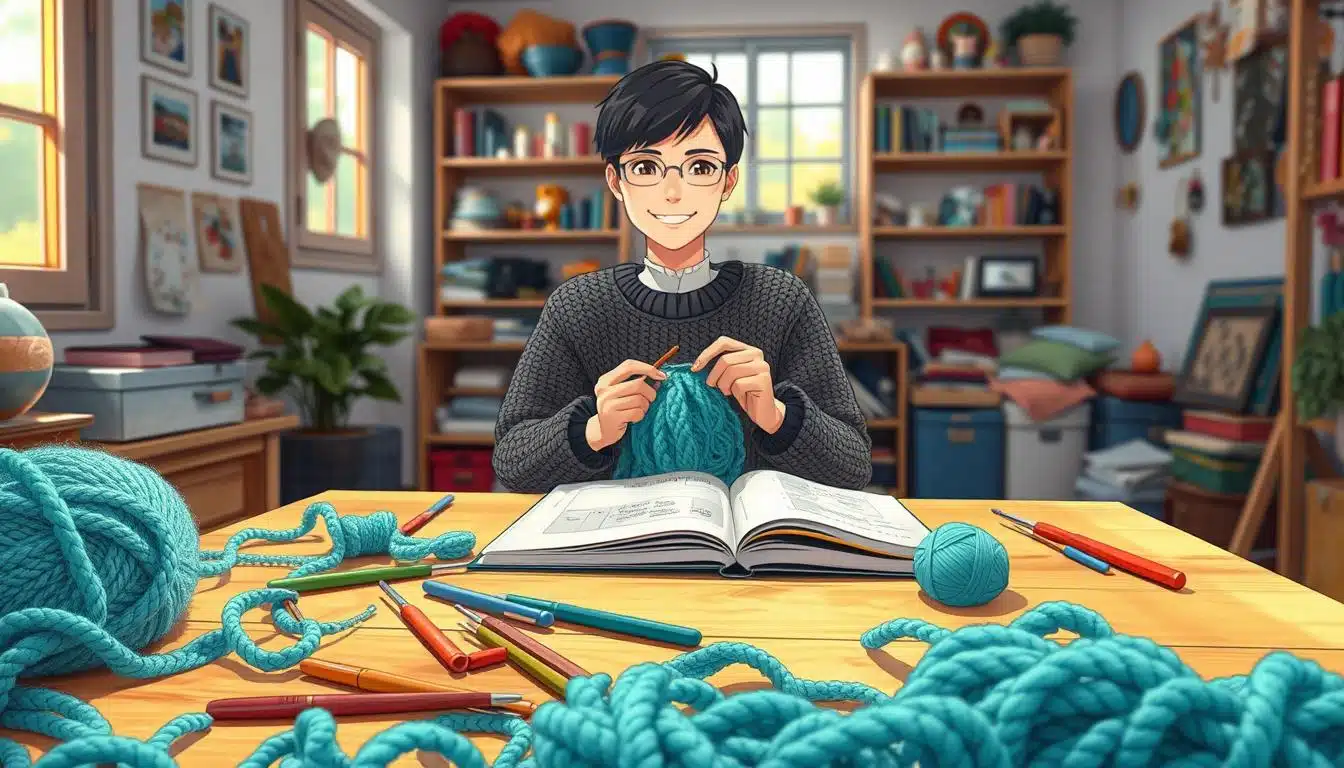
Welcome! You’re about to start your crochet journey. This guide will show you the basics in a fun way. You’ll learn how to crochet and start projects without getting tangled up.
First, you’ll learn how to hold your hook and yarn. Then, you’ll make a slip knot and a neat chain. Next, you’ll stitch single crochet and turn rows. You’ll also learn to finish your project and weave in ends.
Choosing the right supplies is important. You’ll need worsted weight yarn and a 5.5mm / I-9 hook. This will help you start your project with confidence.
This guide uses tips from experienced teachers. You’ll learn how to make a slip knot, count chains, and stitch single crochet. For a quick refresher, check out this primer: how to crochet for absolute beginners.
Key Takeaways
- Begin with the right supplies: worsted weight yarn (size 4) and a 5.5mm / I-9 hook.
- Master holding the hook and yarn first to keep stitches even.
- Make a slip knot and tidy chains before moving on to single crochet.
- Practice a small sample to learn turning rows and keeping stitch count.
- Finish neatly by pulling off, cutting, and weaving in ends with a yarn needle.
Why Crochet Is Perfect for You: Benefits and Beginner Appeal
Crochet is not just for experts. It’s for anyone who wants to create something special. You can make quick gifts and work on bigger projects. This mix of creativity and usefulness is why crochet is great.
Creative and practical reasons to learn
With a hook, you can make hats, scarves, and more. Single crochet is a great starting point. Small projects finish fast, making useful gifts.
Stress relief and mindful crafting
Crochet calms the mind with its repetitive motions. It’s like meditation with yarn. This helps you relax and learn without stress.
Project possibilities for beginners — from dishcloths to blankets
Start with simple projects like squares or a scarf. These teach you the basics. Then, join squares to make a blanket. Mistakes add character to your work.
Choose easy patterns and a comfy yarn. As you crochet, you’ll enjoy the process and feel more relaxed. This shows why crochet is worth trying.
What You Need to Start: Essential Crochet Supplies and How to Choose Them
Ready to start? Grab a few basic crochet supplies and you’ll be stitching in no time. A clear yarn label tells you the weight, fiber content, and the recommended hook size. Reading that label helps match yarn and hook, avoiding tension surprises.
Yarn basics and reading the yarn label
Look at the yarn label for three key things: weight number, fiber type, and suggested hook. The weight number (4 means worsted) helps match stitch size to pattern. Fiber content—cotton, acrylic, wool, or blends—affects feel and drape.
The recommended hook on the label gives a good starting point for tension and gauge.
Choosing a beginner-friendly yarn
For a first project, choose a medium-weight yarn. Worsted weight yarn (size 4) is forgiving, shows stitches clearly, and speeds learning. Brands like We Crochet Brava Worsted are common in tutorials for a reason: they behave predictably for practice.
Pick a light, solid color so you can see your stitches easily.
Selecting your first hook — metric and US sizing explained
Hooks have both US and metric numbers. A 5.5mm hook equals US I-9 and pairs well with worsted weight yarn. Try a comfortable, ergonomic model like Clover Amour if your hands cramp.
Keep an extra hook in a different material—aluminum for slick yarns, bamboo for a bit of grip.
Other must-haves: scissors, yarn needle, stitch markers, and a comfy chair
Sharp scissors make tidy ends. A yarn (darning) needle helps you weave in tails so projects look finished. Use locking stitch markers to mark row starts and repeats.
Light and an adjustable, supportive chair keep your shoulders relaxed and tension steady.
Practical tip: if your chains are too tight, switch to a larger hook; if they’re too loose, try a smaller one. For a quick guide to essential items and choices, check this helpful list at crochet supplies.
| Item | Why it matters | Beginner recommendation |
|---|---|---|
| Yarn | Determines stitch visibility and ease of handling | Worsted weight yarn (size 4), light color |
| Hook | Controls gauge; comfort affects practice time | 5.5mm (US I-9), ergonomic like Clover Amour |
| Scissors | Tidy cut for neat finishes | Small, sharp pair |
| Yarn needle | Weaving in ends prevents unraveling | Metal darning needle, blunt tip |
| Stitch markers | Keep track of rounds and pattern repeats | Locking or split ring markers |
| Seating and light | Comfort maintains relaxed tension | Supportive chair and bright task light |
How to Hold Your Hook and Yarn: Comfort Tips and Common Holds
Getting comfortable with your hook and yarn makes crochet more fun. Your grip affects speed, control, and stitch shape. Here are quick tips on how to hold your hook and yarn for relaxed hands and even stitches.
Pencil hold versus knife hold — pros and cons
The pencil vs knife hold debate is about feel. The pencil hold grips the hook like a pencil. It’s great for fine control and delicate stitches.
The knife hold rests the hook in your palm, feeling like a butter knife. Many find it easier on the wrist for long sessions. Try both to see which fits your posture and project.
Keeping relaxed tension: how your yarn wraps affect stitch size
Tension controls stitch size and fabric drape. Wrap yarn around your pinky then across the index finger to feed evenly. Aim for loops that slide with mild resistance.
If your chains are too tight, inserting the hook is hard. If they’re too loose, stitches look lumpy. Use these tips during warm-up rows to keep tension steady.
Left-handed and right-handed tips — adapt techniques to your comfort
Tutorials usually show right-handed crochet, but left-handed is just a mirror. Mirror the motion and keep turning your work the same way each row for neat edges.
Ambidexterity can help. If you learn from videos at CrochetCraze, you can adapt patterns and practice with mirrored guidance by visiting learn crochet online.
| Grip | Best for | Common issue |
|---|---|---|
| Pencil hold | Precision, small hooks, decorative stitches | Finger fatigue on long sessions |
| Knife hold | Speed, larger hooks, long projects | Less fine control on tiny stitches |
| Hybrid wrap | Balanced control and comfort | Requires practice to find ideal wrap |
Keep your hands loose and change grips if you feel tension. Use these tips to learn how to hold your hook, explore different holds, and make crochet comfortable for you.
Make a Slip Knot: Start Your Project the Right Way
Before you start chaining, learn to make a slip knot. It should slide smoothly on your hook. A good slip knot helps with tension and saves you from undoing your work later. Keep your tail about 3–4 inches for easy weaving or securing.
Step-by-step: Loop the yarn twice around your finger. Pull the back loop over the front. Slide the loop onto the hook, then pull the tail to tighten the knot. Make sure it’s snug but not too tight.
Practice adjusting the tail length. A tail that’s too short makes securing ends hard. Too long and you waste yarn. Aim for 3–4 inches for most projects.
Step-by-step written slip knot technique you can master
Hold the working yarn in your right hand and the tail in your left. Make a small loop and place it on the hook. Pull the tail until the knot is snug. Test the loop by sliding it up and down the hook; it should move freely.
Adjusting tail length and making a slip knot that actually slips
If your slip knot is stuck, loosen it and re-tension. Watch the loop move on the hook. Pull the tail gently to tighten the knot, not the loop. Leave a 3–4 inch tail for weaving and seaming.
When to use a slip knot vs. a magic ring
Most flat-row patterns use a slip knot unless specified. Use it for scarves, blankets, and chain-started items. For amigurumi and round motifs, use a magic ring. Knowing when to use each helps in choosing the right start.
If you like video demos, check Crochet Craze. They offer clear beginner resources to help you practice.
Beginner’s Chains: How to Crochet a Chain That Works for You
Start with a relaxed grip and a slip knot on your hook. Begin by yarn over and pulling through the loop on the hook. Keep repeating this to get the length you want. Practice until your chain has a small, even hole and the hook slides through each stitch without force.
Creating the first chain stitch
With the slip knot ready, wrap the yarn from back to front over the hook. Then, pull that loop through the loop already on the hook. This makes one chain stitch. Keep your wrist loose and use consistent yarn wraps for neat “V” shapes.
Common chain mistakes and quick fixes
If your hook won’t pass through a chain, you likely made the chains too tight. Try relaxing your grip or using a larger hook for practice. If chains gape, wrap the yarn a bit firmer or try a slightly smaller hook. Uneven chains usually come from inconsistent yarn wraps or gripping the yarn too tightly. Slow down and focus on the wrap and pull rhythm until it feels natural.
Counting chains and where to start
The loop on your hook does not count as a chain. Count only the completed chain stitches—the visible V shapes. When a pattern asks for a turning chain, remember that extra chain often acts as the first stitch height and is counted differently in finishing rows. For example, many patterns use 11 chains to give you 10 working stitches after the turning chain is considered.
| Issue | What to check | Simple fix |
|---|---|---|
| Chains too tight | Hook won’t fit through, fabric pulls | Relax grip, try a larger hook, practice loose wraps |
| Chains too loose | Huge gaps, uneven tension | Tighten yarn wrap slightly, use smaller hook, steady hand position |
| Uneven chains | Different sizes along the row | Slow your rhythm, keep consistent yarn wraps, practice |
| Counting confusion | Does the loop on hook count? | Do not count the loop; count only completed V-shaped stitches |
| Turning chain questions | Extra chain for turning rows | Follow pattern notes; one extra chain often acts as the first stitch height |
Single Crochet Stitch: The First Basic Stitch You’ll Use
Ready to master the SC stitch? This guide will teach you the essential move. You’ll learn how to single crochet, find the right spot to insert your hook, and create a neat practice crochet square.

Step-by-step technique
Begin with a chain. Put your 5.5mm Clover Amour hook into the second chain from the hook. Yarn over and pull up a loop, so two loops are on the hook. Yarn over again and pull through both loops. This makes one single crochet stitch.
Need a quick refresher? Check out this single crochet tutorial for photos and tips. It suggests using We Crochet Brava Worsted yarn for better definition.
Where to insert and why the “V” matters
Look for the tiny V’s at the top of the chain. Work into the center/top of each V for even edges. If a pattern asks for front or back loops, insert correctly. Skip the first chain next to the hook when starting a new row to keep edges neat.
Practice crochet square exercise
Start with a chain of about 21. Single crochet into each chain across for 20 SC in the first row. Turn with a chain-1 turning chain and keep going until your strip is the height you want.
Count the V’s at the top of each row to check your stitch count. Keep your tension even. Repeat until you have a square or several strips to join into a blanket.
Troubleshooting tips for neat results
If your edges are uneven, make sure you skipped the correct first chain and are inserting into the V. If stitches seem tight, try a slightly larger hook or relax your grip.
With practice, you’ll see how quickly the SC stitch builds fabric. Try this method next time you want to see real progress in a short afternoon.
Turning Rows and Building Fabric: How to Work Multiple Rows
The turning chain is a key helper when moving from one row to the next. It helps the hook reach the right height for the next single crochet row. Chain 1 at the start of single crochet rows to keep your work flat and neat.
After finishing a row, start with a chain 1, then turn your work the same way each time. This consistent rhythm helps keep your work smooth. Continue until your fabric reaches the desired length.
To keep your crochet edges looking good, always insert your hook into the top of the stitches. Turning in the same direction for each row ensures straight sides. If you accidentally turn the wrong way, your edges will be uneven.
It’s important to keep track of your stitch count to avoid mistakes. Check the V’s at the end of each row to ensure you haven’t missed or added a stitch. Finding errors early can save you from having to unravel a lot of work. If you notice a mistake, fix it before moving on.
Here’s a simple practice outline to build steady fabric and reliable edges:
- Row start: Chain 1 (turning chain).
- Turn your work in the same direction every time.
- Insert under the first V next to the chain-1.
- Work each stitch into the tops (both loops) to preserve even crochet edges.
- At row end: Count V’s to confirm maintaining stitch count.
| Step | What to Do | Why It Helps |
|---|---|---|
| Chain 1 | Place one chain before turning | Sets hook height so rows line up and the fabric lies flat |
| Turn Work | Flip the piece and keep the same turning direction | Prevents twists and keeps edges straight |
| Insert in First V | Work into the stitch next to the chain-1 | Keeps row starts consistent and avoids gaps |
| Work into Tops of Stitches | Insert under both loops across the row | Produces clean, even crochet edges |
| End-of-Row Count | Count V’s to confirm stitch number | Maintains stitch integrity and makes mistakes easy to fix |
Finishing Techniques: How to Finish Off and Weave in Ends Like a Pro
You’re almost there. The last few steps turn a pile of stitches into a polished piece. Good crochet finishing keeps your work neat, prevents curling, and makes your handmade item look store-bought. Use these tips to finish off crochet work cleanly and to weave in ends so they vanish into the fabric.
To finish, yarn over as if for a chain and pull the loop out about an inch. Cut the yarn leaving roughly two inches of tail. Pull that tail through the loop on your hook to secure the FO crochet. This simple finish off crochet method locks stitches without bulk.
Thread the remaining tail into a yarn needle. Work the tail through the back or bottom rows, inserting the needle through the tops of stitches and following the path of the fabric. Do not pull too tight. Leaving a little slack preserves drape and stops distortion.
Weave along multiple rows or go back and forth to anchor the tail. Trim close to the work after weaving. If a tiny bit peeks out, gently stretch the row to tuck it under. These steps help you weave in ends so they don’t show and avoid curling at edges.
For joins and seams, use a mattress stitch or whip stitch with matching yarn. Stitch through seam lines and hide tails inside the seam to create tidy, sturdy joins. When you need invisible joins for blankets, join squares with the same-color tail threaded and sewn so the seam looks seamless.
Common Beginner Mistakes and Troubleshooting Tips
Every crocheter hits snags. This guide helps you spot and fix issues quickly. So, your project stays fun, not frustrating.
Fixing tight chains, missed stitches, and extra stitches
If your chains are tight, try a larger hook. Tight crochet tension often comes from how you wrap yarn. Experiment with fewer wraps until the chain feels even.
Count the V shapes at each row end to check stitch counts. If they don’t match, find the problem by tracing back row by row. To fix missed stitches, gently pick up the missed loop with your hook. Or, rip a few rows back if that’s quicker. For a guided refresh, check this beginner crochet guide.
When to rip back versus when to frog
Small errors need a quick rip back a row or two. This is less painful and gets you to the problem fast. For mistakes spread across many rows or uneven gauge, frog crochet. Pull the yarn and undo large sections to start again cleanly.
When frogging, keep a tidy tail for a neat slip knot. This makes rejoining simpler and avoids a lumpy restart.
Choosing the right hook size to rescue tense or loose tension
Swap hook sizes to fix fabric density. Move up one size to loosen tight stitches. Drop down a size to tighten loose stitches. Use the yarn label’s recommendation as your baseline and tweak from there.
Look for visual clues before changing hook size. Curling edges or large gaps mean your turning chain use or stitch placement is off. Make sure you’re working into the correct part of the stitch—the V top or one of the loops—so the fabric lies flat.
Quick checklist for smart crochet troubleshooting
- Relax your grip if chains feel tight; try a larger hook.
- Count V’s at row ends to find missed or extra stitches.
- Rip back a little for small mistakes; frog crochet for widespread issues.
- Adjust hook size to correct crochet tension and fabric drape.
- Work into correct stitch parts and use proper turning chains to avoid curling and gaps.
Keep practicing, be curious about yarn and technique. Don’t let one crooked row stop you. With a few troubleshooting moves, you’ll learn to fix missed stitches, tame crochet tension, and turn frogging into a simple reset instead of a disaster.
crochet for beginners
You’re ready to start real projects. Begin with small, easy pieces to build confidence. These projects will teach you the basics without frustration.

Start with a practice square. Make several to use as coasters or join into a blanket. Dishcloths are great for learning even tension and work up quickly.
Try a simple scarf next. It will help you master longer rows and understand how edges behave. You’ll also learn how to switch hooks or yarn.
Learn basic crochet abbreviations first. You’ll see CH for chain, SC for single crochet, and YO for yarn over. Most patterns assume you know a slip knot unless they specify a magic ring.
Use both video tutorials and written patterns for faster learning. Videos show hand movement and tension. Written patterns give exact stitch counts and row instructions. Watch a short video, then read the pattern to confirm.
Set a short practice plan. Make several squares, a dishcloth, and a scarf over a few weekends. When ready, try a small 3D toy to learn the magic ring and shaping.
- Practice square: repeat rows of SC to master consistency.
- Dishcloth: switch colors, practice edges, learn finishing.
- Simple scarf: steady rows for rhythm and gauge control.
Use good tools to help you progress. Clover Amour hooks and We Crochet Brava Worsted yarn are great choices. Many designers share free SC-based patterns on blogs and social channels.
| Project | Skills Practiced | Why It’s Good |
|---|---|---|
| Practice square | Chains, SC, counting rows, finishing | Fast feedback, perfect for coasters or sampler blankets |
| Dishcloth | Even tension, edges, color changes | Durable, useful, forgiving of small mistakes |
| Simple scarf | Long rows, turning chains, consistent gauge | Shows how stitches behave over length; great practice |
Keep a small notebook for pattern notes. Write down unclear abbreviations and video timestamps. This will save you time when you revisit a pattern later.
Conclusion
You’ve made it to the end of our beginner crochet guide. You now know how to choose the right supplies, like worsted weight yarn and a 5.5mm (I-9) hook. You’ve learned to make a slip knot, chain, single crochet, and more. You also know how to fix common mistakes without getting stressed.
Now, it’s time to practice with small projects like squares, dishcloths, or scarves. Use written patterns and YouTube videos for help. Channels like Make & Do Crew and The Crochet Crowd have great tutorials.
As you get better, try different hooks and yarns. Keep your stitches loose and count the V’s in each row. Don’t be afraid to start over if something doesn’t feel right. With practice, you’ll soon make a cozy blanket or a special gift.
FAQ
What supplies do I need to start crocheting?
Start with the basics: worsted weight yarn and a 5.5mm / US I-9 hook. A Clover Amour is a good choice. You’ll also need sharp scissors, a yarn/darning needle, and stitch markers. Choose a comfy chair and a well-lit area. Read the yarn label for the right weight and hook size. We Crochet Brava Worsted is a great yarn for beginners.
Why is worsted weight yarn recommended for beginners?
Worsted weight yarn is easy to see stitches with and works well with mid-size hooks. It’s forgiving for beginners and great for quick projects like dishcloths and scarves.
How do I hold the hook and yarn—pencil or knife grip?
Try both grips. The pencil grip is precise, while the knife grip is more controlled. Choose what feels natural to you.
How do I make a proper slip knot?
Leave a 3–4 inch tail. Make two loops, pull the back loop over the front, slide the loop onto the hook, and pull the tail to snug the knot. It should slide up and down the hook easily.
When should I use a slip knot versus a magic ring?
Use a slip knot for flat rows and most projects. Use a magic ring for starting in the round, like for amigurumi. Patterns will tell you which to use.
How do I make a chain stitch?
Start with a slip knot on your hook. Yarn over and pull through the loop. Repeat to make the needed chains. Don’t count the loop on your hook as a chain.
My chains are too tight or too loose—how do I fix them?
If chains are too tight, relax your grip or use a larger hook. For too loose chains, tighten your wrap or use a smaller hook. Adjust your yarn wrap to steady your tension.
How do I do a single crochet (SC)?
Insert the hook into the second chain from the hook. Yarn over and pull up a loop. Yarn over again and pull through both loops. That’s one SC. Work into the center/top of the chain “V” for even stitches.
Where exactly do I insert the hook in a chain or row?
Insert into the top of the stitch—the V at the top of the chain or the top loops of the previous row. When instructed, you may work into front or back loops. Skipping or adding edge stitches changes your stitch count, so count V’s to verify.
What is a turning chain and how many should I make?
For single crochet rows, use chain 1 as your turning chain. It brings the hook to the right height for the next row and helps keep edges straight. After chaining 1, turn your work and insert into the first V of the previous row (usually the stitch next to the chain-1).
How do I keep my edges straight across rows?
Turn your work the same way every row, work into the tops of stitches consistently, and use a chain-1 turning chain for SC. Count stitches at the end of each row—catching a missed or extra stitch early prevents uneven edges.
How do I finish off and weave in ends neatly?
To finish, yarn over, pull a loop out about an inch, cut leaving ~2 inches, and pull the tail through the loop to secure. Thread the tail onto a yarn needle and weave through several rows on the back, going back-and-forth to hide and secure it. Don’t pull too tight or you’ll distort the fabric.
How long should the starting tail be?
Leave about 3–4 inches when you begin. That gives you enough yarn to weave in cleanly or secure the start. When finishing, leave ~2 inches to weave in comfortably.
How do I know when to rip back versus frog my work?
Rip back a few rows to fix a small, recent mistake. Frog (rip it out entirely) when errors are widespread or tension is consistently wrong. Keep the tail so you can restart cleanly with a slip knot.
How can I troubleshoot missed or extra stitches?
Count the V’s at the end of each row. If the count is off, trace back to find where you skipped a V or added an extra stitch. Correct immediately—small fixes are easier than dealing with compounded errors later.
What hook size should I use if my tension is too tight or too loose?
Use a larger hook to loosen tight stitches and a smaller hook to tighten loose ones. The yarn label recommendation (e.g., 5.5mm / I-9 for worsted) is a good starting point—then tweak based on your tension and desired fabric density.
What beginner projects should I try first?
Start with practice squares, dishcloths, and a simple scarf. These use chains, single crochet, turning rows, and finishing. Practice squares can be joined into a blanket later—turn mistakes into cozy wins.
How do I follow a simple pattern and abbreviations?
Learn common abbreviations: CH = chain, SC = single crochet, YO = yarn over. Patterns assume you know basic techniques like making a slip knot unless they specify a magic ring. Combine written steps with short video demos to see motion and tension.
How can crochet help my stress or focus?
Repeating stitches, steady hand movements, and relaxed focus create a meditative flow. Small practice exercises like making squares help build muscle memory and calm you down while you learn.
Any practical tips to keep my stitches even?
Keep your hands relaxed, experiment with wraps around your pinky and index to regulate yarn feed, turn work consistently, and count V’s often. If chains are stubborn, try changing hook size or adjusting grip until stitches slide comfortably.
Where can I find beginner-friendly yarns and hooks?
Look for brands like We Crochet (Brava Worsted) for yarn and Clover Amour for hooks. Many designers and makers publish free beginner patterns and video tutorials on blogs and YouTube to pair with written instructions.