
You’re about to start a new habit: learn to sew without the extra stuff. This short intro covers the basics so you can follow a clear stitch tutorial and learn sewing fast.
This is like a friendly guide for beginners. You’ll learn when hand stitching is better than a machine, how to pick the right thread for your fabric, and simple ways to make seams neat. Start with small steps, like practicing running and backstitch, then move on to finishing techniques that make your project look great.
Small steps like pressing, cutting straight, and marking seam allowances can make a big difference. If you want to learn about invisible finishes, check out the ladder stitch guide here: ladder stitch hand-sewing tutorial. It shares tips on stitch spacing and thread length to make closures almost invisible.
Before starting projects, think about taking a Sewing 101 course to learn your machine and basic skills. With that foundation and a beginner sewing guide, you’ll go from simple repairs to pillow finishes and soft toys with confidence.
Key Takeaways
- Start with Sewing 101 to learn your machine and core sewing basics.
- Keep hand stitches even—about 1/4″ spacing or smaller for invisible seams.
- Use thread 2–3 times the gap for ladder or invisible stitches and knot securely.
- Match thread color and press seams to hide hand stitching.
- Practice simple running and backstitch before attempting invisible finishes.
Why You’ll Love Learning to Sew
When you pick up a needle or turn on a Singer, you start something special. You learn skills that help you save money and make things that fit your life perfectly. Sewing means having smaller wardrobes, custom home decor, and fewer trips to the mall.
Right from the start, you’ll see the benefits. A quick baby blanket or a fast tote can replace things you buy and teach you to sew fast. Making pillow covers, table runners, and clothes lets you pick the fit, fabric, and color. This shows you can save money and stay stylish.
Save money and customize your wardrobe
Custom-made clothes avoid the flaws of off-the-rack items. Simple changes like shorter sleeves or hem adjustments can make an item last longer. Choosing your fabric and cut means your clothes fit better and suit your life. This saves money in the long run.
Therapeutic benefits and creative satisfaction
Sewing has a calming effect. It reduces stress and gives you a productive way to relax. Small achievements, like a neat seam or a pressed hem, boost your confidence. They encourage you to tackle bigger projects like quilts or bags.
Perfect gifts and home décor you made yourself
Handmade gifts are special and last longer than store-bought ones. Basic stitches and techniques like the ladder stitch make your gifts look professional. Once you master these, your handmade items will impress everyone.
Stitch Tutorial
Ready to sharpen your sewing skills? This guide will show you the basics, when to use a needle by hand, and how to hide seams. Follow these easy steps for your next project.
What counts as a basic stitch
Basic stitches are essential for most projects. You’ll use the running stitch for quick seams, backstitch for durability, and satin stitch for small shapes. The ladder stitch is key for finishing edges and closing openings.
There are over 300 embroidery stitches, but you only need a few to start. For a quick guide, check out this embroidery stitches list. It shows common stitches and when to use them.
When to choose hand stitching vs. machine stitching
Decide between hand and machine sewing based on the project. Machines are best for long seams, quilts, and projects needing consistent tension. Modern Brother or Singer machines save time and ensure sturdy results.
Hand stitching is better for small repairs, delicate fabrics, and precise work. It’s slower but perfect for invisible stitching, fine control, and soft curves. Hand stitching is ideal for appliqué or toy repairs.
Matching thread to fabric for invisible results
Invisible stitching requires tiny stitches, matching color, and even spacing. Aim for about 1/4″ or smaller stitch spacing and thread that blends with the fabric’s color.
Test your stitches on a scrap, whether sewing by hand or machine. Use fine thread for lightweight cottons and heavier polyester for denim. Press seams flat and align allowance lines before stitching for better invisibility.
| Use | Stitch Types | Best Method | Tip for Invisible Stitching |
|---|---|---|---|
| Quick seams | Running stitch, straight machine stitch | Machine | Short stitch length, match thread color |
| Durable seams | Backstitch, lockstitch | Machine for long runs, hand for repairs | Consistent tension, secure start/end |
| Filling and surface work | Satin stitch, long & short stitch | Hand or machine depending on design | Layer stitches, keep edges neat |
| Invisible closures | Ladder stitch (invisible stitch), slip stitch | Hand | Small spaced stitches, match thread to fabric |
| Dots and texture | French knots and small knots | Hand | Tension control, use stabilizer if needed |
Must-Have Supplies for Beginner Sewists
Begin your sewing adventure with a starter kit that’s useful. Choose a few key supplies for both hand and machine sewing. These small, smart picks make projects quick and fun as you learn.
Essential tools: needles, scissors, seam ripper, pins
Start with quality sewing needles, sharp scissors, a seam ripper, and straight pins. Good needles help with hand stitches. Sharp scissors are key for clean cuts.
Keep a small pincushion and seam ripper handy. Pins keep layers steady and prevent fabric shifts. These tools make sewing smoother and faster.
Choosing the right thread and fabric precuts
Match your thread to your fabric for seamless seams. Cut thread carefully to avoid knots. For machine sewing, polyester thread works best on most fabrics.
Fabric precuts like fat quarters and jelly rolls are great for testing patterns. They save time and let you try different colors and sizes.
Best sewing machines for beginners and kids
Look for machines with basic stitches and presser feet. Brands like Brother and Singer have easy-to-use models. A lightweight machine is perfect for kids or travel.
Choose a machine that’s durable and supports your learning. With the right tools, you’ll sew more and learn faster.
Sewing Basics: Understand Terms and Techniques
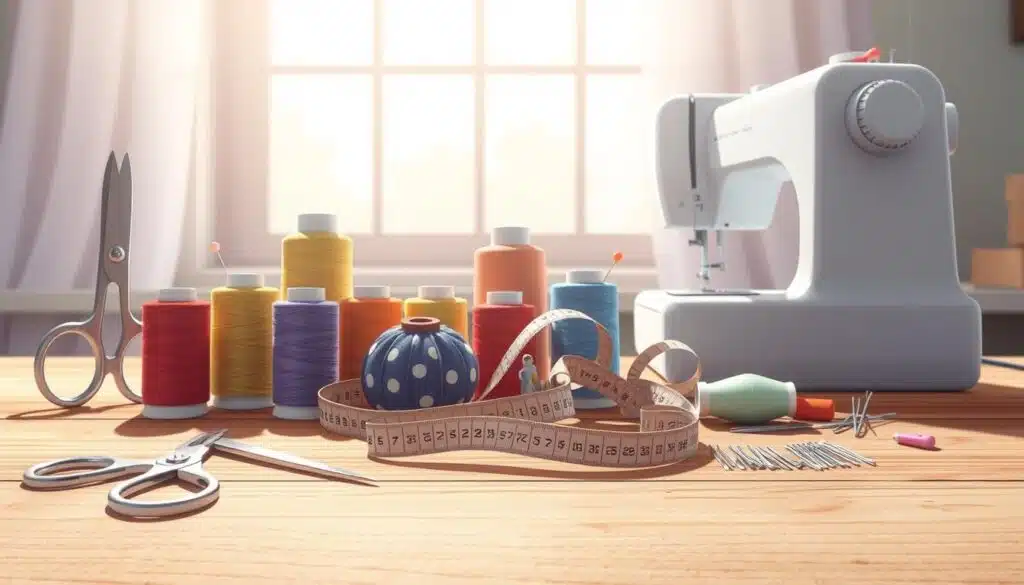
You’re about to learn the core sewing terms that make patterns easy to understand. Start with backstitch, topstitch, and presser foot names. Also, learn about seam allowance. Knowing these will speed up every project and make instructions easier to follow.
Common sewing terms every beginner should know
Keep a short glossary by your machine. Backstitch locks seams; topstitch adds strength and a finished look. Presser feet have names like zipper foot and walking foot and they change how fabric feeds. Learn what a grainline means and where the seam allowance sits on a pattern piece.
How to press the right way and why it matters
Pressing is not ironing. Use a hot iron and a pressing cloth for delicate fabrics. Press seams flat before you finish them. Good pressing prevents puckering and gives crisp edges that make a project look professional.
For tricky textiles such as velvet or chenille, mark the seam allowance with chalk or a fabric pen instead of heavy steaming. That helps when you must hand-finish. Learn how to press fabric in short bursts and test on scraps first.
How to cut straight and mark seam allowances
Cutting straight starts with a clear layout and a sharp rotary blade or scissors. Use a ruler, or mark a finger-width guide to check alignment as you cut. Small, steady cuts beat long, wild swings.
Mark seam allowance in 1/4″ increments for precision when basting or doing ladder stitch. When you start a hand stitch, begin about 1 cm from the raw edge and keep spacing even. Those tiny habits make beginner sewing techniques look expert fast.
Hand Stitching Techniques You’ll Use Daily
With a small kit and patience, you can do a lot. Hand stitches are key for quick fixes and fine details. Master a few essential stitches, and your projects will look professional.
Running stitch for quick seams
The running stitch is perfect for basting and simple seams. A good tutorial shows you to start with a knot, then stitch about 1 cm from the edge. Keep your stitches even, about 0.5 cm apart. This method is quick and holds fabric layers while you sew.
Backstitch for strength and durability
Choose backstitch for seams that need to last. It’s strong because it overlaps. Start with a knot, then stitch forward and back into the last stitch. Keep your stitches short for a sturdy seam that withstands wear and tear.
Ladder stitch (invisible stitch) for finishing toys and pillows
The ladder stitch closes openings without showing. Press the seam flat and mark the edges. Take small stitches across both sides, pulling gently to close the gap. A good tutorial will show you how to hide the knot so it’s not visible.
Practice these stitches on scraps and small projects. By mastering running stitch, backstitch, and ladder stitch, you’ll make repairs and finishes fast and almost invisible.
Easy Projects to Build Your Confidence
You want to sew something useful fast. Start with small wins that teach seams, finishing, and pressing. These beginner sewing projects give quick payoff and build skills you reuse on larger makes.
Pick a baby item to begin. Burp cloths and simple loveys use straight seams and require little cutting. Many baby sewing patterns include video walk-throughs and live sew-alongs that answer common questions as you work.
Quick baby projects: burp cloths and 15-minute blankets
Make an Easy Burp Cloth in under an hour to practice neat corners and topstitching. The popular 15-minute blanket teaches quick binding and edge finishing without fancy tools. Using precuts or fat quarters reduces cutting time so you can focus on stitch quality.
Kid-friendly makes: pillowcase dresses and art smocks
Pillowcase dresses are forgiving and fast. A pillowcase dress pattern adapts to sizes with little measuring, making it perfect for gifts. Art smocks and no-slip headbands let you practice hems and elastic channels while making a wearable item.
Home projects: pillow covers, table runners, and coasters
Square pillow covers and fat quarter pillow covers teach zipper insertion and turning techniques. Table runners and scrappy coasters use straight seams and pressing, so you learn consistent seam allowances and crisp edges. Making your own pillow form helps you fit cushions precisely.
| Project | Skill Focus | Time | Why It Helps |
|---|---|---|---|
| Easy Burp Cloth | Straight seams, topstitch | 30–60 min | Teaches seam allowance and neat corners |
| 15-minute blanket | Binding, quick finishing | 15–20 min | Builds confidence with fast, polished result |
| Pillowcase dress | Simple shaping, hemming | 1–2 hours | Uses a pillowcase dress pattern for easy sizing |
| Art smock | Elastic channels, basic fit | 1–2 hours | Great for practicing curveless construction |
| Square pillow cover | Zipper, turning, pressing | 1–2 hours | Introduces zippers and professional finishing |
| Scrappy coasters | Small seams, quilting basics | 30–45 min | Use scraps to practice even stitch spacing |
When you lack a machine, hand sewing can produce polished items. Use matching thread, keep stitch spacing consistent, and finish with the ladder stitch to close pillows or soft toys without visible seams.
Try one project a week. Each completed make strengthens your skills and makes easy home sewing feel natural.
Bags, Zippers, and Pouches: Demystifying the Zipper
Zippers are easier to understand when you break them down. Start with a simple zipper pouch. This lets you practice aligning tape, setting stops, and moving the slider without stress.
Simple zipper pouches to practice insertion
Begin with an Easy Zipper Pouch. Use scrap fabric and a coil zipper. This lets you remove stops, swap sliders, and practice topstitching until seams are flat.
Hand finishing is key when your machine doesn’t work. Keep a needle and matching thread ready.
30 Days of Zippers approach to build skill fast
Focus on one zipper technique each day. The 30 days of zippers method helps you practice different types of zippers. You’ll get better at installing them by doing it a few times with small changes.
For a clear guide on zipper basics, check this zip-bag primer: zip bag chapter. It explains parts and prep in simple terms, including stops, insertion pins, and measuring length.
Make a lined tote or a 10-minute tote for practical practice
Once you’re comfortable with a zipper pouch, try a lined tote. This pattern teaches you to place a zipper between layers and finish seams neatly. A 10-minute tote is great for quick practice. Then, remake it with lining and a zipper to see how pressing and seam allowances change the look.
| Exercise | Skills Practiced | Why It Helps |
|---|---|---|
| Mini zipper pouch | Installing short coils, removing stops, slider swaps | Low-stakes practice for insertion and alignment |
| Pencil pouch with topstitch | Topstitching, matching thread, finishing ends | Improves edge control and visible seam quality |
| 15-minute lined tote | Quick assembly, basic lining, simple zipper insertion | Builds speed and confidence for bigger bags |
| 10-minute tote upgrade | Attaching a zipper in a lined opening | Bridges pouch techniques to beginner bag sewing projects |
| Practice series (30-day) | Multiple zipper types, RS/WS installs, invisible zips | Repetition creates muscle memory and reduces mistakes |
Keep your practice sessions short and focused. Use the zipper tutorial method: practice specific moves, mark seam allowances, press seams, and evaluate each try. This pattern will make sewing a lined tote or a beginner bag feel natural, not daunting.
Intro to Quilting and Quilt Blocks for New Sewists
Quilting might seem daunting at first. But, start with small steps and learn the basics. Focus on keeping your seams consistent, pressing well, and using precuts to cut fabric faster. These tips make quilting fun and easy for beginners.
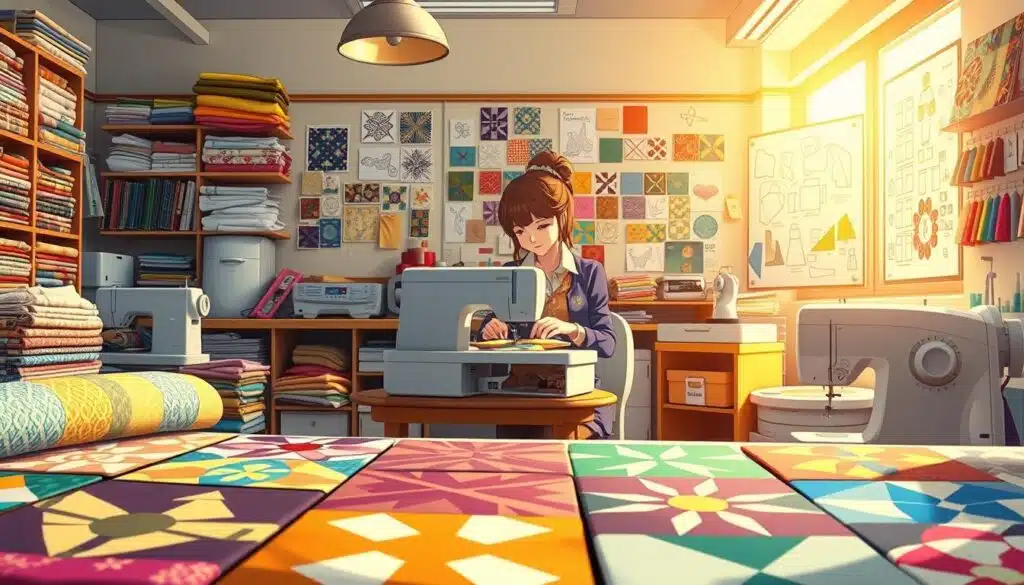
Choose one simple project and follow it step by step. Sew What Alicia recommends starting with a basic quilt plan. Watch a video or use a pattern like the Subway Tile Quilt Top to see how it’s done.
Start here: how to make a quilt and basic quilt terminology
Learn key terms like block, sashing, backing, batting, and binding. Practice one block type until it fits perfectly. Use a 1/4″ seam allowance and press seams as the pattern suggests. This way, your blocks will match up well.
Paper piecing and easy quilt blocks to practice precision
Try a paper piecing tutorial for better accuracy. Sewing on printed paper helps you place seams exactly right. Start with small blocks like geese or pinwheels. Press each seam carefully to keep your blocks sharp and even.
Cheater rag quilts and whole cloth quilts for low-stress quilting
For quick results, try a cheater rag quilt. It uses simple stitching and little cutting. Choose soft flannel and sew straight lines for a cozy quilt.
A whole cloth quilt is great for learning finishing skills. With a uniform surface, you can focus on quilting patterns and binding. Use free-motion quilting or a walking foot to practice steady stitching. This builds your confidence and teaches you useful finishing techniques.
Troubleshooting Common Stitching Mistakes
As you learn to sew, you’ll make mistakes. Don’t worry, they’re a chance to learn. Check your pressing, seam allowances, and cutting straightness first. Sew What Alicia and many tutorials say these are key to avoiding mistakes.
Why puckering happens and how to fix it
Puckering occurs when tension, feed, or stitch length is wrong. Use a longer stitch and lower top tension for thin fabrics. Press seams flat before and after sewing to keep things straight.
To fix puckering, try stitching wider, ease the fabric, or use a finer needle. For tough spots, hand-baste first, then machine-stitch for a smooth finish.
Dealing with uneven or visible hand stitches
Uneven stitches happen from bad spacing or starting too close. Re-thread and knot well. Aim for 0.5 cm spacing and steady tension for even stitches. Match thread color to fabric to avoid visible thread.
Use the ladder stitch for invisible joins on cushions and toys. Mark equal spacing and keep stitches parallel. If hand stitching looks bad, undo and restitch with a guiding line. A quick swatch can save your work.
When to rip and redo: tips for clean repairs
At times, the best fix is to rip and redo. Remove bad stitches, re-press the seam, and re-mark allowances. Good seam rip tips include sliding the blade under just a few threads at a time to avoid fabric damage.
For repair sewing, finish by anchoring thread tails: stitch back to the previous stitch, loop around it, triple-knot, and bury the tail inside the seam. If visible knots remain, clip and tuck them for a neat finish.
For more practical demos and live fixes, check a helpful guide on mastering common fixes at repair sewing tips. Use videos and sew-alongs to watch real-time fixes and avoid repeating sewing mistakes.
Conclusion
You began with Sewing 101, learning basic terms and getting the right supplies. You started with small projects like 15-minute blankets and zipper pouches. Using precuts saves time, and live sew-alongs help you learn faster.
Remember, sewing in short, steady sessions is better than trying to do too much at once. This approach helps you make progress without feeling overwhelmed.
Now, let’s talk about basic hand-stitching. First, prepare your thread and knot it well. Start stitching away from the edge and keep your stitches even. Finish with tight knots to secure your work.
It’s also important to match your thread color to the fabric. This makes your seams look cleaner and more professional.
Next, practice the ladder stitch for a smooth finish. Always press your seams and mark them. Use small stitches and tighten them to close the seam. Finish by burying the thread tail with a triple-knot.
Start with small projects and gradually move to bigger ones. Try a 30 Days of Zippers plan to improve your skills. This will help you go from simple repairs to making custom clothes, quilts, and gifts. Keep sewing and you’ll see your skills grow.
FAQ
What is the quickest way to get started with sewing?
Start with a Sewing 101 course to learn your machine and core basics. Gather must-have supplies like needles, scissors, and pins. Then, pick tiny projects like a 15-minute baby blanket or a simple zipper pouch.
Use fabric precuts to skip heavy cutting. Join video sew-alongs to see real-time fixes.
What counts as a basic stitch I should learn first?
Learn the running stitch for quick seams and the backstitch for strength. Also, learn simple topstitching for finishes. Familiarize yourself with stitch names and functions through a Sewing Terms for Beginners guide.
When should I hand stitch and when should I use the sewing machine?
Choose hand stitching for closures, repairs, and delicate fabrics. Use the sewing machine for long straight seams and quilting layers. Many projects combine both.
How do I make hand stitching look professional and invisible?
Match your thread color to the fabric and keep stitch spacing consistent. Start about 1 cm from the raw edge and knot securely. Finish with a secure knot and a short tail.
For invisible closures, use the ladder (slip) stitch with 1/8″–1/4″ spacing. Press seams flat, mark seam allowance lines, tighten to close the gap, triple-knot, and bury the tail.
What tools do I need for hand finishing like the ladder stitch?
You’ll need a suitable hand needle, matching thread, and a marking pen or chalk. Also, a ruler or a marked finger for even spacing, and an iron for pressing seams. These tools improve alignment and invisibility.
How much thread should I use for hand stitching and ladder stitch?
For hand stitching, cut a comfortable length—usually no more than arm’s length. For ladder stitch, use thread 2–3 times the gap you need to close. This allows for secure knots and weaving the tail inside the seam.
What are the must-have sewing supplies for beginners?
Essentials include sharp fabric scissors, hand needles, and a seam ripper. Also, pins or clips, measuring tools, an iron and pressing board, and a good starter thread. If you plan to machine sew, choose a beginner-friendly machine.
How do fabric precuts help a beginner?
Precuts like fat quarters, charm packs, and jelly rolls let you practice without committing to large yardage. They reduce cutting time and simplify fabric coordination. Ideal for quick projects like pillow covers and small quilt blocks.
Which beginner sewing machines are best for kids and absolute beginners?
Look for machines with simple controls and a reliable straight stitch. Also, a zigzag option and clear presser foot attachments. Brands like Brother and Singer often have models tailored to beginners and kids.
What common sewing terms should I learn right away?
Start with backstitch, topstitch, seam allowance, and presser foot names. Also, learn the running stitch and ladder (invisible) stitch. Knowing these terms makes tutorials and patterns easier to follow.
How do you press the right way and why does it matter?
Press seams flat with an iron before finishing. Pressing sets seams, reduces bulk, and makes hand finishes neater. For tricky fabrics, use marking tools to define seam allowances.
What’s the best way to cut straight and mark seam allowances?
Use sharp cutting tools, a ruler or rotary cutter, and a cutting mat. Mark seam allowances with chalk or a washable fabric pen. A consistent seam allowance is key for accurate blocks and garments.
How do I sew a running stitch correctly?
Thread and knot securely, start about 1 cm from the raw edge, and keep even stitch spacing. Finish with a secure knot. Running stitch is great for basting and simple seams.
Why and when should I use a backstitch?
Use backstitch when you need machine-like strength in a hand-sewn seam. It’s for repairs, garment construction, or any seam that will take stress. It overlaps stitches for durability.
How exactly does the ladder (invisible) stitch work?
Press the seam, mark seam allowance lines, and use small horizontal stitches on alternating sides of the gap. Keep spacing about 1/8″–1/4″ for invisibility. Pull the thread to close the gap, finish with a triple knot, and bury the tail inside the seam.
What are the best starter projects to build skills fast?
Try burp cloths, a 15-minute baby blanket, a 10-minute tote, simple zipper pouches, and square pillow covers. These projects reinforce cutting, pressing, and simple finishes.
How should I practice zippers without getting discouraged?
Start with simple zipper pouches to practice insertion. Follow a step-by-step series—like a 30 Days of Zippers approach—where you build zipper skills with small, repeatable projects.
What quilting projects are best for new sewists?
Begin with how-to-make-a-quilt basics, then try paper piecing for accuracy. Start with simple quilt blocks, cheater rag quilts, or whole cloth quilts. Precuts and straight-line sewing reduce complexity.
Why does my fabric pucker and how do I fix it?
Puckering often comes from uneven stitch length, incorrect tension, or starting too close to the edge. Rethread, stabilize the fabric, press seams flat, and maintain even stitch spacing. If puckering persists, rip the stitches, re-press, re-mark, and resew with consistent tension.
My hand stitches are visible and uneven—what should I do?
Match your thread color to the fabric, keep stitch spacing even, and practice on scraps. For invisible finishes, use smaller stitches (1/8″–1/4″), press seams, and if needed, remove sloppy stitches and restitch.
When should I rip out seams and redo them?
Rip and redo when stitches are uneven, puckering occurs, seams don’t align, or the finish looks unprofessional. Use a seam ripper, re-press the fabric, re-mark seam allowances, and sew again with consistent spacing and tension. Ripping cleanly is often the fastest route to a neat result.