
You might have started knitting for a sweater or a gift. But it’s more than that. Knitting for relaxation is about letting go of goals. It taught me to be present, stitch by stitch.
Your focus shifts from making something to the simple act of knitting. This change is key to mindful knitting.
Retreats like Making Zen Online Retreat show the power of hands-on practice. Teachers share not just techniques but ways of being. Knitting becomes a tool for dealing with life’s ups and downs.
Even simple techniques, like the Kitchener Stitch, teach us about method and rhythm. This article offers tips for making knitting a calming practice. You’ll learn to make each row a moment of presence.
Key Takeaways
- Knitting shifts focus from finished items to the making process, fostering mindful knitting.
- Practical retreats and classes teach being, not just technique, showing knitting’s therapeutic potentials.
- Slow craft practices like Kitchener Stitch create meditative rhythm for knitting meditation.
- Mindful knitting can help you move through grief, reconnect with joy, and reshape daily life.
- This series offers witty, practical knitting advice to make your stitch time more restorative.
Why Knitting Is a Mindful Practice: The Zen of Slow Craft
When you pick up needles, you start a journey that values the journey over the end result. Each stitch is a chance to focus again, just like in meditation. This simple act trains you to catch distractions and stay present.
Knitting and meditation share a common thread. Both require focus and a steady pace. By paying attention to your hands and yarn, you can let go of distractions. This shift helps you find peace in the moment.
Slow crafts offer quick benefits. Just ten minutes of knitting can transform your day. It’s like taking a short meditation break, but with yarn. Make these moments a regular part of your day.
Knitting engages your senses. The sound of needles, the feel of wool, and the sight of colors all help you stay focused. Use these sensory cues to anchor your mind and feel more connected to your work.
Choose a knitting pattern that suits your goals. Simple patterns like ribbing help you stay present. More complex ones, like lace, challenge your focus. Both offer chances to practice mindfulness.
For more on the connection between craft and meditation, read this essay. It explores how paying attention to your hands and materials can deepen your connection to the world.
Find the Right Posture and Intention
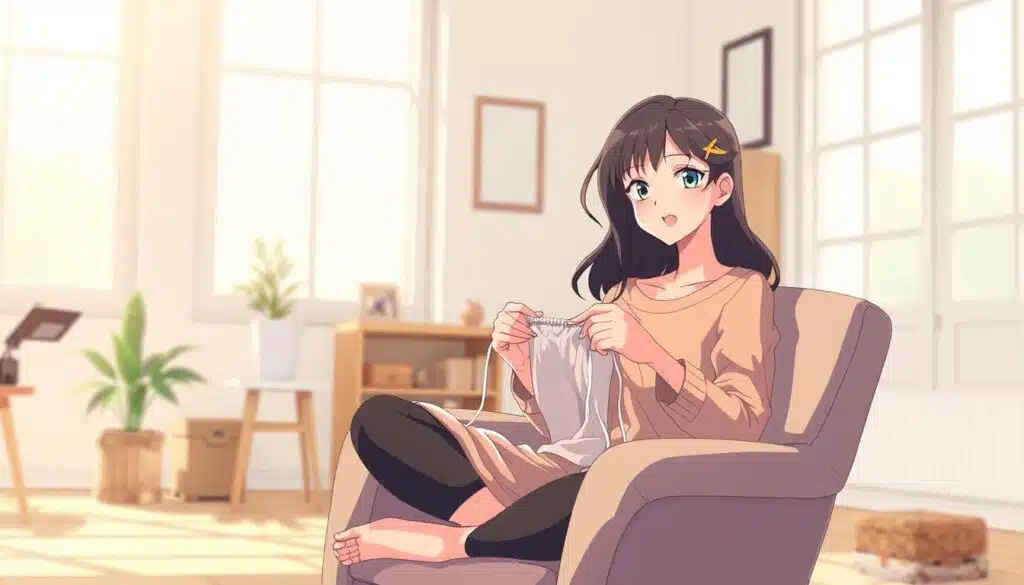
Carrying your project bag is like having a tiny studio. It holds your yarn, needles, scissors, and notes. Opening it creates a calm space for knitting.
Your seat matters. Choose a seat that supports you and add lumbar support if needed. Keep your shoulders relaxed and elbows close. These actions make knitting comfortable and help you stay present.
Take short breaks to keep going. Stand, stretch, or do chair yoga to loosen up. Shake your wrists between rows to avoid strain. These habits keep your focus sharp.
Before starting, set a clear intention. Say, “I will make something useful,” or choose a mood. A focused intention makes each stitch meaningful.
A well-packed bag helps you stay focused. Include spare yarn, a tape measure, stitch markers, and a notebook. A prepared kit supports good knitting and saves time.
See mistakes as chances to practice letting go. When you make a mistake, breathe, decide, and act. It teaches you patience, technique, and rhythm.
Slow Down to Tune In
You wake up early, grab a mug, and start stitching. Slowing down makes each stitch a mindful moment. This quiet time becomes a ritual that calms your mind and focus.
How pacing sharpens awareness
Matching your knitting to your breath makes it meditative. Simple patterns let your mind wander, while complex ones bring you back. Start with easy rows to focus, then move to harder stitches as you get better.
Techniques for mindful stitching
Counting stitches can be like a meditation. Try syncing your knitting with your breath or the sound of needles. Use a metronome or music to keep a steady pace. Slow down on special parts, like lace, to enjoy the yarn.
These techniques help you listen to your creative voice. Many find slow stitching a way to escape stress. For more on slow crafting, check out a thoughtful piece on mindful routines here.
When to walk away and reset
It’s okay to take breaks to protect your body and mind. Short breaks can prevent frustration and make your work easier. Try standing, stretching, or making tea during these moments.
Plan small breaks into your work sessions. Use chair yoga or gentle stretches between rows. For tips on blending modern habits with traditional craft, see this helpful resource.
- Tip: Set a timer for 25 minutes of focused stitching, then take a 5-minute reset.
- Tip: Mark deliberate sections in your pattern and reduce speed by half for those rows.
- Tip: Celebrate small, steady progress so slowing down feels rewarding, not wasteful.
Kitchener Stitch and the Rhythm of Seamless Practice
The Kitchener Stitch makes the last row of a project special. It turns grafting into a ritual. This process slows your hands and breath, making it a form of meditation.
What makes it meditative
The Kitchener Stitch has a simple, repetitive motion. This creates a rhythm that quiets your mind. The focus on each stitch helps you stay calm and patient.
Step-by-step set-up and grafting rhythm
Begin with wrong sides together and needles parallel. Insert the first stitch on the front needle as if to purl, then pull the yarn through and leave it on the needle. Repeat this on the back needle as if to knit, then pull through and leave it.
Follow a four-step grafting cycle slowly. Start by knitting the front needle, then pull the yarn through and drop the stitch. Next, purl the front needle, pull through, and leave it. Then, purl the back needle, pull through, and drop it. Finish by knitting the back needle, pull through, and leave it. Keep the tension even to avoid a sloppy or puckered join.
Start slow and count or chant the steps. As you get the rhythm, let it guide your breath and speed. See this as a mini retreat at the end of your project.
Cheat-sheet mindfulness tips
Write the four graft lines on a 3×5 card and carry it with your notions. Say the steps aloud or in your head like a short chant. This small ritual helps keep your focus and embeds the Kitchener rhythm in your memory.
Pay close attention to tension control. It’s key for grafting. Notice how your shoulders tense when you pull too tight. Relax them. Breathe with each stitch. Turn this task into a short meditation session, and you’ll finish your project feeling refreshed.
Concentrate on the Activity: Attention Techniques for Knitters
Begin by seeing your knitting as a small experiment in focus. Rhythm helps keep your mind on track. If you get distracted, gently bring your attention back to the stitches.
Simple patterns might let your mind wander, but complex lace needs your full attention. Both types of patterns help you learn to catch and refocus your thoughts.
Developing stitch-by-stitch attention
Improve your focus by doing short, easy exercises. Try counting rows out loud for five minutes. Also, use your fingers to check each stitch for mistakes.
Alternate between easy and hard rows to keep your brain active. This helps you switch between different levels of focus smoothly.
Studies show that crafts like knitting can boost your attention. A study found that 20 minutes of crochet can improve your focus and brain connections. You can learn more at how knitting enhances attention and focus.
Choosing patterns for mindful practice
Choose patterns with a purpose. Pick designs that fit your goals, whether it’s to relax, train, or challenge yourself. For relaxation, try simple patterns in one color.
For training, pick patterns with repeats or small lace charts. Use notes to remind yourself of your goals. Write down your intention at the start of the pattern.
Dealing with mistakes mindfully
If you find an error, stop and take a breath. View mistakes as learning opportunities, not failures. Think about how to fix it calmly.
Decide on a repair that suits your mood and the project’s needs. Practice accepting mistakes without judgment. This helps you enjoy the process more.
- Count aloud or with beads to keep attention steady.
- Alternate simple and complex rows to build endurance.
- Use timers for short focused intervals to increase control.
- When repairing, name options: tink, lifeline, frog—then pick one and move on.
These tips offer practical ways to improve your focus while knitting. They help you stay calm, focus better, and handle mistakes with ease.
Materials as Collaborators: Let Yarn Teach You
You might think yarn just waits for you. But try listening to it. It will guide you to the right needles, stitches, and rhythm.
Begin by feeling the yarn’s weight and bounce. A bouncy merino wool suggests slow, cozy stitches. On the other hand, crisp linen calls for light, airy patterns.
Notice how the yarn reacts to tension and heat. Write down these observations in your sketchbook.
Listening to your yarn and tools
Pay attention to the yarn’s sound, drag, and stitch definition. A quiet cotton is perfect for lace and summer clothes. Soft alpaca may not show texture but is great for warmth.
Keep a log of each yarn’s unique voice. This helps you find patterns that match its behavior.
Choosing fiber for mood and intention
Match fibers to your mood. Soft wool or merino is great for comfort. Linen or cotton are cool choices. For luxury, silk or alpaca is the way to go.
For quick fiber reference, check out the yarn types guide.
Sustainable, connected sourcing
Think about where your yarn comes from. It connects you to shepherds, spinners, and dyers. Support local shops and brands like Cascade or Quince for community and less environmental impact.
Choosing sustainable yarn adds depth to your projects. It keeps stories alive in your fabric.
Experiment with your yarn. Wet-felt a piece, mend with thrifted linen, or graft with a surprising swatch. These small acts create a deep connection between you and your materials.
Creative Courage: Let Go, Play, and Embrace Wobbles
You don’t need perfection to make something beautiful. When you bring creative courage to the needles, mistakes stop being failures and become part of the piece. This shift lets you embrace imperfections and find new textures in your work.
Making friends with “what if”
Ask yourself small, curious questions: what if you swapped yarn mid-row or tried a purl pattern upside down? Those little experiments open doors. Trying a new stitch or color can spark joy in a stalled project and help you reignite knitting mojo.
Permitting imperfection and happy mistakes
Relax your rules. Dropped stitches, uneven tension, odd gauge—these are teachable moments. When you treat repairs as quiet practice, you see how happy mistakes give character and remind you why you started knitting. Let go of guilt and give your work room to breathe.
Practical prompts to restart your sew-jo
- Try a five-minute “what if” swatch with a bold color switch.
- Set a tiny constraint: one color, one needle size, ten minutes daily.
- Turn scraps into a mini sampler to test unexpected combos.
- Join a prompt-based knit-along or challenge with a friend.
These prompts nudge you gently back into practice. Each small experiment builds confidence and keeps the play alive. Use them to embrace imperfections and let happy mistakes guide your next stitch while you reignite knitting mojo.
Stitching Community and the Social Zen of Making
Joining a knitting community is like finding a quiet heartbeat. Simple actions like sharing patterns or swapping yarn turn solo work into a shared experience. This rhythm keeps your craft alive and welcomes newcomers.
Workshops and retreats amplify this heartbeat. In workshops, you learn from teachers and peers. At retreats, you dive deep into focus, meet makers, and absorb new ideas.
Participate in online knit-alongs or local guilds to stay connected. Use feedback as guidance, not criticism. Choose workshops that resonate with you and retreats for a deeper connection.
Handmade gifts forge strong bonds. A scarf or blanket carries more than yarn. It holds your choice of materials and the time you invested. Add a note about your intentions to share your story.
Your craft connects you to a larger community. Buying from local shops supports local economies. It turns personal craft into a shared experience.
Stay engaged with small actions: join a guild, follow makers, attend workshops, or host swaps. Gift items with a story card to share your journey.
Textile storytelling is in every stitch. Old clothes and yarn carry memories and voices. By stitching them into new pieces, you keep a conversation alive.
Conclusion
You’ve learned how knitting can calm your mind. It helps you focus and breathe deeply. Even simple actions, like adjusting your posture, can change your mood.
Every project is a promise to be present. Let your materials guide you, and see mistakes as chances to learn. The Kitchener Stitch and other routines can be like meditation.
Try one small change, like a better posture or a mindful stitch. See how it affects your mood and focus. This can be a powerful way to find calm through knitting.
If you prefer company, look for local yarn shops or online retreats. They offer a chance to learn and relax with others. Start with a simple goal, try a new technique, and enjoy the journey to calm.
FAQ
How is knitting like zazen meditation?
Knitting and zazen both focus on the present moment. They use repetitive actions to train attention. This helps calm the mind and deepen awareness.
Can short knitting sessions actually help my mood or stress levels?
Yes, they can. Just ten minutes of knitting can change your day. It’s like journaling or a short meditation. Even a short session can lower stress and bring joy.
What posture should I use so knitting doesn’t cause pain?
Sit comfortably with a supportive chair and a small cushion. Keep your shoulders relaxed and elbows close. Use stretches and breaks to avoid strain.
How do I set an intention when I pick up my needles?
Choose a simple intention before starting. It could be to create something useful or focus on your breath. Write it down or say it quietly to keep yourself on track.
Why is pacing important in mindful knitting?
Pacing helps you stay focused and enjoy the process. It lets you notice the rhythm and feel of the yarn. By slowing down, you can handle mistakes better.
What techniques help make stitching more mindful?
Try counting stitches or syncing your knitting with your breath. Use a timer for focused intervals. These techniques help keep you present and mindful.
When should I walk away from a project and reset?
Take a break if you feel tired, frustrated, or in pain. A short walk or some stretches can help. Remember, breaks are important for your well-being.
What makes the Kitchener Stitch meditative?
The Kitchener stitch has a calming rhythm. It’s like a meditation, with each step leading to the next. It’s a way to relax and focus.
Can you summarize the Kitchener Stitch setup and basic grafting rhythm?
Start with the two pieces together, needles parallel. Set up by going into the first stitch as if to purl, then knit. Repeat by alternating front and back stitches, keeping tension even.
Any cheat-sheet tips for practicing Kitchener mindfully?
Carry a cheat-sheet with the steps. Say the steps aloud to keep rhythm. Start slow and focus on tension to deepen your practice.
How do I develop stitch-by-stitch attention without getting bored?
Choose patterns wisely. Use simple patterns for focus and complex ones for challenge. Try different techniques to keep your mind engaged.
What’s the best way to handle mistakes so they don’t wreck my mindfulness?
Pause and assess mistakes calmly. View them as learning opportunities. Choose how to fix them based on your goals, always with kindness.
How do materials act as collaborators in mindful making?
Yarn has its own personality and behavior. Listen to how it feels and responds. This informs your stitch choices and mood.
How should I choose fiber to match my mood or intention?
Pick fibers that match your mood. Soft wool for comfort, crisp cotton for focus. Test swatches to feel their qualities.
Are there sustainable sourcing tips that also deepen the practice?
Choose ethically made yarns and support local shops. Use recycled materials for a deeper connection. This enriches your craft and builds community.
How do I become braver about experimenting and embracing “wobbles”?
Give yourself permission to play. Try small experiments and accept mistakes as data. Curiosity is more important than perfection.
What practical prompts help me restart my “sew-jo” when it’s waning?
Use small prompts like a five-minute swatch or a color swap. These can help you regain momentum without feeling overwhelmed.
How does community or a retreat deepen mindful knitting?
Workshops and retreats share techniques and ways of being. They offer feedback and support, turning solo craft into a shared journey.
Why does giving or receiving handmade work feel different?
Handmade items carry stories and emotions. Gifting them adds meaning and strengthens bonds. They hold history and personal touch.
How can I start knitting mindfully right now?
Pack a small kit and choose a simple pattern. Start with a short, focused session. Connect with a local yarn shop or online retreat to continue.
What role do rhythm and breath play in mindful knitting?
Rhythm anchors your attention. Sync your knitting with your breath or use the needle click as a beat. This calms your mind and focuses your making.
Any quick kit checklist for mindful knitting on the go?
Yes, include needles, spare yarn, scissors, and a cheat-sheet. Carry a small pouch as your portable practice space.
How do I balance learning new techniques with staying present?
Practice techniques mindfully. Use a cheat-sheet and slow down. Start with simple pieces and focus in short sessions.