
Crochet Amigurumi Characters: 10 Best Amazing Patterns 2025
Why Crochet Amigurumi Characters Are Taking the Crafting World by Storm
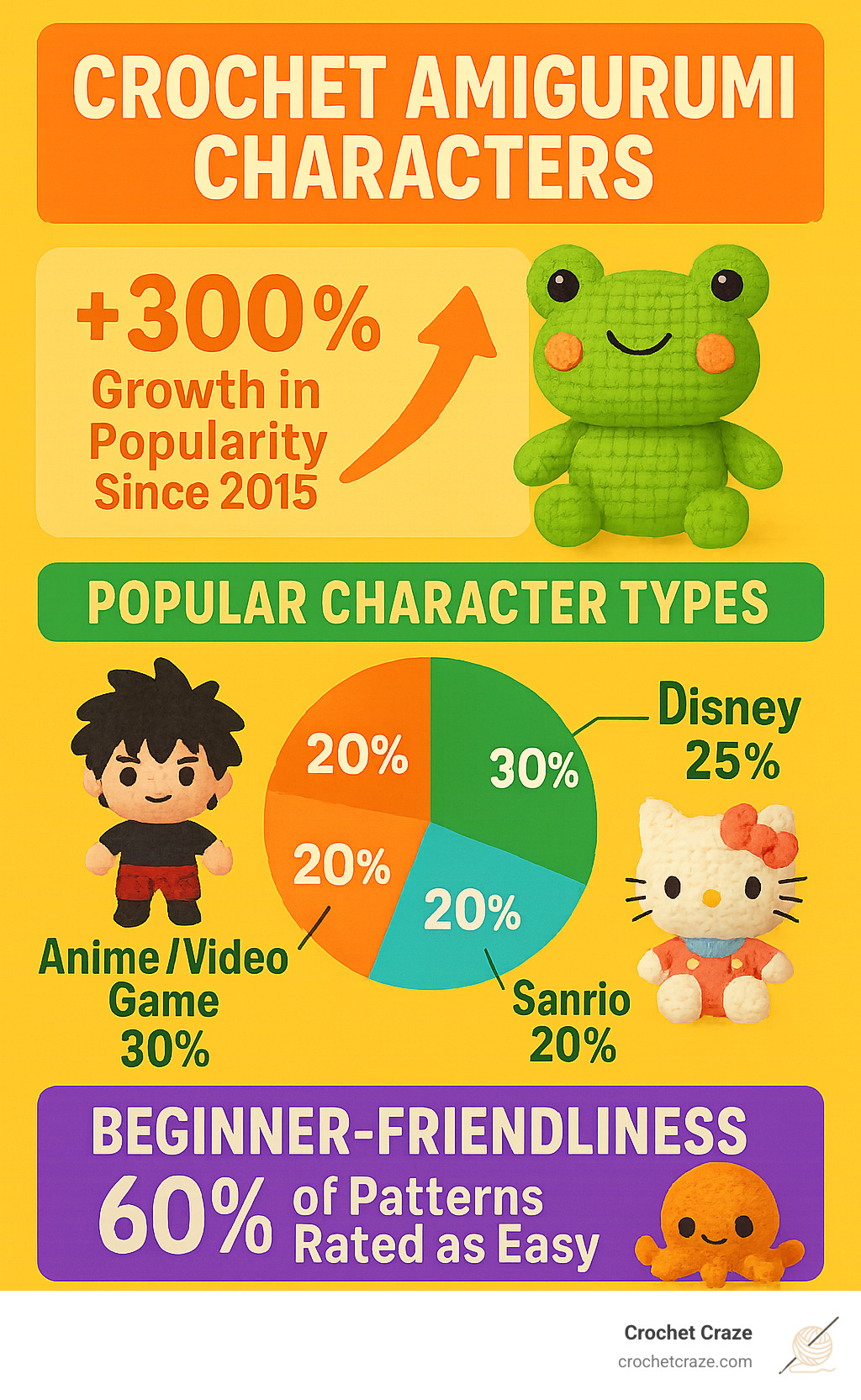
Crochet amigurumi characters are small, stuffed toys made using Japanese crochet techniques that have exploded in popularity worldwide. These adorable handmade figures range from beloved anime heroes to Disney favorites, offering crafters a fun way to bring their favorite characters to life.
Quick Guide to Crochet Amigurumi Characters:
– What they are: Small stuffed toys crocheted in continuous rounds
– Popular types: Anime characters (Totoro, Naruto), Disney figures (Mickey Mouse, Stitch), Sanrio designs (Hello Kitty, Cinnamoroll)
– Skill level: 60% of patterns are beginner-friendly
– Time investment: Most small characters take 3-8 hours to complete
The numbers tell an incredible story. Amigurumi searches have increased 300% since 2015, with over 100,000 character patterns available on Etsy alone. What started as a Japanese craft trend has become a global phenomenon, offering both creative outlet and stress relief.
Crochet amigurumi characters appeal to crafters because they combine nostalgia with practicality – you get cuddly toys that are safer and softer than collectible figures. Plus, most patterns are designed for beginners, making this an accessible entry point into the crochet world.
I’m Sonja Huerta, and as someone who recently finded the joy of crochet, I’ve found that crochet amigurumi characters perfectly match my need for detailed, rewarding projects that build skills gradually.
Glossary for Crochet amigurumi characters:
– amigurumi for beginners
– best amigurumi books for beginners
What Are Crochet Amigurumi Characters and Why Are They So Popular?
Picture this: you’re scrolling through social media and suddenly see the most adorable crocheted Totoro sitting on someone’s desk, or maybe a tiny Naruto figure that looks like it could come to life any second. That’s the magic of crochet amigurumi characters – and you’ve just witnessed why they’ve taken the crafting world by storm.
The word “amigurumi” comes from two Japanese words: “ami” (meaning crocheted or knitted) and “nuigurumi” (stuffed doll). This craft bloomed in Japan as part of their kawaii culture – that irresistible “cute” aesthetic that makes everything feel warm and fuzzy inside.
Crochet amigurumi characters are three-dimensional stuffed toys that come to life through your crochet hook. Instead of working back and forth in rows like traditional crocheting, you work in continuous rounds. This creates those perfect, seamless shapes that form adorable heads, chubby bodies, and tiny limbs.
But why has this craft exploded with a 300% search boom since 2015? These handmade collectibles offer something store-bought figures simply can’t match.
When you create your own amigurumi, you’re in complete control. Want a purple Hello Kitty instead of white? Go for it! Need a giant Kirby for maximum cuddles? Make it happen! Plus, these soft creations are actually huggable – try snuggling a plastic action figure and you’ll quickly appreciate the difference.
There’s also something deeply satisfying about the creativity boost you get from bringing a beloved character to life with your own hands. Each stitch builds toward something recognizable and meaningful, making these projects incredibly rewarding gift ideas for friends and family.
The Appeal of Crochet Amigurumi Characters
The real magic happens when you realize how crochet amigurumi characters connect us to the stories and characters we love. Anime fans find incredible joy in recreating characters like Sailor Moon’s team or One Piece’s Luffy. Disney lovers are equally smitten with Mickey Mouse, Stitch, and Winnie the Pooh patterns, bringing childhood magic into adult hands.
Beyond the character connection, this hobby offers a wonderful tactile experience. The repetitive motions of crochet naturally promote mindfulness, helping to quiet busy minds and reduce stress. It’s like meditation, but at the end you have an adorable new friend to show for it.
Many crafters also find that completing these projects builds confidence in ways they never expected. There’s something incredibly empowering about looking at a finished Totoro or Mario mushroom and thinking, “I made that with my own hands!”
Essential Tools & Materials for Crochet Amigurumi Characters
Starting your journey with crochet amigurumi characters feels a bit like preparing for a fun trip – you need the right gear to make those adorable little creatures come to life! The good news is that amigurumi doesn’t require a huge investment, but choosing the right tools makes all the difference.
The magic happens with smaller crochet hooks, typically ranging from 2.25mm to 3.5mm. Unlike regular crochet projects where you might want a looser fabric, amigurumi needs tight, dense stitches to keep that precious stuffing from peeking through. If you’re just starting out, a 3.0mm or 3.5mm hook will be your best friend.
Choosing between acrylic and cotton yarn often stumps new amigurumi makers. Cotton yarn like DMC Natura Just Cotton gives you gorgeous stitch definition and comes in amazing color ranges. The downside? It’s less stretchy and can make your hands tired during long sessions.
Acrylic yarn is like the comfortable sneakers of the yarn world. It’s easier on your hands, more forgiving if you’re still getting your tension right, and generally friendlier to your wallet. Many experienced crafters actually prefer acrylic for amigurumi because it bounces back nicely and holds its shape well.
Safety eyes are those little plastic eyes with washers that lock securely from the inside of your character. They range from tiny 6mm eyes for miniature characters all the way up to 12mm for larger dolls. Just remember – if you’re making toys for little ones, embroidered eyes are the safer choice.
Your toolkit wouldn’t be complete without stitch markers, poly-fiberfill stuffing that won’t clump up over time, and embroidery needles for sewing pieces together and adding those special details that bring characters to life.
Starter Shopping List
When you’re ready to dive in, here’s what belongs in your amigurumi starter kit:
Hook sizes to grab first: 2.5mm for tiny details, 3.0mm for most projects, and 3.5mm for bulkier yarns. Yarn colors that’ll cover most characters: white, black, and brown for facial features, plus red, blue, yellow, pink, and purple for the fun stuff. Safety eyes in 6mm, 8mm, 10mm, and 12mm will handle characters from tiny keychain size to big huggable dolls.
For stuffing, poly-fiberfill is your go-to choice – it’s lightweight, washable, and keeps its shape. Skip cotton batting (it gets lumpy when washed) and save plastic pellets for adult-only projects if you want weighted characters.
Sourcing Quality Supplies Online
Clover tools have earned their reputation among amigurumi makers for good reason – their ergonomic handles make those long crafting sessions much more comfortable. Yarnspirations offers fantastic bundles designed specifically for character work, often with perfectly coordinated colors that take the guesswork out of matching.
Looking for more project inspiration beyond characters? Our guide to Creative Crochet Projects has tons of ideas to keep your hooks busy once you’ve mastered the basics of crochet amigurumi characters.
Master the Basics: Stitches, Rounds & Pattern Reading
Think of learning crochet amigurumi characters like learning to speak a new language – once you understand the basic “vocabulary” of stitches and techniques, you’ll be amazed at how quickly everything clicks into place.
The magic ring is where your amigurumi journey truly begins. This adjustable starting loop is completely different from traditional crochet chains. This technique is what gives your characters that perfect, seamless look without any gaps in the center. Practice making magic rings until your fingers remember the motion, because you’ll be starting almost every piece this way.
Single crochet becomes your best friend in amigurumi work. While other crochet projects might use a variety of stitches, amigurumi relies heavily on single crochet to create that tight, dense fabric that keeps your stuffing hidden. Your tension needs to be firm – think “snug hug” rather than “death grip.”
The invisible decrease is a game-changer that separates beginner work from professional-looking pieces. Regular decreases create those unsightly bumps and ridges that make your character look lumpy. With invisible decreases, you insert your hook through the front loops of two stitches at once, creating smooth, even shaping.
Working in continuous rounds feels weird if you’re used to traditional crochet. Instead of joining each round with a slip stitch, you just keep spiraling around and around. This is where stitch markers become absolutely essential – move that marker up after each round like it’s your lifeline.
Color changes in amigurumi happen mid-round, which initially feels awkward but becomes natural with practice. When you’re working on characters with multiple colors, planning these changes ahead of time saves you from having to cut and weave in dozens of yarn tails later.
How to Read an Amigurumi Pattern
Amigurumi patterns speak their own special language, and once you crack the code, you’ll feel like you’ve open uped a secret world of possibilities.
Round notation follows a specific format that tells you exactly what to do. When you see “Round 1: 6 SC in magic ring (6),” that number in parentheses is your safety net – it’s your total stitch count for that round. If you don’t have the right number, something went wrong.
The pattern “Round 2: 2 SC in each stitch around (12)” means you’re doubling your stitches, while “Round 3: SC, 2 SC in next stitch repeat around (18)” introduces you to controlled increases using repeat notation.
Those asterisks are your repeat markers – everything between them gets repeated around the entire round. So “SC, 2 SC in next stitch repeat around” means you’ll single crochet in one stitch, then make two single crochets in the next stitch, then repeat this pattern all the way around.
Most patterns separate the crocheting phase from the assembly phase. You’ll crochet all your individual pieces first – head, body, arms, legs – then the pattern will guide you through sewing everything together and adding the finishing touches.
Beginner Practice Session
Before jumping into your first full character, spend some time with basic shapes. Our Amigurumi for Beginners guide walks you through these fundamentals step by step.
Start with a simple sphere – it teaches you the essential increase and decrease pattern that forms the foundation of most amigurumi heads and bodies. Begin with 6 stitches in your magic ring, then practice controlled increases until you have a nice round shape, work some straight rounds for the middle section, then decrease back down to create a complete sphere.
A cylinder shape teaches you to work straight rounds without any shaping – perfect for arms, legs, and necks. Once you can crochet a smooth, even cylinder, you’ve mastered consistent tension.
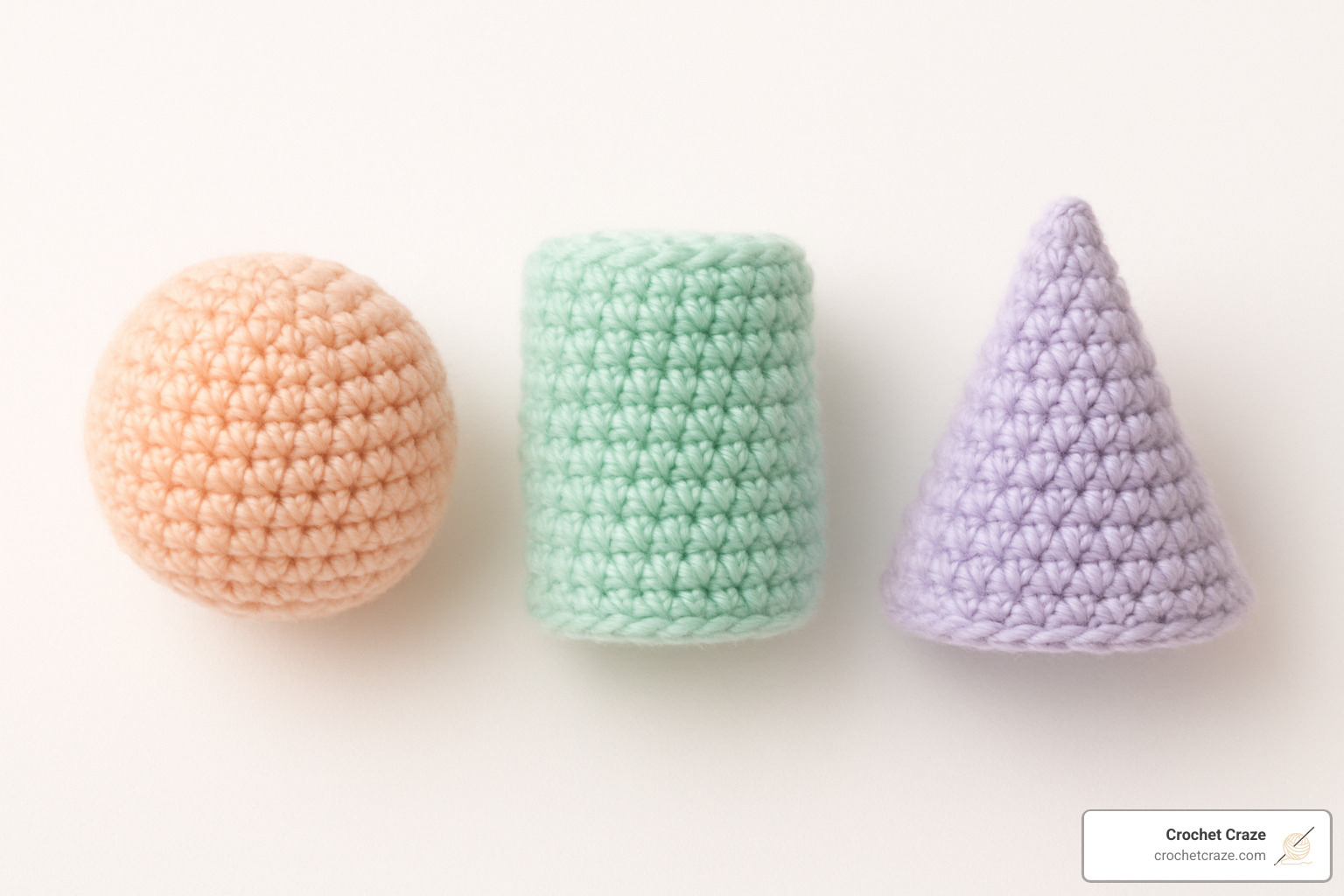
Cone shapes combine increases with straight sections, teaching you how different rates of increase create different shapes. These skills directly translate to creating character bodies, hats, and other tapered elements.
The beauty of practicing with these basic shapes is that you’re learning gauge control and stitch counting without the pressure of making a recognizable character. Once you can confidently create spheres, cylinders, and cones with consistent tension and accurate stitch counts, you’re ready to tackle your first crochet amigurumi characters with confidence.
Bringing Crochet Amigurumi Characters to Life: Patterns, Customizing & Inspiration
The fun really starts when you pick your first crochet amigurumi character pattern. Options run from five-round keychains to museum-worthy showpieces, so choose a design that matches your current skill (and patience) level.
Anime favourites account for roughly a third of all downloads. Studio Ghibli’s Totoro remains the number-one free pattern worldwide, while newer series such as Demon Slayer are closing the gap fast. Classic shōnen heroes—think Naruto or One Piece’s Luffy—also have plenty of beginner-friendly patterns.
Over in the West, Disney & Pixar icons never go out of style. Mickey, Stitch, and Winnie the Pooh all have well-tested patterns in multiple sizes. Gamer nostalgia is equally strong: a simple Mario 1-Up mushroom or a squishy Kirby is perfect practice for colour changes, and you’ll find hundreds of Pokémon options once you’re ready for extra shaping.
A few designer highlights worth bookmarking:
* Anime Demon Crochet Doll
* SirPurlGrey Kero pattern
Where to Find Free vs. Paid Crochet Amigurumi Character Patterns
The community is generous with freebies. Amigurumi.com, designer blogs, Pinterest boards, and Ravelry all host thousands of no-cost PDFs. Paid patterns (most often on Etsy) are worth the few dollars when you want step-by-step photos, troubleshooting support, or a particularly detailed design. Our hand-picked Easy Amigurumi Patterns list is a safe starting point.
Customizing Existing Patterns
Personal tweaks turn any pattern into something uniquely yours:
- Colour swaps—a pastel Totoro? Why not!
- Facial embroidery—tiny eyelashes or a wider grin completely change the vibe.
- Outfit add-ons—seasonal hats, scarves, or cosplay mash-ups.
- Scaling—bulk up with thicker yarn and a 5 mm hook, or miniaturise with crochet thread.
Advanced Finishing Touches
Want a pro finish? Try loop-stitch fur for fluffy creatures, thread-jointing for movable limbs, or hide tiny magnets so figures can grip accessories.
Assembly, Finishing, Care & Safety
Seeing separate pieces transform into a single character is the most rewarding—and occasionally nerve-racking—part of amigurumi. A few simple habits guarantee a polished result.
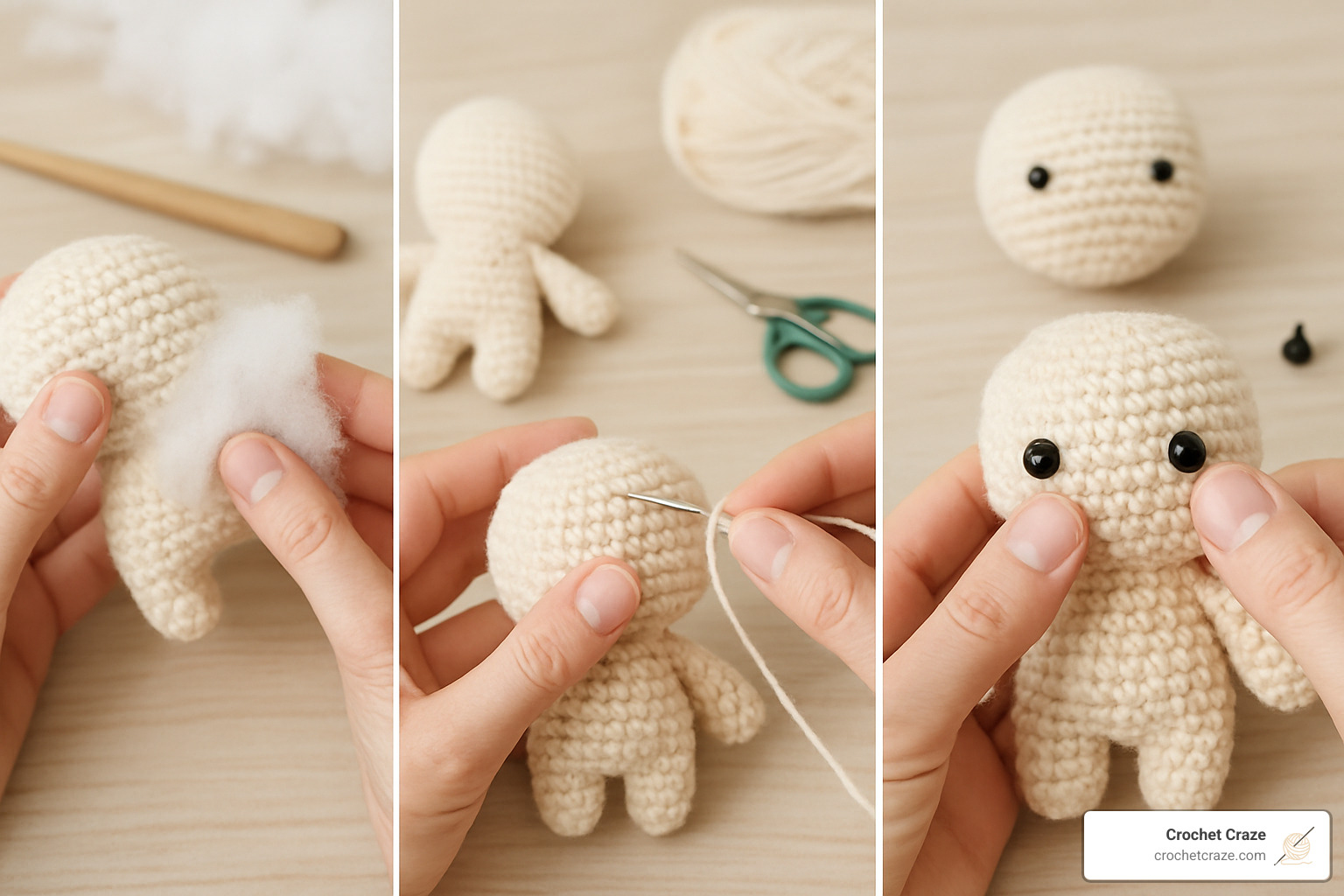
Invisible seams. Use the ladder (mattress) stitch, catching only the outer loops so joins disappear. Work with a length of yarn that matches the piece you’re sewing.
Stuff as you go. Add small tufts of poly-fiberfill every few rounds instead of cramming it all in at the end. Aim for firm but squeezable—over-stuffed parts look distorted.
Weighting. A teaspoon of plastic pellets at the base helps figures sit upright. Seal pellets in a scrap of pantyhose so they stay put during washing.
Safety first. For children under three, embroider eyes instead of using plastic safety eyes. Always double-knot and weave in ends to prevent loose pieces from becoming chew toys.
Common Pitfalls and Quick Fixes
- Gaps between stitches – tighten tension or drop to a smaller hook.
- Lost stitch count – move your marker every round and verify the stitch total in parentheses.
- Wonky eye placement – pin eyes first, then step back and check symmetry before committing.
Cleaning & Storage
Most acrylic and cotton pieces handle a gentle machine wash in a mesh bag; air-dry flat out of direct sun. Spot-clean embroidered features and loop-stitch fur with a damp cloth. Store characters on open shelves (away from pets) to prevent crushing and colour fade.
Frequently Asked Questions about Crochet Amigurumi Characters
Starting your journey with crochet amigurumi characters brings up lots of questions – and trust me, we’ve all been there! These are the three questions I hear most often from beginners, along with the answers that will save you time and frustration.
What size hook should I use for beginner amigurumi?
For your first crochet amigurumi characters, I recommend starting with a 3.5mm (E/4) or 3.0mm (D/3) hook. These sizes hit that sweet spot where your stitches will be tight enough to hold stuffing properly, but not so tiny that your hands cramp up after an hour of crocheting.
These hook sizes work best with worsted weight yarn, which is what most beginner patterns call for anyway. The slightly larger size gives you room to learn proper tension without fighting your yarn every step of the way.
Once you’ve completed a few characters and your tension becomes more consistent, you can experiment with smaller hooks like 2.5mm for even tighter stitches. But honestly? Some of my favorite characters were made with that trusty 3.5mm hook, and they’ve held up beautifully for years.
How do I keep my round count accurate?
Round counting can make or break your amigurumi project – I learned this the hard way when my first Totoro ended up lopsided because I lost track somewhere around round 15!
The stitch marker method is your best friend here. Place a marker at the beginning of each round and move it up as you complete each round. But here’s the extra step that changed everything for me: count your stitches at the end of every round, especially during increase and decrease sections.
Many experienced crocheters swear by keeping a small notebook nearby to jot down completed rounds. You can also use a row counter (those little clickers) or even a simple tally on your phone. The key is finding a system that works for you and sticking with it.
When you’re working on complex characters with multiple increase patterns, take a moment to double-check your stitch count matches the number in parentheses at the end of each round instruction. It takes an extra 30 seconds but saves hours of frogging later!
Can I sell dolls made from someone else’s pattern?
This question touches on copyright law, and the answer isn’t always straightforward. The key is always reading the pattern’s terms of use carefully before you start stitching with selling in mind.
Many independent pattern designers are happy to let you sell finished items made from their patterns – it’s actually great advertising for them! You’ll often see language like “finished items may be sold in small quantities” or “selling completed dolls is permitted with credit to the designer.”
However, licensed character patterns are a different story entirely. Disney, Sanrio, anime studios, and video game companies are very protective of their intellectual property. Even if a pattern designer allows selling finished items, you could still run into trademark issues when selling recognizable characters like Mickey Mouse or Hello Kitty.
The safest approach? When in doubt, reach out to the pattern designer directly. Most are happy to clarify their policies, and many have FAQ sections on their websites addressing this exact question. Remember – respecting designers’ rights keeps the amazing pattern community thriving for all of us!
Conclusion
Creating crochet amigurumi characters opens up a world where creativity meets mindfulness, offering benefits that extend far beyond the finished toys sitting on your shelf. Whether you started this journey to reconnect with beloved childhood characters or finded the therapeutic rhythm of counting stitches, you’ve joined a global community that understands the magic of bringing imagination to life with yarn and hook.
The beauty of this craft lies in its accessibility. That first wobbly magic ring eventually becomes second nature. Those early characters with uneven eyes and lopsided heads transform into polished creations that friends and family treasure. Every expert crocheter started exactly where you are now – with curious hands and a willingness to learn.
Community support makes this journey even more rewarding. The amigurumi world is filled with generous crafters eager to share tips, celebrate your successes, and help troubleshoot when that decrease section just won’t cooperate. Social media groups buzz with photos of finished projects, pattern recommendations, and encouraging words for beginners.
Many crafters find that crochet amigurumi characters become a gateway to broader crochet trips. The tension control you develop prevents gaps in blankets. The color-changing skills transfer beautifully to striped scarves. The patience you build following detailed patterns serves you well in every future project.
Mental wellness benefits deserve special mention. In our digital world, the focused attention required for amigurumi provides natural stress relief. Counting stitches quiets racing thoughts. Seeing a recognizable character emerge from simple yarn boosts confidence in ways that surprise many crafters.
For entrepreneurial spirits, this hobby can evolve into income opportunities. Custom character commissions, original pattern design, or teaching workshops all provide paths to turn passion into profit. The key is building skills gradually while respecting copyright restrictions and developing your unique style.
At Crochet Craze, we’re here to support every step of your amigurumi trip. From troubleshooting your first magic ring to celebrating your hundredth finished character, we believe in the power of handmade creation to enrich lives and connect communities.
Ready to dive deeper into your amigurumi education? Our Best Amigurumi Books for Beginners guide features carefully selected resources that will accelerate your learning and inspire your next project.
The world of crochet amigurumi characters welcomes you with open arms and endless possibilities. Pick up that hook, choose a character that makes you smile, and find the joy that millions of crafters worldwide have found in bringing beloved figures to life, one carefully counted stitch at a time.