
You’re about to turn yarn chaos into a modern crochet sweater pattern. It will look like it came from a boutique, but without the high price. Imagine wearing a cozy sweater from fall to summer, thanks to lightweight cotton.
Designers like Heart Hook Home and Meghan Makes Do are leading the trend. They’re all about waffle textures, balloon sleeves, and reversible raglans this season.
This article offers practical tips and examples. You’ll see the Weekend Waffle pullover and chunky cardigans. There are also tips for beginners and yarn notes to help you choose the right materials.
Whether you need a stylish pullover or a gift, this article has you covered. It explores trends, construction methods, and patterns on Ravelry and Etsy. For a curated look, check out modern crochet styles.
Key Takeaways
- Modern crochet sweater pattern options span lightweight cotton to bulky wool for year-round wear.
- Waffle stitch, ribbed sleeves, balloon shapes, and simple necklines are trending design features.
- Beginners benefit from patterns with basic stitches, minimal seaming, and video tutorials.
- Select yarn and hook size (example: 7.0 mm for chunky) to match desired drape and gauge.
- Ravelry, Etsy, and curated blogs provide reliable handmade sweater pattern picks and free patterns.
Why a Modern Crochet Sweater Pattern Belongs in Your Wardrobe
You want pieces that look thoughtful and feel lived-in. Modern crochet sweaters offer style and usefulness. Pinterest shows a variety of styles, from cropped cardigans to chunky wool pullovers.
The blend of fashion and function
Designers on Ravelry and Etsy create silhouettes that are both trendy and practical. They make reversible pieces, structured collars, and clean hems. These features make crochet staples that can go from casual to polished.
Why handmade sweaters beat fast fashion
Handmade sweaters are durable and personal. They have stronger seams and can be repaired. You also get to choose fibers that last longer than cheap machine-made knits.
Versatility for year-round wear — from lightweight cotton to chunky wool
Yarn choice determines the season. Thin cotton blends are perfect for summer. Bulky wool and blends keep you warm in winter.
Practical details like pockets and hoods add function without sacrificing style. Patterns like the Scorpio-style reversible designs and utility-focused Rosebud Cardigan or Sawyer Shacket ideas make everyday clothing.
In short, crochet sweater projects are worth the space in your closet. They offer customization and longevity. A well-chosen pattern becomes a go-to piece, joining your other crochet staples.
Choosing the Right Yarn and Hook for Cozy & Stylish Results
Choosing the right yarn and hook is key to your sweater’s look and feel. You need yarn that matches the season, style, and stitch pattern. For a drapey top, try a lightweight cotton blend. DK or worsted yarn is great for everyday pullovers. Bulky yarns like We Are Knitters Petite Wool make projects quick and cozy.
Yarn weight and fiber: cotton, wool, acrylic, and blends
The weight of your yarn affects the sweater’s warmth and drape. Fingering or sport yarns are perfect for lightweight layers. DK and worsted yarns offer structure without bulk. Bulky yarns are quick to make and keep you warm.
Choose between cotton and wool yarns based on the season. Cotton and linen are good for warm months because they breathe. Wool and wool blends are better for cold weather as they trap heat.
How yarn choice affects drape, warmth, and stitch definition
The type of fiber in your yarn impacts its drape and stitch clarity. Cotton yarns lie flat and drape well, while wool yarns spring back and show texture. Acrylic yarns mimic wool’s texture but may not have the same memory.
Bouclé and fuzzy boucle yarns can hide detailed stitches. For textured patterns like waffle or honeycomb, choose yarns with good memory and stitch definition.
Matching hook size to yarn and gauge tips
Start with the recommended hook size from the pattern and make a swatch. Use the hook size gauge to ensure your stitches and rows match the pattern. If your fabric is stiff, try a larger hook for more drape. If it’s too loose, use a smaller hook to tighten it.
For bulky projects, use a 7.0 mm hook or the size recommended for your bulky yarn.
Actionable checklist:
- Match yarn weight for sweater to the pattern’s intent: lightweight for drape, worsted for everyday, bulky for warmth.
- Decide between cotton vs wool sweater yarn by season and desired bounce.
- Work a measured swatch with the recommended hook; adjust until your hook size gauge sweater matches the pattern.
Design Trends in Modern Crochet Sweaters for 2024
Get ready to explore the top crochet sweater trends for 2024. These trends focus on texture, fun shapes, and simple designs perfect for daily wear. You’ll find everything from big, comfy sweaters to cropped tops and vests with a vintage twist.
First, let’s talk about shape. If you prefer comfort, the oversized sweater is your go-to. It looks great with jeans or a slip dress and is forgiving if your stitches are a bit off. For a more modern look, try cropped or fitted styles that add a touch of elegance.
Now, let’s dive into texture. The waffle stitch sweater is all the rage for its soft, textured fabric. It’s perfect for casual days. The honeycomb trend adds depth to cardigans and yokes without making them too thick. Cable-inspired crochet brings a classic feel to your modern sweaters.
Don’t forget about bold sleeves and bright colors. Sweaters with balloon sleeves or neat cuffs offer a stylish balance. Colorblocking and modern takes on granny squares and houndstooth add a fresh twist to your wardrobe.
Choose textures that match your skill level. Waffle or honeycomb patterns are great for beginners because they’re easy yet impactful. Look for patterns that are clear and easy to follow, even for beginners.
Here’s a quick guide to help you pick your next project.
| Trend | Best Uses | Skill Level | Why It Works |
|---|---|---|---|
| Oversized crochet sweater | Everyday layers, lounge pieces, over dresses | Beginner to intermediate | Forgiving fit, simple shaping, cozy silhouette |
| Waffle stitch sweater | Weekend sweaters, textured cardigans, cropped tops | Beginner to intermediate | Plush texture, strong stitch definition, modern look |
| Honeycomb crochet trend | Yokes, panels, structured cardigans | Intermediate | Three-dimensional effect, vintage-meets-modern appeal |
| Retro-modern vests | Layering pieces, tailored casualwear, statement looks | Intermediate | Classic motifs with updated shaping and finishes |
Pattern Construction Methods: Top-Down, Bottom-Up, and Seamless
How a sweater is made changes your experience and look. You can see fit changes row by row, skip long seams, or use bold colorwork. Here are options for your patience, skill, and style.
Benefits of top-down raglans and easy fit adjustments
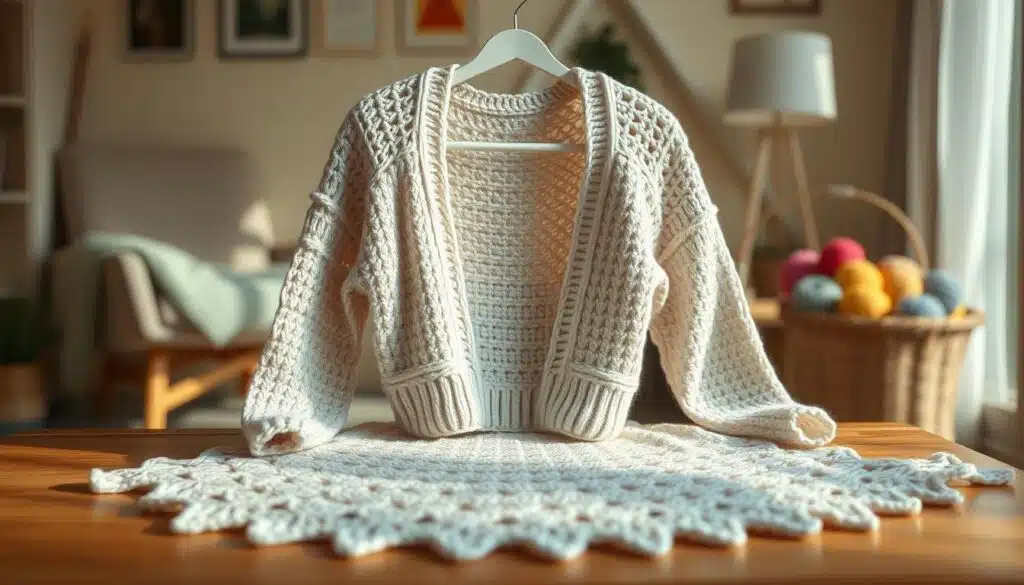
Top-down raglan crochet lets you fit as you go. You can adjust sleeve length and shape the neckline easily, without undoing work.
This method is great if you want to see changes right away and avoid complex seams.
Bottom-up construction for custom length and no-sew finishes
Bottom-up sweater crochet lets you control the torso. You can set the exact length before joining the yoke, which is useful for specific rise or hem needs.
Many bottom-up patterns have a near no-sew finish. This is perfect if you dislike sewing seams or want a clean edge quickly.
Seamless and modular techniques (granny squares, panels, yokes)
A seamless crochet sweater has less finishing work and looks clean. It uses continuous yokes and circular construction for a smooth process.
Modular crochet lets you mix creatively. Use granny motifs, hexagons, or panels to make garments that are easy to change, fix, and recolor.
Choose a method by answering three quick questions: do you mind seaming, want to fit as you go, and are you okay with joins or Tunisian techniques? Your answers will guide you to top-down raglan, bottom-up, seamless, or modular crochet.
Sizing, Gauge, and Making a Swatch That Actually Works
You want a sweater that fits perfectly. Start by comparing the pattern’s finished measurements to your bust or chest size. Many patterns on Ravelry and Pinterest list sizes from XS to 5XL. They also include notes for making a custom fit, helping you understand how to read crochet sizing.
Choose the size that matches the finished sweater, not the label. If the pattern is for a relaxed or oversized fit, expect it to be roomy. If unsure, size up or choose patterns labeled as roomy to avoid fitting issues.
Making a proper gauge swatch is essential. Use the yarn and hook recommended in the pattern. Crochet a swatch that’s at least 4×4 inches or the size specified by the designer. Then, wash and block it like the finished sweater. Measure the stitches and rows in the defined area.
Compare your swatch’s numbers to the pattern’s gauge. If your stitches are too tight, use a larger hook. If they’re too loose, use a smaller one. Keep adjusting until your swatch matches the pattern’s counts. This step is key to a sweater that fits right.
Top-down raglans and make-to-measure bottom-up patterns allow for adjustments as you go. Patterns from TL Yarn Crafts, like the Rosebud Cardigan in sizes XS–5XL, show how inclusive sizing and clear measurements help you make changes easily.
Oversized crochet sweaters are forgiving. Even if your gauge is a bit off, the extra room usually hides small differences. But don’t skip the swatch step. It saves yarn and avoids the need to rip out your work later.
Quick checklist:
- Compare your bust/chest to finished measurements.
- Make and block at least a 4×4 inch swatch.
- Measure stitches and rows for crochet sweater gauge.
- Adjust hook size until your swatch matches.
- Choose oversized options if you want extra breathing room.
Follow these steps, and your next sweater will be a cozy, flattering reward for doing things right.
Stitch Patterns to Try in Your Modern Crochet Sweater Pattern
Choosing the right stitch can change how your sweater looks and feels. You want it to be warm, textured, and easy to finish. Here are some practical options for different skills and fabrics, with tips to help you pick.
Waffle stitch and weekend waffle sweater inspiration
The waffle stitch adds a bold, grid-like texture that keeps you warm. It works well with bulky yarn for a cozy pullover or DK for a crisp sweater.
Use a slightly larger hook than recommended to make the waffle softer and more drapey. It’s perfect for adding texture to sleeves and necklines.
Honeycomb and textured ribbing for modern cable looks
Honeycomb crochet patterns mimic cable texture with simple repeats. The raised cells add vertical interest and a soft stretch that fits well on shoulders.
Pair honeycomb with back-loop ribbing for a clean hem or cuff. For more guidance on choosing stitches, check out recommended stitch guides for tips on drape and hook sizes.
Granny stripes, mosaic, and Tunisian textures for statement pieces
A granny stripe sweater offers instant color and easy construction. It’s great for beginners who enjoy working with rows and joining panels.
Mosaic and Tunisian sweater textures provide graphic repeats and warmth. Mosaic is perfect for colorwork without floats. Tunisian creates a dense fabric ideal for structured cardigans.
| Stitch | Best Use | Fabric Qualities | Skill Level |
|---|---|---|---|
| Waffle stitch | Weekend waffle sweater, textured sleeves | Warm, thick, pronounced texture; moderate yarn use | Beginner to intermediate |
| Honeycomb crochet | Raglan sweaters, modern cable-look panels | Structured, slightly stretchy, cable-like depth | Intermediate |
| Granny stripe | Colorwork jumpers, patchwork cardigans | Open, modular, excellent for bold color | Beginner |
| Mosaic | Graphic yokes, color panels | Dense, color definition, minimal floats | Intermediate |
| Tunisian sweater texture | Warm pullovers, fitted cardigans | Dense, warm, stable drape; uses more yarn | Intermediate to advanced |
Choose a stitch that matches your goals. Waffle stitch is great for warmth and texture. Honeycomb is perfect for cable-like structure. Granny stripe is ideal for color and ease. Tunisian is best for dense warmth. Small changes in hook size, yarn weight, and increases can greatly affect the sweater’s drape and fit.
Beginner-Friendly vs Advanced Modern Crochet Sweater Pattern Choices
Choose a pattern that fits your mood and skill level. For a quick project, pick a beginner sweater with simple stitches and few seams. It’ll be cozy by the weekend. For a challenge, try advanced techniques for stunning texture and fit.
What to look for in easy projects
Look for patterns with clear requirements and basic stitches. An easy sweater has one-piece construction, simple ribbing, and no colorwork. Ravelry and blog tutorials often mark these as beginner-friendly.
Opt for single-color or rectangular projects to avoid tricky joins. Choose patterns with photo schematics or video lessons for step-by-step guidance.
When to level up
Move to more complex projects when you’re comfortable with increases and decreases. Advanced techniques include Tunisian panels and mosaic colorwork. These require patience but offer professional-looking results.
Practice new stitches on small swatches before starting a full garment. This keeps frustration low and improves your accuracy.
Video tutorials, schematics, and crochet pattern support
Good pattern support makes a big difference. Look for patterns with photo schematics, step-through videos, or tutorials. Designers on LoveCrafts and blogs often provide detailed guidance.
Use Ravelry comments and YouTube walkthroughs for help with fit and technique. Patterns that list specific skills help you decide if they’re right for you. For more on skill levels, see this guide here.
- Tip: Start with an easy crochet sweater in cotton or acrylic to practice shaping without worrying about blocking.
- Tip: When you’re ready, try advanced crochet sweater techniques on a swatch or small accessory first.
- Tip: Rely on pattern chat threads and video tutorials for on-the-spot crochet pattern support.
Customization Ideas to Make the Pattern Your Own
Make your sweater unique by learning to customize it. Start with small changes like adjusting length, sleeve shape, or neckline. These tweaks let you try new styles without starting over.
Length, sleeve shape, and neckline variations
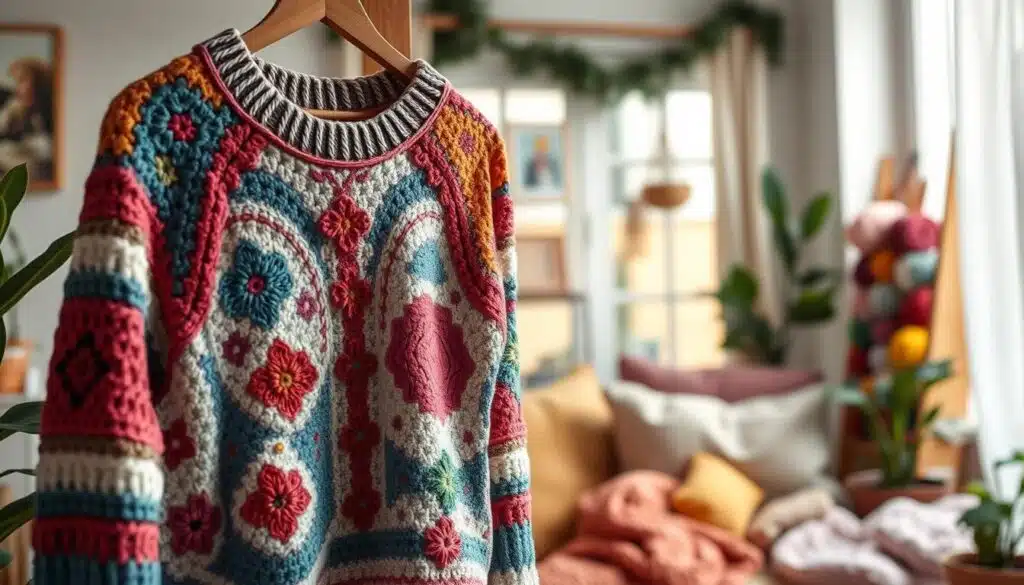
Shorten the sweater for a cropped look or add inches for a tunic. Try different sleeve lengths like three-quarter, full, or puffed. If the neckline is too wide, add a slip-stitch edging or a ribbed band.
Before making big changes, swatch and block to keep your gauge right. Use a construction you like from past projects. Only change hook or stitch count after testing.
Colorwork ideas: stripes, blocks, and statement panels
Color can transform a simple pattern. Try bold stripes, colorblocking, or granny-panel inserts. Look for inspiration on pattern sites and visual boards, then adapt to your gauge.
Changing yarn weight or stitch can create vertical stripes or subtle panels. Start with small experiments to manage time and avoid redoing work.
Add-ons: pockets, belts, hoods, and playful fringe
Add functional touches like patch pockets or a belted waist. Convert a pullover to a cardigan with a button band and buttons or a zipper. A hood or playful fringe adds personality.
Plan your sequence: make the body first, then sleeves, then add-ons. This order keeps things predictable and lets you test fit as you go. For more on designing from a photographed knit and practical swatching tips, visit how to design a crochet sweater.
| Customization | What to change | Quick tip |
|---|---|---|
| Length | Crop, standard, tunic | Adjust by rows after swatching and blocking |
| Sleeves | Shorten, lengthen, bell, fitted | Measure arm length on a favorite sweater for reference |
| Neckline | Boat, crew, V, scoop | Add edging or ribbing to tighten a wide opening |
| Colorwork | Stripes, blocks, panels, granny motifs | Use simple striping first to master color changes |
| Add-ons | Pockets, hoods, belts, fringe | Sew or crochet on after body and sleeves are complete |
| Construction reuse | Adapt a trusted pattern backbone | Reusing a construction reduces fit surprises |
Don’t be surprised if you need to remake parts. Skipping a ribbing swatch or changing hooks mid-project can take hours. Embrace measured experiments and reuse your favorite construction for intentional alterations. Aim for casual daily crafting for three weeks to cover swatching, adjustments, and finishing.
Care, Blocking, and Finishing Tips for a Professional-Looking Sweater
You want your sweater to look like it’s from a boutique, not a laundry basket. Small details make a big difference. Follow clear steps for blocking, neat seams, and smart washing to keep it looking great.
Blocking methods for different fibers and stitch textures
Wet block wool to relax fibers and even out stitches. For acrylic or blends, steam or spray block as the yarn label suggests. Cotton needs gentle wet shaping and pinning to size.
Block motif assemblies and granny squares before joining them. This ensures edges match and reduces puckering when seaming.
Seaming techniques, ribbed edges, and tidy button bands
Learn mattress stitch for invisible joins and whipstitch for quick shoulder fixes. Match needle size and thread tension to your gauge for flat seams. If seaming, use stitch markers to align rows.
Double-folded ribs add weight and a polished look. Reinforce button or zipper areas with interfacing or a folded band. For neat button bands, pick up stitches evenly and block before sewing buttons.
Washing and storing your handmade sweater to keep it cozy
Always follow the yarn label for washing crochet garments. Use gentle wash, cool water, and mild detergent when allowed. Never hang a wet sweater; dry flat on a towel to keep the silhouette intact.
Store folded in a dry drawer to avoid shoulder stretch. For long-term storage, include cedar or lavender sachets to deter moths without harsh chemicals. Periodic gentle reblocking keeps stitch definition fresh and drape consistent.
Finishing crochet sweater care is a small habit with big returns: tidy seams, proper blocking, and mindful washing extend the life of your work and elevate the final piece.
Where to Find Inspo and Reliable Patterns for Modern Crochet Sweaters
Ready to find patterns that excite you? Start by looking at visual boards and direct listings. They help you find ideas, compare designs, and save your favorites. Use each resource for a specific need: mood, instructions, or community feedback.
Pin your favorite patterns on Pinterest to plan visually. Pinterest links often lead to Ravelry listings and Etsy shops. This makes it easy to see popular designs like raglans, cardigans, and vests.
Designer hubs like TL Yarn Crafts and individual pattern pages offer ready-made options. Look for patterns like the Rosebud Cardigan and Tessellated Cardigan on Ravelry. Etsy sellers also list modern PDFs, such as the Modern Cable Stitch Hoodie and balloon sleeve patterns. These pages are great for sizing notes and maker photos.
Books can be a solid foundation for your collection. Titles like Modern Crochet Sweaters by Janine Myska and technique guides like the Tunisian Crochet Handbook are helpful. They help you understand the why behind the how, alongside online patterns.
Curated bundles and video-plus-pattern offerings are very helpful when you need guidance. Communities like Yarn Hive offer workshops and pattern packs with step-by-step support. YouTube tutorials can also help with shaping or stitch texture issues.
Before buying, check maker galleries and pattern comments for real yarn examples. Search tags and skill-level markers to find patterns that match your experience. This way, you can choose well-reviewed options from the best crochet patterns Etsy sellers offer.
Use community groups for help and inspiration. Facebook groups, Instagram makers like @crochet365knittoo, and Ravelry threads can answer quick questions. People share fit notes, modifications, and yarn substitutions that save you time.
| Resource | Best Use | Example Finds |
|---|---|---|
| Ravelry | Pattern search, downloadable PDFs, maker projects | Rosebud Cardigan, Pemba Cardi, Magnum Cardigan listings |
| Etsy | Indie designer patterns and niche modern styles | Modern Cable Stitch Hoodie, balloon sleeve patterns |
| Visual inspiration and shortcut links to patterns | Boards linking to crochet sweater patterns Ravelry and best crochet patterns Etsy | |
| Pattern Books | Foundational techniques and curated sweater collections | Modern Crochet Sweaters by Janine Myska; Tunisian Crochet Handbook |
| Video & Community | Step-by-step help, workshops, real-time feedback | YouTube tutorials, Yarn Hive bundles, Facebook groups |
Start with free or highly rated paid patterns and track your progress in a notebook. Use crochet pattern books for deeper techniques, then return to Ravelry and Etsy to expand your collection. This loop keeps your skills sharp and your wardrobe fresh.
Conclusion
You’ve explored the world of modern crochet sweaters. From drapey cotton tops to chunky raglans, there’s a lot to choose from. Sites like Ravelry, Etsy, and designer feeds have patterns for all sizes and skill levels.
Before starting your crochet sweater, get ready with the basics. Read the pattern’s skill level and swatch to check your gauge. You’ll also need hooks, stitch markers, blocking tools, and a tapestry needle.
For your first sweater, go for minimal seaming and an oversized fit. Many 2024 patterns come with video tutorials and community support to help you along the way.
When choosing your next crochet sweater, pick one that excites you. Use books, forums, and pattern bundles to build your confidence. For a reliable starting point, check out Crochet Craze patterns.
You now have the knowledge to create a cozy and stylish sweater. Grab your hook and start crocheting!
FAQ
What counts as a “modern crochet sweater pattern”?
A modern crochet sweater pattern is about today’s styles and practical features. Think oversized cardigans and cropped pullovers. It also includes stitch textures like waffle and honeycomb.
These patterns list sizes from XS to 5XL. They show finished measurements and offer construction tips. Designers like Janine Myska and Heart Hook Home are great examples.
How do I pick the right yarn for the season and style?
Choose yarn based on the season and style you want. Thin cotton or linen blends are good for summer. DK or worsted yarns work for everyday pullovers.
Bulky wool or blends are quick and warm. Consider the stitch definition. Smooth yarns show textures well, while fuzzy ones hide them.
Always check the pattern’s yarn weight and make a gauge swatch before starting.
What hook size should I use for a sweater?
Start with the hook size the designer recommends. Many bulky projects use large hooks, like 7.0 mm. Swatch with that hook and wash or block it as suggested.
Then, measure it. If it’s too dense, use a larger hook for drape. If too loose, use a smaller one. Gauge is more important than the yarn label.
Which stitch textures are trendy and easy enough for beginners?
Waffle stitch, basic ribbing, and simple honeycomb are trendy and easy for beginners. Granny stripes and mosaic-style repeats are also good for practice.
For beginners, choose patterns with simple stitches and tutorials or photos. Start with simple pullovers or cardigans before moving to complex designs.
Should I choose a top‑down or bottom‑up construction?
Top-down raglan is great for adjusting fit as you go. It’s perfect for tweaking sleeve length and shoulder fit. Bottom-up is better for precise torso length and no-sew finishes.
Modular and granny constructions let you customize panels and colors. Seamless or make-as-you-go patterns are good for those who don’t like finishing seams.
How important is sizing and finished measurements?
Sizing and finished measurements are very important. Compare your bust/chest measurement to the pattern’s finished measurements. Decide on the desired ease.
Oversized designs are forgiving for beginners. Fitted styles require accurate gauge and attention to measurements. If unsure, size up or choose a pattern with made-to-measure instructions.
What’s the minimum swatch I should make?
Make a swatch the size the pattern suggests, usually 4×4 inches or larger for textured stitches. Make it in the main fabric stitch pattern, block it, and measure stitch and row counts.
Adjust the hook size until your swatch matches the pattern gauge.
Which finishing techniques make a sweater look professional?
Neat ribbed edges, tidy button bands, and properly blocked panels are key. Learn mattress stitch or whipstitch for invisible joins. Reinforce areas for buttons or a zipper.
Block motif pieces to uniform size before assembly. Use the right blocking method for the fiber (wet for wool, steam or spray for blends).
Can I customize a pattern without wrecking the fit?
Yes, you can customize a pattern without ruining the fit. Simple changes like length, sleeve conversion, pockets, or a hood are doable. Start with small changes and test them on swatches.
Remember, altering yarn weight or stitch pattern usually requires recalculating gauge and finished measurements.
Are there beginner‑friendly modern sweater patterns to start with?
Yes, there are beginner-friendly patterns. Look for ones labeled beginner or easy. They should use basic stitches and minimal seaming.
Many designers and blogs offer free or well-documented patterns. Start with simple pullovers or cardigans before tackling complex designs.
Where can I find reliable patterns and tutorials?
Ravelry and Etsy have thousands of indie patterns. Designer blogs and curated roundups like TL Yarn Crafts highlight seasonal favorites. YouTube and Ravelry project pages offer step-by-step videos and maker galleries.
Trusted pattern authors and community comments are invaluable for troubleshooting.
How do I care for my handmade crochet sweater?
Follow the yarn label’s care instructions. Many wools need gentle hand washing and flat drying. Cotton can usually be washed more aggressively but also benefits from reshaping.
Block pieces after finishing to improve drape and stitch definition. Store folded in a cool, dry place; avoid hanging heavy crochet garments to prevent stretching.
Which patterns or features add practical everyday function?
Look for cardigans with pockets or belts (Rosebud Cardigan), shackets with pockets (Sawyer Shacket), jackets with zippers and collars (Willow Jacket), and reversible designs like the Scorpio for styling variety. Pockets, hoods, and adjustable lengths turn pretty sweaters into wardrobe workhorses.
When should I attempt Tunisian or mosaic textures?
Try Tunisian, mosaic, or complex colorwork once you’re comfortable with gauge, tension, and pattern repeats. These techniques produce beautiful, dense fabrics but can amplify gauge issues. Use tutorials or pattern bundles with video support, and practice on swatches first.
How do I choose yarn for textured stitches like waffle or honeycomb?
Choose yarns with good stitch definition—smooth plies in wool or acrylic blends work best. Avoid highly fuzzy or boucle yarns for detailed textures, unless you want a soft, blended look. For waffle and honeycomb, a slightly springy yarn keeps texture crisp and helps the fabric recover.
What tools should I gather before starting a sweater?
At minimum, you’ll need the correct hook(s), stitch markers, a tape measure, blocking tools (pins/mats), scissors, and a tapestry needle. Keep the pattern, yarn label, and a copy of your gauge swatch nearby. For zipper or button bands, have an appropriate sewing needle and extra yarn for reinforcement.
How can I ensure good stitch distribution for colorwork or patchwork sweaters?
Plan color placement on a swatch or sample panel, test color contrast and carry floats where allowed, and check how stripes or panels affect yardage. For granny or hexagon modular builds, block each motif to the same size and lay out pieces before joining to balance colors and weight.