
This guide is all about making crochet fun for pets. It includes free and paid patterns, projects for shelters, and cozy wearables. You can crochet sweaters, bandanas, collars, beds, or toys. It shows how to make pet accessories stylish and safe.
Find designer roundups and free pet crochet projects online. TLYCBlog, Ravelry, and Instagram are great for patterns and ideas. There’s also a collection of pet patterns at this resource for quick ideas or Pinterest pins.
We’ll share how-to guides, safety tips, and ways to help pets in May. You’ll get easy patterns for gifts, ideas for shelter donations, and stories of rescue dogs that inspired designs.
Key Takeaways
- Crochet pet projects include wearable items, beds, toys, and shelter-friendly donations.
- Mix free and paid pet crochet patterns from designers and community sites for variety.
- Handmade pet accessories can be both fashionable and functional for everyday walks.
- Use social platforms like Instagram and Ravelry to find inspiration and share projects.
- Plan projects around safety, washability, and proper fit—during National Pet Month.
Why Crochet for Pets Is a Paw-sitive Idea for Cozy Comfort
When you crochet for your pet, you do more than make something cute. You create comfort and style. You also make a special item that shows you care.
Handmade pet accessories are better than store-bought ones. They fit well and last long. They also make walks stylish and safe.
Benefits of handmade pet accessories
Handmade items fit and function better. A dog sweater won’t be too tight or too loose. You can pick soft yarns that wash well.
Designers on sites like Ravelry share cozy patterns. You can find blankets, sweaters, and toys for any pet. These patterns help you make something special for your pet.
Personalization: size, color, and fit for rescue pets
Personalized crochet lets you match your pet’s needs. You can make items that fit and look good. This is great for pets of all sizes and personalities.
Instagram is full of ideas for custom pet items. You can try different colors and styles. This way, you get a perfect fit for your pet.
Eco-friendly and budget-friendly uses of scrap yarn
Upcycled yarn projects save money and reduce waste. You can make bandanas, scarves, and toys from leftover yarn. Shelters love these donations because they’re easy to make.
Using scraps for pet items is good for the planet. You can make colorful blankets and toys. This way, you get creative without spending a lot.
If you want to crochet for your pet, there are many free patterns. You can find blankets, sweaters, and toys. These quick projects are a great way to spoil your pets without spending a lot.
Essential Materials and Safety Tips for Pet-Friendly Crochet
You want cozy, well-made pieces your pet can enjoy. Start by choosing yarn that cleans easily and stands up to sniffing, tugging, and the occasional paw swipe. Look for pet-safe yarn and washable yarn for pets in acrylic, cotton, or blends that the pattern recommends. Check designer notes on Ravelry or Instagram to confirm fiber content and care instructions before you buy.
Pick a hook size that matches the pattern gauge so your item fits right and wears well. Patterns will list recommended hook sizes and tension; follow them to avoid gaps that let stuffing escape. If you stray from the gauge, test a small swatch and wash it to see how the fabric behaves.
For toys, choose toy stuffing for pets that suits their chewing style. Use polyester polyfill for most gentle chewers. If a pet is a heavy chewer and supervised play is planned, consider wool or hay for sturdier fills. Never add beads or loose bits to toys meant for unsupervised play.
Replace buttons and beads with embroidered features or safety eyes that are sewn on securely and only used when you will watch play. Choose non-toxic embellishments and attach them with tight stitching or back-and-forth reinforcement. Inspect seams and attachments often and remove toys at the first sign of wear.
Collars and wearable items need extra care. Use breakaway cat collars for any feline accessory that sits at the neck. Fit collars loosely enough for comfort but snug enough to avoid catching. Never leave pets unattended in handmade clothing or with toys that could shed parts.
When in doubt, ask the designer on Instagram or check pattern comments on Ravelry for real-world tips from makers who used Bernat Maker Big or similar yarns for pet beds. Regular washing matters, so favor washable yarn for pets to keep smells and dander under control.
Keep a short inspection routine: check stitches, seams, and stuffing weekly, toss anything damaged, and replace worn items. Supervised play and careful material choices will keep your projects safe, durable, and ready for cuddles.
Quick and Easy Crochet Bandanas and Scarves for Dogs
Need a last-minute gift for a dog or a donation to a shelter? You can make a cute crochet dog bandana in just one evening. Simple patterns like triangles or bib styles use little yarn but make a big impact during walks or meetings.
Looking for something different? Try a snarf scarf pattern for a fun twist. There are many free patterns for crochet and knit snarf scarves online. Check out Crochet Craze patterns for pets for quick ideas and inspiration.
When picking yarn, choose lightweight, washable fibers for small dogs. Scrap yarn is great for colorful bandanas that really pop. Make sure the closures are safe and won’t irritate your dog.
Measure your dog’s neck before starting. Wrap a soft tape measure around where the collar sits, then add an inch for comfort. Small dogs usually need 10–12 inches, medium 13–16 inches, and large 17–22 inches. Adjust the length for style and comfort.
Snarf scarves and lightweight wraps are perfect for layering or wearing alone on warm days. Choose open stitches for breathability and make sure they fit well. This keeps your dog looking good and feeling comfortable.
For shelter donations and gifts, pick fast patterns like bandanas and bow ties. They’re quick to make, use up scrap yarn, and are great gifts for volunteers and new owners.
Stylish Sweaters and Jumpers to Keep Dogs Warm
When it gets cold, a good crochet dog sweater keeps your pet warm and looking great. You can find free patterns from designers like Avery and Lion Brand. These patterns are perfect for rescue dogs and everyday wear.
Choose yarn that drapes well and can be machine washed. This ensures the sweater lasts through play and many washes.
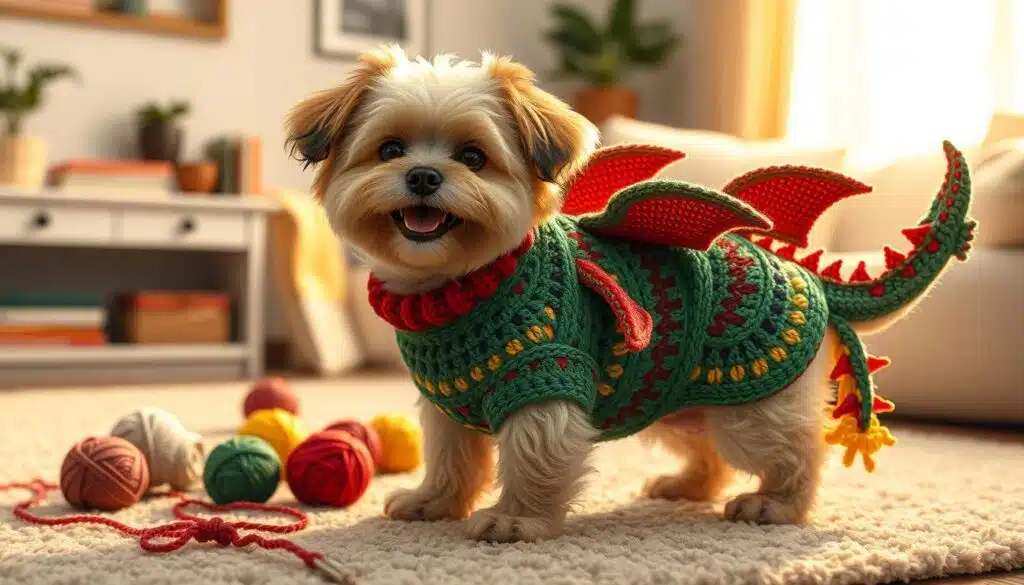
Patterns for small, medium, and large dogs
Begin with a basic outline for the neck, chest, and length. Then, pick a pattern. Simple designs like raglan or tube styles are great for small breeds. For medium dogs, aim for a snug back and a roomy belly opening.
Specialty designs: dragon sweater, linked puff stitch, and large-dog fits
The dragon dog sweater is a hit for its fun spikes and modern style. It’s perfect for photos and events. For extra texture and warmth, try a linked puff stitch. It adds loft without bulk.
For large dogs, use sturdy yarns and reinforced seams. This ensures the sweater can handle more movement and weight.
How to measure your dog for a custom fit
Getting the right fit is key. Measure your dog’s neck, chest, and length from neck to tail base. Check the pattern gauge and adjust the hook size or yarn weight if needed.
Watch for fit issues around the legs and belly. This ensures your pet can move and go to the bathroom easily. For large dogs, test the fit on a swatch and add reinforced stitches at stress points.
Cozy Cat Couture: Sweaters, Collars, and Tiny Beds
You want your cat to look stylish and feel comfortable. Make sure they can move freely and use the litter box easily. Choose patterns and materials that fit a cat’s body and habits well.
Cat sweater design tips: ensure neck and belly openings are big enough. Use short rows or ribbing for a snug but flexible fit. If dressing a shelter cat, pick simple stitches that work up fast and fit many sizes.
The right collar is key. Use a breakaway cat collar with a tested release buckle to protect curious climbers. Avoid small, detachable charms that can snag or be swallowed. For style, try a Pom-Pom Collar from Ravelry-sized ideas but keep decorations sewn on securely and out of reach.
When making a kitty bed crochet or cat pod, aim for coziness and machine-washability. Use two strands of worsted yarn for extra thickness, add a faux-fur lining for softness, or use jute rope for a rustic house that holds shape. A 14″ diameter pod with a 6″ entrance fits many indoor cats, those between 7 and 18 pounds.
Try gradual acclimation. Let your cat sniff new items, wear garments briefly, and reward calm behavior. Supervised sessions help you spot irritation or tight areas before unsupervised wear.
Patterns to bookmark include linked puff stitch options for a lightweight coat and compact cat house patterns that double as hideaways. If you want to scale projects for shelters, pick modular designs that let you swap yarn types and hook sizes without reworking the pattern.
Testing matters. Check fit on a relaxed cat, watch for rubbing at shoulders and under the belly, and measure with a soft tape around neck, chest, and back length. Keep a trusty breakaway cat collar on any cat that wears accessories and store small pom-poms away when unsupervised.
Plush Pet Beds and Blankets That Invite Naptime
You want your pet to flop into something plush, washable, and made with love. Choose patterns that mix fluff with easy care. This way, naps stay cozy and cleanup quick. Bulky yarns make projects faster and give pets the loft they love.
Patterns for pet beds
Try a peanut couch or a faux-furr bed for structure with soft sides. The Big Little Pet Bed uses super-bulky yarn and finishes fast. It’s a great Bernat Maker Big pet bed option you can finish in an afternoon.
Blanket ideas
The granny v stitch blanket creates a timeless, textured throw. It layers well inside a bed or across a crate. Quinn-style join-as-you-go methods yield smooth joins that cut down on seams.
For a dramatic chevron look, the Bradley Afghan in three colors works well with bulky yarns.
Choosing yarn weight and construction
Go bulky or super-bulky for beds so your crochet pet bed pattern holds shape and feels plush. Choose acrylic blends or washable wool blends for a truly machine-washable pet blanket. Build removable covers when possible and use join-as-you-go or single-piece constructions to reduce weak seams.
Pick stuffing that tolerates washing and resists clumping. For shelters or gifts, select patterns that use common yarns and clear sizing. A Bernat Maker Big pet bed paired with a machine-washable pet blanket keeps both style and sanitation on your side.
Fun and Durable Crochet Toys for Play and Enrichment
You want toys that can handle tail wags, zoomies, and furry pounces. Use tight stitches, rugged fibers, and smart stuffing to make toys that last. Community roundups offer designer patterns for shelters or your home.
For cats, try quick projects like a Fish Cat Toy or a Mouse Cat Toy. A door hanger cat toy in jellyfish style is a bouncy target for solo play. Ready-made inspiration can be found at crochet pattern roundups on Instagram.
Dog toys are chunky and chew-aware. Try chunky ball dog toys and no-sew pet toys like simple ropes. For big or chewing dogs, use double-strand yarn or rugged fibers and test the gauge by tugging at seams.
Stuffing choice is key. Polyester fill is light, washable, and good for gentle chewers. For dogs that chew a lot, use wool or tightly packed hay when supervised. Always pick pet-safe stuffing and avoid loose beads or buttons for unsupervised play.
Make toys safe by securing small parts and reinforcing seams. If you add a squeaker, make it removable or use it only in supervised play. Check toys often and remove or repair any worn-out parts.
Make a table of quick-reference tips to compare toy types and stuffing choices. This helps you pick the right match for your pet’s play style.
| Toy Type | Best For | Recommended Stuffing | Safety Notes |
|---|---|---|---|
| Fish Cat Toy | Batting and batting pounces | Polyester fill | Avoid beads; secure tail seams |
| Door hanger jellyfish | Independent cats; batting on doors | Light polyfill | Mount securely; remove if frayed |
| Chunky ball | Fetch for medium dogs | Polyester or wool for supervised play | Double-strand yarn; reinforce seams |
| No-sew rope toy | Tuggers and chewers | None (braided yarn) | Use thick yarn; trim loose ends |
When making toys for shelters, choose fast, durable, and washable patterns. Keep a stash of pet-safe stuffing and label toys with materials. Small, bright toys can boost adoption room engagement and encourage play during visits.
Use Instagram to study how pets interact with specific designs before starting a project. Watch scale, movement, and durability in short clips. This ensures your crochet cat toys and dog toys match your pet’s energy and your time. Always inspect toys weekly to catch wear early and keep play safe.
Upcycling and Shelter-Friendly Projects to Give Back
You can turn spare yarn into real comfort for animals in need. Small, fast projects let you make a big difference without a huge time investment. Pick washable, durable yarn in neutral or bright colors shelters accept.
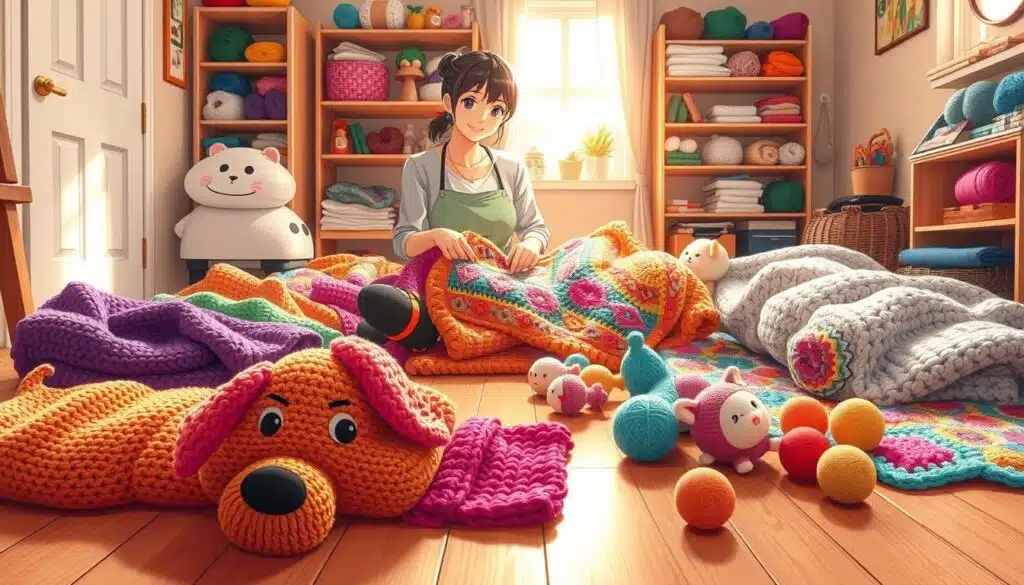
Quick patterns shelters love include simple blankets, bandanas, and mats. Granny-style squares stitch up fast and stack well for donation days. Bandanas use little yarn and offer instant cheer for dogs and adopters alike.
Use donated yarn and time-saving patterns to boost output. Work in batches: chain several bandanas, then switch to stitching blankets. Label each item with care instructions when possible. That small note helps shelter staff and adopters care for the piece.
Before you pack a box, contact shelters to confirm current needs. Ask about color preferences, sizes, and any safety rules. Shelters such as the Humane Society of the United States and local rescues often post guidelines on Instagram and Facebook.
Organize a shelter volunteer crochet session at your local library, church, or community center. Bring simple patterns and basic supplies. Groups like TLYC Makers and neighborhood yarn circles can amplify efforts and share pattern roundups you can follow.
Consider National Pet Month crochet campaigns in May to time a drive when media interest is higher. That window helps you recruit volunteers, gather donated yarn, and encourage people to donate pet blankets and bandanas. A coordinated push raises visibility and warmth for shelter animals.
Shelter volunteer crochet pays off when shelters receive ready-to-use items that meet their needs. Keep designs simple, durable, and machine washable. Your projects will move pets into cozy beds and faster into loving homes.
Project Planning, Tutorials, and Community Resources
Start with a simple plan you can finish. Choose a free pet crochet pattern or a basic Ravelry pet pattern. Make sure to check the gauge and note the yarn and hook sizes. Set a realistic timeline for your project, like a bandana in an afternoon or a blanket over a weekend.
Bookmark trusted tutorials so you can learn a stitch without losing your place. This helps keep your momentum going.
Where to find curated patterns and designer roundups
Look for designer roundups that collect must-make projects. They often link to Ravelry, Pinterest, and YouTube. A focused roundup saves time when you need ideas for cat toys, dog mats, or bird-safe swings.
Use the Secret Yarnery roundup as a starting point. It helps you explore designer sites and find new favorites by saving individual pattern pages.
Video lessons, social previews, and sharing
When a technique trips you up, search for crochet video tutorials. Instagram reels and Pinterest pins give quick previews of finished items. This helps you judge scale and texture before starting.
Post progress photos to invite feedback and troubleshooting. A short clip can earn tips that save hours of frogging.
Joining maker groups and contributing back
Find support in active crochet maker communities on Facebook groups, Ravelry forums, and local yarn shops’ meetups. Ask questions, share pattern links, and offer your photo-based notes for patterns you test. During donation drives or National Pet Month, use hashtags and community boards to amplify shelter-ready projects and recruit helpers.
Keep a running project sheet: pattern link, materials, gauge notes, and finish date. If you need a quick refresher, try the Secret Yarnery post for beginner tips and a curated set of resources to jumpstart your next pet project: crochet for pets resource.
Conclusion
You’ve learned how crochet can transform scrap yarn into cozy items for pets. You can make beds, scarves, bandanas, toys, and sweaters. These items are perfect for both rescue pets and beloved pets.
Follow designers’ blogs and social media for new patterns and ideas. You can also find resources like project roundups for quick weekend projects.
Remember to prioritize pet safety when crocheting. Choose yarns that are safe and easy to clean. Make sure your creations are comfortable and won’t pose any risks to pets.
Use Ravelry and designer websites for patterns. Instagram is great for sharing your work and finding communities for support and ideas.
Make gifts that are both stylish and practical for pets. Use durable stitches and easy-to-clean fibers. Consider donating your creations during National Pet Month or any shelter drive. Your small projects can make a big difference.
Now, grab your hook and yarn. Start crafting your next DIY project. It’s waiting for you.
FAQ
What kinds of pet projects can I crochet from the roundup?
You can crochet wearables like bandanas and sweaters for dogs. There are also beds and blankets, toys, and practical items. The roundup links to free and paid patterns and more ideas on Ravelry and social media.
Which yarns and materials are best for pet projects?
Choose yarns that are safe for pets, like acrylic or cotton blends. Bernat Maker Big is good for plush beds. Use polyester polyfill for toys, but wool for chewers under watch.
Avoid beads and loose buttons for toys. Use embroidery or safety eyes if you can watch.
How do I size a sweater, bandana, or bed to fit my pet properly?
Measure your pet’s neck, chest, and length for dogs. For bandanas, measure the neck. For cat sweaters, keep it short for litter access.
Check the pattern gauge and adjust as needed. Make sure it fits well and allows movement.
Are there quick patterns suitable for shelter donations or last-minute gifts?
Yes, bandanas, snarf scarves, and simple blankets are quick to make. Big Little Pet Bed and granny blankets work well with bulky yarn. Shelters like machine-washable yarns and bright colors.
What safety precautions should I follow when making items for pets?
Make sure toys are safe, avoiding small parts. Use breakaway collars for cats. Choose non-toxic materials and sturdy stitching for toys.
Inspect items regularly and remove if damaged. Never leave pets in clothing that could snag or restrict breathing.
Which toys are best for different chewers and how should I stuff them?
Soft toys are good for gentle chewers. For tough chewers, use sturdy yarns and minimal stuffing. Avoid plastic and fragile parts unless supervised.
Can I use scrap yarn for pet projects, and what projects suit scraps?
Yes, scrap yarn is great for bandanas, toys, and blankets. It’s budget-friendly and reduces waste. Use it for shelter donations.
How should I care for and launder handmade pet items?
Use machine-washable yarns and follow the label. Make removable covers for beds. Wash on gentle cycles and air-dry bulky items.
Fix items at the first sign of wear to prevent hazards.
Where can I find the specific patterns mentioned, like snarf scarves, dragon sweaters, and cat pods?
The roundup and designer blogs link to these patterns. Ravelry has many free or paid downloads. You can also find tutorials on YouTube and inspiration on Instagram and Pinterest.
How can I get involved with donation drives for National Pet Month?
National Pet Month is a great time for donation drives. Contact local shelters to learn their needs. Use social media to coordinate yarn donations and logistics.
Are there stitch techniques or tools that help make pet projects more durable?
Yes, use tight stitches and hold two strands together for thickness. Join-as-you-go methods reduce weak seams. Reinforce stress points with extra rows or backstitch sewing.
How can social media help with my crochet-for-pets projects?
Instagram and Pinterest offer color and fit inspiration. YouTube has step-by-step tutorials. Use these platforms to ask designers, share progress, and connect with maker groups.