
Welcome to a cozy corner of craft where knitting patterns for pets meet real-world yarns and joyful four-legged models. You’ll find pet knitting patterns that span simple bandanas to statement dog sweaters knitting projects and charming cat sweaters patterns. This piece is your map to turning skeins into snug, handmade pet wear that fits, performs, and earns extra treat-time admiration.
Major suppliers back these projects with accessible yarn lines like Red Heart Super Saver Bitty Stripes, Caron Colorama, Bernat Blanket Mist-Ical, Caron All Day Cotton, Bernat Blanket Extra Thick, and Caron Simply Me. Pattern libraries hold thousands of choices for knitters and crocheters—over 2,000+ designs and more than 700 free patterns you can download and start today.
Throughout the article you’ll discover the benefits of making your own pet pieces, how to pick the right fiber and yarn weight, which pattern attributes matter for fit and safety, and how to size your companion precisely. You’ll also explore tools, seasonal strategies, beginner-friendly quick wins, and intermediate patterns that add flair.
By the end, you’ll know how to choose yarns, sift through pet knitting patterns, and select dog sweaters knitting and cat sweaters patterns that match your pet’s lifestyle. Ready to wrap your furry friend in handcrafted style? Let’s begin.
Key Takeaways
- Knitting patterns for pets cover everything from quick bandanas to detailed sweaters.
- Major yarns like Red Heart, Caron, and Bernat support pet projects with many suitable options.
- There are 2,000+ pattern library entries and 700+ free patterns for immediate download.
- Choosing the right fiber and fit is as important as the pattern style.
- This guide will walk you through yarns, sizing, tools, seasonal tips, and project levels.
Why Knit for Your Pet: Benefits of Handmade Pet Wear
Knitting for your pet does more than just keep them warm. It lets you tailor the fit, fabric, and finish to your pet’s needs. This way, you create a sweater or bandana that matches their personality and meets their needs.
Comfort and fit advantages of custom-made pieces
Measuring your pet’s neck, chest, back, and legs helps you make a sweater that fits perfectly. Store-bought sizes often don’t fit right, causing discomfort. A custom-made knit ensures your pet moves freely and looks great.
It’s easy to adjust for different breeds and body shapes. For example, dachshunds, bulldogs, and greyhounds all need unique fits. Knitting lets you make these small changes for better comfort every day.
Safety and material control: choosing the right fiber for pets
You get to choose fibers that are safe for your pet. Brands like Bernat and Lion Brand offer non-toxic yarns. You can pick acrylic or polyester for easy care, or cotton and alpaca for breathability.
Stay away from small buttons and long tassels that pets might chew. Use tightly spun yarns and secure seams to prevent snagging. This way, you make clothes that are safe and last longer.
Bonding, gifting, and sustainable crafting
Knitting for your pet strengthens your bond. The time spent making a sweater is a special gift. Handmade pet wear is more personal than store-bought items.
Choosing to make instead of buy reduces waste and supports slow craft values. Durable yarns and thoughtful designs make each project a sustainable choice. This mix of love and responsibility is a key benefit of handmade pet clothing.
Knitting patterns for pets
https://www.youtube.com/watch?v=fgO-t8YM2y8
Once you start looking, you’ll find all sorts of projects. There are cozy sweaters, fun bandanas, tiny booties, and comfy beds. These items are often grouped together to help you find what you need quickly.
Overview of popular project types
Look for tags that list project type and season. Sweaters are often made with worsted or bulky yarn for quick projects. Bandanas and beds are fast to make and add a lot of style.
Booties and special accessories might need more shaping and finishing. This can make them take longer to complete.
Skill-level classifiers
Patterns usually list their difficulty level. You can find Beginner, Easy, and Intermediate projects. Beginner projects are simple, while Intermediate ones have more details.
Beginner projects have little shaping. Easy ones have basic increases or seaming. Intermediate projects include more complex stitches.
How to search pattern libraries
Use filters to narrow down your search. Look for Aran, Bulky, DK, Fingering, Super Bulky, or Worsted yarns. Choose Fall-Winter for warmer designs.
Big libraries have thousands of patterns and over 700 free ones. Lion Brand offers free pet patterns. You can browse by type and yarn weight easily: free knit & crochet patterns for.
| Project | Typical Yarn Weight | Suggested Skill | Why Choose It |
|---|---|---|---|
| Sweater | Worsted, Bulky | Beginner–Intermediate | Fast warmth and easy sizing adjustments |
| Bandana | DK, Worsted, Fingering | Beginner | Quick, stylish, low yarn use |
| Booties | Worsted, Bulky | Easy–Intermediate | Protect paws and add flair |
| Bed | Bulky, Super Bulky | Easy | Fast, cushioned, durable |
When searching, use multiple filters. Choose a project type, yarn weight, and difficulty level. You can also filter by brand for specific yarns like Bernat, Lion Brand, or Red Heart.
Choosing the right yarn: fiber types and weights for pet projects
You want your pet to love their cozy, durable knits. The best yarn for pet projects depends on your pet’s needs. Look for fibers that are easy to wash, soft, warm, and can handle chewing.
Fiber pros and cons
Acrylic yarn from Red Heart and Bernat is great because it’s machine-washable and affordable. It also doesn’t felt easily, making it perfect for pet projects.
Wool is warm and lets air through. Choose superwash wool like Cascade or Patons for machine washing. But, some pets might react to lanolin, so test it first.
Cotton, like Caron All Day Cotton, keeps pets cool and is soft. It’s good for bandanas and summer clothes. But, it might stretch over time.
Alpaca and mohair add luxury and fluff. Alpaca is warm and soft, great for special sweaters. Mohair looks fluffy but wears out fast, so use it for decorations.
Polyester and nylon blends are durable and chew-resistant. They’re made to last through play and can be machine washed.
Yarn weights and what to use
Fingering weight is perfect for small toys and light vests. DK and worsted are versatile for many garments. They offer stretch and are easy to knit.
Aran, bulky, and super bulky yarns make quick, warm sweaters. For fast, warm clothes, pick a heavier yarn and bigger needles.
Match needle sizes to the yarn weight and check the swatch gauge. Choose the right yarn weight for dog sweaters for comfort without bulk.
Allergies, chew-resistance, and washability
If your pet has sensitive skin, choose hypoallergenic fibers like acrylic or superwash wool. These fibers are gentle and easy to wash.
For chew-resistant yarns, go for tighter-twist yarns or nylon blends from Lion Brand or Universal Yarn. They last longer through play.
For easy care, pick machine-washable yarns from Red Heart, Bernat, and Cascade. These brands offer reliable options for washing without worry.
| Fiber | Strengths | When to choose | Brand examples |
|---|---|---|---|
| Acrylic | Washable, affordable, low irritation | Everyday sweaters, washable beds, beginner projects | Red Heart, Bernat |
| Wool (superwash) | Warm, breathable, natural elasticity | Cold-weather garments where warmth matters | Cascade, Patons |
| Cotton | Cool, soft, breathable | Summer knits, bandanas, indoor pets | Caron All Day Cotton |
| Alpaca | Very warm, soft, luxurious | Special pieces, light but warm layers | BC Garn |
| Polyester/Nylon blends | Durable, chew-resistant, machine-washable | Active dogs, high-wear areas, reinforced trims | Lion Brand, Universal Yarn |
| Mohair | Fluffy, decorative halo | Trims and accents, not heavy-use items | Rowan, Kid Silk blends |
Pattern details that matter: attributes to look for
When picking a pattern, think about your pet and your time. Look at the pattern attributes list for important details. Check for construction notes, yarn weight, needle size, and total yardage. These help you see if the pattern fits your yarn and schedule.
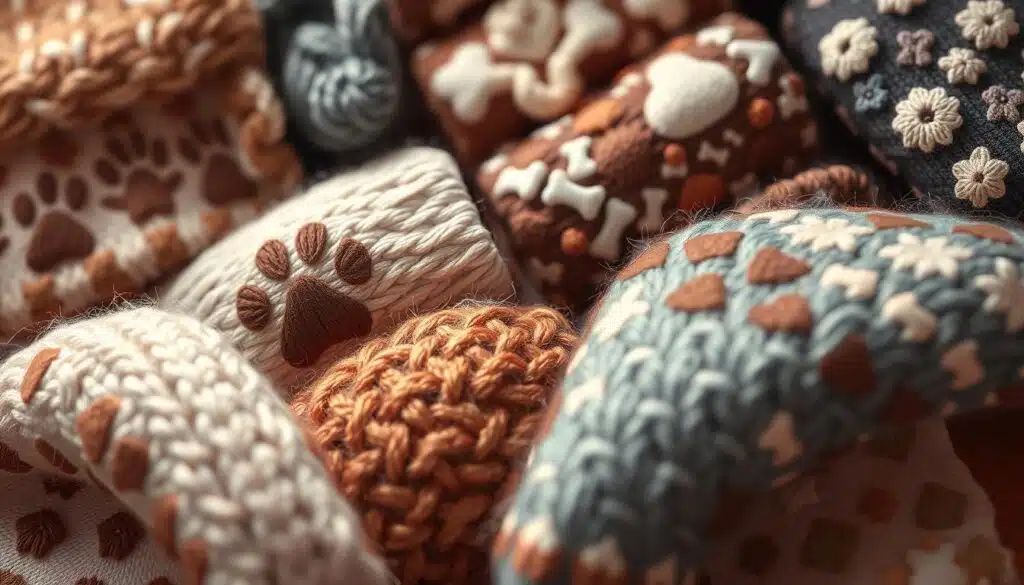
How a sweater is made affects how it fits. Top-down patterns let you adjust as you go. Bottom-up patterns offer predictable shapes and are often labeled as such.
Seaming is key for comfort and speed. Patterns may say Seamed or Seamless. In-the-round construction avoids seams and can be softer. Hooded options add warmth and style, so look for Hood, I-Cord, or Crochet Finish for extra details.
Technique tags show what skills and supplies you need. Cables, Fair Isle, and stranded colorwork add texture. Some patterns require special techniques like short rows. Seamless patterns are great for those who want easy finishing.
Double-check the yardage and fiber suggestions. Patterns list yardage from small to large, and suggest fibers. This helps avoid surprises and ensures the yarn is practical for your pet.
Use this quick table to compare common attributes when choosing a pattern. Match your skill, pet needs, and materials before starting.
| Attribute | What it means | When to choose |
|---|---|---|
| Top-down vs bottom-up pet sweater | Direction of construction; affects try-on and shaping | Pick top-down for adjustable fit; pick bottom-up for classic shaping |
| Seamed | Pieces knit flat then sewn together | Choose when you want structured shaping or simpler stitch patterns |
| Seamless pet knit patterns | Worked in-the-round with no sewn seams | Choose for comfort and fewer finishing steps |
| Hood / I-Cord / Crochet Finish | Additional style and closure options | Choose for warmth, secure fit, or decorative edges |
| Cables / Fair Isle / Stranded | Texture and color techniques that alter gauge and time | Pick for visual interest if you’re comfortable with the techniques |
| Yarn Weight & Yardage | Needle size match and project size in yards | Match to your yarn stash and how bulky you want the garment |
| Fiber Type | Material properties such as warmth, washability, and durability | Choose hypoallergenic or machine-washable fibers for practical pets |
Sizing and measuring your pet for a perfect fit
Getting the fit right starts with a few simple measurements. Think of this as your pet sweater sizing guide: accurate numbers make knitting easier and the finished sweater more comfortable for your dog or cat.
Neck: wrap a soft tape where the collar sits. Leave a finger’s width for comfort. This helps you size neck openings and turtlenecks.
Chest (girth): measure the widest part behind the front legs. Most patterns use this as the primary sizing figure. If you need to measure dog for sweater, this is the one you’ll repeat.
Back length: measure from the base of the neck to the base of the tail. Use this to set sweater length and avoid trip hazards.
Leg circumference: measure where the sleeve or leg opening will sit. Keep mobility in mind and add ease for thick fur or active dogs.
Patterns often list sizes from 2XS to XL and Adult. Use the schematic and gauge to match your pet knitting measurements to the closest pattern size. Check yarn yardage so you don’t run out mid-project.
Translate pattern sizes by comparing your pet’s chest and length to the pattern chart. If your numbers fall between sizes, choose the larger size and adjust with decreases or short rows for a custom fit.
Add or subtract ease based on coat and activity. For sled-type breeds that run, favor a snug, low-ease fit. For lounging pets, pick relaxed ease so your pet can stretch and roll without restriction.
Use short rows and targeted shaping to tweak neck depth, belly coverage, and leg openings. These small adjustments let you adapt standard patterns to unique body shapes and breed proportions.
Tools and notions: needles, stitch markers, and finishing supplies
You’ve chosen a pattern and yarn. Now, you need the right tools. A small kit of knitting tools for pet garments makes projects smooth and safe. Think about needle choices, handy notions, and the finishing steps that make a sweater or bandana look pro and stay pet-friendly.
Match needle sizes to yarn weight so your pet’s knit holds shape and fits comfortably. Needle sizes for pet knitting often span US 2 through US 17. Use smaller needles for fingering yarn and move up to US 7–11 for worsted through bulky. Super bulky projects ask for US 13–17 to keep stitches even and fast.
Keep needle sizes for pet knitting noted on the pattern. Gauge matters more than speed. A snug stitch can block out loose areas. A loose stitch can let claws catch. That balance makes the garment safe and wearable.
Knitting notions pet patterns rely on include stitch markers, stitch holders, and tapestry needles. Stitch markers prevent mistakes when shaping a neckline or leg opening. Stitch holders keep live stitches tidy while you work the body. Tapestry needles finish seams cleanly with minimal bulk.
I-cord tools and small crochet hooks add neat finishing touches. Use an I-cord for ties or decorative trims that won’t fray like ribbon. Crochet finish techniques hide yarn tails and reduce loose ends that could tempt a curious pup.
Blocking and finishing techniques shape the final piece. Wet or steam block according to fiber care; cotton and acrylic react differently than wool. Felting can add structure to wool garments for extra warmth. Secure buttons and embellishments well to prevent choking hazards.
| Item | Purpose | Recommended Sizes/Types |
|---|---|---|
| Needles | Create fabric and match gauge | US 2 (2.75 mm) to US 17 (12.0 mm); circulars for in-the-round |
| Stitch markers | Mark increases, decreases, or pattern repeats | Plastic or metal split rings; lockable for live-stitch sections |
| Stitch holders | Hold live stitches during shaping | Flexible cable holders or large safety-pin style |
| Tapestry needles | Seam and weave in ends neatly | Blunt tips, large eye for worsted and bulky yarns |
| I-cord tool / Knit picker | Make tidy cords for ties and trims | Handheld I-cord tool or small double-pointed needles |
| Blocking tools | Shape pieces and set gauge | Blocking mats, pins, steam iron or spray bottle |
| Embellishment safety | Secure buttons, bows, and appliqués | Sew-on buttons with shank, secure stitching, no small loose parts |
When you gather knitting notions pet patterns recommend, focus on safety and durability. Pick quality tools from brands like Clover or ChiaoGoo for needles and Bohin for pins. A thoughtful kit makes garments that look great, fit well, and stay on active pets without hazards.
Seasonal and functional pet garments: fall-winter vs year-round
Choosing knitwear for your pet is all about finding the right balance. You need pieces that are warm, breathable, and easy to care for. They should look good, fit well, and withstand rainy walks.
Warmth strategies for cold seasons
For really cold weather, choose Bulky, Aran, or Super Bulky yarns. These yarns trap air and keep your pet warm. For winter dog sweaters, consider a thick top layer and a thin underlayer for pets that get cold easily.
Lightweight, breathable options
When it’s mild or your pet stays indoors, opt for Fingering or DK weight cotton. Brands like Caron All Day Cotton make breathable pet knits that keep your pet dry. Use loose stitches to let air in without losing shape.
Weatherproofing and washability for active pets
Knits aren’t always waterproof. For pets that love water, choose washable, quick-dry synthetics like acrylic or polyester blends. Red Heart and Bernat offer durable, machine-washable yarns. If your pet goes out in the rain, add a waterproof shell over the knit.
seasonal pet knitwear patterns often list materials and care tips. This helps you choose between thick winter sweaters and light, airy knits for all seasons.
Beginner-friendly patterns to get started quickly
Ready to start knitting without stress? Begin with small projects that teach you the basics. These projects build your confidence and help you get better at controlling your stitches. Plus, they make your dog look stylish at the park.
https://www.youtube.com/watch?v=pqAbxpnjF-w
Simple garter-stitch sweaters and bandanas
Garter stitch is easy to work with. It’s a simple pattern that makes a sweater for most small to medium dogs. You can also make a stylish dog bandana to go with it.
Choosing worsted or bulky yarn for faster projects
Use worsted or bulky yarn to knit faster. These yarns work well with larger needles, making your projects quicker. You can finish a sweater or bandana in just a few hours.
Where to find hundreds of free beginner patterns and downloads
Look for pattern libraries that let you filter by skill level and yarn type. Find easy pet knitting patterns and sort by worsted or bulky yarn. There are many free downloads for sweaters, bandanas, and more.
| Project | Skill focus | Suggested yarn | Estimated time |
|---|---|---|---|
| Garter-stitch sweater | Seaming, simple shaping | Worsted | 4–8 hours |
| Easy dog bandana pattern | Triangle shaping, basic finishing | Worsted or Bulky | 1–2 hours |
| Basic booties | Short rows, seaming | Bulky | 2–4 hours |
| Quick pet sweater knit (tube style) | In-the-round, gauge reading | Bulky | 3–6 hours |
Intermediate designs: shaping, colorwork, and novelty pieces
Ready for more? Intermediate pet knitting patterns offer garments with personality. You’ll learn shaping, cables, and colorwork. These projects make your pet’s sweater stylish and snug.
Cables, stripes, and stranded colorwork
Cables add a tailored look for small pets. Stripes offer bold contrast. A Fair Isle dog sweater is a showstopper with its crisp motifs.
Hoods, pockets, and I-cord finishes
Functional add-ons make a sweater useful. Hoods add warmth, pockets hold treats, and I-cord ties are durable. You’ll need markers, a cable needle, and extra yarn for shaping.
Costumes and celebratory pieces
Novelty pet costumes celebrate holidays and milestones. They mix shaping and colorwork for fun designs. Be sure to check the yarn for comfort.
For inspiration, visit lovelifeyarn. They have a collection of patterns that show off these techniques. You’ll find everything from cablebacks to patchy sweaters.
Choose a project that excites you. Gather your notions and watch your pet wear a handcrafted piece. It will be a mix of fit, function, and flair.
Sourcing patterns and yarn: best resources and trusted brands
Looking for reliable places to find patterns and yarn? Start with big pattern libraries. They have over 2,000 designs and more than 700 free patterns ready to download. You can filter by yarn weight, season, difficulty, or project type to find what you need quickly.
Want to find pet knitting patterns? Look in libraries and marketplaces. Read pattern notes and preview schematics before buying. Use yardage and needle size to avoid buying the wrong amount. For a quick guide on yarn basics, check common yarn tips to save time.
Top pattern libraries with thousands of designs and 700+ free patterns
Major platforms have huge collections and strong filters. You can filter by yarn weight, season, and difficulty. This helps avoid surprises and keeps your project on track.
Recommended yarn brands for pet projects: Bernat, Lion Brand, Red Heart, Cascade
Choose brands that are durable, washable, and soft. Bernat Blanket, Lion Brand Wool-Ease, Red Heart Super Saver Bitty Stripes, and Cascade lines are good choices. Also consider BC Garn, Patons, Universal Yarn, King Cole, and Garnstudio for specialty fibers.
For pet projects, look for acrylic blends and washable cottons. Caron Colorama and Caron All Day Cotton from Yarnspirations pet patterns are great for textured or novelty pieces.
How to filter searches by yarn weight, yardage, season, and difficulty
Use filters to get reliable results. Set yarn yardage ranges to match pattern requirements. For example, 0–150 yards for small accessories or 1200–1500 yards for large blankets.
Pick fiber type filters — acrylic, wool, cotton, alpaca, polyester — to manage warmth and chew-resistance. Match needle size and gauge to pattern notes to avoid fit problems.
When shopping, cross-check the pattern’s recommended brand examples and compare yardage with the skein label. This step prevents mid-project trips to the yarn store and keeps your pet comfy from the start.
Conclusion
Knitting patterns for pets conclusion: you now know that handmade pet wear is both comfy and safe. Choose the right yarn weight and fiber for your pet’s needs. Follow the pattern’s instructions for a great fit.
Remember, the right tools and finishing touches make a big difference. They turn a simple sweater into something special.
Handmade pet wear tips: use trusted brands like Bernat and Lion Brand for consistent quality. Pattern libraries have thousands of designs, with many free to download. A quick look at pattern collections can get you started.
Choose yarns that are chew-resistant and easy to wash. Make sure they match the season for the best look.
In short, measure carefully and match the yarn to your pet’s needs. Follow the pattern for a great result. With these steps, you’re ready to knit something cozy and stylish for your pet.
Now, cast on and enjoy making something both useful and delightful.
FAQ
What are the main benefits of knitting patterns for pets?
Knitting for pets offers custom comfort and fit. You can avoid allergens or irritants by choosing the right materials. It also strengthens your bond with your pet and reduces reliance on mass-produced apparel.
Which yarn brands and products are good choices for pet projects?
Trusted brands include Bernat, Lion Brand, Red Heart, Cascade, Patons, Universal Yarn, BC Garn, and Garnstudio. Yarnspirations offers Red Heart Super Saver Bitty Stripes, Caron Colorama, and more. These brands provide washable, durable, and budget-friendly options.
How many patterns are available and where can I find free downloads?
Over 2,000+ patterns are available for knitters and crocheters. More than 700 free patterns can be downloaded immediately. Sites like Yarnspirations let you filter by yarn weight and season.
What project types are popular for pets?
Popular pet projects include sweaters, bandanas, booties, beds, and cozy blankets. Libraries often tag projects by type for easy searching.
How do I choose the right yarn fiber for my pet?
Choose fiber based on warmth, washability, and sensitivity. Acrylic is affordable and machine-washable. Wool is warm but can irritate some animals. Cotton is breathable for warmer climates. Alpaca is warm and soft but pricier. Polyester and nylon blends add durability and chew resistance.
Which yarn weights suit which pet garments?
Fingering weight works for lightweight garments and toys. DK and worsted are versatile for everyday pet wear. Aran, Bulky, and Super Bulky provide warmth for winter sweaters.
How should I measure my pet for a knitted garment?
Measure neck circumference, chest, back length, and leg circumference. Compare these to the pattern schematic and gauge to choose the right pattern size.
How do pattern sizes like 2XS to XL translate to my pet’s measurements?
Patterns list schematics and gauge; use those to match your pet’s measurements. Check the yarn yardage ranges. If your pet falls between sizes, adjust ease and gauge or choose the larger size and alter length as needed.
What is “ease” and how do I adjust it for different breeds?
Ease is the extra room added to a finished garment for comfort and coat thickness. Add more ease for bulky-coated or relaxed-fit garments; reduce ease for sleeker, active-fit pieces. Use short rows or shaping to fine-tune neck and back length for breeds with unique proportions.
When should I choose top-down versus bottom-up construction?
Top-down patterns let you try the piece on as you go and adjust fit easily. Bottom-up construction can give different shaping options. Pattern attributes will usually indicate Top‑Down or Bottom‑Up.
Are seamed or seamless garments better for pets?
Seamless, in-the-round construction often avoids rub points and can be more comfortable for pets. Seamed garments may allow easier shaping in some areas. Consider the pet’s comfort and the pattern’s intended wear when choosing between seamed and seamless options.
What techniques should I consider for intermediate pet designs?
Intermediate patterns commonly include cables, Fair Isle and stranded colorwork, stripes, short rows, and felting. These add personality and structure but increase complexity and yarn yardage requirements. Tags like Cable, Fair Isle, and Stranded help you find these features in pattern libraries.
How can I make pet garments more durable and chew-resistant?
Use tighter-twist yarns and blends with polyester or nylon for added toughness. Synthetic and superwash fibers are more resistant to felting and abrasion. Avoid fragile embellishments and secure trims firmly to prevent choking hazards.
What needles and notions do I need for pet projects?
Needle sizes range from US 2 (2.75 mm) up to US 17 (12.0 mm) depending on yarn weight. Helpful notions include stitch markers, stitch holders, tapestry needles, I‑cord tools, and blocking mats. Crochet hooks can be handy for finishing and fixing dropped stitches. Pattern metadata will list recommended needle sizes.
How important is blocking and finishing for pet wear?
Blocking shapes the finished piece and refines fit; wet or steam blocking is chosen based on fiber. Felting can add structure and insulation for wool projects. Always follow fiber-specific care and make sure any decorative elements are secured to prevent hazards.
What yarn choices are best for cold-weather pet garments?
For Fall‑Winter wear, choose Aran, Bulky, or Super Bulky yarns and wool blends for insulation. Felting and layering increase wind resistance and warmth. Brands like Bernat and Cascade offer heavy‑weight options suited to seasonal knits.
Which yarns suit year‑round or warm-climate pet knits?
Fingering or DK weight cotton and cotton blends, such as Caron All Day Cotton, make breathable, lighter garments for mild climates or indoor pets. Use looser stitch patterns to increase airflow and prioritize soft, non‑irritating fibers.
How do I find beginner-friendly pet patterns?
Search pattern libraries for Beginner or Easy tags and look for simple garter-stitch sweaters, bandanas, and basic booties. Filtering by yarn weight—worsted or bulky—also surfaces fast, approachable projects. Thousands of free beginner patterns are available across major libraries.
How do I estimate yarn yardage for a pet project?
Check the pattern’s listed yarn yardage range. Small items may need under 150 yards; large or multi-size designs can require 1200–1500 yards. Choose yarn enough for your pet’s size plus extra for gauge differences, stripes, or colorwork.
Can I filter pattern libraries by brand and season?
Yes. Many sites let you filter by yarn brand (Bernat, Lion Brand, Red Heart), yarn weight (Fingering to Super Bulky), season (Fall‑Winter), difficulty, and yardage. Use these filters to match your preferred fiber, speed, and climate needs.
Are there safety tips when knitting for pets?
Use machine‑washable, non‑toxic fibers for easy care and hygiene. Avoid buttons, beads, or long ties that pose choking risks. Secure embellishments tightly and select fibers suited to your pet’s sensitivities—acrylics and superwash wools are often safe and practical choices.
What are quick starter projects for building skill and confidence?
Try garter-stitch sweaters, simple bandanas, and basic booties. Using worsted or bulky yarn speeds up progress. These projects teach essential shaping and finishing without complex techniques.
Which brands offer durable, washable yarns for active pets?
Red Heart and Bernat provide robust, washable acrylics and blends. Lion Brand and Cascade also offer durable options in worsted and bulky weights. Look for yarns labeled machine‑washable or superwash for easy maintenance.
How do novelty and costume designs affect yarn choice?
Costumes and celebratory designs often need more yardage and may use finer fibers or multiple colors for detail. Choose comfortable, lightweight fibers if the garment is worn briefly, and ensure decorations are safe. Check pattern yardage—complex designs can require hundreds to over a thousand yards depending on size.