
Knit one, purl one, and breathe. You know the joy of making yarn into fabric. But mindful knitting makes that joy a calm practice. It turns simple stitches into a mindfulness hobby that slows you down and makes you present.
Knitting for mindfulness is like a quiet loop that pulls your focus away from worries. Therapists suggest activities like knitting to calm the nervous system. Mindful.org says mindfulness is being fully present, and knitting fits that perfectly.
Knitting also has a practical side. Many knitters pick projects for the challenge, creativity, or to make gifts. Brands like Re:Treat yarn offer easy paths into this calming world. You don’t need to worry about perfect stitches or a finished project. The journey is what matters.
Key Takeaways
- Mindful knitting moves your attention to breath and stitch, reducing mental clutter.
- Rhythmic, repetitive motions calm the nervous system and support relaxation.
- Approach knitting as a mindfulness hobby focused on process, not perfection.
- Simple kits like Re:Treat yarn can make starting mindful knitting easy.
- Knitting relaxation fits into short, regular sessions and daily routines.
Why Knitting Makes a Great Mindfulness Practice
When you start knitting, the world seems to slow down. The rhythm of knitting tells your nervous system to relax. Simple stitches help ease stress and bring calm.
Therapists say that doing the same thing over and over helps distract from worries. Once you know a pattern, you get lost in the flow. This lets your mind relax while your hands keep a steady pace.
Knitting is like playing the piano. It uses both sides of your brain. This helps you focus and keeps your thoughts balanced, stopping you from getting caught up in worries.
Counting your stitches becomes a simple way to stay present. Knitting asks for enough focus to keep your mind from wandering, but not so much that it’s overwhelming. This balance keeps your mind active but not too busy.
Soon, you’ll see the benefits. Knitting’s rhythm calms your nerves, using both hands improves brain function, and staying focused keeps you in the moment.
| Mindful Element | What It Feels Like | How It Helps |
|---|---|---|
| Rhythm of knitting | Steady, reassuring beat of stitches | Calms heart rate and eases anxious thoughts |
| Repetitive motion benefits | Predictable, soothing repetition | Shifts focus away from stress and reduces rumination |
| Bilateral hand movement knitting | Coordinated movements like a gentle duet | Stimulates both hemispheres, aiding attention and memory |
| Focused attention knitting | Calm concentration without strain | Maintains presence while preventing mental overload |
knitting for mindfulness
Make a simple hobby into a mindful craft by setting an intention. Choose a quiet spot, a soft lamp, and a simple pattern. This helps you focus on the moment and your breath.
Defining mindfulness in the context of knitting
Defining mindful knitting means being aware of your actions. James Baraz says mindfulness is noticing the present without wishing it were different. For knitting, that means paying attention to the yarn’s weight, the sound of stitches, and your hand’s rhythm.
How presence, breath, and stitch work together
To feel centered, sync your breathing with your knitting. Try inhaling for five seconds, holding for five, and exhaling for five. Match each breath with a set of stitches for a calming effect.
Therapists suggest approaching projects with curiosity and patience. Don’t worry about perfect results. Treat mistakes as learning opportunities. Choose simple patterns to keep your focus on the process, not the outcome.
For a calm knitting session, silence your phone and create a cozy space. Choose yarn that feels soothing. For beginner tips and advice, visit knitting advice for short, satisfying sessions.
Real-life accounts: knitters who felt calmer and more accomplished
Knitting stories often share less worry and a more stable mood. A Stitchlinks participant found knitting brought peace, even beyond medication. Such stories show how knitting can build confidence and reduce anxiety.
Begin with small steps, immerse yourself in the craft, and explore each stitch. Over time, these moments of focus become a reliable mindfulness practice, even on busy days.
Mental and Physical Health Benefits Backed by Research
Knitting is more than just making cozy scarves. Recent studies show it can lower stress and improve thinking. You’ll learn how the simple act of knitting can change your mood and health.
A Stitchlinks study found that frequent knitters feel calmer and happier. Over half of those with clinical depression reported feeling happy after knitting. This suggests that knitting can help improve mood for many people.
Clinical studies provide more insight. In a 2009 study, 74% of participants with eating disorders saw a big drop in weight worries after knitting. More than half felt proud and accomplished from their projects. This shows how knitting can help shift obsessive thoughts to more positive tasks.
Knitting also helps those with chronic pain. A study at Royal United Hospital, Bath, found that joining knitting circles reduced pain-related isolation. The study linked knitting’s rhythm to serotonin release and reported lasting social support. These findings support knitting’s benefits in health care settings.
Licensed therapists also see the benefits. Knitting can lower cortisol levels and help regulate the nervous system. The repetitive motion can break cycles of negative thinking. This aligns with reports on knitting’s effects on anxiety and depression.
Neuroscience explains how knitting works. The act of knitting activates the brain and can lead to mood improvements. Studies show that knitting’s rhythm can trigger serotonin changes and reduce negative thinking. This helps explain why knitters often report better focus and calm.
Practical care partnerships enhance knitting’s benefits. Organizations like Mental Health America and clinical programs offer resources that support knitting. When these resources are combined with knitting, outcomes in eating disorders and chronic pain improve. This shows how knitting research is applied in real-world settings.
Below is a concise comparison of key findings from surveys, clinical studies, and neuroscience work. Use it to see where evidence is strongest and where more research could help guide practice.
| Evidence Type | Key Findings | Implications for You |
|---|---|---|
| Survey (Stitchlinks) | Higher knitting frequency linked to feeling calmer and happier; >50% of depressed respondents reported improved mood | Regular, short sessions may boost mood and offer low-cost self-care |
| Clinical (Eating disorder program) | 74% reported reduced weight-management preoccupation; 53% felt pride after knitting instruction | Structured knitting classes can reduce rumination and build self-esteem |
| Clinical (Chronic pain, Royal United Hospital) | Rhythmic knitting tied to serotonin release; social circles reduced isolation; benefits persisted post-study | Group knitting offers pain coping and lasting social support |
| Therapist Reports | Immersive hobbies lower cortisol by shifting nervous system toward regulated state | Mindful knitting can be a therapeutic adjunct to formal treatment |
| Neuroscience | Bilateral hand movements stimulate broad neural networks; rhythm promotes neurotransmitter shifts and less rumination | Consistent practice may strengthen neural pathways tied to mood regulation |
How to Start Mindful Knitting: Tools, Space, and Simple Patterns
Starting mindful knitting is easy with a few simple steps. Find a quiet spot or a cozy coffee shop seat. Set up soft lighting and choose a comfy chair with good back support. Keep your supplies close for easy, short sessions.
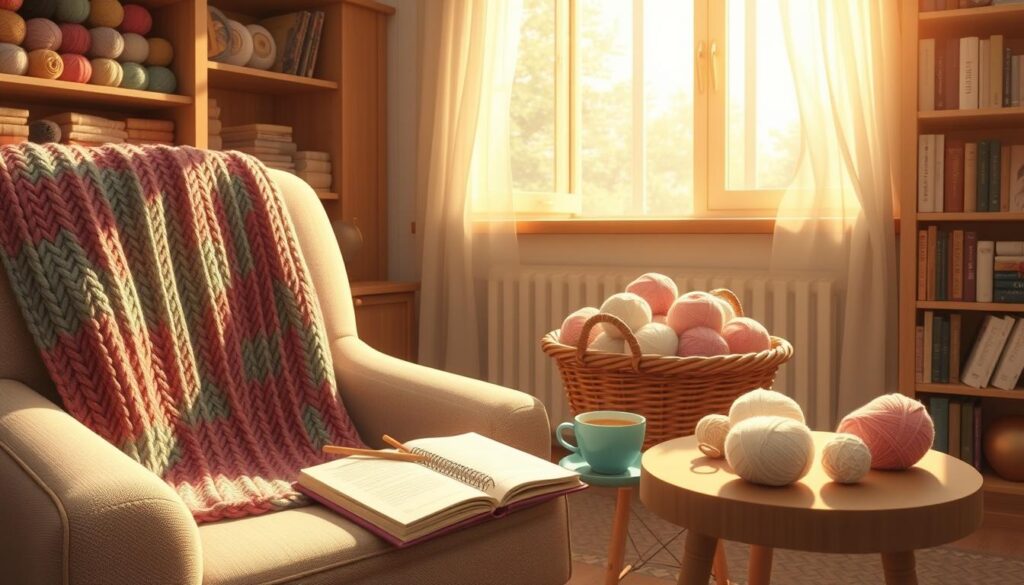
Setting up a calming knitting nook—lighting, chair, and ergonomics
For a peaceful knitting spot, aim for warm, soft light. Choose a chair that supports your back. Place your feet flat and rest your arms at a natural height. Use firm pillows or a nursing pillow for extra arm support.
Add plants or a window view to keep you grounded. For setup ideas, check this mindful knitting resource here.
Choosing beginner-friendly, meditative patterns to build rhythm
Begin with simple patterns that let you breathe with each stitch. Try garter stitch scarves, basic shawls, cushions, and plain socks. These patterns help you find a steady rhythm without constant counting.
Choose projects that offer small victories, like a scarf or throw. This predictable progress encourages you to make knitting a daily habit. It helps you align your breath with each row.
Recommended needles and soft, comforting yarns for sensory comfort
Choose needles that feel good in your hands. Bamboo or wooden needles are warm and forgiving for beginners. Make sure the needle size matches the yarn weight for even stitches and rhythm.
For sensory calm, pick soft yarns. Good choices include Debbie Bliss Rialto DK, Malabrigo Mechita, Malabrigo Sock, Regia 4 Ply, and West Yorkshire Spinners Re:Treat. These yarns offer a brain-friendly texture.
| Item | Why it helps | Example |
|---|---|---|
| Lighting | Reduces eye strain, creates a warm mood | Soft LED lamp with warm tone |
| Chair & ergonomics | Supports posture and reduces fatigue | Comfy armchair + lumbar pillow |
| Arm support | Keeps shoulders relaxed during long rows | Firm pillows or a nursing pillow |
| Beginner patterns | Builds rhythm without complex counting | Garter stitch scarf, basic shawl, cushion |
| Needles | Comfortable grip improves flow | Bamboo or wooden needles, size suited to yarn |
| Yarns | Sensory comfort that soothes hands and mind | Debbie Bliss Rialto DK; Malabrigo Mechita; West Yorkshire Spinners Re:Treat |
| Sound | Background audio can enhance relaxation | Acoustic guitar, nature sounds, or white noise |
| Supplies visibility | Encourages short sessions and routine | Project basket within arm’s reach |
When starting mindful knitting, choose simple tools and soft materials. A calm space and gentle patterns help you breathe, focus, and build a relaxing habit.
Mindful Techniques to Use While You Knit
Before you start knitting, take a deep breath and set a calm goal. These simple steps help you shift from doing to being. They turn a quick project into a soothing ritual.
Breath-stitch alignment and the 5-5-5 breathing method
Match your breath with your stitches. Breathe in for a set of stitches, then out as you finish. This is the core of breath-stitch knitting.
For when you feel lost, try the 5-5-5 breathing. Breathe in for five seconds, hold for five, then out for five. Do this a few times, then go back to your knitting.
Using sensory awareness: texture, color, and sound
Feel the yarn in your hands. Notice the softness of Malabrigo or the smoothness of Debbie Bliss. Sensory knitting makes touch a focus point.
Choose colors that calm you. Soft blues or warm neutrals can set your mood. The sound of needles clicking can be as soothing as music.
Letting go of perfectionism and focusing on being
See mistakes as chances to learn. Tinking a row or dropping a stitch is part of the journey. Therapists say to treat errors as teachable moments.
Try short exercises like counting breaths with stitches or scanning your shoulders. These mindful techniques lower stress and calm your mind.
| Practice | How to Do It | Benefit |
|---|---|---|
| Breath-stitch pairing | Match one breath to five stitches; adjust to comfort | Improves focus and steady rhythm |
| 5-5-5 breathing | Inhale 5s, hold 5s, exhale 5s for 3–6 cycles | Quick reset for anxiety and scattered thoughts |
| Sensory scan | Notice texture, color, and needle sound every few minutes | Anchors attention and deepens sensory knitting practice |
| Micro-meditation | Pause for 1–2 minutes to breathe and relax shoulders | Resets tension and prevents strain |
| Compassionate tink | Undo mistakes calmly; treat errors as part of craft | Reduces perfectionism and supports being-centered focus |
Creating a Habit: How to Make Knitting a Regular Calming Practice
You want knitting to be a regular part of your day, not just a hobby. Start with small wins: five to ten minutes each session. This builds momentum without feeling overwhelmed. It makes knitting a habit you can keep up with.
Make knitting a part of your daily routine. Tie it to tea time, your evening wind-down, or your commute home. This helps your brain link knitting to something familiar, making it easier to start every day.
Start small to build momentum
Keep your sessions short and consistent. Use a timer for ten minutes and enjoy the time. Tracking your progress, like rows or minutes, rewards you and strengthens your knitting habit. Missing a session is okay; it’s just a pause, not a failure.
Pair knitting with an existing habit
Create a cozy trigger for knitting. Make tea, turn off your phone, and sit in your favorite chair. These steps signal to your brain it’s time to relax. For more tips, check out knitting advice.
Keep supplies visible and welcoming
Leave a small project bag where you spend time. An inviting corner with needles and a simple kit encourages you to knit. Mindful knitting kits and visible supplies make it easy to start knitting daily.
Use cues to strengthen your routine. A dedicated mug, a snug blanket, or a special playlist can help. These sensory anchors make knitting a calming ritual that feels effortless.
Set gentle reminders and celebrate small wins. Over time, you’ll see how consistent short sessions create a calming knitting routine that fits into your life.
Social and Community Benefits: Knitting Circles and Charity Knits
Joining a knitting circle connects you to a small, steady group of people. It lifts your mood, eases feelings of loneliness, and lets you share tips. Research shows that knitting together can create lasting support, even after programs end.
Knitting with friends can feel like a gentle medicine for better days. It offers a rhythm that helps ease social anxiety and builds trust. You get practical help with patterns and emotional support when you hit a snag, showing that knitting groups are more than just hobbies.
The emotional lift of group knitting and peer support
In group settings, you share both successes and challenges. This feedback loop boosts your self-esteem and reduces feelings of loneliness. Studies show that social knitting can even reduce loneliness in people with chronic pain.
Knitting for charity: neonatal units, shelters, and community drives
Charity knitting meets real needs. Neonatal units often ask for tiny hats and booties. Animal shelters welcome small blankets. Homeless shelters and community centers take hats and scarves during cold months.
To make a bigger impact, join local yarn shops, community centers, or online groups like Ravelry. You can also sign up for drives or create a knitting night to make items quickly. For a quick guide on the mental health benefits of knitting, check this guide: knitting for mental health benefits.
How giving away your knits boosts wellbeing and reduces stress
Donating your work brings emotional gains. People who knit for charity report higher happiness and a stronger sense of purpose. It can even lower blood pressure and calm your breathing.
Community knitting connects your craft to something bigger. It turns quiet crafting into a joyful ritual that supports mental health and strengthens local bonds.
| Activity | Typical Recipients | Wellbeing Benefit | How to Join |
|---|---|---|---|
| Knitting circles | Local members, beginners, seniors | Reduced isolation, peer learning | Check yarn shops, libraries, community centers |
| Charity knitting drives | Neonatal units, shelters, disaster relief | Sense of purpose, lower stress | Contact hospitals, shelters, or organized campaigns |
| Community knitting projects | Public art, warm clothing programs | Collective pride, increased social ties | Join local nonprofits or online groups |
| Virtual knitting groups | Global members, remote learners | Flexible connection, skill sharing | Search Ravelry, Facebook groups, meetup platforms |
Mindful Knitting Kits and Product Recommendations
Ready to make mindful knitting feel effortless? Choose a kit that makes it easy and keeps you calm. A good knitting starter kit has needles, yarn, and a simple pattern. This lets you focus on the rhythm, not the choices.
Look for kits made for mindfulness and mindful making. Brands like Universal Yarn offer sets that match your skill level. These kits include the right tools and enough yarn for a project.
Start with a kit that matches your skill level. Beginners should try simple projects like scarves or small pouches. These quick wins build confidence and keep your practice soothing.
Yarn picks that soothe: soft textures and calming color palettes
Calming yarns make a big difference. Try soft fibers like Malabrigo Mechita or Malabrigo Sock for their gentle feel. Debbie Bliss Rialto DK and Regia 4 Ply 50g are great for neat stitches.
West Yorkshire Spinners Re:Treat is perfect for mindful making. It offers peaceful colors that help you relax. Choose colors like soft gray, sage, or dusty rose to enhance the calm.
Accessories to enhance comfort: arm supports, project bags, and lighting
Simple accessories can boost comfort and focus. Use an arm-support pillow or firm pillows to reduce strain. A nursing pillow can also act as a compact arm rest.
Good lighting is key. A bright, adjustable lamp cuts eye strain and helps you knit at a relaxed pace. Keep your accessories in a project bag to encourage knitting.
Quick checklist
- Pick a mindful knitting kits set that matches a small, clear project.
- Choose calming yarns like Malabrigo, Debbie Bliss, Regia, or West Yorkshire Spinners Re:Treat.
- Gather knitting accessories: arm support, project bag, needle gauge, stitch markers, and scissors.
- Buy locally at a yarn shop or through trusted online sellers to touch yarn before you commit when possible.
Pair your kit with a calming playlist or soft background sound. A tidy, ergonomic space and the right tools make each session a pocket of calm.
Troubleshooting Mindful Knitting: Common Obstacles and Fixes
When knitting gets tough, take a deep breath and simplify. Start with small, easy patterns to find a rhythm. Don’t worry about making mistakes; they can teach you more than perfect rows.
When frustration rises
Feeling frustrated? Take a minute to breathe deeply or match your breath to your stitches. Try garter stitch or a simple pattern to regain confidence. If a pattern is too hard, frogging a few rows or switching to something easier is progress.
Managing aches and posture
Knitting can hurt your back and shoulders. Use pillows and supports to keep your back straight and arms comfortable. Micro-stretches between rows can help with neck and upper back pain.
Needle and yarn tweaks
Needle pain? Try different sizes or materials. Wooden needles might feel warmer and better for grip, while metal needles move faster. Changing yarn weight or texture can make a project more enjoyable.
Keeping your practice alive
To stay motivated, work on small projects that match your mood. Keep your supplies out and knit with a favorite drink or podcast. A daily knitting ritual and donating your work can add purpose.
A quick troubleshooting checklist
- Concentration drift? Use breath-stitch alignment or 5-5-5 breathing.
- Pattern too hard? Frog a few rows or pick a simpler design.
- Hands ache? Change needle size, material, or try wooden needles.
- Posture pain? Add pillows, arm supports, and take micro-stretch breaks.
- Motivation flagging? Start a tiny project, keep yarn in sight, or knit with friends.
For more tips on how knitting helps with focus and overthinking, visit knitting for overthinking. Use these tips to keep your knitting sessions calm and productive.
Conclusion
Knitting for mindfulness is simple: it calms the mind, wakes the brain, and boosts mood. Studies from the University of British Columbia to the Mayo Clinic back this up. They show it reduces stress and improves thinking skills.
For a quick start, try five mindful minutes with soft yarn and a cozy spot. Think of it as a mini-meditation, not a deadline. Start small, pair it with tea or wind-downs, and be patient as it becomes a habit.
When you knit mindfully, focus on the journey, not the outcome. Use simple patterns to stay in the moment. Knitting also connects you to others through social groups and charity projects.
Knitting for mindfulness is easy, affordable, and scientifically supported. Start with a basic kit, a comfy chair, and just five minutes of focused knitting. Your next stitch could be the one that relaxes you, sharpens your mind, and brings you closer to others. For tips on tools and techniques, check out knitting advice guides.
FAQ
What is “mindful knitting” and how is it different from regular knitting?
Mindful knitting is about paying full attention to the present moment while knitting. It’s not just about making something. It’s about enjoying the process, feeling the yarn, and listening to the needles click.
Why does knitting feel so calming? What’s happening in my brain?
Knitting’s calming effect comes from its repetitive motion. It helps shift your focus away from worries. This can lower your stress levels and improve your mood.
Can knitting actually reduce anxiety or depression?
Yes, studies show knitting can help with anxiety and depression. It can make you feel calmer and happier. But remember, it’s not a cure-all; it’s best used alongside professional help.
How do I get started without feeling overwhelmed?
Begin with just a few minutes a day. Choose a simple project like a scarf. Use a kit to make things easier. Try to knit at the same time every day to make it a habit.
What should my knitting nook look like?
Your knitting spot should be cozy. Use a good chair and soft lighting. Keep your yarn and needles within reach. Adding a plant or a view can make it even more relaxing.
How do I align my breath with my stitches?
Try the 5-5-5 method: breathe in for five seconds, hold for five, breathe out for five. Match this with your knitting. It helps you stay focused without getting stuck.
Which yarns and needles are best for mindful knitting?
Soft yarns like Malabrigo or Debbie Bliss are great. Wooden needles are warm and grippy. Choose smooth yarns and colors that calm you.
What patterns are most suitable for mindfulness?
Simple patterns like garter stitch scarves are best. They let you get into a rhythm. Avoid complex patterns until you’re more comfortable.
How long before I feel the benefits?
You might feel calm right after starting. Studies and people say it helps reduce worries. Regular knitting will make the benefits stronger over time.
What if I get frustrated or make mistakes?
Mistakes are okay. Frogging a few rows or switching to garter stitch is fine. View knitting as a way to relax, not as a task to be perfect.
Can knitting help with chronic pain or hospital recovery?
Yes, it can help with chronic pain and recovery. Programs have shown it can improve symptoms. Knitting with others can also make you feel less alone.
How do I manage physical strain while knitting?
Make sure you’re comfortable. Use pillows and take breaks to stretch. If your hands hurt, try different needles or accessories.
Can knitting be social and yet mindful?
Yes, knitting with others can be calming and social. It’s a way to connect while staying focused on your knitting.
How can I use my knitting to help others?
Donate your knitting to places like neonatal units or shelters. Giving can make you feel better and happier.
Are there ready-made kits for mindful knitting?
Yes, there are kits like the Universal Yarn Japanese Knot Bag Multi Kit. They make starting easy. Look for kits that match your skill level and are calming.
How do I keep knitting a regular habit?
Start small and keep at it. Pair knitting with a daily routine. Celebrate your progress. Try different projects to stay interested.
What sensory tactics help when my mind wanders?
Focus on the yarn, its color, and the sound of your needles. Check your shoulders for tension. These tricks can bring you back to the moment.
Where can I buy recommended yarns and accessories?
You can find them at local yarn shops, online, or on brand websites. Look for Malabrigo, Debbie Bliss, and West Yorkshire Spinners. Choose ergonomic tools and a tidy bag to make knitting easier.
Is knitting safe if I’m dealing with serious mental-health issues?
Knitting can be helpful, but it’s not a replacement for professional help. It’s best used alongside therapy or medication. Check with your doctor or a mental health organization for guidance.
Any quick troubleshooting tips when focus slips?
Try a short meditation or switch to a simpler pattern. Stand up and stretch. These small actions can help you stay focused and enjoy knitting.