
Advanced knitting classes: 5 Powerful Top Picks for 2025
Why Advanced Knitting Classes Are Essential for Taking Your Skills to the Next Level
Advanced knitting classes teach complex techniques like double-knitting, reversible lace, and professional garment construction that go far beyond basic knit and purl stitches. Here’s what you need to know about finding the right advanced knitting program:
Quick Answer for Advanced Knitting Classes:
– Prerequisites: Chart reading, short rows, cables, and colorwork experience
– Time Commitment: 3-hour workshops to 2-year certification programs
– Formats: Online video courses, live workshops, distance learning programs
– Certification Options: TKGA Master Hand Knitting Program, City & Guilds accredited courses
As one advanced knitting instructor puts it: “If you are anything like me, with gazillion interests… this course will offer you structure and framework, without limiting your artistic desires.”
Whether you’re a hobbyist looking to master complex colorwork or an aspiring professional seeking certification, advanced classes bridge the gap between intermediate skills and true expertise. The most comprehensive programs combine technical mastery with design theory and business skills.
The difference is dramatic. Basic classes teach you how to knit. Advanced classes teach you how to think like a designer, fix complex mistakes, and create professional-quality pieces that last forever.
I’m Sonja Huerta, and while my expertise lies primarily in crochet, I’ve researched extensively into advanced knitting classes to help crafters like you expand their skills across yarn arts. My detail-oriented approach to learning complex techniques translates well to understanding the structured progression these advanced programs offer.
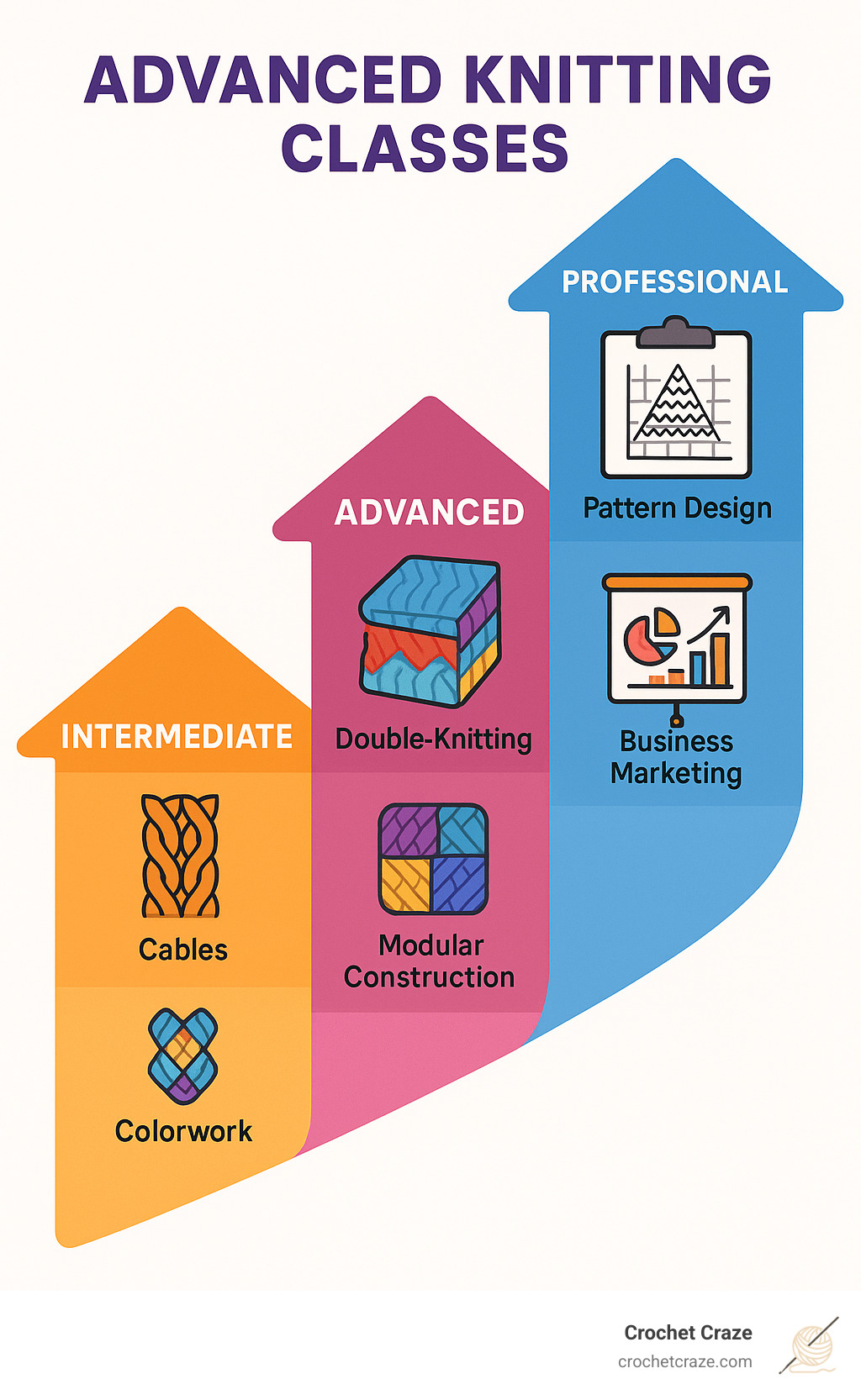
What Makes a Class Truly Advanced?
So what exactly separates an advanced knitting class from the intermediate workshops you might have taken before? The difference goes way beyond just learning harder stitches.
Think of it this way: intermediate classes teach you to follow directions really well. Advanced knitting classes teach you to throw away the directions and create your own masterpiece instead.
True advanced programs live in what experts call Skill Stage 4. This is where things get seriously challenging – we’re talking about 410 hours of course content that assumes you already know your way around complex techniques. No more hand-holding through basic cable charts here.
The magic happens when these classes start blending design theory with technical skills. Instead of just knitting someone else’s sweater pattern, you’ll learn color theory, understand garment construction from an engineer’s perspective, and start sketching your own designs. It’s like the difference between following a recipe and becoming a chef who can improvise a five-course meal.
Professional finishing techniques separate the pros from the hobbyists every single time. Advanced classes obsess over the details that make people ask “Did you actually make this yourself?” We’re talking about blocking methods that transform your work, seaming so invisible it looks like magic, and edge treatments that rival anything you’d find in expensive boutiques.
But here’s what I find most exciting about advanced programs: they teach you to think like a knitting detective. When something goes wrong (and trust me, it will), you won’t need to rip back 20 rows. You’ll diagnose the problem, fix it in place, and maybe even improve the original design while you’re at it.
The time commitment reflects this complexity – most advanced programs span 12 to 24 months. The City & Guilds Advanced Distance Learning course gives you up to 30 months to work through 12 comprehensive modules. It’s not a weekend workshop; it’s a journey.
Learning formats vary widely at this level. Self-paced video courses work great if you’re juggling family and work commitments. Live workshops give you that immediate feedback when you’re wrestling with a tricky technique. Many programs combine both approaches because, honestly, some things just need real-time guidance.
For techniques that build toward this advanced work, our Knitting Tips section covers essential foundations.
Core Skills You Should Have Before Enrolling
Before you dive into advanced knitting classes, let’s be honest about what you need in your skill toolkit already.
Chart reading should feel as natural as reading a book. We’re not talking about simple stockinette charts here – you need to be comfortable with complex lace patterns, multi-color charts, and those intimidating cable diagrams that look like engineering blueprints. If you’re still flipping back to the symbol key every few stitches, spend more time with intermediate charts first.
Short rows need to be your friend, not your nemesis. Advanced garment construction relies heavily on wrap-and-turn, German short rows, and Japanese short rows. You should know which technique works best for different situations and execute them without leaving holes or puckers.
Your seaming game must be absolutely solid. Perfect mattress stitch, invisible three-needle bind-offs, and smooth grafting are non-negotiable. Advanced projects often involve modular construction where wonky seams will ruin the entire piece.
Blocking knowledge goes beyond “soak it and pin it out.” You need to understand how different fibers respond to moisture and heat, when steam blocking works better than wet blocking, and how blocking can actually fix minor gauge issues.
Gauge control means more than just matching the pattern. Can you adjust your tension when switching between stockinette and cables? Do you know how different needle materials affect your gauge? Can you estimate yardage when modifying a pattern? These skills separate intermediate knitters from advanced ones.
Project planning shows you’re ready for complex challenges. This includes yarn substitution calculations, pattern modifications for different sizes, and the confidence to tackle a six-month project without getting overwhelmed halfway through.
If any of these areas feel shaky, consider strengthening your foundation with targeted intermediate workshops. Advanced programs move fast and assume you’ve got these basics locked down solid.
The Essential Guide to Advanced Knitting Classes Platforms
Finding the right platform for advanced knitting classes can feel overwhelming with so many options available today. The good news? There’s truly something for every learning style and schedule, from busy parents squeezing in lessons during naptime to dedicated crafters ready for intensive certification programs.
Self-paced video platforms have become incredibly popular, and it’s easy to see why. You can pause when your toddler needs attention, rewind when you miss a crucial hand movement, and practice the same technique until it clicks. Most importantly, you get lifetime access to your courses, turning them into a permanent reference library. These work especially well for technique-heavy classes where seeing the instructor’s hands clearly makes all the difference.
Live workshop formats bring back that classroom energy many of us miss from in-person learning. With class sizes typically capped at 20 students, instructors can actually see your work and offer personalized feedback. There’s something magical about troubleshooting a tricky cable with real-time help, plus you’ll often make lasting friendships with fellow knitting enthusiasts.
Hybrid cohort programs offer the best of both worlds by combining pre-recorded lessons with scheduled live sessions. This format works particularly well for comprehensive certification programs where you need ongoing support and formal assessment. You can work through the technical content at your own pace, then bring questions to live sessions.
Distance learning programs provide the most structured approach, complete with formal assessment, detailed tutor feedback, and recognized accreditation. These require the longest commitment but deliver the most comprehensive education – think college-level rigor applied to advanced knitting techniques.
When choosing your platform, consider how much structure you need, whether you want formal certification, and how important community interaction is to your learning style. Some platforms excel at specific techniques while others provide broad skill development across multiple advanced areas.
Top 5 Advanced Knitting Classes You Can Stream Today
After researching dozens of programs, these five advanced knitting classes consistently earn rave reviews from serious knitters:
The TKGA Master Hand Knitting Program stands as the gold standard in advanced knitting education. This isn’t a casual weekend workshop – it’s a serious three-level certification that can take up to five years to complete. Level 1 requires 19 different swatches, gauge worksheets, and a perfectly executed mitten project, all completed within 12 months. Level 2 adds historical research, book reviews, and three challenging projects over 18 months. Level 3 culminates with designing your own hat and sweater plus extensive research components.
What makes this program special is its emphasis on evaluation rather than competition. You can resubmit work unlimited times with detailed feedback from expert evaluators. Graduates receive recognition at annual ceremonies and earn credentials they can display professionally. Enroll Here
The City & Guilds Advanced Distance Learning Course offers nationally recognized certification through 12 comprehensive modules covering approximately 410 hours of content. Students typically complete one module every 6-8 weeks, with up to two years plus a six-month extension for completion. This program brilliantly integrates technical skills with professional practice, teaching business marketing, costing models, and portfolio development alongside advanced techniques like sculptural knitting and mixed media applications.
Patty Lyons’ Advanced Knitting Fixes addresses every knitter’s worst nightmare – complex mistakes that seem impossible to fix. This specialized workshop covers error correction for cables, lace, shaping, and colorwork, teaching both on-needle corrections and post-bind-off rescue methods. Many students say this course finally gave them confidence to attempt challenging projects they’d been avoiding for years. The program includes community message boards for ongoing support long after you finish the course. Advanced Knitting Fixes
The Interweave Professional Series takes a focused approach with technique-specific workshops covering advanced topics like reversible cables, double-knitting, and modular construction. Rather than trying to cover everything, each course dives deep into mastering one complex technique thoroughly. This approach works well for knitters who want to add specific advanced skills to their repertoire.
The School of Fashion and Textiles Skill Stage 4 emphasizes both technical mastery and creative development. Students learn advanced construction methods while developing their unique artistic voice through personal research projects. This program particularly appeals to knitters interested in the intersection of traditional techniques and contemporary design. Advanced Knitting Classes Online | Knitwear Design Course
Niche Advanced Knitting Classes for Technique Junkies
For knitters who get excited about mastering specific complex techniques, these specialized workshops offer deep dives into fascinating methods that push the boundaries of traditional knitting:
Modular Mystique teaches the art of creating entire garments one small piece at a time using domino or patchwork knitting techniques. You’ll learn join-as-you-go methods that eliminate seaming while reproducing stunning quilt patterns in knitted fabric. The technique requires mastering various geometric shapes and understanding how they fit together structurally.
Daring Double Cables explores the mind-bending world of reversible Saxon braids and two-sided cables created without ever purling. This monochromatic approach creates incredibly rich textural effects that look like magic but follow logical construction principles once you understand the underlying structure.
Reversible Lace Mastery solves the age-old problem of lace patterns with unsightly wrong sides by teaching specialized increases, decreases, and edge treatments that create fully reversible designs. Students learn to convert traditional stockinette-based lace patterns into stunning two-sided fabrics.
Labyrinth Fabric Construction introduces Debbie New’s technique for creating entire sweaters in just 10-20 rows through strategic modular construction and ingenious shaping methods. It sounds impossible until you see it in action.
Brioche Advanced Techniques goes far beyond basic brioche to explore multi-color patterns, complex shaping, and full garment construction in this distinctive stitch pattern that creates incredibly elastic, cushy fabric perfect for cozy sweaters and accessories.
Deep-Dive: Specialized Technique Workshops
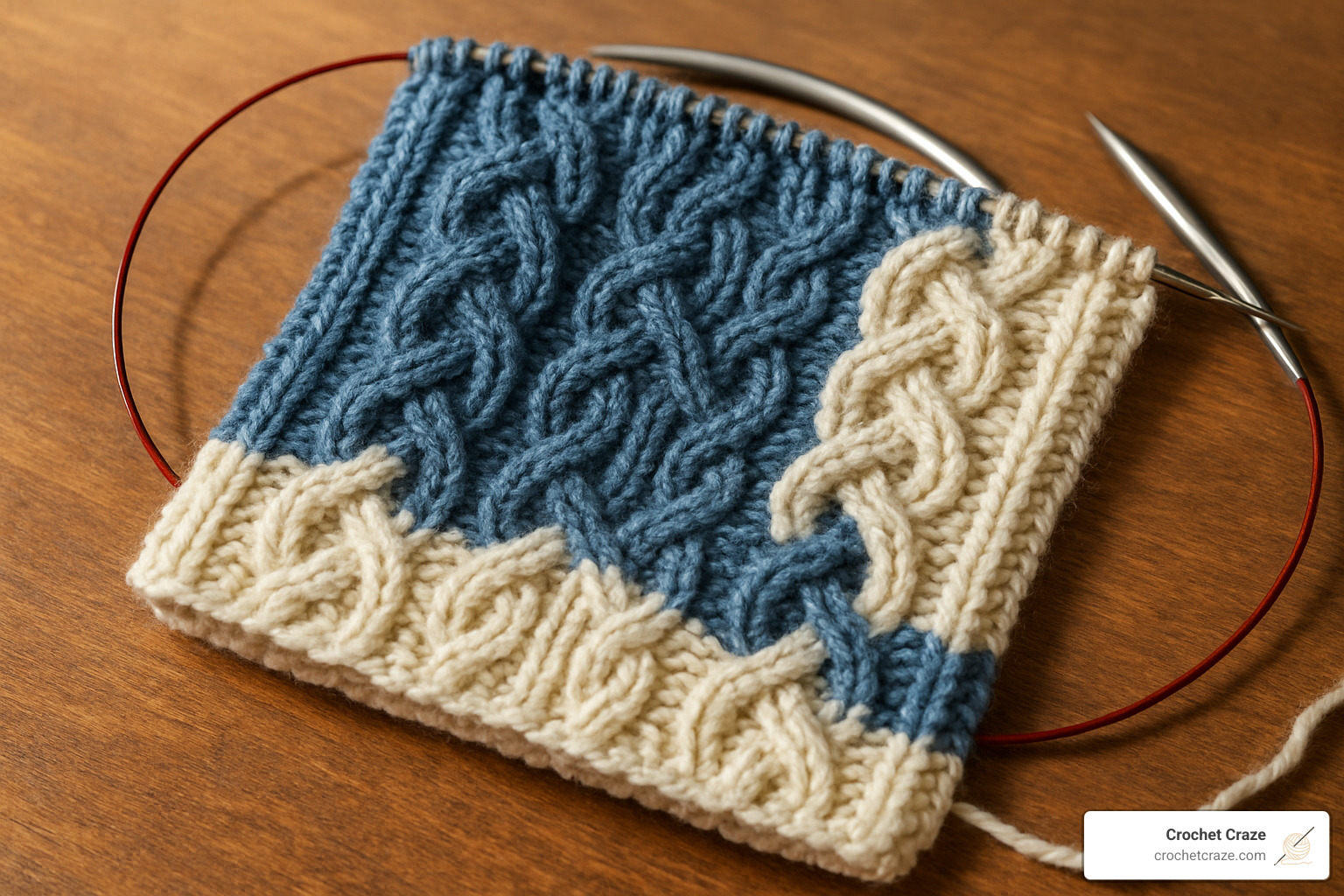
Advanced knitting classes often focus on specialized techniques that require dedicated instruction and practice. These workshops typically dive deep into one complex method rather than covering multiple techniques superficially.
Double-Knitting Mastery represents one of the most challenging advanced techniques. Beyond basic two-color positive/negative patterns, advanced classes teach textured patterned double-knitting, letters readable from both sides, and reversible corrugated ribbing. Students learn to make purls show on both sides and create truly reversible fabrics.
Modular Construction opens up entirely new approaches to garment creation. Advanced classes cover hexagonal modules, lace variations, and side-to-side construction methods. The technique particularly showcases multicolored yarns and provides excellent stash-busting opportunities.
Reversible Cables eliminate the need to hide wrong sides in cabled garments. Students learn which cable types can be worked reversibly and master specialized techniques for creating two-sided stockinette and reverse stockinette backgrounds.
Estonian Colorwork (Roosimine) produces embossed textures without actual stranded knitting by laying contrast colors as you work. When paired with Vikkel braids, this creates stunning textural combinations perfect for bags and accessories.
Professional Finishing Techniques separate amateur from professional work. Advanced classes cover Japanese bind-offs for strength, tubular cast-ons for reversible edges, and blocking methods that improve rather than flatten textural elements.
Design Theory Integration teaches color theory application, proportion principles, and pattern modification techniques. Students learn to adapt existing patterns for different sizes and create original designs from scratch.
Workshop Formats & Schedules
Advanced knitting classes typically follow structured formats designed to maximize learning while accommodating complex technique instruction:
Half-Day Intensives (3 hours) work well for single-technique workshops like reversible cables or modular squares. These sessions focus on mastering one specific skill with immediate application in a small project.
Full-Day Laboratories (6 hours plus lunch) allow deeper exploration of complex techniques. Students can complete substantial swatches and troubleshoot individual challenges with instructor guidance.
Multi-Module Series spread learning over weeks or months, allowing practice time between sessions. This format works particularly well for comprehensive programs requiring skill building and project completion.
Maximum 20 Students represents the standard cap for hands-on advanced workshops. This size ensures personalized attention while maintaining group energy and peer learning opportunities.
Homework and Swatch Preparation are standard expectations. Students typically receive preparation instructions including specific cast-on requirements, yarn recommendations, and prerequisite skill practice.
Many workshops require smooth, non-splitting yarn in light to medium colors for optimal stitch visibility. Needle requirements often specify particular types (circular, double-pointed, or interchangeable) based on technique demands.
Certification & Professional Pathways
Taking advanced knitting classes can open doors to exciting professional opportunities, especially when you earn recognized certifications along the way. Think of these programs as your knitting PhD – they’re serious commitments that transform passionate hobbyists into true experts.
City & Guilds accreditation stands out as one of the most respected qualifications in the fiber arts world. Their advanced distance learning program isn’t just about mastering techniques – it’s about proving you understand both the art and business sides of professional knitting. This certification carries real weight when you’re applying for teaching positions or marketing your services to clients.
The TKGA Master Hand Knitting Program represents the ultimate achievement for serious knitters. This isn’t a quick weekend workshop – we’re talking about a comprehensive journey that can take 3-7 years to complete all three levels. You’ll create over 57 swatches, write detailed reports, and design your own projects from scratch.
What makes this program special is the unlimited resubmission policy. If your work doesn’t meet standards the first time, you can revise and resubmit without penalty. The goal isn’t to trip you up – it’s to help you achieve true mastery. When you finally receive those completion pins at the annual ceremony, you’ll have earned every bit of recognition.
Portfolio building becomes second nature in these advanced programs. You’ll learn to document your process, photograph your work professionally, and explain your design decisions clearly. This skill proves invaluable whether you’re applying for teaching positions or showcasing work to potential clients.
The assessor feedback you receive throughout these programs is incredibly detailed and constructive. Professional evaluators don’t just tell you what’s wrong – they explain how to fix it and why certain techniques work better than others. Many students find this mentoring relationship continues long after graduation, providing ongoing support as they build their careers.
Enroll Here TAKE YOUR KNITTING TO THE NEXT LEVEL
Turning Advanced Skills into Income
Here’s where advanced knitting classes really pay off – literally. The business components included in many programs teach you how to transform your newfound expertise into steady income streams.
Pattern sales have exploded in the digital age. Advanced programs teach you proper pattern writing, how to grade designs for multiple sizes, and the technical editing skills that separate amateur patterns from professional publications. Many graduates earn substantial income through platforms like Ravelry and their own websites.
Teaching opportunities multiply dramatically once you have recognized credentials. Yarn shops actively seek certified instructors for their advanced workshops, and many knitting guilds pay well for specialized technique classes. The TKGA certification especially opens doors to teaching at major fiber festivals and retreats.
Commission work becomes much more profitable when clients know you have professional training. Custom sweaters, intricate baby items, and complex accessories command premium prices when your finishing skills meet professional standards. Advanced programs teach you how to price your work appropriately and manage client expectations.
The craft business marketing components of these programs are surprisingly practical. You’ll learn costing models that ensure profitability, social media strategies that actually work for fiber artists, and customer relationship management techniques specific to the crafting industry. Many graduates are surprised to find they enjoy the business side almost as much as the knitting itself.
Choosing & Preparing for Your Ideal Class

Selecting the right advanced knitting classes requires careful consideration of your goals, schedule, and learning preferences.
Learning Goals Assessment should drive your choice. Are you seeking certification for professional credibility? Mastering specific techniques for personal projects? Or developing design skills for pattern creation? Different programs excel in different areas.
Budget Considerations extend beyond tuition to include materials, tools, and potential travel costs. Some programs provide materials while others require specific yarn purchases. Factor in the total investment when comparing options.
Schedule Compatibility varies dramatically between formats. Self-paced courses offer maximum flexibility but require strong self-discipline. Live workshops provide structure but demand specific time commitments.
Teaching Style Preferences matter significantly for complex material. Some students thrive with detailed video instruction they can replay, while others need immediate feedback and hands-on guidance.
Material Kit Requirements often specify particular yarns, needle types, and accessories. Budget for these requirements and consider whether you’ll use specialized tools beyond the class.
Yarn Selection Guidelines typically emphasize smooth, non-splitting fibers in light to medium colors for optimal stitch visibility. Many advanced techniques require specific yarn characteristics for best results.
Tool Upgrades may be necessary. Advanced classes often require high-quality circular needles, precise measuring tools, and specialized accessories like cable needles or stitch markers.
Homework Preparation is standard for advanced classes. Many require specific swatches, cast-on preparations, or skill practice before the first session. Plan time for these requirements.
For techniques involving joining yarns mid-project, review our guide on Connecting Yarn in Knitting before starting advanced colorwork classes.
Frequently Asked Questions about Advanced Knitting
When you’re considering advanced knitting classes, you probably have some burning questions. These are the ones I hear most often from crafters ready to take their skills to the next level.
Do I need certification to call myself an advanced knitter?
Here’s the honest truth: you don’t need a certificate hanging on your wall to be an advanced knitter. Many incredibly skilled knitters have learned through years of practice, workshops, and personal challenges without ever enrolling in a formal program.
That said, certification does offer some real benefits. The TKGA Master Hand Knitting Program and City & Guilds courses provide structured learning that ensures you don’t miss important fundamentals. They also give you external validation of your skills, which becomes especially valuable if you want to teach classes or sell patterns professionally.
Think of certification like getting a driver’s license. You might be perfectly capable of driving without one, but having that official recognition opens doors and gives others confidence in your abilities. Plus, the feedback and community connections you gain through formal programs can be invaluable for continued growth.
How long does it take to finish most advanced courses?
The time commitment for advanced knitting classes varies wildly depending on what you choose. A focused technique workshop might take just one afternoon, while comprehensive certification programs can span multiple years.
Single technique workshops typically run 3-6 hours and teach one specific skill like double-knitting or reversible cables. These are perfect if you want to master a particular technique without a huge time investment.
Self-paced video courses offer the most flexibility. You might have 6-20 hours of content to work through, but you can spread that over weeks or months depending on your schedule and practice time.
Distance learning programs like the City & Guilds course expect 1-2 years of commitment, with most students completing one module every 6-8 weeks. The TKGA certification requires 12-24 months per level, and there are three levels total.
Most programs are understanding about life getting in the way. They typically offer extensions beyond the stated timeframes because they know you’re balancing learning with work, family, and other commitments.
What tools should I upgrade before class starts?
This is where many knitters get overwhelmed, thinking they need to buy everything at once. Don’t do that! Start with what your specific class requires, then build your collection gradually.
High-quality circular needles should be your first priority. Cheap needles with rough joins or cables that kink will make advanced techniques frustrating. Invest in a good interchangeable set or quality fixed circulars in the sizes your class requires.
Precision measuring tools become crucial for advanced work. A good ruler, gauge checker, and row counter help ensure your projects turn out as intended. Many advanced techniques require exact measurements and stitch counts.
Proper lighting and magnification make a huge difference when working complex charts or fine details. Your eyes will thank you, and you’ll make fewer mistakes that require time-consuming fixes.
Blocking equipment often gets overlooked, but professional finishing separates amateur work from advanced results. Invest in quality blocking mats and rust-proof pins that won’t stain your finished pieces.
The key is buying tools as you need them rather than overwhelming yourself with purchases. Each new technique you learn might require specific accessories, and it’s better to understand what you actually use before investing heavily.
Conclusion
Taking advanced knitting classes feels like open uping a secret door in your crafting journey. One day you’re following patterns step-by-step, and the next you’re designing your own reversible cables or fixing complex colorwork mistakes like a knitting wizard.
At Crochet Craze, we’ve seen how the right advanced program transforms not just what you can make, but how you think about making it. The structured learning and expert guidance you get from quality classes compress years of trial-and-error into months of focused growth. It’s like having a master craftsperson looking over your shoulder, catching mistakes before they become disasters and showing you shortcuts you’d never find alone.
The ripple effects surprise most students. Yes, you’ll master those intimidating techniques like double-knitting and modular construction. But you’ll also develop the problem-solving confidence to tackle any pattern, the design eye to modify existing projects, and the professional finishing skills that make people ask “Did you really make that yourself?”
Whether you choose a comprehensive certification program like TKGA or dive into specialized technique workshops, the investment pays for itself in every project you touch afterward. Your gauge becomes more consistent. Your finishing looks cleaner. Your creativity expands because you’re not limited by technique anymore.
Here’s what we recommend: Start with an honest skills assessment using our prerequisite checklist. Then pick one program that genuinely excites you rather than overwhelming yourself with multiple courses. Advanced knitting isn’t about rushing through techniques—it’s about building mastery that lasts a lifetime.
The knitting community is incredibly supportive, and advanced classes connect you with fellow technique junkies who share your passion for getting every detail right. You’ll find yourself part of a group that celebrates the perfect cable cross and understands why blocking matters so much.
Ready to surprise yourself with what you can create? Your needles are waiting, and we’re here cheering you on every step of the way.
For more tutorials and deep-dives into crafting techniques, explore our comprehensive tutorial collection where we continue expanding our coverage of advanced fiber arts skills.