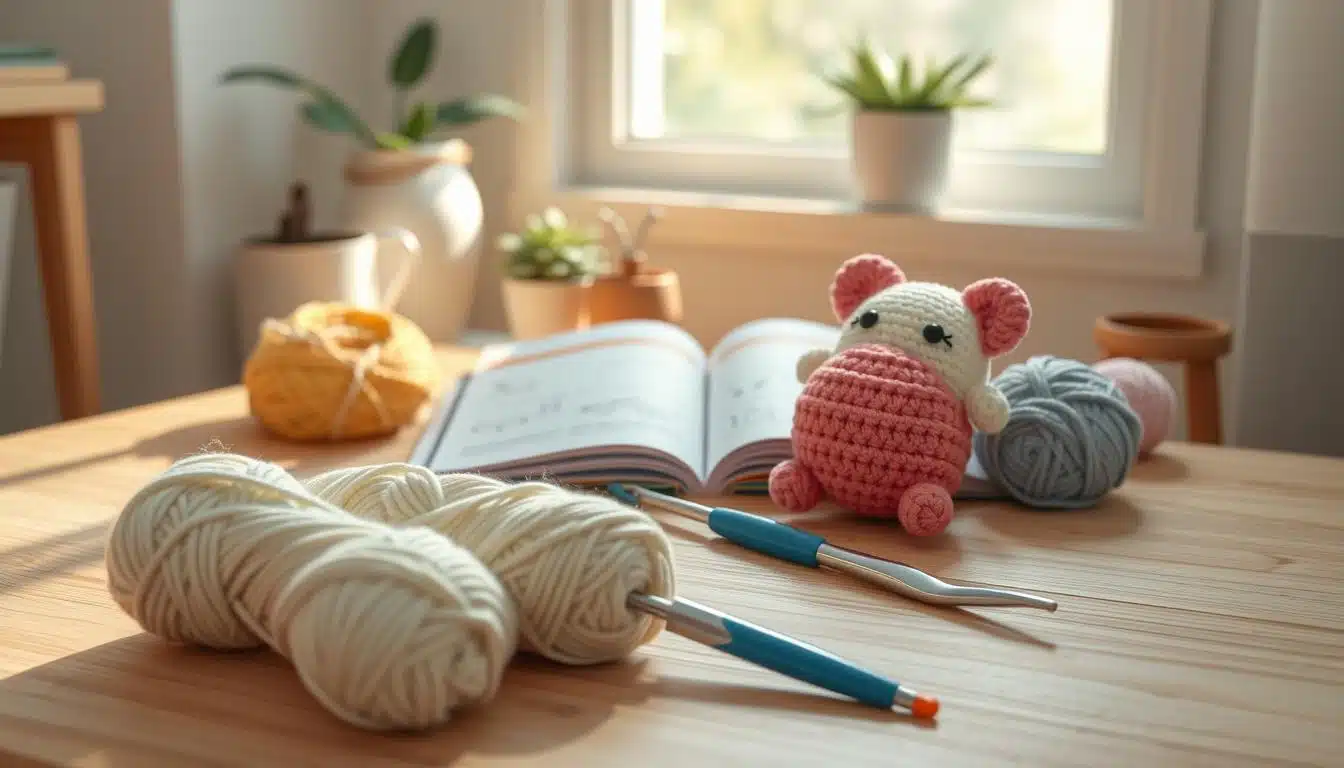
You’re about to discover a craft that’s both fun and powerful. Amigurumi for beginners combines old techniques with new, creating adorable friends. It’s perfect for those new to crochet, as it uses simple steps to unlock many possibilities.
This article will guide you from your first stitch to a finished plushie. You’ll learn about hand and yarn placement, basic stitches, and how to shape your work. Plus, it points to great tutorials, like this amigurumi tutorial USA, to help you see each step.
Begin with something simple. Try a no-sew pattern and learn the single crochet and magic ring. Soon, you’ll be making cute dolls with ease. Are you ready to make your first pal?
Key Takeaways
- Amigurumi for beginners is approachable and built on a few core stitches.
- Beginner amigurumi favors no-sew projects to speed confidence and results.
- Hand and yarn placement, plus consistent tension, make the biggest difference.
- Learn single crochet, magic ring, increase, and decrease to unlock many patterns.
- Use trustworthy resources like the linked amigurumi tutorial USA to watch techniques in action.
Why You’ll Fall for Amigurumi: The Cute, Cozy Craze
Amigurumi is loved for its charm and quick results. Projects are small, making them perfect for gifts. They also fit well on shelves or keychains.
This easy approach helped start the crochet trend of the 2020s. People moved from making big blankets to tiny, character-sized items.
History and trend snapshot
The history of amigurumi goes back to the 1950s in Japan. It grew quietly into a worldwide craze. Online platforms and pattern sites soon filled with fun designs.
Seasonal patterns, like ghosts and Santa gnomes, keep things fresh all year. This keeps the craze alive.
Learning amigurumi is easy thanks to free tutorials and blogs. You can follow along with a project each week. This helps you learn without getting overwhelmed.
Why amigurumi is perfect for crafters in the United States
The American crochet community loves to share projects and meet up. Local yarn shops and online groups host events. This makes it easy to join and share your work.
For beginners, this support means faster learning and fewer mistakes. For inspiration, check out Amigurumi Adventures. It has patterns and guides for the latest trends.
What makes amigurumi different from other crochet projects
Amigurumi is different from other crochet projects. It focuses on making small, three-dimensional shapes. This requires tight stitches and careful shaping.
It offers quick results and a chance to add your own style. This mix of skill and creativity is why people keep coming back.
Getting Your Gear: Essential Crochet Supplies for Amigurumi
For your first amigurumi, you want it to look good, feel soft, and be safe. You’ll need yarn, a hook, stuffing, needles, and finishing touches. These will help your amigurumi keep its shape and show off its personality.
Best yarn choices and why they matter
Yarn affects the look and feel of your amigurumi. Cotton is great for clear shapes and a neat look. Acrylic yarn is good for kids because it’s soft and easy to clean.
For a plush toy, try chenille yarn. Hobbii Honey Bunny or Premier Parfait Chunky are good choices. They make your amigurumi feel like a marshmallow.
Choose your yarn weight carefully. Worsted (4) is good for most dolls and animals. Bulky (5) and super bulky (6) make projects quicker and squishier. But, make sure your hook size is right to keep stitches tight.
Choosing the right hook size and why smaller hooks help
Smaller hooks help keep stuffing inside. Use hooks 2–3 sizes smaller than what the yarn label says. A 3.5 mm hook is often used for dolls. For thicker yarns, start with a 5.0 mm or 5.5 mm hook.
Make a small swatch first. If you see gaps when stuffing, try a smaller hook. A bit of extra effort now can save you from fixing a lumpy toy later.
Stuffing, needles, stitch markers, safety eyes, and extras
Polyfil stuffing gives your amigurumi a nice shape. For an eco-friendly option, use yarn or fabric scraps. Keep several stitch markers to mark rounds in a continuous spiral.
Use blunt tapestry needles for weaving in ends and sewing limbs. For baby-safe faces, use embroidery floss instead of plastic eyes. Amigurumi safety eyes come in sizes from 8 mm to 24 mm. Sizes 10, 12, and 15 mm are most popular for small to medium toys.
| Item | Why it matters | Suggested options |
|---|---|---|
| Yarn | Determines texture, durability, washability | KnitPal-style cotton; WeCrochet Brava Worsted (acrylic); Hobbii Honey Bunny, Premier Parfait Chunky (chenille yarn amigurumi) |
| Hook | Tightness of stitches; adjust for yarn weight | 3.5 mm for dolls; H/5.0 mm or I/5.5 mm for bulkier yarns; use crochet hooks for amigurumi smaller than label |
| Stuffing | Shape retention and feel | Polyfil for consistent loft; yarn/fabric scraps for eco option |
| Eyes & safety | Appearance and child safety | Amigurumi safety eyes USA in 10–15 mm for most projects; embroidery for baby-safe faces |
| Notions | Finishing, marking, and assembly | Locking stitch markers, blunt tapestry needles, sharp scissors, embroidery floss |
| Project kit example | Starter set for a small doll | 3.5 mm hook, Brava Worsted in 3–4 colors, 12 mm safety eyes, polyester stuffing, tapestry needle, scissors |
Hand and Yarn Placement: How to Hold Your Tools Like a Pro
Getting a comfy grip and steady yarn flow will change your amigurumi game. Small, consistent stitches make shapes that look neat and hold stuffing well. Below are clear steps and quick tricks to help you master how to hold crochet hook and control yarn tension amigurumi so you can avoid stuffing showing as you work.
Correct hook grip for control and comfort
Try knife and pencil grips to see which fits your hands. Knife grip gives strong wrist motion; pencil grip gives fine finger control. If your wrist hurts, switch grips or try a different hook material like Clover or Tulip to ease insertion. Practicing slow, even pulls helps you find a natural rhythm for crochet tension tips.
Left-hand yarn placement and tension tips
Hold the hook in your dominant hand and use the left hand to guide yarn. Pass the working yarn under your left-hand fingers, pinch the strand between your middle finger and thumb, and wrap it around the index finger. Keep the index finger upright to control tension as you feed yarn. This method gives repeatable tension and makes following patterns easier.
Maintaining consistent tension so stuffing doesn’t show
Amigurumi needs slightly tighter tension than flat projects. Use a smaller hook if stitches look loose. Work in continuous rounds and add stuffing gradually to keep shape even. Anchor the yarn with the pinch between thumb and middle finger to maintain steady flow and avoid stuffing showing.
If hook insertion feels tough, ease the grip a touch or try a softer hook. Use locking stitch markers to track rounds and reduce mistakes that disrupt tension. Stuff moderately as you go and check for gaps; adjust your yarn tension amigurumi technique until the fabric sits snug with no visible stuffing.
| Issue | Quick Fix | Why it Helps |
|---|---|---|
| Stitches too loose | Drop one hook size, tighten index finger wrap | Tighter stitches hide stuffing and sharpen shape |
| Stitches too tight | Loosen thumb pinch, try pencil grip or larger hook | Easier insertion reduces hand strain and evens rows |
| Stuffing peeks through | Stuff as you go, check for gaps, tighten tension slightly | Prevents holes and preserves smooth surface |
| Inconsistent rounds | Use locking stitch markers and long-tail stitch counters | Reduces miscounts and keeps tension uniform |
| Hand fatigue | Switch grip, take breaks, try ergonomic hooks | Maintains control and helps keep crochet tension tips steady |
Basic Stitches You Must Master for Amigurumi
Start here and you’ll save time, yarn, and a few frustrated sighs. Amigurumi relies on a few key stitches. Learn these basics and you can create heads, limbs, and tiny tails with ease. Below, you’ll find the essential steps, a practice plan, and a comparison to guide your first hours of stitching.
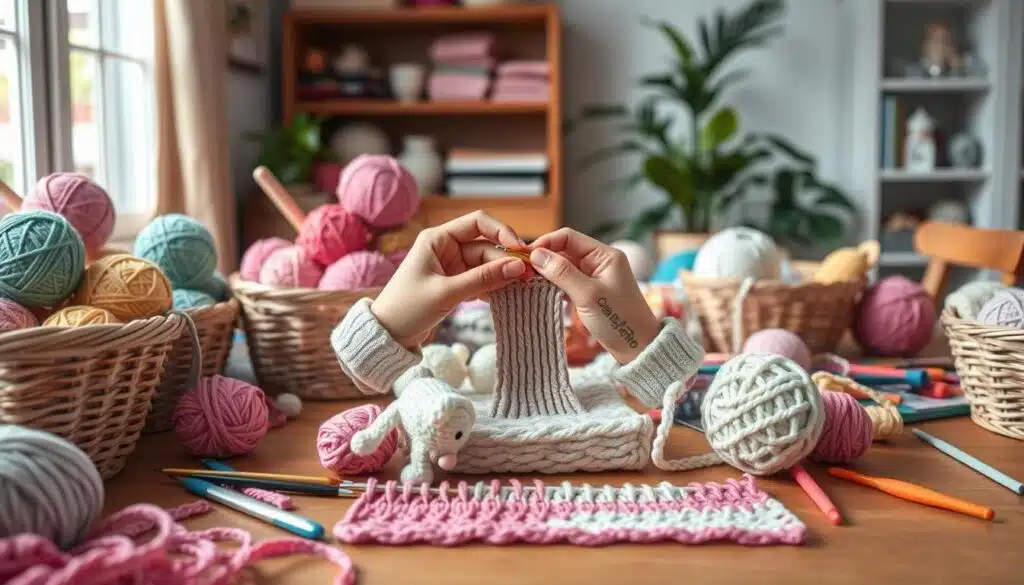
The slip knot and chain stitch are the foundation of every pattern. Start with a knot, then pull a neat chain to set your base. Repeat until the motion feels natural. Many patterns require a small chain or a magic ring, so practicing this is very important.
Single crochet is the most used stitch. Insert the hook into the V, yarn over, pull up a loop, yarn over again, and pull through both loops. This simple pattern is the core of your amigurumi. By following a single crochet tutorial and practicing rows, you’ll see your skills improve quickly.
Shaping is done with increases and decreases. Use increases to grow a circle and decreases to narrow a neck or close a ball. Learning invisible decrease will make joins look smooth and professional, perfect for small pieces like arms and ears.
Make practice a habit with short drills that build muscle memory. Practice making dozens of slip knots and chains until your chain stitch looks even. Crochet 1” squares of single crochet for gauge checks. Practice rounds that alternate increases and decreases so you can see stitch counts change in real time.
Try this quick drill set:
- Slip knot chain stitch: make 20 chains without pausing, then rewind and try again with smoother tension.
- Single crochet tutorial drill: crochet rows until you have four 1″ squares in different yarns to compare tension.
- Round shaping drill: magic ring with 6 sc, round of (sc inc) x6 to make 12, then practice decreases to return to 6.
Keep sessions short and focused. Ten minutes on chains, ten on single crochets, ten on increases/decreases will show more progress than one long, distracted hour. Track your stitch counts and note which yarns need a tighter or looser grip.
| Skill | Goal | Quick Drill |
|---|---|---|
| Slip knot & chain stitch | Quick, even foundation chains | Make 20 chains x3 sets; compare tension and adjust your hold |
| Single crochet | Even rows and 1″ gauge squares | Crochet 4 squares in different hooks/yarns; record stitch counts |
| Increase / Decrease | Smooth shaping for limbs and heads | Magic ring 6 sc, (sc inc)x6 → 12, then practice invisible decreases |
| Practice crochet drills | Build speed and consistency | 10-minute timed drills of each skill, three times per week |
Master these amigurumi basic stitches and your projects will go from awkward to charming. Keep a short notebook of gauge and counts for each yarn. This record will be invaluable when you move from making keychains to creating cuddly pals.
Shaping Techniques: Increases, Decreases, and the Magic Ring
You want your amigurumi to look smooth and professional. Start by learning a clean single crochet increase. This method adds rounds without a bump. When widening a head or body, make two single crochets in one stitch.
How to do an increase stitch cleanly and where to use it
To work a single crochet increase, insert your hook, pull up a loop, yarn over, and pull through. Then, work a second single crochet in the same base stitch. Use this method for shaping cheeks, bellies, and the base of hats.
Keep stitch counts consistent and check progress every few rounds. This helps avoid unintended flares.
Decrease stitch techniques including invisible decrease
For neat tapering, learn a standard decrease. Pull up a loop in one stitch, then in the next, yarn over, and pull through all loops. For a sleeker finish, try the invisible decrease.
The invisible decrease tutorial most pattern authors praise works under the front loops. This hides the seam line on dolls and toys.
Practice the invisible decrease on a scrap tube before applying it to limbs. You’ll notice fewer visible joins and a smoother silhouette once you master the tension and placement.
Making and securing a magic ring for perfect starting circles
The magic ring amigurumi method gives you a tight, adjustable start for heads and appendages. Form an adjustable loop, chain to secure if your pattern asks, then work stitches directly into the loop. Pull the tail to close the center snugly and weave in the tail for extra security.
Many stitchers link a short guide like this beginner resource to practice rounds and stitch counting. Use continuous rounds and mark your first stitch to keep track while shaping complex areas.
- Tip: Use increases to widen, decreases to taper, and the magic ring to start closed shapes.
- Tip: Count after every shaping round to match pattern stitch counts exactly.
- Tip: Combine single crochet increase and invisible decrease for smooth transitions between bulges and tapers.
amigurumi for beginners
Ready to make something cute with a simple hook and loop? This guide will help you go from the first stitch to a finished friend. It shows you why focusing on a few key skills is better than learning many techniques. Start with small projects to build confidence quickly.
Why this exact approach works for total newbies
First, learn the basics: slip knot, single crochet, and how to increase and decrease. Practice these until your stitches are even. This small set of skills lets you make most shapes you’ll need.
Repeating these steps makes them second nature. Finishing small pieces helps you learn how to put them together easily.
Follow a step-by-step guide that links hand position to stitch results. When your hands and yarn work together, shaping becomes easy. The guide at best amigurumi books for beginners pairs patterns with drills to speed up learning.
No-sew vs sewn construction: pick your beginner path
If sewing worries you, go for no-sew amigurumi. These designs join parts as you go or make whole shapes in one piece. You’ll finish faster and enjoy more instant successes.
Some patterns use both methods. For example, a doll might be mostly crocheted in one piece but need a little sewing for arms or hair. This option is good if you want clothes that can be removed or extra structure without too much sewing.
Project scaling: from keychains to cuddle-size pals
Start with small projects like an amigurumi scale keychain or a palm-sized creature. They use less yarn, finish quickly, and give you a big confidence boost. A small Octopus or mouse teaches you about shaping and stuffing without a big commitment.
When you’re ready, move on to bigger friends using plush chenille or worsted weight yarn with a slightly smaller hook. Bigger pieces help you control your tension and let you get creative with shaping. Choose projects that match your patience and what you want to learn.
- Quick wins: aim for several keychain or palm-sized projects first.
- Try a no-sew amigurumi if you want speed and simplicity.
- Mix methods when you want removable bits or a more polished toy.
Beginner-Friendly Patterns to Stitch Your First Pal
Start with a small project for a quick win. Look for designs that teach you the basics without being too hard. You can pick from easy amigurumi patterns or no-sew ones to begin with.
Begin with something small, like a Busy Bee or Teeny Mouse. These projects teach you single crochet and stuffing quickly. For more, try a Jiggly Jellyfish or Squishy Octopus from Cuddly Stitches Craft or Hookfully. They’re small and can be finished in a few hours.
Prefer not to sew? Try no-sew patterns like No Sew Nala the Turtle or the No Sew Narwhal. They’re perfect for those who don’t like sewing. These patterns offer quick satisfaction with minimal finishing.
For holiday cheer, make tiny projects like a pumpkin, candy corn charm, or snowman gnome. These quick amigurumi gifts are perfect for the season and don’t take long to make.
Here’s a simple plan to learn fast:
- Start with a keychain-size pattern for a quick win.
- Try a no-sew octopus or narwhal for easy finishing.
- Move to slightly bigger projects like a mini turtle or doll once you’re comfortable with rounds and shaping.
Use free amigurumi patterns USA to find ideas without spending money. Many U.S. designers offer clear instructions and supply lists. Amazon is great for buying yarn, safety eyes, and stuffing once you’ve picked a pattern.
Below is a quick comparison to help you choose your first pal based on time, skill, and whether you want to sew.
| Pattern | Typical Time | Skill Needed | Sewing Required | Best For |
|---|---|---|---|---|
| Busy Bee (keychain) | 30–45 minutes | Beginner | No | First quick amigurumi project |
| Teeny Mouse | 30–60 minutes | Beginner | Minimal | Practice shaping and eyes |
| Jiggly Jellyfish | 1–2 hours | Beginner+ | No | Frills and tentacles practice |
| Squishy Octopus / Reversible Octopus | 1–2 hours | Beginner+ | Optional | No-sew options, sensory toy |
| No Sew Narwhal | 45–90 minutes | Beginner | No | No-sew satisfaction |
| Mini Turtle / No Sew Nala | 45–90 minutes | Beginner | No | Compact, great for gifts |
| Holiday Minis (pumpkin, ghost, gnome) | 30–120 minutes | Beginner to Intermediate | Varies | Seasonal quick amigurumi gifts |
For inspiration, search for free amigurumi patterns USA. Mix quick projects for confidence with slightly longer ones for stitch finesse. This balance helps you grow your skills steadily.
Choose a pattern, get your yarn and hook from Amazon or a local yarn shop, and set a timer. You’ll make a pal, learn something new, and have another pattern for gifts. Quick amigurumi gifts add up faster than you think.
Step-by-Step: A Simple First Amigurumi Project Workflow
Begin with a simple plan. Read the crochet pattern notes carefully. Check if the pattern uses U.S. terms and if it joins with sewn or no-sew methods. A clear workflow saves time and keeps your project neat.
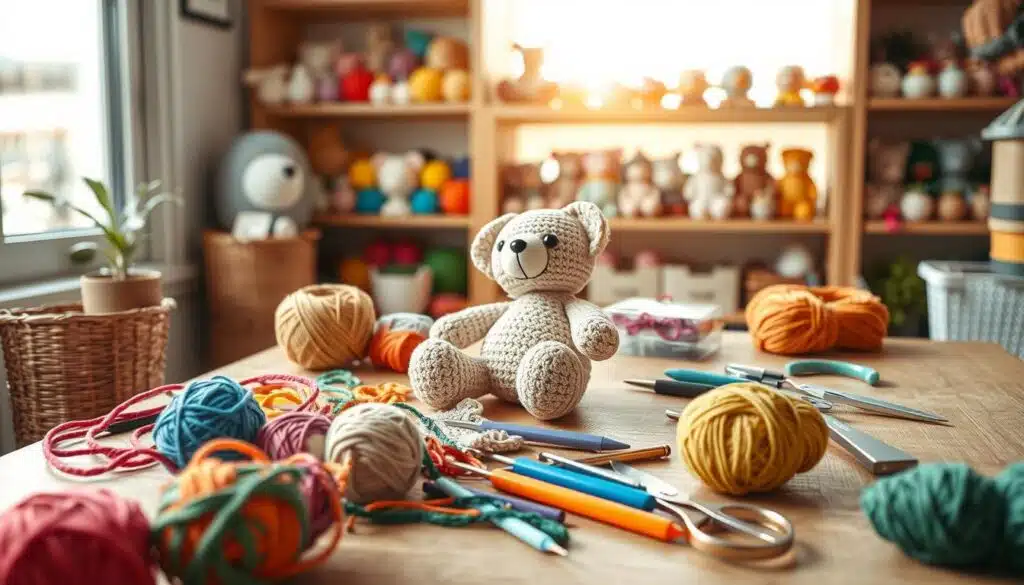
Before starting, make a small gauge swatch. It’s important to match the gauge for the right size and fit. If your stitches are loose, use a smaller hook than the yarn label suggests. This will give you a firmer fabric, so stuffing won’t show.
Reading a basic pattern and matching gauge
Look at the pattern for stitch counts and placement notes. If it mentions a round for eyes, mark that round now. Learning pattern shorthand makes this easy.
Do a 4-inch swatch and check rows per inch. Compare it to the pattern. If it’s larger, drop a hook size. If smaller, go up a size. This ensures your finished project matches the pattern’s dimensions.
Working in continuous rounds and using stitch markers
Many patterns use continuous rounds. You work without joining, counting each stitch. Use locking stitch markers to mark round starts or repeat boundaries.
Place markers after every 10 or 20 stitches if needed. Counting aloud or using a row counter app helps. These markers track increases, decreases, and safety eyes placement.
Stuffing, closing, and finishing for a professional look
Stuff gradually, adding small amounts of fiberfill. Tamp gently, then add more. This avoids lumpiness and helps shape control. Put safety eyes in before stuffing reaches the eye round.
When closing, use the long tail from the last round. Use a tapestry needle for an invisible decrease or gathered finish. For seamless joins, continue without cutting yarn for smooth seams.
Use a simple doll pattern as your guide. Work legs separately, then continue onto the body. Mark rounds, place eyes, stuff as you go, and close with an invisible join. This method keeps pieces aligned for a professional look.
| Step | What to do | Tip |
|---|---|---|
| Prep | Read pattern, make gauge swatch, choose hook | Use smaller hook for tighter fabric |
| Mark | Set locking stitch markers for round starts | Mark every 10–20 sts for long rounds |
| Work | Follow stitch counts in continuous rounds | Count each round and track increases/decreases |
| Place | Position safety eyes at the pattern round | Insert before heavy stuffing |
| Stuff & Close | Stuff gradually, use long tail to close | Use invisible decrease for a neat finish |
For a quick practice, try a tutorial at crochet amigurumi characters. It shows a step-by-step doll workflow. It uses continuous rounds and staged stuffing for smooth results.
Assembly and Finishing Touches That Bring Your Pal to Life
You’ve crocheted and counted rounds. Now, it’s time to put it all together. Good amigurumi assembly turns loose parts into a character. This character will have personality and last through playtime.
Start by pinning parts before sewing. Use T-pins on a blocking mat or safety pins on scrap yarn. This helps you check the balance and face expression of your amigurumi.
Decide if you’ll sew or crochet parts in place. No-sew projects are easier, but sewing is better for toys that get handled a lot. Use long tails and mattress stitch or invisible join to hide seams. Reinforce high-stress spots with extra stitches or fabric glue.
Choose facial features that fit your audience. Safety eyes give instant expression and come in various sizes. For children’s toys, embroidery is safer. Use washable yarn and tight stitches to keep features in place after washing.
Close openings and secure stuffing to prevent pokes. Finish magic rings by pulling tight, then weave the tail into the last rounds. For sewn closures, thread a tapestry needle on a long tail and draw the hole shut with even stitches. Check the join to ensure stuffing does not show and the shape remains smooth.
Weave in tails carefully. Thread your tail onto a blunt tapestry needle and follow existing stitches for a few inches before burying the end. This keeps ends hidden through play and washing. For extra safety, tack the tail back through the work and trim close.
Do a final quality check and add finishing touches. Test all seams for strength, make sure safety eyes are locked, and feel for stray stuffing near seams. Consider gentle blocking to even out curves and let pieces rest in their intended shape. For removable clothing and hair, try on the accessories and secure buttons or closures so they do not come loose.
Below is a quick reference to guide your final pass. Use it while you inspect each toy so nothing gets missed before gifting or listing.
| Task | Why it matters | Quick tip |
|---|---|---|
| Pin placement | Ensures symmetry and balanced expression | Step back and view from 3 feet away before sewing |
| Attach limbs crochet or sew | Controls durability and final silhouette | Use long tails and invisible join for neat seams |
| Eyes and face | Defines personality and safety level | Choose embroidered faces for baby-safe toys |
| Close openings | Prevents stuffing leaks and preserves shape | Finish magic rings tightly; hide tails inside |
| Weave in ends amigurumi | Stops unraveling and strengthens joins | Follow existing stitches for at least 2 inches |
| Final check | Catches loose bits and safety hazards | Wiggle seams, lock safety eyes, and launder if needed |
Troubleshooting Common Beginner Blunders
Running into problems is normal. This guide helps you find and fix common mistakes easily. Stay focused and you’ll stitch again in no time.
Fixing too-tight or too-loose tension
Stitches that feel like knots? Your tension is too tight. Try a bigger hook or relax your grip. Move your yarn a bit farther from your finger tip to loosen it.
If your fabric looks too open, your tension is too loose. Use a slightly smaller hook or wrap the yarn tighter around your finger. This will fix your crochet tension fast.
Dealing with holes, lumpy stuffing, and wonky shapes
Holes showing stuffing mean your hook is too big or your tension is off. Use a smaller hook or tighten your stitches. Stuffing lumps come from adding too much at once. Stuff a little at a time and smooth out with a tool or needle.
To keep stuffing hidden, work in tighter rounds near closures. Add extra stitches where gaps appear.
When to frog and how to do it without tears
Frogging is a lifesaver. Rip back when your stitch count is wrong or shapes are off. Undo to a point where you can start again easily.
Use stitch markers to mark your place. Secure live loops with a safety pin or holder. Pull tails gently with a tapestry needle. Frogging is a skill, not a failure.
- Try a slightly larger hook if stitches are too tight; use a smaller hook if too loose.
- Add Polyfil gradually and stuff firmly but not aggressively to avoid lumps.
- When holes appear, tighten tension or swap to a smaller hook to prevent stuffing showing.
- Use stitch markers and a safety pin when frogging so you can restart cleanly.
Practice these fixes to reduce mistakes. Think of amigurumi troubleshooting as part of your toolkit. Each time you frog, you learn something new about your craft.
Resources, Tutorials, and Where to Find Free Patterns
Getting started with amigurumi needs a few key resources. Look for clear video guides and pattern hubs. Choose reliable yarn and tools from Amazon. Join active crochet communities on Ravelry and Facebook groups for quick help and updates.
Top YouTube tutorials and pattern blogs to follow
Start with YouTube tutorials from Darling Maple Designs and MJ Carlos. They cover magic ring, increases, and sewing. Wobbles has great videos on slip knot and increases. Fibre Flux and Crochet Guru offer chain stitch and single crochet basics.
Also, check out blogs from Cuddly Stitches Craft, Hookfully, The Nicole Chase, and Raffamusa Designs. For beginners, Lilleliis has a great page with free patterns and photo guides. You can find them at Lilleliis’ free patterns.
Recommended yarn and tool picks available on Amazon (USA)
Choose yarn that fits the pattern and stuffing needs. WeCrochet Brava Worsted is great for stitch definition. Hobbii Honey Bunny is perfect for plush toys. Premier Parfait Chunky is ideal for quick projects. Loops & Threads Sweet Snuggles Lite is safe for babies.
For a starter kit, get locking stitch markers, Polyfil stuffing, and safety eyes. Add tapestry needles, sharp scissors, and hooks in 3.5 mm and 5.0–5.5 mm. Many designers have Amazon storefronts with tools and notions for the best yarn.
Communities to join: Facebook groups, Ravelry, and crochet-alongs
Join crochet communities on Ravelry and Facebook to share and ask questions. The Loopy Lamb hosts popular crochet-alongs and shares free patterns and updates.
Ravelry is great for saving patterns and getting feedback on fit and gauge. Facebook groups are perfect for quick feedback on sewing and stuffing. Many designers add video walkthroughs to their PDFs and free patterns.
| Resource Type | Recommended Examples | How It Helps You |
|---|---|---|
| YouTube Channels | Darling Maple Designs, MJ Carlos, Wobbles | Visual demos for magic ring, increases, sewing, and finishing |
| Blogs & Pattern Hubs | Cuddly Stitches Craft, Hookfully, Raffamusa Designs, Lilleliis | Photo-led step-by-steps and free amigurumi patterns for beginners |
| Yarn & Tools (Amazon USA) | WeCrochet Brava, Hobbii Honey Bunny, Premier Parfait, Loops & Threads | Consistent gauge options, plush alternatives, and baby-safe yarns |
| Supplies | Locking stitch markers, Polyfil, safety eyes, tapestry needles | Essential finishing items that improve appearance and durability |
| Communities & CALs | The Loopy Lamb Crochet Community, Ravelry groups, Facebook CALs | Feedback, pattern updates, and scheduled group progress to keep you on track |
Conclusion
Wrapping up amigurumi for beginners is simple. First, learn the slip knot, chain, single crochet, and how to increase and decrease. Also, master the magic ring. With the right hand and yarn placement, and a tight-stitch hook, you can create neat pieces.
Start your amigurumi journey with a small, no-sew pattern. This will give you quick results. You’ll need cotton or acrylic yarn, stuffing, stitch markers, and a tapestry needle. Use clear tutorials and feedback from others to stay on track. For a step-by-step guide, check out amigurumi for beginners.
When you’re ready for bigger projects, like crochet dolls, break them into smaller parts. Follow continuous-round techniques and pay attention to gauge notes. For your next steps, practice shaping, try new patterns weekly, and join a group on Ravelry or Facebook for tips and support.
You have everything you need to make your first amigurumi. Start small, keep practicing, and enjoy the journey. Now, go create something adorable.
FAQ
What is amigurumi and why should you try it?
Amigurumi is a Japanese craft of crocheting small, stuffed toys. It started in the mid-20th century and has become popular for making plushies and home decor. It’s great because it’s easy to learn, projects are quick, and you can make cute gifts.
How is amigurumi different from other crochet projects like blankets or garments?
Amigurumi focuses on making tight, 3D shapes with small stitches. You work in continuous rounds, using increases and decreases for shaping. This makes progress fast and gives you quick, toy-sized results.
What yarn should you use for your first amigurumi?
Choose yarn based on texture and safety. Cotton or cotton blends are good for crisp stitches. Washable acrylics are affordable and safe. Chenille or super-bulky yarns add squish. For baby-safe toys, use washable acrylic and embroider faces instead of safety eyes.
What hook size should I start with?
Start with a hook 1–3 sizes smaller than the yarn label for tight stitches. Common sizes are 3.5 mm for doll work and 5.0–5.5 mm for chunkier yarns. If stitches show stuffing, try a smaller hook. If it’s painful, try a larger one or change your grip.
What basic tools and notions do I need?
You’ll need yarn, a smaller-than-recommended hook, polyester Polyfil stuffing, and locking stitch markers. Also, a blunt tapestry needle, sharp scissors, and either safety eyes or embroidery floss for faces. Extras like stitch counters and a hook set are handy too.
How should you hold the hook and yarn for consistent tension?
Try either knife or pencil grip for the hook and anchor the yarn with your middle finger/thumb. Wrap the yarn around your index finger to control tension. Keep that finger slightly erect. Adjust until insertion is comfortable and stitches are tight enough to hide stuffing.
What stitches must you master first?
Learn the slip knot, chain stitch, single crochet (sc), increase (two sc in one stitch), decrease (standard and invisible decrease), and the magic ring. Single crochet plus strategic inc/dec and a solid magic ring let you build heads, bodies, and limbs.
What is a magic ring and why is it important?
The magic ring (magic loop) creates an adjustable closed center for starting rounds like heads and appendages. It prevents a hole at the start and gives a neat, professional finish. Practice it until you can tighten the tail and close the center smoothly.
Should beginners choose no-sew patterns or sewn patterns?
If you hate sewing, start with no-sew patterns (reversible octopus, no-sew turtle, jiggly jellyfish). They’re faster and less frustrating. If you want removable clothes or poseable limbs, try patterns that crochet body parts together or require minimal sewing—it’s a small leap once you’re comfortable with basic stitches.
What are good first projects for quick wins?
Pick palm-sized keychain pals: Busy Bee, Teeny Tiny Mouse, Squishy Octopus, or a mini jellyfish. These take 30–60 minutes and teach rounds, increases, and finishing without committing to a multi-week CAL.
How do you work in continuous rounds and keep track?
Use locking stitch markers to mark the start of each round and count your stitches every few rounds. Continuous rounds (no joining) give seamless shapes. Markers prevent lost rounds and make shaping consistent.
When and how should you stuff your amigurumi?
Stuff gradually as you work—add a bit after a few rounds and firm up before closing. Use polyester Polyfil for even loft; for eco options use yarn/fabric scraps. Overstuffing creates lumps; under-stuffing lets stuffing show, so add small amounts and redistribute as needed.
How do I attach safety eyes safely, or what are alternatives?
Place safety eyes at the specified round before stuffing that section, check spacing with stitch counts, and lock the safety back firmly. For child-safe toys, skip safety eyes and embroider faces with embroidery floss for a washable, soft finish.
What are invisible decreases and why use them?
Invisible decrease (inv dec) hides the join between stitches for a tidy taper. It’s done by working under front loops and slipping loops together in a way that preserves stitch alignment. Use inv dec on visible areas like dolls’ heads and necks for a cleaner look.
My stitches are too tight or too loose—what now?
Too tight: try a slightly larger hook, relax your grip, or experiment with a different hook material. Too loose: switch to a smaller hook, tighten the wrap on your index finger, or keep stitches tighter until you get used to amigurumi tension. Practice and small adjustments fix most issues.
How do I fix holes or lumps in stuffing?
If holes show, try a smaller hook or pull yarn tighter on finishing rounds. For lumps, open the section, redistribute or remove stuffing, then re-stuff in small increments. If shaping or counts are wrong, frog back to the last correct round and replay the increases/decreases carefully.
When should I frog part of my project, and how do I do it without a mess?
Frog when stitch counts or shaping diverge from the pattern. Rip back to a logical point—usually before the last increase/decrease round. Use stitch markers or a safety pin to hold live stitches, and keep calm; frogging is common and a fast fix with practice.
How do I read an amigurumi pattern and match gauge?
Read abbreviations (U.S. terms), note recommended hook and yarn weight, and do a small gauge swatch (1” squares of single crochet). If size matters, adjust hook or yarn to match the pattern’s stitch-per-inch count. Always follow round stitch counts and mark rounds.
What finishing steps make a project look professional?
Close magic rings with long tails and cinch tight, weave in ends with a tapestry needle, use invisible joins and inv dec for neat seams, embroider features for safety, and check seams and eyes are secure. Light blocking can help shape if needed.
Where can you find beginner-friendly patterns and tutorials?
Free pattern blogs and YouTube channels are full of options—Darling Maple Designs, The Loopy Lamb (CALs), Hookfully, and Cuddly Stitches Craft are good starts. Ravelry and Etsy offer paid PDFs; search Instagram, Pinterest, and Facebook groups for CALs and community support.
What yarns and tools are easy to buy in the USA?
Popular, easy-to-find picks include WeCrochet Brava Worsted, Hobbii Honey Bunny, Premier Parfait Chunky, and Loops & Threads Sweet Snuggles Lite. Stock up on locking stitch markers, polyester Polyfil, safety eyes (10–15 mm), 3.5 mm and 5.0–5.5 mm hooks, tapestry needles, and sharp scissors.
How can joining a community help my progress?
Join Facebook groups like The Loopy Lamb Crochet Community, Ravelry pattern groups, or CALs to post WIPs, get feedback, and follow step-by-step schedules. Communities accelerate learning, show you common fixes, and keep knitting momentum high.
Any quick drill routine to build confidence fast?
Practice slip knots and chains in short bursts, make rows of single crochet to measure gauge, and do rounds of (sc inc) and dec sequences to watch counts change. Make tiny 1–2 inch keychain pals to apply stitches, then graduate to no-sew octopus or a small doll pattern.
Are safety and child-friendly choices covered?
Yes. For kids, choose washable acrylic yarns, embroider faces instead of safety eyes, and reinforce seams. Avoid small detachable pieces for babies and double-check that all attachments are secure before gifting to children.