
Get ready to fall in love with a craft that combines neat patterns with bold colors. Fair Isle knitting started on the Shetland Islands in the 18th century. It has evolved from simple designs into the detailed colorwork seen on garments today.
As you explore, you’ll discover classic Fair Isle patterns updated by designers like Kate Davies and Marie Wallin. Tin Can Knits and resources like DROPS Design also make Shetland knitting easy to learn. You can choose from top-down yokes or charted motifs.
Online forums and journals are full of ideas for projects like sweaters and mitts. They link to both free and paid patterns. This shows how colorwork knitting is a living tradition, blending tradition with personal creativity.
In short, Fair Isle knitting is special because it mixes heritage, skill, and creativity. You’ll learn to read charts, handle stranded floats, and mix motifs. It’s a way to honor Shetland knitting’s clear, tried methods.
Key Takeaways
- Fair Isle knitting originated in the Shetland Islands in the 18th century and evolved into complex stranded colorwork.
- Modern Fair Isle patterns adapt traditional motifs for contemporary garments and many designers publish accessible charts.
- Resources like DROPS Design, Lettlopi, and designers such as Kate Davies and Marie Wallin offer patterns for all skill levels.
- Online inspiration boards and journals gather motifs and color ideas to help you plan projects.
- Colorwork knitting blends technical skill with creative colorplay, making it both practical and expressive.
The history and origins of Fair Isle knitting
When you think of Shetland Islands knitting, you might picture tiny boats and wind-bent cottages. This craft started in the 18th century on Fair Isle and other Shetland outposts. It was simple, made for warmth and to withstand harsh weather.
Early patterns were simple bands and checks. Over time, these bands turned into the colorful rows we know today. This slow growth adds to the charm of Fair Isle knitting.
Roots in the Shetland Islands
The Shetland landscape influenced the stitch choices. Local yarns and short, busy lives led to small, repeatable motifs. Knitters used two strands of wool in each row to trap heat.
Community-based making meant patterns passed between families. Small local tweaks were added along the way.
Writers and designers like Kate Davies and Marie Wallin have highlighted this heritage. Alice Starmore’s Book of Fair Isle Knitting and Mary Jane Mucklestone’s 200 Fair Isle Designs collect many old charts. These works show how regional practice became a recorded craft.
Evolution of motifs and techniques
Early motifs were geometric and compact. As trading and travel increased, Nordic and Baltic patterns appeared alongside Shetland ideas. Online pattern boards now show how motifs remix across borders.
Techniques also evolved. Stranded colorwork moved from basic two-color repeats to complex multi-color sets. Knitters learned to manage floats and keep tension even. This resulted in a richer, more varied visual vocabulary that is unmistakably Fair Isle.
Fair Isle in modern knitwear culture
Today, designers tie motifs to place and memory. Ella Gordon and Emily Poleson create palettes named for specific coves and sunsets. The Shetland Wool Adventures Journal documents how landscape and weather influence color and repeat choices.
At the same time, magazines, books, and pattern aggregators spread the look worldwide. This exposure keeps traditional Fair Isle motifs alive while allowing for new interpretations. You get a tradition that feels alive, not frozen.
| Aspect | Early Practice | Modern Expression |
|---|---|---|
| Primary Purpose | Warmth and durability for island life | Style, heritage, and everyday wear |
| Common Garments | Jumpers, hats, mittens | Cardigans, yoke sweaters, accessories |
| Motif Source | Local family charts and landscape cues | Designer collections and global remixing |
| Technique | Two-color stranded knitting, short repeats | Multi-color stranded work, refined tension control |
| Reference Works | Oral tradition and small local samplers | Alice Starmore, Mary Jane Mucklestone, Kate Davies |
Why you’ll fall in love with fair isle knitting
Fair Isle knitting catches your eye right away. Its patterns remind you of Shetland’s shores and moors. Your projects become like wearable postcards. The stitchwork offers a quick visual reward and is very practical.
Timeless visual appeal
When you see a well-made yoke or slipover, you see stories in color. Designers like Tin Can Knits blend traditional motifs with modern shapes. This way, they avoid the bulk of old sweaters. The beauty of Fair Isle lies in its rhythm and contrast, from subtle yokes to bold, elegant jumpers.
Practical warmth and versatility
Stranded colorwork traps air, making Fair Isle knitting warm for cold days. This structure creates knitwear that’s warm outdoors and stylish indoors. You can make everything from mitts and hats to cardigans and jumpers. These pieces are perfect for all seasons.
Creative joy of colorplay
Choosing colors is half the fun. Yarns from places like Ginger Twist Studio and adaptable patterns let you play. You see your creations come to life, making the process fun and addictive. These small wins make Fair Isle knitting a lasting hobby for many.
Essential tools and yarns for Fair Isle projects
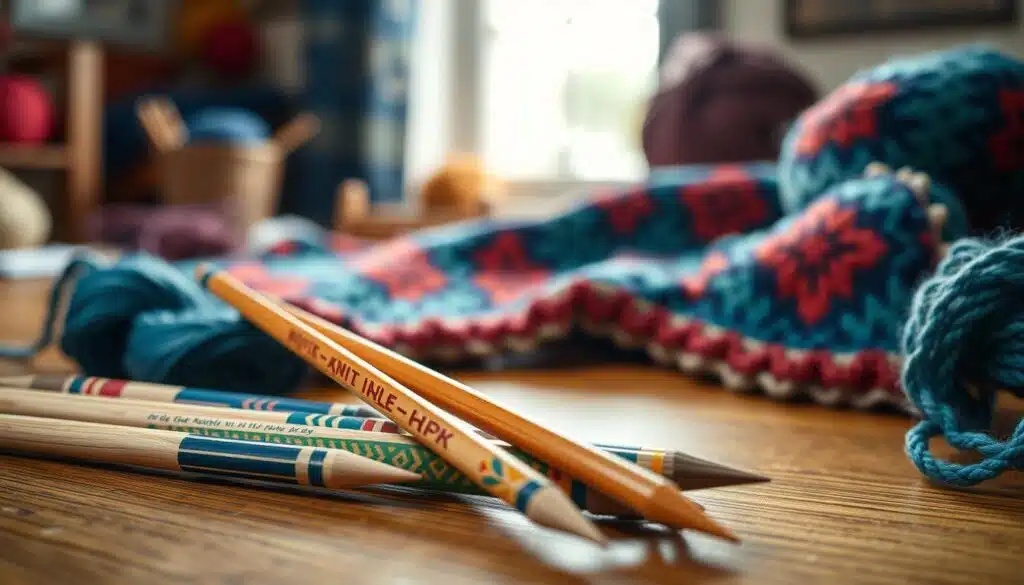
You need tools that make colorwork pop and hide mistakes. Start with the right Fair Isle needles and tools for stranded knitting. Wooden or bamboo circulars are great because they’re grippy and keep your work neat.
For top-down yokes and seamless pieces, circular needles are best. Many patterns use them with steeks for openings you can cut confidently.
Needles and techniques
Look for needles with smooth, grippy tips to keep slipped stitches in place. Short circulars or 16–24″ cords are good for yokes. Longer cords are better for body pieces. Straight needles are handy for flat panels and small motifs.
Practice knitting with two colors across a row to get the right tension. Use a crochet hook for steeking and tapestry needles for finishing. Tin Can Knits and other tutorials offer great guidance on steeking and in-the-round techniques.
Best yarn choices
Traditional projects often use Shetland wool for its memory and bloom. Jamieson of Shetland Spindrift and Lettlopi are favorites because they hold color well and give crisp stitches.
While you might explore other blends, Jamieson of Shetland is often the top choice for Fair Isle. It grips the needle and blooms beautifully after blocking. Marie Wallin’s Shetland work and Shetland Wool Adventures show how to create stunning palettes with tonal shifts and small skeins.
Useful accessories
Keep a small kit handy. It should include locking stitch markers, bobbins or tiny yarn balls, a color wheel, and a chart keeper. Don’t forget blocking mats, pins, and a gauge swatch tool.
For inspiration or tutorials, check out a detailed guide on tools and yarn behavior in stranded work here. Also, explore curated winter patterns for ideas.
- Must-have needles: short circulars in wood/bamboo;
- Yarn picks: Jamieson of Shetland, Lettlopi, and other Shetland wools;
- Extras: bobbins, crochet hook for steeks, tapestry needle, chart keeper.
Patterns and projects to try right now
Start with classic accessories like hats, mittens, socks, or berets. They show off colorwork and are quick to make. These projects are great for beginners and give you fast results.
Classic garments to start with
Try cardigans and yoke sweaters for bigger motifs. Top-down yokes are easier and have predictable colors. Slipovers and simple crewnecks are next steps for more experience.
Check out free patterns like Ellen Cardigan by Amy Christoffers and Sommarkoftan25 by Maja Karlsson. DROPS’ After Midnight jacket and many hat and mitten freebies on Ravelry are also great. They let you practice classic motifs without spending money.
Designer and book recommendations
For good instruction, try Tin Can Knits’ Strange Brew collection and Jennifer Steingass’ Fern and Feather pullover. Kate Davies’ Yokes, Colours of Shetland, and Epistrophy offer great palettes and motifs. Marie Wallin’s Shetland and Bloomsbury books give pattern depth and garment shaping strategies.
Other good references include Hilary Grant’s Knitting from the North and Nicki Trench’s Fair Isle and Nordic Knits. Mary Jane Mucklestone’s 200 Fair Isle Designs and Alice Starmore’s classic collections are also great. They have charts, histories, and motif libraries for skill growth.
Project ideas for every skill level
Beginners can start with hats, mitts, and simple stripes. This builds confidence and neat floats. For practice, search for beginner Fair Isle projects and follow tutorials from DROPS and Tin Can Knits.
Intermediate knitters should try stranded yoke sweaters or cardigans. Use 4–6 color palettes and try short rows and outline rounds. Advanced-beginner stitchers can try pattern sets in Shetland Wool Adventures Volume 5, which include slipovers, berets, and extended mitts.
For a quick diversion, try a linked easy blanket pattern at easy knit purl blanket pattern. It’s a fun way to play with repeats and contrast without worrying about fit.
| Project Type | Skill Level | Suggested Patterns | Why Try It |
|---|---|---|---|
| Hats & Berets | Beginner | Ellen Cardigan hat freebies, Ravelry hat patterns | Quick results, short color repeats, easy tension practice |
| Mittens & Gloves | Beginner to Intermediate | Spring Fjords mitts, Shetland Wool Adventures mitts | Small surface area, useful for float control and shaping |
| Socks | Beginner | Various hat-to-sock motif conversions, Ravelry freebies | Portable projects that teach color changes and short rows |
| Yoke Sweaters | Intermediate | Tin Can Knits yokes, DROPS top-down yokes | Learn increases with pattern continuity across body and sleeves |
| Cardigans & Jackets | Intermediate to Advanced | Amy Christoffers’ Ellen Cardigan, DROPS After Midnight | Garment construction, button bands and larger motif planning |
| Sampler & Slipovers | All levels | Volume 5 slipovers, Mandal Jacket samples | Great for testing palettes from Fair Isle books and journals |
Look through Laine magazine and published journals for seasonal color stories. Use Pinterest boards to collect 100+ fair isle ideas. Free Fair Isle patterns and paid collections from designers offer a wide range of projects to start today.
Work from small to large projects. Keep a project notebook for color combos. Choose a Fair Isle book that matches your pace. This approach makes learning Fair Isle enjoyable and natural.
Learning colorwork: tips and common techniques
Mastering colorwork starts with breaking tasks into simple steps. Begin with the basics, practice reading charts, and make small swatches before starting a big project. Good resources include Mary Jane Mucklestone’s 200 Fair Isle Designs and Alice Starmore’s Book of Fair Isle Knitting. These books offer great examples and charts.
Tin Can Knits and DROPS also have tutorials and videos. These make learning to read Fair Isle charts easier.
Reading and using charts
First, learn how symbols on charts mean knit and purl. Also, understand how stitch repeats create bands. Many patterns use 6-stitch repeats or larger.
Mark the start of each repeat with a stitch marker or highlighter. Sketching a single repeat by hand helps you remember color changes.
Tension management and stranded floats
Even tension is key for crisp motifs and flat garments. Hold one color in each hand or use the long-arm method. This makes managing two colors easier.
If your knitting is too tight, try smaller needles for color sections. Catch floats every 3–5 stitches to avoid snagging or distorting the fabric.
Fixing mistakes and finishing neatly
Mistakes are common. Use tutorials and videos to fix small errors and repair dropped stitches. For projects with a cut steek, secure the steek edges before cutting.
After knitting, block the piece and weave in tails with a tapestry needle. This makes joins neat and edges smooth.
- Practice chart sections as tiny swatches before starting the main project.
- Count repeats often to catch pattern drift early.
- Use contrast appropriately so motifs read well from a distance.
- When steeking, reinforce edges with a sewn or crocheted line before cutting.
These tips help balance careful stitchwork with smart preparation. Use the recommended books and online tutorials to build confidence. This includes reading Fair Isle charts, managing tension, and executing clean steeks and finishes.
Where to find patterns, inspiration, and community
You’re looking for places to find patterns, get new color ideas, and connect with others. Start with some trusted sources. Mix magazines, books, and social media to keep your projects going.
Online pattern libraries and free resources
Ravelry Fair Isle pages are a top spot for patterns, both free and paid. Designers like Jennifer Steingass and Tin Can Knits share their work here. You can also see photos and notes from other knitters on Ravelry project pages.
Look for curated free pattern lists and tutorial sites. DROPS Design offers many free patterns and videos. Pinterest boards like “Knitted Fair Isle Inspiration” have charts and color combos. For small projects, check out Ravelry free toy collections.
Magazines, journals, and books
Magazines offer in-depth pattern work. Laine magazine has beautiful photo essays and patterns. Shetland Wool Adventures shares stories and designs that show island techniques.
Reference books are key. Mary Jane Mucklestone’s 200 Fair Isle Designs and Alice Starmore’s Book of Fair Isle Knitting are must-haves. They offer motifs, charts, and background to enhance your stitchwork.
Social inspiration and community boards
Join project groups to ask questions and share your work. Instagram tags and Pinterest boards keep color ideas flowing. Ravelry forums offer troubleshooting advice and pattern tips. Local meetups and knitting holidays, like Marie Wallin’s workshops, provide hands-on learning.
By mixing these sources, you get patterns, technique help, and the motivation to finish projects. Use free Fair Isle patterns to practice. Read Laine magazine and Shetland Wool Adventures for depth. Stay active in the Fair Isle community to keep improving.
Color palettes and motif ideas drawn from Shetland and beyond
Start by looking at the land. You can pull Shetland color inspiration from cliffs, heather, sea, and sky. This makes vivid Fair Isle color palettes that feel rooted and fresh.
Landscape-inspired palettes
Choose five or six shades that mirror a scene. Use jewel greens for peatland, pale blues for the horizon, warm browns for moorland, and bright oranges for sunset. Swatch small sections to test contrast and rhythm before you commit.
Try historical mixes from the 1930s and 1940s for a muted, classic look. Or pick hand-dyed brights from studios like Ginger Twist Studio for modern punch. For seasonal projects, use coastal greens and stormy blues to evoke weather patterns you admire.
Traditional motifs to remix
Study reference books like Mary Jane Mucklestone’s 200 Fair Isle Designs and Alice Starmore’s guides. Learn classic diced patterns, floral bands, and tiny geometric repeats. These motifs give you structure while you experiment.
Cross-pollinate with Latvian, Estonian, Norwegian, or Icelandic motifs for fresh results. Pinterest and DROPS galleries show many motif ideas, from foxes and snowflakes to tree bands. Designers like Kate Davies adapt diced motifs into modern yokes you can emulate.
Building your own palette
When building Fair Isle palette, pick a neutral base and add two to three accents. Use small skeins in five or more coordinating shades to create depth. This allows for swaps if a color reads off on your needles.
Swatch repeats at gauge and evaluate floats, stitch definition, and harmony. If you want a guided refresher on modern styles, visit modern knitting styles to expand your eye for color and layout.
Keep notes on hex or dye lot numbers so you can reproduce the mix later. With deliberate motif ideas and a clear plan for building Fair Isle palette, you’ll craft original colorways. These will nod to tradition and welcome bold reinvention.
Working Fair Isle by project type: cardigans, yokes, accessories
You can pick projects based on what you want to achieve and how much time you have. Cardigans offer buttons and layers, while yoke sweaters have a classic look. Small items are great for quick practice with colorwork.
Fair Isle cardigans and slipovers
Cardigans and slipovers are favorites for those who want to wear their knitting. Look at designs by Marie Wallin and Maja Karlsson for elegant styles and clear patterns.
Ellen Cardigan by Amy Christoffers teaches you about button bands and stranded panels. Tin Can Knits has guides to turn pullovers into cardigans for a custom fit.
When choosing Fair Isle cardigan patterns, check the sizes, yarn weight, and if the pattern uses steeking for conversions.
Yoke sweaters and top-down construction
Yoke construction is great for a single, striking band across the shoulders. Many modern patterns are seamless and worked from the top down. This lets you try the fit before making the body longer.
Check out DROPS After Midnight and the Fern and Feather pullover by Jennifer Steingass for top-down Fair Isle yoke instructions. Top-down Fair Isle makes shaping easier and allows for size adjustments during knitting.
If you plan to steek for a cardigan conversion, practice reinforcement on scraps. Follow pattern notes for safety and neatness.
Hats, mittens, socks, and small projects
Accessories are a good way to build stranded skills without a big time commitment. Berets from Jennie Atkinson Knits and mittens inspired by Marie Bruhat focus on floats and tension.
Try small motifs in a hat or socks named Queen of Hearts to learn color changes and repeat placement. Fair Isle accessories offer quick wins and useful practice for bigger projects.
| Project | Skill focus | Good starter patterns |
|---|---|---|
| Cardigan/Slipover | Button bands, steeking, full yokes | Marie Wallin designs, Ellen Cardigan |
| Yoke Sweater | Round yoke shaping, raglan or circular decreases | DROPS After Midnight, Fern and Feather |
| Accessories | Color rhythm, float management | Jennie Atkinson beret, mittens, Queen of Hearts socks |
For a ready-to-download yoke pattern in worsted yarn, consider the Fair Isle Yoke Pullover Pattern from Mary Maxim. It’s available for sizes small to extra large. Find it as a paid download at Mary Maxim Fair Isle Yoke Pullover.
Match the project to your goals. Choose Fair Isle cardigan patterns for layering, a yoke sweater for that iconic shoulder band, or practice with accessories before moving to bigger projects.
Conclusion
Fair Isle knitting is a mix of Shetland tradition and modern style. Start with a small project or a top-down yoke. You’ll need five shades and follow tutorials for charts and tension.
Use pattern libraries and designers for help. Free tutorials from DROPS, Tin Can Knits, and Ravelry are great for a quick review.
Fair Isle resources are plentiful. You can find inspiration boards and forums for sharing charts and motifs. Shetland Wool Adventures and Laine magazine offer deep dives into the craft.
Books by Alice Starmore and Mary Jane Mucklestone are full of motifs and techniques. They’re great for inspiration and learning.
For a practical approach, start with a small project. Save five shades and try a new color mix. This article provides historical context and style examples: the timeless artistry of Fair Isle.
Fair Isle knitting is rewarding. You’ll create warm, wearable art and connect with a rich knitting tradition.
FAQ
What is Fair Isle knitting and where did it originate?
Fair Isle knitting is a colorful technique using two or more colors per row. It started in the 18th century on the Shetland Islands, Scotland. Knitters made practical items like jumpers and hats for the cold weather.
Over time, simple patterns grew into complex designs. Today, you see these patterns in yokes, hats, and socks.
How have Fair Isle motifs and techniques evolved?
Motifs began with simple shapes and grew into florals and bands. Designers like Alice Starmore and Kate Davies have updated these motifs for today’s garments. Nordic and Baltic traditions have also influenced modern designs.
Now, you see new and traditional Shetland patterns together.
Why do knitters love Fair Isle today?
Fair Isle knitting is loved for its beauty and warmth. The colors remind us of Shetland landscapes. The technique lets you show your personality through colors.
It’s both calming and creative, making it enjoyable to do.
What needles and techniques are common for Fair Isle projects?
Many use circular needles for seamless yokes. Straight needles are used for flat pieces. Top-down yokes are popular, and some garments are steeked for cardigans or armholes.
Use smaller needles for colorwork and always swatch.
Which yarns work best for stranded colorwork?
Wools with fiber memory and bloom are best. Jamieson’s of Shetland Spindrift and Ístex Lettlopi are good choices. DROPS Karisma and Isager are also popular.
Hand-dyed yarns from indie dyers like Ginger Twist Studio add depth.
What accessories and tools should I have on hand?
You’ll need stitch markers, bobbins, tapestry needles, and a crochet hook for steeking. Also, blocking mats, pins, and a gauge swatch tool are essential.
A clear chart print or tablet with charting software helps. Tutorials from DROPS and Tin Can Knits are great for learning.
What projects are best for beginners?
Start with small projects like hats, mittens, and socks. These let you practice colorwork without a big commitment. Simple yoke repeats in hats or child’s jumpers are good for beginners.
Free patterns on Ravelry or DROPS tutorials are great for beginners.
Which designers, books, and resources should I check out?
Check out Alice Starmore’s Book of Fair Isle Knitting and Mary Jane Mucklestone’s 200 Fair Isle Designs. Kate Davies and Marie Wallin also have great books.
Explore designers like Tin Can Knits and Jennifer Steingass. DROPS and Ravelry offer many free patterns and tutorials.
How do I read and use Fair Isle charts?
Charts show each stitch as a colored cell. Read charts from right to left on right-side rows and left to right on wrong-side rows. Mark repeats clearly and use lifelines or color notes to track motifs.
Many patterns include both chart and written options; practice with a small swatch first.
How do I manage tension and floats in stranded knitting?
Keep your non-working yarn relaxed and catch floats every 3–5 stitches. Try different yarn-holding methods to find consistent tension. If your fabric is too loose, try a needle size down for colorwork sections.
What if I make a mistake in colorwork or need to steek?
Fix common colorwork mistakes by tink-ing to the error or duplicate-stitching corrections on the wrong side. For steeking, reinforce the steek with crochet or sewn running stitch before cutting.
Practice steeking on a swatch first and follow photo or video tutorials.
Where can I find patterns, inspiration, and community help?
Ravelry is the central hub for patterns and project pages. Pinterest and curated inspiration boards collect Fair Isle ideas and link to free and paid patterns. DROPS provides many free multi-size patterns and videos.
Laine magazine and Shetland Wool Adventures offer high-quality editorial patterns and place-based features. Instagram hashtags and Ravelry groups are great for asking questions and sharing progress.
How do I choose a color palette for a Fair Isle project?
Start with inspiration from Shetland landscapes or pick a historical palette from reference books. Use five or more coordinating shades for depth. Swatch your palette together to ensure the motifs read well at your chosen gauge.
Consider hand-dyed skeins for lively contrast.
Which garment types suit Fair Isle techniques best?
Classic formats include cardigans, slipovers, round-yoke sweaters, berets, hats, mittens, and socks. Top-down yoke constructions are common for seamless fit and easy sizing adjustments. Cardigans often use steeks to convert a circular yoke into a buttoned garment.
Accessories are ideal for practice and quick satisfaction.
Can I remix traditional motifs into my own designs?
Absolutely. Designers like Kate Davies and Marie Wallin show how to adapt historic motifs for modern silhouettes. Use motif libraries as starting points, then change color placement, scale, or pairing to create a fresh look.
Just be mindful of copyright if directly copying recent commercial charts.
How do I pick the right pattern size and adjust fit for a yoke sweater?
Measure your chest and compare to the pattern’s finished measurements and ease recommendations. Top-down yoke sweaters let you try on as you work; you can increase length, adjust yoke depth, or change sleeve ease mid-project.
Use the pattern’s gauge and swatch in stranded colorwork to confirm stitch and row counts before committing to size adjustments.
Where can I buy Fair Isle yarn kits or small skeins for colorwork?
Etsy and specialist shops like North Child Trading and independent dyers often sell coordinated kits and small skeins. Jamieson’s of Shetland, Ístex (Lettlopi), DROPS, and Ginger Twist Studio are reliable sources for Shetland-type yarns and hand-dyed palettes.
Many pattern listings include suggested yarns and kit links.
How do publications like Shetland Wool Adventures and Laine magazine fit into Fair Isle learning?
These publications combine patterns with cultural and landscape essays, grounding your knitting in place-based stories. Shetland Wool Adventures features designers tied to local motifs and palettes; Laine offers editorial inspiration and modern takes on Nordic/Fair Isle traditions.
Both are valuable for deepening your aesthetic and technical understanding.
What are good next steps after finishing a small Fair Isle accessory?
Move on to a simple top-down yoke sweater or a cardigan that uses steeking if you want a new technical challenge. Try adapting a favorite motif into a larger band or yoke. Continue swatching with new color combos, join a Ravelry or Instagram group for feedback, and explore books like Alice Starmore or Mary Jane Mucklestone for motif libraries and deeper study.
Any tips for keeping Fair Isle knitting enjoyable and manageable?
Keep projects small at first, use bobbins or mini-skeins to reduce tangles, and break larger motif charts into readable sections. Swatch often, practice steeking on scraps, and rely on video tutorials for tricky steps. Save inspiration on Pinterest, and share progress in knitting communities—Fair Isle is more fun when you swap color ideas and tips.