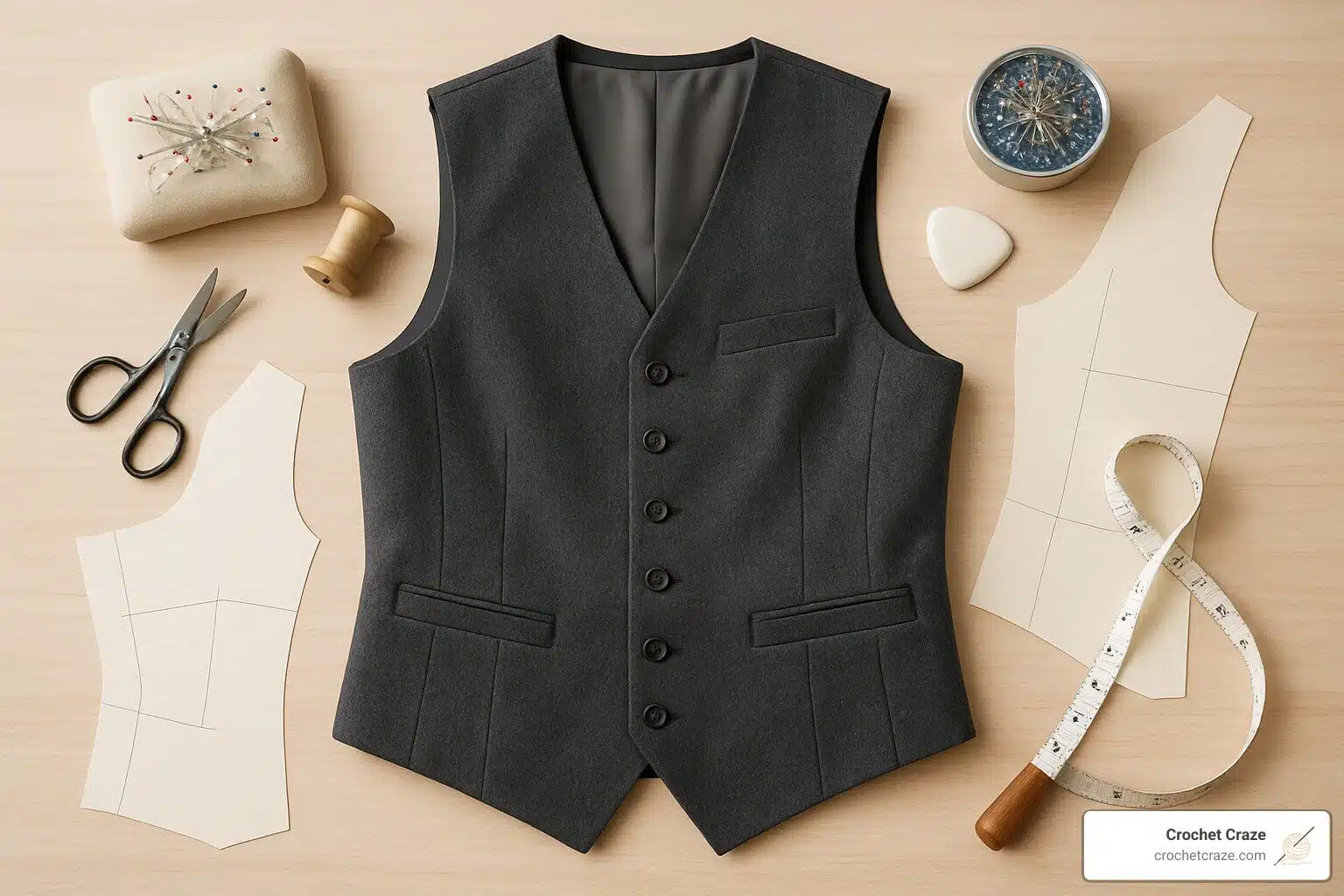
Waistcoat pattern free: 4 Best Stunning Designs 2025
Finding Your Perfect Free Waistcoat Pattern
Looking for waistcoat pattern free options to add a touch of elegance to your wardrobe? Here are some of the best places to find free waistcoat patterns online (listed without outbound links for your convenience):
- FreeSewing.org – offers the customizable Wahid waistcoat pattern with advanced fitting options
- DRCOS – provides 8 different sizes for children and adults with pre-added seam allowances
- Maison Fauve – features the free Pompon Waistcoat with lining, pockets and back belt
- Mood Fabrics – hosts over 10 free vest and waistcoat patterns in its sewing section
- Ralph Pink – supplies a free men’s waistcoat pattern for a 38/40″ chest that works for all genders
For a concise overview of the garment’s history, you can read the entry on waistcoats at Wikipedia.
A waistcoat (or vest in American English) is a sleeveless upper-body garment that adds sophistication to any outfit. Whether you’re looking to create a formal piece for special occasions or a casual layering item, free waistcoat patterns give you the flexibility to customize fit, fabric and style without spending a penny.
Sewing your own waistcoat offers numerous benefits: perfect-fit customization, fabric-choice freedom and the satisfaction of creating something unique with your own hands. Unlike store-bought options, a self-made waistcoat can be custom to your exact measurements and style preferences.
I’m Sonji Huerta, and while I’ve primarily focused on crochet projects, I’ve recently expanded into sewing using waistcoat pattern free resources to build my crafting repertoire. The precision and structure of waistcoat construction provide an exciting challenge that combines my love for detailed handwork with practical fashion pieces.
What Is a Waistcoat vs. a Vest?
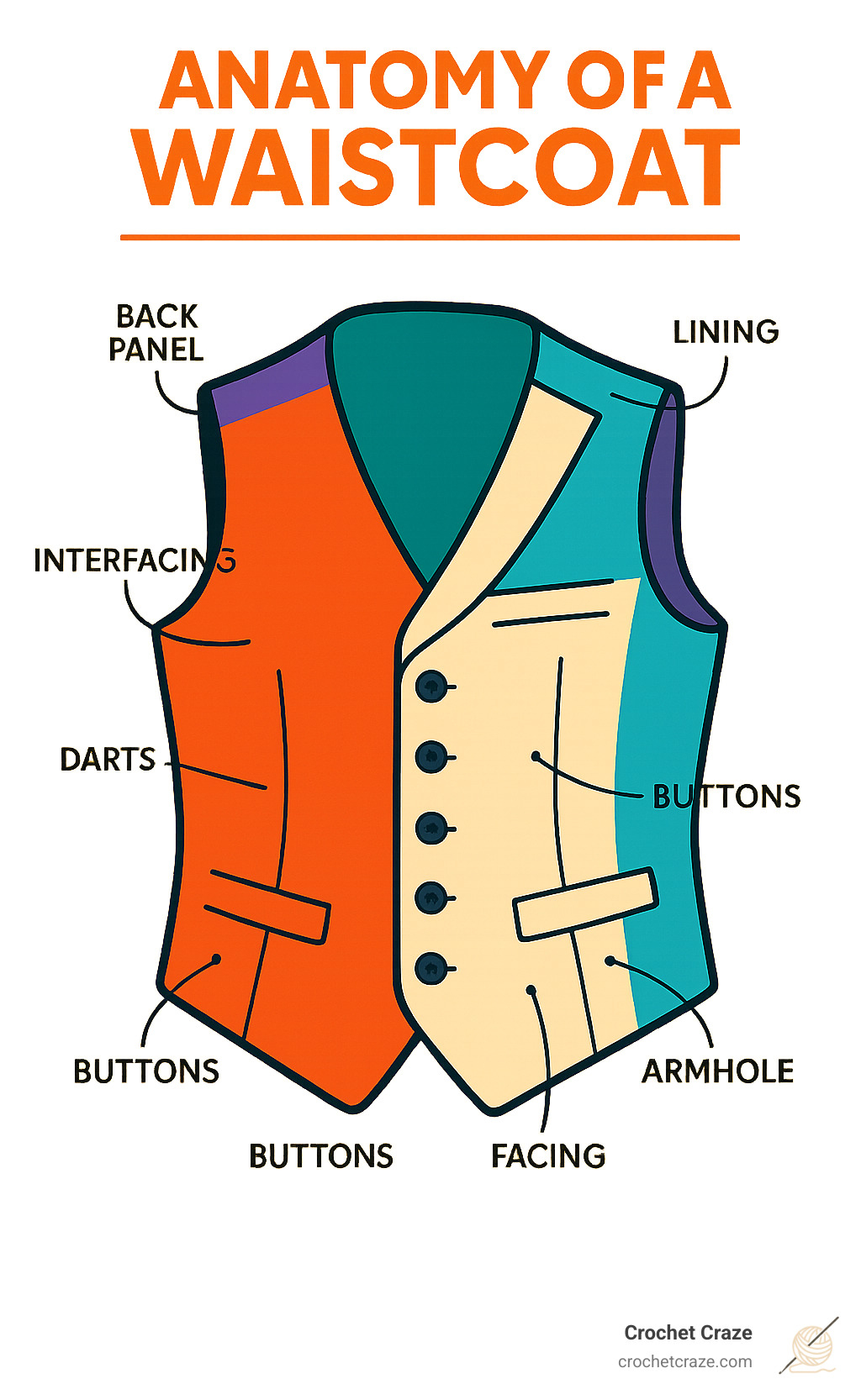
While often used interchangeably, waistcoats and vests have subtle historical and regional differences. The term “waistcoat” originated in 17th-century England as a formal garment worn beneath a coat. It typically features a V-neckline, buttons down the front and a more structured, custom appearance. The term “vest” is more commonly used in American English to describe the same garment.
Waistcoats have deep roots in tailoring traditions, originally designed as a third piece in the classic three-piece suit. They were primarily considered menswear for centuries, but today’s fashion has accepted waistcoats as versatile garments for all genders. Modern waistcoats range from formal pieces with traditional details to casual, relaxed styles that can be worn with jeans or over dresses.
At Crochet Craze, we’ve noticed an increasing interest in waistcoat sewing alongside our traditional crochet and knitting patterns, as crafters seek to expand their skills across different textile arts.
Materials & Tools Checklist
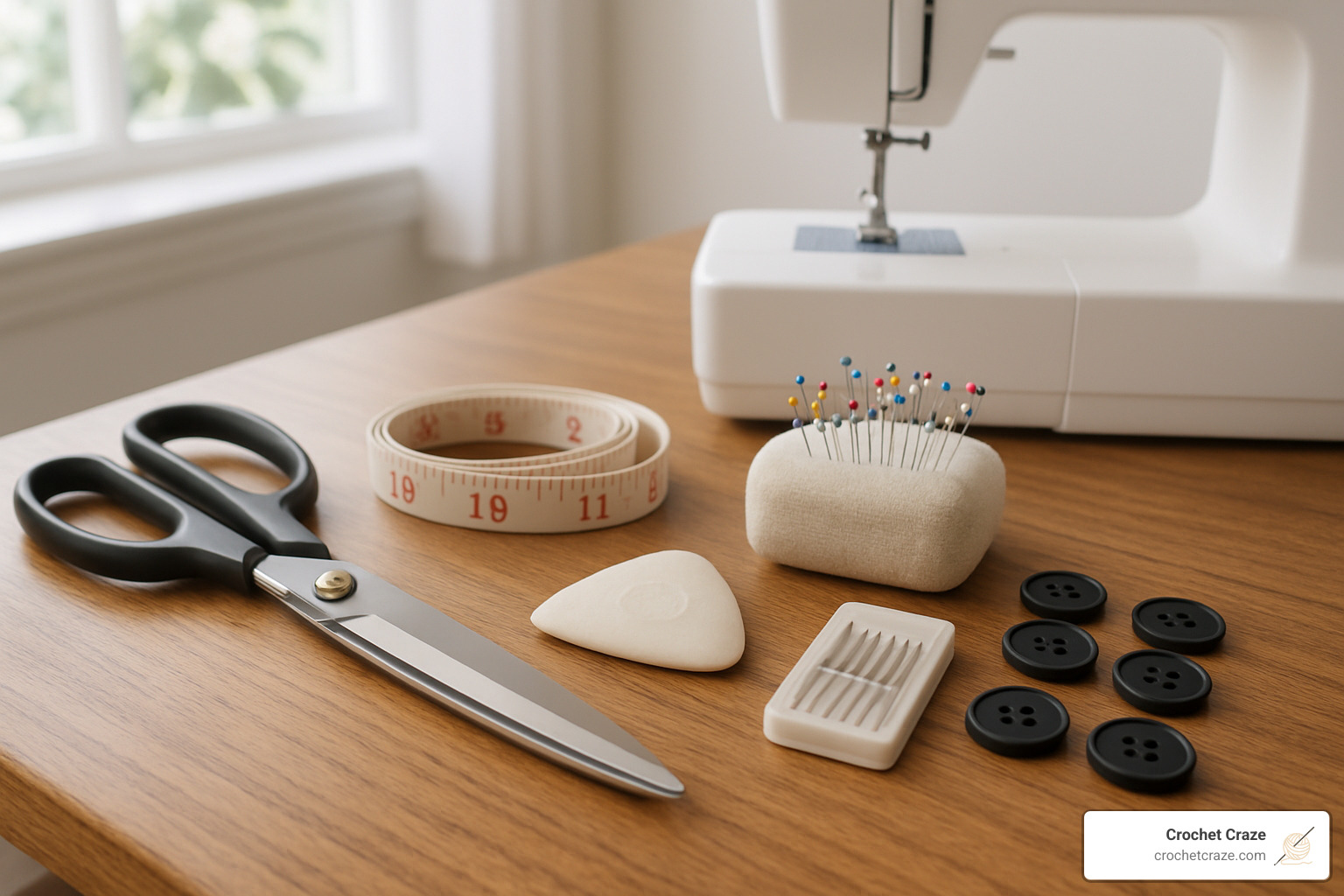
Before diving into your waistcoat project, gather these essential materials and tools:
- Fabric shears: Sharp, dedicated scissors for cutting fabric cleanly
- Interfacing: Provides structure to front panels, collar and facings
- Lining fabric: Creates a clean interior finish and adds comfort
- Pressing iron and board: Essential for professional-looking seams
- Tailor’s ham: Helps press curved seams properly
- Buttons: Choose decorative or functional options depending on your design
- Sewing machine: While hand-sewing is possible, a machine speeds up construction
- Hand-sewing needles: For buttonholes, buttons and finishing details
- Marking tools: Chalk, washable markers or tailor’s tacks for pattern transfer
- Pins and clips: To hold fabric pieces together during construction
- Measuring tape: For taking accurate body measurements
Why Choose a Free Pattern?
There are several compelling reasons to opt for a free waistcoat pattern rather than purchasing one:
Budget-friendly crafting: Free patterns allow you to allocate your budget toward quality fabrics and notions instead of pattern costs. This is especially helpful if you’re new to waistcoat construction and want to test your skills before investing in premium patterns.
Instant download convenience: Most free patterns are available as immediate PDF downloads, meaning you can start your project right away without waiting for shipping or visiting a store.
Size variety and accessibility: Many free patterns come in multiple sizes or with grading instructions, making them accessible to a wider range of body types. Some digital patterns even offer customizable sizing based on your exact measurements.
Creative freedom and learning: Free patterns often serve as excellent starting points for customization. As you gain confidence, you can modify details, add pockets or change styling elements to create truly unique pieces.
At Crochet Craze, we believe crafting should be accessible to everyone, which is why we’re excited to share these free resources with our community.
1. Wahid Custom-Fit Waistcoat Pattern
If you’ve ever dreamed of a waistcoat that fits like it was made just for you—well, the Wahid pattern from FreeSewing.org actually delivers exactly that! This gem of a waistcoat pattern free resource has captured the hearts of sewists worldwide, with over 20 beautiful finished projects proudly displayed on their community showcase.
What truly sets the Wahid pattern apart is its clever parameterized sizing system. Unlike traditional patterns with standard sizes that might leave you between a medium and large, this pattern adapts to your precise measurements. Enter your numbers, and the pattern adjusts automatically to create a custom blueprint that hugs your body in all the right places without that uncomfortable restricted feeling when you sit down.
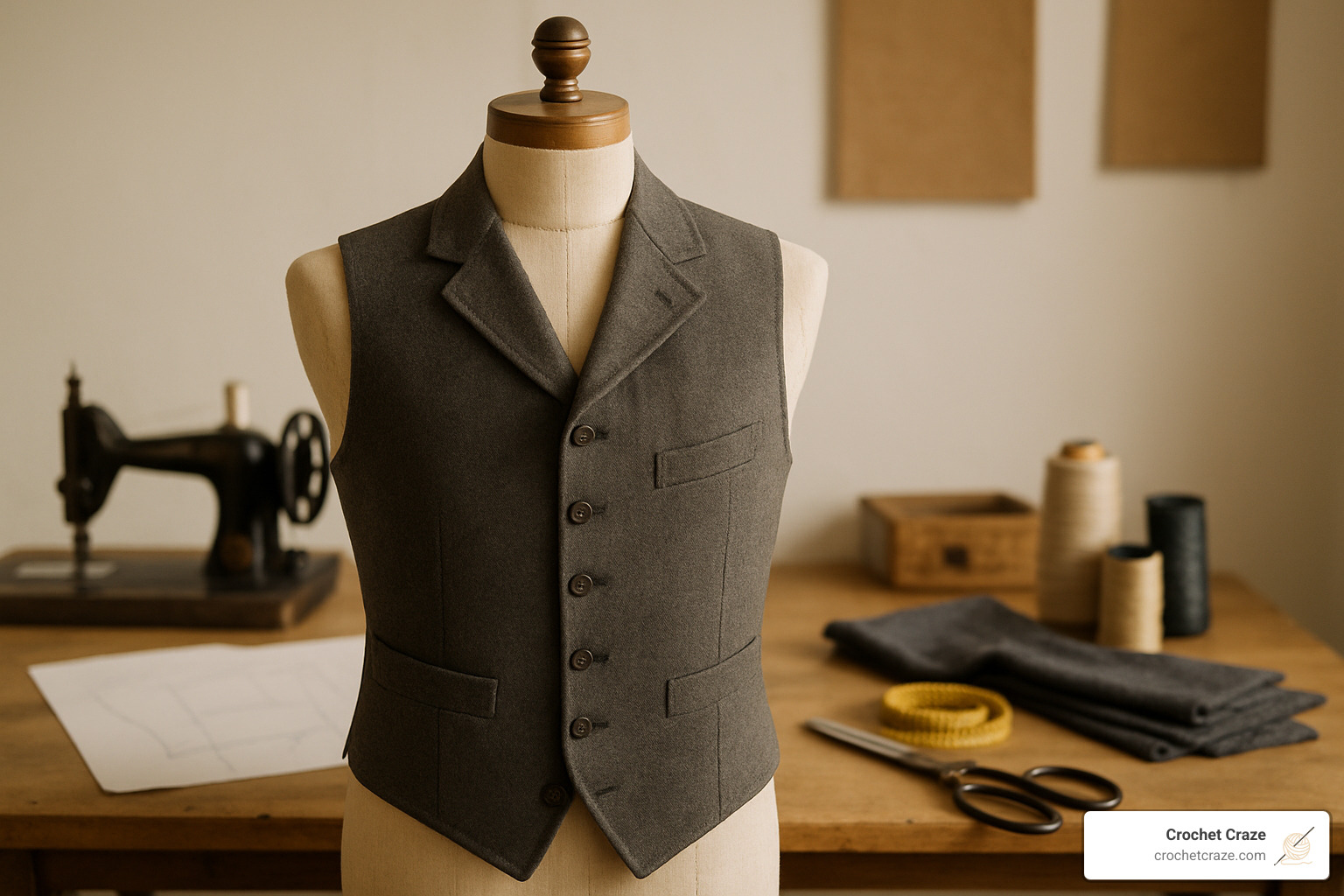
The Wahid doesn’t skimp on classic tailoring details either. You’ll find professional features like beautifully constructed welt pockets (with step-by-step instructions that won’t leave you scratching your head), a structured collar and lapel that maintain their shape wear after wear, a practical back belt for fit adjustments and various closure options to match your personal style.
For the creative souls among us, the Wahid offers a fantastic reversible option. By selecting complementary fabrics for your outer shell and lining, you essentially craft two waistcoats in one—perfect for those of us who love options but have limited closet space! Imagine a formal black wool side for professional settings, flipped to reveal a playful patterned side for casual gatherings.
One enthusiastic community member shared: “I made the Wahid for my husband using leftover wool from another project. The custom sizing meant it fit perfectly first time, with no alterations needed. The instructions were clear enough for me to attempt welt pockets for the first time!”
While we at Crochet Craze typically focus on yarn-based projects, venturing into sewing with patterns like the Wahid can expand your crafting horizons and give you valuable skills that complement your fiber arts journey. The precision required for waistcoat construction might even improve your crochet technique—who knew?
2. Maison Fauve Pompon – Waistcoat Pattern Free & Fabulous
The Pompon Waistcoat by Maison Fauve is a standout free waistcoat pattern that combines French chic with beginner-friendly construction. This pattern has gained popularity for its comprehensive features despite being completely free.
The Pompon includes:
– Full lining instructions for a professional finish
– Functional pockets that add both style and practicality
– A back belt for a customizable fit and neat silhouette
– Clear step-by-step instructions suitable for confident beginners
What we love about this pattern is how it balances classic styling with modern proportions. The slightly cropped length works beautifully with high-waisted pants or skirts, while the structured shoulders create a flattering line for all body types.
The Pompon is particularly versatile when it comes to fabric choices. While the original design showcases a medium-weight linen, it works equally well in lightweight wool for cooler seasons or structured cotton for summer wear. The pattern’s clean lines also make it an excellent canvas for showcasing beautiful buttons or unique fabric patterns.
One sewist reported: “I made the Pompon as my first ever waistcoat project. The instructions were clear enough that I didn’t need any additional tutorials, and I’m thrilled with how professional it looks inside and out.”
3. DRCOS Multi-Size Vest for the Whole Family
If you’re looking to outfit your entire family in matching waistcoats for a special occasion, the waistcoat pattern free option from DRCOS is truly a gem. This generous pattern collection offers 8 different sizes that cover everyone from the little ones to the adults in your household.
What I love most about the DRCOS pattern is how beginner-friendly it is. Unlike many free patterns that leave you to figure out seam allowances (a common frustration for new sewists!), these patterns come with seam allowances already included. This thoughtful detail saves you time and prevents potential fitting disasters.
The size range is impressively comprehensive:
– Children can be fitted in sizes 100, 120, and 140
– Women have options for S, M, L, and LL
– Men are covered with L and LL sizes
Another practical feature is that the pattern comes formatted for both A4 and letter-size paper, making it accessible whether you’re printing in the US or internationally. The entire pattern prints on just 14 sheets, which means you won’t be using up an entire ream of paper or spending hours taping together endless pages.
The design itself strikes a perfect balance between simplicity and sophistication. You’ll find all the essential elements: shaped front and back panels with darts for a custom fit, collar and facing pieces, and full lining instructions. For those new to waistcoat-making, there’s even an option for simple “dummy” pockets that give the look without the challenging construction.
For reference, the Ladies’ Medium accommodates approximately a 37-inch bust and 30.5-inch waist, with a finished length of 23.4 inches. This hits at a flattering point for most wearers and works well with various bottoms.
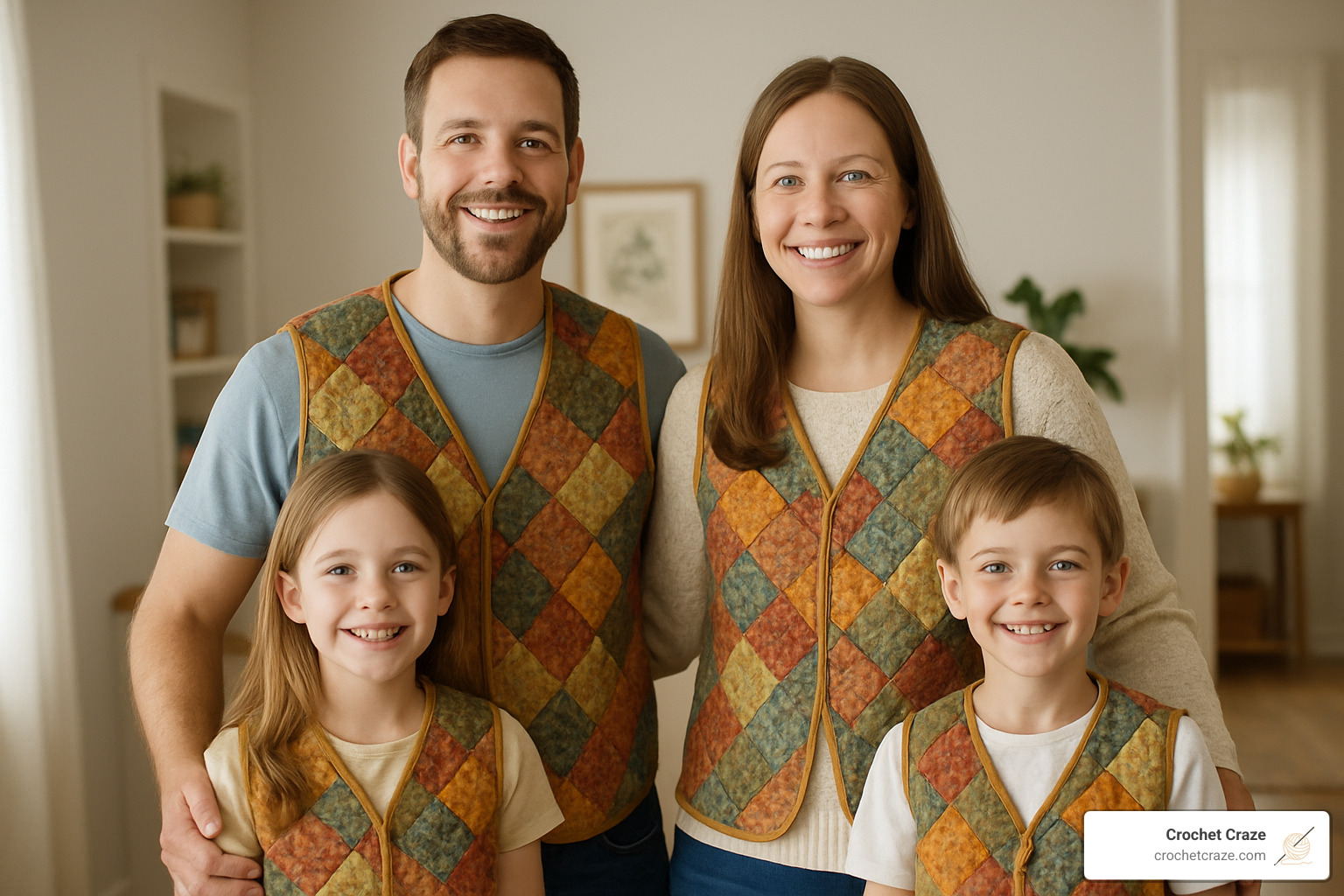
This pattern makes for a wonderful family project. Imagine coordinating holiday photos with everyone sporting matching waistcoats in complementary fabrics! It’s also a fantastic teaching tool if you’re helping older children or teens learn garment construction. The straightforward design provides enough challenges to build skills without overwhelming new sewists.
I’ve seen several Crochet Craze community members use this pattern for family weddings and reunions, with beautiful results that look far more expensive than their DIY origins would suggest. The versatility of this pattern means you can make it casually in cotton for everyday wear or lift it with silk and wool blends for special occasions.
4. Ralph Pink Tommy Men’s Waistcoat
The Tommy Men’s Waistcoat by Ralph Pink offers a classic silhouette that works beautifully for all genders. Originally designed for a 38/40″ chest, this free pattern has become popular for its versatility and timeless design.
What makes this pattern special:
– Clean, traditional lines that never go out of style
– Simple construction suitable for intermediate beginners
– Versatile styling potential for both formal and casual looks
– Works well in a variety of fabrics from light tweed to linen
The pattern was originally created for a last-minute wedding but has since become a staple for sewists seeking a boyfriend-fit waistcoat. While designed as menswear, many sewists have adapted it as a statement piece for women, demonstrating the pattern’s versatility.
For a luxurious touch, the pattern suggests using matching silk lining, which not only adds warmth but lifts the overall appearance. The neutral tones recommended in the pattern description make it a versatile addition to any wardrobe, capable of transitioning from casual to formal settings.
At Crochet Craze, we appreciate patterns that transcend traditional gender boundaries, allowing all crafters to explore styles that appeal to them regardless of who they were originally designed for.
Pro Tips for Sewing, Fitting & Customizing Your Waistcoat
Ready to take your waistcoat pattern free project from homemade to handcrafted? I’ve gathered some professional tips that will help you create a waistcoat you’ll be proud to wear or gift to someone special.
Before cutting into your beautiful fabric, make a test version (called a muslin or toile) using inexpensive fabric. This simple step saves heartache later! Pay close attention to how it fits across the shoulders, whether the front edges meet properly, if the length works for your body and whether the darts land in the right spots. Making adjustments at this stage is so much easier than trying to fix your final garment.
Speaking of darts—these little triangular tucks are what give your waistcoat its lovely shape. When adjusting darts, keep them pointed toward the fullest part of the bust or widest part of the hips. If you need to move them, make sure you’re removing the same total amount of fabric. And here’s a pro secret: always press darts toward the center of the garment for that smooth, custom look.
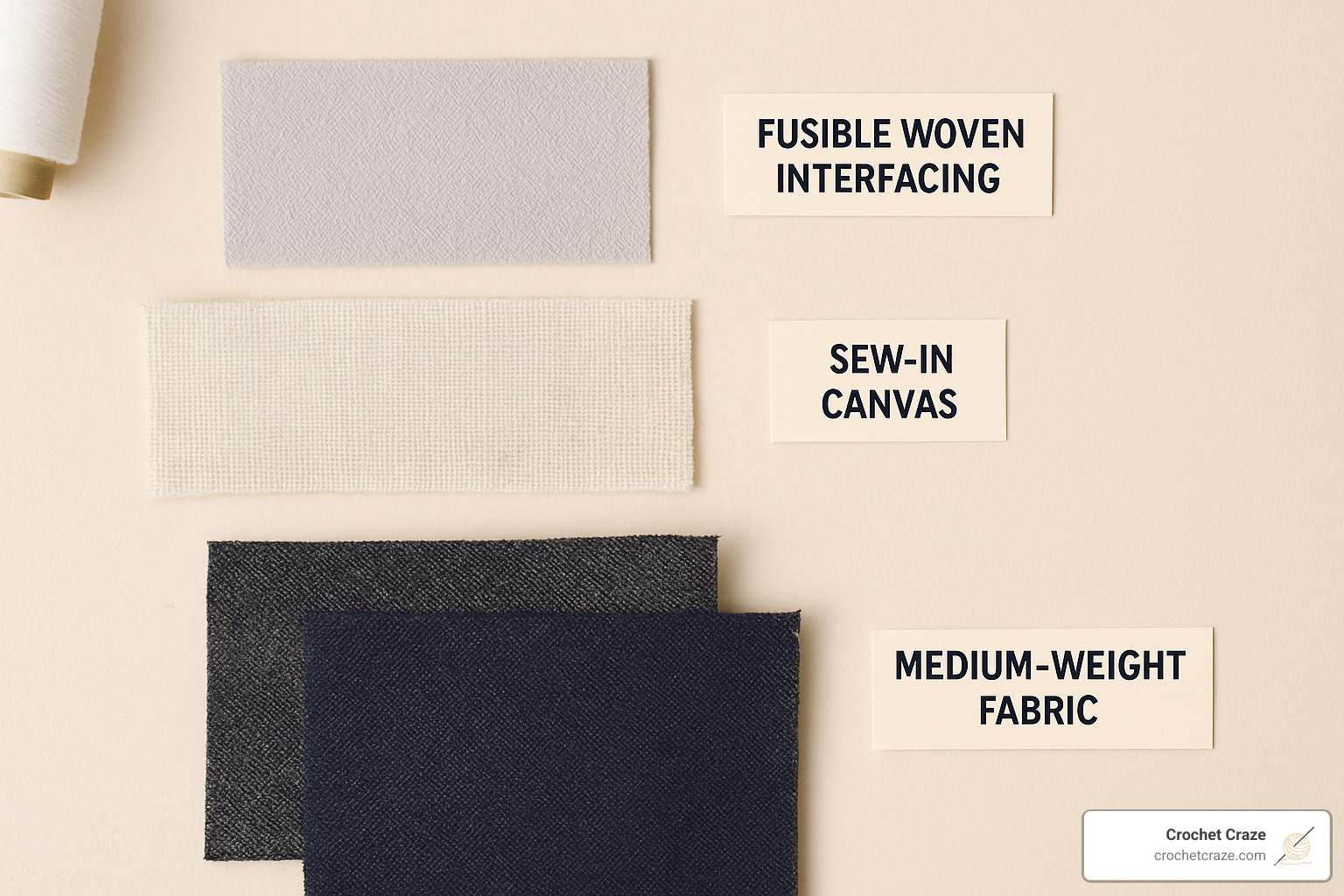
The unsung hero of a great waistcoat is proper interfacing. This hidden layer gives structure and body to your garment. For most medium-weight fabrics, fusible woven interfacing works beautifully. If you’re creating a traditional wool waistcoat, consider sew-in canvas for authentic structure. Don’t skimp on interfacing—apply it to front panels, collar, facings and pocket welts. For areas that will take stress, like buttonholes, double-interfacing provides extra stability.
Your iron might be the most important tool in your sewing kit when making a waistcoat. Proper pressing is what transforms your project from looking homemade to professionally crafted. Always press seams flat first to set the stitches, then press them open or in the direction your pattern suggests. For curved areas like darts and armholes, a tailor’s ham is invaluable. Remember to press (setting the iron down and lifting it up) rather than ironing (sliding the iron back and forth), and let pieces cool completely before handling them further.
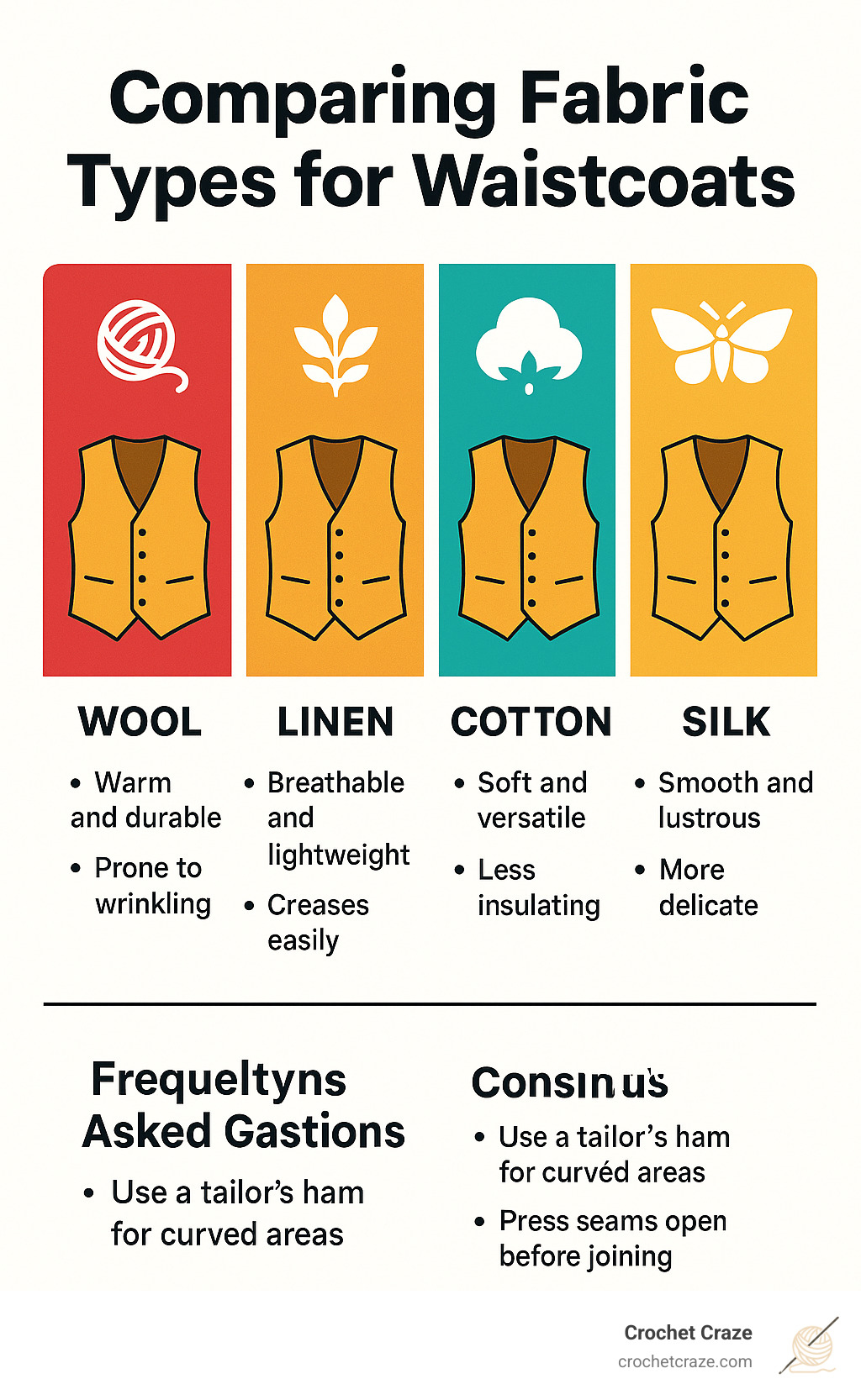
Choosing the right fabric for the season makes your waistcoat both beautiful and practical. For spring and summer, consider linen, cotton or lightweight wool blends that breathe well. Fall and winter call for wool, tweed, velvet or corduroy for warmth and structure. If you want a year-round waistcoat, medium-weight cotton, tropical wool or silk blends offer versatility across seasons.
The back of your waistcoat offers wonderful opportunities for customization. Adding a back belt not only looks professional but provides adjustability—perfect if you’re between sizes. For a modern twist, try a split back with lacing. If you want better shaping, consider adding a center back seam that follows your contours.
Personal touches make your waistcoat uniquely yours. Consider adding hand embroidery along edges or pockets, contrast piping to define edges, statement buttons that showcase your personality or decorative topstitching for subtle detail. Independent sewing blogs report thousands of downloads of free waistcoat patterns each month, showing just how popular these versatile garments have become.
Choosing the Right Waistcoat Pattern Free for Your Skill Level
Finding the perfect waistcoat pattern free for your sewing experience helps ensure your project will be enjoyable rather than frustrating.
If you’re new to sewing, look for patterns with minimal pieces—ideally just front, back, facing and lining. Skip complex details like welt pockets or bound buttonholes for now; you can always tackle those on your next project! Detailed step-by-step instructions with clear diagrams or photographs will guide you through the process. The DRCOS pattern mentioned earlier is perfect for beginners since it already includes seam allowances—one less thing to worry about!
Intermediate sewists can stretch their skills with patterns featuring more shaping details like princess seams. This is a great time to try adding welt or patch pockets and experimenting with basic collar variations. The Maison Fauve Pompon offers just the right level of challenge to build your confidence while creating something beautiful.
Advanced sewists might enjoy patterns with traditional tailoring techniques or historical reproduction patterns that offer period-accurate details. The Wahid pattern’s parameterized approach provides endless opportunities for customization, perfect for sewists who want complete control over their creation.
Don’t forget to supplement your pattern with additional resources if needed. Video tutorials can help clarify tricky steps, online sewing communities often share valuable tips for specific patterns and pattern reviews can alert you to potential challenges before you begin. Here at Crochet Craze, we believe in building skills gradually—even the most complex-looking waistcoats are just a series of manageable steps!
Troubleshooting Common Waistcoat Pattern Free Mistakes
Even experienced makers run into occasional hiccups when creating waistcoats. Here’s how to solve the most common issues:
Gaping armholes can make your waistcoat look ill-fitting. This usually happens when the armhole is cut too deep or when the front and back pieces aren’t aligned properly. The fix is simple: take in the side seams just at the armhole area, or add a small dart at the front armhole to remove the excess fabric.
Button alignment troubles are frustrating but preventable. Before cutting your fabric, lay the front pieces flat together and mark all buttonholes and buttons at once, using a ruler to ensure perfect spacing. This prevents the uneven look that can happen when each side is marked separately.
A puckered lining is a common issue that happens because the lining needs to be slightly larger than the outer fabric to accommodate movement and prevent pulling. Add about 1/8″ to the side seams of your lining pieces, or press the completed lining with extra steam to relax the fabric and give it a bit more ease.
If your collar sits away from the neck instead of lying flat, it’s likely because the collar pattern is too flat or because the under-collar was cut the same size as the upper collar. For a professional finish, cut the under-collar slightly smaller (about 1/8″ on the outer edges) and ease the upper collar to it when sewing.
Proper pressing can fix many issues! Use a tailor’s ham for curved areas, press seams open before joining pieces together and allow your work to cool completely in position before moving it. This simple step can lift your waistcoat from good to great.
At Crochet Craze, we love seeing crafters expand their skills beyond hooks and needles. Creating your own waistcoat using a waistcoat pattern free resource brings the same satisfaction as completing a complex crochet project—with the added bonus of a beautiful, wearable garment that showcases your talents!
Frequently Asked Questions About Free Waistcoat Patterns
How do I resize a pattern if I fall between sizes?
Finding yourself between standard sizes is a common crafting conundrum! Don’t worry—you’ve got several friendly options to get that perfect fit.
Most of us aren’t “standard” in every measurement, which is why I recommend starting with the size that matches your chest/bust (the most critical measurement for a waistcoat). From there, you can make adjustments to the waist and hips as needed.
My favorite approach is grading between sizes. Simply trace your pattern and draw a smooth, gradual line from the smaller size at one point to the larger size at another. This works beautifully when you’re just one size different between areas and creates a custom fit without much fuss.
If you’re comfortable with digital patterns, I highly recommend trying the Wahid pattern from FreeSewing.org. Its parameterized design lets you input your exact measurements for a truly custom fit without any manual grading headaches!
Always, always make a muslin (test garment) first. This simple step has saved me countless times! You can mark adjustments directly on the fabric, then transfer those changes to your pattern. The beauty of waistcoats is they’re relatively forgiving since there are no sleeves to complicate matters.
Can I make a waistcoat without a commercial pattern?
Absolutely! I’ve created several waistcoats without commercial patterns, and it’s surprisingly doable. Here are my tried-and-true approaches:
If you have a well-fitting shirt or waistcoat already, simply trace it! Lay the garment flat on paper, trace around it, then adjust the outline to create your waistcoat shape. You’ll want to shorten the back, create a V-neck front and make other waistcoat-specific adjustments.
The “rub-off” method works wonderfully too. Place pattern paper over your existing garment and use a tracing wheel to mark the seams and edges. This creates an impression you can then trace with a pencil—like magic!
For those with some pattern experience, modifying a basic bodice block is straightforward. Remove the sleeves, adjust the neckline and add appropriate length. Voilá—custom waistcoat pattern!
One of our Crochet Craze community members shared: “I made my son’s wedding waistcoat by tracing his favorite shirt, shortening the back and creating a V-neck front. It fit perfectly, and he received so many compliments!”
What’s the best way to wash and store a handmade waistcoat?
Taking proper care of your handmade waistcoat pattern free creation will significantly extend its life and keep it looking sharp for years to come.
Washing guidelines depend entirely on your fabric choice. For wool and wool blends, stick to dry cleaning or spot cleaning with a damp cloth. Cotton and linen waistcoats can typically be hand washed in cool water with mild detergent or machine washed on a gentle cycle inside a protective mesh bag. Silk generally requires dry cleaning, though some can be hand washed with special silk detergent if the manufacturer allows it. For synthetic blends, follow care instructions for whichever fiber dominates the blend.
When it comes to drying your precious handmade piece, patience is key! Always air dry flat on a towel to maintain the garment’s shape. Never wring or twist a waistcoat—this can distort its carefully crafted structure. Instead of direct ironing, I prefer steaming lightly to remove wrinkles, which is gentler on the fabric and construction.
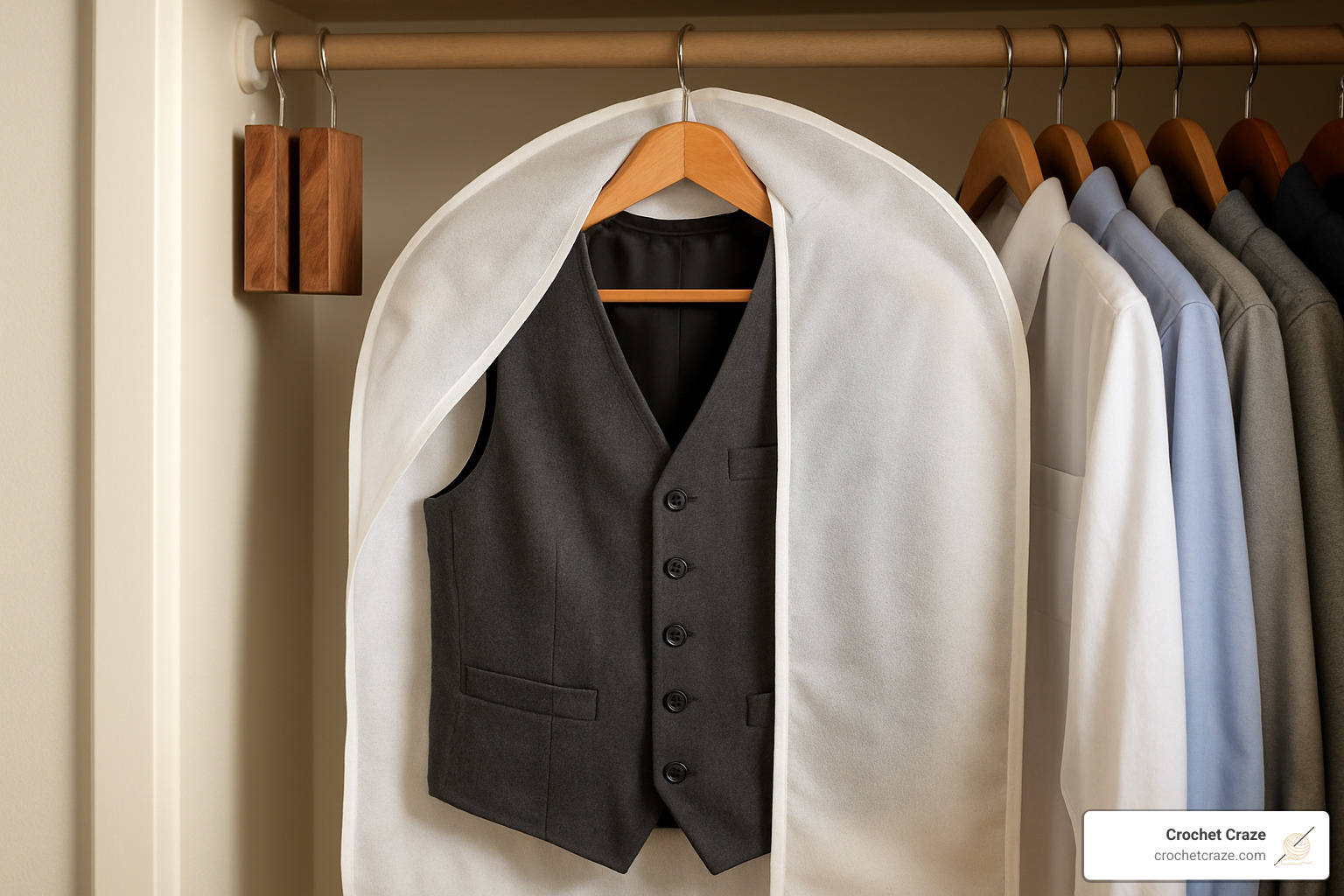
For storage, invest in a shaped hanger to maintain those crisp shoulder lines. Always button the top or middle button to help the waistcoat keep its shape while hanging. I like to cover mine with a breathable garment bag for dust protection while allowing air circulation. If you’re storing wool waistcoats, tuck a cedar block nearby to naturally deter moths without harsh chemicals.
Before storing long-term (like between seasons), make sure your waistcoat is clean and check that all pockets are empty—forgotten items can cause strange bulges or distortions over time. Also, give your garments breathing room in the closet—crowding leads to unwanted wrinkles and can stress the fabric.
With a little care, your handmade waistcoat will remain a wardrobe standout for years to come!
Conclusion
There’s something truly magical about creating your own waistcoat from a waistcoat pattern free resource. Whether you’ve fallen in love with the precise customization of the Wahid, the French chic of the Pompon, the family-friendly versatility of the DRCOS, or the classic lines of the Ralph Pink Tommy, you’re now equipped to craft a garment that perfectly expresses your personal style.
At Crochet Craze, we’ve seen how branching out from traditional yarn crafts into sewing can transform your creative practice. The precision and structure required for waistcoat construction beautifully balances the flowing creativity of crochet and knitting. These complementary skills make you a more versatile maker, able to create complete, coordinated looks from head to toe.
Every sewing project—even the ones with challenges—helps build your confidence and skill. That slightly wonky first buttonhole? It’s not a mistake but a stepping stone on your crafting journey. Your second waistcoat will be better, and your fifth will be something truly spectacular. Start where you are, with the pattern that matches your current abilities, and enjoy the process of growth.
The sustainable fashion aspect of making your own waistcoats can’t be overlooked either. By selecting quality fabrics that you truly love and creating garments that fit perfectly, you’re crafting pieces designed to last for years rather than seasons. Your handmade waistcoat won’t just look better than store-bought alternatives—it’ll carry the story of your creativity with every wear.
We’d absolutely love to see what you create! Share your finished waistcoats with our Crochet Craze community and inspire others to try these wonderful free patterns. Whether you’re sporting a tweed number for autumn or a breezy linen version for summer gatherings, your handmade garment is a wearable testament to your skills.
So press that iron, thread that needle, and prepare to turn heads with your bespoke waistcoat. After all, nothing beats the satisfaction of answering “Where did you get that amazing vest?” with a proud “I made it myself!”
Happy sewing, and may all your stitches be straight (except when they’re supposed to curve)!
Looking for more crafting inspiration? Explore our patterns section for additional free resources across various fiber arts and sewing projects.