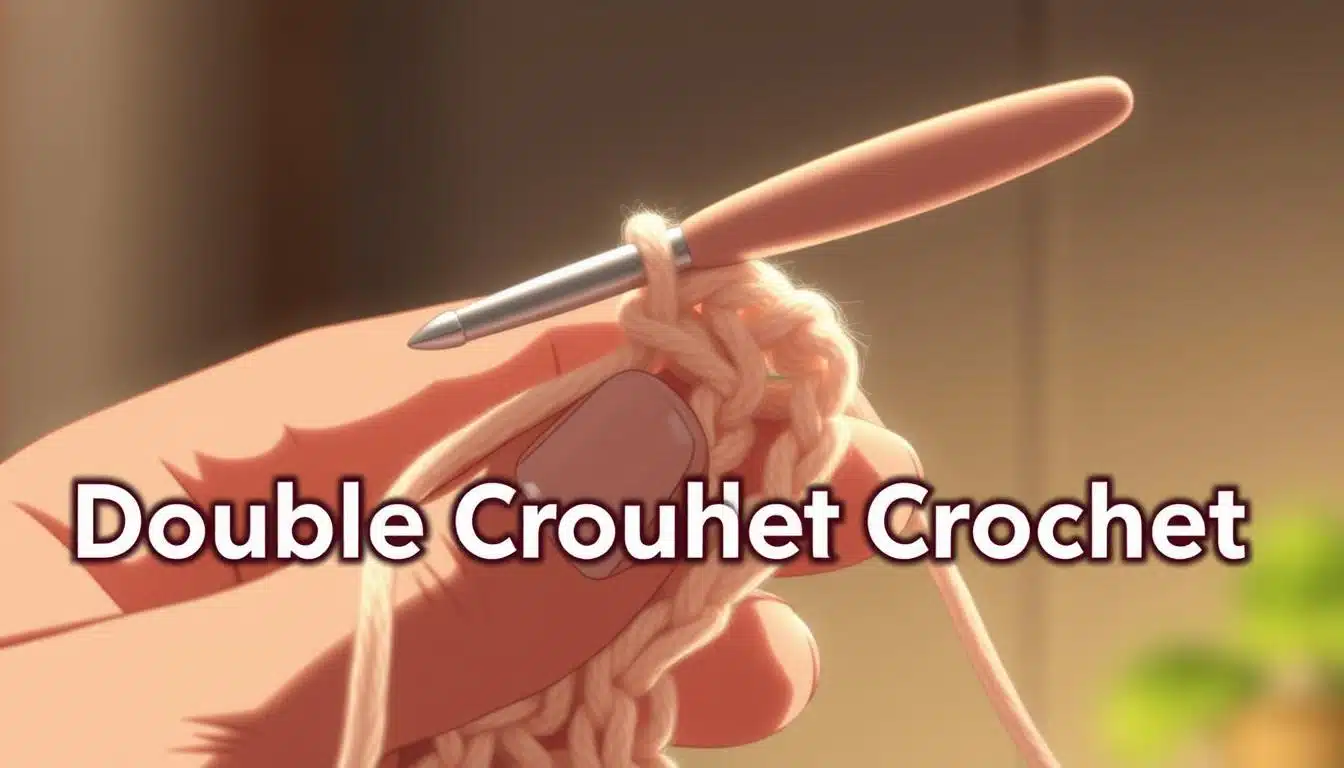
You’re about to learn a key stitch in crochet: the double crochet. It’s a basic stitch used in many projects like hats, shawls, and clothes.
This stitch is great for making detailed lace patterns or cozy items. It’s taller than a single crochet, adding texture and interest to your work.
Mastering this stitch opens up many crochet possibilities. You’ll be able to try different patterns and projects. Get ready to grow your crochet skills and explore new ideas.
Key Takeaways
- Learn the basics of the double crochet stitch
- Understand its applications in various crochet projects
- Discover how to incorporate this stitch into your crochet repertoire
- Explore new creative possibilities with this versatile stitch
- Enhance your crochet skills with this essential stitch
The double crochet stitch is more than just a technique; it’s a key to unlocking a world of creative possibilities. As you master this stitch, you’ll find that it opens up new avenues for crafting a variety of projects, from garments to home decor items.
The Anatomy of a Double Crochet Stitch
The double crochet stitch involves an initial yarn over, followed by a three-step process of “pulling through.” It’s roughly equal in height to two single crochet stitches, making projects work up quicker. Understanding the anatomy of this stitch is key for executing it correctly.
Where Double Crochet Fits in Your Crochet Journey
Whether you’re a beginner or an experienced crocheter, the double crochet stitch is essential. It’s a building block for more complex patterns and versatile for a wide range of projects.
| Skill Level | Project Type | Benefits |
|---|---|---|
| Beginner/Intermediate | Garments, Home Decor | Quick project completion, Versatility in patterns |
| Advanced | Complex Garments, Intricate Designs | Ability to create complex designs, Enhanced creativity |
By mastering the double crochet stitch, you’ll not only enhance your crochet skills but also unlock a world of creative possibilities.
Crochet Weapons of Choice: Tools and Materials You’ll Need
To master the double crochet stitch, you’ll need the right tools. This includes a good crochet hook and yarn. Knowing your tools is the first step to becoming a skilled crocheter.
Choosing the right crochet hook is like picking the right pen. It should feel comfortable and match your style. For beginners, a J/6mm hook is best. It makes the stitches easy to see.
Hook Heroes: Selecting the Perfect Crochet Hook
The material of your crochet hook matters a lot. Hooks can be made of aluminum, steel, or plastic. Aluminum hooks are light and warm, making them popular among crocheters.
Yarn Therapy: Choosing Fibers That Work for Double Crochet
Yarn choice is as important as your hook. Beginners should start with worsted weight yarn. It’s easy to work with and forgiving.
Weight Matters: Best Yarn Weights for Beginners
Worsted weight yarn is perfect for double crochet. It’s thick but not too thick.
Color Considerations for Practice Projects
Choose a light to medium-colored yarn. It helps beginners see their stitches better.
| Yarn Weight | Hook Size | Project Type |
|---|---|---|
| Worsted | J/6mm | Garments, Accessories |
| Dk Weight | I/5.5mm | Lace, Baby Items |
| Chunky | K/6.5mm | Home Decor, Quick Projects |
Laying the Groundwork: Essential Pre-Double Crochet Skills
Before starting with double crochet, it’s key to have a solid base. Learning a few important skills will make your crochet journey easier and more fun.
Chain Reaction: Mastering Your Foundation Chain
The foundation chain is where most crochet projects begin. To start, make a slip knot on your hook and then chain stitches. The number of chains needed varies by project. For instance, a scarf might need chains until it’s the right width.
To keep your foundation chain even and not too tight, try these tips:
- Keep your tension relaxed; you don’t want to pull the yarn too tightly.
- Make sure to count your chains accurately to avoid mistakes later on.
- Use a hook that’s the right size for your yarn to achieve the perfect balance.
Tension Taming: Getting Your Grip Just Right
Crochet tension is how tightly or loosely you hold the yarn and hook. Getting the right tension is important because it affects your project’s size and texture. Too tight, and it might be small or stiff. Too loose, and it could be too big or sloppy.
To tame your tension, practice holding your yarn and hook in a way that feels comfortable for you. Try different grip styles until you find one that works. Some crocheters prefer a pencil grip, while others like a knife grip. Experimenting with different grips will help you find the perfect tension for your double crochet projects.
Double Crochet Decoded: Step-by-Step Instructions
Ready to improve your crochet skills? Let’s learn the double crochet stitch. It’s a key stitch for many projects. Mastering it opens up lots of creative possibilities.
Your Very First Double Crochet Stitch
To begin, you need to know the basic steps for a double crochet. It might seem hard at first, but breaking it down helps.
To make a double crochet, follow these steps:
- Yarn over
- Insert the hook into the indicated stitch or space
- Yarn over
- Pull up a loop
- (Yarn over, pull through 2 loops) twice
The Yarn Over: Getting It Right Every Time
The yarn over is key in the double crochet. To do it right, wrap the yarn around the hook from right to left. This step is vital for the right tension and stitch count.
Pulling Through Pairs: The Heart of Double Crochet
Pulling through pairs finishes the double crochet. After pulling up a loop, yarn over and pull through two loops on the hook. Do this once more, and you’ve made one double crochet stitch.
Row, Row, Row Your Hook: Working Across and Turning
Now that you know the double crochet, it’s time to work across a row. Just keep making double crochet stitches in each stitch until you reach the end. When you’re done, turn your work.
To turn your work, chain a few stitches (usually three) to get ready for the next row. This step keeps your tension and stitch count right.
Counting Stitches: Making Sure Nothing Goes Missing
As you work across a row, count your stitches carefully. Look at the top of each stitch and count the Vs you see.
By following these steps and keeping an eye on your stitch count, you’ll create a beautiful fabric. This fabric will be the base for your crochet projects.
“Knot” What You Expected: Common Double Crochet Mistakes
Learning double crochet means knowing how to dodge its usual mistakes. Even with a good start, problems like wrong width and wavy edges can pop up. These issues can mess up your whole project.
The Incredible Shrinking Project: Width Problems Solved
One big problem is when your project is the wrong size. This usually comes from wrong tension or counting stitches wrong. To fix this, always check your stitches at the end of each row. Also, keep your tension even. For more tips on fixing common crochet mistakes, check out our guide on mastering your crochet.
Wavy Edges and How to Straighten Them Out
Wavy edges can come from uneven tension or picking the wrong stitch. To fix this, make sure to pick the right stitch and keep your tension steady. If problems persist, try blocking your finished project to even out the stitches.
Knowing these common double crochet mistakes helps you avoid them. This way, you can make sure your project turns out right. Happy crocheting!
Double Crochet Variations That’ll Make You Look Like a Pro
As you keep crocheting, you’ll find that double crochet variations are key. They help you create new textures and designs. These changes can make your projects look more complex, making you seem like a pro.
Front Post and Back Post: Adding Delicious Texture
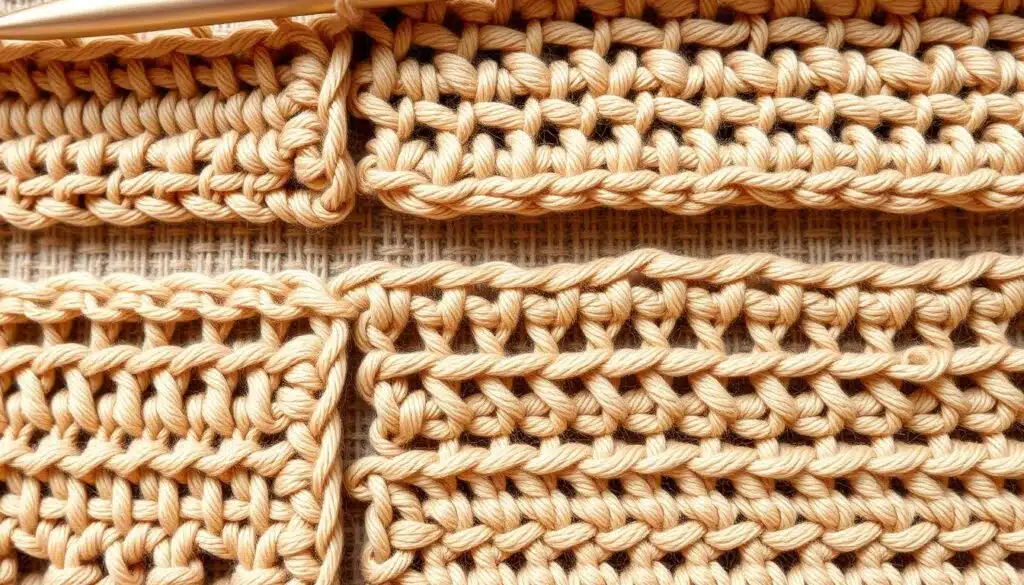
Using front post and back post double crochet stitches adds texture to your crochet. The front post double crochet goes around the post of the stitch below, from front to back. The back post double crochet goes from back to front. This makes your work look raised and interesting.
To do a front post double crochet, yarn over, then insert your hook from front to back around the post. Yarn over again and pull through. Then, complete the stitch as usual. For a back post double crochet, insert the hook from back to front. These stitches are great for ribbing, cables, or textured elements.
Extended and Linked Double Crochet: Stretching the Possibilities
There are also extended and linked double crochet variations. The extended double crochet is taller, achieved by adding an extra step. It’s perfect for adding height without width.
The linked double crochet links stitches together before finishing them. This makes the stitches shorter and creates a more structured fabric. It’s great for garments or projects needing a firm look.
Going in Circles: Double Crochet in the Round
Working in the round with double crochet opens up a world of possibilities. You can create hats, amigurumi, and more. This technique makes projects both functional and visually appealing.
The Magic Circle: Your Gateway to Hats, Amigurumi and More
The magic circle is key for starting round projects. It creates a secure, adjustable loop. This lets you start without a traditional foundation chain.
To make a magic circle, wrap yarn around your fingers, insert the hook, and pull up a loop. Then, chain one to secure it. For a step-by-step guide, check out crochet tutorials online.
Joining Without the Jitters: Seamless Round Techniques
Joining rounds seamlessly is key for a professional finish. Use a slip stitch to join the last stitch of the round to the first. Make sure to keep the tension even.
Another method is “join-as-you-go.” You crochet in a spiral without joining rounds. This avoids a visible join. The choice depends on the project’s needs.
Mastering the double crochet in the round opens up many project possibilities. From hats and amigurumi to doilies, the key is practice. Get comfortable with the techniques involved.
Stitch Matchmaking: Pairing Double Crochet With Other Stitches
Pairing the double crochet with other stitches can make your crochet projects look amazing. The secret to interesting textures and patterns is mixing stitches in new ways. Once you get the hang of the double crochet, you’ll see it’s great for many projects.
The DC-SC Power Couple: Creating Texture and Interest
Pairing the double crochet (DC) with the single crochet (SC) adds texture and interest. This combo creates a fabric that looks good and feels soft. For example, alternating DC and SC rows can give a woven look.
Using SC as a base for DC rows creates a staggered look. This adds depth to your crochet.
“The art of crochet is not just about following a pattern, but about understanding how different stitches interact with each other.” Trying out different stitch combinations helps you find your own style. This way, you can make truly unique projects.
Shell We Dance? Fancy Stitch Combinations
For a touch of elegance, try fancy stitch combinations with double crochet. The “shell stitch” is a classic that works well with DC. It creates a lacy fabric great for shawls, scarves, or baby blankets.
Experimenting with stitches like the “V-stitch” or “fan stitch” can lead to beautiful patterns. These stitches mix DC with others to make complex designs.
Mastering these combinations lets you make projects that are both beautiful and useful. So, don’t be shy to try new things and find your own unique stitches. It’s all part of the fun of crochet!
From Hook to Heirloom: Your First Double Crochet Projects
Now that you’ve learned the double crochet stitch, it’s time to make beautiful projects. Start with dishcloths, scarves, and hats. These are great for practicing this stitch.
These projects are perfect for beginners. They help you improve your double crochet skills. Plus, you’ll make useful items for your home or as gifts.
The “I Did It!” Dishcloth: A Perfect First Project
A dishcloth is a great first project. It’s practical and lets you practice the double crochet stitch easily. You’ll also get a useful kitchen item.
- Easy to make and quick to finish
- Great for practicing tension and stitch count
- Results in a functional kitchen accessory
Scarf Simplicity: A Rectangular Canvas for Practice
Making a scarf is another excellent way to practice. It’s a simple, rectangular project. You can choose your favorite colors and yarn textures.
- Choose your yarn and hook size
- Crochet your desired length and width
- Add a simple border for a professional finish
Simple Double Crochet Hat: Working in the Round
For those ready to try working in the round, a hat is a great choice. It teaches you to crochet in a continuous spiral or joined rounds. This expands your skill set.
These projects are just the start of your double crochet journey. As you get better, you’ll be able to make more complex patterns. You’ll create truly special pieces.
Double Crochet Ninja Moves: Advanced Techniques
Ready to become a double crochet ninja? Advanced techniques are the key to unlocking complex designs. With these skills, you’ll be able to create detailed patterns and shapes. This will elevate your crochet projects.
As you continue on your crochet journey, you’ll want to explore advanced techniques. These add complexity and interest to your projects. Two essential skills are increasing and decreasing. They allow you to shape your projects and create fitted garments or accessories.
Increasing and Decreasing: Shaping Your Projects
Increasing and decreasing are key techniques for shaping your double crochet projects. By adding or subtracting stitches, you can create a fitted shape. For example, increasing stitches can help you create a flared skirt or a hat with a curved crown.
Decreasing stitches, on the other hand, can help you shape a sleeve or create a tapered toe on a sock. “The ability to increase and decrease stitches is what sets apart a beginner from an advanced crocheter,” says crochet expert Jane Smith. “With these skills, you can create garments and accessories that are both functional and fashionable.”
Lacework and Openwork: Creating Airy Designs
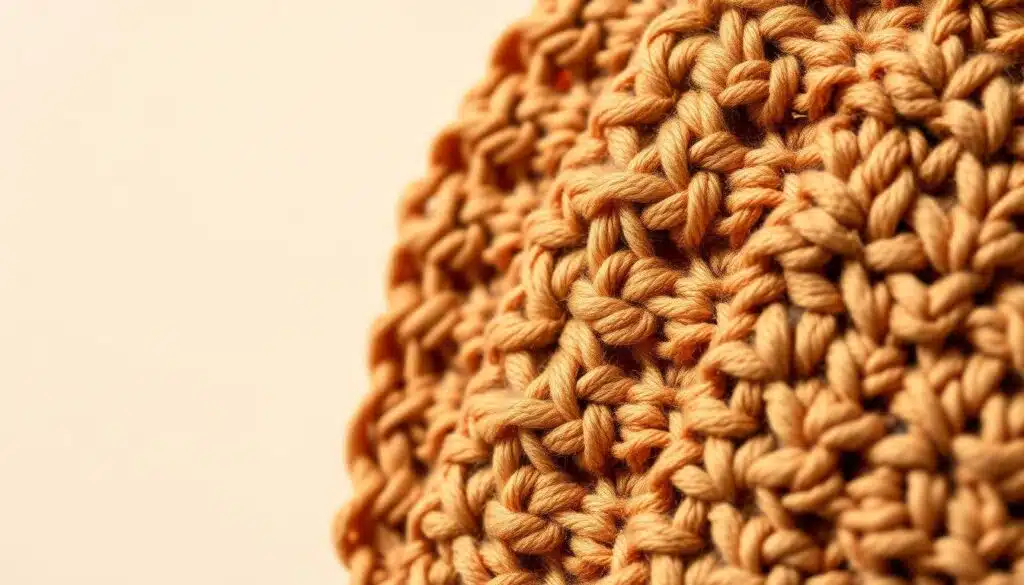
Lacework and openwork are advanced techniques that involve creating detailed patterns. These techniques allow you to create airy, lightweight fabrics. They are perfect for summer garments, shawls, or home decor items.
To create lacework or openwork, you’ll need to be comfortable with working with chains, double crochets, and other stitches. You can use a variety of techniques, such as working stitches into chains or using double crochets to create a mesh-like fabric.
By mastering these advanced techniques, you’ll be able to create complex, beautiful designs. Whether you’re making a garment, accessory, or home decor item, advanced double crochet techniques will help you take your projects to the next level.
When Good Stitches Go Bad: Troubleshooting Your Work
When your double crochet project starts to go wrong, it’s time to solve the mystery. Even with great intentions and knowledge, mistakes can happen. But, with some troubleshooting skills, you can find and fix the problem. This will get your project back on track.
The Case of the Crooked Edge: Detective Work for Straight Borders
A crooked edge can be annoying, but it’s usually simple to fix. First, check if your foundation chain is twisted or uneven. If not, look at your stitch count. A small mistake in counting can cause a crooked edge.
To fix it, adjust your stitch count or re-block your work. This will help even out the tension.
- Check your foundation chain for twists or unevenness.
- Verify your stitch count to ensure accuracy.
- Adjust your tension to prevent further distortion.
Tension Headaches: Maintaining Consistency Throughout Your Project
Tension problems can be a big challenge, mainly in big projects. To keep things consistent, crochet in a relaxed and steady way. If your tension is off, take a break and check your grip and posture.
Re-blocking your work can also help even out the tension. For tough projects, use a stitch marker to track your tension.
By paying attention to your tension and keeping it consistent, you’ll get a professional finish. Your project will be a pleasure to wear or show off.
“Knot What You Expected”: Common Double Crochet Mistakes
Starting with double crochet can lead to a few bumps in the road. But, many crocheters face these issues and find solutions. Knowing how to fix these problems can make all the difference.
The Incredible Shrinking Project: Width Problems Solved
One big problem is when your project shrinks more than you expected. This usually happens because of uneven tension or counting mistakes. To fix this, always double-check your stitch count at the end of each row. Keeping your tension even is also key.
If your project is too tight, try blocking it. This can help relax the fibers and even out the stitches. Or, you can use a bigger hook to add more stitches and widen it. Always check your gauge before starting to make sure you’re using the right hook size.
Wavy Edges and How to Straighten Them Out
Wavy edges can be a real problem, but they’re easy to fix. They often come from uneven stitch counts or tension. To fix wavy edges, re-count your stitches at the end of each row. This helps keep your stitch count even.
Blocking your project can also help even out the stitches. If the problem continues, try changing your hook size or yarn weight. This can help you achieve even tension. By avoiding these common mistakes, you can make beautiful double crochet projects.
You’re Now a Double Crochet Devotee
With practice and patience, you’ve mastered the double crochet stitch. This stitch is key in crochet, making fabric drape naturally. You’ve learned how to do it, fix common mistakes, and try different versions.
As you keep crocheting, you’ll see the double crochet stitch is great for many projects. It’s perfect for things like clothes, blankets, and shawls. For more tips and ideas, check out crochet guides.
Now, you’re more confident in your crochet skills. You can make beautiful projects that show off your creativity. The double crochet stitch is a must-have in your crochet collection. It lets you easily make many different projects.
By using this stitch often, you’re becoming a skilled crocheter. You’re well on your way to being a true crochet devotee.
FAQ
What is the double crochet stitch, and why is it essential for crocheters?
The double crochet stitch is a key stitch in crochet. It’s used for many projects, like clothes and home decor. It’s also a base for more complex stitches.
How do I choose the right yarn weight and color for my double crochet project?
Pick the right yarn weight based on your project’s needs. Think about the texture you want. For color, consider the project’s use, your taste, and the recipient’s if it’s a gift. Worsted weight yarn is a good choice for many projects.
What are some common mistakes made when working with the double crochet stitch?
Mistakes include uneven width, wavy edges, and uneven tension. These can come from wrong hook size, yarn, or stitch count. To fix these, check your tension, count stitches, and adjust your hook as needed.
How do I work the double crochet stitch in the round?
Start with a magic circle or chain ring. Then, crochet in a spiral or join rounds with a slip stitch. Keep an eye on your stitch count and tension for a flat fabric.
Can I pair the double crochet stitch with other stitches to create unique textures?
Yes, mixing the double crochet with other stitches can add interesting textures. Try it with single crochet, half double crochet, or other stitches for varied projects.
What are some simple projects for practicing the double crochet stitch?
Start with simple projects like dishcloths, scarves, and hats. These projects help you improve your skills while making something useful and fun.
How do I increase or decrease stitches when working with the double crochet stitch?
To increase, work multiple double crochet stitches in one. To decrease, work two or more stitches together. These methods help shape your projects into different forms.
What is the difference between front post and back post double crochet?
Front post double crochet goes around the post from front to back. Back post double crochet goes from back to front. Both create textured, dimensional effects.
How do I maintain consistent tension when working with the double crochet stitch?
Keep your tension even by paying attention to your yarn and hook grip. Practice relaxing your hands and keeping a steady grip for smooth fabric.