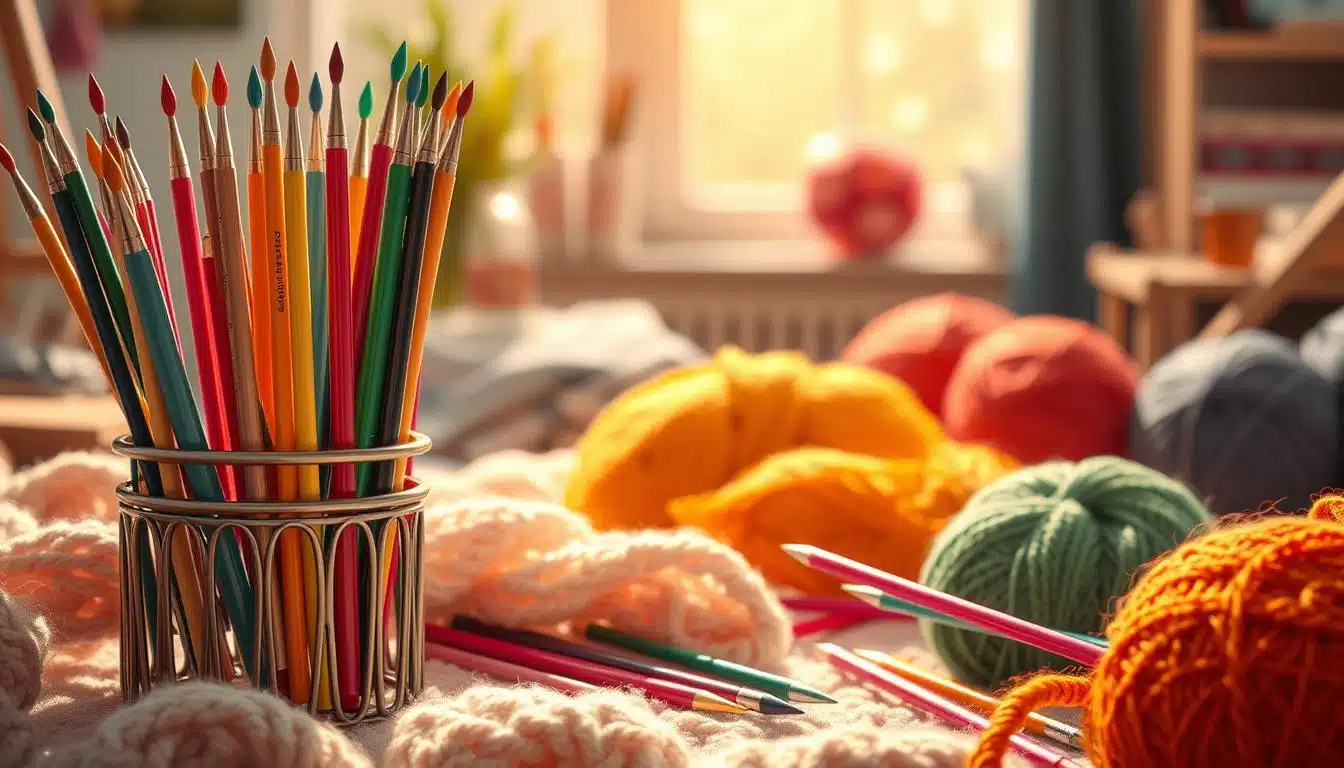
Choosing the right tools is key for every stitch. From a cozy sweater to a delicate sock, KnitPicks offers great options. They have beginner kits, Sunstruck needles, and deals that make upgrading appealing. But, it’s your hands, yarn, and projects that decide the best set for you.
Experience plays a big role in choosing needles. Different knitters prefer different tips and materials. No single set is perfect for everyone. Your gauge, fiber choice, and comfort after knitting are what truly matter.
How you finish your project affects its look. The right needle can make a big difference. You’ll learn to pick the right needle for your yarn, ensuring neat stitches.
Want to try before you buy? Short circulars or sample needles are a good start. You can find more info at circular knitting needle resources. Testing them out can save you trouble later.
Key Takeaways
- Your hands, yarn, and project type matter more than any one brand when choosing the best knitting needles 2025.
- KnitPicks offers useful starter kits and needle lines, but test needles to confirm feel and gauge.
- Tip shape and finish affect stitch appearance—sharp for lace, blunt for purl-heavy seams.
- Try short circulars or single needles in-store to avoid buyer’s remorse when following a needle buying guide.
- This knitting needles guide 2025 focuses on fit and performance, not just popular lists of top knitting needles US.
Why choosing the right needles matters for your knitting
Choosing the right needles is key to avoiding issues like puckered sweaters or limp lace. The right needles can affect stitch size, how your fabric drapes, and your comfort while knitting. Stores like KnitPicks, Addi, and ChiaoGoo have many options to help you find the perfect match for your yarn and project.
How needle material changes stitch behavior
The material of your needles impacts how yarn moves and stitches form. Metal needles from brands like AddiSteel and ChiaoGoo provide a smooth glide, which is great for tight knitters. Wooden and bamboo needles, such as those from Brittany and Takumi Clover, offer a better grip for slippery yarns like silk.
Plastic and carbon fiber needles are a good middle ground. They are light but have predictable drag.
Weight, balance, and hand fatigue
The weight and balance of your needles can affect your hand’s comfort. Heavy metal needles might speed up your work but can tire your wrists. Lighter needles, on the other hand, can reduce fatigue, which is helpful for long knitting sessions.
Balance is also important. A well-balanced needle, like those from Addi or Lantern Moon, feels more natural in your hand. This reduces wrist strain.
Project-driven needle selection
It’s important to choose needles based on your project, not just what looks good. For socks and seamless garments, DPNs or short circulars are best for control. Shawls with open lace benefit from sharp tips for precise yarnovers.
For slippery yarns, choose wood needles. For dense stitch definition, metal needles are better. Pairing the right needle type with your technique can lead to cleaner cast-ons and neater bind-offs.
How needle types differ: straight, circular, DPNs, and hybrid options
When you shop at KnitPicks or a local yarn shop, you see many needle types. Each type changes how you work with yarn and stitches. Choosing between straight needles, circulars, DPNs, and hybrids depends on your project, comfort, and preference for working in the round.
Double-pointed needles (DPNs): pros and cons
DPNs are great for knitting small tubes like socks and sleeves. They offer control and a variety of materials to match your yarn and tension.
DPNs are versatile for small projects and come in many materials. You can choose from metal for smooth knitting, wood or bamboo for better grip, or lightweight plastic or carbon for comfort over long sessions.
But, DPNs can be tricky to use. They require practice and can drop stitches if you’re not careful. Specialized DPNs like bent or curved ones can make things easier for many knitters.
Short circulars and magic loop alternatives
Short circular needles and the magic loop technique make working with DPNs easier. Many sock knitters prefer 9″ circulars or 16″ cables based on their hand size and knitting style.
Short circular needles are great for small tubes with fewer joins. Magic loop uses a longer cable to create two loops for a smooth, continuous round. You can try both to see which works better for you.
Hybrid and ergonomic designs
Hybrid needles combine fixed and flexible features. HiyaHiya Flyers and Addi FlexiFlips have short tips and a flexible middle for fast knitting on small projects. They offer the ease of circulars without the fiddliness.
Ergonomic tools aim to reduce hand strain by changing how you hold the needles. Knitter’s Pride Cubics and KnitPicks Foursquare have unique shapes to guide your fingers. Prym Ergonomics and other ergonomic needles help with fatigue and tight knitting.
Finding the best knitting needles 2025
Standing at the yarn counter, you’re unsure which needle will make your project shine. This guide helps you find the best knitting needles for 2025 without feeling overwhelmed. You’ll learn about materials, where to buy, and when it’s time to splurge.
What to look for in 2025: updated materials and coatings
In 2025, look for needles with new coatings that make yarn glide smoothly and feel durable. Metal options include AddiSteel for extra smoothness and KnitPicks with nickel plating to reduce snagging.
Carbon fiber shafts are light but strong. Nylon blends offer a good balance for slippery yarns. Make sure the join is coated well to avoid yarn catches during lace and seaming.
Trusted sources and where to buy
KnitPicks, Addi, ChiaoGoo, and local yarn shops are your best bets. Big craft stores also carry popular lines for you to try out.
Don’t underestimate community feedback. Ravelry groups and local yarn shop staff can help you compare. For quick yarn pairing ideas, check out chunky knit blanket yarn to see how needle sizes affect your project.
Budget versus splurge: when to invest
For beginners, aluminum or basic wood needles are great. They’re affordable and hold their shape well for practice.
Invest in premium tools like AddiTurbo, ChiaoGoo stainless, or high-end wood brands for special projects or hand pain. Ergonomic Cubics or square-handled needles can also reduce strain during long sessions.
| Needle Type | Good For | Price Range |
|---|---|---|
| AddiTurbo / AddiSteel | Fast stockinette, smooth joins | Mid to high |
| ChiaoGoo stainless | Durability, travel, circulars | Mid to high |
| Brittany / Lantern Moon (wood) | Warmth, grip for slippery yarns | Mid to high |
| KnitPicks sets | Value, variety, starter kits | Low to mid |
When choosing where to buy knitting needles in the US, consider convenience and return policies. Local shops let you test the needles, while online stores often have sales and a wide range of options.
Remember, technique is key. Better cast-ons and bind-offs can improve your finished edges as much as the right needles. Choose tools that fit your tension and project needs, not just the latest trends.
Best needles for tight knitters and rigid tension
If your stitches are as tight as a tug-of-war, the right needles are key. You need needles that move smoothly, don’t bend easily, and fit into small loops without a fight. The aim is to knit smoothly, not wrestle with the yarn.
For tight stitches, smooth metal needles are often the best choice. AddiSteel and ChiaoGoo stainless steel needles have slick surfaces that reduce friction and speed up your knitting. KnitPicks nickel-plated needles also work well, balancing glide and control.
Sharp tips are essential for getting into tight stitches. Addi and HiyaHiya SHARP tips are great for precision. If you prefer wood, KnitPicks’ Foursquare is a good option. It offers a bit more grip while being gentle on your hands.
Durability and bending concerns
Not all metals are the same. Lightweight aluminum can bend or break under tight tension. Stainless steel and solid steel DPNs, on the other hand, are stiff and stay straight under heavy pull.
When looking at metal DPNs, choose thicker shafts and known alloys. AddiSteel and ChiaoGoo are made for stiffness and durability. KnitPicks nickel-plated sets are good for most projects but might bend if you pull too hard.
To ensure your work is protected, test different sizes in store or with a quick swatch. A stiff stainless steel needle will feel different from a thin aluminum one. Pick the tool that keeps your gauge steady and your patience intact.
Best needles for loose knitters and slippery yarns
You enjoy knitting with airy stitches and soft drape. But, slippery yarns can make your work slide off the needles. Choosing needles with a bit of grip can make a big difference. Wooden and bamboo needles are great for this, as they offer control without being too heavy.
Wood and bamboo needles feel warm in your hands. They also provide a bit of friction to keep your stitches in place. Brands like KnitPicks, Brittany, Takumi, and Lantern Moon offer a range of options. These are perfect for those who struggle with slippery yarns.
Top wooden and bamboo picks
KnitPicks Sunstruck is a great choice for those on a budget. It offers a smooth but grippy feel. Brittany birch and black walnut needles are durable and balanced. Takumi Clover bamboo needles are loved for their natural feel. Lantern Moon offers premium hardwoods and hand-finished joins.
These needles are great for loose knitters. They help keep your stitches in place without adding too much friction. Bamboo needles are also lightweight, which reduces hand fatigue and helps maintain even tension.
Tips for slippery yarn handling
If your yarn is slippery, try dropping one needle size to tighten your stitches. Use needle stoppers to prevent dropped stitches. A small amount of yarn wax or friction coating can also help.
Practice is key. Work on short swatches to test your tension. Adjust your needles if your stitches are slipping. Slip-stitch guards, stitch holders, and circs with a softer join can also help manage slippery yarns.
| Needle | Material | Best for | Price range |
|---|---|---|---|
| KnitPicks Sunstruck | Wood (various blends) | Everyday projects, budget-friendly grip | Low |
| Brittany Birch / Black Walnut | Birch, Walnut | Balanced weight, durable for long sessions | Medium |
| Takumi Clover Bamboo | Bamboo | Warm feel, excellent grip for slippery yarns | Low–Medium |
| Lantern Moon | Premium hardwoods | Luxury projects, hand-finished joins | High |
Needles that help with hand pain and ergonomics
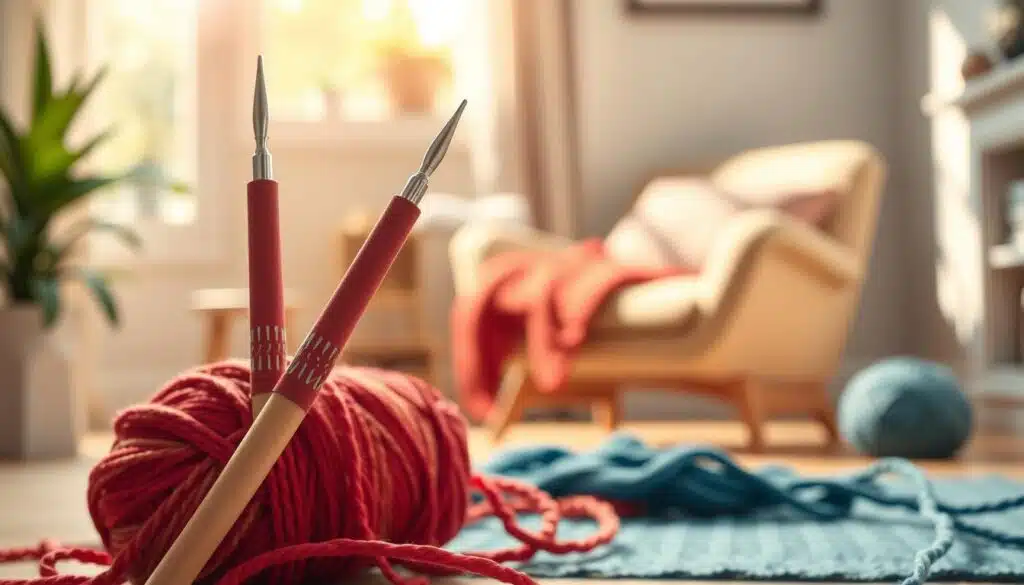
Hand pain can stop you from enjoying knitting. The right needles can help. Ergonomic needles are designed to reduce grip pressure, weigh less, and support a natural hand position. Look for brands like Prym Ergonomics and Knitter’s Pride Cubics in stores. KnitPicks also offers lightweight options for comfort during long sessions.
Ergonomic shapes and materials
The shape of the needle is important. Triangular, ridged, and cubic shapes can change how you hold the needle. Knitter’s Pride Cubics have angled sides to prevent tight gripping. Prym Ergonomics uses light plastic and carbon fiber to reduce wrist strain and keep hands relaxed.
Textured surfaces can help prevent slipping without causing discomfort. Some find ridges distracting, while others prefer them for preventing pain-causing tension.
Choosing needles for arthritis or repetitive strain
Start with weight. Lighter needles reduce fatigue during long projects. Try different shapes before deciding. What feels comfortable for one hand might not for another.
If yarn gets caught on textured grips, try smooth metal needles. A larger diameter can also help by reducing the number of stitches you need to move. This can make arm movement easier and reduce pain for those with arthritis.
When shopping, compare Prym Ergonomics and Knitter’s Pride Cubics. See how they affect your wrist and grip. You might prefer plastic, carbon fiber, wood, or metal based on your yarn and needs.
Use short knitting sessions, stretch between rows, and try different tools. Mixing ergonomic needles with traditional ones can help with different projects and pain levels. Your hands will appreciate the change.
Needle tips and finishes: how points and surface affect your stitch
You want your edges to be neat and your lace to be clean. The way your needle bites into a stitch depends on its tip shape and finish. Choosing the wrong pair can ruin your bind-offs or delicate patterns.
But, picking the right pair makes your knitting smooth and professional-looking.
Sharp vs blunt points for lace and seaming
Sharp tips from brands like Addi and ChiaoGoo are great for lace. They fit into small stitch holes easily, helping your yarn follow the pattern accurately.
Blunt or rounded tips are better for seaming bulky stockinette. They help you avoid splitting fine yarns and give you more control.
Knowing the difference between sharp and blunt tips helps you choose the right tool for each task. Sharp tips are best for detailed increases and tight stitches. Blunt tips are better for seaming and working with yarns that split easily.
Surface coatings and glide control
Knitting needles come with different surface coatings. From polished steel to matte finishes, each offers a unique feel. Nickel-plated AddiSteel and similar finishes make needles extra smooth, speeding up your knitting.
Wood and bamboo needles have a natural grip, perfect for slippery yarns like silk blends. The contrast between smooth metal and textured wood lets you choose the right feel for your yarn.
Try a small swatch to see how different finishes affect your stitch. Pay close attention to how the edges look. The right tip and coating together can make your edges and joins look neater.
For more on choosing the right needles, check out this guide: mastering knitting needle selection.
Needle lengths and cable choices for circular knitting
You want your knitting to flow smoothly and without interruptions. Choosing the right needle length and cable is key. Short circulars are best for socks and small projects. Longer cables are better for shawls and sweaters.
Match your cable to your project and knitting style. This helps keep your tension steady and your stitches happy.
Cable flexibility is important for smooth stitch movement. A floppy cable makes sharp turns easy but can twist stitches. Stiffer cables hold shape well but may resist smoothing out.
Cable memory knitting is about how cables hold curves. Strong memory can cause kinks and drag on yarn. Look for cables with low memory for magic loop. Brands like ChiaoGoo, Addi, and KnitPicks offer different memory levels. Try a few to find your favorite.
Good joins are essential for snag-free knitting. Smooth joins let yarn glide from cable to needle without catching. ChiaoGoo and Addi are known for their quality joins. KnitPicks also offers high-end lines with smooth transitions.
Snag-free joins come from tight manufacturing and good coating. A small lip at the join can catch fibers. Compare different brands to see how they feel. A quick swatch will show any issues with stitch movement at the join.
| Needle/Cable Feature | Best For | Trade-off |
|---|---|---|
| Short circulars (9″–16″) | Socks, small tubes, tight magic loop | Limited circumference, easier to manage in small projects |
| Medium cables (24″–32″) | Hats, sleeves, mid-size projects | Versatile, may need rearranging for very small circumferences |
| Long cables (40″–60″) | Shawls, sweaters, large flat pieces | Can have higher cable memory if not designed for flexibility |
| Low-memory coated cables | Magic loop, uninterrupted circular work | Often pricier, but fewer kinks and easier stitch flow |
| Smooth metal joins (Addi, ChiaoGoo) | Delicate yarns, lace, fast knitters | Higher cost, requires careful selection of cable length |
Specialty needles and tricks every picky knitter should know
You want smoother rounds, neater edges, and fewer drops. A few specialty tools and tight technique fixes can change your knit life. Try new shapes, test small hacks on a scrap, and pick what feels right for your hands and yarn.
Bent and curved tips reduce fiddliness when you hate juggling four sharp ends. Bent DPNs sit in the hand more like a single circular, so your stitches stop leapfrogging off the points. Brands like Neko and ChiaoGoo offer curved options that keep work stable while you move stitches around.
Bent DPNs, FlexiFlips, and Flyers
Short needles with a soft middle can feel freeing. The Addi FlexiFlips design pairs short rigid ends with a flexible center so you get the control of a DPN without the juggling. If you want a user review, search for a focused FlexiFlips review and read a few hands-on takes before you buy.
HiyaHiya Flyers and other compact circular-style tools give the same benefit: fewer needle tips to fuss with and a cleaner rhythm for small circumferences. Try one if standard DPNs make you squirm.
Cast-on and bind-off fixes for cleaner edges
A tidy edge makes blocking easier and seams disappear. For a squared cast-on, try the cable cast-on last-stitch fix: add a yarn-over and lift it over to give the first row a base instead of a floppy tail.
To avoid the bind-off dip, knit one stitch then make a yarn-over before lifting the next stitch off. That small turning chain behaves like a crochet edge and keeps the start of your round from sagging.
When to mix needle types within a project
You can swap needle styles mid-project without chaos. Use metal tips for lace sections when you need speed and thin points. Switch to wooden or bamboo needles for slippery yarns to gain grip and control.
Ergonomic needles belong in finishing and seaming. If hand pain flares late in a project, change to a lightweight ergonomic pair for the last few inches. Thoughtful mixing of tools smooths tension and boosts comfort.
For extra reference on specialty DPNs and alternatives, see a practical roundup at best double-pointed needle options, which highlights many of the gadgets you might want to test.
Care and maintenance: make your needles last
You want your needles to be like trusted friends, not something you throw away. A little care makes them sharp and your knitting easy. Just wipe them clean after use and store them safely.
Cleaning and storage by material
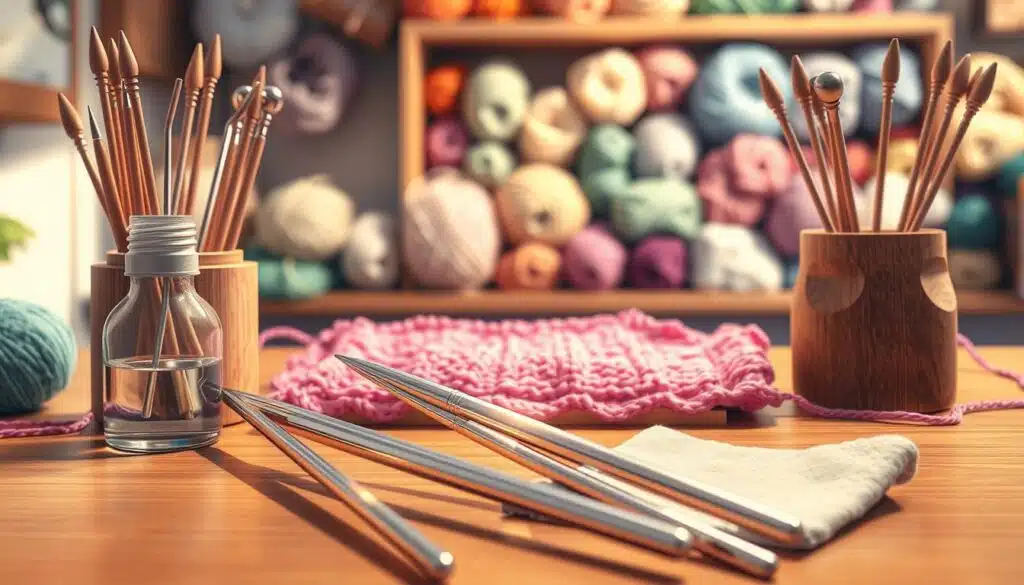
Wood and bamboo needles need gentle care. Clean them with a soft cloth and lukewarm water for light dirt. For tougher stains, use a bit of mild soap, dry well, and oil them to keep the grain nice.
Store them flat or in tubes to avoid warping.
Metal and aluminum needles need a firmer cleaning. Use a cloth with mild soap and lukewarm water to remove oils and salt. Dry them well to stop corrosion. When they lose their shine, polish them with a soft cloth or a gentle metal polish.
Keep metals away from wood to avoid scratches.
Plastic and carbon fiber needles don’t like moisture or heat. Clean them with a damp cloth and avoid harsh cleaners. For tough stains, a soft brush works well. Store them in special pockets or cases to keep them straight.
Looking for storage ideas? Check out KnitPicks or this needle maintenance guide for tips and solutions.
When to retire or replace needles
It’s time for new needles when they start to let you down. Look for blunt tips, snagging yarn, or bent metal. Cables with kinks or memory issues need to be replaced too.
If a needle causes problems with gauge or yarn splitting, it’s time for a new one. Broken grips or loose joins can ruin your work. For replacements, try brands like Addi and ChiaoGoo.
Regular care and smart storage help your needles last longer. Clean them after use, keep them organized, and check them often. This small effort makes your knitting enjoyable and stress-free.
How to test needles before you buy (in-store and online)
Before buying a full set, try out needles first. Visit a KnitPicks display or your local yarn shop. Hold needles from Addi, ChiaoGoo, Brittany, and HiyaHiya to feel their weight, tip shape, and join smoothness.
Shopping online? Buy a single needle or a cheap trial set to test at home.
In store, see how the needle feels in your hand and how it moves through stitches. For circulars, bend the cable to check its memory and kinking. Try a few stitches to see if it feels balanced and if your hands get tired quickly.
What to swatch for different projects
Swatch for the fabric you want to make. For lace, knit a small lace pattern to test tip sharpness and stitch clarity. For sweaters, knit stockinette on circulars to check glide and gauge consistency. For ribbed cuffs, knit a ribbing swatch to test control and recovery over 10–20 rows.
Use needle swatching tips like working at your project tension, washing or blocking a swatch, and timing a short knit session to spot fatigue. Note stitch definition, snagging, and whether the surface helps or fights your yarn.
Reading reviews and using community feedback
When you can’t try things in person, read needle reviews from people who knit like you. Ravelry pattern notes and group threads often reveal real-world problems like bending, join gaps, or snagging. Contributor experiences point out favorites across brands such as Takumi Clover, Prym, and KnitPicks lines.
Balance what you learn from reviews with a short trial. If many knitters praise a model for lace but you prefer a blunt tip, their praise may not match your needs. Use reviews to narrow choices, then test a single needle to confirm comfort.
Use these steps to test knitting needles before buying and to apply needle swatching tips that reveal long-term comfort. When in doubt, read needle reviews, try one piece, and trust your hands.
Conclusion
You’ve explored the world of knitting needles. Metal needles like Addi and ChiaoGoo are great for quick work. Wood and bamboo from Takumi and Brittany handle slippery yarns well. Ergonomic options from Knitter’s Pride or Prym help with hand pain.
Use trusted retailers like KnitPicks to compare and find the right needles. Remember, the best needles depend on your tension, project, and comfort. This guide shows that there’s no one-size-fits-all solution.
Technique is also key. A good cast-on or bind-off can make a big difference. Try special tools like FlexiFlips or bent DPNs for tricky projects. Quality needles are worth it if you knit a lot.
For more tips, check out knitting machine reviews for pattern-compatible tools and machine reviews.
When buying needles, swatch first and read reviews. Choose needles that match your yarn and tension. Don’t forget about ergonomics to make knitting easier. Follow these tips, and you’ll find the perfect needles for your knitting.
FAQ
Knit Picky? Find Best Knitting Needles 2025!
You want needles that make your stitches sing and your hands happy. In 2025, choose needles that match your tension, yarn, and project. Metal needles like AddiSteel or ChiaoGoo are great for tight knitters.
Wood and bamboo needles (Takumi Clover, Brittany, KnitPicks Sunstruck) are better for loose knitters and slippery yarns. Ergonomic shapes (Knitter’s Pride Cubics, KnitPicks Foursquare, Prym Ergonomics) help reduce grip tension. Try short circulars, magic loop, or DPNs based on the circumference.
Test single needles or buy from trusted sellers like KnitPicks, Addi, ChiaoGoo, Brittany, HiyaHiya, or your local yarn shop before committing.
Why choosing the right needles matters for your knitting?
Your needles control stitch size, edge appearance, and how pleasant knitting feels. A mismatch can give you sloppy edges, split yarn, or wrist pain. The right needle helps you hit gauge, make clean cast-ons and bind-offs, and avoid endless tink-and-frog cycles.
Tools and technique work together; a better needle won’t fix a sloppy bind-off, but it will make cleaner results far easier to achieve.
How does needle material change stitch behavior?
Metal needles (nickel-plated, AddiSteel, ChiaoGoo) offer speed and smoothness—great for tight knitters and lace. Wood and bamboo (Takumi Clover, Brittany, Lantern Moon, KnitPicks Sunstruck) give grip that tames slippery yarns and suits looser tension.
Plastic and carbon fiber are lightweight and can ease fatigue. Coatings and surface finish change glide: extra-smooth metals reduce friction, while textured woods add bite.
How do weight and balance affect hand fatigue?
Heavier metal needles can speed you up but also tire your wrists during long sessions. Balance—the relationship between tip and shaft—affects control. Ergonomic and hybrid designs aim to redistribute weight and discourage a death grip.
If your hands protest after an hour, try lighter carbon fiber, plastic, or wooden options, or switch to a triangular/cubic shape to relax your grip.
How should project type drive needle selection?
Socks and sleeves call for short circulars or DPNs; shawls and large garments favor long circulars. Lace benefits from sharp metal tips; bulky stockinette might be friendlier to blunter wooden tips.
Slippery yarns love wood; tight gauge and delicate lace love slick metal. Pick needles with the tip style and length suited to the stitch pattern and circumference you’ll knit.
Double-pointed needles (DPNs): pros and cons?
Pros: DPNs are versatile for small circumferences (socks, mitts), come in many materials, and are compact. Cons: they can be fiddly, require practice, and risk dropped stitches.
Alternatives include short circulars or magic loop methods. If you dislike juggling multiple needles, try bent DPNs, Neko curved DPNs, or Addi FlexiFlips.
What about short circulars and the magic loop?
Short circulars (~9″ or 23cm) and magic loop techniques let you knit small circumferences without DPNs. Many sock knitters prefer a 9″ or 16″ circular depending on comfort.
Magic loop with a long flexible cable is a great one-needle solution, but cable memory and join quality matter—choose a low-memory cable from ChiaoGoo or Addi for smoother results.
What are hybrid and ergonomic needle options?
Hybrids like HiyaHiya Flyers and Addi FlexiFlips blend tips and short flexible middles for ease in small circumferences. Ergonomic shapes—triangular, cubic, or ridged (Knitter’s Pride Cubics, KnitPicks Foursquare)—discourage tight gripping and can reduce repetitive strain.
Prym Ergonomics and carbon/plastic blends offer lightweight choices for long sessions.
What should I look for in 2025: updated materials and coatings?
Look for extra-smooth metal coatings (AddiSteel, nickel-plated KnitPicks) and improved carbon or nylon blends that balance weight and grip. Updated joins and coated cables reduce snagging.
New finishes aim to combine glide with durability—ideal for tight knitters who want speed without bent needles.
Where should you buy needles and which brands are trusted?
Trusted sources include KnitPicks, brand sites (Addi, ChiaoGoo, Brittany, HiyaHiya), major craft retailers, and your local yarn shop. KnitPicks offers broad selection and frequent promotions; brand sites and LYS let you test weight and balance.
Use Ravelry groups and pattern notes for real-world feedback before splurging.
Budget vs splurge: when should you invest in nicer needles?
Buy basic wood or aluminum sets to learn; upgrade when you hit a favorite project or persistent issues like bending, repeated breaking, or hand pain. Splurge on AddiTurbo, AddiSteel, ChiaoGoo stainless, or premium wooden needles (Brittany, Lantern Moon) if you knit often or need specific features like sharp tips or rigid joins.
Which needles are best for tight knitters and rigid tension?
Tight knitters usually prefer smooth metal needles—AddiSteel, ChiaoGoo stainless, or KnitPicks nickel-plated—for reduced friction and sharper points. Choose thicker shafts and sturdier alloys to avoid bending or snapping.
Sharp points help insert into dense stitches, but beware lighter metals that might bend under high tension.
What about durability and bending concerns for metal needles?
Durability varies by metal and thickness. AddiSteel and ChiaoGoo stainless are stiff and long-lasting. KnitPicks nickel-plated needles are reliable workhorses but may bend under extreme tension.
Replace needles with permanent bends, blunt tips, or snagging joins. For heavy-handed knitters, choose solid stainless options.
Which needles work best for loose knitters and slippery yarns?
Wood and bamboo are your allies—Takumi Clover, Brittany, Lantern Moon, and KnitPicks Sunstruck offer grip that tames silk and slippery synthetics. These needles are lightweight and warm in the hand, which helps control loose tension and prevent dropped stitches.
Any tips for handling slippery yarns?
Try slightly smaller needles to tighten gauge, use wooden tips for added friction, or mix materials—metal for lace panels, wood for slippery sections, ergonomic for seaming. Use short circulars or magic loop if DPNs make you twitch.
Those small changes can save hours of frustration.
What cast-on and bind-off fixes give cleaner edges?
Simple technique fixes make big visual differences. Try the cable cast-on last-stitch fix (use a yarnover + lift-over trick) for a squared edge. For bind-off, create a crochet-style turning chain by knitting one stitch then making a yarnover before lifting to avoid that starting dip.
These tweaks tidy starts and ends dramatically.
When is it appropriate to mix needle types within one project?
Mix when it solves problems: switch to metal tips for a lace section, then back to wood for slippery yarn. Swap to ergonomic needles for finishing seams if your hands complain. Mixing balances stitch behavior and comfort and is a perfectly reasonable, even clever, approach.
How should I clean and store needles by material?
Wood/bamboo: keep dry, avoid heat and oils, store flat or in tubes to prevent warping. Metal: wipe after use to remove salts and oils; store in cases to avoid bending. Plastic/carbon: avoid heat and sharp edges. Mild cleaners and soft cloths work—skip harsh chemicals that strip coatings.
When should you retire or replace needles?
Replace needles when tips blunt, metal needles permanently bend, joins snag yarn, or cables develop irreversible kinks or memory. If a needle causes gauge inconsistency or frequent split stitches, it’s time to swap. Better to replace than wrestle with a tool that fights you.
How can I test needles before buying, in-store and online?
In-store: handle needles to check weight, tip sharpness, balance, and cable flex; bend a cable gently to test memory. Online: buy single needles or inexpensive trial sets, read Ravelry and retailer reviews, and check pattern notes. Many shops let you return or exchange if they don’t suit your hands.
What should I swatch for different projects?
Swatch like you’ll knit the project: lace pattern for sharp tips, stockinette on circulars for garments, ribs for projects needing needle control. Knit 10–20 rows to test stitch glide, definition, and hand comfort. Check for fatigue over those rows so you don’t discover discomfort mid-sweater.
How do reviews and community feedback help choose needles?
Real users report long-term durability, bending, snagging, and comfort that specs don’t show. Use Ravelry groups, pattern notes, and brand reviews to learn which needles hold up and which promise glam and deliver bend. Community feedback steers you toward durable, comfortable choices.