circular knitting machine: 6 Best Powerful Picks for 2025
Revolutionize Your Knitting Projects
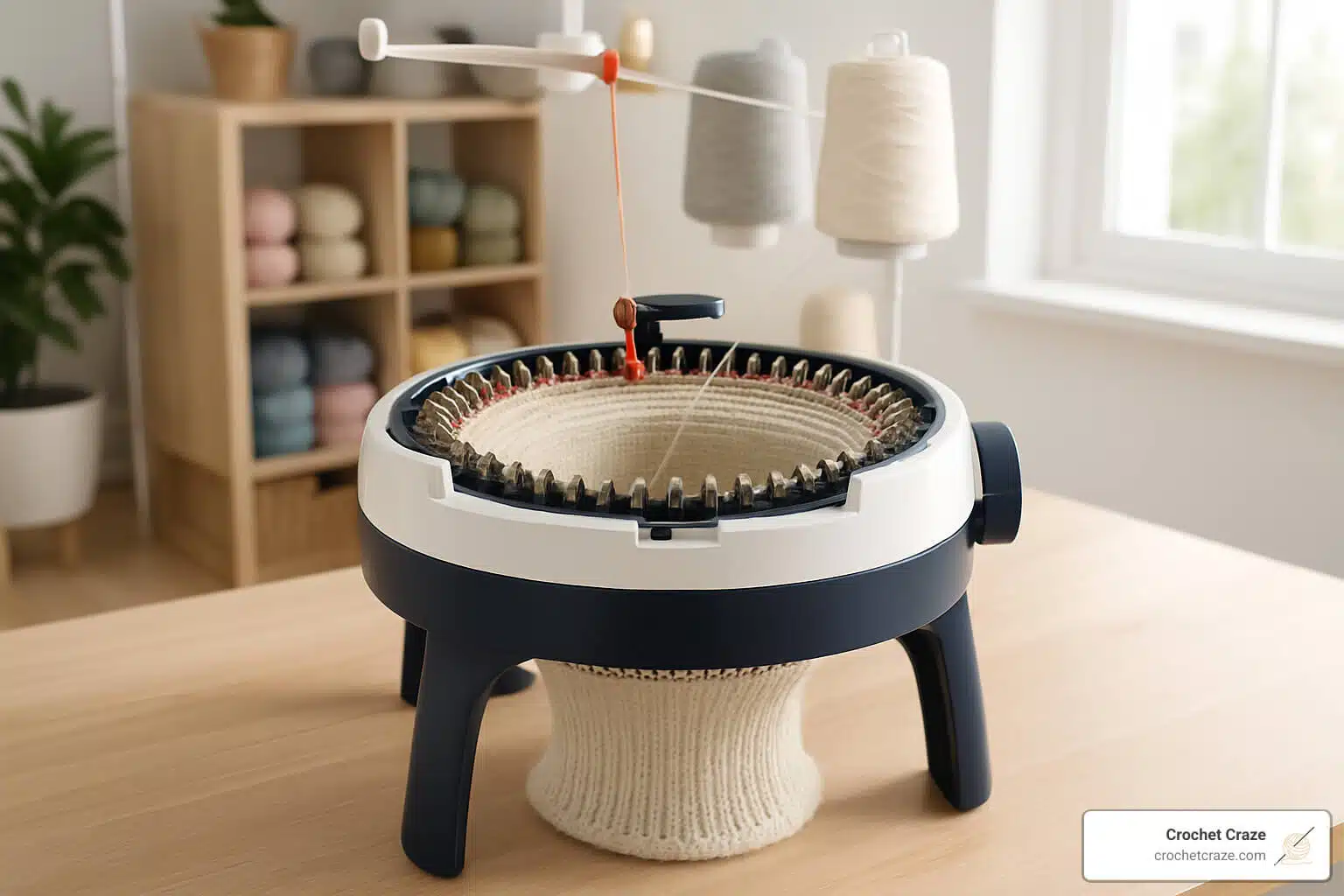
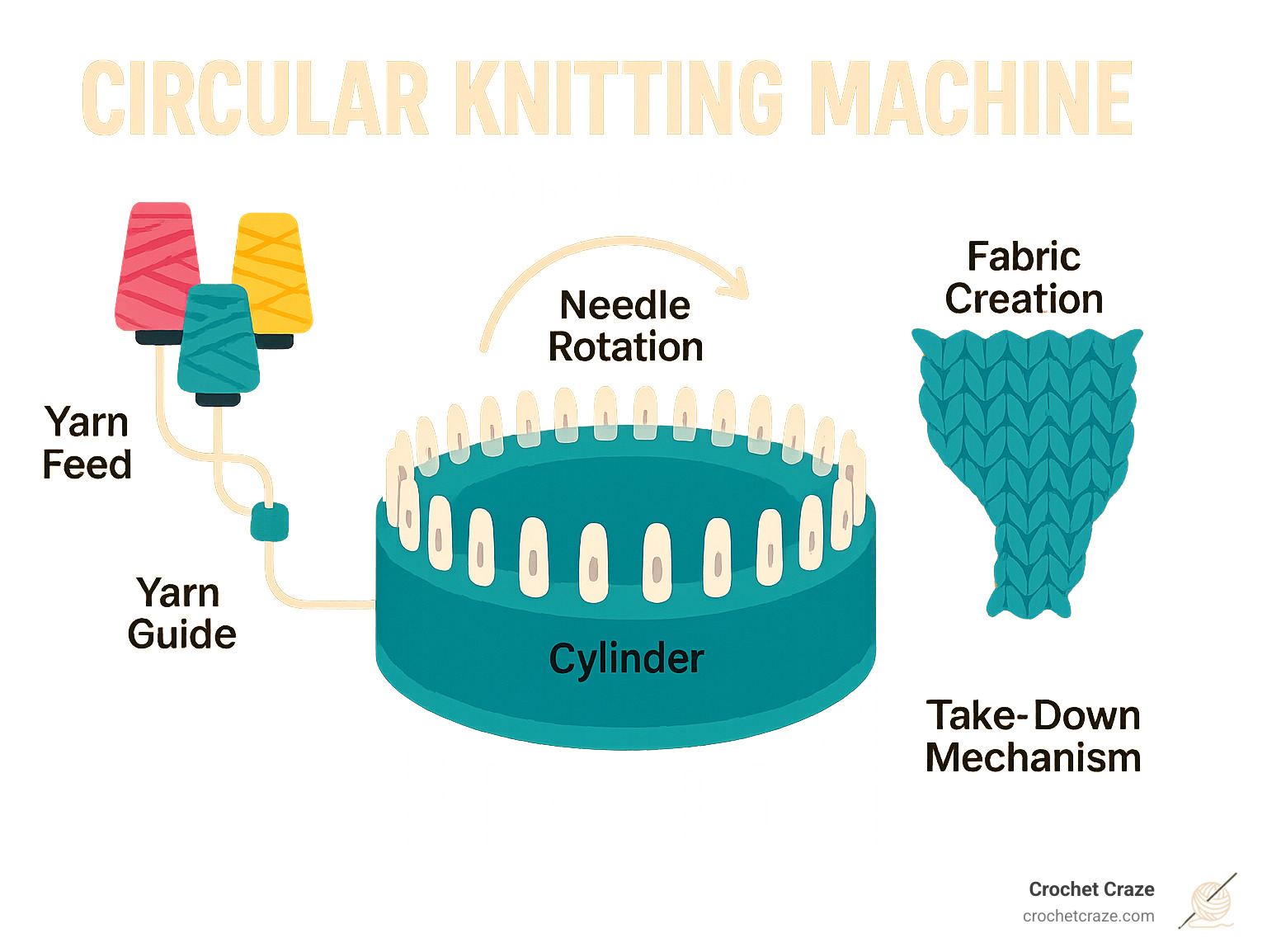
A circular knitting machine is a device that creates tubular knitted fabric by rotating yarn around a circular needle bed. These machines significantly speed up the knitting process compared to hand knitting, allowing you to create hats, socks, scarves, and more in a fraction of the time.
What is a circular knitting machine?
– A mechanical device that knits yarn into seamless tubes or flat panels
– Uses rotating hooks/needles arranged in a circle
– Creates primarily stockinette stitch fabric
– Available in hobby and industrial versions
– Can produce a hat in as little as 30 minutes
Unlike traditional knitting needles, circular knitting machines can produce a pair of socks in less than an hour, allowing you to quadruple your production rate compared to hand knitting. Most hobby-level machines feature between 22 and 48 needles, with the needle count determining the diameter of the tube you can create.
These machines range from simple manual cranks perfect for beginners to sophisticated computerized models used in textile manufacturing. While industrial versions can have more than 200 needles for complex patterns, home models typically focus on ease of use and affordability.
The learning curve is surprisingly gentle – children can successfully use these machines with minimal instruction. Many crafters find circular knitting machines to be accessible even for those with hand or wrist pain that limits traditional knitting.
I’m Sonji Huerta, a crochet enthusiast who recently expanded into circular knitting machines to overcome hand fatigue while maintaining my yarn crafting productivity. I’ve tested several circular knitting machine models to find the best options for beginners and experienced crafters alike.
Addi Express King Size
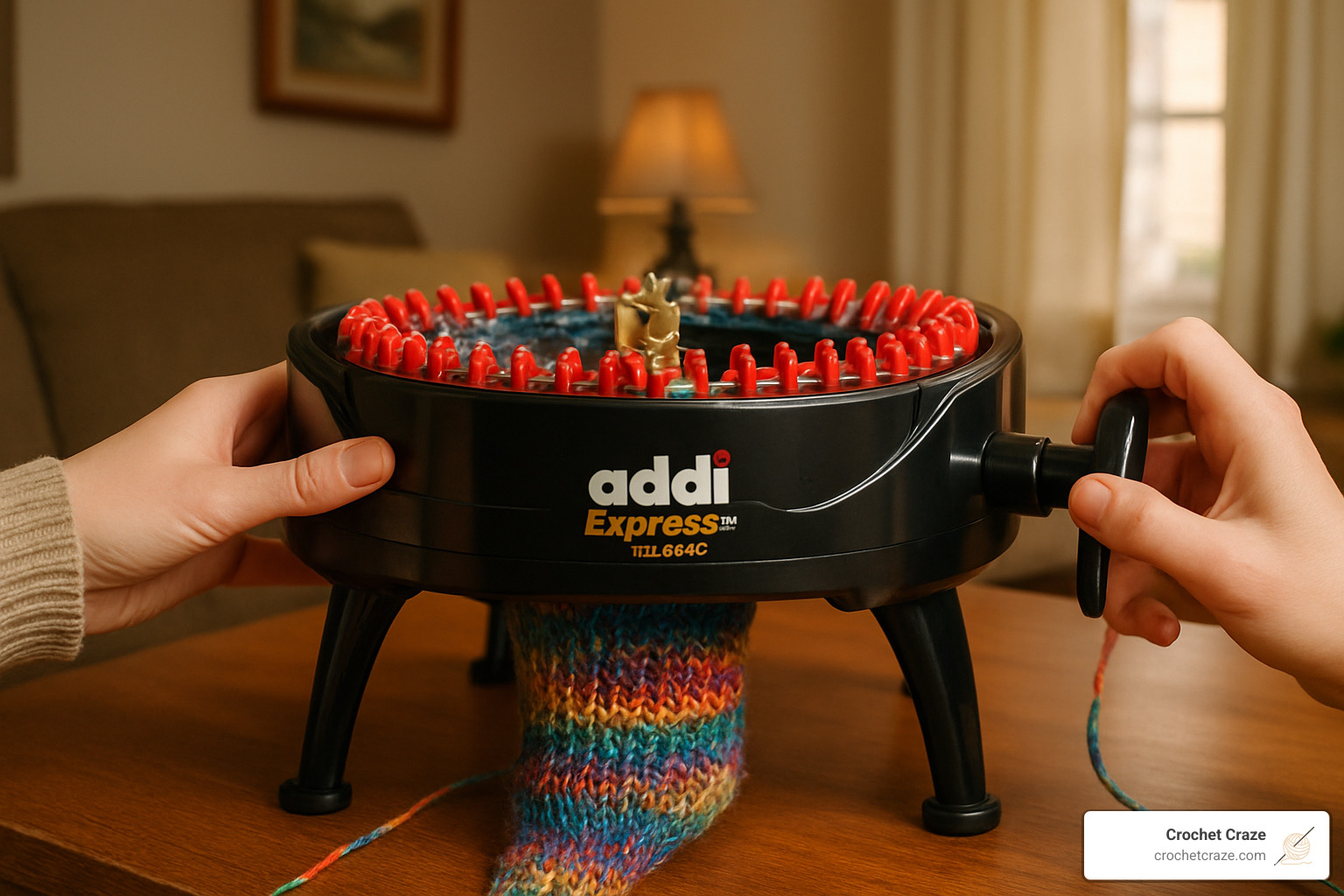
If you’re looking for German craftsmanship in the circular knitting machine world, the Addi Express King Size is your new best friend. This delightful machine features 46 stitches, making it perfect for whipping up adult-sized hats and cozy cowls in record time.
I’ve heard from so many crafters who’ve fallen in love with their Addi. One told me, “It’s so easy to use and I can make a hat in less than an hour!” That’s the magic of these machines – projects that would take days of hand knitting can be finished while watching your favorite movie.
What makes the Addi Express King Size special is its thoughtful design. The built-in row counter helps you keep track of your progress without needing to mark down each round. The manual crank gives you complete control over your knitting speed, perfect for beginners who are just finding their rhythm. And don’t worry about safety – the kid-friendly design means the whole family can join in the crafting fun.
Speaking of family crafting, I’m always amazed at how quickly children pick up machine knitting. One crafter shared that her friend’s child learned to use the Addi in minutes and completed a hat after just basic instruction on counting rows. Half-hour hats become entirely possible once you get comfortable with the machine!
For beginners, the Addi offers a gentle introduction to machine knitting. While the included manual covers the basics, I recommend checking out online tutorials for visual guidance. A simple beginner beanie typically needs about 120-140 rounds with worsted weight yarn – the row counter makes tracking this a breeze.
The durability of the Addi Express King is another highlight. This isn’t a toy that will break after a few projects – it’s a workhorse designed to create countless knitted tubes for years to come. When you invest in an Addi Express King Knitting Machine, you’re investing in a reliable crafting companion that will help you create handmade gifts with remarkable efficiency.
Sentro 48-Pin
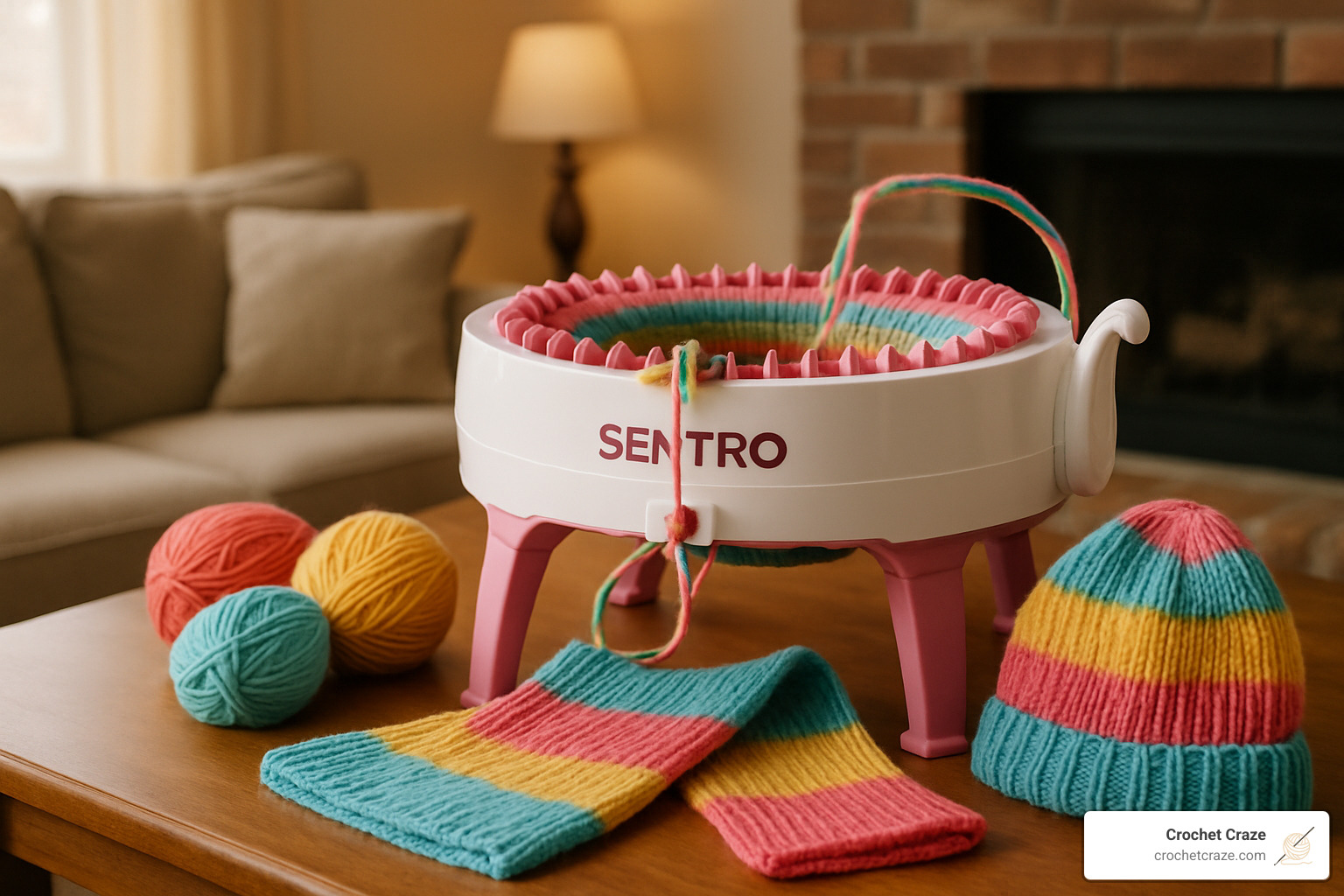
The Sentro 48-Pin circular knitting machine has a charming rags-to-riches story that crafters love. Originally conceived as a children’s toy, this budget-friendly device has won the hearts of serious fiber enthusiasts looking for an affordable entry into machine knitting. With its generous 48 needles (that’s two more than the Addi King), the Sentro creates wider tubes and opens up a whole new world of project possibilities.
What really makes the Sentro shine is its wallet-friendly price tag. As one delighted crafter told me, “If you’ve been on the fence about trying machine knitting, just go for it!” It’s the perfect low-risk way to dip your toes into circular knitting without emptying your craft budget for the month.
When it comes to yarn selection, the Sentro plays nicely with DK (size 3) and worsted weight (size 4) yarns. I’ve found that smooth, consistent yarns with minimal fuzziness work best – save those beautiful novelty yarns for hand knitting projects. The machine comes with some test yarn that’s perfectly adequate for getting the hang of things, but once you’re comfortable with the operation, you’ll want to switch to your favorite premium yarns for projects you’ll actually wear or gift.
The speed at which you can create finished items is truly remarkable. Imagine whipping up a stylish headband in just 15 minutes during your lunch break! Beanies, hats, and loop scarves flow from this machine with surprising ease. I’ve even managed to create the tubes for socks, though they do require some hand-finishing techniques to complete.
Like any budget-friendly tool, the Sentro has its quirks. You might encounter the occasional skipped stitch, but most crafters quickly develop a feel for maintaining consistent yarn tension, which solves most issues. When a stubborn stitch does misbehave, a gentle manual assist usually gets things back on track without much fuss.
The tube form knitting is particularly beginner-friendly compared to working with panels. There’s something magical about watching a perfectly formed tube of knitted fabric emerge from this humble little machine. For anyone looking to expand their crafting repertoire without breaking the bank, the Sentro 48-Pin offers an accessible starting point that delivers impressive results with just a bit of practice and patience.
Tru-Knit Circular Sock Machine
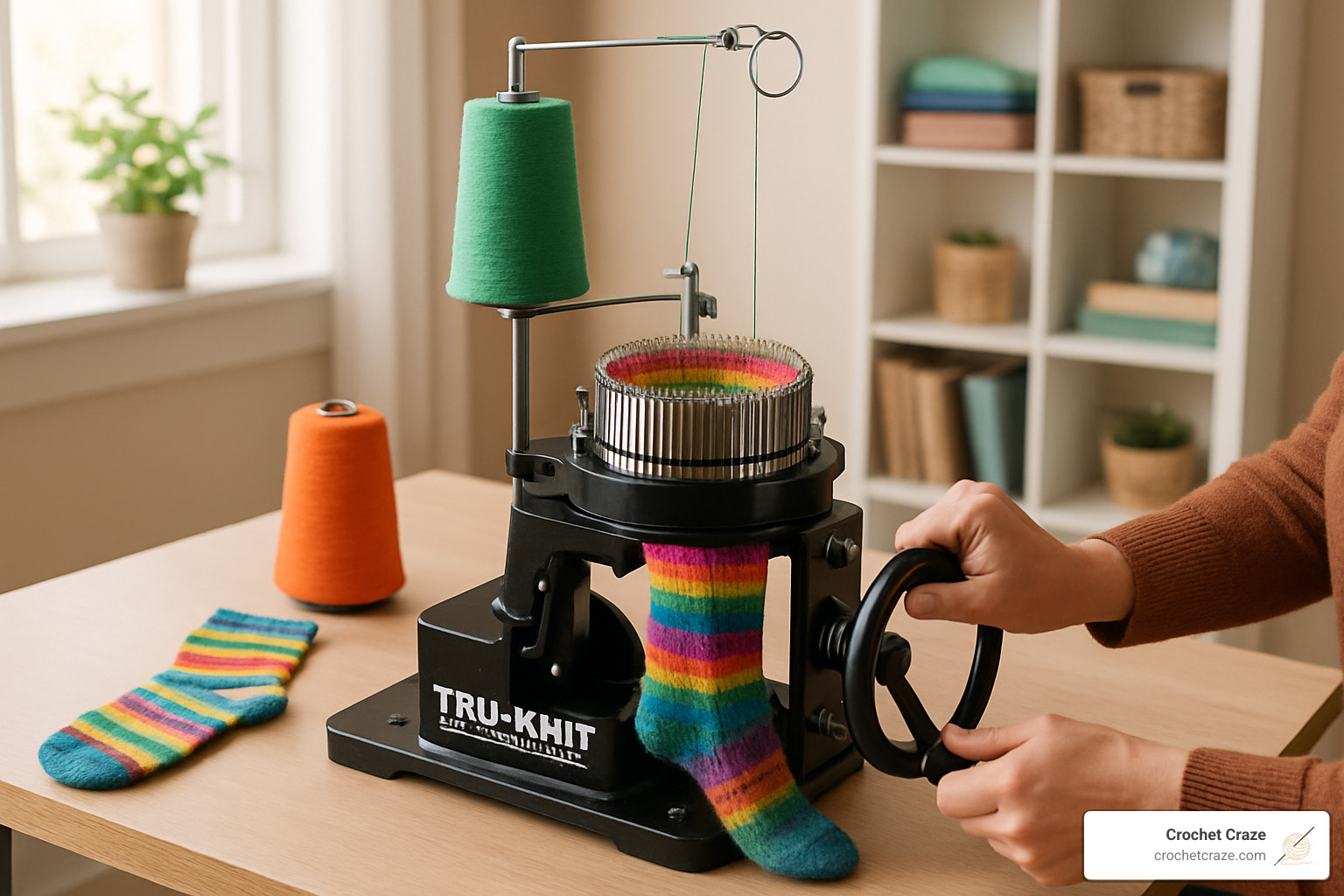
Ready to lift your knitting game from hobby to passion? The Tru-Knit circular knitting machine might just be your perfect match. This isn’t your everyday crafting gadget—it’s a precision-engineered marvel specifically designed for creating perfect matching socks with remarkable efficiency.
What makes the Tru-Knit special is how it blends old-world craftsmanship with modern engineering solutions. The team behind this beauty has shipped over 200 units as of early 2024, building a devoted following among serious sock enthusiasts. Each machine features precision-machined components that work together in perfect harmony, eliminating the frustrating “hula wobble” that plagues many vintage sock machines.
The ingenious “silver bullet” yarn carrier is a game-changer for anyone who’s ever muttered under their breath about dropped stitches. As one delighted owner put it, “Ribbing is now a joy; no more dropped stitches!” Those perfectly ribbed sock cuffs that once seemed impossible are now consistently achievable, even for those new to circular sock machines.
I love how thoughtfully designed this machine is—from the helpful gauge marks etched directly onto the cylinders for easy stitch adjustment to the lockable handle that prevents accidental cranking. Each Tru-Knit even comes with a custom-engraved tool set that feels special from the moment you unpack it.
The folks at Nokomis Knitting Company understand that investing in a quality circular knitting machine is a significant decision. That’s why they offer a unique “Reserve – Pay Later” option, letting you secure your place in the production queue without immediate payment. You’ll only be invoiced when your machine is ready to ship—a customer-friendly approach that speaks volumes about their confidence in their product.
Beyond the machine itself, Tru-Knit owners gain entry into a warm, welcoming community. Many users affectionately name their machines (one proud owner dubbed hers “Black Beauty”) and bring them to “crank-in” gatherings where sock machine enthusiasts share techniques and inspiration. These social connections add immeasurable value to the Tru-Knit experience.
While the Tru-Knit represents a bigger investment than simpler hobby machines, its precision engineering and thoughtful design make it a joy to use for years to come. For dedicated crafters who dream of creating perfectly matched sock pairs with professional results, the Tru-Knit offers capabilities that simply can’t be matched by entry-level alternatives.
Erlbacher Gearhart CSM
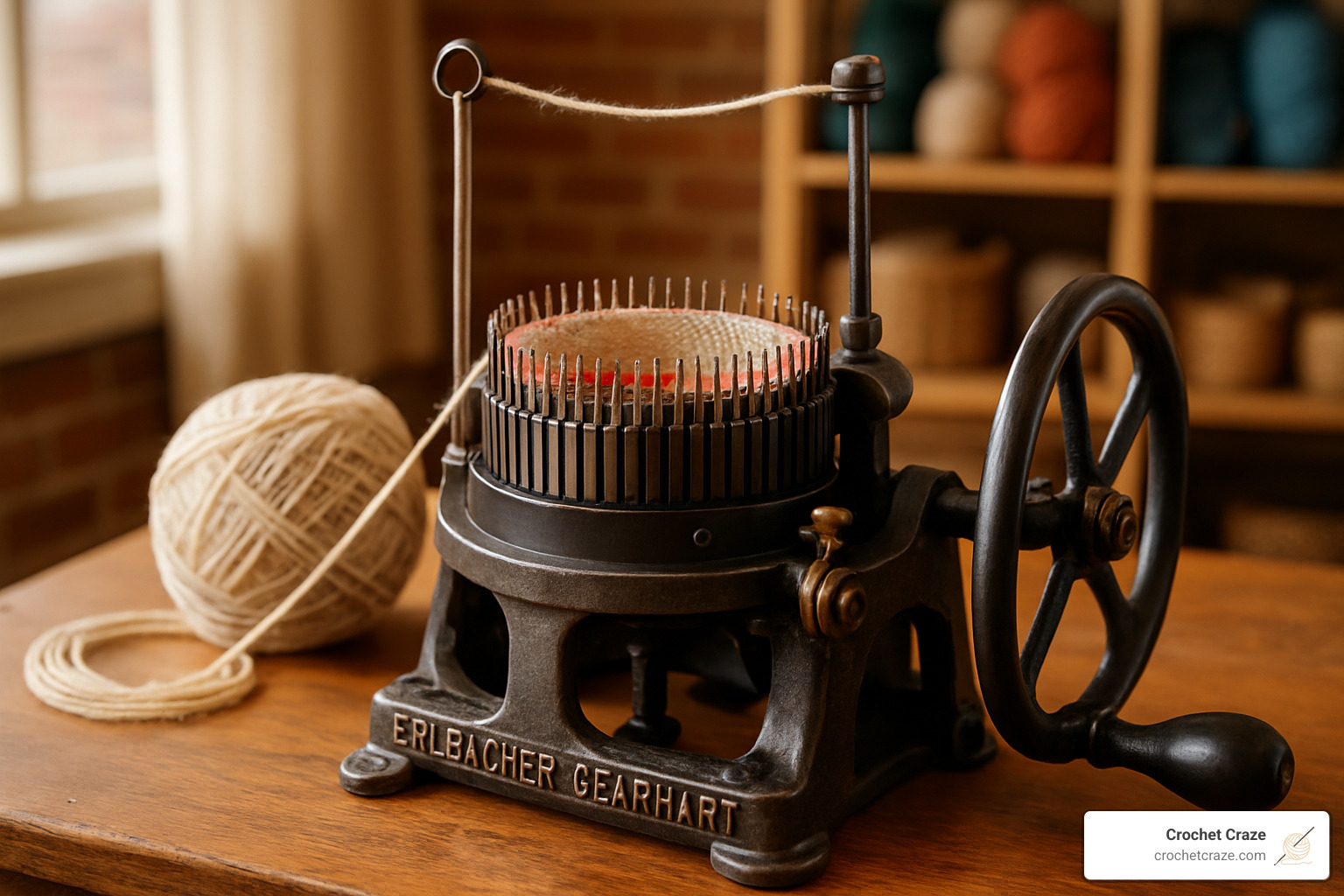
If circular knitting machines had a royal family, the Erlbacher Gearhart circular knitting machine would surely wear the crown. These magnificent machines aren’t just tools—they’re pieces of American manufacturing heritage brought to life in your craft room. Continuing the legacy of the original Gearhart Knitting Machine Company from the early 20th century, today’s models blend that treasured history with modern engineering precision.
What makes crafters’ eyes light up when discussing the Erlbacher Gearhart is its substantial feel and enduring construction. Unlike plastic hobby machines, these beauties feature solid metal cylinders and dials that feel reassuringly robust in your hands. “This machine is built to last generations,” one owner told me, patting her Gearhart affectionately. She’s right—many original Gearharts from the 1900s still faithfully produce socks today!
The versatility of these machines is truly impressive. With interchangeable cylinders available in different gauges (typically 54, 72, or 84 needles), you can adapt your Gearhart to various project sizes and yarn weights. This modular approach extends to how they’re sold as well. Starting with the Basic Machine Package, crafters can choose increasingly comprehensive setups all the way up to the Super Deluxe PLUS Machine Package, which includes enough accessories to keep a sock enthusiast busy for years.
For those with specific knitting interests, the specialized “Bumblebee” packages cater to particular knitting styles. Each upgrade adds more cylinders, tools, and accessories—allowing your machine to grow alongside your skills. The comprehensive documentation included makes the learning curve much gentler than you might expect for such a sophisticated tool.
Perhaps the most heartwarming aspect of joining the Gearhart family is the community that comes with it. “The community around these machines is as valuable as the machine itself,” shared one enthusiast who regularly attends “crank-in” gatherings. These social events bring together Gearhart owners to share patterns, troubleshoot problems, and simply enjoy the rhythmic cranking together.
The availability of replacement parts provides peace of mind not often found with crafting tools. Should anything ever need attention, parts are readily available to keep your heirloom-quality machine in perfect working order for decades to come.
For those serious about sock production or drawn to preserving traditional textile arts, the Erlbacher Gearhart represents more than just a purchase—it’s an investment in American craftsmanship and a ticket to a warm, welcoming community of like-minded makers who appreciate the beauty of creating something lasting, one rotation at a time.
LX96 Multi-Feed Industrial

Stepping into professional textile production, the LX96 Multi-Feed circular knitting machine shows us just how far this technology can go beyond our crafting tables. This isn’t your grandmother’s knitting machine – it’s a powerhouse designed for small manufacturing operations or serious enthusiasts who’ve outgrown hobby-level equipment.
What makes the LX96 truly remarkable is its flexible feeding system. You can run it with a single feed for standard projects, but when deadlines loom, switching to the two-feed option doubles your output instantly. Need even more speed? The three-feed configuration kicks production into high gear, perfect for meeting those urgent orders. The machine even handles multi-color work or core-wrapped yarns simultaneously – something hobby machines can only dream about.
The versatility of this machine is astounding. While most home machines create tubes of fixed diameters, the LX96 produces materials ranging from tiny 1.5 mm tubes to impressive 127 mm (5-inch) wide fabrics. This incredible range opens doors to specialized applications you might never have considered.
Beyond traditional garments, the LX96 excels at creating technical textiles like filtration mesh for industrial applications. Imagine knitting the reinforcement for industrial hoses or precision gasket materials – that’s the capability we’re talking about. The machine maintains consistent density across these specialized materials, something crucial for technical applications where performance matters more than appearance.
The precision engineering really shines through the LX96’s take-down system. The hardened take-down rolls ensure even tension throughout long production runs, while the optional capstan wheel provides the gentle handling needed for delicate or specialized yarns. When you’re working with technical textiles, this level of control makes all the difference between usable products and expensive waste.
For continuous production, the roll-up attachment allows the machine to keep running without constant operator attention. Meanwhile, the stop-motion detection system watches for problems, automatically halting production if it spots a flaw – saving materials and preventing headaches.
While this machine might be beyond what most home crafters need, it beautifully illustrates how circular knitting machine technology scales from hobby to industrial use. The basic principles remain unchanged from the simplest toy machines – rotating needles creating interlocked loops – but the precision, speed, and versatility increase dramatically.
For small businesses looking to start producing specialized knitted products, the LX96 offers an entry point into industrial knitting without requiring the massive investment of full-scale commercial machinery. Its adaptable design also allows for future growth, accepting cylinders up to 6-inch OD as your production needs expand.
Choosing the Right Circular Knitting Machine
Finding your perfect circular knitting machine companion is a bit like dating – you need to find the right match for your crafting style, budget, and ambitions. I’ve helped dozens of crafters make this choice, and the right machine truly depends on what you hope to create.
Think about your needle count needs first. Machines with 22-24 needles create cozy tubes perfect for children’s hats or arm warmers. If you’re planning adult-sized projects, you’ll want 40-48 needles for standard hats and cowls. For ambitious projects like blankets or adult sweater bodies, look for machines with 60+ needles to create wider tubes.
The type of machine makes a huge difference in your crafting experience too. Hobby plastic machines like the Addi or Sentro are lightweight and perfect for weekend warriors who knit occasionally. Mid-range CSMs like the Tru-Knit offer better precision when you’re ready to get serious about sock-making. Heritage metal machines like the Erlbacher represent heirloom quality for dedicated crafters, while industrial machines like the LX96 are built for those turning their passion into production.
I still smile remembering what Maria from our Crochet Craze community shared: “I started with a basic Sentro to test the waters, but quickly upgraded to a Tru-Knit when I realized how much I enjoyed making socks. The quality difference was immediately apparent.”
When deciding between manual and computerized options, consider your tech comfort level. Manual machines offer tactile control and generally cost less, while computerized models allow pattern programming but require some technical know-how. Semi-automated systems offer a happy medium if you want both hands-on crafting and efficient production.
Your project intentions should guide your choice too. If you’re making occasional gifts or charity items, entry-level machines will serve you well. Regular sock production calls for a dedicated CSM. And if you’re launching a small business, you might want to consider industrial-grade options for consistent, higher-volume production.
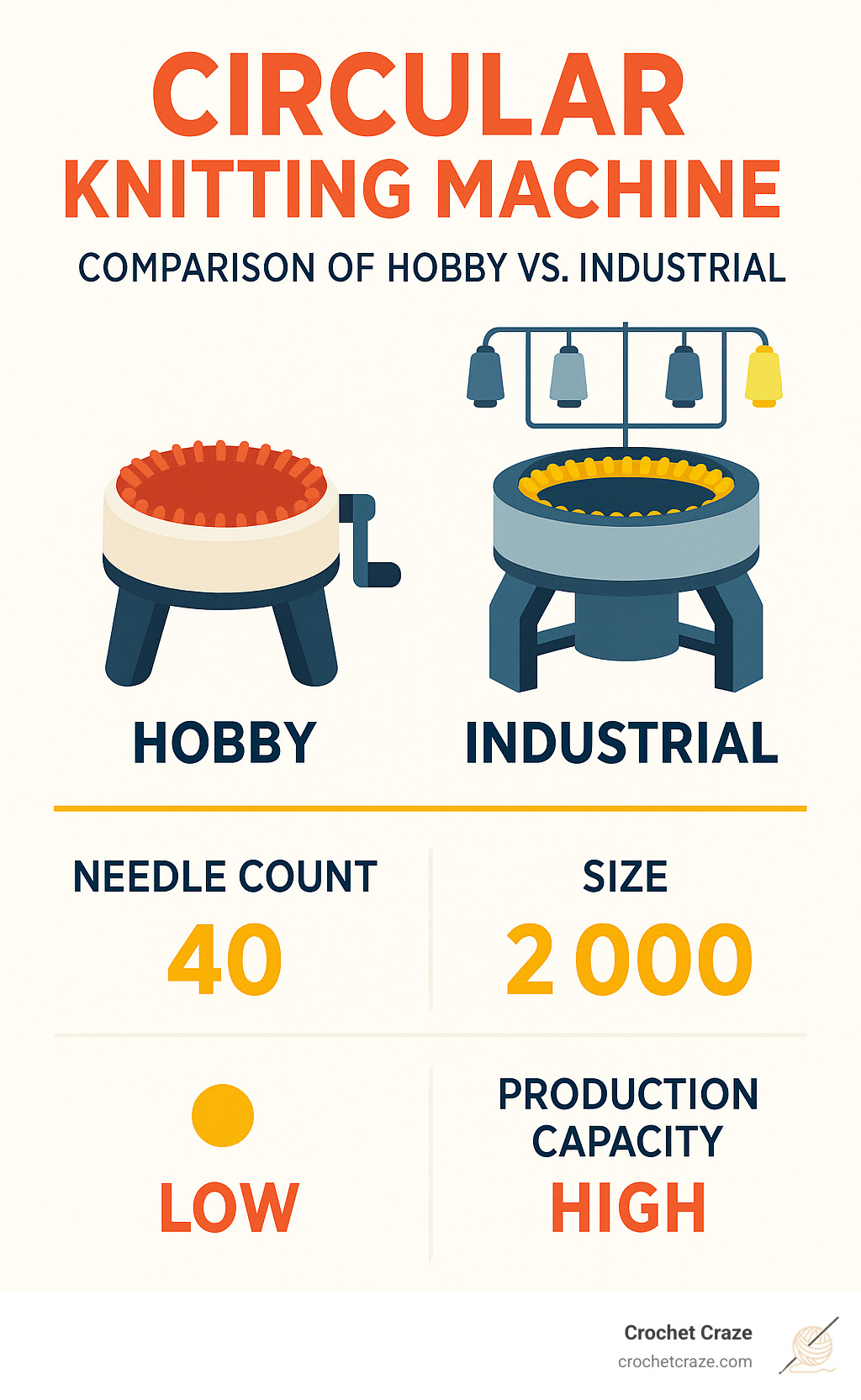
At Crochet Craze, we’ve found most beginners benefit from starting with an entry-level machine before investing in pricier equipment. This approach lets you find if machine knitting fits your crafting personality without breaking the bank.
Before making your choice, ask yourself: Will you use this machine weekly or just occasionally? Are you focused on specific items like socks or creating a variety of projects? Do you have dedicated space for a larger machine? Is this purely for pleasure or potentially for profit? Your honest answers will guide you toward the machine category that fits your needs.
Speed vs Skill on a circular knitting machine
The magic of a circular knitting machine is undeniably its speed – but there’s still an art to mastering it. While hand knitters might spend an entire weekend creating a pair of socks, a practiced machine knitter can crank out the same pair during a favorite movie. This quadrupled output is a game-changer for charity knitters, craft sellers, or anyone with more knitting dreams than time.
That said, there’s definitely a learning curve. As my friend Janice (who’s been machine knitting for 15 years) always says, “The first few projects might actually take longer than hand knitting as you learn the machine’s quirks. But once you develop muscle memory and troubleshooting skills, the time savings are remarkable.”
The skills you’ll develop include finding your perfect cranking rhythm, managing yarn tension (too tight and you’ll struggle to turn the handle, too loose and stitches drop), quickly spotting and fixing missed stitches, and mastering efficient cast-on and bind-off techniques. Row counting becomes crucial too – one regular at our knitting circle swears, “The row counter on my Addi is essential—120 to 140 rounds produces a perfect cuffed beanie with worsted weight yarn.”
Most crafters reach comfortable proficiency after completing 5-10 projects, with skills continuing to improve with each creation. The satisfaction of watching a hat materialize in under an hour makes the learning process worthwhile.
Price Range of a circular knitting machine
When it comes to circular knitting machines, the price range reflects the vast quality spectrum. Think of it like cameras – there are smartphone cameras, hobby cameras, professional equipment, and studio setups, each serving different needs and budgets.
Entry-level machines like basic Sentro models serve as your “point-and-shoot” options. They’re perfect for beginners wanting to try machine knitting without a major investment. These plastic machines work well for occasional use but may lack the precision and durability of higher-end models.
Mid-range hobby machines, including the Addi Express series, represent a significant step up in reliability and consistent results. These are the “prosumer” cameras of the knitting world – serious equipment for dedicated hobbyists who create regularly but don’t need professional-grade tools.
Specialized Circular Sock Machines (CSMs) like the Tru-Knit and Erlbacher Gearhart models are the professional equipment of machine knitting. While they represent a substantial investment, these precision instruments are built for decades of use. As one dedicated sock maker in our community explained, “When I calculated the cost per pair of socks over the expected lifetime of my CSM, it actually works out to be quite reasonable—especially considering the quality and customization I can achieve.”
Industrial machines like the LX96 sit at the high end, designed for small-scale commercial production rather than home use.
For most home crafters, we at Crochet Craze recommend starting with a mid-range hobby machine unless you have a specific focus on sock production or historical textile arts that would justify investing in a specialized CSM. You can always upgrade as your skills and interests develop.
Maintenance Must-Dos
Showing your circular knitting machine some regular TLC will keep it humming happily for years to come. Think of maintenance as preventative medicine – a little care now prevents bigger headaches later.
Regular lubrication keeps everything moving smoothly. Apply appropriate lubricant to moving parts according to your manufacturer’s recommendations. Industrial machines typically need spray lubrication to avoid contaminating yarn, while home machines usually prefer silicone-based lubricants that won’t damage plastic components.
Needle inspection should become second nature. Check regularly for bent latches or hooks, and replace damaged needles immediately to prevent further issues. I always recommend keeping spare needles on hand – there’s nothing more frustrating than finding a bent needle mid-project with no replacement available.
Tension mechanism care is crucial for consistent results. Clean tension discs or guides regularly to remove fiber buildup, check for wear on yarn guides, and adjust tension settings whenever you change yarn weights. Your machine will thank you with even, beautiful stitches.
Cylinder and cam maintenance keeps everything aligned properly. Ensure your cylinder alignment is correct, remove any lint and debris from cam systems, and check that all moving parts operate smoothly.
Smart storage protects your investment. Cover your machine when not in use to prevent dust accumulation, store metal machines in a climate-controlled environment to prevent rust, and secure moving parts during storage to prevent accidental damage.
One of our Tru-Knit owners shared this brilliant tip: “I keep a maintenance log with my machine, noting when I’ve cleaned or replaced components. This helps me stay on top of regular maintenance and troubleshoot any sudden changes in performance.”
For computerized or industrial machines, additional maintenance includes sensor cleaning and calibration, software updates, electrical component inspection, and checking belt or drive mechanisms.
At Crochet Craze, we recommend establishing a maintenance routine based on your usage frequency – monthly for occasional users, weekly for regular producers, and daily checks for those using their machines commercially. Your machine will reward your diligence with years of reliable service and beautifully consistent knitting.
Frequently Asked Questions about Circular Knitting Machines
What yarns work best?
Finding the perfect yarn for your circular knitting machine is like finding the right ingredient for your favorite recipe—it makes all the difference in your finished project!
Most machines work beautifully with DK (3) and worsted (4) weight yarns, which provide the sweet spot between being substantial enough to catch on the needles while still flowing smoothly through the machine. If you’re working with a machine that has closer needle spacing, sport weight (2) yarns can be your best friend. For machines with wider spacing between needles, you might successfully venture into bulky (5+) territory.
The texture of your yarn matters tremendously. Think smooth rather than fuzzy—those lovely mohair and angora blends that work so beautifully for hand knitting will frustratingly catch and snag in your machine. A medium twist helps maintain crisp stitch definition, while consistent thickness prevents the dreaded machine jam that can halt your creative flow.
“I’ve finded that yarns specifically labeled for sock knitting perform like champions in my circular machine,” shared one of our Crochet Craze community members. “Even when I’m making hats or cowls, sock yarn has that perfect balance of strength and elasticity that makes machine knitting a dream.”
Acrylic-wool blends have become my personal favorite for machine projects—they offer the easy-care properties that make finished items practical while maintaining enough wool content for beautiful stitch definition. Cotton-acrylic blends provide wonderful structure for summer items without excessive stretch, and superwash wool performs reliably without felting concerns.
When building your stash, consider keeping “machine-friendly” yarns separate from your hand-knitting collection. This simple organization hack makes it easy to grab the right yarn when inspiration strikes for a quick machine project!
How do I avoid dropped stitches?
Ah, dropped stitches—the nemesis of every machine knitter! These frustrating little escapees can turn an enjoyable crafting session into a rescue mission, but with a few thoughtful techniques, you can significantly reduce their occurrence.
Tension is everything when working with a circular knitting machine. Think of tension as the conductor of your knitting orchestra—when it’s consistent, everything plays in harmony. Use your machine’s tension guides if available, and consider adding weights to the hanging work to create even downward pull. Feed your yarn with steady, gentle pressure, neither too tight nor too loose.
Before you begin cranking, take a moment for a quick machine check. Ensure all needles are properly positioned and that their latches move freely. Verify your yarn is correctly threaded through all guides—this thirty-second inspection can save you thirty minutes of frustration later!
“When I first started with my machine, I was cranking like I was in a race,” laughed one Crochet Craze community member. “Once I slowed down and found my rhythm, the dropped stitches virtually disappeared.” Start slowly until you establish a comfortable pace, then maintain that consistent cranking speed throughout your project.
Keep a crochet hook within arm’s reach—it’s your rescue tool for quickly catching and lifting any stitches that do manage to escape. For small projects, sometimes it’s faster to restart than to fix multiple drops, especially while you’re learning.
Each machine has its quirks and solutions. Tru-Knit users should adjust the “silver bullet” yarn guide with precision, while Addi and Sentro users should pay special attention to the position of the yarn mast. Industrial machine operators will want to verify positive feeder settings before beginning.
Practice truly makes perfect with machine knitting. Spend time with scrap yarn finding your machine’s “sweet spot” for tension and speed—this investment will reward you with frustration-free projects in the future.
Can I knit flat panels on a circular knitting machine?
Yes! Despite what the name might suggest, your circular knitting machine is quite the versatile tool, capable of creating beautiful flat panels alongside seamless tubes. This opens up a whole new world of project possibilities, from sweater components to blankets and scarves.
If you’re using an Addi Express or similar hobby machine, switching to flat knitting mode is typically as simple as moving a designated lever. This clever mechanism disengages some needles and creates an automatic turn-around point, allowing the machine to knit back and forth rather than in continuous rounds. The result is a flat piece with finished edges on both sides—perfect for projects that require seaming.
For those working with CSM (Circular Sock Machine) models, you can create flat pieces by manually changing direction at marked beginning and end points of your flat section. Industrial machines often feature dedicated flat knitting settings or can be configured with special cams for this purpose.
“I fell in love with my circular machine when I finded I could make sweaters by knitting flat panels and seaming them together,” shared an enthusiastic Crochet Craze community member. “The stockinette stitch is perfectly even, and I can work at a fraction of the time it would take me to hand knit.”
This dual functionality makes circular knitting machines remarkably versatile additions to your crafting arsenal. Imagine creating a cozy hat in tube form in the morning, then switching to flat panels for a baby blanket in the afternoon—all on the same machine!
Many crafters find that combining machine-knit panels with hand-finished details creates pieces with both efficiency and personal touch. Consider machine knitting the main panels of a sweater, then adding hand-knit ribbing or decorative borders for that special handmade quality that makes your work unique.
The ability to create both flat and tubular knitting on one device truly makes a circular knitting machine a worthwhile investment for any serious fiber enthusiast looking to expand their creative possibilities.
Conclusion
The world of circular knitting machines truly offers something magical for every yarn enthusiast, whether you’re a weekend crafter or someone looking to start a small handmade business. These clever devices bridge the gap between traditional handcrafting and modern efficiency, letting you create beautiful pieces while still enjoying that special connection with yarn.
Throughout our journey together, we’ve explored machines across the spectrum – from the budget-friendly Sentro that welcomes beginners with open arms, to the reliable Addi Express that balances quality with accessibility. We’ve also ventured into specialized machines like the Tru-Knit and Erlbacher Gearhart, which carry forward knitting traditions while adding modern improvements. And for those dreaming bigger, we glimpsed how industrial models take these same principles to commercial heights.
What I find most heartwarming about the circular knitting machine community is how welcoming everyone is. Whenever you hit a snag or need pattern inspiration, fellow enthusiasts are ready with helpful tips and encouragement. Many crafters tell me that connecting with others – whether in online forums or at in-person “crank-in” gatherings – has become just as rewarding as the knitting itself.
Here at Crochet Craze, we’re passionate about supporting your machine knitting trips. Our comprehensive knitting tools section is regularly updated with information about accessories and equipment that will improve your projects and make your crafting time even more enjoyable.
Ready to take your skills to the next level? Our advanced techniques section walks you through combining machine knitting with hand-finishing touches, creating textured stitches, and dozens of other ways to make your machine-knit projects truly one-of-a-kind.
I’ve seen so many crafters turn to these machines for different reasons – some love the efficiency, others appreciate how accessible they make knitting for people with hand pain or mobility issues, and many simply enjoy exploring a new crafting frontier. Whatever draws you to circular knitting, I hope this guide has illuminated the possibilities and inspired you to give it a try.
Happy cranking, friends! May your yarn journey be filled with joy, creativity, and perhaps a few more finished projects than you ever thought possible!