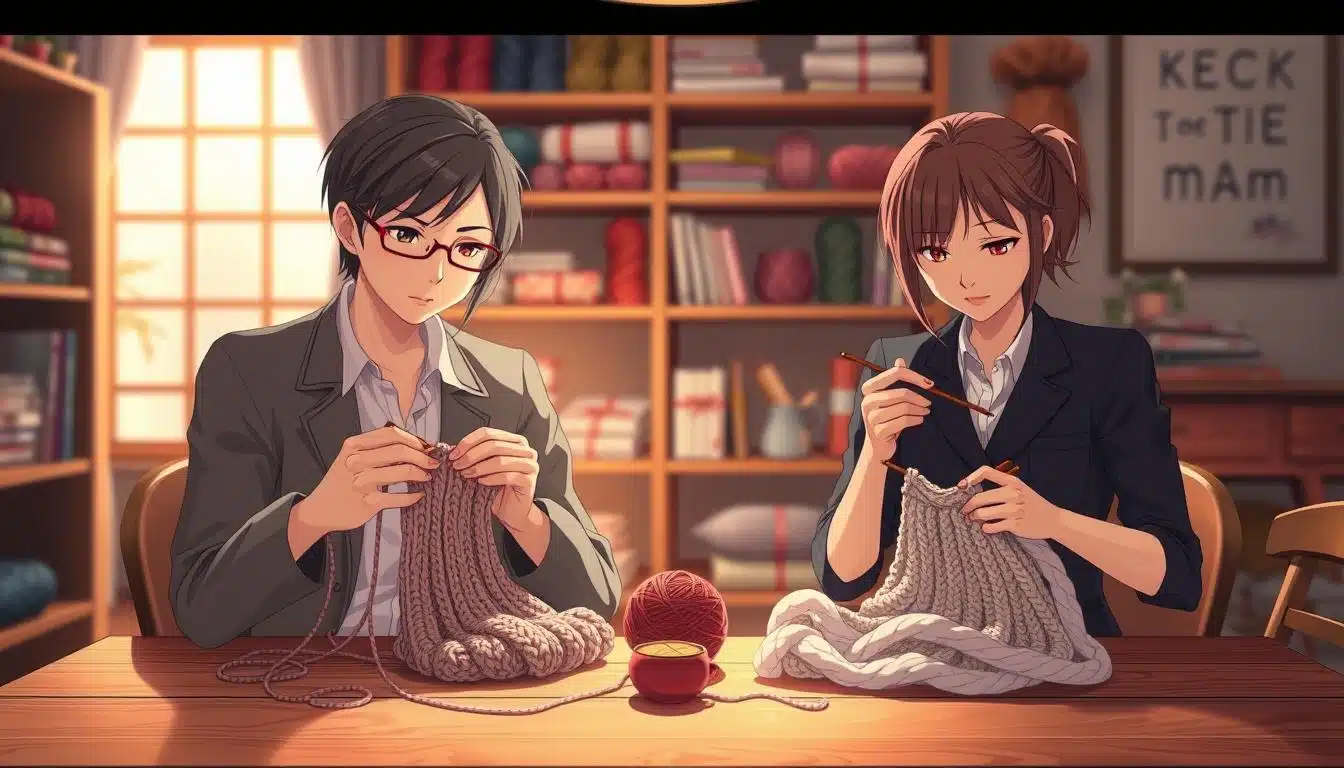
If you’ve ever seen a knitting reel on Instagram and wanted to join the debate, you’re not alone. The fight between continental and English knitting is like sports rivalry: it’s passionate and full of strong opinions. But, in reality, both methods are just different ways to make yarn into fabric.
One big difference is how you hold the yarn. Continental knitters hold it in their left hand and use a picking motion. English knitters hold it in their right hand and throw the yarn. Both styles have deep roots. Continental comes from Germany and Scandinavia, while English knitting has its roots in the British Isles and the United States.
Which method is better for you depends on your comfort, the type of project, and how you learned. For a quick guide or a new tip, check out knitting techniques and tips. The best method is the one that keeps your hands moving and your shoulders relaxed.
Key Takeaways
- Continental vs English knitting differ mainly by yarn hand and motion: left-hand picking vs right-hand throwing.
- Both methods achieve the same fabric outcome; speed and comfort are personal and learnable.
- Continental often offers faster rhythm for many knitters, but English can feel more intuitive at first.
- History and geography shape style preferences—Germany and Scandinavia lean continental; the British Isles favor English.
- Try both methods on simple swatches to see which reduces strain and improves your speed.
Quick snapshot: continental knitting vs english — the essential comparison
Looking for a quick summary before you dive in? This snapshot compares continental and English knitting. It highlights which hand holds the yarn, the needle’s movement, and how it affects speed and comfort.
Think of it as a cheat sheet. Social media clips from Instagram and TikTok make both styles look easy. But, your comfort and muscle memory decide what works for you.
What the phrase means and why it matters
The phrase contrasts two broad camps: yarn in the left hand versus yarn in the right. This simple difference affects your knitting speed and comfort. It also influences which projects you find easier.
It matters because your preferred method changes how you knit. It affects ergonomics, learning, and suitability for tasks like Fair Isle or stranded colorwork. If you want a clear starting point for fixes and tweaks, check this helpful guide that many knitters recommend.
Top practical differences at a glance (yarn hand, motion, speed)
Continental holds yarn in the left hand and uses a picking motion with the right needle. This method is short and efficient, often leading to faster rows.
English keeps yarn in the right hand and uses a throwing motion around the needle. This method can be larger and more deliberate. Many teachers in the U.S. start students with this method because it feels intuitive.
In a quick comparison, note three key differences: yarn hand, motion economy, and speed. These markers help choose projects for each method.
Who tends to prefer each method and why
Knitters who value speed and compact motions often prefer continental. Travelers, sweater knitters, and colorwork fans praise it for less hand travel and smoother floats.
People who learned from family or in craft classes often prefer English. It can feel steadier when learning complex stitch patterns and when precision matters over speed.
| Feature | Continental | English |
|---|---|---|
| Yarn hand | Left | Right |
| Primary motion | Picking with right needle | Throwing the yarn around needle |
| Typical speed | Often faster for many knitters | Can be slower but steady and precise |
| Best for | Fair Isle, stranded colorwork, travel knitting | Complex textured stitches, learners taught in U.S./UK |
| Learning curve | May feel awkward at first, rewards practice | Often more intuitive for beginners |
| Common debate point | Picking vs throwing differences drive speed talk | Picking vs throwing differences drive teaching choices |
What is Continental knitting?
Continental knitting is a way to knit where the yarn rests in your left hand. The right needle picks up the yarn to create each stitch. This method is known as continental knitting picking or the European style.
https://www.youtube.com/watch?v=_Iu_6gxt7t0
This style is known for its efficiency. The right wrist moves the needle, and the left hand controls the yarn. This makes knitting feel quick once you get the hang of it.
There are different ways to do continental knitting. Some use classic picking, while others flick the yarn with their fingers. A few even wrap the yarn with their left hand. This shows that there’s a variety within the European style.
Continental knitting is popular in many places. It comes from Germany and the Nordic countries. You can find it in Europe, Japan, and parts of Latin America. It’s often passed down through family and community, spreading the craft.
| Aspect | Typical Continental Trait | Why It Matters |
|---|---|---|
| Yarn hand | Left-hand tensioning | Steadier yarn control for colorwork and speed |
| Main motion | Picking or flicking with the right needle | Smaller motions reduce travel time between stitches |
| Common names | Picking, German knitting, European knitting style | Helps you find tutorials and local teachers |
| Regional roots | Germany, Scandinavia, wider Europe | Explains prevalence and traditional teaching methods |
| Practical benefit | Often faster for stranded colorwork | Useful when you plan long panels or frequent color changes |
What is English knitting?
English knitting means using your right hand to guide the yarn while your left hand works the needle. This method, also known as right-hand knitting, is easy for beginners. It involves a wrapping motion that can be a full-arm wrap or a quick flick with your right index finger.
Below are the key traits and common variations so you can spot the differences quickly.
Definition and key characteristics
English knitting focuses on right-hand yarn control. It uses a wrapping motion to create stitches. This method is great for beginners because it makes stitch structure clear.
Variations within the style
Some knitters prefer a full-arm throw for a broader motion. Others use a right-index flick for quicker work. You might also see a mix where a flick is used for knits and a small throw for purls.
History and regional popularity
English-style knitting has a long history in the UK and is popular in the US and other English-speaking countries. It’s kept alive through tutorials on Instagram and YouTube. For a comparison of continental and English knitting, check out this guide.
Speed, efficiency, and muscle memory
When you pick up your needles, you’ll see speed is both skill and habit. Debates on continental vs english speed often favor continental. This is because the needle “picks” the yarn, reducing arm travel. This smaller motion is smoother and less tiring, perfect for long stockinette runs.
Why continental is often faster for many knitters
Continental knitting keeps the yarn in your left hand, with the right needle picking it up. This reduces shoulder and elbow movement, creating a smooth rhythm. Knitters from Germany and Scandinavia often use this method for long sessions. They enjoy strong knitting efficiency and less fatigue.
How muscle memory makes “your fastest” method personal
Your brain loves patterns, and muscle memory in knitting turns practice into speed. If you learned English and have practiced a lot, your hands will beat a novice continental knitter. YouTube and Instagram demos show that speed often depends on practice, not just technique.
When English knitting can match or outperform continental
English knitting can close the gap with flicking using your index finger. Small, controlled flicks reduce motion and increase speed. For short sections, lace work, or heavy textured stitches, English allows precise placement of stitches. It keeps knitting efficiency high.
Ergonomics and repetitive strain considerations
Keep knitting fun and pain-free by paying attention to your body. Knitting ergonomics is about good posture, choosing the right tools, and small motion changes. These changes can make a big difference in how long you can knit without getting tired.
Which motions reduce shoulder, elbow, and wrist strain
Use small finger and forearm movements instead of big arm swings. Sitting with your wrists straight and shoulders relaxed helps your spine and keeps your shoulders from getting sore.
Make your work surface higher to avoid leaning forward. Use lighter project bags or distribute the weight with two straps. Try circular needles to ease the load on your hands.
How flicking vs full-arm movement changes injury risk
Flicking uses your index finger and reduces arm effort. This can lower the risk of injury to your shoulders and elbows compared to big arm movements. Flicking with either English or Continental technique is safer for your arms.
Full-arm throwing, on the other hand, can lead to pain in your right arm over time. This is more likely with tight tension or heavy yarns.
Tips for avoiding RSI regardless of method
Take breaks every 20–30 minutes to stretch and move around. Keep your wrists straight and avoid bending them too much. Choose needles that are smooth and the right size for your yarn to reduce strain.
Vary your projects, yarn weights, and techniques to avoid overworking any muscles. Learn stretches for your wrists, fingers, and chest. Consider ergonomic needles or lightweight bags. For more tips, visit ergonomic knitting advice.
By watching your movements and taking breaks, you can reduce strain and enjoy knitting for years to come.
Learning curve and resources for beginners
Learning to knit can feel like starting a new language. English-style stitches might seem easier at first. This is because using your right hand to wrap the yarn feels natural for many people.
English knitting is intuitive because you release one needle to wrap the yarn. This action looks simple and makes sense when you first try it. Teachers in the United States often teach this method. So, you’ll find many ways to learn english knitting in local shops and online.
Continental knitting might seem harder at first. It requires more finger coordination and tension control. But once you get it, you’ll knit faster and with a smoother rhythm. Many knitters say learning continental is worth it for long projects and colorwork.
Where to find help in the US: start with knitting tutorials US on YouTube and TikTok. These platforms offer clear, step-by-step demos. Ravelry groups, local yarn shops, and knitting guilds host classes and knitalongs. These let you practice with guidance. A Bee In The Bonnet Facebook groups and Instagram demo videos are great for swapping tips and asking questions.
Beginner knitting resources to try: follow short video clips for single techniques, join an in-person class for live feedback, and use threaded forum posts to troubleshoot specific moves. If you want breadth, try combining beginner knitting resources that teach both styles. This way, you can compare and choose what fits your hands better.
Practical tips for steady progress: set aside short daily practice sessions, record yourself to spot tension issues, and copy a simple swatch repeatedly until motion becomes automatic. If you aim to learn english knitting first, then add continental later, you will expand your toolkit. This approach avoids the social pressure to stick with only one method.
Which technique fits specific projects best
Choosing the right knitting method is key, not sticking to one way. For projects like long stockinette, stripes, and wide panels, continental knitting is best. It keeps the yarn tension even and reduces hand fatigue.
For big projects like blankets, long cardigans, or many jerseys, continental is a time-saver. Designers and hobbyists share tips and examples. They show how continental can make your knitting faster and easier on your hands. Check out continental vs English for a comparison.
Stockinette, stripes, and long panels — when continental shines
Go for continental when you need smooth, consistent knitting. It’s great for stripes and long panels. The picking action makes color changes easy, perfect for fair isle yarn holding.
Complex textures, twists, and detail work — when English helps
For projects with cables, twists, and dense textures, English is better. It lets you control stitches better, which is important for detailed work.
Fair Isle and colorwork strategies (holding yarns in both hands)
Fair Isle knitting often uses a mix of techniques. You might hold different colors in each hand or use a hybrid method. This helps manage yarn and avoid tangles. Crochet Craze has videos and tutorials to help you switch grips and improve your yarn handling.
| Project Type | Why It Fits | Suggested Technique |
|---|---|---|
| Long stockinette panels and stripes | Fewer motions per stitch, steady tension, less fatigue | Continental—best for speed and consistency |
| Fair Isle and two-color patterns | Multiple yarns need clear dominance and tangle control | Hybrid approach with fair isle yarn holding; continental for picking, English when needed |
| Cables, twists, and textured sweaters | Frequent stitch changes; precision in wraps and pulls | English—offers control for detailed stitch work |
| Blankets and long cardigans | Large surface area benefits from reduced upper-arm movement | Continental—ideal for repetitive work and reduced strain |
| Small detailed pieces and hems | Short runs where wrap control matters | English projects that use throwing for fine control |
Think about your knitting project, not just the technique. Learning both continental and English knitting makes you more flexible. It helps you handle complex colorwork and adjust to different patterns.
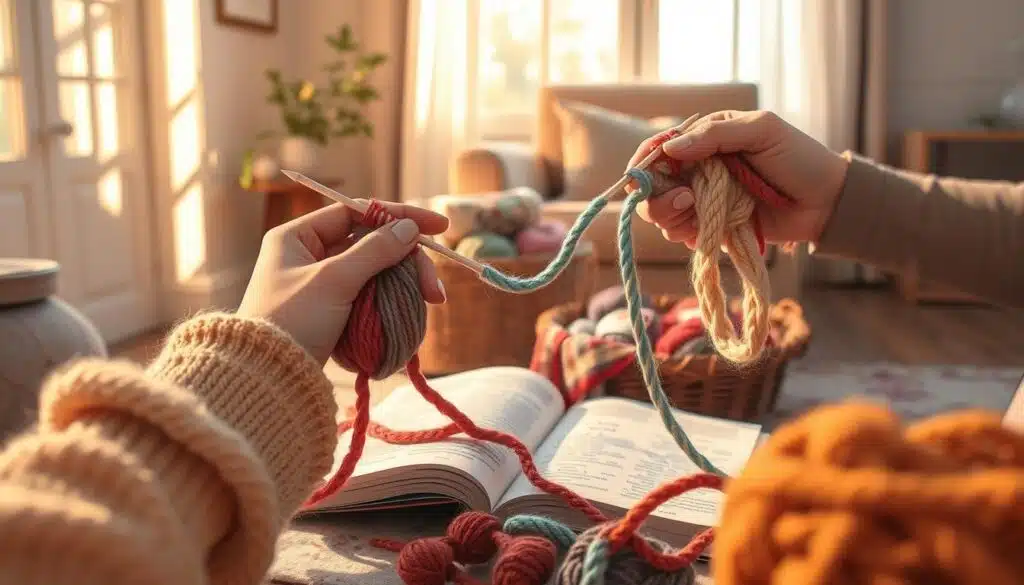
Hybrid approaches and learning both methods
You don’t have to choose just one way forever. Many knitters mix styles to use the best tool for each task. This makes their stockinette faster and their details finer.
Why stitch-mixing works by task
Skilled makers often use continental for long stretches. Then, they switch to English for shaping or tiny details. This mix lowers tangles and keeps the flow smooth when tasks change.
How dual skills help color projects
For Fair Isle and other stranded work, knitters hold separate strands in each hand. Learning both methods gives you better control over yarn dominance. This makes colors stand out clearly and prevents one from hiding behind another.
Practical drills to build new habits
Short, daily practice is better than long sessions. Try two-handed knitting drills like ten-minute swatches with your non-dominant hand. Work garter ridges back and forth. Slow-motion rows help you keep even tension while your muscle memory adapts.
- Set a timer for 10 minutes and knit a small swatch with the alternate method.
- Do five slow stitches, then five at normal speed; repeat for tension control.
- Practice a two-color stripe where you switch methods mid-row to simulate real project shifts.
Mixing methods gives you flexibility on the fly. Use hybrid knitting techniques to match technique to task. Keep practicing with two-handed knitting drills until both approaches feel natural.
Left-handed knitters and mirrored techniques
If you knit with your left hand leading, you have choices that affect your rhythm and comfort. You can mirror English moves, adopt left-handed continental, or learn right-handed knitting. Each choice changes how yarn flows, your speed, and what feels natural when you switch projects or teachers.
Mirror knitting copies right-handed English stitches in reverse. You wrap and throw with your left hand, mirroring your teacher’s standard motions. It’s easy to learn if your teacher can mirror gestures or you watch flipped videos.
Left-handed continental offers a different feel. It puts yarn tension in the left hand by default, feeling ergonomically simple for many lefties. This method keeps the yarn ready for picking motions, speeding up plain stitches and suiting long panels or stockinette.
Your craft background influences your choice. If you started with left-handed crochet, the hand that held yarn and tension will guide you. People taught by family members often mimic those handed techniques without thinking. Teaching left-handed knitters requires adapting demonstrations to their history.
Instructors working with lefties will mirror movements, show both handed versions, and offer practice swatches. Encourage students to try small drills for switching tension and hand roles. Suggest filmed tutorials that flip the view or present a left-handed teacher to help muscle memory form correctly.
Below is a compact comparison to help you decide which route to try first. It highlights ease of learning, typical speed, and when each method shines in real projects.
| Option | Ease for Lefties | Speed Potential |
Best Uses |
|---|---|---|---|
| Mirror knitting (English mirrored) | Easy if teacher mirrors or you use flipped videos | Moderate to fast once muscle memory builds | Detail work, pick-up stitches, knitters from crochet background |
| Left-handed continental | Natural for many lefties; yarn in left hand by design | High for plain stitches and long runs | Stockinette, stripes, fast shaping |
| Learning right-handed | Challenging at first; useful for following most workshops | Varies; can match others with practice | Pattern classes, group lessons, when teachers cannot mirror |
Conclusion
When it comes to continental vs English knitting, the truth is straightforward. Your comfort, past injuries, and project goals are key. They decide which method feels right for you. Continental is often faster and neater, while English is more intuitive for certain patterns.
Don’t let online debates sway you. Try both methods to see how they feel. Many knitters use a mix of both, depending on the project. This way, you can choose the best technique for each task.
For a quick guide or demos, check out this primer: continental and English techniques explained. It also links to more craft debates for context. When picking a knitting style, focus on enjoying the process. Keep what feels good and learn what helps. Let your hands create something unique.
FAQ
What does “continental” vs “English” knitting mean and why does it matter?
Continental knitting, also known as picking, uses the left hand to hold the yarn. The right needle picks up the yarn. English knitting, or throwing, uses the right hand to hold the yarn and wraps it around the needle. The choice between these methods affects speed, comfort, and suitability for certain projects.
What are the top practical differences at a glance?
Continental knitting is faster and uses smaller motions. It’s great for long runs and colorwork. English knitting is easier for beginners and better for textured work. Both methods aim to turn yarn into fabric but differ in motion and history.
Who tends to prefer each method and why?
Continental is popular in Germany and Scandinavia, favored for its speed. English is common in the U.K. and U.S., preferred by beginners. Social media also influences which method new knitters try first.
What is continental knitting exactly?
Continental knitting uses the left hand for right-handed knitters. The right needle picks up the yarn. It’s fast and efficient, ideal for long runs and colorwork.
What variations exist within continental knitting?
Variations include classic picking and left-hand wrapping. Some use throwing-like motions with the left hand. These variations come from personal tweaks and family traditions.
Where did continental knitting come from?
Continental knitting originated in Germany and Nordic countries. It spread across Europe and was reintroduced in the U.S. in the 20th century. Today, it’s practiced worldwide.
What is English knitting exactly?
English knitting holds the yarn in the right hand. It involves wrapping the yarn around the needle. Many use a compact flick instead of full-arm throwing.
What variations exist within English knitting?
Variations include full-arm throwing and compact flicking. Tensioning techniques also vary. These differences come from different teachers and regions.
What are English knitting’s historical and regional ties?
English knitting has ties to the British Isles. It was popularized by William Lee’s 1589 knitting machine. It remains popular in the U.K. and U.S.
Why is continental often faster for many knitters?
Continental knitting is faster because it uses smaller motions. This makes it quicker for long rows and colorwork. It reduces fatigue, making it ideal for large projects.
How does muscle memory decide which method is fastest for you?
Muscle memory plays a big role in speed. The method you practice most will be faster. Consistent practice helps build muscle memory.
When can English match or beat continental in speed or control?
English can be as fast as continental with compact flicking. It’s better for short, detailed work. This makes it precise for cables and lace.
Which motions reduce shoulder, elbow, and wrist strain?
Compact motions, like continental picking, reduce strain. Avoiding large arm swings helps prevent fatigue. Keeping wrists neutral is also important.
How does flicking vs full-arm movement change injury risk?
Flicking reduces strain on shoulders and elbows. Full-arm throwing can increase strain if not done with breaks. Ergonomic adjustments help.
What practical tips help avoid RSI regardless of method?
Use ergonomic needles and maintain neutral wrists. Take breaks and vary projects. Stretching and good posture also help. Consult a therapist if pain persists.
Why does English feel more intuitive to many beginners?
English knitting’s wrapping motion is easy to learn. Many teachers in English-speaking countries teach this way. It feels simpler at first.
Why does continental feel harder at first but reward speed later?
Continental requires coordination between hands. It takes practice to get it right. Once mastered, it’s very efficient, making it fast for long sections.
Where can you find tutorials and community help in the U.S.?
YouTube, TikTok, Ravelry, Facebook, and Instagram have great tutorials. Local yarn shops and knitalongs also offer help. They cover both methods and left-handed tutorials.
Which technique fits stockinette, stripes, and long panels best?
Continental is best for long, repetitive work. It’s fast and maintains consistent tension. This makes it ideal for blankets and cardigans.
When is English preferable for complex textures and detail work?
English is better for cables and lace. Its larger hand movements help control stitches. It’s great for short, detailed sections.
How should you approach Fair Isle and other colorwork?
Use a two-handed approach or mix methods for colorwork. Continental is good for carrying floats. Try different techniques to find what works best for you.
Why do experienced knitters mix techniques by task?
Mixing techniques combines speed and control. Use continental for long runs and English for detailed work. This approach is efficient and comfortable.
How does using both methods improve colorwork and yarn dominance?
Holding different yarns in each hand helps manage colorwork. Using continental and English together improves yarn dominance. This leads to cleaner motifs and fewer tangles.
What practical drills help add a second method to your muscle memory?
Short daily swatches and slow-motion practice help. These drills build coordination without frustration. Consistent practice is key.
What are options for left‑handed knitters?
Left-handers can mirror English or use continental. They can also learn right-handed knitting. The best method depends on experience and teaching.
How does a background in crochet or who taught you influence method choice?
Crochet influences hand posture and tensioning. Teaching history and handedness shape your method choice. Personal experience is more important than the “best” method.
What advice helps instructors teaching left‑handed students?
Show mirrored movements and provide video examples. Demonstrate continental and English options. Encourage practice and be patient. Left-handers benefit from seeing motions in their direction.
Is one method objectively better than the other?
No, both methods have their strengths. Continental is faster, while English is more intuitive for some. Choose based on comfort, project type, and muscle memory.
How should social media influence my choice?
Use social media as a learning tool, not a rulebook. It can create pressure. Try techniques you like, not just what others praise.
Any final practical takeaway on choosing between continental and English?
Try both methods. Keep what works best for you. Use continental for long panels and English for detailed work. Mix and match, practice, and remember knitting is for enjoyment.