
You’re about to discover a yarn that makes simple stitches look fancy. Crochet velvet yarn has a suede-like shine and a soft touch. It’s perfect for making blankets, scarves, and home decor items look luxurious.
This yarn comes in various weights and colors. You can find many options to match your project’s mood and color. Brands like Craftytop™ promise “Softness You’ll Love to Live In.” They show how velvet yarn is great for cozy items that are surprisingly light.
Not all velvet yarns are the same. Some are very plush, while others may pill or shed. Patterns often suggest specific brands like Bernat Velvet or Lion Brand Vel-Luxe. It’s important to choose the right yarn for your project. You can find inspiration in curated lists like this one: velvet crochet patterns.
Key Takeaways
- Velvet yarn gives a velvety sheen and soft hand ideal for cozy accessories and home décor.
- Color range and SKU variety let you pick precise shades from Dusty Pink to Turquoise.
- Brand marketing highlights softness and lightweight warmth—look for hypoallergenic claims if needed.
- Weights vary from worsted to super bulky; choose based on drape and stitch definition.
- Read pattern notes or designer recommendations to avoid yarns that pill or shed.
Why Crochet Velvet Yarn Feels So Luxurious
When you start crocheting with velvet yarn, you feel its plush texture right away. It feels like running your fingers over a soft blanket. This sensation is a mix of science and craft, bringing you comfort.
The plush, velvety texture explained
Velvet yarn’s unique pile comes from short, dense fibers. These fibers are cut to create a nap. This makes the yarn catch light and hide stitch details when you look at it straight on.
It offers a soft surface that invites touch and keeps you warm. This is thanks to its design.
Fiber blends and construction that create softness
Brands like Lion Brand and Bernat mix polyester with nylon or acrylic. This blend aims for the perfect balance of weight and loft. The way the yarn is made, like slit-tube or chenille methods, makes it feel plush but not too thick.
This is why these yarns are marketed as “soft and comfortable” or “light yet warm”. It’s not just a claim; it’s a fact.
How the hand-feel transforms finished projects
Using velvet yarn in your projects has three main benefits. First, it drapes beautifully with a gentle weight. Second, it resists pilling if you take good care of it. And third, it turns simple stitches into something you just want to hug.
A throw or scarf made with this yarn feels like a luxury item. Even if the pattern is simple, the yarn’s softness makes it special.
| Attribute | What to expect | Why it matters |
|---|---|---|
| Plush texture | Dense nap, light sheen | Creates visual depth and cozy surface |
| Velvet crochet feel | Soft, low-stitch definition | Makes simple patterns read as luxury items |
| Velvet yarn construction | Slit-tube or chenille techniques | Produces consistent pile and durable strand |
| Soft hand-feel | Plush, warm, lightweight | Improves wearability and comfort of finished work |
Popular Uses for Velvet Yarn in Crochet Projects
Your next cozy creation waits in a skein of velvet. This yarn shines in projects that benefit from softness and loft. You get warmth, texture, and a luxe look with minimal fuss.
Blankets and throws that beg to be cuddled
Velvet blankets are a go-to for chilly nights and gift-giving. Bulky, chenille-style velvet builds quick panels that stay plush after repeated use. Retailers and pattern hubs list many patterns for afghans and lap throws, making velvet yarn projects beginner-friendly when you want big impact without tiny stitches.
Scarves, cowls, and wearable cozy accessories
Plush scarves pop when made with velvet yarn. The fiber traps heat and feels soft against the neck, so your accessories look polished and feel like a hug. Try chunky ribbing or simple single crochet for pieces that wear well. For amigurumi fans who venture into wearables, patterns often recommend keeping hook size snug for structure.
Home décor: pillows, rugs, and plush toys
Velvet home decor spans decorative pillows, small accent rugs, and cuddly toys. Patterns for stuffed animals and pillows exploit the yarn’s sheen and body to create definition without stiffening the fabric. If you want pattern ideas for plush toys and amigurumi-style projects, check a curated list of favorites and technical notes at Bernat velvet amigurumi picks.
- Quick win: Make a throw in super-bulky velvet for a weekend project.
- Wearables: Knit a plush scarf or cowl with a simple stitch to highlight pile.
- Decor: Use velvet yarn for pillow fronts or small rugs to add a tactile focal point.
| Project Type | Why Velvet Works | Tip |
|---|---|---|
| Blankets & Throws | Lofty warmth, quick stitches, inviting hand-feel | Use large hooks; keep gauge loose for drape |
| Scarves & Cowls | Soft next-to-skin comfort, smooth sheen | Choose simple textures to avoid flattening pile |
| Pillows & Plush Toys | Plush texture creates depth and character | Mix weights or add detailing with contrasting yarns |
When you plan velvet yarn projects, think about care and the end use. Some patterns call for lighter baby-velvet variants for finer details. A bit of planning helps you turn that sumptuous skein into a cherished everyday item.
Choosing the Right Velvet Yarn: Weight, Fiber, and Colors
Choosing velvet yarn is like picking your favorite dessert. You want it to be soft, colorful, and perfect. First, think about how fast you want to finish your project. Bulky and super bulky yarns make things quicker and softer, great for blankets and big scarves.
Bulky and super bulky options for quick, lofty pieces
Choosing bulky velvet yarn makes your project thicker and softer. Use bigger hooks to make it even fluffier. Before buying lots, check the recommended hook sizes and swatches on product pages.
Common fiber contents and hypoallergenic considerations
Many velvet yarns are made from polyester or microfiber. This makes them smooth and less likely to shed. If you have sensitive skin, look for “hypoallergenic velvet yarn” labels. This ensures the yarn is safe for you or your gift recipient.
Color selection: from neutrals to bright jewel tones
Choosing the right color is key. You’ll find a wide range of colors, from calm neutrals to vibrant jewel tones. Look through these options to find the perfect match for your project.
Make sure the yarn weight matches your pattern and hook size. If you prefer a lighter yarn but need something bulkier, try a swatch. This helps you get the right balance of softness and definition.
When shopping, use item numbers and brand details to check the yarn’s fiber, dye lots, and care instructions. Clear labels help you pick the right weight and ensure the colors match.
How to Read Labels and Care Instructions for Velvet Yarn
Reading a yarn label can seem like a secret code. It tells you how to wash, dry, and store your yarn. This keeps it soft and colors bright. Look for care symbols on websites from Lion Brand, Bernat, and Red Heart. These symbols guide you on how to care for your velvet yarn.
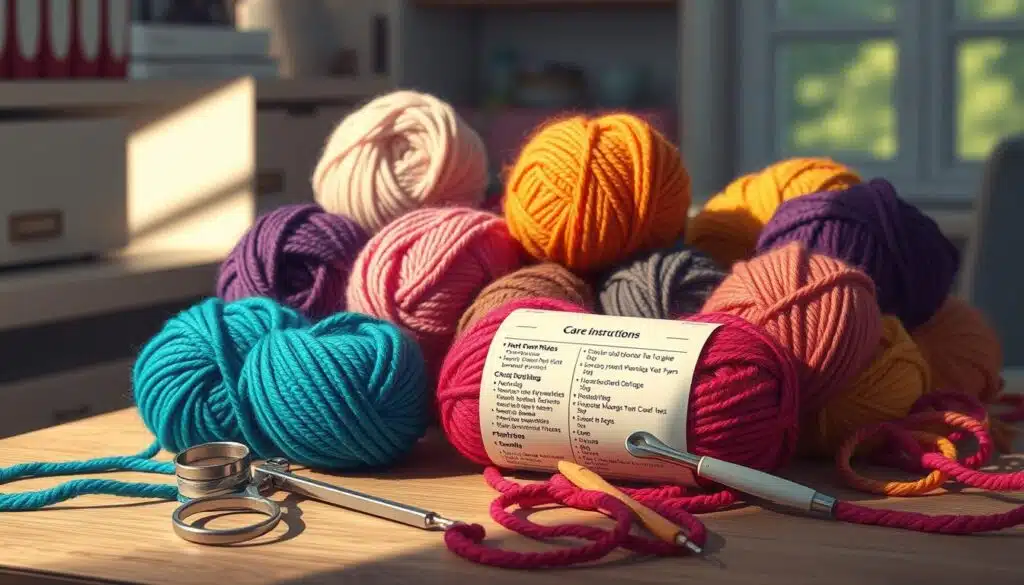
Understanding care symbols and washing tips
Check for a machine-wash icon or a hand-wash symbol. If it says machine wash, use cold water and a gentle cycle. This prevents the yarn from getting matted.
For hand washing, use a mild detergent like Woolite. Gently swirl the yarn without rubbing or wringing. Blot it with a towel and reshape while damp. These steps help keep the yarn’s texture and shine.
Drying and blocking velvet crochet items without crushing pile
High heat can flatten the yarn’s nap. So, avoid hot dryers. If allowed, tumble dry on low. Most of the time, lay items flat on a towel to dry. This keeps the pile fluffy and prevents color fading.
To block velvet crochet, use steam carefully or a damp cloth. Don’t press the pile flat. After blocking, gently pat and lift fibers with your fingers. This helps keep the pile fluffy.
Storage tips to keep yarn plush and dust-free
Store skeins in a cool, dry place. Avoid plastic that traps moisture. Use breathable bags, clear bins with silica packs, or labeled drawers. For moth protection, try cedar blocks or lavender sachets.
When storing velvet yarn, keep skeins loosely coiled. For finished items, fold gently and stack with acid-free tissue between layers. Good storage habits keep your projects looking great and ready to use or give.
Essential Tools and Hook Choices for Working with Velvet Yarn
Choose tools that keep your velvet plush and your projects stress-free. Start with an ergonomic aluminum hook if your hands get tired. Then, move to larger sizes for more loft.
Bulky yarn hooks are great because they give stitches room. This keeps the pile lofty, not crushed.
Best hook types and sizes for bulky velvet—why larger hooks often win
Velvet yarns are mostly bulky. Use hooks in the K to T range, depending on the skein. Larger hooks make each stitch stand proud.
This means you can crochet faster and get a softer drape.
Ergonomic aluminum hooks are perfect for beginners. They’re smooth, affordable, and gentle on wrists. Check product pages for size guidance; many brands list it in the Overview section.
Needles for finishing and weaving in ends on plush yarn
Finishing velvet needs the right needle. Use blunt, wide-eye tapestry needles that velvet lovers trust. They help weave ends without shredding fibers.
A needle with a large eye and rounded tip slides under the pile. This avoids stabbing it.
Keep different sizes of needles on hand. This way, you can choose the best fit for thin or chunky strands. For amigurumi or stuffed pieces, a curved darning needle is helpful. It guides stuffing and seams without disturbing the pile.
Accessory suggestions: stitch markers, tapestry needles, and gentle blocking tools
Stitch markers and a soft tape measure make gauge checks easy. A digital row counter worn on a finger saves mental effort. Get a yarn bowl and crochet bag to prevent snagging.
Blocking velvet crochet needs a gentle touch. Use polyester-filled blocking mats and T-pins with soft heads. Avoid crushing the pile.
For a compact guide to supplies and suggested hooks for bulky yarn, check out Ganxxet’s supply notes via crochet supplies overview. It highlights Velvet Air Braided Cord and matching tools. This helps you choose the right hook with confidence.
Techniques and Stitch Patterns That Shine with Velvet Yarn
You want your velvet projects to look lush and keep their plush feel. Start simple. Basic stitches let the pile and color sing without competing textures. Use single crochet velvet or half double crochet for edges, seams, and fabrics that need a clean, dense finish.
Choose textured patterns carefully. Some textured velvet stitches add structure without flattening the pile. Raised ridges, linen stitch adaptations, and spaced bobbles can create interest while keeping loft. Pick patterns that note bulky construction, such as those from Craftytop™ or similar brands, when you want structure in cushions or throws.
Control your tension velvet yarn to keep loops even and avoid snagging. Velvet can slip on hooks, so slow down your rhythm. Try slightly looser tension than with acrylic yarns and test gauge in a small swatch before you commit to a full blanket.
When a stitch pattern calls for strong definition, use single crochet velvet rows as a border or anchor. That gives crisp edges and helps textured velvet stitches read clearly. For pattern inspiration and stitch diagrams, consult the stitch guide on crochet stitch guide to match stitches to your yarn weight.
Keep ends tidy with a blunt tapestry needle from Clover or Boye to weave through plush fabric. Work with larger hooks recommended on the label to avoid crushing the pile. If a pattern looks fussy, swap to a simpler textured velvet stitch to preserve the velvety finish.
| Use Case | Recommended Stitch | Why It Works |
|---|---|---|
| Cozy blanket | Half double crochet rows | Fast coverage, shows pile, keeps warmth without heavy texture |
| Decorative cushion | Raised ridge alternating with single crochet velvet | Adds structure while preserving plush face |
| Wearable accessories | Single crochet velvet with folded hem | Durable edge that resists stretching and shows color |
| Textured throw | Linen-style textured velvet stitches | Subtle grid that keeps pile upright and shapes well |
| Small amigurumi | Tight single crochet velvet | Dense fabric hides stuffing and resists snagging |
Troubleshooting Common Issues with Velvet Yarn
Working with plush velvet can feel like magic until a loop slips or the pile worms. This guide helps keep your project neat and your patience intact.
Dealing with splitting, snagging, and uneven loops
Velvet fibers can hide splits or snags until they show as holes. Use a bit more tension and try a smaller hook to control stitches. Pull loops a bit tighter to avoid tunneling.
For stubborn snags, gently tease the pile back with a blunt tapestry needle. This avoids cutting fibers. Tips for working with Bernat Velvet offer care reminders to keep the plush look.
Fixing dropped stitches and invisible repairs in plush fabric
Finding a dropped stitch in velvet is like finding a hidden trapdoor. Unclip the strand slowly and replace the loop directly on the hook. Work row by row upward when needed and weave ends through multiple rows to lock them in.
For neat, invisible repairs, use longer tails and a sturdy yarn needle to weave back and forth. If a small hole remains, insert a few secure stitches around it. For stepwise guidance on common fixes, see fix knitting mistakes, which apply well to crochet repairs.
When to frog and when to embrace the squish despite imperfections
You’ll face the choice to frog velvet yarn or live with slight flaws. Frog velvet yarn when tension errors are recent or when uneven loops affect fit and drape. Correcting a few rows early prevents worming later.
Accept minor imperfections when they sit deep in the pile and don’t change the garment’s shape. Velvet forgives texture flaws; a cozy scarf or cushion often gains charm from lived-in squish. For recurring issues, unclipping velvet yarn and reworking small sections prevents bigger headaches down the line.
Quick checklist:
- Maintain firmer tension and consider a smaller hook.
- Leave longer tails for weaving and secure ends in multiple directions.
- Unclip velvet yarn slowly when fixing drops; avoid cutting the pile.
- Frog velvet yarn early if stitches are loose in recent rows.
- Hand wash and lay flat to dry to reduce agitation and pile distortion.
Where to Buy Quality Velvet Yarn and What to Look For
You want plush results and smooth shopping. Start by scouting online marketplaces and specialty yarn shops. Look for wide velvet yarn colorways. Retail sites like The Velvet Yarn collection offer many options. They let you filter by color, price, availability, and type for quick comparison.
Check brand pages for clear specs. Both big names and small labels sell luxurious skeins. Velvet yarn brands differ in fiber content and care notes. Look for clear descriptions that mention pile height, hypoallergenic claims, and suggested hook sizes before you commit.
Pay attention to stock cues on product pages. Listings often show “Sold out” or give low-quantity warnings during seasonal runs. If a favorite shade disappears, sign up for velvet yarn restock alerts or note alternate colorways so your project keeps moving.
How to choose between options
- Filter by price and availability to spot bargains without sacrificing feel.
- Compare fiber mixes to match intended use—wearables versus home goods.
- Read customer notes for real-world feedback on shedding and drape.
Brands to consider
- Craftytop™ and similar specialty labels focus on bulky velvet yarn made for quick projects and gentle wear.
- Established mills often provide consistent dye lots and broader color ranges.
- Indie dyers may offer unique velvet yarn colorways that sell out fast but return on restock.
When to buy and when to wait
- Buy seasonal favorites early to avoid sold-out runs.
- Watch for restocks before switching to an alternate color.
- Use availability and price filters to find the best match for your budget.
| What to Check | Why It Matters | Action |
|---|---|---|
| Color range and dye lot info | Ensures consistent hue across large projects | Compare velvet yarn colorways and note lot numbers |
| Fiber content and care | Determines washability and suitability for wearables | Pick yarns that match your care willingness |
| Price per skein and shipping | Impacts total project cost | Filter by price and calculate shipping into budget |
| Stock status and restock alerts | Prevents mid-project shortages | Sign up for velvet yarn restock notices or buy extra skeins |
| Brand reputation | Predicts consistency and customer service | Compare velvet yarn brands and read reviews |
Project Ideas and Beginner-Friendly Patterns Using Velvet Yarn
You’re excited to start with velvet yarn patterns. These projects are quick, cozy, and perfect for beginners. With bulky yarn, you can make something special in just a few nights.
Quick starters are great for beginners. A simple scarf pattern is a good place to start. It’s fast and keeps you warm. Try making a seat pad or headband to practice stitches and techniques.
Intermediate builds offer more challenge and beauty. A blanket with waffle or basketweave stitches is a great next step. It teaches you about stitch repeats and adds a wow factor to your living room. Cushions are also a good choice, letting you play with colors and textures.
Yarn stores like Lion Brand and Bernat often have free patterns on their websites. Craftytop™ recommends bulky velvet for beginners, which is why there are so many patterns for it.
- Start small: one skein projects help you learn without commitment.
- Scale up: combine a few skeins for a velvet blanket pattern that crowns your living room.
- Mix stitches: simple ribbing plus a textured panel adds visual interest without frustration.
When searching for patterns, check yarn store websites like Yarnspirations and Joann. They have patterns that match the yarn’s weight. Downloadable PDFs and bundles usually include yardage, hook size, and substitution tips.
Keep a notebook for notes on gauge and skein numbers. This habit helps when you want to make a scarf or a blanket later.
Safety, Sustainability, and Care Considerations for Velvet Yarn
You want cozy, plush pieces that last and stay safe in your home. Always read the manufacturer’s fire safety tips before using blankets, cushions, or rugs near heat sources. Many yarn labels warn against using soft home décor near open flames. So, treat these warnings as your project’s first pattern note.
Fire-safe tips:
Place throws away from fireplaces and space heaters. Use cushion covers with zippers so you can remove and wash the shell without risking the inner foam when cleaning. Choose decorative spots that won’t trap heat around a thick pile.
Materials and health:
If you or someone in your household has sensitive skin, look for hypoallergenic velvet yarn. Brands like Bernat and Lion Brand offer synthetic microfibers that can be labeled as hypoallergenic velvet yarn. These fibers resist dust mites and shed less than some natural fibers.
Sustainability matters:
Check fiber origin and processing claims to find sustainable velvet yarn options. Some makers use recycled polyester or traceable viscose to lower environmental impact. Read labels and brand pages to verify certifications and responsible sourcing statements.
Care for long life:
Velvet yarn longevity depends on gentle handling. Wash on a delicate cycle or hand wash in cool water using mild detergent. Avoid wringing; press water out and lay flat to dry. Low-heat tumble drying can be used sparingly if the label allows.
Storage and maintenance:
Store finished items in breathable cotton bags to keep the pile plush and dust-free. Brush lightly with a soft-bristled brush to revive texture after storage or gentle washing. Repair snags promptly to prevent runs in plush fabric.
Use the chart below to compare quick care choices and their effects on softness, safety, sustainability, and expected life span.
| Care Choice | Effect on Softness | Impact on Safety | Relation to Sustainability | Velvet Yarn Longevity |
|---|---|---|---|---|
| Hand wash, cool water | Maintains pile and hand-feel | Reduces shrinkage that can expose fillers | Low energy use for small loads | High — preserves fibers and color |
| Delicate machine wash | Good when using garment bag | Safe if label allows; avoid high heat | Moderate — efficient for batches | Moderate — gentle cycles protect pile |
| Low-heat tumble dry | Can restore loft if used sparingly | Avoid near heating elements and foam | Higher energy use; balance with need | Moderate — overuse degrades fibers |
| Air dry flat | Best for preserving texture | Safer — no heat exposure | Most sustainable — no energy required | Very high — extends usable life |
| Storage in breathable bag | Keeps pile from matting | Prevents moisture buildup and mold | Neutral — depends on bag material | High — protects color and fibers |
Conclusion
If you enjoyed this crochet velvet yarn summary, remember the main point. Velvet yarn makes crochet projects feel luxurious with its soft texture and rich colors. Brands with many colors make it easy to find the perfect match for your home or clothes.
Choosing the right velvet yarn is important. Look at the weight, fiber, and care instructions. Craftytop™ Bulky Velvet Yarn and similar options are great for soft, warm, and hypoallergenic projects. Always check the product page for details to keep your project looking good after washing.
Before buying, make sure the yarn is available and the patterns match. Use tips like testing tension, choosing the right hook size, and gentle blocking to keep the yarn’s softness. For inspiration, check out easy crochet projects. With careful planning, your next project will be a cozy delight.
FAQ
What makes crochet velvet yarn feel so luxurious?
Velvet yarn’s softness comes from its dense pile and soft fibers like polyester or microfiber. This construction catches light, making stitches look rich and smooth. It feels decadent against your skin and adds a cozy look to finished pieces.
Which projects are best suited to velvet yarn?
Velvet yarn is perfect for cozy home and wearable items. Try making blankets, throws, scarves, cowls, plush pillows, rugs, and stuffed toys. Bulky velvet is great for quick, lofty blankets and chunky accessories.
How do I choose the right weight and fiber for my project?
Choose bulky or super-bulky yarn for fast, lofty projects. Use larger hooks to avoid crushing the pile. For hypoallergenic options, look for synthetic blends. Always check the product page or label for fiber content and care details.
What colors are commonly available in velvet yarn collections?
Velvet yarn collections often have a wide range of colors. You’ll find neutrals, pastels, and jewel tones. This makes it easy to match your décor or create bold, contrasting pieces.
How should I wash and dry velvet crochet items to protect the pile?
Always follow the yarn’s care symbols. Most velvet yarns prefer gentle washing and low-heat or air drying. Avoid aggressive agitation and high heat to keep the pile plush.
Can I block velvet crochet pieces without crushing the pile?
Yes, but skip heavy steam blocking. Use light shaping while damp and dry flat. If you must use steam, keep the iron several inches away and hover briefly. Use damp towels and weighted edges for gentle blocking.
What hook sizes and tools work best with velvet yarn?
Use larger hooks to preserve the pile’s loft. Ergonomic hooks are helpful with bulky strands. For finishing, use blunt tapestry needles and stitch markers that clip on.
Which stitches best showcase velvet yarn?
Simple stitches like single crochet and half double crochet are best. They let the velvet pile and color shine. Choose patterns that don’t compress the pile for a textured look.
How do I prevent splitting, snagging, or uneven loops when working with velvet?
Work with a relaxed grip and slightly larger hook. Smooth, steady motion is key. Avoid tugging and rotate the hook gently if the strand slips or splits.
What’s the best way to fix dropped stitches or repairs in plush velvet fabric?
Invisible repairs are possible but require care. Use a matching yarn tail and a blunt tapestry needle to reweave loops from the back. For large damaged areas, frogging and reworking might be cleaner.
When should I frog a velvet project instead of repairing it?
Frog when the damage affects structure or stitch count, or when repairs would be visible. Repair minor issues like one or two dropped stitches. For large mistakes, reworking preserves appearance and loft.
Where can I buy velvet yarn and find more than a handful of colors?
Look online or at specialty yarn shops with extensive collections. Some offer 29 or more colorways. Check product pages for availability and restock alerts to snag seasonal shades.
How do I compare brands and price points for velvet yarn?
Compare fiber content, gauge, color range, and care instructions. Look for plushness, hypoallergenic claims, and quick-project suitability. Use price and customer reviews to judge value. Check SKU details and product pages for full technical info.
Are there beginner-friendly patterns for velvet yarn?
Yes, there are many beginner-friendly patterns. Try quick scarves, chunky headbands, seat pads, and simple scarves or throws. Patterns using single crochet or half double stitches are fast and easy.
What safety and sustainability factors should I consider?
Follow manufacturer guidance on safe uses for home items. Avoid high-heat zones and follow fire-safety recommendations. If sustainability matters, check fiber origin and manufacturing notes. Many velvet yarns are synthetic and hypoallergenic, but environmental impact varies by brand.
How do I store velvet yarn and finished pieces so they stay plush?
Store skeins and finished items in breathable, dry containers away from direct sunlight. Use cotton storage bags or sealed bins with silica packs to reduce dampness. Fold blankets loosely or roll them to prevent creases in the pile.