
Knitting durable socks is a big commitment. A simple sock can take about eight hours to make. More complex designs or larger sizes can take up to ten hours.
When you spend 16–20 hours on a pair, using quality yarn, you want them to last. Techniques that increase sock longevity can save you from reknitting later.
Socks face a lot of wear and tear. They get damaged by walking, shoe friction, pets, and rough floors. That’s why making durable socks is more important than just their looks.
This article offers practical tips for making long-lasting socks. You’ll learn about yarn choice, gauge, reinforcement, construction, and laundering. These tips will help you create socks that last, not just look good.
Discover how to pick the right fibers, stitch density, and reinforcement for everyday use. For a quick guide on durability and mending, check out this roundup are-knit-socks-durable. Also, see this guide for basic sock technique and fit sock knitting tips.
Key Takeaways
- Handknit socks take significant time—plan for 16–20 hours per pair when choosing materials.
- Durable sock knitting starts with yarn choice and proper gauge to resist abrasion.
- Reinforcement and construction choices matter more than added nylon percentage alone.
- Rotate pairs and follow gentle laundering to preserve sock longevity.
- Practical repairability, like choosing top-down construction, extends usable life.
Why knitting durable socks is worth the time and cost
You enjoy the sound of needles and the softness of wool. But you might wonder if making socks is worth it. The answer is yes, considering the materials, how they wear, and the benefits of lasting socks.
The real investment: time and materials
Making a simple pair of socks takes about eight hours. More complex designs or larger sizes can take up to ten hours. If you make more than one pair, the time adds up fast.
Choosing the right yarn affects the cost and effort. High-quality yarns may be pricier but last longer. They resist pilling and wear better. You can find more about this at Darn Tough’s price discussion.
Socks endure a lot of abuse
Sock bottoms and heels face daily wear from shoes and carpets. Toes get rubbed and sometimes hit rough toenails. Pets, rough floors, and constant movement also damage socks.
Wearing one pair every day speeds up wear. Rotating your socks can make each pair last longer. This saves you time and money in the long run.
Emotional and practical payoffs
Durable handknit socks offer comfort, a perfect fit, and long life. Choosing strong yarn and good construction means fewer reknits. This saves you time over time.
Long-lasting socks mean fewer replacements, better warmth, and a better fit. This trade-off—paying more upfront for lasting value—is worth it for many knitters.
Choosing yarn for longevity and performance
Choose yarn that’s durable for long-lasting socks. A mix of wool and nylon in the 80/20 or 75/25 ratio is great. It’s strong, keeps shape, and resists wear without feeling too thick.
Fiber content that stands up to wear
Fibers that don’t pill and can handle friction are key. Wool and nylon together offer the best of both worlds. If you prefer natural fibers, silk or mohair can add strength without adding bulk.
Breed and staple length matter
Long-staple wools make fabric more durable. Blue-Faced Leicester socks are a great example. They’re shiny and strong, unlike some merinos. Romney, Wensleydale, and Polwarth are also good for durability over softness.
Plies and twist for abrasion resistance
Avoid single-ply yarns for socks. Instead, go for multi-ply yarns with a firm twist. This helps prevent pilling and wear. Look for high-twist or four-ply yarns for denser, longer-lasting socks.
Superwash vs. non-superwash considerations
Superwash yarn is easy to wash in machines. It changes how the yarn feels and dyes, but doesn’t always mean it’s less durable. Choose based on your washing habits, environmental views, and how the yarn feels.
| Criteria | Best for | Why it lasts | Example |
|---|---|---|---|
| Wool nylon blend (80/20) | Everyday socks | Nylon adds strength and shape retention | Commercial sock lines and many indie dyers |
| Blue-Faced Leicester | Keeps sheen with sturdiness | Long staple gives abrasion resistance | Blue-Faced Leicester socks in 4-ply |
| High-twist, multi-ply | Heavy-use footwear | Firm twist reduces pilling and wear | Yarns labeled high-twist or 4-ply |
| Superwash sock yarn | Busy households, machine wash | Convenience with similar wear when chosen well | Machine-washable sock lines from major brands |
| Silk or mohair reinforcement | Reinforced heels and toes | Thin strand adds tensile strength without bulk | Laceweight silk or mohair carried along |
Needle size and gauge strategies for durable fabric
Choosing the right needle size for socks is key. A small change in needle size can affect how the fabric feels and lasts. You want a sock that’s dense and doesn’t get stiff from daily wear.
Make a denser fabric by going down a needle size
Try dropping one needle size from what the pattern suggests. You’ll see your stitches get firmer right away. Many patterns suggest US #2 (2.75 mm) needles, but some knitters prefer US #1–1.5 (2.25–2.5 mm) or even US #0 (2.0 mm) for more durability.
Using a smaller needle size helps close gaps and reduces snagging. It also makes the fabric more compact and resistant to wear.
Target stitches per inch for durability
Match your yarn with a stitches per inch goal. For fingering weight, aim for about 8 stitches per inch. DK weight yarns should be around 6–7 stitches per inch. Don’t go over 9–10 stitches per inch unless you prefer stiff fabric.
High stitch counts can make the fabric stiff but may not add much durability.
Testing gauge under stretch
Test your gauge by stretching the swatch a bit and rubbing the purl side. It should feel even and compact, without bumps or gaps. If you see bumps when stretched, your gauge is too loose and the fabric will wear out faster.
Practical tip: going down one needle size, like from 2.5 mm to 2.25 mm, can make a big difference. It can make your socks firmer and more even before you change yarn or pattern. It’s a simple way to make your socks last longer.
Reinforcing high-wear zones
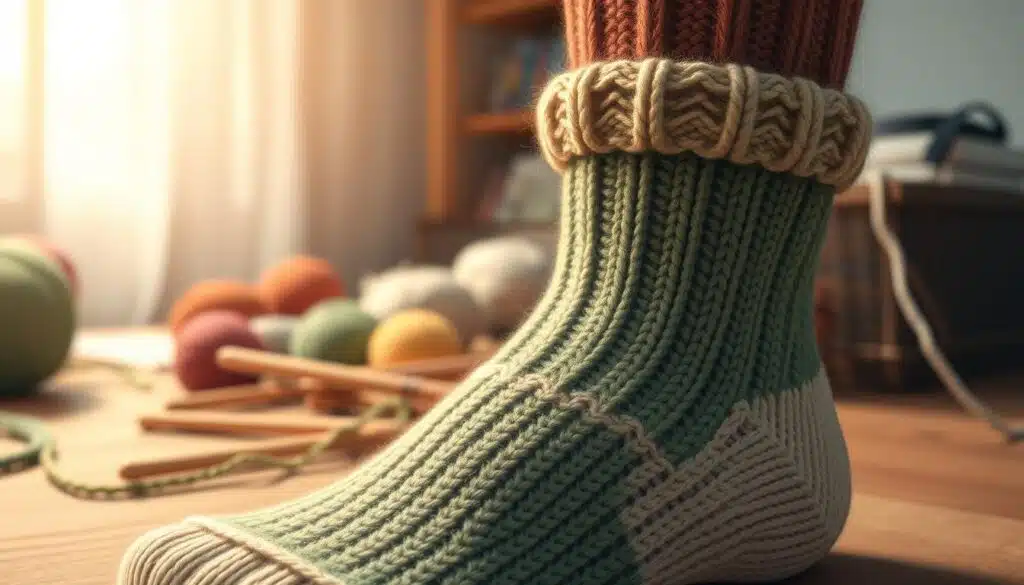
Wear and tear often happens in the same spots: the heel, the ball of the foot, and the toes. Look for thinning, pilling, or shiny spots to know where to reinforce. Regular checks can help you fix problems before they get worse.
Common wear points to inspect
Start by checking the heel flap and the turn area. These spots get a lot of friction from walking or moving in shoes. Next, examine the ball of the foot for wear from pressure and sliding. Don’t forget to look at the toe tips for thinning from nail rubbing or tight shoes.
Mark thin spots with a stitch marker. This way, you can easily find them when it’s time to mend or reinforce.
When to use reinforcement thread
Use sock reinforcement thread for extra strength without changing the yarn’s thickness. A fine thread or a laceweight yarn held with the working yarn adds density to heels and toes. Avoid sewing thread or non-yarn threads as they can damage the fibers and shorten the sock’s life.
Reinforcement thread is better than slip-stitch for changing stitch counts during heel turns or in afterthought toes. Use it to prevent wear or after several seasons of use.
When stitch-pattern reinforcement is best
Slip-stitch patterns like heel stitch and eye of partridge make the fabric thicker and more resistant to wear. They’re great for flap-and-gusset and square heels because they add thickness without extra thread. You can also extend the pattern into the heel turn on square heels for seamless protection.
But, pattern reinforcement isn’t as good for areas that change stitch counts often or for large areas. If you need to reinforce a big area, think about changing the yarn or making the fabric thicker before relying on patterns alone.
Pre-darning for larger high-wear areas
For thinning in the ball of the foot or toe tops, try pre-darning with duplicate stitch. It creates a neat, lasting patch. Pre-darning thickens the fabric in place and is easier than fixing a hole. Use yarn that matches the original sock’s color and elasticity.
For more on combining these methods and deciding when to use one over another, check out this guide: techniques for making socks last.
| High-wear zone | Best reinforcement | Why it works | Limitations |
|---|---|---|---|
| Back of heel | Heel stitch or sock reinforcement thread | Creates dense fabric or adds hidden strength where friction peaks | Slip-stitch may be tricky on some short-row turns |
| Underside of heel (turn) | Eye of partridge or carried reinforcement | Double-layer feel from slip-stitch; thread fills gaps in variable counts | Carried thread better for changing stitch counts |
| Ball of foot | Pre-darning (duplicate stitch) | Thickens a targeted area without altering original construction | Time-consuming if large area needs coverage |
| Toe tips | Carried reinforcement thread or local duplicate stitch | Reinforcement thread preserves gauge; duplicate stitch rebuilds worn fabric | Afterthought toes may limit slip-stitch options |
Construction choices that boost durability
Choosing the right construction can make a sock last longer. Decisions on heel type, layers, and layout affect wear and repair ease.
The flap-and-gusset heel offers a sturdy, shaped cup that withstands rubbing. Adding a reinforced flap with Heel Stitch or Eye of Partridge makes it even more durable. This design is great for a classic fit and tidy shaping.
Square heel socks are also durable. They let you add extra material to the heel turn without affecting fit. This extra material reduces hotspots and spreads stress evenly.
For easy repairs, consider an afterthought or forethought heel. An afterthought heel allows you to fix just the damaged part, keeping the rest intact. Top-down socks are also good for quick fixes, making them a smart choice for those who mend often.
Slip-stitch techniques create dense fabric in high-wear areas while keeping other parts light. A double-layer heel or folded sole adds extra protection where needed. Some knitters use both slip-stitch and double-layer heel for maximum durability without using too much yarn.
Layout is key to managing stress. Negative ease, a firm gauge, and a well-fitting heel and toe reduce movement. Avoid bulky joins or seams in friction areas. A balanced layout spreads pressure evenly, making the sock last longer.
| Construction Choice | Primary Benefit | Repairability | Best Use |
|---|---|---|---|
| Flap-and-gusset heel | Shaped fit, strong heel cup | Moderate — can reknit heel but more shaping required | Everyday and hiking socks needing durable heel |
| Square heel socks | Easy extension of reinforcement into turn | Moderate — simpler reshaping than flap | Socks where targeted reinforcement is desired |
| Afterthought heel | Excellent targeted repair; simple replacement | High — remove and reknit only the heel | Projects intended for long-term mendability |
| Slip-stitch reinforcement | Dense abrasion-resistant fabric without full double layers | High — localized patterning is easy to fix | High-wear zones like sole, toe, and heel |
| Double-layer heel | Maximum protection at critical point | Moderate — thicker to rework but long-lived | Work socks, heavy boots, and long hikes |
Practical reinforcement methods and recipes
Want to stop holes before they start? Try small, easy tricks that fit into your sock-making routine. Use a fine thread in high-wear spots, add special stitches to heel flaps, and fix thin areas early. These steps make your socks last longer and save yarn.
How to carry reinforcement thread without changing gauge
Choose a fine silk, mohair, or sock reinforcement that matches your yarn. Hold the extra thread with the main yarn. This way, it won’t change the fabric’s thickness.
Keep the tension even in every round. Uneven tension can make the fabric ripple or tighten. Avoid using sewing thread or heavy polyester as they can damage the yarn and shorten the sock’s life.
Examples of reinforcement stitch patterns
The Heel Stitch is simple and works well on flap heels. On the right side: slip 1 purlwise with yarn in back, knit 1 across the row. On the wrong side: slip 1 purlwise with yarn in front, purl to end. This creates a dense fabric under the heel.
The eye of partridge pattern adds cushion without bulk. It uses slipped stitches for a pebbled texture. Use it on the flap and extend it a few rounds into the turn for best results.
For a quick guide on stitch impact, see the linked brioche resource: brioche stitch primer.
Pre-darning technique walk-through
Find thin spots at the ball of foot or toe. Work on a flat surface or keep the sock on the foot. Choose a yarn close to the original in fiber and color.
Use duplicate stitch row by row, following the original knit paths. Fill the thin area with dense passes until it feels reinforced. Pre-darning socks early is easier than fixing a hole later and uses less yarn than carrying reinforcement across an entire sole.
| Situation | Recommended reinforcement | How long to work it |
|---|---|---|
| Heel flap wear | Carry laceweight silk/mohair with working yarn; use Heel Stitch | Flap rows and 4–6 rounds into heel turn |
| Square heel bottom | Extend eye of partridge pattern into the heel turn | Throughout flap and turn for continuous coverage |
| Ball of foot thinning | Pre-darning socks with duplicate stitch using similar yarn | 1–2 inch patch before heavy wear |
| Toe reinforcement | Hold fine nylon or laceweight with main yarn for 10–20 rounds | From decreases through 10–20 rounds |
| All-over lightweight reinforcement | Fine reinforcement strand matched to fiber blend | Only when extra yardage is available; targeted areas preferred |
For a concise visual guide to padding and texture, refer to Swiss darning tutorials. They show stitch-by-stitch texture. Use heel stitch instructions or the eye of partridge pattern where you need direction and density. When you combine careful carrying with timely pre-darning, your socks will outlast many store-bought pairs.
Care and laundering to preserve knit socks
Looking after your handknit socks is easy. You don’t need to fuss over them. Just a few simple steps can keep them looking great and feeling soft.
Best washing practices
Washing handknit socks requires care. Use cool or lukewarm water and a mild detergent for wool. Avoid hot water and harsh agitation to prevent damage.
If your yarn is superwash, you can machine wash it. Use a mesh bag and a gentle cycle. This method helps keep your socks looking good.
Drying and storage tips
Don’t dry your socks in the machine. It can shrink them and lose their stretch. Instead, lay them flat to dry and shape them while they’re damp.
Store your socks in a cool, dry place. Use cedar or lavender sachets to keep moths away. Rotating your socks helps them last longer.
Repair and maintenance to extend life
Regularly check your socks for wear and tear. Fix small holes and reinforce weak spots early. This makes repairs easier and less noticeable.
Choose yarns and patterns that are easy to mend. Socks with afterthought heels or top-down construction are great for quick fixes. This way, your socks will last longer.
When handknit socks might not be the right tool
You love your needles, but there are moments when you should pause. If you walk 10–15 miles a day, your shoes and toenails might cause constant friction. This can wear out handknit socks faster than they can handle.
Handknit socks are great for comfort and fit, but they have limits. If the cost of yarn and your time adds up quickly, it might be cheaper to buy new socks. This is true for situations where handknit socks can’t handle ultra-abusive use.
Set realistic expectations for how long your socks will last. Knit them tightly with durable yarn and add reinforcement. This way, they can last as long as many commercial socks. But remember, they will need rotation and repairs.
Save handknit socks for everyday wear, commuting, office use, light hikes, or cozy home lounging. For tougher activities, look for hard-wearing footwear alternatives. Brands like Darn Tough, Smartwool performance lines, or heavy-duty military and work socks are good options.
If you want practical tips for knitting tougher socks and managing wear, check out this sock knitting guide. It offers advice on when to knit and when to choose a performance-ready commercial pair.
knitting durable socks
You have all the pieces now. A quick recap helps you move from notes to a wearable pair without guesswork. Use the checklist below to lock in yarn choice, gauge, reinforcement, and care so your next project lives longer and feels better on the foot.
Putting it all together: a quick durable-sock checklist
- Yarn: choose a multi-ply, firmly-twisted fingering weight with about 75–80% wool and 20–25% nylon for resilience.
- Breed or label: prefer long-staple fibers like Bluefaced Leicester, Romney, Wensleydale, or Polwarth over soft merino singles.
- Needles & gauge: go down a size; aim for roughly 8 stitches per inch. For most knitters that means US #1–1.5 (2.25–2.5 mm).
- Reinforcement: add slip-stitch patterns or carry a fine reinforcement thread through heels and toes.
- Construction: pick top-down for easy frogging or afterthought heels for replaceability; square heels take reinforcement well.
- Care: wash gently in a mesh bag or hand wash, air dry flat, and rotate pairs to spread wear.
Sample build for a long-lasting pair
Follow this knit durable socks recipe when you want a dependable, wearable outcome.
- Yarn: 100 g fingering-weight, 80% wool/20% nylon, high-twist; or one strand fingering plus one laceweight silk/mohair for extra warmth and subtle reinforcement.
- Needles: US #1–1.5 circulars or DPNs, depending on your preferred method for small circumferences.
- Gauge: target ~8 sts/in in stockinette when slightly stretched; test and rub the purl side to judge compactness.
- Heel: use a flap-and-gusset with Heel Stitch or Eye of Partridge across the flap and a square turn, or work an afterthought heel for easy replacement.
- Reinforcement: hold a fine silk or commercial reinforcement thread with the main yarn on heel and toe rounds; pre-darn the ball of foot if you spot thinning.
Maintenance plan for longevity
Create a simple sock maintenance plan and stick to it. Small habits save you time and yarn later.
- Rotate: wear several pairs in turn to prevent concentrated abrasion.
- Inspect: check every few wears for pilling or thinning and pre-darn at the first sign of wear.
- Wash & dry: use a gentle machine cycle in a mesh bag or hand wash. Never tumble dry; air dry flat.
- Supply shelf: keep spare reinforcement thread and a matching skein for quick darning and toes.
Conclusion
Small choices can make a big difference. Choose a high-twist, multi-ply yarn and drop a needle size for a tighter fit. Add a fine reinforcement strand where the sole rubs. These steps make socks more durable without making them too big.
It’s all about finding the right balance. You want your socks to be comfortable and your feet to be happy. This is the key to making durable socks.
Durable handknit socks require smart choices. More reinforcement and a denser fabric take more time but feel slightly bulkier. Choose the right techniques based on how you use your socks.
If you walk a lot, go for heavy-duty socks. If you’re home most of the time, softness is more important. Use the checklist, sample build, and maintenance plan to keep your socks in good shape.
Maintenance is part of the project. Wash them gently, mend them quickly, and rotate them seasonally. This will make them last longer.
If you need a quick refresher or new tips, check out this sock knitting tips guide. Wear your handknit socks with pride. Thoughtful materials, a tighter gauge, targeted reinforcement, and care make them last longer.
FAQ
Why is knitting durable socks worth the time and cost?
Knitting socks is a big investment. It takes about 8 hours for a simple sock and up to 10 hours for patterned ones. You also spend money on special yarns.
Choosing the right yarn and making the fabric tight makes them last longer. This means you won’t need to replace them as often. It also keeps your feet comfortable and well-fitted.
How much abuse do socks actually endure?
Socks get a lot of wear and tear. They rub against shoe soles, carpets, and floors. They also face damage from pet claws and rough floors.
The heel, back of the heel, ball of the foot, and toe tips are the most worn-out parts. That’s why picking durable yarns and making them tight is key.
What fiber content should I choose for long-lasting socks?
Go for wool/nylon blends like 75/25 or 80/20. The nylon makes them stronger and more durable. If you prefer natural fibers, a thin strand of silk or mohair can add strength.
Do breed and staple length really affect durability?
Yes, they do. Longer-staple wools like BFL, Romney, and Wensleydale are more durable. BFL is known for its strength and shine. Avoid very fine merino singles for heavy use.
How important are plies and twist?
Very important. Multi-ply yarns with a firm twist last longer. Look for four-ply yarns or brands with high twist for a denser fabric.
Should I choose superwash or non-superwash yarn?
It depends on your preferences. Superwash yarns are easy to wash and less likely to shrink. Non-superwash yarns need gentler care but offer unique textures and colors.
How can I make the fabric denser and more durable?
Use a smaller needle size to make the fabric tighter. Many knitters find US #1–1.5 or even US #0 works better than the recommended US #2. A denser fabric is less likely to pill and lasts longer.
What stitch gauge should I aim for?
For fingering-weight socks, aim for about 8 stitches per inch. For thicker yarns like DK, go for 6–7 stitches per inch. Avoid making the fabric too tight, as it can be uncomfortable.
How should I test gauge for socks?
Test gauge while stretching the fabric a bit. Rub the purl side gently. If it feels solid and not bumpy, it’s good. Adjust your needle size as needed.
Which parts of a sock should I inspect and reinforce first?
Check the heel, ball of the foot, and toe tips for thinning or pilling. Reinforce these areas early to prevent holes. Darning or reinforcing these spots can help a lot.
When should I use reinforcement thread?
Use reinforcement thread for specific strengthening of heels or toes. It’s best for areas with changing stitch counts or short-row turns. Hold a fine thread with your main yarn for 10–20 rounds.
When is stitch-pattern reinforcement better than carrying a thread?
Use stitch patterns like Heel Stitch or Eye of Partridge for flap-and-gusset or square heels. They create a denser fabric without extra thread. Patterns are less useful for short-row or afterthought heels.
What is pre-darning and when should I use it?
Pre-darning thickens fabric in wear zones like the ball of the foot. It’s done row-by-row to mimic original stitches. It’s more effective at the first signs of thinning.
Which heel constructions offer the best durability and repairability?
Flap-and-gusset heels with reinforced flaps are very durable. Square heels also work well for reinforcement. Afterthought or forethought heels are easy to repair. Top-down socks are great for quick fixes.
How do I maintain and repair socks to get the most life out of them?
Check socks often for pilling or thinning. Pre-darn thin spots early. Keep spare thread and yarn for quick fixes. Afterthought heels and top-down builds make repairs easier.
Are there situations where handknit socks aren’t practical?
Yes, for extreme wear or rough toenails, commercial socks might be better. They can handle more abuse than handknits.
How do handknit socks compare to mass-produced socks in durability and cost?
Handknit socks can be as durable as commercial ones if made right. But they cost more in time and yarn. Choose based on your lifestyle and needs.
What’s a quick checklist to knit durable socks?
Choose a 4-ply or high-twist yarn, like 75–80% wool with 20–25% nylon. Use long-staple wools and drop a needle size. Reinforce heels and toes with patterns or thread. Rotate and wash gently.
What does a sample long-lasting sock build look like?
Use 100 g fingering-weight yarn, 80/20 wool/nylon, 4-ply or high-twist. Needles are US #1–1.5. Aim for ~8 sts/in. Use flap-and-gusset or square heels with reinforcement. Reinforce with laceweight thread at heel and toe.
What maintenance plan ensures the longest life for handknit socks?
Rotate pairs to avoid daily wear. Inspect and pre-darn thin spots early. Wash by hand or in a mesh bag for superwash yarns. Air-dry flat and store in a cool, dry place. Keep spare thread and yarn for repairs.