
You have a basket of leftover yarn and a busy schedule. This guide is for you. It shows how to make useful items from leftover yarn without feeling overwhelmed.
Learn to make gifts, kitchen helpers, and charity knits that are easy to carry. We’ll share tips from trusted brands like Knit Picks Felici and Lorna’s Laces. You’ll find projects that match what you already have.
Expect quick projects, yarn-saving tips, and hacks for self-striping yarn. This section is witty, useful, and focused on results. Whether for holiday gifts or charity, these ideas will help you use up yarn and free up space.
Key Takeaways
- You can turn partial skeins into practical projects that fit busy schedules.
- Brands like Knit Picks, Lorna’s Laces, and Schachenmayr Catania guide yarn choices for best results.
- Scrap yarn projects save money, reduce waste, and deliver quick creative satisfaction.
- Simple techniques tame self-striping yarn and make stashbusting easier.
- This roadmap focuses on small wins, charity knitting, and giftable outcomes.
Why You’ll Love Leftover Yarn Ideas: Save Money, Reduce Waste, and Spark Creativity
That jar of tiny scraps on your shelf is more than just clutter. Using leftover yarn is a smart way to make your favorite skeins last longer. It’s a practical way to save money and help the planet by reducing waste.
Environmental and budget benefits
Using scraps keeps fiber out of landfills and cuts demand for new production. Groups like the Craft Yarn Council and many makers promote this. It’s a way to make your crafting more sustainable and feel good about finishing your projects.
Even a little yarn can make a big difference. A small amount can turn into useful items or add a special touch to a project. This way, you can enjoy your yarn without breaking the bank.
Creative satisfaction and small-project wins
Quick projects give you a sense of accomplishment. You can make prayer squares, stress balls, amigurumi, or ornaments in no time. Each finished piece boosts your creativity and encourages you to try new things.
Using leftover yarn in creative ways is rewarding. You can mix different yarns for unique patterns or use small amounts for contrasting details. This approach helps you develop your design skills quickly.
How leftover projects fit into busy American life and holiday gifting
Leftover projects are perfect for busy times. You can work on them during commutes, TV nights, or weekends. They’re great for making gifts, helping charities, or participating in swaps.
For tips on sorting and using leftover yarn, check out this guide: stashbusting scrap yarn and leftovers.
| Scrap Size | Quick Uses | Why It Works |
|---|---|---|
| Partial skeins (50–100 g) | Full small garments, colorwork panels, borders | Enough yardage for structure, great for contrast or main color |
| Few yards (10–30 g) | Granny squares, magic balls, tassels, gift-wrap accents | Perfect for accents and modular builds that hide yardage limits |
| Inches to a foot | Pompoms, embellishments, provisional cast-ons, lifelines | Tiny scraps make durable notions and playful decorations |
| Mixed mini-skeins | Striped shawls, scrap blankets, amigurumi colorblocks | Visual interest from contrast; easy to manage with magic-ball technique |
Quick and Cozy: Small Knit Projects Perfect for Scraps
You’ve got leftovers and a desire for quick wins. Small knit projects turn odd balls into practical, giftable items in an evening. Choose projects that finish fast, wear well, and show off stripes or speckles without needing a full skein.
Washcloths and dishcloths are great for cotton and cotton-blend remnants like Schachenmayr Catania. These scrap yarn washcloths use simple stitch repeats, are machine washable, and follow many free dishcloth patterns on Ravelry and maker blogs. Knit a one-skein cloth in garter or seed stitch and you’ll have a useful kitchen item in an hour or two.
Boot toppers, wrist warmers, and small cowllets demand tiny yardages and make great gifts. Use DK scrap projects to play with stripes or color blocking. Brands such as Fibernymph Dye Works offer tweed DK that looks luxe in narrow accessories. A pair of wrist warmers can use just 20–40 yards per piece, letting you showcase 10–30 yard remnants with style.
Using DK and sport-weight leftovers effectively means stretching yardage with smarter choices. Use larger needles or a looser gauge to make DK scrap projects go farther. When a pattern asks for 30 yards but you have 23, knit the largest size and adjust stripe counts to use up more color. For chunkier results, hold two lighter-weight scraps together for a cozy, thrift-friendly finish.
Practical tips keep your projects tidy. Choose simple stitch patterns to avoid running out of yarn mid-texture. For dishcloth patterns, pick ones that work in multiples of a small stitch repeat so you can change size without ripping. Track yardage as you go and embrace mismatched stripes: odd skeins create the best personality in small knit projects.
Amigurumi and Tiny Toys: Turn Scraps into Adorable Gifts
You can make delightful little friends with odd balls of yarn, even when weights and colors don’t match. Pick forgiving designs and focus on charm. Tiny wins like ornaments or stocking stuffers come together fast and feel special.
Choosing patterns that tolerate mixed yarns
Look for patterns with gauge ranges or notes that say adjustments are fine. Many Lalylala patterns and Mochimochi Land designs accept tweaks. You can also find free community options on Ravelry that work too.
When a pattern lists worsted or DK, you can usually swap in scraps. Just change hook size and adjust stuffing for proper shape.
Colorplay and texture combos for whimsical results
Use a shiny cotton like Schachenmayr Catania for faces and sturdy tweed DK or novelty yarns for clothes. Contrasting textures hide mismatched skeins and make each toy look intentional. You can highlight a Felici accent for a hat or use boucle for a fuzzy mane.
Experiment with palettes so that bright spots draw the eye, not the joins.
Simple stuffing and finishing tips for durable toys
Choose polyester toy stuffing for a washable result and use safety eyes or embroidered eyes based on the recipient. Weave in tails with a Russian join or felted join when switching wool to prevent unraveling. Tuck knots into the stuffing and secure seams with backstitching to survive play and laundering.
For pattern ideas, search tiny toy patterns and mixed yarn amigurumi options. If you want a primer on working thin yarns into small projects, check a helpful guide at easy crochet projects with thin yarn for tips that translate well to scrap-sized amigurumi.
- Use small safety eyes or embroider for machine-safe pieces.
- Stuff firmly, then adjust to keep proportions sweet.
- Stitch joins and hides ends inside so toys last.
When you blend amigurumi scrap yarn into a plan, your stash becomes a source of joy. Tiny projects teach quick finishing skills and turn leftover bits into handmade gifts that people actually keep. Try a few lalylala patterns for seasonal inspiration and then make your own mix-and-match versions with pride.
Home Decor Mini-Makeovers with Leftover Yarn
Transform a basket of leftovers into stylish pieces. You can make small motifs, braid trims, or crochet dense rounds. This way, you can refresh your living room without spending much.
For a quick update, knit or crochet a patchwork cushion cover from tiny squares. Use cotton blends for pillows you can toss in the wash. Save wool for decorative cushions only. Join squares with a neat whipstitch or mattress stitch for a polished look.
Patchwork cushion covers and small pillow accents
Make each square a mini experiment in color and texture. Use a neutral center color to tie everything together. For inspiration, check out scrap yarn project ideas.
Mini wall hangings and boho ornaments
Mini wall hangings add personality to any space. Use macramé knots, short fringe, and crocheted motifs for a boho look. Make several small hangings for a curated gallery vibe.
Coasters, trivets, and lemon stress-ball style projects
Practical items are great for cotton or cotton-blend leftovers. Tight stitches make coasters and trivets durable and absorbent. Try a knitted lemon stress ball for a fun giveaway.
| Project | Best Yarn | Skill Level | Use |
|---|---|---|---|
| Patchwork Cushion Cover | Cotton blends or washable acrylic | Beginner to Intermediate | Decorative & washable accent |
| Mini Wall Hanging | Mixed scraps including novelty yarns | Beginner | Wall gallery or shelf decor |
| Coasters & Trivets | 100% cotton or cotton-blend | Beginner | Heat-resistant kitchen use |
| Lemon Stress Ball (pattern) | Soft worsted or DK cotton | Beginner | Stress awareness gifts, pocket toys |
| Small Tassel Ornaments | Varied scraps for color | Beginner | Tree, garland, or drawer pulls |
Charity Knitting: Donate Prayer Squares and Comfort Projects
You can make tiny scraps into meaningful gifts. Charity knitting is a simple way to help those in need. A stack of soft squares can bring comfort quickly.
What prayer squares are and why they matter
Prayer squares are small, usually four-inch knitted or crocheted squares. They come with a note, charm, or blessing. People give them to those in need, making them feel hugged.
Material recommendations for comfort projects
Use soft, washable fibers like cotton, acrylic, or cotton-blend yarns. These are good for washing and most allergies. Merino wool is okay if accepted. Avoid scratchy wools for chemo comfort knitting. Include tags with fiber content and care instructions.
Where to send donations and how to prepare them
Knits for Needs collects prayer squares and small comfort items. Local hospitals, hospice centers, and knitting groups also accept donations. Check their guidelines before sending. They often prefer a consistent size and secure ends.
Practical tips to make your donations ship-ready
Keep your squares the same size, about four inches. Securely weave in ends and press lightly if allowed. Label bundles with fiber and care information. For bulk donations, contact the organization for mailing directions.
Charity knitting is both grounding and efficient. Your leftovers become prayer squares that help others. Make a few each week to change lives.
Colorwork & Stripes: How to Blend Leftovers for Stylish Results
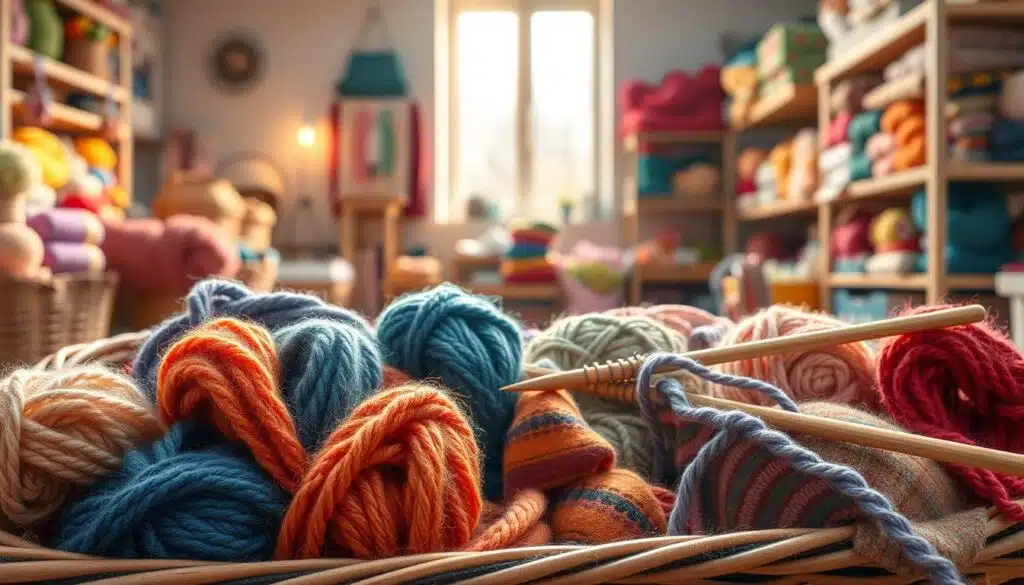
You can create stunning pieces from mismatched skeins without a big stash audit. Start by picking three to four colors that look good together. Then, swatch them briefly and decide on the pattern.
Choose between bold bands or subtle fades. Short-row stripes, narrow bands, and contrast edgings help you balance the look even when colors run out.
Simple stripe patterns that hide yardage limits
Stretch small leftovers with short repeats. Narrow stripes in garter or stockinette hide yardage limits. Modular methods like squares or motifs let you swap colors easily.
Contrast edgings or a bold stripe at the cuff or hem turn scarcity into a design choice. This is great for stash-buster blankets or mismatched socks.
Managing self-striping skeins and knots in production (tips from sock knitters)
Self-striping yarns can be both a blessing and a challenge. Many sock knitters wind yarn until the color repeats align. If repeats don’t match, rejoin yarn at a color sequence or place a knot at a seam.
Document starting points with photos or yarn cake markers. This helps match pairs across socks. Planning stripe starts saves time and prevents color jumps.
Planning palette combos when you have partial skeins
Stick to three or four tones for a cohesive look. Mix variegated scraps with solids and tweeds for depth. Swatch small blends to check color combinations.
For colorwork, try mosaic or slip-stitch patterns. They mimic stranded knitting without long floats. Short-row shaping also helps use every scrap.
For inspiration, check a list of stash-buster ideas that pairs well with small-color planning. These ideas help turn leftover yarn into beautiful pieces without the hassle of managing self-striping yarn.
Seasonal Leftover Projects: Holiday Ornaments and Costume Accessories
Small balls and leftover yarn can quickly become festive decorations. They’re perfect for tree ornaments, costume pieces, or quick gifts. These projects are great for busy people and make wonderful last-minute presents.
For Halloween, make mini pumpkins, bats, and witch hats. A set of coasters and a pumpkin ornament makes a great gift. Ravelry groups and maker newsletters offer free patterns and make-alongs for inspiration and prizes.
Quick Halloween and Christmas ornament ideas
Try making mini stockings, snowmen heads, or small toys. Crochet or knit small spheres and add faces with contrast stitching. Use a small button or bead for eyes to add personality without wasting yarn.
Doctor Who‑themed small knits and geeky make-along project ideas
Doctor Who knitting is perfect in small sizes: TARDIS ornaments, fez appliqués, and scarf trims. Join make-alongs for pattern swaps and deadlines. A TARDIS keychain from leftover blue yarn is a great stocking stuffer.
Pair a themed ornament with a practical item for a cohesive gift. Find patterns at leftover yarn resources that fit your stash and schedule.
Using tiny amounts of Felici or novelty yarns for festive accents
Novelty yarns like Knit Picks Felici are great for small details. Use them for stripes, tassels, or borders to add luxury to simple shapes. A narrow stripe on a mini stocking looks like a new skein and uses little yarn.
| Project | Typical Scrap Size | Best Use of Felici scrap accents |
|---|---|---|
| Mini pumpkin ornament | 10–20 yards worsted | Stem or rib stripes for depth |
| TARDIS keychain | 5–15 yards DK | Door details and tiny border |
| Snowman head ornament | 8–18 yards sport | Hat trim or scarf stripe |
| Tiny stocking set (pair + coaster) | 25–40 yards mixed weights | Top cuff stripe, tassel accent |
| Fez applique | 3–8 yards fingering | Pompom or tassel highlight |
These small projects keep your yarn stash moving and your gifts exciting. View tiny projects as chances to play with color and texture. Using novelty yarn as an accent adds festivity without using up your main yarn.
Yarn-Saving Techniques and Smart Pattern Choices
You can make the most of your yarn stash with a few smart tricks. Think like a maker who loves thriftiness and style. Changing needle size, pattern shape, and how you join pieces can save yarn and make your projects look great.
Maximizing yardage with larger needles and looser gauge
Try using bigger needles for a looser fabric. This way, you can cover more area with the same amount of yarn. Just remember to test a swatch first to ensure it fits right.
Choosing top-down or modular patterns to adjust for scrap lengths
Use patterns that let you stop when you run out of yarn. Top-down sweaters and shawls are great because you can control the length. Modular knitting, like granny squares, lets you add or remove pieces to fit your yarn.
When to combine weights (holding together vs. switching colors)
Combining two lighter yarns makes a thicker fabric. It’s perfect for using up small amounts of yarn. Switching colors is better for clear stripes or texture. Always knit a swatch first to check how it looks.
Real-world tips
- If a pattern needs 30 yards but you only have 23, go for a larger size or cut a stripe. Use a contrasting color for a nice finish.
- Use sock knitting tricks to join pieces cleanly. This hides the ends well.
- Label your partial skeins with yardage estimates. It helps you plan without guessing.
Storage, Organization, and Using That Mysterious Stash
Do you have a corner where single skeins and tangled yarn gather? With a few small habits, you can tame that pile. It can become useful and stop throwing away work that could be gifts or useful items. Start simple and build a system that fits your space and the projects you love.
Sorting by weight, color, and project
Sort yarn into basic weight groups: lace, fingering, sport, DK, worsted. Keep cotton separate for kitchen items so towels and dishcloths stay durable and safe. Within each weight, group by color family so you can see palette options at a glance.
Once you have weight and color sorted, set aside small bags labeled for likely uses like accessories, amigurumi, and home decor. This turns a chaotic pile into a planning drawer for quick makes.
Labeling and tracking yardage
Weigh scraps on a kitchen scale to get a usable yardage estimate. As a rule of thumb, 10 g of many DK tweeds equals about 23 yards, though fiber and twist change that number. Use a small notebook or a phone photo to track weights, fiber content, and yardage estimates.
Make it a habit to label scrap bags. If you prefer a digital route, snap a photo and attach it to notes on your phone. This way, you can quickly search for a leftover without dumping every bin. You can also find ideas and examples for common yardage conversions and packing setups.
Winding tiny yarn balls and storage choices
Turn loose scraps into center-pull mini cakes for tangle-free use. A small ball winder speeds the job, but you can hand-wind neat mini balls using a fork or a nostepinne. Winding tiny yarn balls makes colorwork and amigurumi so much easier.
Store finished mini cakes in clear bins, mason jars, or labeled zip bags. Use yarn bobbins for colorwork leftovers you plan to carry across rows. Keep a “ready-for-scraps” basket for projects that happily accept tiny bits, like prayer squares and coasters.
Practical community tips you’ll actually use
Photograph labels for quick reference when you’re hunting through stash. If you want an inspiration boost, check community collections and pattern roundups that show how small scraps become finished items. That nudge often turns a mystery pile into a curated mini-wardrobe of craftable ideas.
leftover yarn ideas
You’ve got a basket of colorful ends and a head full of plans. This roundup gives a quick route from stash to finished object. Pick a tiny charm or a cozy kitchen piece, match the yarn to the task, and dive into projects that reward fast.
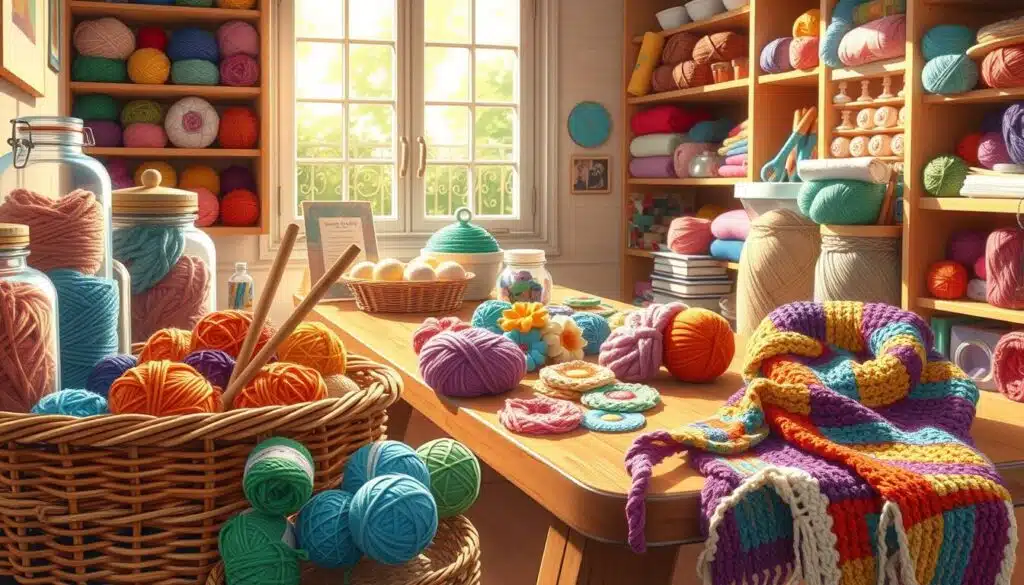
Below is a compact scrap yarn project list with more than twenty starters. Use it as a grab-and-go menu when you have five minutes or five evenings. Each idea links in your mind to patterns you can find as free knitting patterns or Ravelry scrap patterns.
- Prayer squares
- Dishcloths and washcloths
- Lemon stress balls
- Coasters and trivets
- Mini amigurumi: pierogi, snowman, stag
- Boot toppers
- Wrist warmers
- Small cowllets
- Mini wall hangings
- Patchwork cushion squares
- Fezzes
- TARDIS ornament
- Tiny stockings
- Headbands and scrunchies
- Bunting strands
- Yoga shawl trim accents
- Modular granny squares
- Sock stripes
- Mosaic scrap shawls
- Keychain charms and sewn appliqués
- Trim for larger projects
Pick projects by how much yarn you have. For tiny scraps under 10 g, choose charms, sewn accents, or mini amigurumi. If you have 10–30 g, try stripes, boot toppers, wrist warmers, or trims. For 30–75 g, small cowllets and child-size accessories work well.
Fiber matters. Use cotton for kitchen items that need heat resistance and absorbency. Choose acrylic or sturdy blends for charity donations that face heavy washing. Save soft merino or cotton-blend yarn for chemo-friendly donations and sensitive-skin gifts.
Hunt for patterns on Ravelry scrap patterns collections and maker blogs like Mochimochi Land and Tiny Owl Knits. Lion Brand and Craft Yarn Council have beginner-friendly free knitting patterns for items such as lemon stress balls. Join Ravelry groups, Facebook communities like Geeky Knitters Unite, and follow Lion Brand or Knit Picks on Instagram for fresh ideas and occasional giveaways.
| Scrap Size | Good Projects | Recommended Fibers | Why It Works |
|---|---|---|---|
| <10 g | Mini amigurumi, charms, sewn appliqués | Acrylic, cotton blend | Small yardage needs, forgiving gauges, fast gifts |
| 10–30 g | Wrist warmers, boot toppers, stripes, headbands | Acrylic, wool blends, cotton | Enough yardage for wearables, easy color changes |
| 30–75 g | Small cowllets, child accessories, modular squares | Merino blends, acrylic, cotton-blend | Sufficient length for shaped pieces, durable finishes |
| Kitchen stash | Dishcloths, trivets, lemon stress balls | 100% cotton | Heat resistance, absorbency, easy care |
| Charity-ready | Prayer squares, comfort hats, washcloths | Acrylic or easy-care blends | Machine washable, inexpensive, durable |
Use this scrap yarn project list as a living checklist. Track what you make and which free knitting patterns you favored. Build a Ravelry scrap patterns collection for your next make-along and watch tiny leftovers turn into gifts that matter.
Conclusion
You’ve learned how using leftover yarn can save money and reduce waste. Small projects like prayer squares, coasters, or amigurumi keychains can be made from scraps. These projects are great for gifts or adding warmth to your home.
For tips on using yarn scraps, start by organizing your stash. Sort it by weight and color, and label small balls. Choose a simple project and work on it for a few hours. This will help you see progress and stay motivated.
Joining community efforts can also help. Donate to groups like Knits for Needs, participate in Ravelry or Instagram make-alongs, and share your work with craft hashtags. This way, you can turn leftover yarn into something meaningful and support a greener craft habit.
FAQ
What are the best quick projects to make with leftover yarn?
Dishcloths, washcloths, coasters, and stress balls are great. They work well with cotton yarns like Schachenmayr Catania. For DK or sport-weight scraps, try small amigurumi, wrist warmers, boot toppers, or tiny ornaments.
These projects are quick to finish. They’re perfect for watching TV or during commutes.
How do I estimate yardage for tiny scraps?
Use a kitchen scale to weigh your scraps. Then, check an online yarn meter or guide. A good rule is 10 g ≈ 23 yards for DK tweeds.
Label your yarn bags with fiber, weight, and yards. This saves time and prevents waste.
Which fibers are best for charity knitting and prayer squares?
Choose soft, machine-washable fibers like cotton, acrylic, or cotton-blends. Merino is also ultra-soft. Avoid scratchy wools for chemo patients.
Many groups want 4″ finished squares. They also need sturdy joins and clear washing instructions.
Where can I donate prayer squares and small comfort items?
Knits for Needs is a well-known channel. Check their guidelines and Ravelry threads for addresses. Local hospitals, hospice groups, and knitting circles also accept donations.
Confirm size and fiber requirements first.
How can I hide yardage limits when I run out mid-project?
Use narrow stripes, contrast edgings, or short-row bands. Modular construction works too. Stripe strategically to balance the look.
Choose simple stitch patterns like garter or stockinette. This helps manage yarn use.
What’s the best way to handle production knots in self-striping yarns like Knit Picks Felici?
Wind the skein to align striping. Rejoin where color sequences match. Place knots deliberately at seams.
Document starting points and use short-row or mosaic techniques. This keeps color continuity.
Can I mix different weights or fibers in one project?
Yes, but with caution. Hold two lighter strands together for a thicker weight. Switch colors strategically to keep stitch definition.
Always swatch to check drape and tension. Avoid puckering.
How do I make tiny center-pull cakes or wind very small leftovers?
Use a small ball winder if you have one. Wind by hand into mini center-pull cakes. Store them in zip bags or clear bins.
Yarn bobbins are handy for colorwork leftovers and tiny stripes.
Which patterns tolerate mixed yarn weights and gauge variance for amigurumi?
Lalylala seasonal amigurumi and many Mochimochi Land designs are forgiving. Free Ravelry small-toy patterns often accept varied weights.
Adjust hook/needle size and stuffing approach. Simple faces and embroidered features hide mismatched yarns well.
Are cotton scraps good for kitchen items?
Absolutely. Cotton and cotton-blends like Schachenmayr Catania are ideal. They’re absorbent, heat-resistant, and machine-washable.
Use tight stitches for coasters and trivets. This protects surfaces and ensures durability.
How can I stretch DK or sport-weight leftovers to make accessories like boot toppers?
Use larger needles or a looser gauge to gain yardage. Knit the largest size in multi-size patterns to maximize striping and yardage use.
Holding two strands or adding open stitch patterns can also extend scrap usefulness.
What finishing tips make tiny toys or gifts durable and safe?
Use polyester stuffing and secure woven-in tails. Prefer embroidered eyes for items going to children or hospitals. Safety eyes are fine for decorative gifts.
Use a Russian join or felted join for wool. Tuck knots inside stuffing to avoid unraveling.
How should I sort and store my leftover yarn for easy use?
Sort by weight (lace, fingering, sport, DK, worsted), then by color family and intended project. Keep cotton separate for kitchen items.
Label bags with fiber content and yardage estimates. Keep a “ready-for-scraps” basket for small, immediate projects.
What are smart pattern choices when you only have scraps?
Pick modular or top-down patterns so you can stop when your yarn runs out. Granny squares, modular shawls, and Tessella-style pieces work well.
Simple textures (garter, stockinette, seed stitch) minimize wasted yarn on complex stitches.
Which novelty yarns or self-striping bits should I save for accents?
Save Knit Picks Felici, Lorna’s Laces bits, and other novelty skein leftovers. Use them for focal stripes, tassels, or borders.
Small amounts of variegated yarn punch up neutral projects without draining your stash.
How do I plan a cohesive palette with partial skeins?
Limit your working palette to 3–4 complementary colors and repeat them across pieces. Swatch blends to check harmony between tweeds, solids, and variegated scraps.
Photograph skeins or use cake markers to track pairings.
Can leftover yarn projects be good last-minute gifts?
Yes—mini ornaments, coasters, boot toppers, and tiny amigurumi are fast to make. Pair small sets (ornament + coaster) for affordable, thoughtful presents.
They’re perfect for advent countdowns or neighbor gifts.
Where can I find free patterns and community make-alongs?
Ravelry collections, maker blogs like Mochimochi Land and Tiny Owl Knits, Lion Brand’s free patterns, and Ravelry groups (Get Cozy! collections) are full of scrap-friendly ideas.
Look for themed MALs like Doctor Who make-alongs on Ravelry and Facebook groups such as Geeky Knitters Unite.
How do I choose projects based on scrap size?
Under 10 g: tiny toys, charms, sewn accents. 10–30 g: stripes, boot toppers, wrist warmers, trims. 30–75 g: small cowllets or child-size accessories.
Always match fiber function—cotton for kitchen, acrylic/blends for frequent-wash charity items.
Are prayer squares machine-washable and how big should they be?
Yes—most donation groups require machine-washable squares. They want a consistent finished size, commonly 4 inches.
Secure ends, include fiber content and washing instructions on a small tag. Avoid loose embellishments that could snag.
Any tips for using self-striping yarn when colors don’t align?
Wind until you find matching color sequences. Rejoin where the repeat aligns. Place mismatched joins at seams.
Short-row stripes and mosaic stitches let you work with the color runs without needing long contiguous yardage.
How can I make tiny holiday ornaments from leftovers?
Mini amigurumi (snowmen, tiny stockings), fezzes, TARDIS ornaments from Doctor Who MALs, and small pumpkins for Halloween are all scrap-friendly.
Use novelty yarns for eyes or trims and stuff lightly so ornaments stay flat and tree-friendly.
What’s a practical first step to get started turning my scraps into projects?
Sort a small pile by weight and color. Weigh a few scraps to estimate yardage. Pick one simple project—like a prayer square, coaster, or tiny amigurumi—to finish during a weekend or TV session.
Commit to one FO to build momentum.
How do I keep track of small-yardage projects across seasons and make-alongs?
Create a “scrap project” bag and a photo log of labels or cakes. Join Ravelry groups or Instagram hashtags to follow MALs and share progress.
Community threads often post scrap-friendly pattern roundups and current donation drives.