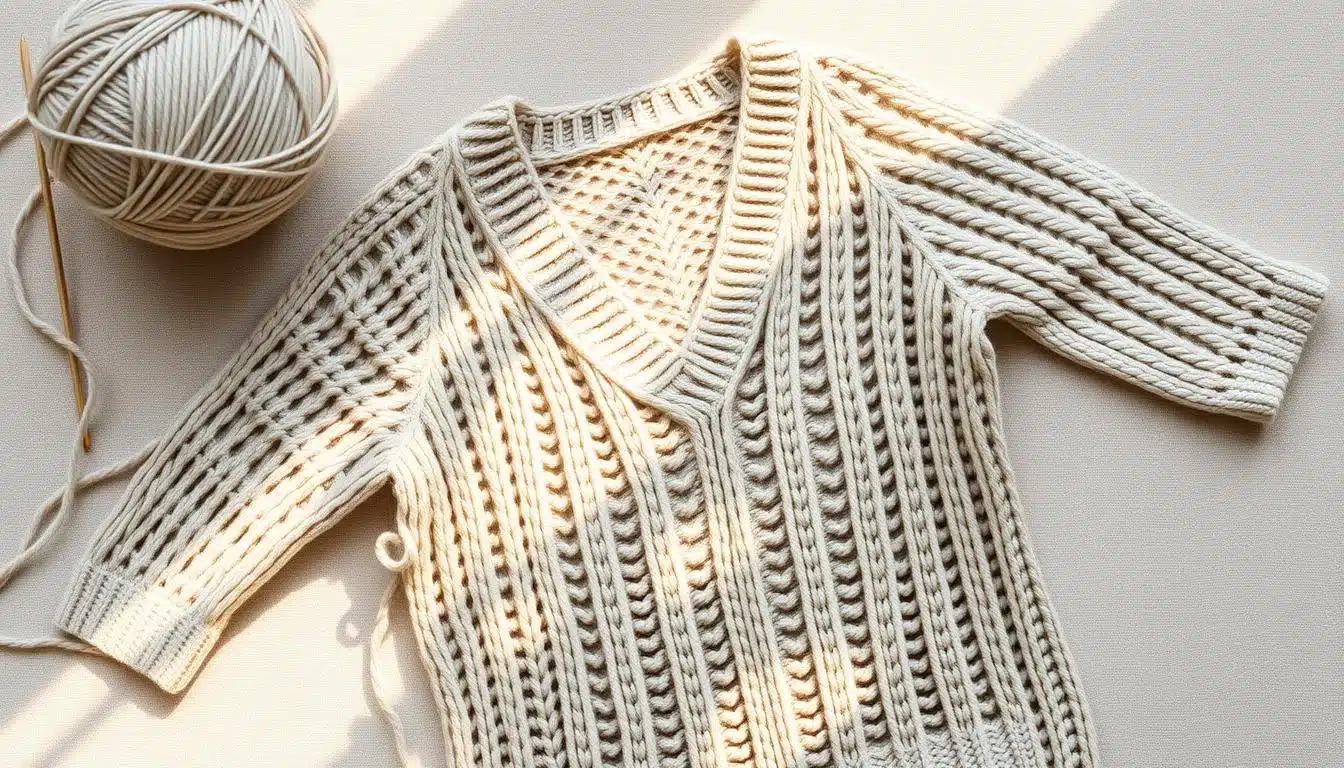
Get ready to see how a slipover vest can be your favorite craft and wardrobe staple. Knitted vest patterns are super versatile. You can make a light cotton one for summer or a warm merino or silk-mohair blend for fall.
A slipover vest is great because it’s quick to make and doesn’t have sleeves. This makes it perfect for a fast, rewarding project.
There are thousands of free and paid vest patterns online. You can find one that fits your style and skill level easily. Brands like Önling offer yarn suggestions and seasonal kits. They help you pick the right fibers for your vest.
All you need is some basic supplies like needles, yarn, stitch markers, scissors, and a yarn needle. Then, you’re all set to start.
Key Takeaways
- Slipover vests are versatile year-round pieces that knit up faster than full sweaters.
- Knitted vest patterns range from beginner-friendly to advanced, with many free vest patterns available online.
- Choosing the right yarn — cotton, merino, or blends — shapes the drape and seasonality of your slipover vest.
- Basic tools and accurate measurements set you up for a successful knit vest tutorial experience.
- Share finished projects with knitting communities for feedback and inspiration.
Why You’ll Love Knitting a Slipover Knitting Pattern
Knitting a slipover is a great choice. It combines usefulness with fashion in a unique way. You can show off different yarns and textures, and get something you can wear right away.
Slipovers are versatile. Use a cotton-linen mix for a light piece, or merino with silk mohair for warmth. This makes a slipover perfect for any season.
Knitting a slipover is fast and stylish. It has fewer parts than a sweater, so it’s quicker to make. You get a stylish piece without spending too much time.
For beginners, a slipover is a great start. It teaches you the basics of knitting without being too hard. Patterns like Timbo Vest help you learn as you go.
Slipovers also offer lots of design options. You can change the neckline, add buttons, or try different stitches. There are many patterns and kits to choose from, so you can find one that suits your taste.
| Why It Works | What You Gain | Best For |
|---|---|---|
| Fewer seams and no sleeves | Faster finish, neater drape | Quick knit project seekers |
| Fiber choice variety | Seasonal wearability and texture | Those building a versatile closet |
| Simple shaping and repeats | Skill-building with visible progress | Beginner knitting project learners |
| Wide pattern availability | Endless styling options | Experimenters and gift makers |
Are you ready to try? Knitting a slipover is rewarding. It’s practical, versatile, and teaches you important knitting skills.
Choosing the Right Slipover Knitting Pattern for Your Skill Level
Start by matching pattern features to your current skills for a smooth project. Many designers and brands label slipover pattern difficulty. Look for terms like “easy” or “advanced.” Check stitch counts, shaping notes, and special techniques before choosing yarn and needles.
For your first vest, choose simple shapes with minimal shaping and few seams. Beginner vest patterns like straight pullovers and open-front designs are great. They use basic knit and purl work, short rib hems, and clear photos from brands like Lion Brand or Brooklyn Tweed to guide you.
When you’re ready to level up, try intermediate knitting patterns. Expect V-necks, mock turtlenecks, and textured panels. These patterns teach neckline shaping and short rows. Patterns from independent designers on Ravelry or kits from Berroco offer helpful notes on stitch counts and substitutions.
If you’re looking for a challenge, explore advanced slipover techniques. Complex shaping, cable panels, lace inserts, and colorwork require careful reading and precise gauge. Designers like Quince & Co. and Rowan publish patterns with charts and blocking tips for experienced makers.
Use free pattern databases to filter by skill level, stitch type, and silhouette. Try a small upgrade each time, like a textured stitch or a deeper V-neck. Pattern providers often mark difficulty and offer yarn kits that help you move from beginner to advanced without guesswork.
Before starting, check the techniques list in any pattern. This quick read prevents surprises and saves time. Pace yourself, practice new stitches on a swatch, and let each finished vest build your confidence in tackling higher slipover pattern difficulty.
Essential Supplies and Tools for Your Slipover Project
Before you start knitting a slipover, make sure you have the right tools. You’ll need yarn, needles, stitch markers, scissors, and a yarn/tapestry needle. Check your pattern for the exact amount of yarn and any special tools you might need.
Yarn types and fiber choices for-seasonal wearing
When picking yarn for your slipover, think about the season and how it will drape. Cotton and linen blends are great for summer vests. For fall and winter, merino and lambswool are good choices because they’re warm but not too heavy. Silk or mohair blends add a nice sheen and softness for dressier looks.
Önling is a great example of how different yarn blends can change your project. Önling No 21 is perfect for summer with its cotton and linen blend. For a smooth fabric, try Önling No 4, made from organic merino. For something cozy, Önling No 13 is a mix of lambswool and cashmere. Always touch the yarn to see how it feels and drapes.
Needles: straight, circular, or DPNs — picking what your pattern calls for
Read your pattern to find out what needles it recommends. Straight needles are good for flat pieces and simple shapes. Circular needles are better for long bodies and can help avoid shoulder strain. Double-pointed needles (DPNs) are useful for small circles or complex joins.
If your pattern says to use circular needles for in-the-round construction, stick to it. This keeps your gauge consistent. Try different materials like wood, bamboo, or metal until you find what works best with your yarn and knitting style.
Notions you might need: stitch markers, tapestry needle, scissors, buttons
Make a list of basic knitting notions: locking stitch markers, a blunt tapestry needle, sharp scissors, a measuring tape, and a row counter. You might also need a cable needle, scrap yarn for provisional casts, and blocking pins for finishing.
Patterns and resources often list specific accessories you’ll need. For a detailed list of essential tools, check out this helpful resource: essential knitting tools you can’t live. This link will guide you through the tools many makers can’t do without.
| Item | Why you need it | Suggested options |
|---|---|---|
| Yarn | Determines drape, warmth, and gauge | Önling No 21 (cotton/linen), No 4 (merino), No 13 (lambswool/cashmere) |
| Needles | Shapes fabric and affects tension | Straight for flat pieces, circular for long bodies, DPNs for small circumferences |
| Stitch markers | Marks pattern repeats and shaping points | Locking plastic markers, split ring markers |
| Tapestry needle | Seams and weaving in ends | Blunt large-eye needle, yarn needle set |
| Blocking tools | Sets shape and evens stitches | Blocking pins, mats, and a spray bottle |
| Extras | Buttons, measuring tape, row counter | Pick buttons that match color and scale of your vest |
Always double-check your pattern for any special notions or unique needle sizes. Choose the right yarn for your slipover and consider the fiber choices for the season. Following your pattern’s advice on needle types helps keep your gauge consistent and saves time.
Taking Accurate Measurements and Reading Size Charts
Before starting your project, take a deep breath and grab your tape measure. Getting your knitwear measurements right is key to a great fit. Start by measuring your bust, waist, and desired length. Make sure to record each number and double-check them while standing relaxed.

Next, get good at reading size charts. Compare your measurements to the pattern’s finished garment sizes, not just the size labels. Look for notes on intended ease to know if the pattern is fitted or relaxed. Pattern pages and yarn kits often list both body and finished measurements, which helps a lot.
How to take bust, waist, and length measurements that matter
Measure your bust at the fullest point, keeping the tape level. Measure your waist at its natural indent. For length, measure from the highest shoulder point down to your desired hem position. Try draping a sweater or tee to see where armholes and hem fall on you.
Choosing ease and intended fit (fitted vs. relaxed)
Choosing ease is about comfort and style. For a close fit, pick little or negative ease. For layering, add several inches for a relaxed look. Check the pattern for recommended ease. Try the piece over a similar layer to judge fit based on fabric and yarn.
Adjusting patterns to match your measurements
To adjust knit patterns, change length by adding or subtracting rows in straight sections. Change width by altering stitch counts in multiples required by the pattern. If you need to shift armhole depth, re-calc rows instead of guessing. Remember to keep gauge and stitch pattern repeats in mind when altering counts.
For more on inclusive sizing and measurement tips, check out inclusive knitting patterns for expanded charts and notes.
| Measurement | How to Measure | Adjustment Tip |
|---|---|---|
| Bust | Wrap tape at fullest point, level around back | Match finished bust measurement; change stitch count to add/subtract width |
| Waist | Measure at natural waistline while relaxed | Alter shaping rows or increases/decreases to align with body curve |
| Length | From high shoulder to desired hem position | Add/subtract pattern repeats or extra rows in body sections |
| Armhole depth | From shoulder point down to underarm | Adjust the number of rows before binding off for armhole shaping |
| Ease | Difference between body and finished measurements | Decide fitted or relaxed and choose size according to size chart reading |
Making and Using a Gauge Swatch to Ensure a Perfect Fit
You want your slipover to fit like it was made for you. A gauge swatch is the single most reliable way to get there. It proves your knitting gauge, saves hours of ripping, and keeps pattern math honest.
Why a small test matters
Think of the swatch as a rehearsal. Knit it in the same yarn and stitch pattern the pattern calls for. This shows true knitting gauge, not a hopeful guess. Many brands, including common labels on yarn balls, list recommended gauges that you can match with your swatch.
How to knit and measure a proper swatch
Cast on enough stitches to make a square at least 4 inches wide. Work in the pattern stitch for several inches so the fabric relaxes. Block the swatch the way you will block the finished vest.
Measure across the center of the swatch for an accurate stitch count per inch. Count several 1-inch segments and average them. Record row gauge too. This simple check proves whether your effort matches the pattern’s numbers.
When gauge is off: practical steps
If your stitch count is too tight, swap needle size up one or two sizes and knit a new swatch. If stitches are too loose, swap needle size down. Keep notes on needle numbers and results so you avoid trial-and-error mid-project.
Use tension tips like changing how you hold the yarn, loosening or tightening your wrap, or switching needle brands. Different needles, such as Addi or KnitPro, can alter feel and gauge. Try those adjustments before committing to major pattern changes.
Quick checklist
- Use the same yarn and stitch pattern as the slipover.
- Make a swatch larger than the gauge square in the pattern.
- Block and measure in the center to confirm knitting gauge.
- Swap needle size if needed, then re-swatch until it matches.
- Apply tension tips like yarn tension or needle brand adjustments.
Step-by-Step Workflow for Knitting a Slipover
Begin with a solid plan to ensure your project is completed quickly and looks great. Start by casting on the ribbing hem, then work on the body with its shaping. Next, set up the armholes, and finish with the neckline and shoulders. This order helps keep your tension even and your seams neat.
Starting smart: cast on, ribbing, and hem finishes
First, pick the right cast-on for your yarn and pattern. A stretchy cast-on is key for a ribbing hem that fits well and feels comfortable.
Then, knit the rib pattern to the desired length. For a firmer hem, slip the first stitch of every row. For a looser hem, use a bind-off that drapes well. Keeping the tension even at the hem is important for the rest of the slipover.
Body shaping: increases, decreases, and armhole setup
After that, follow the steps for the body of the slipover. Mark increases and decreases clearly to ensure smooth shaping.
When you get to the armhole, move your stitch markers and follow the pattern for short rows or bind-offs. Proper armhole shaping prevents puckering and gives a clean silhouette.
Neckline and shoulder finishing techniques
When it comes to the neckline, be patient. Pick up stitches carefully and aim for evenness, just like with hemming. This ensures a neat finish.
For the shoulders, use mattress stitch for a hidden seam on stockinette, or a three-needle bind-off for a strong ridge. Good shoulder seaming supports the garment and keeps the neckline looking right.
If you need a guide, check out this Ravelry listing for pattern details and tips on construction.
Techniques and Stitches Commonly Used in Slipover Patterns
Before starting, know that most slipovers use a few key skills. You’ll need basic knitting stitches and shaping techniques for a good fit. Check your pattern and yarn choice before starting.
Basic moves: Master knit, purl, and the knit purl bind off. These are the basics for hems, ribbing, and edges. A neat bind off makes your vest look professional.
Shaping techniques: You’ll use short rows, increases, decreases, and simple shaping. These are in many patterns, like V-necks or boxy shapes. Practice on scrap yarn to see how they affect the fabric.
Texture and stitch patterns: Slipovers often use seed stitch, garter, and cables. Cables add interest, seed stitch hides wear, and garter gives stretch. Choose yarn that complements the pattern and your wear.
Combining styles: Different yarns change how patterns look. For example, wool with silk mohair softens cables. Pick yarn that enhances the pattern and your wear.
Here’s a quick guide to match techniques with slipover elements.
| Slipover Element | Common Stitches | Helpful Techniques |
|---|---|---|
| Ribbed hem and cuffs | knit, purl | knit purl bind off, tubular cast-on |
| Shaped armholes | stockinette (knit, purl) | decreases, short rows, basic shaping techniques |
| V-neck or crew neck | stockinette, rib | center decreases, pick-up-and-knit edges, neat bind off |
| Textured body panels | seed stitch, garter, cables for vests | pattern repeats, tension control, swatching textured slipover stitches |
| Decorative accents | colorwork, small cables | stranded techniques, cable crosses, blocking to set stitch definition |
Want to learn new stitches? Use pattern repositories and kits with photos or videos. Start with basic stitches and shaping, then add cables or textures when you’re ready.
Care, Blocking, and Finishing Tips for Long-Lasting Vests
After finishing your vest, a bit of care can make it even better. You’ll need simple steps for blocking, washing, and adding the finishing touches. These tips help keep your vest looking great and feeling wonderful.

How to block your finished piece
Start by soaking or spritzing the vest until it’s damp. Lay it flat on a towel or foam board and pin it to the right size. Use rustproof pins and check the measurements as you go. Let it dry completely before removing the pins to keep it looking perfect.
Washing by fiber type
Always check the yarn label before washing. Cotton and linen can soften with wear but need gentle cycles. Merino wool does well with cool hand-washes. Silk-mohair blends need the gentlest care to keep their shape.
Practical fiber care tips
Store vests folded in cotton bags to avoid stretching. Use cedar blocks or vacuum-sealed spaces for long-term storage. Refresh your handknits with a handheld steamer or a damp cloth. Small care sessions can make a big difference.
Finishing touches knit vest
Trim stray ends and weave them in with a yarn needle for clean seams. Sew shoulder seams with mattress stitch for a neat join. Add buttons or trims with matching thread, and reinforce buttonholes for durability.
Garment blocking for fit and style
Use blocking templates or pattern measurements for pinning. Pin directional stitches in rows for better drape. Block each piece consistently before seaming to avoid uneven joins.
Washing knitted vest for longevity
Use gentle soap when washing, and rinse until clear. Press out water without wringing, then roll in a towel to dry. Follow this routine to keep your vest looking and feeling great for years.
Inspiration and Pattern Resources to Spark Your Next Project
Ready to knit something that makes you grin every time you wear it? Start by browsing free vest patterns on major knit pattern hubs and brand sites. These collections let you filter by skill level, stitch type, or season so you can find a slipover that fits your mood and schedule.
Pick a curated list when you want a quick win. For playful minis and special techniques, check out recent book roundups. Vickie Howell, Sachiyo Ishii, Katinka Sarjanoja, Elena Berenghean, and Sian Brown offer fresh project ideas. You can explore these options here.
When you need options, dive into knit pattern hubs that host thousands of designs. Use tags such as “vest” or “slipover” to narrow results. You will find both free and paid patterns, from simple stockinette pullovers to textured treasures that teach you new skills.
For slipover styling ideas, experiment with layering over a crisp white shirt, tucking into high-waist jeans, or wearing under a wool coat for autumn. Lighter cotton slipovers pair nicely with linen in summer. Small tweaks like a bold belt or a chunky necklace change the whole look.
Join knitting community groups to get feedback, share progress photos, and trade tips on fit and finishing. Facebook groups focused on vest and sweater knits are helpful for pattern-specific advice or help with a tricky sleeve hole.
Instagram knitting tags are perfect for visual inspiration and for finding makers who used the same yarn as you. Tagging your finished piece invites helpful notes and pattern recommendations from designers and fellow knitters.
Brands like Önling post seasonal kits and free patterns, plus styling posts that show how a Rose Tee or Zuri sweater pairs with outerwear. Following makers and brands on Instagram gives you a steady stream of outfit pairing ideas and project photos.
To keep your search efficient, make a short checklist: browse a knit pattern hub, save two favorite free vest patterns, pick a yarn, and post a swatch to a knitting community group for quick feedback. That routine moves you from browsing to knitting in no time.
Conclusion
Knitting a slipover vest is easy. These vests are versatile, stylish, and quicker than a full sweater. Start with a pattern that suits your skill level. Look for beginner-friendly options like the Timbo Vest or a sided garter design.
Before you start, measure yourself and knit a gauge swatch. This ensures your vest fits perfectly. Follow the pattern’s instructions for supplies and finishing. Don’t forget to block your piece for the best look and trim seams and edges carefully.
If you want more free patterns and inspiration, check this curated list of options at 12 free knitted vest patterns.
Choose yarn from reputable brands like Önling or ready-made kits for easier planning. These can help you achieve seasonal looks with coordinated colors. Join knitting communities on Instagram and Facebook to share your progress and get feedback.
In short, the key to a great knit vest is to choose the right pattern, make a gauge swatch, follow a steady workflow, and finish with blocking and care. With these steps, you’ll enjoy a fun, fast, and fashionable project that builds your skill and style.
FAQ
What makes a slipover or vest a good project for you?
Slipovers are quick to knit because they don’t have sleeves. They’re cozy and versatile for any season. For summer, try cotton/linen blends like Önling No 21. For cooler months, merino or merino with silk mohair (Önling No 4 + No 10) is perfect.
If you know how to cast on, bind off, and knit and purl, a vest is a great next project.
Which slipover patterns are best if you’re a beginner?
Beginners should look for simple pullovers or open-front designs. The Timbo Vest, Open Trails Slipover, and Sideways Garter Vest are good choices. Look for patterns that only list basic techniques and have clear instructions.
Many pattern hubs let you filter by skill level. This way, you won’t pick a pattern that’s too hard.
How do you choose the right yarn and fiber for the season?
Choose yarn based on the season and how it drapes. Cotton/linen blends are great for summer. Merino is good for all seasons. For fall and winter, merino with silk mohair is luxurious.
Check the pattern’s yardage and needle sizes. Kits from brands like Önling often include yarn and color-coordinated suggestions.
What essential tools and notions should you buy before starting?
You’ll need the needles, yarn, stitch markers, tapestry/yarn needle, scissors, and buttons if needed. Project bags and organic cotton totes help keep everything organized.
How do you take accurate measurements so the vest fits?
Measure your bust, waist, and desired length while wearing a fitting top. Compare these to the pattern’s measurements. Decide on the fit you want — close-fitted or relaxed.
If the pattern offers sizes, choose the one that matches your measurements plus the desired ease.
Is knitting a gauge swatch really necessary?
Yes, a gauge swatch is essential for a fitting vest. Knit a swatch in the same yarn and stitch pattern as the pattern. Measure stitches per inch and compare to the pattern gauge.
If your gauge is off, change needle sizes or tweak your tension. It’s tedious but saves you from a misfit later.
What should you do if your gauge is too tight or too loose?
If your gauge is too tight, go up one needle size and knit another swatch. If it’s too loose, go down a needle size. You can also adjust tension by changing yarn hold or needle material, then remeasure.
Repeat until your swatch matches the pattern gauge.
Can you explain a simple workflow for knitting a slipover?
Start by casting on the required stitches. Work the ribbing or hem finish, then knit the body. Follow any increases or decreases for shaping.
Set up armholes or bind off for sleeveless openings. Shape the neckline and shoulders as instructed. Seam if needed, and finish edges. Block the piece to set shape and drape.
Which stitches and shaping techniques should you expect?
Core stitches include knit, purl, casting on, and binding off. Common shaping includes increases, decreases, short rows, and simple seaming. Optional texture stitches are garter, seed stitch, cables, and colorwork for more experienced knitters.
Check the pattern technique list before you start. This way, you can practice anything unfamiliar first.
How do you block and care for your finished vest?
For blocking, gently wet or spritz your vest, pin it to the target measurements, and let it dry. Follow fiber-specific care: cotton/linen softens with wear and may need gentler washing, while merino and silk-mohair blends typically require milder hand wash or gentle machine cycles.
Store folded to avoid shoulder stretching and use the care guidance from your yarn brand or pattern.
Where can you find patterns and inspiration for slipovers?
Countless free and paid patterns live on major pattern hubs and designer sites. Brand pages like Önling offer seasonal kits, curated yarn pairings, and free patterns with yarn purchases. Instagram and Facebook groups showcase finished projects and styling ideas.
Follow designers and hashtags for visual inspiration. Curated lists (like collections of 21 free vests) are great starting points for picking a pattern that matches your skill level.
How do you alter a pattern if you need a different length or fit?
Adjust length by adding or reducing repeats before shaping points (hem to armhole, or body to neckline). To change fit, modify stitch counts proportionally across the pattern using the stitch multiple the pattern specifies.
When altering, always re-check gauge and, if possible, test changes on a small swatch or a sample section to ensure proportions stay balanced.
What finishing touches take a vest from homemade to professional?
Careful blocking, neat seaming, tidy woven-in ends, and well-sewn buttons make a big difference. Pick edge finishes that suit the fiber — rolled edges for lightweight cottons or reinforced ribbing on wool blends.
Pressed-down seams and consistent tension on button bands or neckbands give a polished result.
Which brands, kits, or yarns are mentioned often for slipovers?
Önling is frequently referenced for seasonal yarns and coordinated kits. Think Önling No 21 (cotton/linen) for summer and Önling No 4 (organic merino) or No 10 (silk mohair) for cooler-weather layers. Many designers and shops offer kits that include yarn, pattern, and sometimes notions to simplify planning.