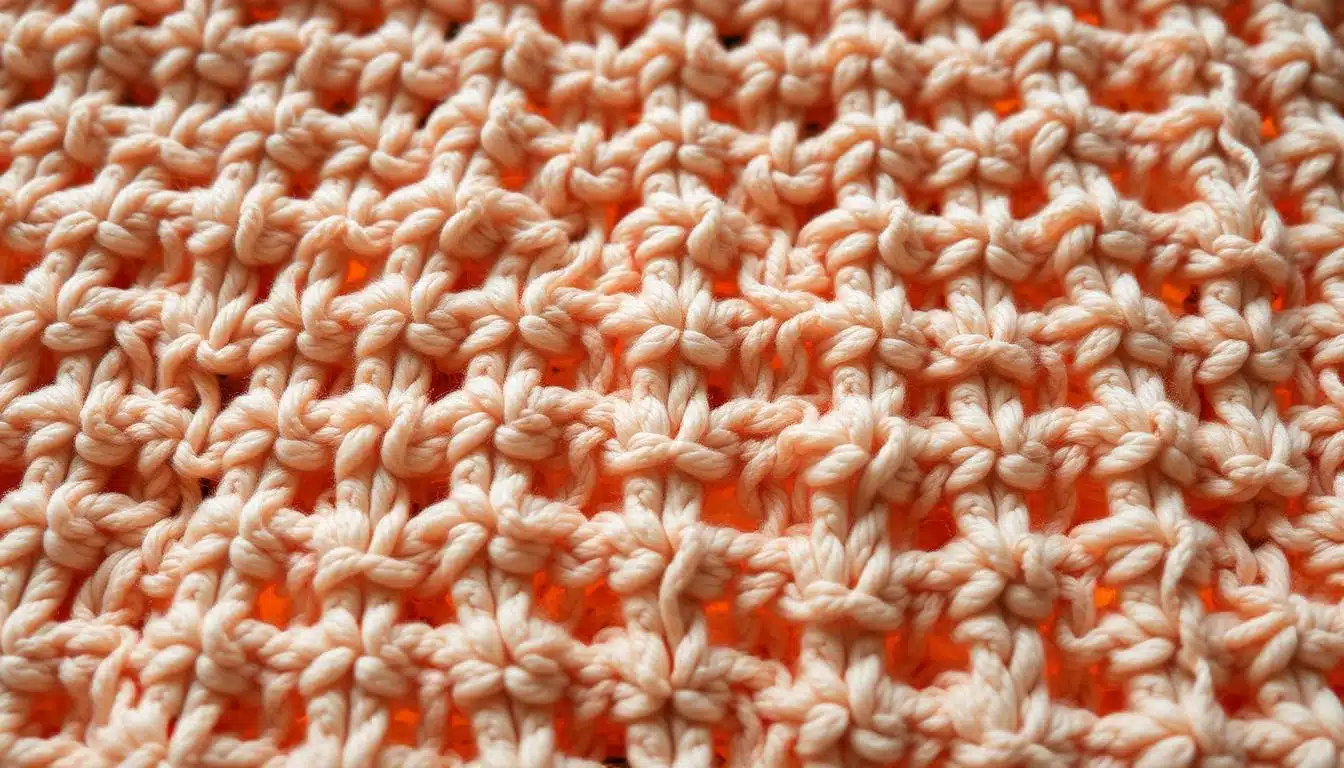
The crochet waffle stitch is like a warm hug. It creates a raised grid with double crochet and front post double crochet. This makes thick, textured crochet perfect for blankets, towels, and baskets.
It’s fancy but easy to follow, with a two-row repeat. Once you get the hang of it, your hook will hum along.
Designers suggest using solid-color yarns to highlight the waffle stitch. Tutorials, from photo guides to video demos, show how to do it. They explain the stitch multiple and row instructions clearly.
This makes projects like a waffle stitch blanket or textured accessories easy to tackle. Whether you like written patterns or video tutorials, you’ll find it helpful.
If you want warmth, stitch definition, and a cozy feel, this stitch is for you. It uses a bit more yarn but creates a dense, lofty fabric. This fabric blocks beautifully.
Ready to learn the basics and make your first square? This article covers materials, common pitfalls, and fun variations. Your next project will be as cozy as you imagined.
Key Takeaways
- The crochet waffle stitch uses dc and FPdc to create a raised, grid-like texture.
- It works best in solid colors to show stitch definition.
- Standard waffle stitch patterns use a multiple of 3 plus 2 for foundations.
- Waffle stitch blanket projects often follow a simple two-row repeat from the bottom up.
- Video and photo tutorials help speed learning; sample gauge and yarn suggestions are common in patterns.
Why the Crochet Waffle Stitch Is Your New Cozy Obsession
The waffle stitch texture will win your heart as soon as you see a swatch. It’s made by overlapping stitches, creating a grid that traps air. This air makes the stitch warm, perfect for hats, scarves, and baby items.
What makes the stitch so textured and warm
The magic happens in the alternating stitches. Front post stitches create columns that add cushion and insulation. This makes the stitch warm without being stiff.
Practical benefits: warmth, absorbency, and thickness for projects
Waffle stitch projects are more than just pretty. They’re warm, absorbent, and thick. This makes them great for throws and dishcloths. The stitch also brings out colors and textures beautifully.
Yarn usage and why this is a stash-buster crochet pick
Using more yarn is a trade-off for the extra layers. A 12-inch sample in worsted weight needed about 110 yards. Swatching helps figure out how much yarn you’ll need for bigger projects.
For a detailed double-waffle tutorial, check out Double Waffle Crochet Stitch. It explains the alternating rows and stitch placement that create the texture.
| Feature | Why it matters | Project fit |
|---|---|---|
| Raised grid from FPdc | Creates insulation and tactile interest | Hats, scarves, blankets |
| Two-row repeat (dc + FPdc) | Simple pattern, strong texture formation | Throws, washcloths, textured garments |
| Higher yarn consumption | Thicker fabric, better warmth and absorbency | Use stash-buster crochet for color combos |
| Squishy stitch definition | Great for colorwork and visible structure | Blankets, baby items, home goods |
Understanding the Basics: Stitches and Techniques Behind the Waffle Look
To get that classic raised grid, you need to know the right stitches. The double crochet waffle stitch uses standard dc rows and ribs from front post stitches. A good FPdc tutorial will help your squares stand out and keep your fabric even.
Essential stitches: dc (double crochet) and FPdc (front post double crochet)
First, learn the double crochet and front post double crochet well. The dc makes the flat base, while the FPdc wraps around the post to push the fabric out. A detailed FPdc tutorial will guide you through yarn over, inserting the hook, pulling up a loop, and finishing the draw-through.
How post stitches create the raised grid
Front post stitches make vertical ribs that look like raised columns. Alternating dc and front post stitches creates squares with recessed and raised parts. Changing the dc count between posts changes square size. Using angled post stitches can make diamonds and V shapes for extra visual appeal.
Turning chains, stacked dc, and clean edges for straight sides
Turning chains can be tricky because ch2 doesn’t count as a stitch in most waffle patterns. The stacked dc technique replaces the turning chain at row starts. This method gives you neat edges and keeps your blanket or large piece even.
| Technique | When to Use | Benefit |
|---|---|---|
| double crochet waffle stitch (dc + FPdc) | All-over textured blankets, dishcloths | Clear squares, warm and absorbent fabric |
| FPdc tutorial steps | Learning post placement and tension | Consistent ribs, fewer missed posts |
| front post stitches (angled) | Diamond or V waffle variants | Geometric interest, directional texture |
| stacked dc technique | Row starts and clean edges | Straight sides, tidy gauge across large pieces |
Materials, Tools, and Gauge Tips for Perfect Waffles
Get your toolkit ready. Choosing the right materials and tools is key for a clean waffle texture. Small choices like fiber and hook can change drape, squish, and stitch definition more than you’d expect.
Pick yarn with purpose. For dishcloths and towels, cotton gives crisp ridges and great absorbency. For everyday blankets and scarves, worsted weight acrylic or blends offer warmth with easy care. For baskets and rugs, t-shirt yarn or #6 super bulky keeps the waffle grid bold and sturdy.
Gauge matters. Make a 4″ swatch to check your waffle stitch gauge before committing to a large project. You might hit 16 sts and 10 rows in a sample with a 5mm hook for some worsted yarns after blocking. If your squares look loose, drop a hook size. If too dense, go up a size.
Hook choice depends on your yarn and desired drape. Use the manufacturer’s recommendation as a starting point. For baby blankets MJ’s Off The Hook style builds, try US G/6 (4.5mm) to H/8 (5mm) and adjust until your waffle stitch gauge lines up with the pattern.
Keep tension consistent. The waffle texture uses post stitches that exaggerate any tightness. Work a practice row or two of front post double crochets to settle your tension before measuring gauge.
Finishing supplies you’ll want at hand: a yarn needle for neat joins, sharp scissors, measuring tape for sizing, blocking mats and rust-proof pins for wet or steam blocking, and optional wooden bases if you plan baskets. Wet-blocking a waffle blanket with mild soap or woolwash evens rows and opens the grid without smashing the texture.
Use the table below to compare common yarn weights, suggested hook size waffle stitch uses, and expected outcomes for projects. Adjust based on your personal waffle stitch gauge and the fabric you prefer.
| Yarn Weight | Typical Hook Size (US / mm) | Best Uses | Notes on Texture & Gauge |
|---|---|---|---|
| Sport / DK | G/6 – H/8 (4.5 – 5 mm) | Light throws, baby blankets, textured scarves | Finer ridges, softer drape. Check waffle stitch gauge; may need larger hook for open fabric. |
| Worsted (Aran) | H/8 – I/9 (5 – 5.5 mm) | Blankets, afghans, cozy scarves | Classic waffle look. Common tutorial gauge falls near 16 sts x 10 rows @ 4″. Adjust hook to match waffle stitch gauge. |
| Bulky / Super Bulky (#5 / #6) | K – M (6.5 – 9 mm) / US 11+ (8 mm+) | Baskets, rugs, chunky throws | Deep, bold grid. Great for structural projects. T-shirt yarn and #6 show strong stitch definition. |
| Cotton (various weights) | Depends on ply; follow label | Dishcloths, kitchen towels, hot pads | Very crisp ridges and high absorbency. Gauge can be stiffer; test and adjust hook size waffle stitch preference. |
How to Crochet Waffle Stitch: Step-by-Step Pattern Guide
Ready to make yarn into textured squares like a warm waffle? This guide will show you how to start, the pattern for the waffle stitch, and how to fix common mistakes. Just follow the steps, watch a tutorial video if you like, and you’ll be making cozy pieces in no time.
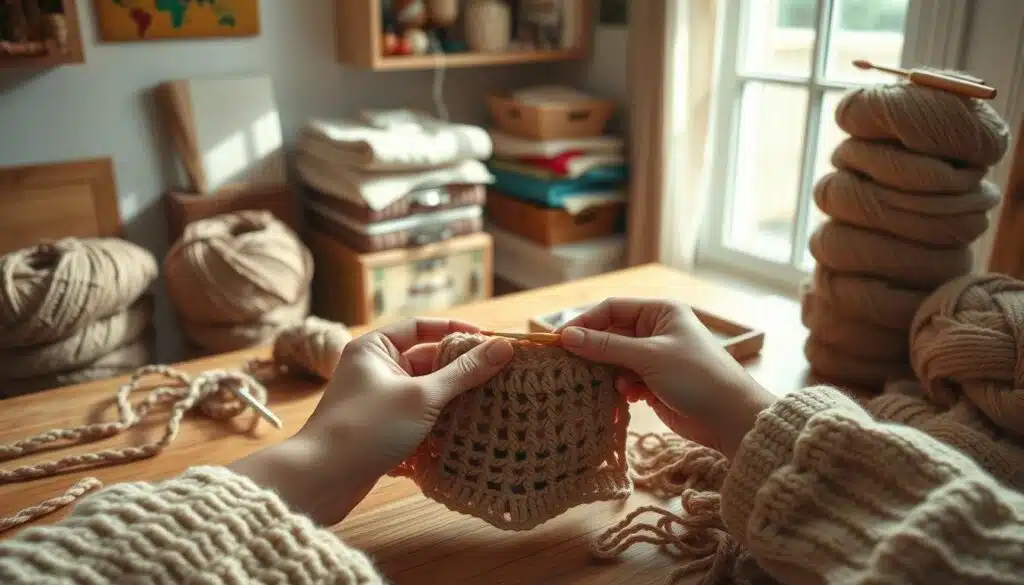
Foundation choices. You can start with a standard chain or try an FDC waffle stitch foundation double crochet for a stretchier, neater edge. For a standard chain, use a multiple of 3 plus 2. For FDC waffle stitch, work foundation double crochet across to set a firm, elastic base that reduces gapping in textured fabric.
Row 1 setup. Row 1 is usually a straight row of double crochet across. Work dc in each chain or FDC stitch. This smooth row sets the base for the ribs the post stitches will create.
The two-row repeat. The waffle stitch row repeat relies on alternating post stitches with regular dc to build depth. Row 2: ch2 (does not count), dc in first stitch, then repeat (FPdc around next stitch, dc in next two stitches) across. Row 3: ch2, dc in first two stitches, then repeat (FPdc around next two stitches, dc in next stitch) across. Repeat Rows 2 and 3 for the grid.
Edge and turning options. Use stacked dc at the start of rows for cleaner, straighter edges. That simple swap keeps your edges from stretching out and matches many patterns that finish with a final dc row for consistency.
Counting and tension tips. Count stitches each row to avoid drift. If your waffle looks skewed, your placement of FPdc may be off. Practice FPdc on a small swatch before committing to a blanket. A quick waffle stitch tutorial video can clarify hand placement and sight-lines for those tricky front-post wraps.
Common mistakes and fixes. Missing an FPdc is the top culprit for lost texture. Fix by unraveling to the last correct row and reworking with a marker. Skipping the turning chain or miscounting it causes row shifts; remember the ch2 does not count as a stitch. If edges flare, use stacked dc or tighten the first stitch after the chain.
Finishing touches. End with a dc row to balance the fabric, switch to a slightly smaller hook for a tidy border, and weave in ends as you change colors to reduce bulk. If you prefer learning visually, pause and replay a waffle stitch tutorial video while you practice each step.
Variations to Try: Mini, Double, Diamond, and Reversible Waffles
Ready to spice up your next project? You can use subtle tweaks to the standard grid to change density, depth, and drape. These four variations give you clear options when you choose yarn, hook, and end use.
Mini waffle stitch yields tight texture and dense fabric. Use a multiple of 2 plus 2 chains, then alternate single front post double crochet and regular double crochet in the row repeat. That compact grid makes excellent washcloths, pot holders, and any project where absorbency and scrubbiness matter.
The double waffle stitch gives chunkier squares and deeper ridges. Chain a multiple of 4 plus 2, work two FPdc followed by two dc in the repeat, and watch the texture pop. This pattern is ideal for blankets, rugs, and cozy throws that need presence and warmth.
Diamond waffle stitch moves post stitches at an angle to generate diamond shapes across the surface. Angled front post placement and staggered repeats create a geometric look that reads modern. Use diagrams or video tutorials when you try increases and decreases so the diamonds stay neat on edges.
The reversible waffle family includes V-stitch and mirrored post options that look great on both sides. After the setup row, many reversible patterns switch to an easy one-row repeat. That makes them perfect for two-sided items like scarves, baby blankets, and market bags where both faces show.
Each variation benefits from clear photo or video guidance. YouTube channels and designers such as Lion Brand and Annie’s Craft may offer step-by-step visuals to learn angled posts, stacked ridges, and reversible repeats quickly.
Pick the variation that fits your project goals. Use mini for tight utility pieces, double for bold texture and warmth, diamond for graphic interest, and reversible when both sides matter. Small tests on scrap will save time and keep your final piece neat and satisfying.
Project Ideas That Shine in Waffle Stitch
Waffle stitch projects are cozy and tactile, perfect for daily use. They offer warmth and scrubby absorbency. This makes them practical and favorite items. Here are ideas for both beginners and experienced crocheters.
Begin with a waffle dishcloth pattern like the Waffle Washcloth or Plaid Waffle Dishcloth. These patterns are great for learning post stitches. Then, try a Waffle Kitchen Towel with a hanging loop for a useful gift.
Use t-shirt yarn to make a sturdy Waffle Basket with an optional wooden base. This adds durability to your basket.
Wearables
Waffle stitch hats are great because they hold structure without being stiff. Try the Off Piste Waffle Hat or a Twisted Waffle Headband. These projects are perfect for practicing colorwork and decreases.
A Waffle Scarf or a Sunday Brunch Shrug shows how the stitch drapes. The Waffle Side Split Sweater offers a modern, relaxed fit.
Baby and blanket projects
The waffle stitch blanket is perfect for baby items because it traps warmth and feels plush. Consider the Waffle Baby Blanket with a flower appliqué or the C2C Waffle Blanket for striking color blocks.
Larger throws like the Spice Market Blanket use the same repeat with planned color changes. They have a single crochet border for a polished finish.
Smaller sets complement blankets: Monkey Bars Waffle Kid’s Set and Tim Loves Waffles Baby Cardigan pair texture with softness. For seasonal fun, crochet a Waffle Christmas Stocking or a Waffle Ice Cream Cozy.
Pick mini or double waffle variants depending on the project need. Mini waffles make dense washcloths, double waffles build deep ridges for chunky blankets and baskets. Tutorials and videos guide you through adjustments so your waffle stitch projects turn out just right.
Patterns and Inspirations from Popular Designs
You’re looking for new project ideas that highlight texture and structure. Start with stitch guides and resources that include a detailed double waffle stitch tutorial and photo diagrams. These visuals guide you in placing post stitches and keeping your work organized.
For a vibrant throw, try the Spice Market Blanket. Designers share tips on stripes and finishing for a clean edge. The Tim Loves Waffles cardigan brings the waffle texture to baby clothes, using soft, easy-to-wash yarns.
Seasonal gifts are perfect for using the waffle stitch. Scale down the blanket pattern to make waffle stockings. You can also make fun projects like an ice cream cozy, playing with colors and textures.
Many makers offer photo tutorials, videos, and printable diagrams. For a collection of free resources, visit this page on crochet waffle stitch tutorials and patterns. It helps you compare different approaches and tips.
- Work through a double waffle stitch tutorial to master ridges and pockets.
- Adapt the Spice Market Blanket layout for throws, table runners, or folded cushion covers.
- Convert Tim Loves Waffles cardigan sizing into a toddler shrug or lapghan.
- Use a waffle stocking pattern repeat to make matching holiday sets with minimal math.
Watch video demos if you learn better from motion. MJ’s Off The Hook and other designers share clear step-by-step videos. These help you learn faster and feel more confident with bigger projects.
Troubleshooting Common Waffle Stitch Issues
Fixing waffle stitch problems can be like solving a mystery. Start with a calm swatch and a checklist: check your tension, stitch placement, and edge strategy. Small fixes now save you from a lot of frogging later.
Fixing uneven edges and missed post stitches
Uneven waffle stitch edges? Stacked dc at the start of each row can help. Count your turning chains as part of the stitch sequence to avoid stray loops.
Post stitches are easy to miss when you’re in a hurry. To fix missed FPdc, slip a hook through the post and work a corrective FPdc into the post from the previous row. Use stitch markers at column boundaries to mark post columns and keep placement consistent. Video tutorials can make this visual correction much clearer; you might find the step-by-step photos and tips at a helpful waffle stitch tutorial.
Dealing with bulky fabric and maintaining flexibility
Bulky waffle fabric can become stiff, which is a problem with bulky yarn and tight tension. For more drape, go up a hook size or choose a lighter yarn like DK. For denser washcloths, use the recommended hook or drop a size.
Blocking relaxes the texture and evens rows. Soak the piece in lukewarm water with mild soap, gently squeeze out excess water, then pin to measurements on blocking mats until dry. This step often turns a stiff square into a friendlier fabric.
How to count repeats and keep your grid aligned
Counting waffle repeats every few rows prevents surprises. At the end of each row, tally post stitch columns and double crochets. A quick count is faster than ripping back several inches.
Use a simple table to track common fixes and when to apply them. Keep this near your project so you can check off actions as you work.
| Issue | Quick Fix | When to Use |
|---|---|---|
| Missed FPdc | Reinsert hook into post and work corrective FPdc; mark columns with stitch markers | During or immediately after the row where post was missed |
| Wavy or uneven waffle stitch edges | Use stacked dc at row starts and count turning chains as stitches | When sides tilt or rows grow/shrink unevenly |
| Puckering or stiff fabric | Try a larger hook, lighter yarn, or wet-block to relax fibers | For garments or drapey blankets needing flexibility |
| Lost grid alignment | Count post columns each row and mark repeat boundaries; work on a swatch | When pattern repeat drifts after several rows |
If troubleshooting is tricky, review a detailed guide on common crochet mistakes for more fixes and visuals at a troubleshooting resource. Keep your notes handy, practice counting waffle repeats, and your next waffle piece will behave itself.
Customization Tips: Colorwork, Borders, and Size Adjustments
Want to make the waffle stitch your own? Small changes in color, edges, and size can transform it. Here are easy tips and rules for making a color block waffle blanket or a plaid throw.
Color planning. Solid blocks highlight the texture. A color block waffle blanket shows off the grid without mess. For plaid, plan stripes to ensure clean intersections.
Carrying and weaving. Carry unused yarn along the back or weave ends in the last row. MJ’s Off The Hook Blanket style suggests weaving tails before adding a border. This keeps joins neat and reduces bulk.
Neat transitions. Change colors on the turning chain or at the row start for crisp banding. Trusted teachers’ video tutorials help avoid snagging when switching colors in waffle stitch colorwork.
Border choices. A simple single crochet frame stabilizes edges without overpowering the design. Use a waffle stitch border to echo the interior and hide color joins. For a finished look, make corners with (sc, ch2, sc) and add striped rounds by dropping and picking up colors as you go.
Scale and multiples. Check the stitch multiple before chaining. The standard waffle multiple is 3 + 2. Mini waffle uses 2 + 2. Double waffle follows 4 + 2. Use these numbers to keep your grid square when scaling the pattern.
Gauge math. Measure your swatch width, divide desired width by swatch width, then multiply by the swatch chain count. This gives a precise starting chain for any size. Adjust for drape with cotton or bulky yarns.
Texture vs. color balance. Bold ridges from yarn and stitch call for one or two colors. For subtle grids, use contrasting shades and try crosswise stripes or plaid panels.
Practical examples. For a baby blanket, choose three color blocks with yardage like popular patterns. For a throw, plan alternating stripes that repeat every four to six inches for neat seams and borders.
Final tip. Swatch your colorwork and border together. This preview shows if your waffle stitch colorwork and border look as intended before starting a full project.
Sustainable Choices and Yarn Substitutions for Waffle Projects
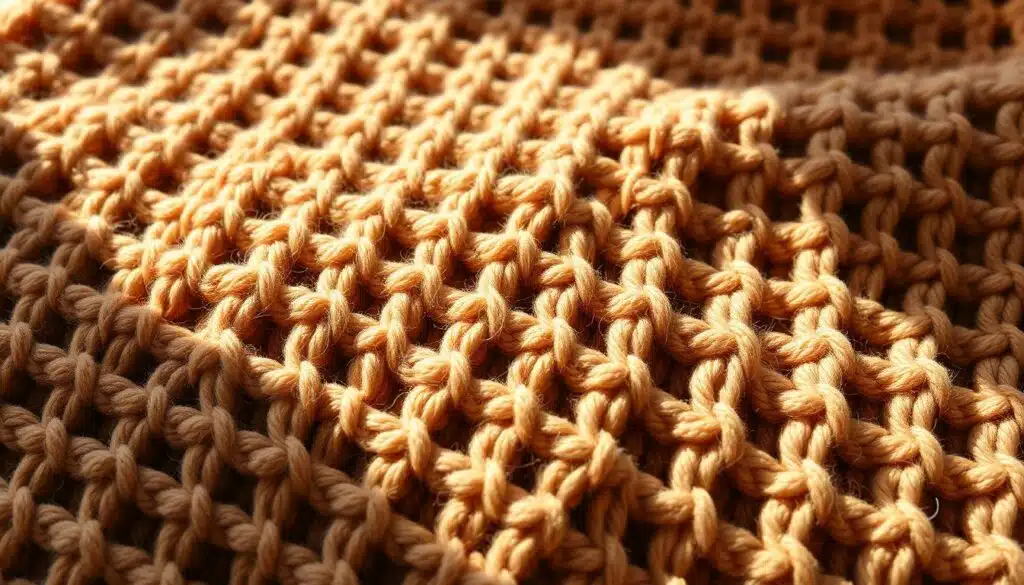
You want your projects to be both durable and soft, while also being kind to the planet and baby skin. Choosing the right yarn for a waffle stitch means considering fiber, washability, and texture. Cotton is great for kitchen items because it’s absorbent and crisp. Acrylic is better for baby items because it’s soft and easy to care for.
For baby-friendly projects, look at yarns like Bernat Softee Baby, Premier Anti Pilling, and Mary Maxim Mellowspun DK. These yarns are gentle and machine washable, which parents will love. For pattern help, check out this waffle blanket reference for yarn and yardage suggestions.
When making a t-shirt yarn basket, use super bulky or reclaimed fabric yarn for sturdy sides. The weight and thickness of these yarns help the basket keep its shape. Choose a smooth, strong t-shirt yarn for the best stitch definition.
Before starting, think about yarn substitution for waffle stitch projects. If a pattern calls for #3 light weight and you want more structure, try #6 super bulky for baskets or rugs. This change affects gauge and yardage, so adjust your hook size and swatch. Remember, waffle textures use more yarn, so plan your yardage carefully.
For garments where drape is important, choose CotLin or Brava Sport. These yarns keep the fabric flowing and flatter the waffle grid. For warmth, use thicker yarns like Brava Sport held double or super bulky. This traps air for better insulation. Cotton and t-shirt yarn give crisp definition, while soft acrylic blends are cushy and pill-resistant.
Here is a simple comparison to help you decide:
| Project | Recommended Yarn | Why it Works | Typical Hook/Gauge |
|---|---|---|---|
| Baby blanket | Bernat Softee Baby, Mary Maxim Mellowspun DK | Soft, washable, gentle on skin | US G/4.5–H/5mm; 16 sts = 4″ |
| Towel or cloth | CotLin, 100% cotton | Absorbent, crisp stitch definition | US G/4.5–H/5mm; adjust for tighter fabric |
| Basket or rug | T-shirt yarn, super bulky #6 | Sturdy, stands upright, shows texture | Large hook; gauge varies by material |
| Lightwear or shawl | Brava Sport, Brava Sport held single | Good drape, delicate waffle texture | Smaller hook for looser drape |
When trying out yarn substitutions, do a quick swatch and wash test. Note how the waffle grid changes after blocking. Small trials save time and ensure your project meets your vision for drape, warmth, and stitch definition.
Quick tip: use solid colors to show off the waffle texture, and save variegated skeins for accents. This way, your baby-friendly yarn waffle blankets and t-shirt yarn basket projects will look intentional and polished.
crochet waffle stitch
The crochet waffle stitch has a rich history. It’s not just one story but a mix of many. People from different times and places worked on it. They used various stitches to create its unique texture.
Designers like Lion Brand and Bernat made it popular today. They brought the waffle stitch into our homes and clothes.
The fabric’s secret is simple. It uses double crochets and front post double crochets in a special way. This creates the waffle’s signature look.
Stitch multiples and turning-chains help keep the pattern neat. They ensure your work stays organized as it grows.
There are many ways to change the waffle stitch. You can adjust the height, change where the posts go, or use different stitches. This creates different patterns like Double, Diamond, and reversible ones.
Designers even use special methods for diagonal blankets. You can find these ideas in tutorials and pattern libraries. They help you create new looks while keeping the waffle’s unique feel.
The waffle stitch is great for many things. It’s perfect for warm winter items like hats and scarves. It’s also good for kitchen linens like dishcloths and towels.
It’s also great for making sturdy baskets. You can use it for textured blankets and throws. And for color-block versions, it lets you play with different scales and colors.
Want to try it out? Start with a small swatch and test different yarns. Cotton is good for dishcloths because it shows off the texture. Acrylic and wool are great for keeping things warm. Super bulky yarn is perfect for making baskets.
You’ll see why the waffle stitch is so versatile. And why its many variations are loved by crocheters today.
Conclusion
To master waffle stitch, start with small swatches. The guide shows that once you get the double crochet rhythm, it becomes easy and fun. Use video tutorials and clear patterns to learn faster, and count your stitches to keep it neat.
Waffle stitch is warm, thick, and has a unique look. For big projects, pick the right yarn and gauge. For example, Mary Maxim Mellowspun DK is great for baby blankets, and t-shirt yarn is perfect for baskets.
Try different variations like double or diamond to make unique items. With practice, your projects will be soft, strong, and look amazing. Keep this guide close, and you’ll get better quickly.
FAQ
What makes the waffle stitch so textured and warm?
The waffle stitch alternates between standard double crochet (dc) and front post double crochet (FPdc). This creates a raised grid that traps air. This makes the fabric dense and squishy, perfect for cold-weather items.
What practical benefits does the waffle stitch offer for projects?
It creates a tactile, visually striking fabric that’s warm and absorbent. It’s great for blankets, dishcloths, towels, and baskets. The stitch also shows solid colors and color-blocking well.
Does the waffle stitch use a lot of yarn?
Yes, it uses more yarn than flat stitches. Designers recommend swatching to estimate yardage. This is important for planning amounts, like for blankets.
What are the essential stitches and techniques behind the waffle look?
You need double crochet (dc) and front post double crochet (FPdc). Also, use turning chains and stacked dc for neat edges. These basics build the waffle grid.
How exactly do post stitches create the raised grid?
Front post double crochet wraps around previous row posts. Alternating FPdc with dc in the next row creates the signature raised squares.
What’s the deal with turning chains and stacked dc for clean edges?
Turning chains are common but don’t count as stitches. For cleaner sides, use stacked dc at row starts. This keeps edges straight, like on blankets.
What yarn weights work best for waffle stitch projects?
Waffle stitch works with many yarn weights. Cotton and DK are good for baby blankets. Worsted weight is great for throws. Super bulky yarn is perfect for baskets and rugs.
Which hooks and tension should I use to get gauge?
Use the recommended hook for your yarn and always swatch. A common gauge is 16 sts × 10 rows = 4″ with a 5mm hook. Adjust the hook size for drape or density.
What finishing supplies will I need for waffle projects?
You’ll need a yarn needle, scissors, measuring tape, and blocking mats and pins. Mild soap or woolwash is good for wet blocking. Optional wooden bases can add stability to baskets.
Should I start with a regular chain or Foundation Double Crochet (FDC)?
Both are fine. A standard chain is simple. FDC gives a stretchier base, good for garments. Patterns usually specify the preferred start.
How does the two-row repeat build the texture?
Start with a multiple of 3 plus 2 chains. Row 1: dc across. Row 2: ch2, dc in first stitch, then (FPdc around next stitch, dc in next two) across. Repeat Rows 2 and 3 to build the grid.
What are common mistakes when learning the repeat and how do I fix them?
Mistakes include missed post stitches and uneven edges. Practice FPdc, count stitches, and use stitch markers. Stacked dc can make edges neater. If the fabric skews, check your counting.
What is the mini waffle and when should I use it?
The mini waffle uses a tighter repeat for denser, smaller squares. It’s perfect for washcloths, dishcloths, and projects needing a tight texture.
How is the double waffle different from the classic waffle?
Double waffle has more FPdc in the repeat for larger squares and deeper ridges. It’s great for chunky blankets and rugs.
How do diamond and angled post variations work?
Diamond waffle shifts post placement for diamond or V patterns. It uses the same dc/FPdc language but changes post placement for geometric effects.
What projects show the waffle stitch at its best?
It’s great for home essentials like dishcloths and baskets. Wearables like hats and scarves also look good. Baby blankets and textured throws benefit from its warmth and definition.
Are there go-to patterns or designers for waffle stitch inspiration?
Yes, Annie Design Crochet and MJ’s Off The Hook have tutorials and patterns. Look for Spice Market Blanket and Tim Loves Waffles Baby Cardigan for ideas.
How do I handle color changes and borders with waffle stitch?
Use solid colors to highlight texture. Plan color blocks for plaid effects. Weave in ends as you go or in the last row before changing hooks. A single crochet border is a tidy finish; consider a smaller hook for a firmer edge.
How do I keep bulky waffle fabric flexible and not stiff?
Choose a lighter yarn or a larger hook for more drape. Wet block the finished piece for a soft finish. This relaxes fibers and softens stiffness.
What yarns do designers recommend for baby blankets and throws?
MJ’s Off The Hook suggests Mary Maxim Mellowspun DK, Bernat Softee Baby, Brava Sport, and CotLin. These are soft, washable, and show stitch definition well.
Can I use t-shirt yarn or super bulky yarn for waffle projects?
Absolutely. T-shirt yarn and #6 super bulky yarn show the waffle texture well. They’re great for baskets, rugs, and other sturdy items.
How do I scale a waffle pattern to any size?
Follow the stitch multiple for your variation. Make a gauge swatch, calculate stitches per inch, and multiply for your desired width. Use gauge math and yarn yardage estimates for color-blocked designs.
What tools help when learning FPdc and post stitches?
Video tutorials and photo sequences are helpful. Use a stitch marker, practice on small swatches, and keep a clear pattern. A stitch counter and notebook for row counts will help avoid mistakes.
Where should I swatch and what gauge is typical for a waffle blanket?
Swatch in the same yarn, hook, and blocked finish you plan to use. A common gauge is 16 sts × 10 rows = 4″ with a 5mm hook. Always measure your own tension and adjust the hook size as needed.
Any quick tips to avoid common waffle stitch pitfalls?
Count stitches each row, practice FPdc, and use stacked dc for tidy edges. Swatch to estimate yardage. If you miss a post stitch, rip back and correct it.
Why is waffle stitch so addictive?
It’s addictive because the texture appears quickly and is both beautiful and functional. The squishy, tactile surface is satisfying to make. Once you master the repeat, you’ll want to use waffle stitch on everything.