
You want sweaters and shawls that actually fit. This guide helps you find, evaluate, and modify inclusive knitting patterns. Your handmade garments will flatter any body. You’ll get practical tips, quick checks for product pages, and fixes for between cast-on and bind-off.
We’ll talk about why size-inclusive knitting matters. You’ll learn what to look for in schematics and tester galleries. We’ll also cover how designers grade for a wide range of sizes and where to shop for inclusive knitwear. You’ll see real examples, like the Nydia Cardigan, that show transparent finished measurements, yardage tables, and large tester galleries in action.
Whether you’re hunting for knitting for all sizes or learning to alter a beloved pattern, this article speaks directly to you. Expect a witty tone, clear steps, and practical language. You’ll be able to choose patterns with confidence and knit inclusively every time.
Key Takeaways
- Inclusive knitting patterns help garments fit and flatter a broad range of bodies.
- Look for transparent finished measurements, yardage tables, and large tester galleries.
- Size-inclusive knitting supports better representation in photos and sample sizing.
- Understanding schematics and grading saves time and helps you alter patterns smartly.
- You can support inclusive knitwear by buying from designers who publish clear sizing and robust test knits.
Why Size-Inclusive Knitting Matters
Seeing patterns on different bodies makes your first stitch feel bold. It helps you imagine the garment on yourself. Designers like Ysolda say that diverse photos make choosing a size easier.
Why representation changes how you feel about making and wearing garments
Seeing models like you reduces guesswork. You no longer need to fix the fit just to wear it. Feeling seen can make you more likely to buy or knit the pattern.
Knowing a pattern fits different body types lets you enjoy the craft. Clear schematics and honest photos make knitting joyful again.
How inclusive patterns support social justice and community care
Inclusive patterns are acts of care. They ask designers to offer various sizes and publish full schematics. This improves access to fitting clothes and changes industry norms.
For a quick guide on inclusive knitting, check this post: some thoughts on size inclusivity in.
Common harms of non-inclusive pattern design and photography
Patterns that only offer small sizes can be a waste of time and yarn. Non-inclusive patterns often have wrong yardage and grading. They may not work well on different sizes.
Using unpaid testers makes representation weak. Clear labels about sample size and grading help avoid surprises. They support fair labor practices in the community.
Choose patterns and shops with diverse models and clear photos. This way, your next project will fit perfectly and feel made for you.
inclusive knitting patterns
You want patterns that fit more than a narrow size chart and show real results. Check if a design lists finished measurements and clear yardage per size. This way, you can compare them to your body and avoid buying yarn that leaves you short.
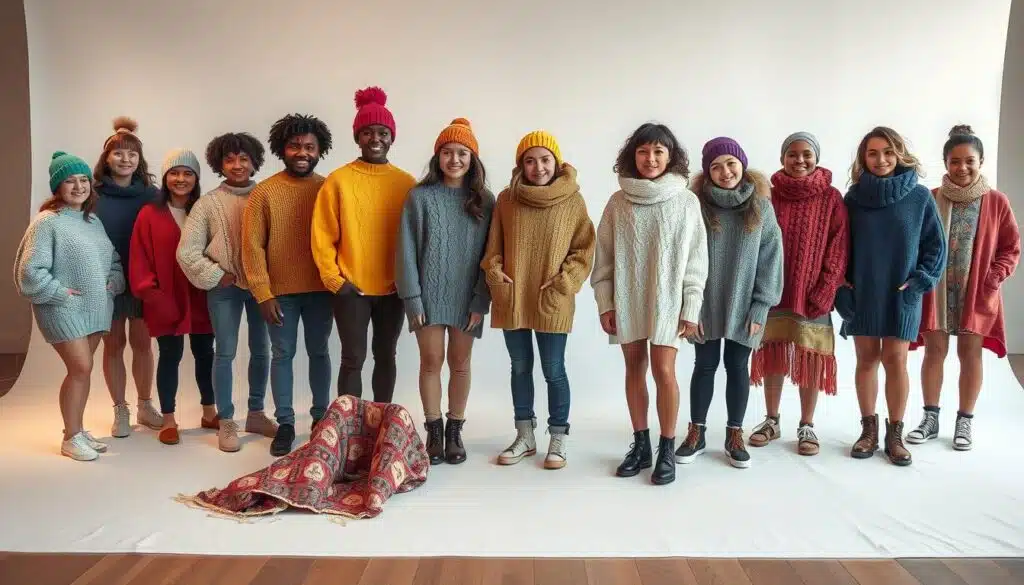
What makes a pattern genuinely inclusive (grading, ease, and measurements)
True inclusivity shows up in graded schematics across many sizes, not just scaled stitch counts. Look for grading and ease that keep intended fit consistent from small to large. The pattern should state ease targets and show finished garment measurements for each size.
Good patterns also include yardage tables with yards and meters per size. This prevents surprise skein runs when you knit up a larger size. If a pattern spells out fit customization tips and short-row shaping, you get tools to tailor the garment to your shape.
Examples of inclusive sizing ranges to look for when you shop
Seek patterns that list wide finished bust circumferences, for example ranges up to and beyond 60 inches. Patterns with many unique sizes, not just a few “adjusted” counts, are stronger signals of thoughtful grading. Multiple length and sleeve options add flexibility for different bodies.
Prefer designs that state intended ease, such as 0–2 inches negative ease at the full bust, so you can pick the correct size. Yardage transparency and explicit fit guidance are signs the designer tested larger sizes or consulted a grader.
How pattern photos and tester galleries help you decide which size to buy
Pattern tester galleries let you inspect drape, ease, and styling across real bodies. Galleries organized by size and showing the size each tester made help you judge how a finished measurement translates to fit.
Look for large, ordered galleries with image enlargement and tester notes. When you can see dozens of test knits in size order, you get a clear sense of how grading and ease behave across the range.
| Feature | What to look for | Why it matters |
|---|---|---|
| Finished measurements | Full bust, waist, hip listed per size | You compare garment to body before buying yarn |
| Grading and ease | Consistent ease targets and true graded schematics | Fit remains predictable across sizes |
| Yardage table | Yards/meters listed per size | Prevents running out of yarn for larger sizes |
| Number of unique sizes | Many fully distinct sizes, not just added repeats | Shows intentional grading, not simple scaling |
| Pattern tester galleries | Ordered by size, with tester size noted | Reveal real-world drape and styling across bodies |
| Fit customization | Short-row shaping, length options, modification tips | Makes the pattern usable for diverse shapes |
How designers grade for many bodies: the craft behind the scenes
You want a pattern that fits across sizes without surprise. Good grading turns one size into many while keeping the design’s shape and drape. This work starts on paper and in software before a single stitch is tested.
Grading to fit a wide bust range and keeping consistent ease
Grading means adjusting a schematic so each size keeps its intended shaping and ease. Treat ease as a design choice, not an afterthought. This way, finished garments fit predictably for every maker.
Consider fiber weight and behavior when grading. A soft, heavy yarn will hang differently on larger sizes. You might offer structural details, varied gauge zones, or multiple sleeve sizes to keep proportions flattering.
Why schematics should be graded before knitting samples
Grade schematic before sample to catch ungradeable features early. When the schematic is solid, you avoid wasted time and scrapped samples. Joji Locatelli and other designers have shown how late-stage grading problems can derail a project.
Starting with a clear, graded schematic helps you plan yardage, stitch counts, and shaping for every size. It also highlights where adjustments, like shortened rows or added shaping, will be necessary so testers give useful feedback.
When to hire or consult a tech editor or grader
If you feel uncertain about grading for inclusive sizes, bring in help. A tech editor for knitting patterns or a professional grader can save hours and deliver consistent results. Services range from hourly consults to full-service grading and collaborative walkthroughs.
Publishers should include skilled tech editors for knitting patterns as part of the process. That investment yields better fit, clearer instructions, and fair compensation for the extra work inclusive grading demands.
Use these practical steps: test grading decisions on a few key sizes, check yardage and length adjustments, and review how different fibers affect drape. This approach makes consistent ease grading easier to achieve across a broad size range.
Reading schematics and picking the right size for your shape
Start by taking clear body measurements. First, measure your full-bust measurement. This number usually decides your sweater size. Next, add your upper chest and hip measurements to see how the yoke, armholes, and hem will fit.
If a pattern only lists one measurement, look for full schematics or extra notes before deciding. This ensures you make the right choice.
When reading knitting schematics, treat the drawing like a mirror. Compare the designer’s finished measurements to your body numbers. Note where ease is intended. Patterns with specific ease guidance are easier to choose from.
Use this short checklist before you pick a size:
- Compare your full-bust measurement to the finished bust circumferences.
- Confirm upper chest and hip circumferences match the garment’s key fit points.
- Decide how much wearing ease you want at the bust, waist, and hips.
- Check tester photos for how the size you plan to make looks on real bodies.
If a pattern offers graded schematics or multiple finished measurements, choose the size that fits the largest area that must be comfortable. For example, if your full-bust measurement is bigger than your upper chest, pick the size that fits your full bust. You can then shape the waist later.
Many designers provide alternate instructions to reach different finished bust ranges. This flexibility helps you find the perfect fit.
Fit hacks help when you fall between sizes. Use pattern-provided customization tips for between-sizes. Add or subtract length at the hem and sleeves following yardage notes. Choose the larger sleeve if your arm needs the room.
Short rows and targeted shaping refine neckline and bust fit. You’ll find many of these suggestions in pattern notes or testing threads.
Here is a handy comparison to guide quick choices:
| What to measure | Which schematic value to use | Typical action |
|---|---|---|
| Full-bust measurement | Finished bust circumference | Pick size that matches desired ease at bust |
| Upper chest / upper bust | Yoke and armhole widths | Adjust shoulder fit or choose alternate yoke |
| Hip circumference | Hem finished circumference | Choose size or plan to ease/shape at waist |
| Length preferences | Schematic length lines | Shorten/lengthen with yardage guidance |
If you want a deeper primer on grading standards and clear schematics, check this concise guide for what truly size-inclusive patterns include: grading and schematic guidance.
Take accurate measurements, note how much ease you prefer, pick the size that fits the critical point—often the full bust—and then use pattern fit hacks to tailor the rest. A little prep here saves frogging later and gives you the confidence to make a sweater that fits like it was meant for you.
Modifying patterns so they flatter your body
Ready to make a pattern truly yours? Start with small moves that yield big changes. Modifying knitting patterns feels less scary when you break choices into clear tweaks: length, waist and hip shaping, bust contouring, and sleeve options. Keep notes as you go so you can repeat what works.
Length, waist, and hip adjustments that actually work
For length adjustments, add or subtract rows between shaping points. This simple step lets you tailor a hem or body to your torso without reworking the whole pattern. Before you change anything, check yardage for modifications. Patterns with clear yarn-per-size tables, like Nydia, show yards per size and body-length options so you can plan for cropped versus full-length versions.
To shape waist and hips, use increases and decreases where the pattern suggests or follow any provided shaping lines. Patterns that include waist and hip shaping make flattering edits straightforward and reduce guesswork.
Using short rows and shaping to contour necklines and busts
Short rows for bust shaping are a knitters’ secret for a smoother fit. Use them to add bust darts, lower the front neckline, or curve the shoulder line so the fabric follows your body. When placed correctly, short rows prevent gaping and make necklines comfortable.
If the designer provides guidance, follow it. If not, test short rows on a gauge swatch and mark the row counts that work for your bust depth. Ask in tester groups or consult tutorials if you need a quick visual—try a helpful guide like the easy-knit hat tutorial linked here for practice with shaping techniques: shaping how-to.
Sleeve and hem options: cropped vs. full length and how to adjust yardage
Many inclusive patterns offer multiple sleeve and hem lengths. When you switch from cropped to full-length, recalculate yarn using the pattern’s yardage table. Nydia lists yards per size and notes how button counts change with body length. Use those figures as a planning baseline.
Sleeve adjustments follow the same rule: measure the additional rows, convert that to yards using the pattern’s yarn-per-size table, and add a buffer skein for safety. Fiber choice affects drape and ease, so factor that into any major length adjustments.
| Adjustment | How to do it | Yardage tip |
|---|---|---|
| Body length | Add/subtract rows between markers | Check yards per size; add 5–10% for safety |
| Waist/hip shaping | Place increases/decreases at pattern points | Minimal yardage change; track stitch counts |
| Short rows for bust | Work partial rows to create darts or lower neck | Small yardage impact; swatch to confirm |
| Sleeve length | Adjust row count from cuff or cap | Recalculate using yarn-per-size table |
When unsure, follow the pattern’s customization tips, ask the designer’s testers, or view video guides. Clear planning prevents surprises and keeps your modifications neat, comfortable, and flattering.
Where to find inclusive knitting patterns and supportive shops
You’re looking for patterns and shops that celebrate every body. Look for designers and publishers who offer wide size ranges. They should publish many unique sizes and share clear fit policies.
Creators who grade to at least a 60″ bust and show patterns on various bodies are a good sign. This gives you confidence before starting your project.
When shopping, look for product pages that make buying easy. A good page includes a full schematic, finished measurements, and yardage for each size. It also lists materials and needles and offers clear fit guidance.
Big tester galleries sorted by size help you see how the pattern fits different bodies. This makes it easier to choose without guessing.
In person, expect more than just yarn. Supportive yarn shops have seating for all, wide aisles, and accessible tables. They also display sample garments in multiple sizes. These details show they value customers of all shapes and sizes.
If a product page is missing important details, ask for them before buying. Use tester galleries to compare yarns and gauge behavior across sizes. If measurements are missing, request them and see how the seller responds.
Here are practical ways to find designers and stores doing this work:
- Follow designers who post open calls for diverse preview knitters and publish multiple sample sizes.
- Favor publishers that include detailed yardage tables and finished bust circumferences on every pattern product page checklist entry.
- Shop at yarn stores that stock adequate quantities so larger sizes don’t require constant special orders.
Want to push for better representation? Use your voice and your wallet. Ask for full schematics and photos from designers and shops. Choose to buy from creators who invest in grading and tech editing, even if it costs more. Your choices help move the market toward quality and fairness.
When browsing online, remember a few quick checks. Confirm finished measurements and scan the tester gallery for fit variety. Compare sample yarns and gauge notes. These steps save frustration and help you find inclusive patterns without guesswork.
| Checklist Item | Why it matters | What to do if missing |
|---|---|---|
| Full schematic | Shows actual shape and stitch distribution so you can judge fit | Request the schematic or decline until it’s available |
| Finished measurements | Lets you compare garment size to your body and desired ease | Ask the designer for measurements in inches and centimeters |
| Yardage per size | Prevents mid-project panic when larger sizes need more yarn | Request yards and meters for every size listed |
| Needle, gauge, materials | Helps predict drape and decide suitable substitute yarns | Check tester notes for yarn swaps and gauge outcomes |
| Tester gallery sorted by size | Shows the pattern on diverse bodies and real-world styling | Ask the designer to add galleries or tag photos by size |
| Shop accessibility & display | Makes in-person shopping comfortable and inclusive | Provide feedback to shop owners and suggest seating or broader displays |
| Transparent pricing for inclusive work | Reflects extra grading and tech editing costs | Support designers who charge fairly; promote their work |
For a quick slogan to use when writing or calling a shop, try this: “Please show full schematics, yardage, and size-sorted tester photos.” This simple request helps advocate for inclusion clearly.
Your choices matter. By preferring designers who publish detailed pattern pages and shopping at supportive yarn shops, you help build a more inclusive knitting community.
Real-world examples: patterns and practices you can trust
You want patterns that make knitting easy. This section talks about a cardigan that fits many sizes, the importance of tester galleries, and how to know the right yarn and size.
Case study: a cardigan built for many bodies
The Nydia Cardigan shows how to design for everyone. It uses special shaping and short rows for the neckline. You can choose the length to fit your body perfectly.
It offers sizes from 29.75–63.25″ with advice for a snug fit. You’ll find everything you need to start, including yarn amounts for each size. This helps you plan without surprises.
How large, organized test knits and galleries build confidence
Nydia’s tester gallery has over 100 photos in size order. Seeing how it fits different bodies helps you trust the pattern. Galleries with size labels and zoomable photos are super helpful.
For more on knitting community and accessibility, check out Natalie in Stitches. It highlights the value of diverse testers and clear photos.
Why clear yardage tables and finished measurements matter for every knitter
Knowing how much yarn you need avoids running out. Patterns that list yarn by size help you buy enough. This saves you from last-minute yarn runs.
Look for patterns with unique grading and schematics that match finished measurements. This ensures a good fit without guesswork.
| Feature | What it shows | Why it helps you |
|---|---|---|
| Detailed finished measurements | Exact bust circumferences and ease guidance | Pick the right size and predict final fit |
| Yardage transparency | Yards and meters per size and option | Buy enough yarn for larger sizes and mods |
| Tester gallery in size order | Photos of many bodies with size labels | See real-world drape, scale, and fabric behavior |
| Multiple length options | Body and sleeve length choices (cropped/full) | Customize silhouette without guessing yardage |
| Graded schematics | Sewn-together measurements across sizes | Improve fit and reduce need for after-the-fact alterations |
Practical takeaway: choose patterns with clear schematics, graded measurements, visible galleries, and full yardage tables. These features make your knitting project successful and stress-free.
Tips for knitters who want to promote inclusion
To promote inclusion in knitting, start with what you share and buy. Your choices show which designers you support. Sharing thoughtfully can help small shops and independent designers improve their size ranges and product pages.
When you post a finished project, give credit to the maker. Tag the knitter, name the designer, and include pattern and yarn details. This helps highlight marginalized makers and guides viewers to their work.
Make sure your gallery is balanced. Share projects from larger bodies more often. In group knits or KALs, suggest diverse display ratios to ensure visibility for all.
Shopping choices that reward designers and stores doing the work
Look for patterns with wide bust ranges and shops that list full schematics. Buying from designers like TinCanKnits, PetiteKnit, or indie dyers who publish yardage for all sizes rewards inclusive labor. Choose ethical yarn shopping by picking retailers that treat larger sizes as standard, not special orders.
If a pattern costs more because it was graded and tech-edited, accept that price as fair. Your purchase helps cover the extra work needed for inclusive designs.
How to respectfully request better sizing info or photos from designers and shops
Message shops and designers with clear requests. Ask for full schematics, yardage tables, and tester photos. Be specific about what you need, like finished bust circumference and model measurements.
Ask politely and explain why the data matters. Offer to support the effort by buying the pattern or sharing their improved listing. When you request sizing info, acknowledge the labor involved and keep feedback constructive.
Practical steps you can take today:
- Share at least one knit by a fat maker when you post pattern photos.
- Choose shops that publish full schematics and yardage tables.
- Join or support beta test programs that value diverse testers and allow longer timelines; suggest at least one week per 200 yards in the largest size and a 12‑week minimum for long‑sleeve sweaters.
- When visiting yarn shops, ask staff to display samples in larger sizes and to provide mannequin measurements.
For quick pattern browsing, check curated resources such as pattern directories to find designers who publish full details before you buy. Small choices add up. If you consistently amplify marginalized makers and prioritize ethical yarn shopping, you shift the marketplace toward real, lasting inclusion.
Conclusion
You can make a real difference by looking for patterns with clear measurements and detailed yardage tables. Patterns with large tester galleries and fit guides help you choose the right size. This way, you can avoid any surprises.
For a practical guide, check out size-inclusive body measurements. It shows how bust, bicep, wrist, and neck sizes affect fit.
Designers, publishers, and shops all play a role in making knitting patterns inclusive. They should provide graded schematics and support inclusive ranges. Yarn shops should stock a variety of yarns and show diverse samples.
You can use your power as a consumer to promote size inclusion. Choose makers who create inclusive patterns and ask for the data you need. This helps support size-inclusive knitting.
When you find a promising pattern, check the finished measurements and yardage table. Look at the tester galleries too. Use fit hacks like short rows or sleeve-width adjustments if needed.
Supporting knits made by marginalized makers helps broaden representation. You can knit for all bodies by seeking out inclusive patterns. Ask for clear data and support thoughtful designers and shops. This way, everyone can wear something handmade and well-fitting.
FAQ
What does “inclusive knitting patterns” actually mean?
Inclusive knitting patterns are made for people of all body sizes and shapes. They help you pick the right size and yarn. You get clear finished measurements and consistent ease values across sizes.
They also offer many unique sizes and show yardage in yards and meters. This makes sure you can see how the garment will look on you.
Why does representation in pattern photos and tester galleries matter?
Seeing patterns on different bodies helps you imagine how they’ll fit. Diverse photos reduce feelings of exclusion. They also help you choose the right size.
Designers like Ysolda show how preview knitters add real-world visuals. This makes you feel seen and understood.
What are the most important specs to look for on a product page?
Look for a full schematic before buying. Check the finished garment measurements, including the bust. Make sure the intended ease is clear.
Also, look for yards/meters per size, material, and needle lists. A large tester gallery labeled by size is a plus. If a page has all these, you’re good to go.
How should I choose a size if my bust and waist are different?
Choose the measurement that must fit the garment’s shape. For sweaters, it’s usually the full bust. Compare your measurement to the finished bust circumference and intended ease.
If you’re busty with a narrower waist, pick the bust size. Then, plan waist shaping or short-row contouring as the pattern suggests.
What does “intended ease” mean and how do I use it?
Intended ease is the room the designer expects between your body and the finished garment. Negative ease means the knit will be snug. Use this value to decide if you want a closer fit or more ease.
Remember to consider the fiber drape when making your choice.
How do yardage tables help with inclusive knitting?
Yardage tables prevent surprises. They tell you how many yards/meters each size needs. They also show how yardage changes with different lengths or sleeve options.
This way, you can buy enough yarn for larger sizes or a longer hem without stress.
What’s the difference between grading and just increasing stitch counts?
Grading adjusts pattern proportions thoughtfully. It ensures shaping, stitch patterns, and ease work across sizes. Simple stitch-count increases often distort design lines.
True grading yields many unique sizes that retain the designer’s intent. This is what the best inclusive patterns provide.
Why should designers grade schematics before knitting samples?
Grading the schematic first reveals proportion issues and ungradeable features early. This saves time and prevents abandoned designs. It ensures testers make samples that actually represent intended sizes.
Joji Locatelli’s example shows how late grading problems can derail a project.
When should a designer or publisher hire a tech editor or grader?
If you’re unsure about grading across a broad size range, hire a grader. You can seek hourly consultations, full-service grading, or collaborative grading-and-walkthrough services.
Proper compensation for this work is key to making inclusive patterns viable.
How do short rows and shaping help with bust and neckline fit?
Short rows add fabric where needed. They lower or curve necklines and create bust darts for fuller chests. This reduces gaping and makes necklines comfortable.
Look for patterns that include short-row instructions or video demos for these techniques.
How do I adjust length, waist, or hip shaping without wrecking the design?
Use the pattern’s guidance: add or subtract rows for length, follow increases/decreases for waist or hip shaping. Check the yardage table for added yarn needs.
Patterns with waist and hip shaping make these mods easier to execute.
How should I plan yarn for switching from cropped to full-length or changing sleeve length?
Consult the pattern’s yardage table per size and add a buffer for longer lengths. Nydia-style tables give yardage by size and length option. They also note differing notions like button counts.
If you change gauge or fiber, allow extra yarn for drape differences.
What practical tips help when picking a pattern for larger sizes?
Compare your measurements to the finished garment. Prefer patterns with explicit finished bust ranges and fit customization guidance. Use tester photos in size order, check yarn substitution notes, and confirm yardage for your chosen size and length before you buy.
How can shops and yarn suppliers be more supportive of inclusive knitting?
Shops should stock larger yarn quantities and display samples in a range of sizes. They should provide accessible seating and aisle space. Online stores should show full schematics, yardage tables, and unedited tester galleries.
Ask for these changes—shops often respond when customers request practical improvements.
How do I ask designers or shops for better sizing info without sounding rude?
Be specific and constructive: request a full schematic, finished measurements, yards/meters per size, or unedited tester photos. Explain how those details help you decide. Acknowledge the labor involved and offer supportive, clear feedback.
How can I use my buying power to support inclusive designers?
Purchase from designers who grade to wide busts and provide many unique sizes. Look for generous tester galleries and yardage tables. Recognize that inclusive grading costs more and that higher pattern prices often reflect that extra work.
Share and recommend designers who do the right thing.
What should I look for in tester galleries to judge fit and drape?
Prefer galleries ordered by size with labeled maker sizes and clear, enlargable photos. Large organized test knits (100+ images sorted by size) let you compare how a fabric behaves across bodies. This helps you make informed choices about size and modifications.
How can I share and amplify knits made by fat and marginalized makers responsibly?
Prioritize posting and promoting projects by larger and marginalized makers instead of tokenizing a single image. Credit makers, include sizing info, and avoid cropping or editing that hides body shape. Aim for ratio balance so visibility becomes the norm, not the exception.
Are there industry-level changes that would make knitting more inclusive?
Yes. Publishers should fund inclusive grading and tech editing. They should provide larger size charts and allow pages for inclusive shaping instructions. Shops should stock yarn for larger garments and display diverse samples.
These structural shifts reduce the burden on individual designers and knitters.
What are common pitfalls to watch for on product pages?
Beware of patterns that stop at small sizes, omit finished measurements or yardage per size, publish misleading photos (clipped or edited garments), or rely on unpaid testers for representation. If a product page lacks basic data, ask for it before buying.
Where can I find exemplar patterns that follow these inclusive practices?
Look for patterns that list wide finished bust ranges, multiple unique sizes, explicit ease guidance, and detailed yardage tables. The Nydia Cardigan is a good example. It provides finished busts, yardage by size, many test knits, and customization guidance.
How long should testing timelines be for large-size projects?
Longer. Recommend timelines like one week per 200 yards in the largest size, with a minimum of 12 weeks for long-sleeve sweaters. Bigger garments take more time, and inclusive testing programs should reflect that so testers aren’t rushed or tokenized.
What immediate actions can I take to make knitting more inclusive?
Choose inclusive patterns and shops, ask designers for schematics and yardage before purchase, promote knits by marginalized makers, and offer constructive feedback to designers and shops. Use your purchases and social platform to reward thoughtful, inclusive work.