
Confession time: I once crocheted an entire scarf only to discover I’d been adding a sneaky extra stitch every row. It started as a lovely rectangle and ended as something better suited for an avant-garde giraffe. Sound familiar? Don’t worry; I’ve worn the crocheter’s cone of shame more than once, and I promise, you’re not alone! This guide is about untangling common crochet mistakes with a laugh, quick fixes, and a good dose of ‘you got this.’ Grab your hook – let’s tackle those predictable—it-happens-to-everyone oopsies, and maybe avoid a few next time too!
The Greatest Hits: Most Common Crochet Blunders (and Quick Fixes)
Welcome to the crochet hall of fame, where every Common Crochet Mistake gets its moment in the spotlight—and you, my friend, get the Crochet Solutions you never knew you needed. Grab your hook, your sense of humor, and let’s untangle those infamous crochet errors together!
Surprise Trapezoids: The Rectangle That Wasn’t
You started with a dream: a perfect rectangle. But somewhere between row three and “just one more episode,” your project morphed into a suspiciously slanted trapezoid. Don’t worry, you’re not summoning ancient geometry spirits—just missing or adding stitches at the row ends. Research shows that counting your stitches at the end of every row is the secret sauce. It’s not glamorous, but it’s the difference between a scarf and a scarf-shaped mystery.
- Quick Fix: Count your stitches every row. If you’re off, frog (that’s crochet-speak for “rip it, rip it”) back a row or two and try again. No shame—every crocheter has been there.
- Pro Tip: Place a stitch marker at the start and end of each row. It’s like GPS for your yarn.
Foundation Chain Tightness – AKA “Row One Regret”
Ah, the Foundation Chain. It’s supposed to be the solid base of your masterpiece, but sometimes it’s tighter than your jeans after Thanksgiving. Suddenly, your first row buckles like a rollercoaster. Studies indicate that using a hook one size larger for just the chain can prevent this classic crochet error. Your future self will thank you.
- Quick Fix: If you’re already committed, gently stretch the chain before moving on. For next time, grab a bigger hook for the chain, then switch back to your regular hook for the rest.
- Bonus: Practice makes progress, not perfection—especially in crochet. (Thanks, Sarah-Jayne Fragola!)
Yarn Knots: When the Ball Becomes a Battleground
Picture this: you’re cruising along, lost in the rhythm, when suddenly—BAM!—a knot in your yarn. It’s like your ball of yarn has declared war. Nearly every crocheter has found at least one of these sneaky manufacturer’s knots. The solution? Don’t try to crochet over it. Cut it out and use a Russian join. (It sounds intimidating, but it’s just a fancy way to say “make the knot disappear.”)
- Quick Fix: Snip out the knot, then use a Russian join to reconnect your yarn. Your project will thank you for the seamless finish.
- Extra Credit: Keep a yarn needle handy for emergency joins. You’ll feel like a crochet surgeon.
Skipped Stitches & Extra Loops: The Rollercoaster Row
Ever looked at your row and thought, “Why does this look like a wave pool?” Skipped stitches or accidental extras can turn your project into a wild ride. The culprit? Usually, it’s losing track of where you are—especially at the row edges. Research shows that regularly counting stitches and keeping an eye on your pattern can help keep things on track.
- Quick Fix: If you spot a mistake early, unravel just the problem area. If you’re deep into the project, consider it a design feature (hey, nobody’s perfect).
- Prevention: Stitch markers and row counters are your new BFFs.
Mythical Creatures: When Your Scarf Looks… Alive
We’ve all been there: you set out to make a scarf, but end up with something that looks like it might crawl away on its own. Uneven tension, skipped stitches, and wild edges can give your project a personality of its own. The fix? Practice, patience, and a willingness to laugh at your “unique” creations.
- Quick Fix: Block your project (gently wet and shape it) to smooth out the wildest edges. If all else fails, call it “abstract art.”
‘Practice makes progress, not perfection—especially in crochet.’ – Sarah-Jayne Fragola
Quick Reference Table: Common Crochet Mistakes & Solutions
| Mistake | Quick Fix | Prevention |
|---|---|---|
| Tight Foundation Chain | Use a larger hook for the chain | Switch back to regular hook after chain |
| Surprise Trapezoids | Count stitches every row | Use stitch markers |
| Yarn Knots | Cut and Russian join | Check yarn before starting |
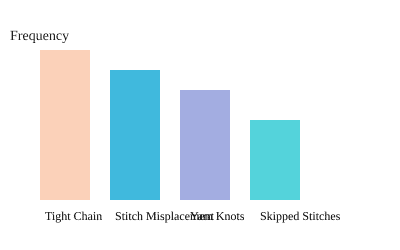
Frequency of Top Crochet Mistakes
Remember, every crocheter has their “oops” moments. The trick is knowing how to spot them, fix them, and—most importantly—laugh about them later. Happy hooking!
Spotting the Sneaky: How to Identify Crochet Mishaps (Before It’s Too Late)
Let’s be honest: crochet mistakes are sneakier than a cat on a kitchen counter. One moment, you’re blissfully stitching away, and the next, your scarf looks like it’s auditioning for a role as a potholder. But don’t panic! With a little know-how and a dash of paranoia (the good kind), you can master the art of crochet troubleshooting before your project turns into a “what is that?” moment.
The “Gut Check” Method: Trust Your Instincts
You know that feeling when you look at your work and something just feels… off? Maybe your granny square is starting to look more like a granny blob. Here’s the deal: if it looks weird, it probably is. Don’t ignore your inner crochet detective. If your instincts are screaming “something’s wrong!”—listen. The earlier you spot a mistake, the less likely you’ll be frogging (that’s crochet-speak for “ripping out stitches” and, yes, it’s as sad as it sounds) half your project.
Stitch Counting Games: Like Morning Coffee, But Less Jittery
Counting stitches isn’t just for the overachievers. It’s your secret weapon for beginner crochet success. Make it a habit—like brushing your teeth or scrolling social media before bed. At the end of every row, count your stitches. If you’re off by one, don’t just shrug and hope for the best. Fix it now, or you’ll be playing “find the missing stitch” twenty rows later (spoiler: it’s never fun).
Research shows that stitch counting per row tracks project accuracy and helps you catch errors before they snowball. Plus, it’s oddly satisfying—like popping bubble wrap, but with yarn.
Odd Tension? Time to Investigate
Let’s talk about stitch tension. If your project could double as a trampoline (boing!) or a potholder (solid as a rock), something’s up. Consistent tension is the secret sauce for a neat, even fabric. Studies indicate that checking your project’s tension every five rows increases your error catch rate by a whopping 70%. That’s basically a superpower.
If you’re struggling to keep things even, don’t be shy—try a tension regulator. These handy gadgets help beginners keep their yarn flowing smoothly, so your stitches don’t end up tighter than your favorite pair of jeans after Thanksgiving.
The Borderline Paranoid’s Guide to Re-Checking Row Ends
You know what’s sneakier than a dropped stitch? A row that mysteriously grows or shrinks at the ends. It’s like your project is playing a prank on you. Here’s a pro tip: always double-check the start and end of every row. Did you accidentally skip a chain? Add an extra stitch? It happens to the best of us (and the rest of us, too).
Consistent checking saves heartbreak and yarn. It’s easier to fix problems early—don’t wait for a 20-row disaster. As Toni Lipsey wisely said:
‘The biggest mistake is thinking you can’t fix a mistake.’
Beginner Crochet’s Top Frustration: Inconsistent Tension
Let’s get real: inconsistent tension is the arch-nemesis of every beginner. One minute you’re loosey-goosey, the next you’re pulling so tight your hook squeaks. But don’t worry—practice makes stitch tension better. Try adjusting your hook size, or if you’re feeling fancy, invest in a tension regulator. And remember, even the pros have off days (and lumpy scarves).
Quick Tips for Spotting Crochet Mishaps
- Count stitches at the end of every row—don’t trust your memory (it’s a trickster).
- Check tension every five rows—if it feels weird, it probably is.
- Inspect row ends for sneaky increases or decreases.
- Trust your gut—if something looks off, investigate!
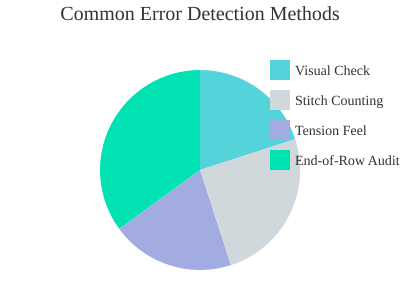
How Do Most Crocheters Catch Mistakes?
So, next time your project starts acting suspicious, remember: a little vigilance goes a long way. Your future self (and your yarn stash) will thank you!
Unraveling with Grace: Practical Fixes and Prevention Tactics
Let’s face it: if you’ve ever crocheted, you’ve probably stared at your project and thought, “Wait, what happened here?” Maybe your scarf is suddenly a triangle, or your blanket has a mysterious ruffle that wasn’t in the pattern. Welcome to the club, friend! Crochet mistakes are as inevitable as running out of coffee mid-project. But don’t worry—this field guide is packed with Crochet Solutions that’ll have you fixing, preventing, and even laughing at your oopsies.
First things first: meet your new best friend—frogging. Yes, it sounds like something you’d do in a swamp, but in the world of Beginner Crochet, “frogging” means unraveling your stitches (because you “rip-it, rip-it”). Sometimes, the only way forward is backward. If you spot a rogue stitch or a sneaky skipped chain, don’t be afraid to frog a row or two. It’s not defeat; it’s tactical retreat. Besides, research shows that identifying and correcting errors early saves time and keeps your project frustration-free. Plus, you get more practice—bonus!
Now, let’s talk about the magical world of Hook Size. Ever feel like your stitches are either strangling the hook or hanging on for dear life? That’s your tension talking. Here’s a hot tip: if your project is tighter than your jeans after Thanksgiving, grab a bigger hook. Too loose? Downsize. Studies indicate that changing hook size during a project can improve tension consistency by up to 80%. That’s not just a Crochet Tip—that’s a game-changer. And if you’re feeling fancy, use a larger hook for your foundation chain to avoid that dreaded first-row buckle. Goldilocks would be proud.
Of course, sometimes the universe throws you a curveball in the form of a manufacturer’s knot smack in the middle of your skein. Don’t panic. Don’t fight the yarn. Just cut out the knot and rejoin using a Russian join (it’s easier than it sounds, and you’ll feel like a secret agent). This little trick keeps your fabric smooth and your sanity intact. Remember: knots are a fact of crochet life, but ugly lumps don’t have to be.
Next up: keeping a tally. If you’ve ever lost count of your stitches and ended up with a lopsided masterpiece, you’re not alone. The pros swear by stitch markers, row counters, or even a scrap of contrasting yarn to keep things on track. Routine error-checks—like counting stitches at the end of each row—are a pro move. Trust me, your future self will thank you. As research shows, beginners who practice tension-regulating stitches weekly report 60% fewer mistakes over a month. That’s a lot less frogging and a lot more finishing.
Let’s not forget the most important Crochet Solution of all: practice. Yes, it’s as important as the project itself. Consistent tension doesn’t come from waving a magic wand (if only!), but from patience and repetition. As the wise Matt Spiers once said:
‘Skill is built, and so is muscle memory—don’t skip your crochet stretches.’
So, stretch those fingers, grab your yarn, and embrace the learning curve. Every mistake is a chance to get better, and every frogged row is a badge of honor in your Crochet Practice journey.
And hey, wouldn’t it be wild if we had “anti-frog” buttons on our hooks? One click and—poof!—no more unraveling. But let’s be honest, would we really want that? Sometimes, the best stories (and the best scarves) come from a little bit of chaos.
| Fix/Tip | Impact |
|---|---|
| Changing Hook Size | Improves tension consistency by up to 80% |
| Practicing Tension Stitches Weekly | Reduces mistakes by 60% over a month |
In conclusion, whether you’re a Beginner Crochet enthusiast or a seasoned yarn wrangler, mistakes are just part of the adventure. Replace knots with Russian joins, consciously pick the right hook, track your stitches, and practice routinely. With these Crochet Tips in your toolkit, you’ll unravel with grace—and maybe even a giggle or two. Now go forth and crochet, oopsies and all!
TL;DR: Crochet mistakes happen – the key is spotting, fixing, and avoiding them. Arm yourself with this guide, keep calm, and remember: every stitch is a fresh start!