Cashmere Knitting Yarn: Top 3 Stunning Facts in 2025
Why Cashmere Knitting Yarn is the Ultimate Luxury Fiber
Cashmere knitting yarn transforms ordinary projects into extraordinary heirlooms with best softness and warmth. Here’s what makes it special:
- 8x warmer than regular wool while staying incredibly lightweight
- Sourced from goat undercoat – the finest natural fiber available
- Available in pure 100% or blended options for different budgets
- Requires gentle care but becomes softer with each wash
- Perfect for scarves, sweaters, and baby items that need ultimate comfort
The magic begins with cashmere goats in Mongolia and China, where harsh winters create the softest undercoat imaginable. As one knitter shared: “This is honestly the most gorgeous cashmere I’ve ever used – I have never knit with a cashmere like yours, I will be a customer forever.”
What makes cashmere so special? The fibers are incredibly fine – much thinner than human hair – and naturally crimped for superior insulation. Unlike sheep’s wool, cashmere comes from the downy undercoat that goats grow to survive freezing temperatures.
The price reflects its rarity. Each goat produces only small amounts of usable fiber per year, which explains why cashmere yarn typically comes in smaller skeins of 25-50 grams rather than the standard 100-gram balls.
I’m Sonja Huerta, and while I’m new to crochet, I’ve quickly finded that working with luxury fibers like cashmere knitting yarn lifts every project from ordinary to extraordinary. My attention to detail helps me appreciate the craftsmanship that goes into creating these premium materials.
Cashmere knitting yarn terms to know:
– chunky knit blanket yarn
– connecting yarn in knitting
What Makes Cashmere a Luxury Fiber
There’s something almost magical about running your fingers through cashmere knitting yarn for the first time. That incredible softness comes from the fiber’s extraordinarily fine structure – each strand measures just 12-19 microns in diameter, compared to regular wool’s chunky 25-40 microns. It’s this fineness that creates the signature touch we all crave.
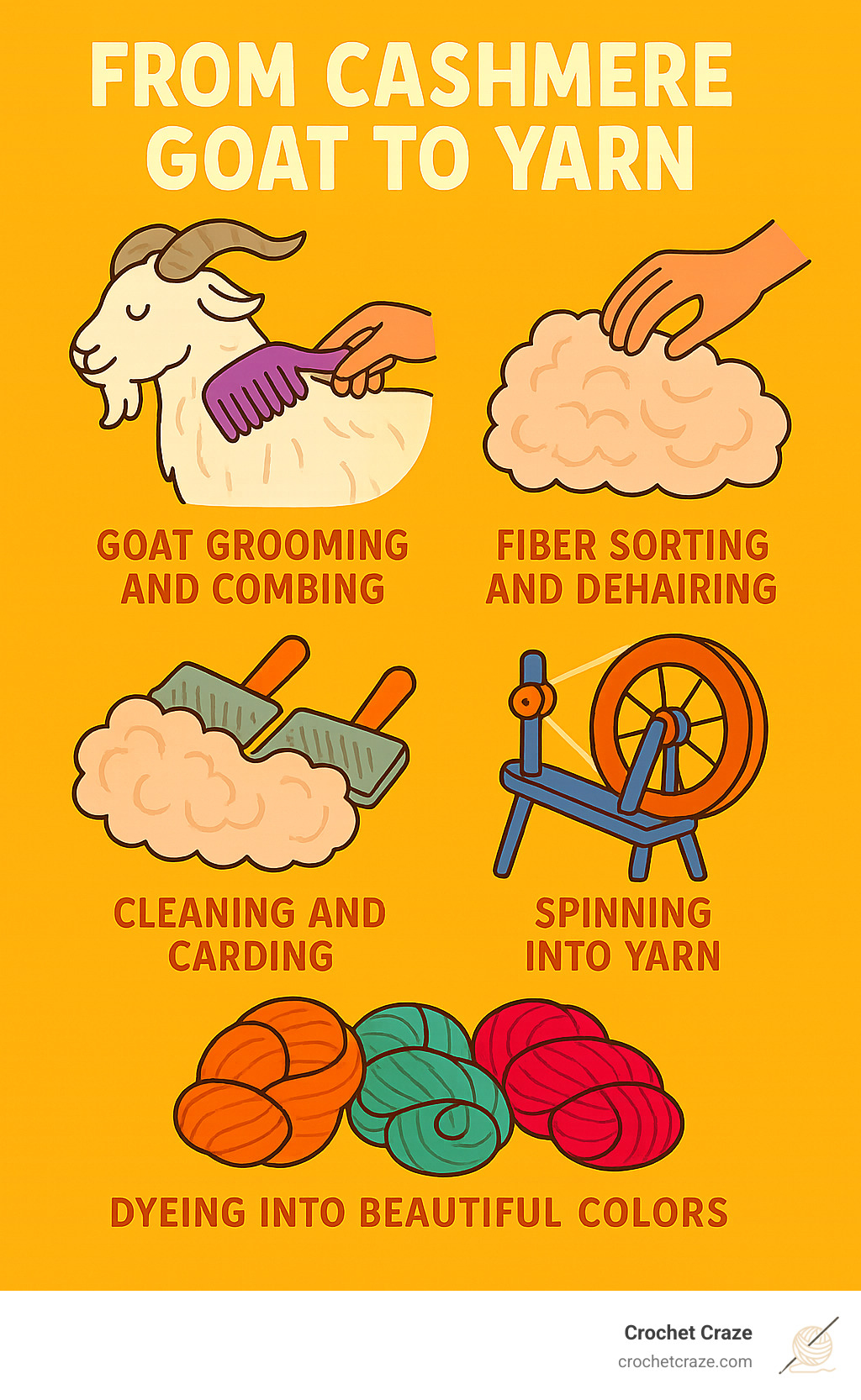
The real treasure lies in the undercoat down of cashmere goats. These hardy animals are nature’s engineers, developing a clever double-layer fleece system. The coarse outer guard hairs act like a weatherproof jacket, while underneath grows the precious soft undercoat that keeps them cozy through brutal winters. When spring arrives, this downy layer is carefully combed out – and that’s what becomes our luxury yarn.
Here’s what makes cashmere truly special: it’s 8 times warmer than regular wool while weighing almost nothing. The secret is in the natural crimp of cashmere fibers, which creates tiny air pockets for superior insulation. You’ll also notice that beautiful natural drape and subtle halo effect that gives finished pieces an neat, almost luminous appearance.
Unlike synthetic alternatives, cashmere breathes with you, making it comfortable in various temperatures. Scientific research on animal fibers continues to confirm what knitters have known for centuries – cashmere simply performs differently than other materials.
Cashmere vs. Other Wools
When you’re deciding between luxury fibers, understanding the differences helps you choose wisely. Merino wool offers lovely softness and practical machine-washability, but it’s still coarser than cashmere and lacks that exceptional warmth-to-weight ratio we love.
Alpaca brings similar warmth with its own unique character – it’s wonderfully cozy but feels heavier and doesn’t have cashmere’s flowing drape. Mohair adds strength and that distinctive fuzzy texture, which is why it’s often blended with cashmere for structure, though pure mohair can feel scratchy against sensitive skin.
The itch factor is where cashmere truly wins hearts. While some people find traditional wool irritating, cashmere’s fine diameter makes it naturally gentle against skin. This is why it’s perfect for scarves, baby items, and anything worn close to your body.
| Fiber Type | Warmth Rating | Weight | Itch Factor | Best For |
|---|---|---|---|---|
| Cashmere | Excellent | Ultra-light | None | Luxury scarves, baby items |
| Merino | Good | Light | Minimal | Everyday sweaters |
| Alpaca | Excellent | Medium | Low | Cozy blankets, outerwear |
| Mohair | Good | Medium | Moderate | Textured accessories |
Cashmere Knitting Yarn vs. Merino
Cashmere knitting yarn commands premium pricing compared to merino, and there are solid reasons behind this difference. While the price per gram is significantly higher, you’re paying for rarity, processing complexity, and that ultimate luxury feel.
The pilling tendency differs between these fibers too. Cashmere has shorter staple length (individual fiber length), making it more prone to those little fuzzy balls than merino’s longer, stronger fibers. Don’t let this scare you away – proper care and gentle handling keep pilling manageable.
Fiber length also affects your knitting experience. Merino’s longer fibers create more forgiving yarn that’s great for beginners, while cashmere requires a gentler touch but rewards you with incredible softness and warmth.
The Price of Exclusivity
The high cost of cashmere isn’t just marketing – it reflects genuine scarcity. Each cashmere goat produces only 150-200 grams of usable fiber annually. That’s barely enough for one sweater! This limited yield, combined with the complex supply chain from remote regions like Mongolia and China, naturally keeps prices liftd.
You’ll notice cashmere knitting yarn often comes in smaller 25-28 gram skeins rather than the standard 100-gram balls. This isn’t just fancy packaging – it reflects the precious nature of the fiber and lets you buy exactly what you need for those special luxury projects without waste.
The journey from remote mountain pastures to your knitting basket involves multiple hands and careful processing steps, each adding to the final cost but ensuring you receive the finest possible fiber.
From Goat to Skein: Sourcing, Ethics & Environment
The story of cashmere knitting yarn begins in some of the world’s most remote places. Picture the windswept grasslands of Mongolia and the high plateaus of China, where about 90% of all cashmere originates. These aren’t your typical farm settings – they’re harsh, beautiful landscapes where temperatures can swing from blazing hot summers to bone-chilling winters.
It’s exactly these extreme conditions that create the magic. The wild temperature swings force cashmere goats to grow that incredibly soft undercoat we treasure so much. Without those frigid winters, there would be no cashmere at all.
The collection process is surprisingly gentle. Unlike sheep shearing, cashmere harvesting happens through careful combing during spring molting season. Picture herders sitting patiently with their goats, using special combs to collect the soft undercoat as the animals naturally shed their winter protection. It’s labor-intensive work that requires skill and patience.
Many of these goats live with nomadic herds that follow ancient migration patterns across vast grasslands. In Mongolia especially, herding families have practiced this lifestyle for centuries, moving their animals seasonally to find the best grazing. It’s a way of life that’s both beautiful and challenging.
But here’s where the story gets complicated. The growing demand for cashmere has led to larger goat populations, and this has created some serious environmental challenges. The problem is overgrazing – too many goats eating too much grass in areas that can’t handle the pressure.
Cashmere goats are particularly tough on grasslands because they don’t just nibble the tops of plants like sheep do. They pull grass up by the roots, which can damage fragile ecosystems if not managed properly. This has contributed to desertification in some regions.
The good news? Some forward-thinking companies are now offering recycled cashmere options. They’re finding ways to reclaim fibers from manufacturing waste or gently used garments. It’s not quite the same as virgin cashmere, but it’s a smart way to reduce environmental impact while making luxury fiber more accessible.
Ethical Cashmere Certifications
As more knitters become conscious about where their yarn comes from, certification programs are stepping up to ensure responsible production. The OEKO-TEX Standard 100 certification is one to look for – it guarantees that yarns are produced without harmful chemicals, protecting both the workers who make them and the crafters who use them.
The Responsible Cashmere Standard (RCS) goes even further. This certification requires producers to meet strict animal welfare standards and environmental protection measures. Certified farms must prove they’re treating their goats well, managing their land responsibly, and keeping their workers safe.
Farm audits are becoming more common too. Some yarn companies now conduct regular visits to their partner farms to verify conditions firsthand. As one ethical producer puts it: “We visit our partner farms twice a year to ensure respectful treatment of goats and sustainable land use practices.”
Environmental Regeneration Projects
The most exciting development in cashmere production is the move toward regenerative practices. Progressive producers are implementing pasture rotation systems that give vegetation time to recover between grazing periods. They’re also setting goat population caps to prevent overgrazing in the first place.
Community programs are helping herders adopt sustainable practices while preserving their traditional way of life. These initiatives often include education about better pasture management, training in improved animal care techniques, and support for developing alternative income sources.
Some companies are going even further, investing directly in grassland restoration projects. They’re replanting native vegetation, implementing water conservation measures, and working with local communities to heal damaged landscapes. These efforts help ensure that cashmere production can continue sustainably for generations to come.
Choosing Your Cashmere Knitting Yarn
Finding the perfect cashmere knitting yarn feels like choosing jewelry – you want something that matches your project, your skill level, and your budget. The good news? There’s a cashmere option for almost every knitter.
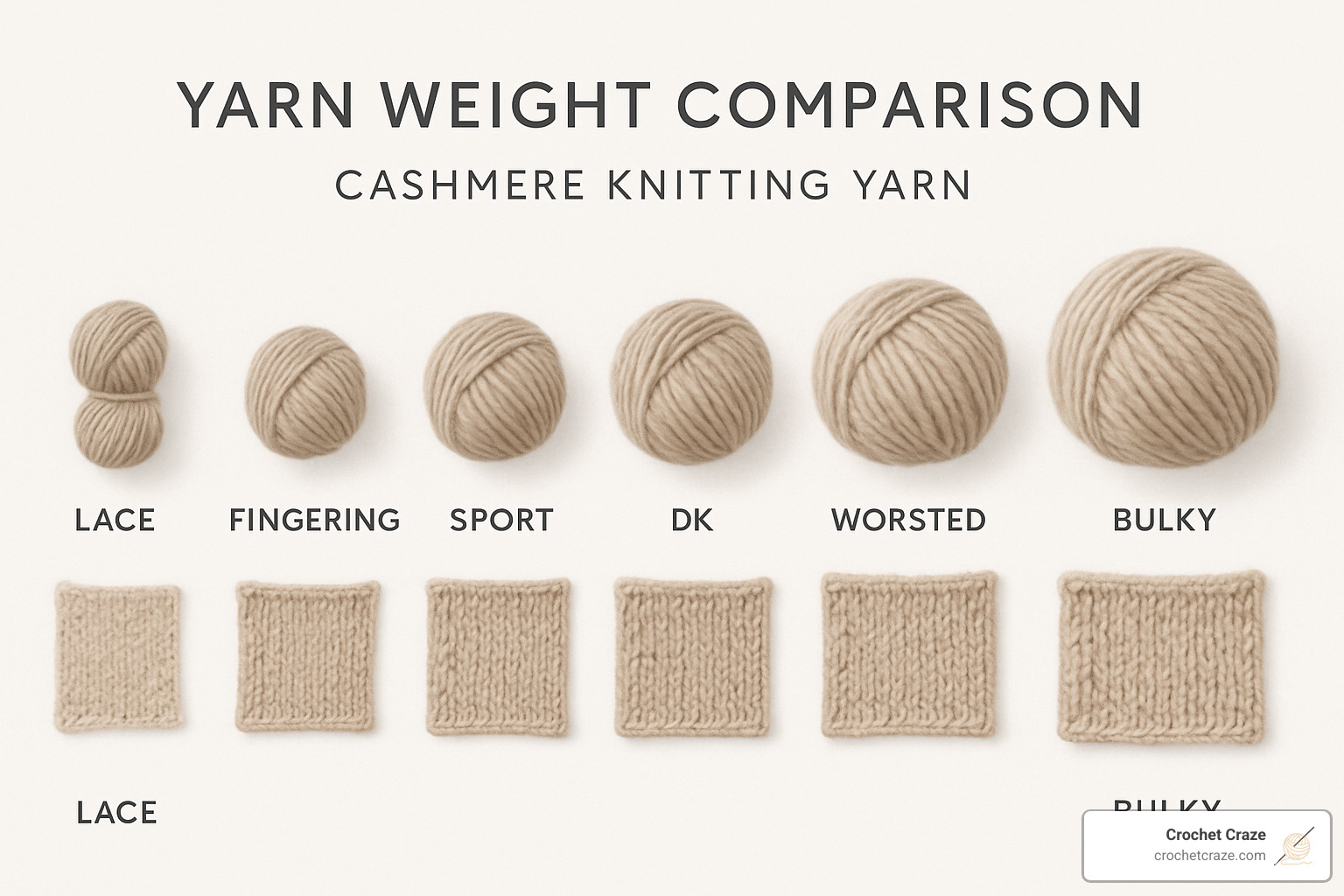
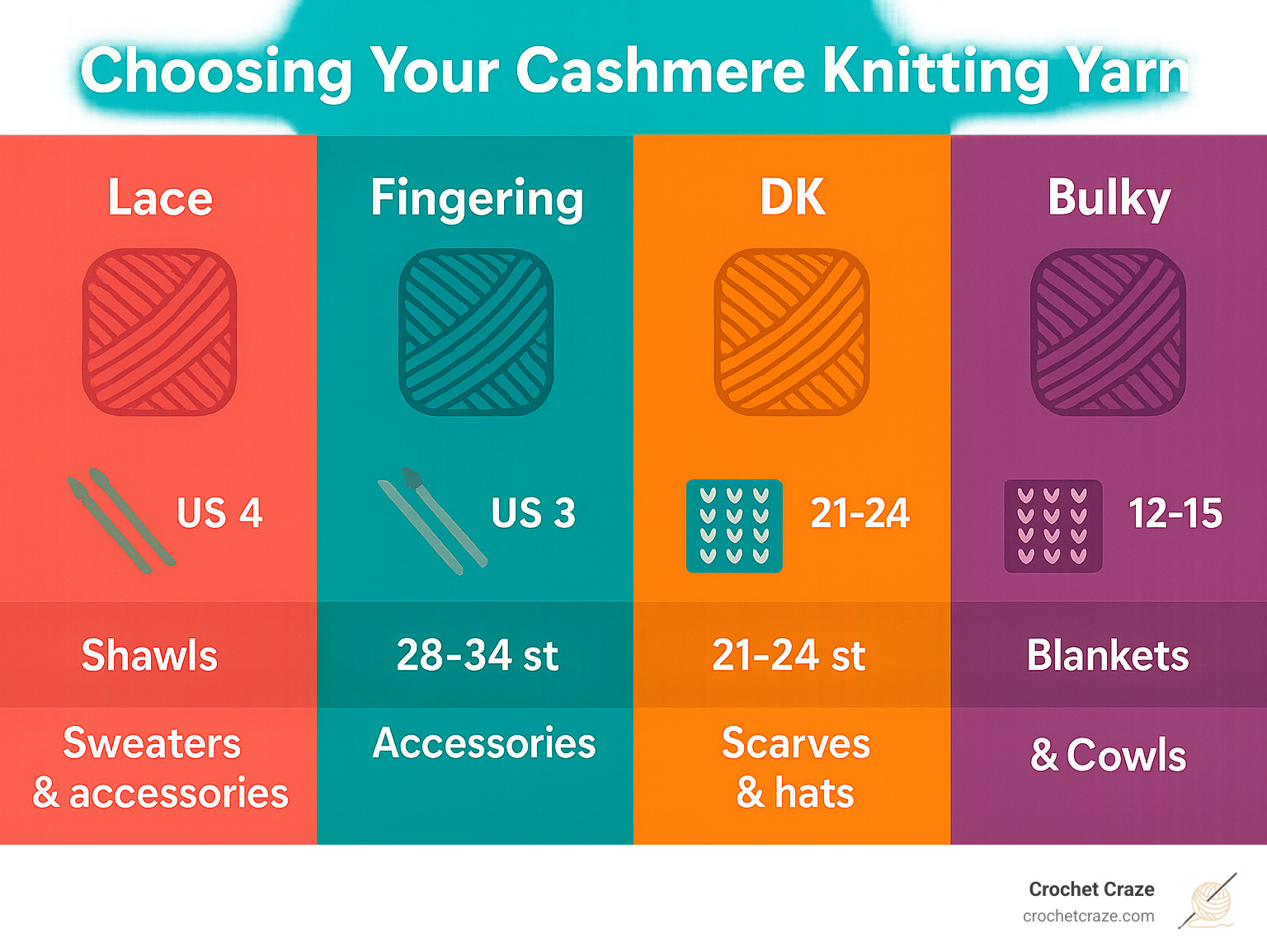
Yarn weight makes all the difference in your finished project. Lace weight cashmere creates those gorgeous, floaty shawls that look like they’re made of clouds. With around 150-187 meters per 25 grams, you’ll need patience, but the results are absolutely stunning.
Fingering weight cashmere is the sweet spot for many knitters. It gives you beautiful stitch definition for sweaters and baby items while still offering decent yardage – typically 217 yards per 28 grams. This weight shows off intricate stitch patterns beautifully.
For everyday luxury, DK and worsted weights knit up faster while keeping all that cashmere softness. They’re perfect when you want to finish a scarf or hat without spending months on it.
Bulky cashmere might sound like an oxymoron, but it’s absolutely magical. Despite being thick, it stays incredibly light and breathable – something synthetic yarns just can’t match.
The color palettes in cashmere tend toward sophisticated neutrals and rich jewel tones. The fiber takes dye so beautifully that even simple stockinette looks expensive.
Pure 100% Cashmere Knitting Yarn
Pure cashmere knitting yarn is the ultimate splurge, and honestly? Sometimes it’s worth every penny. Brands like Cardiff Cashmere, Knitting for Olive, and Artyarns have built their reputations on exceptional quality.
Knitting for Olive Compatible Cashmere exemplifies what premium cashmere should be. Their 100% cashmere comes with Oeko-Tex Standard 100 certification and Italian production standards. At 187 meters per 25-gram skein, you get excellent yardage for delicate projects.
Artyarns Cashmere 1 offers hand-dyed luxury that’s perfect for special occasions. With 492 yards per 50-gram skein, it provides generous yardage for substantial lace projects. The hand-dyeing process creates depth and variation that machine-dyed yarns can’t match.
Yardage per skein varies dramatically with pure cashmere. Lace weights give you more meters per gram, while bulkier weights offer less but work up quickly. This isn’t a flaw – it reflects how the fiber is prepared for different uses.
Cashmere Blends & Smart Hybrids
Cashmere blends are where luxury meets practicality. They give you much of cashmere’s softness while adding strength, durability, or easy care – often at a more accessible price point.
Merino-cashmere blends typically contain 10-15% cashmere with merino wool making up the rest. This combination gives you cashmere’s signature softness with merino’s strength and often machine-washable convenience. It’s a smart choice for everyday luxury.
Cashmere-silk blends add gorgeous sheen and improved drape. The silk strengthens the yarn while maintaining that luxury feel, making these blends perfect for special occasion garments that need to hang beautifully.
Nylon-reinforced cashmere might sound less luxurious, but hear me out. A small percentage of nylon (usually 10-15%) dramatically improves durability and reduces pilling while keeping most of cashmere’s softness. It’s particularly smart for items that get heavy wear.
Machine-washable cashmere blends represent a game-changer for busy knitters. These specially treated yarns let you enjoy cashmere luxury without the hand-washing commitment. They’re absolutely perfect for children’s items and everyday accessories.
Faux Cashmere: Pros & Cons

Faux cashmere made from specially treated nylon can feel surprisingly soft right out of the skein. It’s budget-friendly and often marketed as being “just as soft as real cashmere” – but is it really?
The pros are pretty compelling. Faux cashmere costs a fraction of the real thing while feeling initially soft. It’s more durable, machine-washable, and resistant to pilling. For practice projects or beginner knitters, it removes the pressure of working with expensive fiber.
But the differences become clear over time. Synthetic fibers don’t breathe like natural cashmere, which can make finished garments feel clammy. They also lack cashmere’s superior insulation and natural temperature regulation – you know, the reasons we love cashmere in the first place.
The sustainability debate around faux cashmere is complex. While it doesn’t require animal farming, synthetic production involves petroleum-based processes and creates non-biodegradable waste. Real cashmere, despite environmental concerns, remains a renewable natural resource.
For beginners or budget-conscious knitters, faux cashmere can provide a taste of luxury-style knitting without the investment risk. But if you’re seeking true cashmere benefits – that incredible warmth, breathability, and long-term durability – synthetic alternatives will leave you wanting more.
Knitting, Caring & Inspiring Projects
Working with cashmere knitting yarn feels like a gentle dance between you and the fiber. The yarn wants to flow and drape naturally, so fighting against its nature will only lead to frustration. Instead, let cashmere guide you toward techniques that showcase its incredible softness.
Needle size selection becomes more art than science with cashmere. The yarn’s natural loft means your usual needle size might create fabric that’s too tight. Try going up a needle size from what the pattern suggests – cashmere needs room to breathe and show off its beautiful drape.
Always knit a tension swatch first, even if you normally skip this step. Cashmere behaves differently than regular wool, and getting the gauge right makes the difference between a beautiful finished piece and a disappointing one.
Stitch definition gets softer with cashmere’s natural fuzziness. Those intricate cable patterns that look stunning in wool might disappear into cashmere’s gentle halo. Simple stockinette stitch or basic lace patterns often work best, letting the fiber’s luxury speak for itself.
Blocking cashmere requires a gentle touch. Use cool water and lay your piece flat to dry, patting it gently into shape rather than stretching. The change during blocking is magical – the fiber blooms and reveals its full softness and incredible drape.
Pilling is cashmere’s one weakness, caused by those short fibers that make it so soft. Keep a cashmere comb nearby and gently remove pills as they appear. This simple maintenance keeps your projects looking fresh and extends their life significantly.
Techniques for Cashmere Knitting Yarn
Loose gauge tips can transform your cashmere knitting experience. Use a slightly larger needle than usual and keep your tension relaxed. Think of it as giving the fiber space to show off its natural beauty – tight knitting squashes cashmere’s wonderful loft.
Strand doubling works beautifully with lace-weight cashmere knitting yarn. Holding two strands together creates a heavier weight while keeping all that luxurious softness. This technique works especially well when substituting cashmere for mohair in existing patterns.
Alternating skeins prevents those annoying color variations that can appear in hand-dyed yarns. Work two rows from one skein, then switch to another skein for two rows. This simple trick blends any subtle dye differences seamlessly throughout your project.
Care & Storage Best Practices
Proper care turns your cashmere projects into lifelong treasures. Use mild detergent made specifically for wool and cashmere – regular detergent can strip the natural oils that keep cashmere soft.
Cool water is non-negotiable. Hot water turns beautiful cashmere into a felted disaster faster than you can say “oops.” Gently squeeze soapy water through the fabric without agitating, then rinse thoroughly with equally cool water.
Cedar storage protects against moths while letting the fiber breathe naturally. Plastic bags trap moisture and create mildew problems, so stick with breathable cotton bags or wrap pieces in acid-free tissue paper.
De-pilling should become part of your regular routine. Use a proper cashmere comb or fabric shaver designed for delicate fibers. Work gently in one direction with light pressure – aggressive de-pilling can damage the fabric structure.
Project Ideas to Try Today
The Sophie Scarf makes a perfect introduction to cashmere knitting. This simple yet neat design showcases the fiber’s natural drape while staying achievable for intermediate knitters. The pattern lets cashmere do what it does best – feel incredibly soft against your skin.
No-Frills Sweater patterns work beautifully in cashmere, putting the fiber’s natural beauty front and center. Simple construction highlights cashmere’s warmth and softness without competing stitch patterns stealing the show.
Oslo Hat projects offer quick satisfaction while using smaller amounts of precious cashmere. These accessories make wonderful gifts and let you experience luxury knitting without a huge investment.
Baby Bear Bonnet patterns take advantage of cashmere’s gentle, itch-free nature. The fiber’s natural softness makes it perfect for delicate baby skin, creating heirloom pieces that families treasure for generations.
The Broderie Neckerchief offers an neat way to showcase cashmere’s drape and luxury feel. This sophisticated accessory works for any occasion and makes every outfit feel special.
Frequently Asked Questions about Cashmere Knitting Yarn
What should I consider before buying cashmere knitting yarn?
Choosing your first cashmere knitting yarn can feel overwhelming, but focusing on three key areas will guide you to the right decision. Fiber grade makes the biggest difference in your knitting experience – higher grades use longer, stronger fibers that create less pilling and last longer.
Think carefully about your project type before investing. A delicate baby blanket deserves pure cashmere’s gentle touch, while a daily-wear scarf might work beautifully with a cashmere blend that’s easier to care for. Consider how often you’ll wear or wash the finished piece.
Budget planning goes beyond the price per skein. Cashmere often comes in smaller quantities than regular yarn, so you might need more skeins than expected. Calculate your total yardage needs first, then multiply by the cost per skein to avoid sticker shock at checkout.
Cashmere knitting yarn is an investment in both your project and your knitting experience. The luxury feel and beautiful results often justify the higher cost, especially for special occasion pieces or gifts.
Why does cashmere pill and how can I reduce it?
Pilling happens because cashmere has naturally short staple length – the individual fibers are much shorter than wool or cotton fibers. When these tiny fibers work loose during wear or washing, they tangle together on your fabric’s surface, creating those annoying little balls.
The good news? Gentle handling prevents most pilling problems. During knitting, avoid pulling too hard on your yarn or creating excessive tension. When wearing finished items, minimize friction from bags, belts, or rough surfaces.
Using a pilling comb regularly keeps your cashmere looking fresh. Work gently in one direction, removing pills while they’re small and loose. Don’t wait until pilling becomes severe – early action preserves your fabric’s smooth appearance.
Proper storage also helps. Fold cashmere items carefully and store them where they won’t rub against other clothing. A little prevention saves hours of de-pilling later.
Is faux cashmere really comparable to the real thing?
Faux cashmere might fool you at first touch, but the hand-feel differences become obvious once you start knitting and wearing it. Real cashmere has a unique warmth and breathability that synthetic fibers simply can’t match, no matter how soft they feel initially.
The price gap exists for good reasons. While faux cashmere costs much less, it lacks genuine cashmere’s superior insulation properties and natural temperature regulation. You might save money upfront, but you won’t get the same luxurious wearing experience.
Performance trade-offs become clear over time. Synthetic versions may pill differently, lose their softness faster, or feel less comfortable against your skin. They also don’t have cashmere’s natural ability to keep you warm when it’s cold and cool when it’s warm.
For budget-conscious knitters or beginners wanting to practice luxury techniques, faux cashmere offers a reasonable starting point. However, once you experience real cashmere knitting yarn, the difference becomes unmistakable. Think of faux cashmere as training wheels – helpful for learning, but not quite the real riding experience.
Conclusion
Cashmere knitting yarn represents the pinnacle of luxury fibers, changing everyday projects into treasured heirlooms with its best softness and warmth. From the windswept grasslands of Mongolia to your knitting basket, each precious skein carries centuries of tradition and the promise of creating something truly special.
The magic of cashmere lies in its remarkable properties – being 8 times warmer than regular wool while staying incredibly lightweight. This isn’t just marketing speak; it’s the result of nature’s perfect design, where harsh winters create the finest undercoat imaginable. Whether you choose pure 100% cashmere for ultimate luxury or smart blends that offer easier care, understanding what makes this fiber special helps you create projects you’ll cherish forever.
Making ethical choices matters more than ever in today’s world. When you support producers who prioritize animal welfare and environmental sustainability, you’re not just buying yarn – you’re contributing to positive change. Look for certifications like OEKO-TEX and Responsible Cashmere Standard when shopping. These aren’t just fancy labels; they represent real commitments to treating animals well and protecting the grasslands where cashmere goats roam.
At Crochet Craze, we believe luxury fibers shouldn’t intimidate anyone. Yes, cashmere requires a bit more care than your everyday yarn, but the techniques aren’t complicated once you understand them. Gentle handling, proper blocking, and regular de-pilling will keep your cashmere projects looking beautiful for years.
Starting your cashmere journey doesn’t mean diving into the deep end immediately. Begin with a simple scarf or hat pattern that lets the fiber’s natural beauty shine. As your confidence grows, you can tackle more complex projects knowing you have the foundation skills needed for success.
The investment in quality cashmere knitting yarn pays dividends in satisfaction and longevity. One well-made cashmere piece will bring more joy than multiple lesser items. It’s about choosing wisely, caring properly, and experiencing the unique pleasure that only genuine cashmere can provide.
For more info about advanced yarn tips, explore our comprehensive guides that help you steer luxury fibers with confidence. Every expert knitter started as a beginner, and with proper guidance, you can master the art of working with cashmere too.
Your cashmere trip begins with that first skein. Choose a project that excites you, take your time, and enjoy every stitch. Because some moments – and some projects – deserve nothing less than the very best that cashmere knitting yarn can offer.