
Ever felt the excitement of a single yarn loop becoming something beautiful and useful? This article is your guide to lace knitting patterns. It will help you go from curious to confident. We’ll use a 178-page book, Sarah Bradberry’s online collection, and PieceWork’s knitted-lace guide to give you the best advice and projects.
Expect to find clear, useful lace designs for edgings, scarves, and shawls. The Bradberry collection has over 100 updated patterns. They’re great for fine cotton edgings or airy lace shawls and wraps. For quick inspiration, check out PieceWork’s seven curated projects. They show how old techniques, like Victorian abbreviations, can be used in modern knitting.
You’ll find patterns that respect original copyright and those updated for today’s knitting. Plus, tips on using public-domain material ethically. For more modern lace patterns, visit Knit Picks lace patterns as you read on.
Key Takeaways
- Sources include a 178-page hardcover reference, Sarah Bradberry’s large online collection, and PieceWork’s knitted-lace compendium.
- Coverage ranges from lace edgings to full lace shawls and wearable knitted lace projects.
- Patterns are updated for modern knitting language and note copyright status where relevant.
- You’ll get practical projects plus historical background that informs today’s lace designs.
- The article balances technique, ethics, and pattern choices so your next lace project succeeds.
Why Lace Knitting Patterns Continue to Captivate You
When you pick up needles, you feel a strong connection to tradition and skill. Timeless lace has a rich history that feels like a journey through craft books and museums. Each stitch in lace feels like more than just a part of a project.
The timeless appeal of lacy textures
Lace textures catch your eye with their airy, openwork design. Just a few simple stitches can create fabrics that look luxurious and light. You can make grand scarves or shawls with just a little yarn.
How historical patterns influence modern designs
Historical knitting patterns are not just old relics. You can find them in public collections and update them easily. Magazines like PieceWork show how old designs can inspire new ones.
What makes lace work look complex with simple techniques
Lace uses just a few basic stitches to create complex designs. Styles from Shetland to Orenburg teach you how to make motifs that look detailed but are easy to knit. This mix of simplicity and beauty is why lace keeps drawing you back.
Essential Supplies and Yarn Choices for Elegant Lace
You want a project that looks delicate and thoughtful. Choose yarn based on the project’s use. For example, use fine cotton or thread for edgings on linens. Shawls and scarves look great with airy wool blends.
When updating patterns, designers often suggest adjusting stitch counts. This keeps the original look intact.
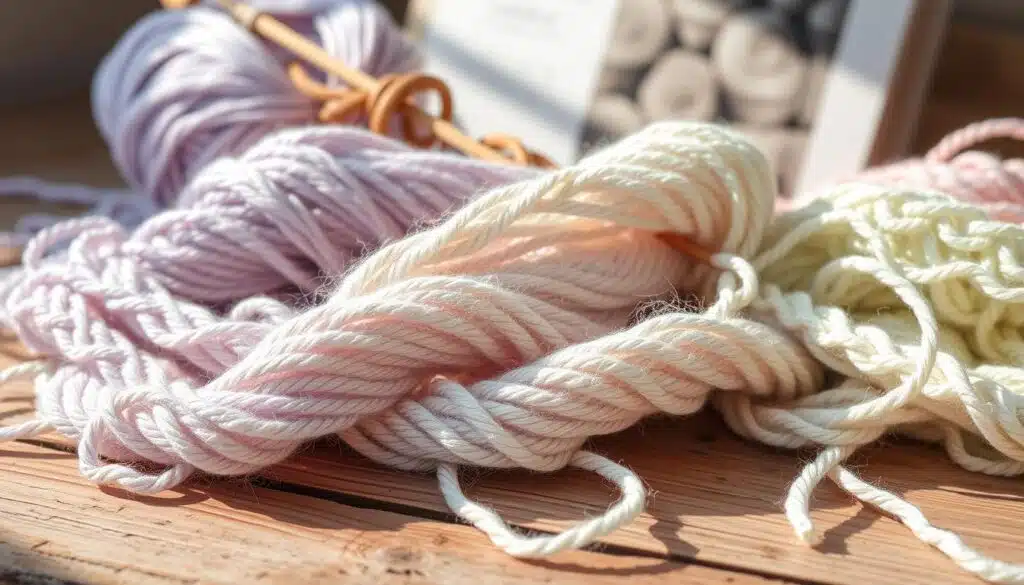
Choosing the right yarn: thread, fingering, and lace-weight options
Thread is best for crisp edgings and fine pieces. Fingering yarn works well for lightweight garments. Lace-weight yarn is perfect for featherlight shawls.
For example, PieceWork projects use angora blends for softness. Malabrigo Lace and silk-cotton blends add sheen and movement.
Needles, blocking tools, and accessories that matter
Needle size affects stitch clarity. Use small needles for thread, medium for fingering yarn, and larger for lace-weight. Ashford bamboo or Lykke needles are good choices.
Blocking tools are key for lace. Use blocking wires and T-pins to open motifs evenly. Quality tools help preserve shape without stretching fibers.
Keep stitch markers and lifelines ready for repeats. A swatch on the right needles shows your gauge. This predicts how the fabric will block. For more on yarn, see best yarn for lace.
How fiber content affects drape and stitch definition
Silk and bamboo give glossy stitch definition and elegant drape. Cotton and linen have crisp motifs. Merino and alpaca add loft or halo.
Choose plied yarns for durability. Single-ply yarns are airy but need gentle handling and the right needles.
| Project Type | Recommended Yarn | Needles | Key Tools |
|---|---|---|---|
| Edgings on linens | Fine cotton or thread | Steel or 1.5–2.5 mm needles | Small blocking pins, fine blocking wires |
| Lightweight shawl | Lace-weight yarn (silk, silk-cotton blends) | 3–4 mm knitting needles | Blocking wires, T-pins, soak wash like Unicorn Fibre Wash & Rinse |
| Scarf or bonnet | Fingering yarn (merino, angora blends) | 2.5–3.5 mm knitting needles | Stitch markers, lifeline, medium T-pins |
| Warm lace wrap | Light worsted or DK with woollen-spun twist | 4–5 mm knitting needles | Heavy-duty blocking pins, wide blocking surface |
Swatch with the needles you plan to use. Test a small motif, wash it gently, and pin with blocking tools. This shows openness and drape. For more on yarn types and personal experiences, see yarn types unraveled.
Beginner-Friendly Lace Knitting Patterns to Try
Start small and win big. If you’re new to lace, pick projects that teach one skill at a time. This builds confidence. Beginner lace patterns from trusted sources make complex charts easy to follow.
Look for public domain lace collections with clear instructions. They often have classic lace edgings and insertions in modern knitting language. These patterns help you practice yarnovers, decreases, and repeats without a big project.
The best short projects are narrow scarves, trim for a pillow, or a tea towel edging. They teach tension control and blocking. You can finish them in a weekend. Simple lace motifs make mistakes easy to spot and fix.
Try an eight-row edging from Victorian sources. An eight-row edging offers fast repetition and a compact learning loop. You learn repeat structure and how small changes affect drape.
PieceWork’s Delineator Leaf Lace and other period edgings are great examples. They are about two inches wide and look dramatic on modern fabrics. Working these designs teaches you how to read repeats and balance increases with decreases.
If you prefer guided practice, a 178-page hardcover reference offers step-by-step stitch diagrams and practice patterns. Use it alongside public domain lace scans for variety. Switching between a modern guide and antique public domain lace helps you match old notation to today’s abbreviations.
To get started, pick three tiny projects: a starter edging, a narrow scarf in simple lace, and one eight-row edging adapted for your yarn. Knit them in a fingering or lace-weight yarn. Blocking will show your progress clearly.
When you finish these pieces, you will feel ready to move on. The skills from simple edgings translate to larger shawls and heirloom trims. Keep the practice pieces; they make lovely gifts and reference swatches for future projects.
Intermediate Lace Projects to Stretch Your Skills
You’re ready to move beyond simple edgings. Try projects that blend repeat patterns into larger shapes. You’ll practice shaping, tension, and chart reading. Books from Heritage Press and hardcover compilations offer clear instructions for intermediate lace knitting.
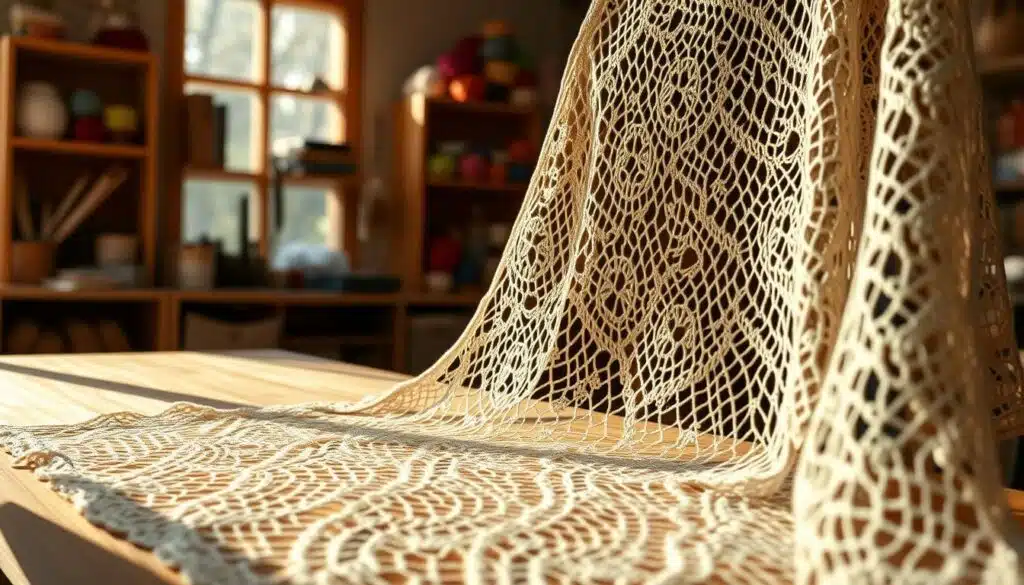
Shetland-style scarves teach you fine-gauge work and subtle increases. You’ll learn to keep even tension across long repeats while shaping narrow edges. PieceWork’s Shetland-style bonnet and booties show how motifs scale, and the Meteliza scarf demonstrates triangular shaping you’ll use for triangular shawls.
Edgings built from a leaf lace motif or shell patterns are ideal next steps. The lace collection contains Apple Leaf Lace, Daisy Lace, Birnam Lace, and Berna’s Torchon Lace. These motifs work as borders or as the basis for larger panels when you repeat and join them.
Victorian charts often use terse abbreviations. Vintage pattern translation turns those shorthand notes into clear row-by-row instructions. Many updated editions explain old symbols and offer stitch counts, so you can follow a pattern without guessing.
Below is a quick reference to help you choose an intermediate project based on the technique you want to practice.
| Project Type | Key Skill | Recommended Pattern Source |
|---|---|---|
| Shetland-style scarf | Fine gauge repeat management | PieceWork collections and hardcover pattern compilations |
| Triangular shawl | Center increases and edge shaping for triangular shawls | Meteliza scarf instructions and updated Victorian charts |
| Leaf-motif edging | Small-motif repeats and joining | Lace collection leaf and shell motif compendium |
| Victorian update project | Vintage pattern translation and abbreviation decoding | Hardcover translations and PieceWork historical notes |
Pick a pattern that lists stitch counts and charts. Work a swatch to test yarn and needles before committing. When you decode vintage abbreviations, mark each step on a printed chart. This habit saves time and keeps your tension steady as you build confidence in intermediate lace knitting.
Advanced Lace Knitting Patterns and Motifs
You’re ready to move past simple repeats and tackle motifs that sing. This section gives practical steps for combining complex panels, reading older texts, and making antique pattern corrections. These corrections keep the original charm while making the work wearable.
Complex motifs require patience and a clear map. Start with a small swatch of Orenburg lace to learn how increases and decreases shape openwork. Practice a diamond lace repeat next; the geometry trains your stitch counting. Try a torchon variant for firm edges and strong motif definition.
When you assemble larger pieces, think modularly. Knit motif panels, block them, then join in stages. This method simplifies placement for scarves, shawls, and wraps. Matching gauge across panels saves hours of rework.
Antique pattern corrections often turn a frustrating line into a clear instruction. Compare the original text to a modern chart. Mark ambiguous rows, then work a tiny sample. Use the sample to test fixes before altering the whole pattern.
PieceWork and major curators show how motifs that look complex rest on repeated simple moves. Use their charts to see how a cat’s-paw or mouse-print motif fits into triangular shawls. Those examples reveal how advanced lace knitting relies on disciplined repetition, not mystery.
If you need a quick checklist, follow these steps:
- Swatch each motif to confirm stitch count and gauge.
- Chart ambiguous sections and annotate likely typos.
- Block motif samples to verify shape before joining.
- Use torchon edges to stabilize flowing diamond lace borders.
- Keep notes on any antique pattern corrections for future projects.
Work steadily and keep your pattern sources close. A corrected antique instruction becomes a teaching tool. You’ll soon combine Orenburg lace panels with diamond lace inserts and torchon borders. This creates heirloom-quality pieces that look complex but were built one reliable repeat at a time.
How to Use Lace Edgings and Insertions in Your Projects
Adding lace to everyday items is easy with a few smart choices. First, match the lace weight to the fabric. Fine cotton edgings are great for pillowcases and table linens. Thicker yarn works better for washable throw pillows and knit shawls.
Adding lace edgings to household linens and sewn items
Choose an edging that fits the item’s scale. For napkins or hand towels, use narrow repeats and small needles. Table runners and centerpieces look good with fluted designs and eyelets.
Mary Frances Wogec’s method of using garter borders with alternating stockinette bands is useful. It adds ruffling without needing aggressive blocking, perfect for easy-care linens.
Incorporating insertions in garments, christening bags, and bonnets
Knitted insertions can break up large surfaces on dresses and shawls. Sew or graft them into seams for a neat finish. When adding christening bag lace, choose motifs that sit flat when filled.
Karen E. Hooton’s christening bag example shows how traditional motifs add cultural weight without complicating construction.
Need a quick finishing refresher? Check out a concise guide to finishing methods at knitting finishing techniques. It helps you attach edgings cleanly and hide joins on both sewn and knitted pieces.
Scaling vintage edgings for wider or narrower applications
Scaling lace patterns is mostly math and taste. Adjust the number of repeats to change the edging’s width. Change needle size and yarn weight to alter the finished dimensions.
If a vintage pattern uses an 8-stitch repeat, add or remove whole repeats instead of fiddling with partial motifs. This keeps the design balanced.
Use pattern bands to adapt antique edgings for modern use. Swap a narrow band for a wider one to create proportion on contemporary pillow shams. If you need more ruffle, choose a yarn with spring and pick needles one size up.
| Project | Recommended Lace Type | Scaling Tip | Finishing Note |
|---|---|---|---|
| Pillowcase | Fine cotton lace edgings for linens | Add repeats to match hem length | Sew with tiny invisible stitches |
| Table centerpiece | Fluted eyelet edging | Use smaller needles for denser eyelets | Block lightly to preserve shape |
| Shawl | Knitted insertions | Increase yarn weight for drama | Graft or mattress stitch joins |
| Christening bag | Christening bag lace | Keep motif repeats whole for symmetry | Line bag for structure |
| Bonnets | Knitted insertions and narrow edgings | Shrink repeats to keep scale small | Attach before seaming for neat edge |
Preserving and Updating Public-Domain Lace Patterns
You love the charm of old lace but want patterns you can actually read and knit. Start with reliable public-domain lace patterns from historical magazines, museum bulletins, and published compilations. These sources give you authentic stitch sequences and motifs without legal fuss. Editorial editions often add clarity and modern abbreviations, making it easier to start.
Where to look
Antique knitting sources include magazines like Delineator and Needlecraft Magazine, museum publications from the Metropolitan Museum of Art, and curated compilations in hardcover books. Reputable online archives and university pages host scanned plates and pattern pages you can study. For a practical gateway, try the curated lace resources at this lace archive, which links to scans and notes that ease your search.
How modernizers work
Pattern modernization means translating old abbreviations, correcting errata, and testing repeats for gauge. Collectors and curators take public-domain lace patterns, knit samples, and publish corrected charts. Sarah Bradberry, who organized a large lace-edging collection, labels each entry as public domain, curator copyright, or used with permission. You get clear credit lines, corrected steps, and guidance on adapting motifs to new yarn weights.
Copyright and ethics
You should care about copyright knitting because it protects living designers while leaving truly public material free to use. When a pattern bears a modern editor’s copyright, respect that credit and follow any stated reuse terms. If a pattern is public domain, you can adapt and share it, but you should cite the original source when possible. Ethical use builds trust between you, designers, and curators.
Practical tips for safe reuse
- Check publication dates and publisher notes to confirm public-domain status.
- Look for editor’s notes that explain pattern modernization and corrections.
- Credit the original magazine, book, or collection when you post your project.
- If a curator like Sarah Bradberry claims copyright on a modernized version, ask before republishing their edits.
With a little due diligence, you can explore antique knitting sources and bring classic lace to life. Respectful pattern modernization preserves history and makes it wearable for today.
Project Ideas and Free Pattern Resources
Ready to start a lacy quick win or a long, satisfying heirloom? Below are curated ideas and reliable sources that let you jump into knitted-lace projects with confidence. Use these for practice, gifts, or to revive a vintage motif with modern yarns.
Seven ready projects to try. Pick an edging, bonnet, booties, scarf, or christening bag and knit something special. Each small piece teaches repeat patterns, shaping, and finishing that scale up to larger work.
- Delicate edgings for linens and garments — fast practice for lace repeats and finishing.
- Mary Frances–style bonnet and Shetland booties — great for gift knitting and sampler skills.
- A Meteliza scarf or fluted eyelet trimming — practice blocking and drape control.
- Christening bag with a tiny lace panel — combines lining and lace for a polished result.
- Stand-alone scarf in diamond lace variants — move from simple repeats to spacious shawl work.
- Transfer vintage eight-row edgings to modern yarns for trims and cuffs.
- Mix small edgings into a sampler runner to experiment with motifs before committing to a large shawl.
Where to find free lace patterns and scans. For quick access to public domain lace downloads, explore scan collections and curated compilations that host historic magazines and needlework books. Those scans let you compare original charts to updated modern instructions in minutes.
Consult the PieceWork free eBook titled “A Compendium of 7 Knitted Lace Projects” for ready-to-download patterns and historical notes. The eBook collects a small set of usable projects with editorial updates that save you time when translating old abbreviations.
Public-domain compilations and trusted collectors. The Sarah Bradberry lace collection holds well over 100 lace-edging patterns. You will find named motifs such as Apple Leaf Lace, Daisy Lace, and diamond variants suitable for fine cotton or yarn projects. These patterns make excellent sources for immediate project selection.
For collectors and serious knitters seeking a curated resource, consider the hardcover with ISBN 978-1570769511, 178 pages. It provides in-depth context and reproducible patterns that pair well with original scans and modern notes.
How to use these resources wisely. When you download free lace patterns or public domain lace downloads, check for updated stitch counts and recommended yarn weights. Cross-reference PieceWork free eBook patterns with scans from Needlecraft Magazine 1931 and Delineator sources to pick the clearest version for your skill level.
You can adapt patterns from the Sarah Bradberry lace collection to current needles and fibers without losing historic charm. Small edits such as changing yarn weight or adding a contrasting border help you personalize a pattern while preserving its structure.
Next steps for your knitting table. Choose one small knitted-lace project, download a pattern from a trusted public-domain compilation, and set aside time for a single practice swatch. Work the swatch to confirm gauge and blocking behavior before starting the final piece.
Conclusion
You now have a clear path to explore lace knitting inspiration. Hardcover books, like the 178-page edition (ISBN 978-1570769511), are great for studying and ensuring pattern accuracy. Combine this with Sarah Bradberry’s vast online collection for both historical insight and reliable lace patterns.
PieceWork’s free collection of knitted-lace projects offers immediate, practical options. It includes seven curated projects, from edgings to a Shetland bonnet and booties. These projects are perfect for learning lace knitting while keeping traditional techniques alive.
With a solid print source, a huge online archive, and downloadable guides, you can pick projects that match your skill and values. Always respect copyright and follow the latest updates. Let these resources help you, whether you’re starting with simple edges or aiming for a complex shawl.
FAQ
What books and printed resources do you recommend for lace knitting?
Start with the 178-page hardcover (ISBN 978-1570769511, October 2019 issue). It’s full of practice patterns, supply lists, and multi-row guidance. Pair it with PieceWork’s knitted-lace compendium for historical context and seven practical projects. Together, they offer modernized instructions and archival background.
Where can I find a large, curated collection of lace-edging patterns online?
Sarah Bradberry’s online library has over 100 lace edgings and insertions. It ranges from beginner to advanced. It includes public-domain motifs, updates antique language, and clearly labels copyright status.
Are antique lace patterns usable today or are they too archaic?
Absolutely usable. Curators translate Victorian abbreviations and correct errors. Patterns like the Delineator Leaf Lace or Daisy Lace work in modern knitting language. Small repeats create complex looks, and you can scale patterns by adjusting needle size or stitch repeats.
What yarns and fibers are best for edgings versus shawls?
Use fine cotton or thread for crisp, stable edgings on linens and sewn items. For shawls and scarves, choose lace-weight, fingering, or soft wools. This gives halo, drape, and warmth. Match fiber to end use: stability for household items, loft for wearable drape.
Which tools are essential for successful lace blocking and finishing?
Blocking wires and T-pins open motifs cleanly. Stitch markers and lifelines save you hours when repeats behave badly. Use appropriate needle sizes for thread versus yarn, and keep a tapestry needle and row counter handy for assembly and edging attachment.
What are good beginner projects to learn lace techniques?
Start with simple edgings from public-domain collections—Daisy Lace, Daisy’s Shell, Apple Leaf Lace—or short scarves. These teach yarnovers and decreases. Vintage eight-row edgings (about 2 inches wide) are perfect confidence-builders and require minimal blocking.
How do I adapt a vintage eight-row edging for modern use?
Translate abbreviations to contemporary terms, choose an appropriate thread or yarn, and swatch to find the needle size that matches desired width. If you need a narrower or wider result, adjust stitch repeats or change gauge.
What intermediate projects bridge edgings and full shawls?
Try Shetland-style triangular shawls, leaf-and-shell motif edgings (Delineator Leaf, Daisy, Apple Leaf), or the Shetland bonnet and booties from PieceWork. These teach triangular shaping, repeating panels, and combining motifs into larger compositions.
Which advanced motifs should I study to level up my lace knitting?
Dive into Orenburg motifs (mouse-print, cat’s-paw), diamond lace variants, and torchon-style repeats. Study how small stitch combinations create complex textures. Practice reading multi-motif charts before combining panels into scarves, shawls, or wraps.
How do I read and correct ambiguous antique pattern notations?
Cross-reference editions, consult modernized versions (such as Sarah Bradberry’s corrections), and look to PieceWork’s historical notes for common Victorian abbreviations. When in doubt, swatch a few rows and test plausible interpretations; lifelines make undoing mistakes painless.
Can I use lace edgings on sewn items like pillowcases and table linens?
Yes. Fine cotton or thread edgings are ideal for sewn household linens. Choose patterns designed for thread or scale a yarn pattern down. Some vintage edgings include garter borders or alternating stockinette bands to reduce blocking, which is handy for linens.
How do I scale a vintage edging to fit a wider or narrower project?
Adjust the number of pattern repeats, change needle size or yarn weight, or substitute a different repeat within the same family of motifs. Always swatch and measure the finished repeat width before committing to a full-length adaptation.
Where can I find public-domain patterns and scans of historical sources?
Look for historical magazines like Delineator, Needlecraft Magazine, and Rose Wilder Lane’s Woman’s Day Book. PieceWork offers scan-based sources and a free eBook of seven knitted-lace projects. Sarah Bradberry’s site aggregates many public-domain edgings, updated and corrected.
Are there copyright or ethical issues when using updated antique patterns?
Yes—respect designer copyrights. Many antique patterns are public domain and safe to use, but curated sites may include copyrighted restorations. Sarah Bradberry labels patterns as public domain, curator copyright, or used with permission; always follow those notices and credit sources when required.
What sample projects illustrate both household and wearable uses of lace?
PieceWork’s compendium features three edgings, a Shetland-style baby bonnet with matching booties, the Meteliza scarf, and a christening bag. These show linens, babywear, and scarves. They demonstrate how motifs translate across applications and fibers.
How can I learn the historical context behind Victorian-era lace patterns?
Read annotated collections and publications like the October 2019 hardcover and PieceWork’s historical notes. These explain Victorian abbreviations and regional techniques. They’re useful background when modernizing or interpreting antique patterns.
What practical tips help when combining multiple lace motifs into a single project?
Match stitch gauge across panels, use compatible repeats, and plan increases/decreases where motifs meet. Work sample panels, use lifelines, and block each motif style individually before assembling. This ensures even drape and cohesive appearance.
Where can I download free patterns and project files to get started right away?
Download PieceWork’s free knitted-lace eBook for seven curated projects and check Sarah Bradberry’s online archive for dozens of public-domain edgings. Combine those with the referenced hardcover for structured lessons and supply lists.
How do I choose between thread and lace-weight yarn when a pattern doesn’t specify?
Consider end use first. For crisp edgings on linens choose cotton/thread. For wearable items that require warmth and drape, pick lace-weight or fingering in wool or angora blends. Swatch to confirm motif scale and blocking behavior before committing.
Can you recommend specific named edgings to practice leaf and shell motifs?
Try Apple Leaf Lace, Daisy Lace, Daisy’s Shell Edging, Birnam Lace, and Berna’s Torchon Lace from curated public-domain lists. These teach repeat structure and leaf/shell shaping. Many have modernized instructions for easy learning.