Picture this: You’re halfway through a complicated cable sweater, a mug of tea close at hand, when disaster strikes—your only tapestry needle has vanished into the realm of lost socks. Sound familiar? I’ve been there, standing in a state of amazement in my living room, realizing that having the right essential knitting tools is as vital to sanity as it is to stitches. Let’s unravel the mystery of indispensable knitting tools and sprinkle in a few personal mishaps—because let’s face it, we’ve all snipped the wrong strand once (or twice).
Knitting Needles: Not Just Pointy Sticks
To fully enjoy your knitting journey, understanding essential knitting tools is key to your success.
Let’s be honest: when you first started knitting, you probably thought knitting needles were just, well, pointy sticks. Maybe you even considered using chopsticks in a pinch (don’t worry, your secret’s safe here). But as any seasoned yarn wrangler will tell you, the world of knitting needles is a wild, wonderful jungle—one that deserves its own knitting needles guide. So buckle up, and let’s dive into the not-so-basic basics of these indispensable tools.
Types Galore: Straight, Circular, Double-Pointed—Like Pokémon, Can You Catch (Use) Them All?
If you thought all knitting needles were created equal, prepare to have your mind (and possibly your yarn stash) blown. There are three main types you’ll encounter on your journey:
Straight Needles: The OGs of the knitting world. Best for flat projects like scarves and blankets. They’re the training wheels of the needle universe—reliable, sturdy, and a little bit old school.
Circular Needles: These are the multitaskers. With a flexible cable connecting two needle tips, circular needles can handle heavy or large projects (think sweaters, shawls, or that ambitious blanket you started in 2017 and swear you’ll finish someday). They’re also perfect for knitting in the round, so you can finally avoid that dreaded seam.
Double-Pointed Needles (DPNs): The acrobats of the bunch. DPNs are essential for knitting tubes—socks, sleeves, hats, or anything else that needs to be round and seamless. They look intimidating, but once you get the hang of them, you’ll feel like a knitting ninja.
Research shows that choosing the right needle type for your project isn’t just about looking cool at your local yarn shop (although, let’s be honest, that’s a bonus). It’s about making your knitting life easier, your stitches neater, and your hands happier. As Clara Parkes wisely said:
“Different needle types can make or break your project.” – Clara Parkes
Why Material Matters: Bamboo for the Zen Master, Metal for the Speed Demon, Plastic for the Undecided
Now, let’s talk about what your needles are made of—because yes, it matters. A lot. The material of your knitting needles can affect everything from your speed to your sanity.
Bamboo: Smooth, lightweight, and just a little bit grippy. Perfect if you’re prone to dropping stitches or if you want to channel your inner knitting monk. Bamboo is also a favorite for those who like a quieter, more meditative experience (and who doesn’t want to feel zen while untangling yarn?).
Metal: Shiny, slick, and built for speed. If you’re the type who likes to knit as fast as you can binge-watch a season of your favorite show, metal needles are your best friend. Just be prepared for the occasional “clink” soundtrack.
Plastic: The Switzerland of needle materials—neutral, affordable, and available in every color imaginable. Great for beginners or the perpetually indecisive.
Studies indicate that bamboo needles are the most popular (40%), followed by metal (35%) and plastic (25%). So if you’re still not sure, you’re in good company—just pick one and see how it feels!
Fun (and Slightly Embarrassing) Story: The Carpool Knitting Incident
Let’s get real for a second. I once tried to knit a hat on 14-inch straight needles in the back seat of a car. Picture it: every time I turned a row, I jabbed my seatmate in the ribs. By the third round, I’d sparked a small carpool mutiny and was politely (but firmly) asked to put the “weapons” away. Lesson learned: circular needles vs straight isn’t just a technical debate—it’s a matter of public safety.
Knitting Needles Guide: Quick Comparison Table
| Needle Type | Best For | Material Popularity |
|---|---|---|
| Straight Needles | Flat projects (scarves, blankets) | Bamboo 40%, Metal 35%, Plastic 25% |
| Circular Needles | Heavy/large projects, knitting in the round | Bamboo 40%, Metal 35%, Plastic 25% |
| Double-Pointed Needles | Tubes (socks, sleeves) | Bamboo 40%, Metal 35%, Plastic 25% |
Needle Material Popularity: Donut Chart
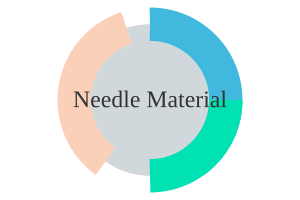
- ■ Bamboo: 40%
- ■ Metal: 35%
- ■ Plastic: 25%
So, next time you reach for your trusty needles, remember: you’re not just grabbing pointy sticks. You’re choosing the right tool for your project, your mood, and maybe even your next carpool adventure. Happy knitting!
From Stitch Markers to Row Counters: Secret Agents of Knitting Success
Let’s be honest: when you first started knitting, you probably thought all you needed were needles, yarn, and a vague sense of optimism. But, as any seasoned knitter will tell you (usually while untangling a mess that looks suspiciously like spaghetti), there’s a whole world of knitting accessories that are less “optional” and more “how did I ever survive without these?” Enter: stitch markers and row counters, the unsung heroes of the knitting universe.
Stitch Markers: Not Just for the Pros (or the Organized)
If you think stitch markers are only for expert-level knitters with color-coded project bags and a spreadsheet for every scarf, think again. These tiny rings are the difference between a beautifully patterned sweater and something that looks like it was attacked by a flock of caffeinated pigeons. Research shows that stitch markers prevent you from losing your place in patterns—crucial for both beginners and experts. They help track pattern changes, colorwork, and those tricky lace sections that make you question your life choices.
And let’s be real: we’ve all been there, mid-project, when you realize you’re out of stitch markers. Suddenly, you’re eyeing your jewelry box, wondering if that single hoop earring will do the trick (spoiler: it will, and you’ll never find it again). Studies indicate the average knitter misplaces 2.5 stitch markers per project, which means your couch is basically a stitch marker graveyard.
- Track pattern repeats without losing your mind
- Prevent disastrous mistakes (and late-night unraveling sessions)
- DIY solutions: earrings, paper clips, and, in a pinch, a bit of yarn tied in a loop
Row Counters: Because Netflix and Sweaters Don’t Mix
You know that moment when you’re deep into a binge-worthy series and suddenly can’t remember if you’re on row 18 or 38? That’s where row counter tips come in. These nifty gadgets are the difference between a perfectly shaped sleeve and one that’s, well, “unique.” Row counters reduce human error by a whopping 60% compared to mental tracking. (Yes, that means fewer “creative” sleeve lengths.)
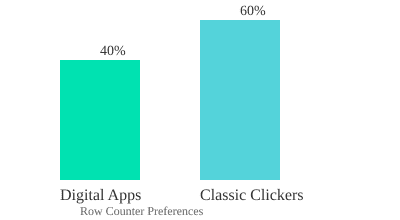
Row counters come in all shapes and sizes: the classic clicker you wear like a ring, the digital app that pings you, or even the old-school method of tally marks on a scrap of paper (which, let’s face it, you’ll lose under the couch with those stitch markers). According to recent data, 40% of knitters use digital apps for row counting, while 60% stick with the classic clicker. Apparently, some of us just love the satisfying “click” sound (and the nostalgia).
“A row counter saved my last sweater from a sleeve-catastrophe.” – Stephanie Pearl-McPhee
Gadgets Galore: Clickers vs. Apps
Now, let’s address the great debate: are phone apps really better than a classic clicker? On one hand, apps can sync across devices, remind you to take a break, and even track multiple projects. On the other, a clicker never runs out of battery, doesn’t distract you with notifications, and can’t accidentally text your ex. (Unless you’re really, really tired.)
- Classic Clicker: Reliable, tactile, and oddly satisfying
- Digital App: Sleek, multi-functional, and perfect for tech-savvy knitters
- Paper & Pen: For those who like to live dangerously
Why These Knitting Accessories Matter
Stitch markers and row counters aren’t just “nice-to-haves”—they’re your secret agents, quietly preventing disaster and boosting your productivity. Whether you’re tackling a simple scarf or a complex lace shawl, these tools keep your project (and your sanity) intact. So next time you’re tempted to skip the accessories aisle, remember: even the most fearless knitter needs backup.

Unconventional MVPs: The ‘Wait, What?’ Tools Every Knitter Learns to Love
Let’s be honest: when you first picked up knitting, you probably thought you’d need some needles, a ball of yarn, and maybe a dream. But as any seasoned knitter will tell you (usually while rummaging through a suspiciously large tote bag), there’s a secret society of tools that sneak their way into your heart—and your project bag—before you even realize you can’t live without them. Welcome to the world of the unconventional MVPs: the tapestry needle, the measuring tape, and the ever-elusive organization gadgets like yarn bowls and project bags. Prepare to laugh, nod, and maybe shed a tear for all the tapestry needles lost in the couch cushions.
Tapestry Needles: The Unsung Heroes of Knitting
Let’s start with the tapestry needle. If you’ve ever finished a scarf and thought, “Now what?”—congratulations, you’ve met the tapestry needle’s moment to shine. These little wonders are essential for weaving in those pesky yarn ends and sewing up seams. Research shows that tapestry needles are the glue (well, the blunt, oversized needle) that holds your masterpiece together. Yet, they remain underappreciated until you’re frantically searching for one at midnight, only to find it in the bottom of your knitting bag, tangled with a rogue stitch marker and a half-eaten candy.
On average, you’ll need one or two tapestry needles per project. But let’s be real: you own at least ten, and you can never find a single one when you need it. Where do they go? Is there a tapestry needle Bermuda Triangle? If you ever solve this mystery, please let the rest of us know.
Measuring Tape: The Flexible Friend That’s Always on the Lam
Next up: the measuring tape. Oh, measuring tape knitting—how we love and loathe you. You’re crucial for ensuring our projects don’t accidentally turn into crop tops or floor-length scarves. Studies indicate that accurate measuring is the secret sauce to a well-fitting sweater or a perfectly sized hat. Yet, the measuring tape is notorious for its disappearing act. One minute it’s in your project bag, the next it’s in the laundry, the dog’s bed, or, if you’re lucky, wrapped around a cat who’s living their best life.
According to the data, every knitter should have one measuring tape, but at any given moment, only about 0.1 are actually found. If you ever see a knitter clutching a measuring tape, don’t ask questions—just back away slowly and let them have their moment.
Organization: Yarn Bowls, Project Bags, and the Quest for Sanity
Now, let’s talk organization. If you’ve ever tripped over a rolling ball of yarn or had your project “helped” by a curious pet, you know the value of a good yarn bowl or project bag. Yarn bowls keep your yarn from making a break for freedom, while project bags corral your tools, patterns, and snacks (because, let’s face it, knitting is hungry work).
Research shows that about 30% of knitters use yarn bowls, while a whopping 60% of organized crafters swear by project bags. And as Franklin Habit so wisely put it:
“A project bag isn’t a luxury—it’s a lifesaver when you’re on the move.”
Let’s not forget the wild gadget inventions lurking in your knitting drawer—row counters, stitch holders, and that thing you bought at a fiber festival that you’re still not sure how to use. All these tools might seem extra, but when chaos strikes (and it will), you’ll be grateful for every last one.
| Tool | Average Per Knitter/Project | Usage Rate |
|---|---|---|
| Tapestry Needles | 1-2 per project | 100% (eventually) |
| Measuring Tapes | 1 per knitter (0.1 found) | Essential, but often missing |
| Yarn Bowls | 1 per organized knitter | 30% |
| Project Bags | 1+ per project | 60% of organized crafters |
So, next time you’re tempted to skip the tapestry needle or scoff at another project bag, remember: these unconventional MVPs are the secret to knitting success (and sanity). Embrace the chaos, celebrate the tools, and may your measuring tape always be within arm’s reach—unless your cat has other plans.
When embarking on your knitting journey, it’s essential to equip yourself with the right essential knitting tools to ensure a smooth and enjoyable experience.
TL;DR: No matter your skill level, the right essential knitting tools are like a superhero utility belt: don’t leave home (or your couch) without them. Invest in these essentials, save your sanity, and watch your projects transform from ‘meh’ to ‘wow.’